Digital Transformation for Main Street: How to Scale Without Burnout
Digital Transformation for Main Street: How to Scale Without Burnout
Feb 04, 2026

You didn’t start your business to become a professional email sorter. You didn’t launch your agency or consultancy to spend six hours a day wrestling with spreadsheets, formatting proposals, or staring at a blinking cursor wondering what to post on LinkedIn. You started this to build something—to solve problems, to create value, and to achieve a level of freedom that the corporate grind couldn't offer.
Yet, for many small business owners like you, the reality feels less like "freedom" and more like a high-stakes juggling act. You are the CEO, the marketing department, the sales lead, and the cleaner. You are ambitious and resourceful, but you are also keenly aware that there are only 24 hours in a day.
This is where the concept of digital transformation usually enters the conversation. But let’s be honest: when you hear that phrase, you probably picture a Fortune 500 boardroom, million-dollar IT budgets, and teams of consultants in expensive suits. It feels disconnected from the reality of "Main Street" business—the consultancies, the creative firms, and the e-commerce shops run by teams of two to ten people.
Here is the truth: Digital transformation is no longer a luxury for big corporations. It is the single most effective survival strategy for the modern entrepreneur.
For a small business, digital transformation isn't about buying expensive software suites you’ll never use. It is about leverage. It is the process of using technology to clone your best efforts, automate the drudgery, and present a brand that looks ten times bigger than your payroll suggests. It is how you move from being an overworked operator to a confident strategist.
The Ultimate Guide to AI for Small Business maps the full journey — from time-poor operator to scalable business owner.
The Mindset Shift: Why "Digital" is No Longer Optional
If you feel like you are working harder than ever just to stay in the same place, you aren't imagining things. The landscape has changed.
The Efficiency Gap
In the past, small businesses competed on personal touch. You knew your customers, you shook their hands, and that was enough. Today, your clients—whether they are B2B buyers or retail consumers—expect the personal touch plus the speed of Amazon and the polish of Apple.
When you handle every task manually, you create an efficiency gap. Every hour you spend manually drafting a routine email or creating social content from scratch is an hour you aren't spending on strategy or business development. Large competitors bridge this gap with staff. You must bridge it with technology.
See how solopreneurs use AI to compete with larger teams on a fraction of the budget.
The Resource Paradox
The old way to scale a business was simple: if you wanted to do more work, you hired more people. But hiring is expensive, risky, and time-consuming. You want to grow, but you don't necessarily want the headache of managing a massive headcount.
This creates a paradox: How do I do more without adding more cost?
Digital transformation solves this by decoupling your output from your hours worked. When you implement the right digital systems, you can handle 50 clients with the same stress level as handling five. You stop trading time for money and start trading value for money, supported by a digital infrastructure that never sleeps.
Core Pillars of Small Business Transformation
To reclaim your time, we need to move past the vague idea of "going digital" and look at three specific pillars where technology can immediately alleviate pressure.
Pillar 1: Operational Hygiene
Operational hygiene is about cleaning up the mess behind the scenes. It’s the unsexy work that, when neglected, causes the most stress.
Consider your current workflow. How many times do you copy and paste data from an email to a spreadsheet? How often do you go back and forth on email just to schedule a meeting? These are "time thieves."
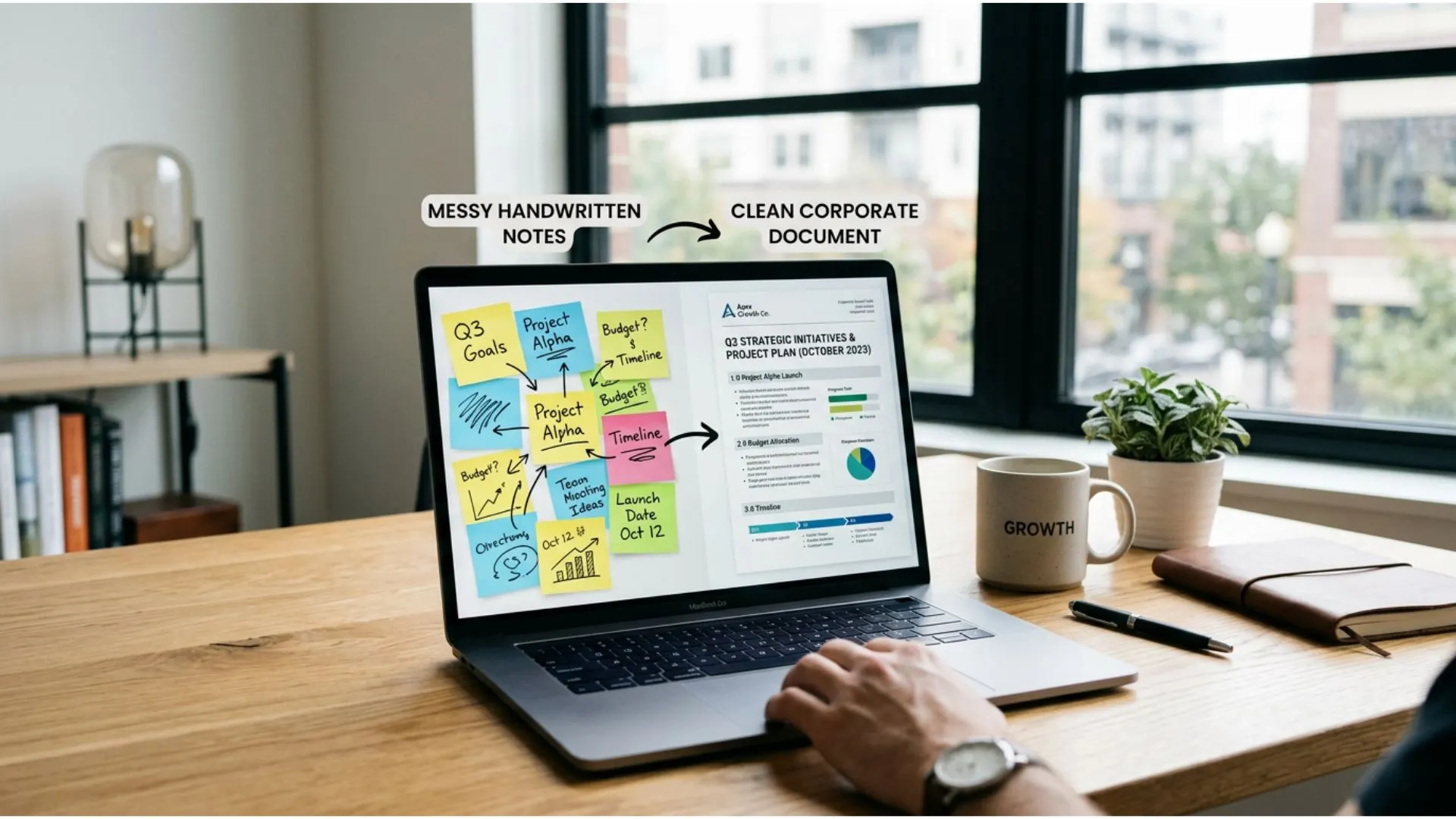
Digital transformation in operations means adopting tools that talk to each other. It’s using a scheduling link instead of an email thread. It’s using a CRM (Customer Relationship Management) tool that automatically reminds you to follow up, rather than relying on sticky notes. When you automate the repetitive, you lower your cognitive load. You stop worrying about what you forgot to do, because the system remembers for you.
The Is Your Small Business Ready for AI Implementation? checklist shows you exactly where your biggest workflow gaps are.
Pillar 2: The Customer Experience (CX)
Perception is reality. In the digital age, a small team can project the credibility of a massive agency—if their digital touchpoints are polished.
Your digital presence—your website, your content, your email communications—is often the only interaction a prospect has with you before they buy. If your content is sporadic or your emails are riddled with inconsistencies because you were rushing, your brand authority suffers.
Transformation here means utilizing tools to ensure consistency. It means having automated onboarding sequences that make new clients feel VIP instantly. It means having a content strategy that runs like clockwork, ensuring you stay top-of-mind without having to panic-write a newsletter at 11:00 PM on a Sunday.
Learning to train AI to write in your brand voice is the fastest way to ensure every touchpoint stays consistent.
Pillar 3: Knowledge Management
This is the most overlooked pillar for solopreneurs and small teams. Right now, where does your business "live"? If the answer is "in my head," you have a bottleneck.
If you get sick, or if you want to take a vacation, does the business stop? Digital transformation involves getting your processes, your templates, and your "secret sauce" out of your brain and into a digital repository. This isn't just about storage; it's about accessibility. It allows you to eventually bring on a freelancer or an assistant who can execute tasks exactly the way you would, because the blueprint is digital and accessible.
Structured, repeatable prompts are the foundation of this system — see Automated Prompt Engineering: The Shortcut for Consistent AI Outputs.
The Great Equalizer: Artificial Intelligence
If the pillars above are the "what," then Artificial Intelligence (AI) is the "how."
For years, small business owners were told that to compete, they needed to learn to code or hire expensive developers. That era is over. Generative AI has democratized access to expert-level output.
Beyond the Hype
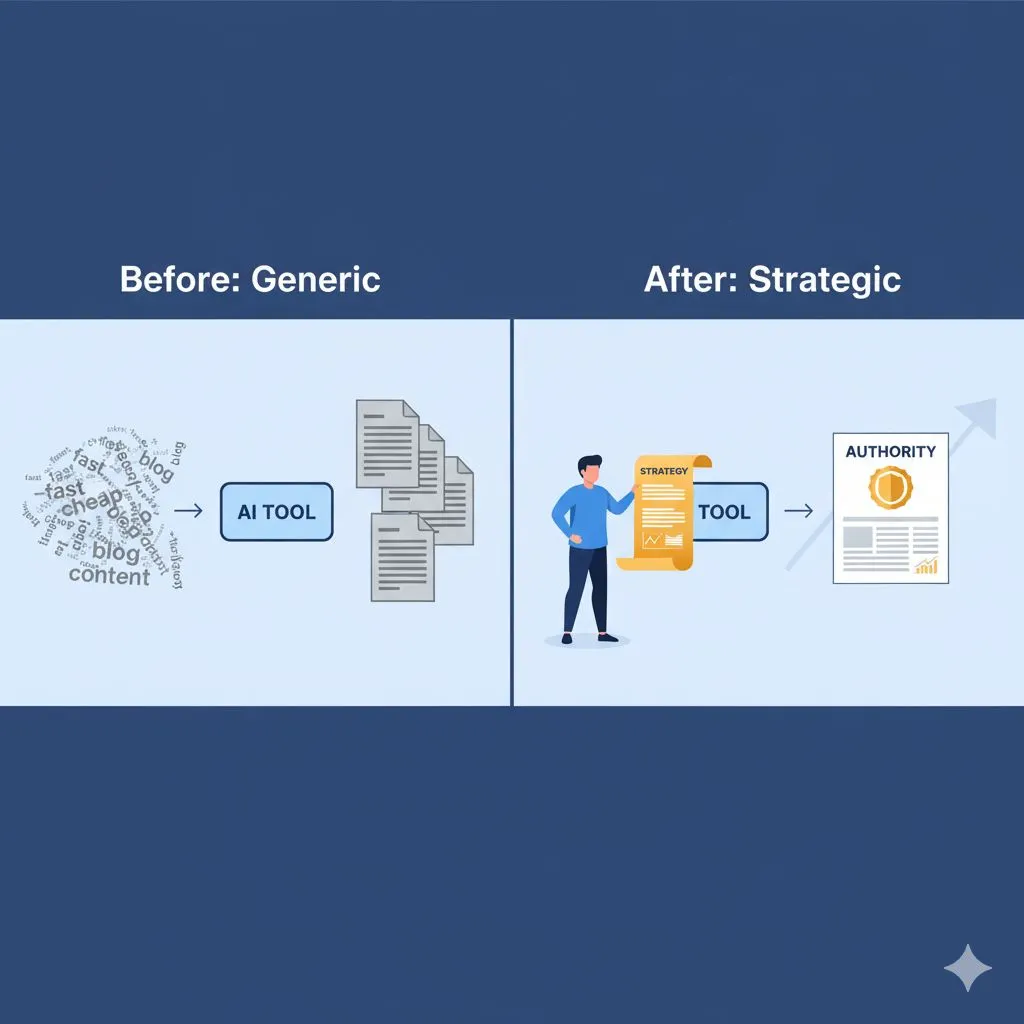
You might be skeptical. You’ve seen the hype cycles before. You may have even tried ChatGPT and received a generic, robotic response that wasn't usable. That is a common experience, but it’s a failure of input, not technology. This is why plug-and-play AI fails without strategy — and what separates generic outputs from expert-level results.
Used correctly, AI is not a gimmick; it is the ultimate leverage. It is a tireless junior employee, a brainstorming partner, and a copy editor rolled into one. It allows a single person to produce the volume and quality of work that used to require a marketing team of five.
Content & Marketing: The scalability problem
The biggest pain point for entrepreneurs like Alex Rivers is usually marketing consistency. You know you need to publish articles, LinkedIn posts, and case studies to build authority. But writing is hard, and it takes time you don't have.
This is where Digital Transformation meets Prompt Strategy.
Imagine being able to generate a month’s worth of high-level strategic content in an afternoon. Not "fluff" content, but content that deeply resonates with your customer persona, handles objections, and drives sales. AI can do this, but only if it is guided by a strategic framework.
The Role of Structured Prompts
This is the missing link for most business owners. They treat AI like a search engine ("Write a post about marketing"). To get expert results, you need expert inputs.
Think of a prompt as a piece of software code written in plain English. A structured prompt gives the AI context, persona, constraints, and a specific goal.
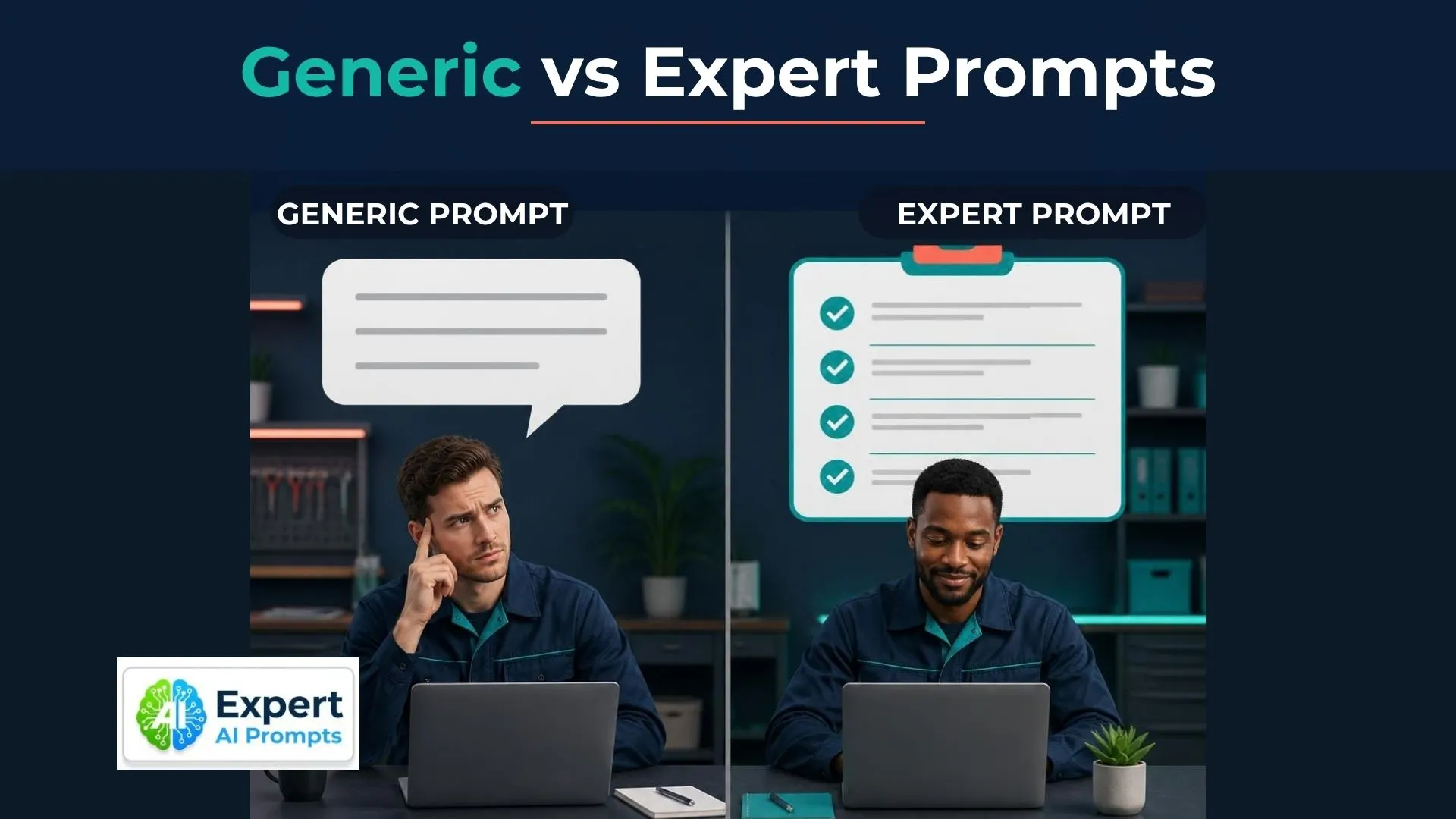
- Generic Input: "Write an email to a client."
- Strategic Input: "Act as a senior account manager. Draft a reassurance email to a client who is worried about project timelines. Use an empathetic but confident tone. Outline these three specific mitigation steps..."
The difference in output is the difference between looking like an amateur and looking like an industry leader. By utilizing pre-built, expert-level prompts, you bypass the "blank page syndrome" and the frustration of trial-and-error. You instantly upgrade your output quality.
For the full methodology, the Entrepreneur's Playbook for Prompt Engineering is the definitive guide on this site.
Strategic vs. Generic AI
Digital transformation isn't just about using AI; it's about integrating it into your workflow. It’s about having a library of "power prompts" that handle your recurring tasks—writing proposals, analyzing competitor data, summarizing meetings, and generating social captions.
When you have these assets ready, you stop being a "content writer" and start being an "editor." You spend your time refining strategy rather than grinding out words. This is how you scale.
The Prompt Engineering Edge AI Toolkit gives you a pre-built library of power prompts to make this shift immediately.
The "Crawl, Walk, Run" Implementation Roadmap
The prospect of overhauling your business can be paralyzed. The key to successful digital transformation is to think big but start small. Do not try to change everything this weekend.
Phase 1: Audit & Identify Bottlenecks (Crawl)
Spend one week tracking your time. Identify the tasks that you dread, the tasks that are repetitive, and the tasks that require zero strategic thought.
- Is it answering the same FAQs?
- Is it drafting standard emails?
- Is it resizing images for social media?
- These are your targets. Pick one to solve first.
Phase 2: The Low-Hanging Fruit (Walk)
Implement a solution for that one bottleneck. For most small business owners, the highest ROI usually comes from accelerating content creation and communication.
This is the perfect time to deploy an AI prompt library. Browse all 30 industry-specific prompt packs to find the right toolkit for your workflow. Instead of staring at your screen, grab a proven prompt for "LinkedIn Authority Post" or "Cold Outreach Email." Run it, edit it, and ship it.
Measure the time saved. If a task used to take 90 minutes and now takes 15, you have just "bought" yourself an hour and fifteen minutes.
Phase 3: Integration (Run)
Once you trust the tools, start connecting them. The Implementation Workflows and How-To Guides hub walks through exactly how to build this connected system step by step. Use AI to generate the content, use an automation tool to schedule it, and use a CRM to capture the leads that result from it. This is where the flywheel effect kicks in. Your business begins to grow even when you aren't actively pushing it.
Overcoming Objections
"I'm not tech-savvy."
Good news: Modern digital transformation requires less technical skill than ever before. If you can send an email and copy-paste text, you can use high-end AI prompts. The "tech" part is hidden behind the scenes; your job is simply to direct the strategy.
"Is the quality high enough?"
This is a valid fear. Your brand is your reputation. However, relying on manual exhaustion also hurts quality. When you are tired, you make mistakes. When you use strategic AI tools, you raise your baseline quality. You ensure that every piece of content starts at an "8 out of 10," and your expertise polishes it to a "10."
Conclusion: From Overworked to Outstanding
Digital transformation is not about replacing the human element of your business. It is about protecting it.
By automating the mundane and using AI to handle the heavy lifting of creation, you protect your energy for the things that actually matter: building relationships, closing deals, and envisioning the future of your company.
Real businesses have already made this shift — explore the case studies to see the results.
You have the ambition. You have the skills. Now, you need the infrastructure to match. Don't let the administrative weeds choke your growth. It’s time to stop hustling harder and start scaling smarter.
Ready to start your transformation?
You don't need to hire a consultant to get started. You just need the right toolkit to unlock your time and creativity.
Get the Ultimate Guide: AI for Small Business and discover how to turn your workflow into your competitive advantage today.
Or grab your free prompts and start saving 5 hours this week — no commitment required.
Ready to go all-in? View all 30 prompt packs and pricing.
Further Reading
Scaling Without Hiring: The Solopreneur's Guide to AI
The First 30 Days: How to Implement AI in Your Small Business
From Operator to Strategist: Using AI to Escape the Daily Grind