Scaling Without Hiring: The Solopreneur’s Guide to AI
Scaling Without Hiring: The Solopreneur’s Guide to AI
Jan 30, 2026

There is a specific kind of exhaustion known only to the ambitious solopreneur. It isn't just about being tired; it is the friction between where you are and where you know you could be.
You are Alex Rivers. You are an expert in your field—whether that’s consulting, digital marketing, or specialized services. You have the vision to compete with the big agencies and the skills to deliver superior results. But you are stuck. You are wearing every hat: CEO, cleaner, copywriter, project manager, and lead strategist.
You hit the "Solopreneur’s Ceiling." This is the point where you literally cannot sell another hour of your time because there are none left.
The traditional advice for breaking through this ceiling is expensive and risky: Hire more people. But hiring requires capital, management bandwidth, and training time—luxuries you likely don’t have in abundance.
But what if the solution wasn't adding headcount, but adding leverage?
We are currently living through the greatest democratization of business resources in history. AI for small business isn't just a buzzword; it is the equalizer. It allows a team of one to output the volume and quality of a team of ten. This guide is not about using AI to write a funny poem; it is a strategic blueprint for scaling your business operations, reclaiming your time, and increasing your revenue without adding a single employee to your payroll.
Phase 1: The Mindset Shift—From Operator to Strategist
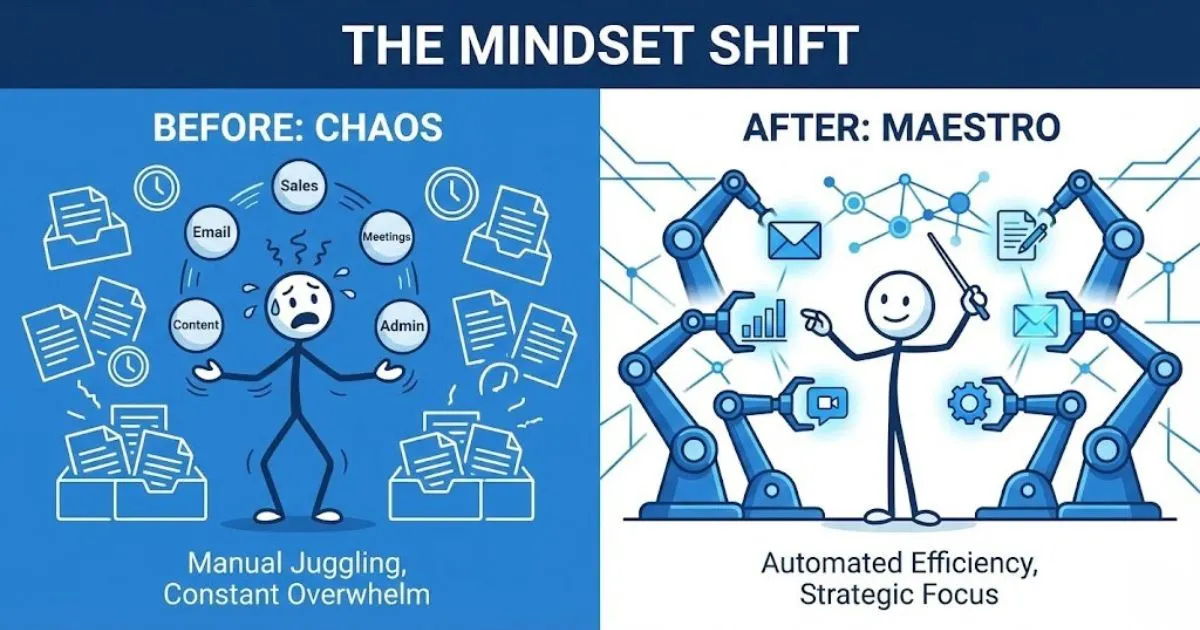
Before you sign up for another subscription or download a new app, the first upgrade must happen in your mindset.
Many small business owners view AI with a mix of curiosity and deep skepticism. You may have tried ChatGPT or similar tools, asked it to write a blog post, and received a generic, robotic output that didn't sound anything like your brand. You likely thought, "This isn't good enough. I can't trust this with my client relationships."
That skepticism is healthy. It protects your brand integrity. However, dismissing the technology based on a few poor interactions is like blaming a hammer because you didn't know how to build a house.
The "Toy" vs. "Tool" Mentality
The divide between entrepreneurs who fail with AI and those who scale with it lies in how they view the technology.
- The Novice views AI as a magic button—a "toy" that should instantly guess what they want.
- The Strategist views AI as a raw capability—a "tool" that requires skilled direction to function.
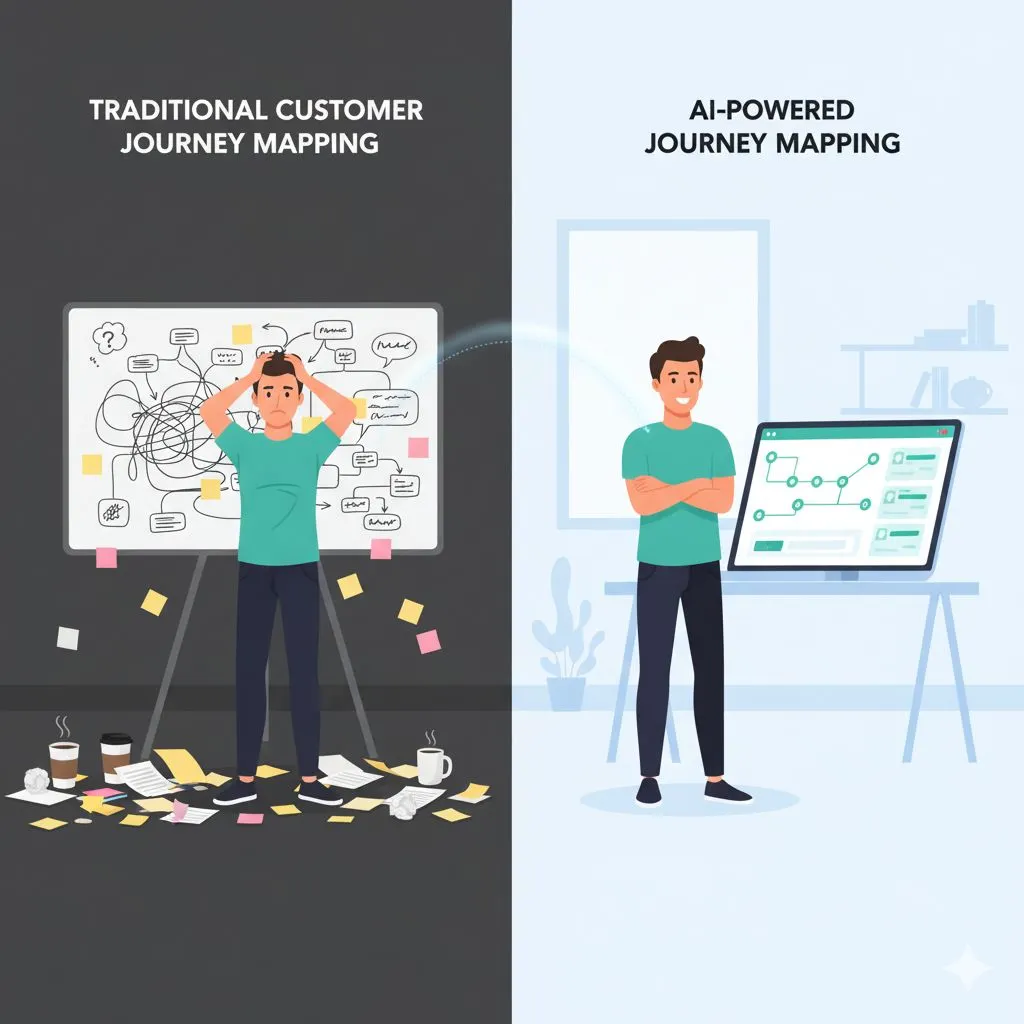
To scale without hiring, you must stop treating AI as a search engine and start treating it as a Junior Associate.
Imagine you hired a brilliant, eager, but inexperienced intern. If you said to them, "Write a marketing email," they would produce something generic and uninspiring. But if you said, "Write a marketing email for our high-ticket consulting package. The audience is skepticism-prone CFOs. Use a professional but urgent tone. Reference the ROI of our last three case studies. Keep it under 200 words."
That intern would deliver gold. AI works exactly the same way. The bottleneck isn't the AI; it's the instruction.
Overcoming the "Quality Gap"
The fear that AI will dilute your brand is valid, but solvable. The goal of using AI in a small business is not to automate strategy, but to automate execution.
You, the human, are the Strategist. You provide the taste, the direction, the nuance, and the final approval. The AI provides the speed and the draft. This is the Human-in-the-Loop workflow.
By shifting your mindset, you move from being the Operator (the one typing the email) to the Editor-in-Chief (the one approving the email). This shift alone can save you 15+ hours a week. It allows you to maintain expert-level quality—because you are still the one directing the ship—while removing the manual labor that keeps you working until midnight.
Scale is no longer about how many people you manage; it's about how effectively you direct your digital resources.
For a deeper look at how real solopreneurs are implementing this shift, see how solopreneurs use AI to compete with larger teams — practical tactics for your size of business.
Phase 2: Identifying High-ROI AI Opportunities
Once you have accepted AI as your digital workforce, the next challenge is deciding where to deploy it. A common mistake is trying to "AI everything" at once, which leads to overwhelmed paralysis. Instead, we must look for high-friction areas in your business—the bottlenecks where you are spending high-value time on low-value tasks.
For a service-based solopreneur or small business owner, these bottlenecks usually exist in three core silos: Marketing, Operations, and Client Delivery.
1. Marketing & Content: From Sporadic to Omnipresent
Consistently creating content is arguably the biggest pain point for small teams. You know you need to be on LinkedIn, writing newsletters, and updating your blog to build authority, but client work always takes precedence. The result? Your marketing is "feast or famine," which leads to unpredictable revenue.
AI changes the equation by decoupling "time spent" from "content produced."
- Content Repurposing: You don't need to write five separate posts. You can write one high-value "Core Concept" (perhaps a strategic insight you had on a client call) and use AI to transform that single thought into a LinkedIn carousel, a newsletter draft, a Twitter thread, and a video script.
- Ideation & Planning: Instead of staring at a blank cursor wondering what to say, use AI to generate 30 days of content topics based on your specific customer persona’s pain points.
- Drafting, Not Writing: Use AI to get you to the "80% done" mark. It creates the structure and the bulk of the text. Your job is to add the remaining 20%—the personal anecdotes, the brand voice, and the expert nuance that establishes trust.
To skip the planning step entirely, download the free 1-week content plan template with AI prompts — a done-for-you structure that works for any industry.
The ROI: You go from posting once a month to posting daily, without spending more time. You appear larger and more active than you effectively are.
2. Operations: Reducing "Admin Debt"
"Admin Debt" is the accumulation of unread emails, unsorted files, and scheduling conflicts that clog your mental bandwidth. It is the invisible killer of productivity.
- Email Triage: AI tools can now draft responses to common inquiries. If you find yourself typing the same "Thanks for reaching out, here are my rates..." email three times a week, that is a failure of process. An AI prompt can generate a polite, professional, and customized response in seconds.
- Meeting Summaries: Instead of frantically taking notes during a client discovery call, use AI transcription tools. These tools not only record the conversation but can extract action items, deadlines, and key sentiment. This allows you to be fully present in the meeting, improving your sales performance.
- Data Organization: Have a messy Excel sheet of leads? AI can clean, categorize, and prioritize that data, turning a jumbled list into an actionable sales pipeline.
The ROI: You reclaim the 1-2 hours a day lost to "busy work," directing that energy toward billable client work or strategic planning. See the specific tools behind this time reclaim — 5 AI business tools to reclaim your week breaks down the exact workflow stack.
3. Client Delivery: The "Expert" Advantage
This is the most controversial but potentially most profitable area. Can you use AI for client work? Absolutely—if you use it to enhance your expertise, not fake it.
- Research & Synthesis: If you are a consultant entering a new niche, AI can summarize industry trends, competitor analysis, and market risks in minutes rather than days. This makes you look smarter and more prepared in your very first meeting.
- First Draft Deliverables: whether it’s a proposal, a strategy document, or a technical report, AI can build the skeleton. If you sell SEO services, AI can categorize keyword lists. If you sell HR consulting, AI can draft policy templates.
- Quality Assurance: Use AI as a critic. Paste your proposal into an AI tool and ask, "Act as a skeptical CFO. Read this proposal and tell me three reasons why you would hesitate to sign." This "Red Teaming" allows you to fix weak points before the client ever sees them.
The ROI: You deliver projects faster. This either increases your effective hourly rate (if you bill by the project) or allows you to handle more clients simultaneously without burnout.
The Audit Strategy
To start, track your time for three days. Highlight every task that is repetitive, rules-based, or text-heavy. These are your "Green Light" tasks for AI. If a task requires deep empathy, high-stakes negotiation, or physical presence, keep that for yourself. Everything else is up for delegation to your digital team.
Phase 3: The Secret Weapon—Precision Prompt Engineering
We have established that AI is the engine for scaling your small business. But like any high-performance engine, it requires the right fuel. In the world of Artificial Intelligence, that fuel is the Prompt.
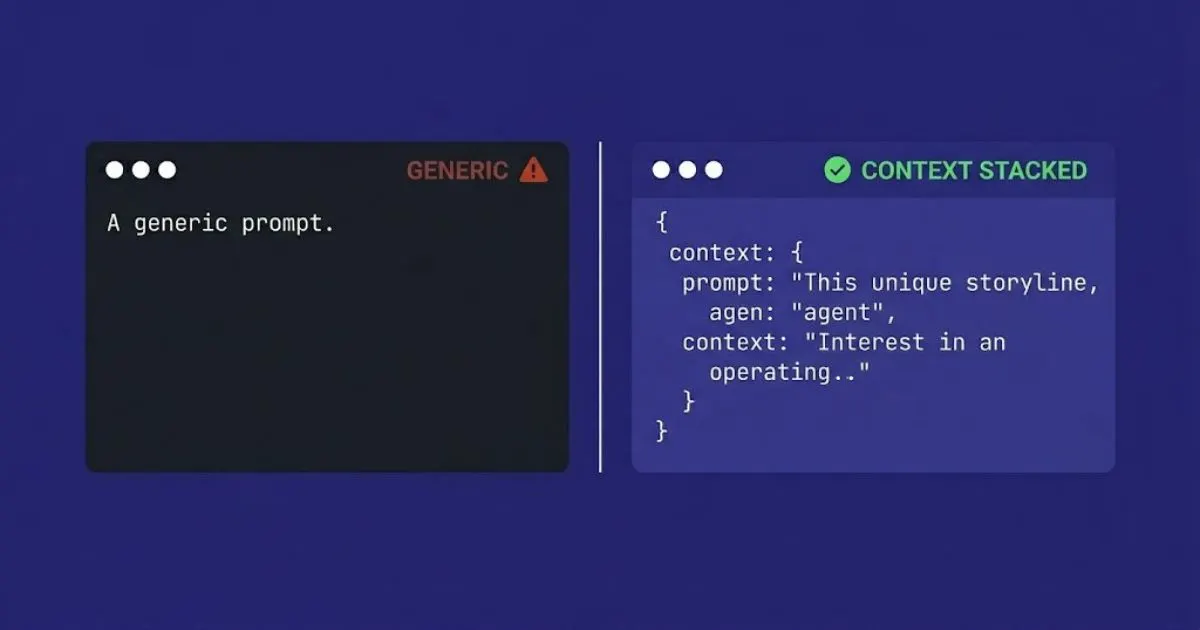
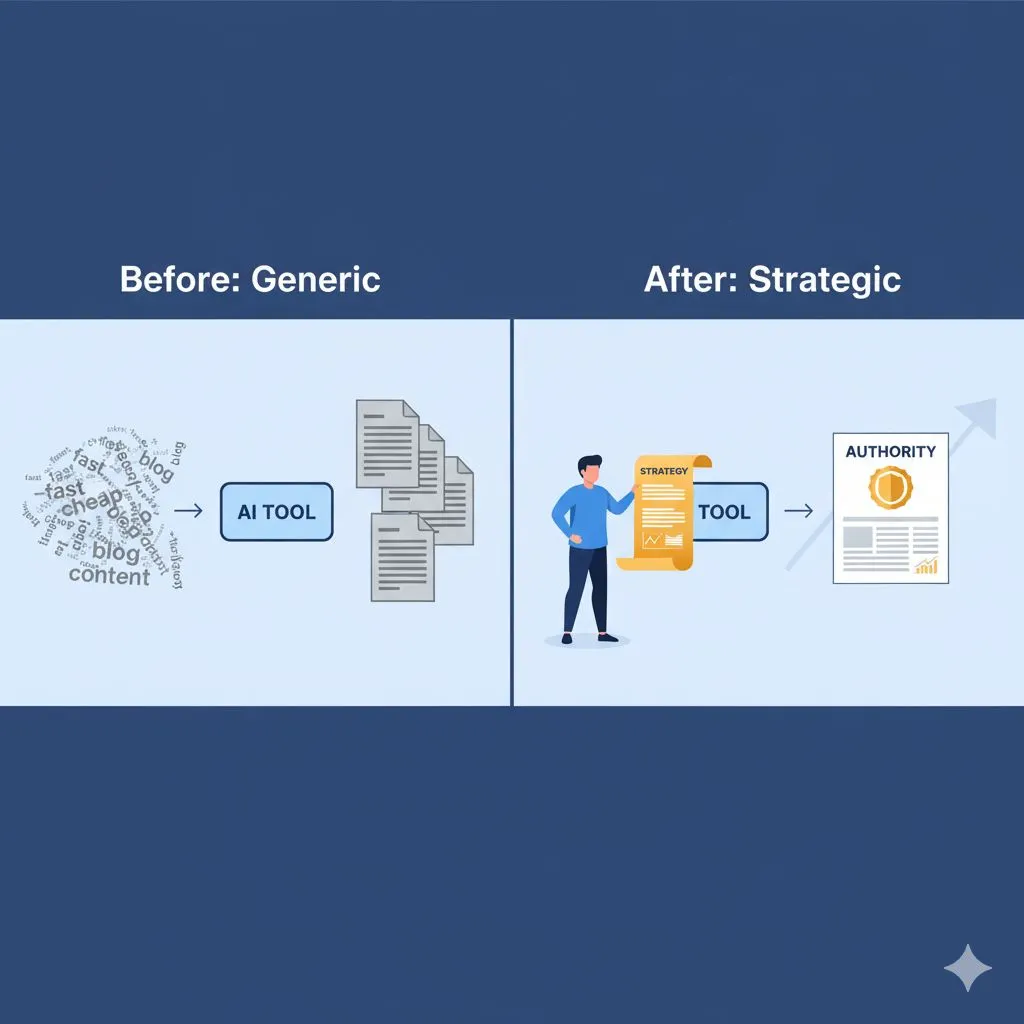
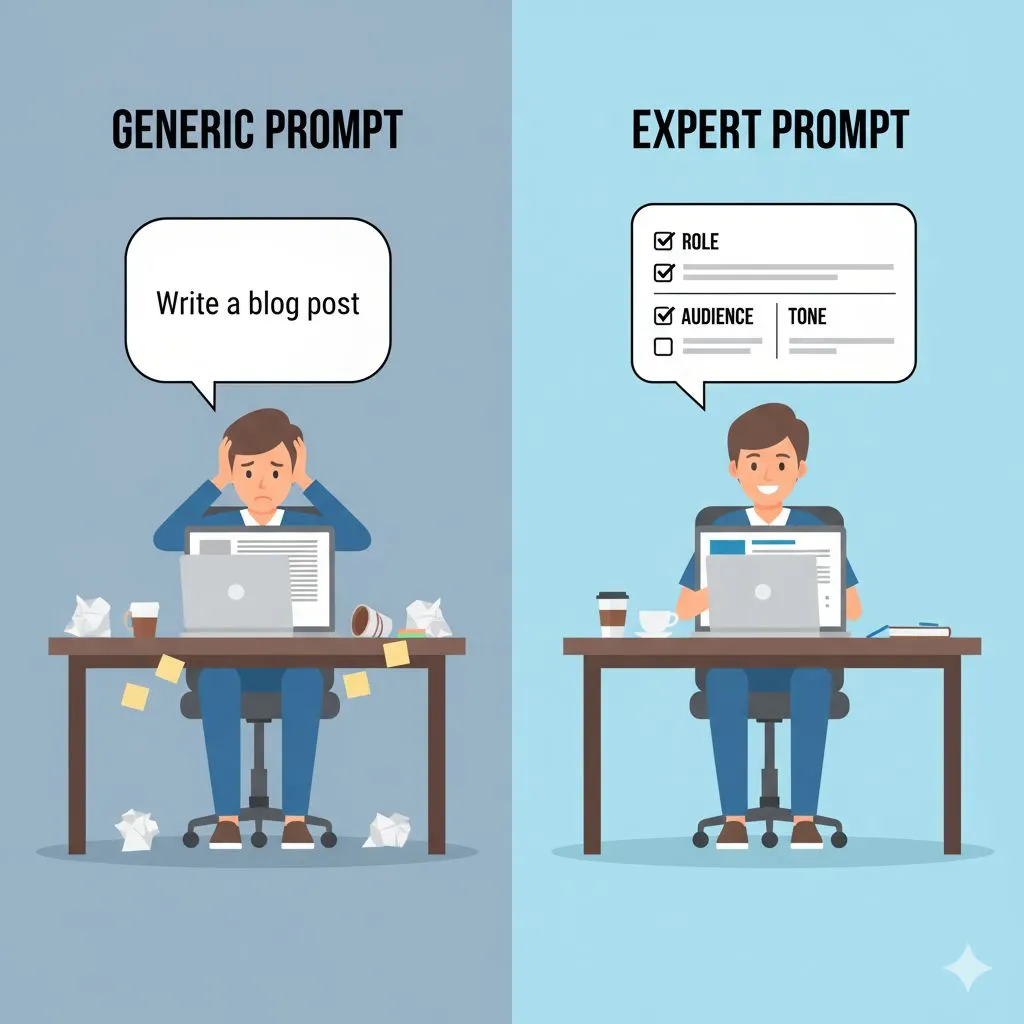
This is where 90% of business owners fail. They treat the prompt box like a Google search bar. They type: "Write a sales email for my graphic design business."
The result? A cheesy, stiff, "Dear Sir/Madam" email that screams spam. The business owner looks at it, sighs, and says, "AI doesn't work for my industry."
AI works for every industry. The failure was in the instructions. To get expert-level results that you can actually use, you need to master Prompt Engineering.
"Garbage In, Garbage Out"
AI models are large language prediction machines. They predict the next most likely word based on the context you provide. If you provide vague context, you get the "average" of the internet—which is usually mediocre. If you provide specific, strategic context, you get the "expert" slice of the data.
To scale your business without hiring, you cannot rely on guessing what to type. You need a structured approach to prompting.
The Anatomy of an Expert Prompt
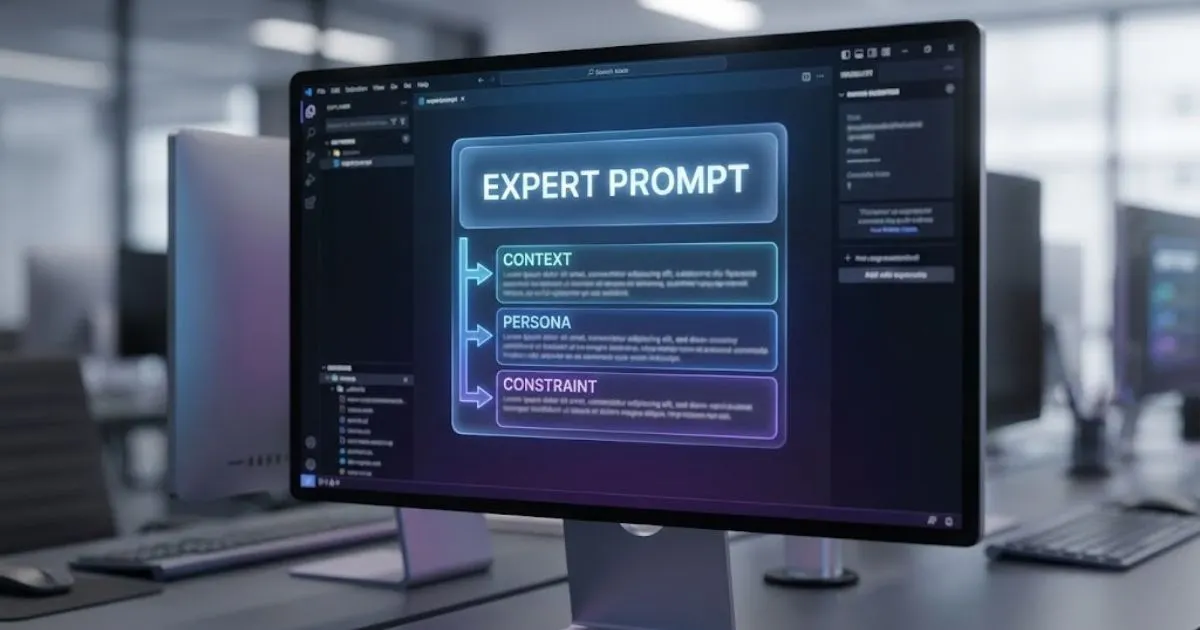
An effective prompt that delivers business-grade results typically contains four critical components. At Expert AI Prompts, we call this the CPCO Framework:
- Context (Who & What): Tell the AI exactly who it is supposed to be.
- Bad: "Write a blog post."
- Good: "Act as a Senior Content Strategist with 10 years of experience in B2B SaaS marketing. We are writing a blog post for CTOs."
- Persona (The Target Audience): Who are we talking to?
- Bad: "For customers."
- Good: "The audience is overworked small business owners aged 30-50 who are skeptical of new technology and value ROI above all else."
- Constraints (The Guardrails): What should the AI avoid? This is crucial for quality control.
- Example: "Do not use buzzwords like 'synergy' or 'game-changer.' Keep sentences short and punchy. Use a professional but empathetic tone. Total length: 800 words."
- Output (The Format): How do you want the data presented?
- Example: "Format this as a step-by-step guide with bold headers and a bulleted summary at the end."
When you combine these elements, the AI stops guessing and starts executing. It ceases to be a random text generator and becomes a specialized consultant tailored to your specific need.
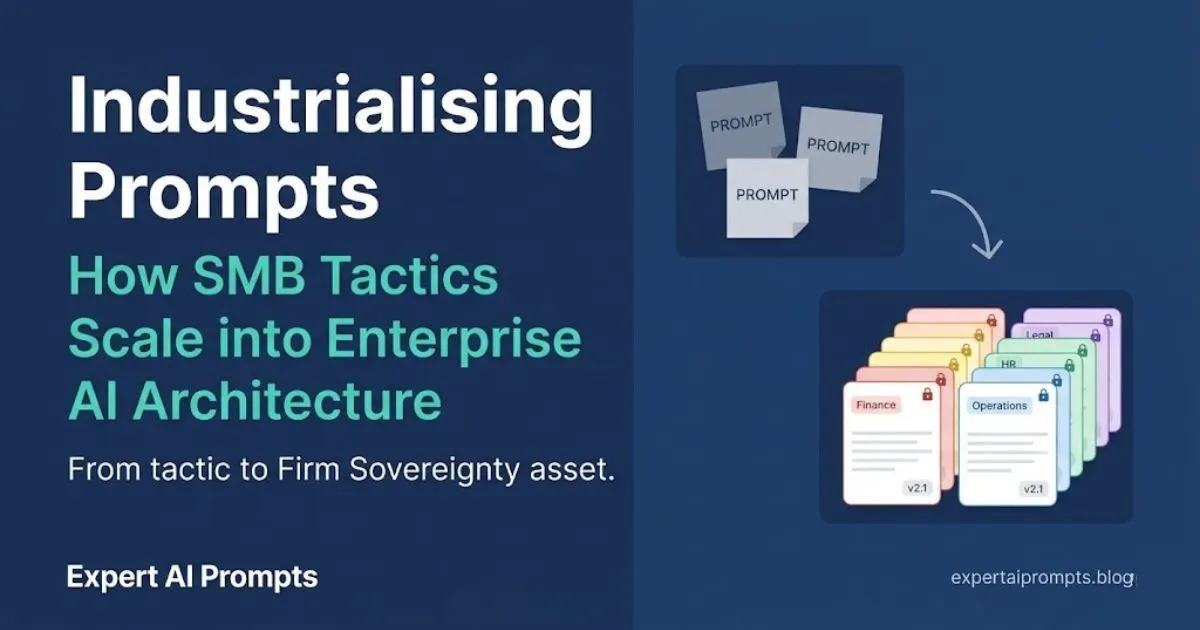
Standardizing Success: The Prompt Library
Here is the secret to scaling: Don't write prompts from scratch every time.
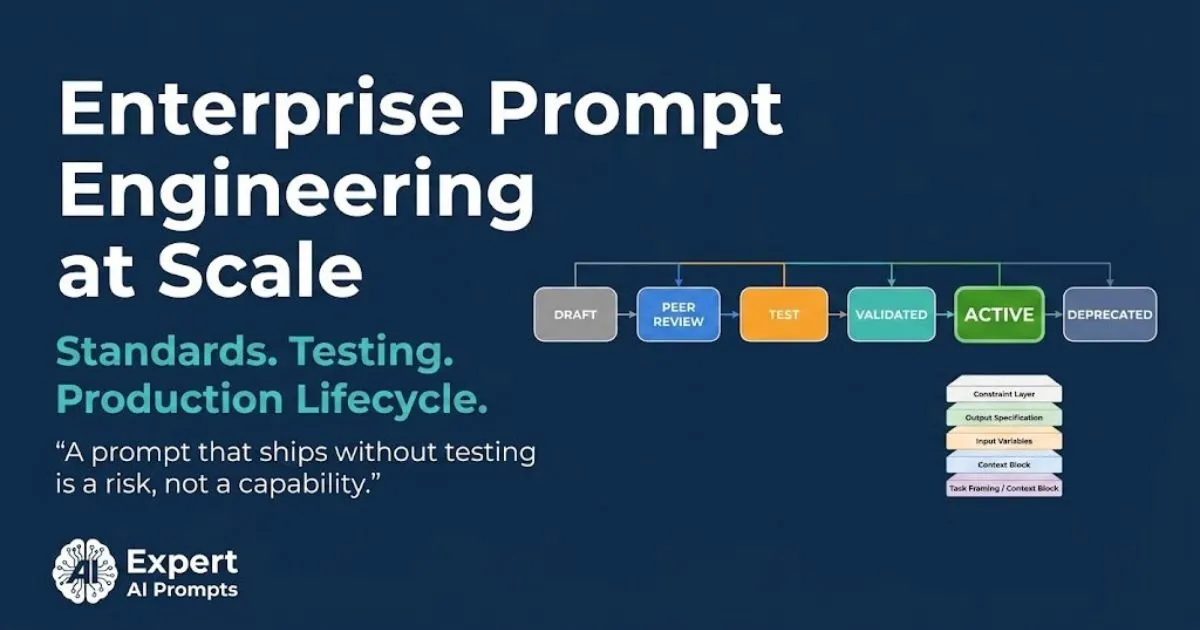
If you hire a human employee, you give them a Standard Operating Procedure (SOP) so they know how to do the job consistently. You must do the same for AI.
Create a "Prompt Library" for your business.
- Have a standard prompt for "New Client Onboarding Emails."
- Have a standard prompt for "Weekly LinkedIn Updates."
- Have a standard prompt for "Project Proposal Outlines."
Once you refine a prompt that delivers a 9/10 result, save it. The next time you need that task done, you simply paste in the prompt, change a few details (like the client name), and hit enter.
This is how you turn a 2-hour task into a 5-minute task. This is how you achieve the consistency of a large agency with the agility of a solopreneur.
However, building these prompts takes time—time you might not have. This is why many smart entrepreneurs skip the "trial and error" phase entirely and invest in pre-engineered prompt packs built for your industry. Using proven frameworks prevents the frustration of "prompt guessing" and delivers immediate ROI.
Phase 4: Implementation Roadmap (The 30-Day Scale Plan)
The danger of discovering the power of AI is "Shiny Object Syndrome." You might be tempted to sign up for ten different tools, automate everything overnight, and inevitably crash your workflow.
Sustainable scaling requires a measured approach. Here is a 30-day roadmap to integrating AI for small business operations without the overwhelm. Before you start, check the AI implementation checklist for small business to confirm your systems are ready for the roadmap ahead.
Days 1–7: Audit and Experimentation
- Goal: Identify ONE major bottleneck and solve it.
- Action: Track your time. Find the task you hate the most that requires text generation or data sorting (e.g., writing client updates or social media captions).
- Strategy: Spend this week refining one prompt to handle this task. Don't worry about the rest of the business. Get this one specific output to 90% quality.
- Win: You realize you can save 2 hours a week with a single prompt. Belief is established. Want that win today? Download the free prompts that save 5 hours this week — three ready-to-use prompts you can deploy before the end of Day 1.
Days 8–14: Building the "Prompt Stack"
- Goal: Operationalize your core functions.
- Action: Create a document named "My Digital SOPs."
- Strategy: Develop three core prompts:
- Marketing: A prompt that turns a rough idea into a newsletter.
- Sales: A prompt that helps draft responses to warm leads.
- Delivery: A prompt that outlines your primary service deliverable.
- Win: You now have a "digital team" supporting your three most critical revenue drivers.
Days 15–30: Integration and Refinement
- Goal: Workflow integration.
- Action: Stop doing the "blank page" work. Commit to starting every suitable task with AI.
- Strategy: Focus on the "Human-in-the-Loop." Spend your energy editing and adding strategic nuance to the AI outputs. Refine your constraints in your Prompt Library based on what is working.
- Win: You begin to feel the "time freedom." You finish your Friday work by 2:00 PM. You have mental space to think about growth, not just survival.
A Warning on "Tool Fatigue"
There are thousands of AI apps launching every week. Ignore 99% of them. You do not need a separate app for writing, another for emails, and another for ideas. Start with one robust Large Language Model (like ChatGPT, Claude, or Gemini) and master the prompts. The power is not in the app; the power is in the strategy you feed it.
Conclusion: The Future of the One-Person Empire
We are entering the era of the "One-Person Empire."
In the past, revenue was directly tied to headcount. To double your revenue, you usually had to double your staff. That is no longer true. With AI, the correlation between size and output has been broken.
For Alex Rivers—and for you—this is the moment to stop hustling and start scaling.
- Efficiency: You can do the work of a team of five.
- Credibility: You can produce expert-level content that builds trust.
- Freedom: You can reclaim your evenings and weekends.
Curious what that freedom is actually worth in dollars? Calculate your AI time savings with the free ROI calculator — plug in your current hours and see the result in under 2 minutes.
The technology is ready. The barrier to entry is low. The only variable left is your willingness to adapt. Will you continue to drown in operational details, or will you step up and become the Strategist your business needs?
You don't need to hire more people to compete with the big players. You just need better instructions.
The fastest path to better instructions? Start free. Grab your free expert AI prompts starter kit — 11 resources, no credit card, immediate impact.
Ready to Scale Smarter?
Stop wasting hours on trial-and-error prompting. We have done the heavy lifting for you.
Unlock the power of your digital workforce with our Ultimate Guide to AI for Small Business. Get access to 50+ pre-engineered, industry-specific prompts designed to save you time, boost credibility, and drive revenue from Day 1.
Get Your Expert AI Prompt Pack Here
Already decided? See all 30 prompt packs and pricing — one-time investment, lifetime access, industry-specific results.
Related Reading
1. Ultimate Guide: AI for Small Business
2. Entrepreneur's Playbook for Prompt Engineering
3. How Solopreneurs Use AI to Compete with Larger Teams
4. The First 30 Days: Implement AI in Your Small Business (blog)
5. Why Most Solopreneurs Fail to Scale — And How AI Fixes It (blog)