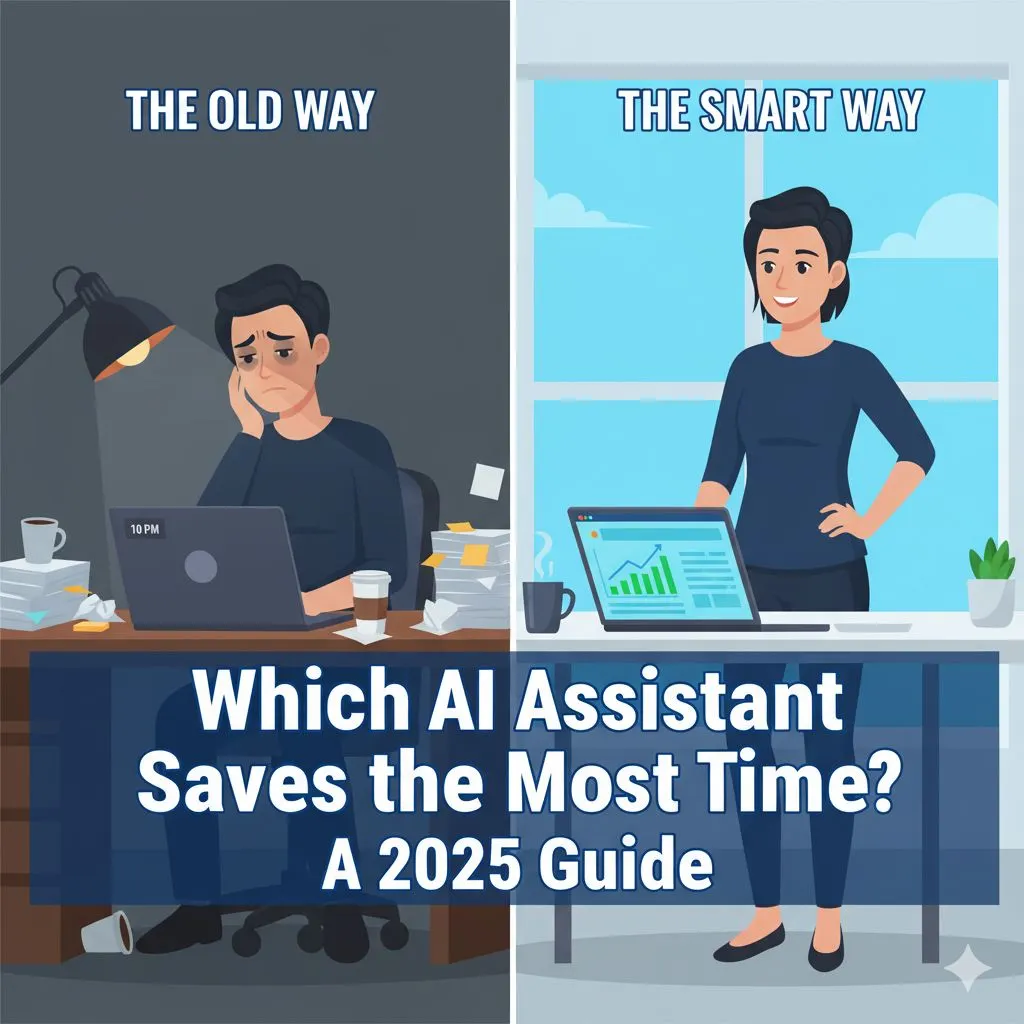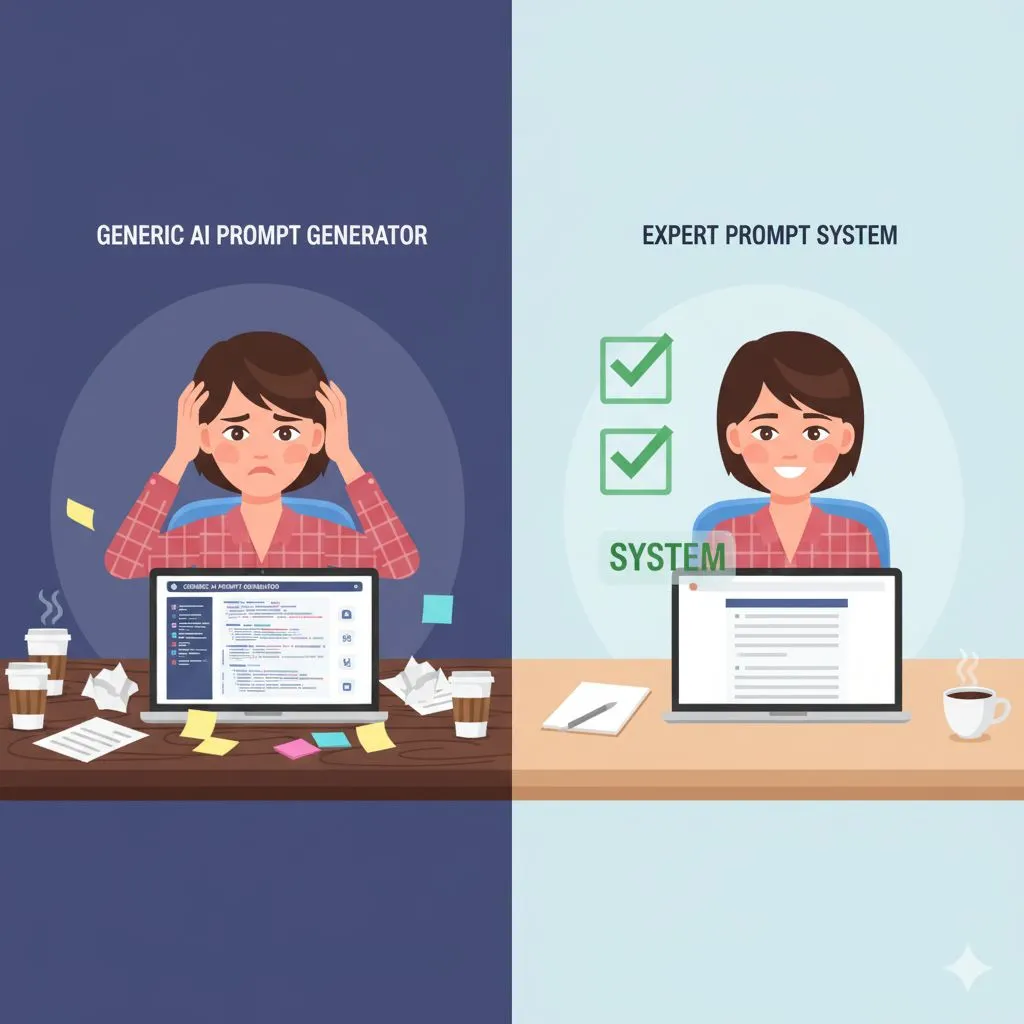
Why Most Solopreneurs Fail to Scale (And How AI Fixes It)
Why Most Solopreneurs Fail to Scale (And How AI Fixes It)
Jan 31, 2026
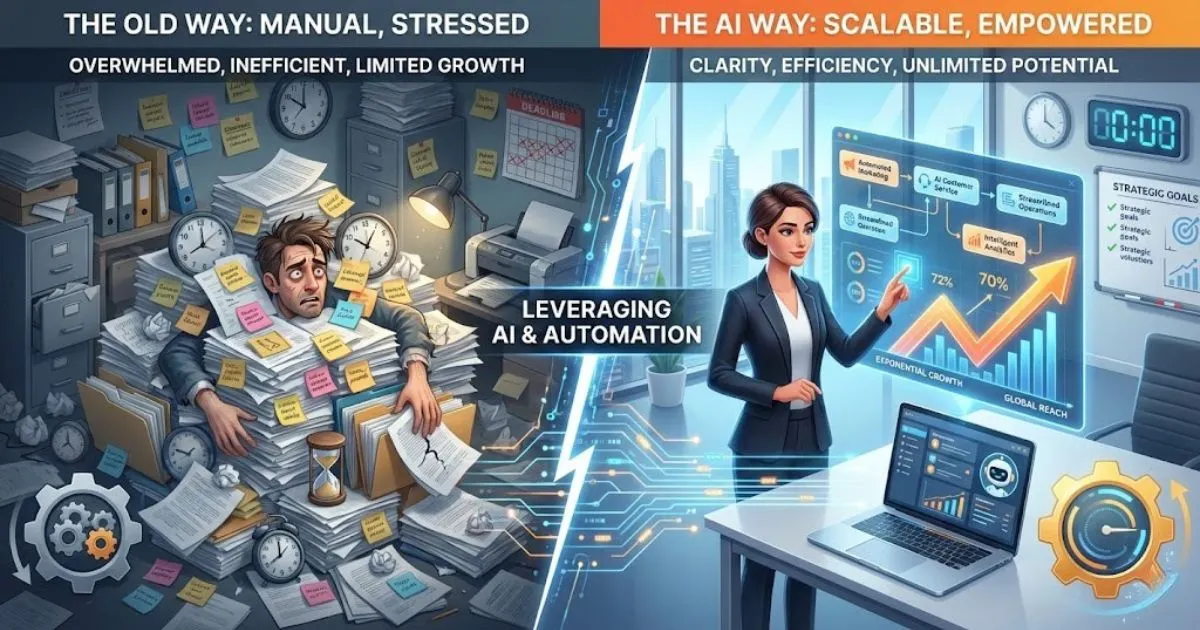
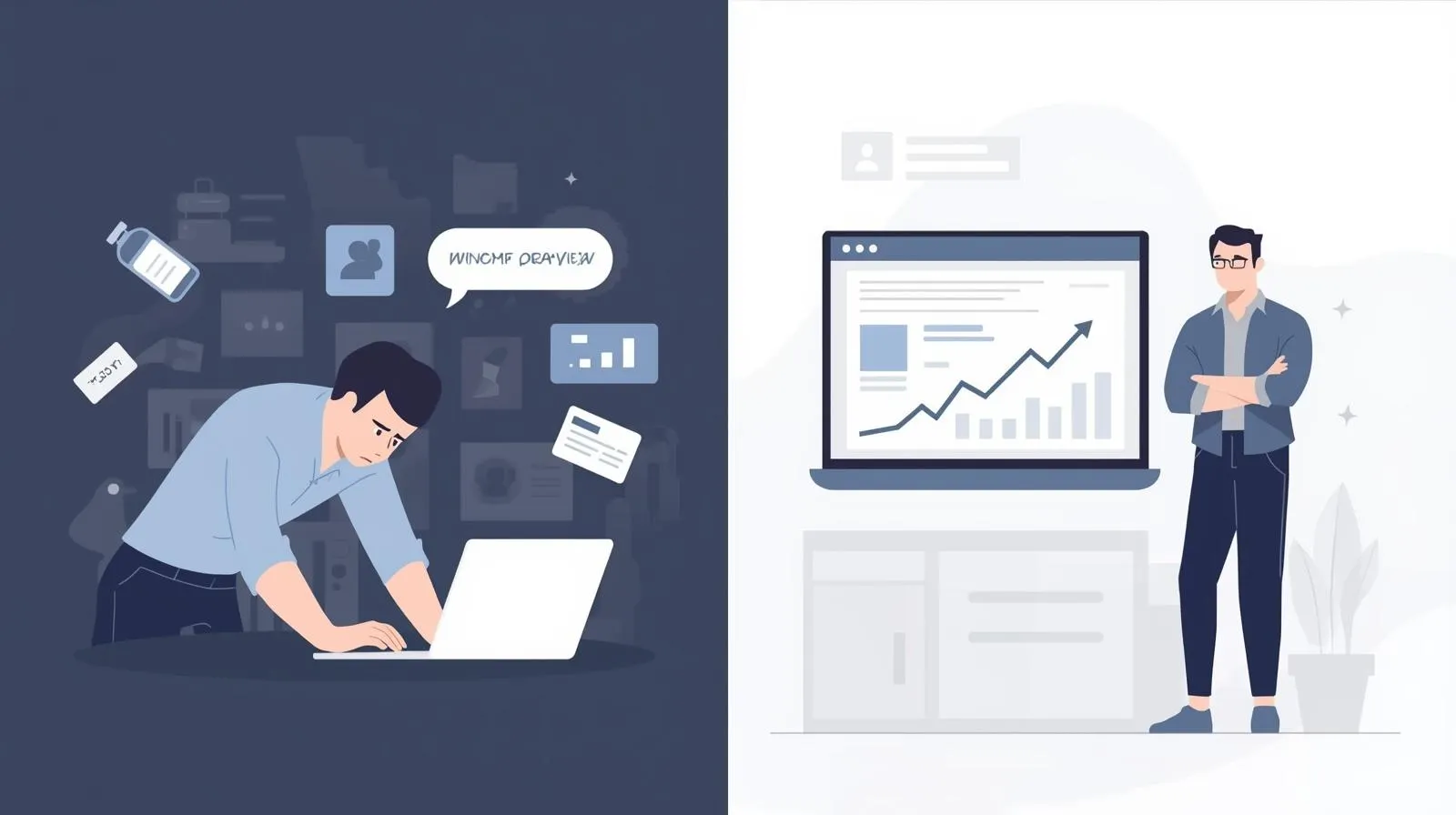
You started your business to buy your freedom. You wanted to do expert work, serve great clients, and build a life on your own terms. But somewhere along the way, the dream of freedom turned into the reality of the "hustle trap."
If you are like most ambitious small business owners, your days are a blur of frantic activity. You wake up thinking about client deliverables, spend your morning putting out operational fires, dedicate your afternoon to "actual work," and spend your evenings trying to figure out how to market your services so the pipeline doesn't dry up.
You are successful, yes. But you are also stuck.
This is the "Solopreneur’s Ceiling." The Ultimate Guide to AI for Small Business maps every AI system you need to break through it and start scaling. It is the invisible barrier that separates a profitable job from a scalable business. Most entrepreneurs believe the answer to breaking through this ceiling is simply to work harder. They think if they just optimize their calendar or wake up an hour earlier, they can handle the load.
They are wrong.
To truly succeed in scaling business operations, you must stop trying to do more. Instead, you must fundamentally change how the work gets done. The harsh reality is that most solopreneurs fail to scale not because they lack talent or drive, but because the very methods that got them to their first six figures are the exact things holding them back from the next level.
This analysis explores why traditional scaling methods fail the modern solopreneur and how Artificial Intelligence (AI)—when applied strategically—offers the first viable path to escaping the operator mindset and becoming the architect of your own growth.
The Bottleneck Paradox: Why "Hard Work" Stops Working
The most dangerous myth in entrepreneurship is that scaling is linear. We assume that if we work 10% harder, we will see 10% more growth. In the early days, this is true. When you have zero clients, hustling gets you your first. When you have five clients, hustling gets you to ten.
But eventually, you hit a mathematical wall. There are only 24 hours in a day, and your cognitive capacity is finite.
The Context Switching Tax
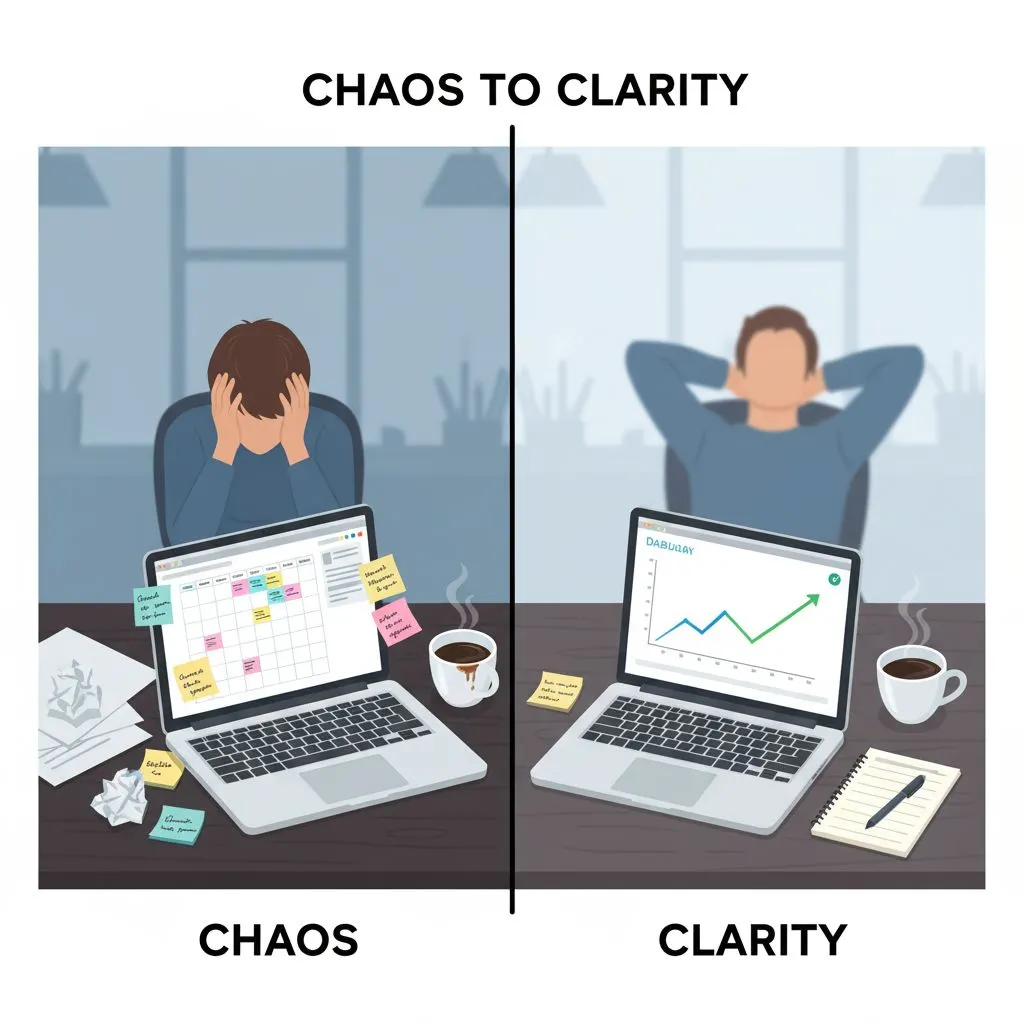
The primary enemy of scaling business efficiency isn't the volume of work; it's the variety. As a solopreneur or small team leader, you are constantly switching hats. One minute you are the visionary CEO; the next, you are the technical writer; ten minutes later, you are the customer support agent resettting a password.
Research suggests that it takes an average of 23 minutes to regain deep focus after an interruption. If you switch contexts just five times a day, you aren't just losing the time it takes to do the task—you are losing nearly two hours of high-level cognitive function. This "Context Switching Tax" erodes your ability to think strategically. You become reactive, not proactive. You stop building the business because you are too busy running it.
The 5 AI Business Tools to Reclaim Your Week cuts the switching overhead so you can get back to building.
The Quality vs. Capacity Trade-off
In a service-based business or a high-end creative firm, your brand is built on quality. Your clients hire you for your expertise, your voice, and your results.
As you try to scale by taking on more volume, your attention dilutes. You spend less time on each project. You rush the research. You reuse old templates. Inevitably, the quality dips. When quality dips, your reputation suffers, and churn increases. To fix the churn, you have to spend more time on marketing and sales, which takes even more time away from delivery.
This is the paradox: The harder you work to scale, the more fragile your business becomes.
The Linear Trap
Ultimately, manual labor—even expert manual labor—is linear. To double your revenue, you generally have to double your output. If your output relies entirely on your personal time and energy, doubling your revenue is physically impossible without burning out.
True scaling requires decoupling your revenue from your time. It requires leverage. Historically, leverage came in two forms: money (hiring staff) or code (custom software). Both were often out of reach for the average solopreneur.
Until now.
The Traditional Solutions (And Why They Fail Small Teams)
Before the widespread accessibility of Generative AI, the playbook for scaling business operations was rigid. If you wanted to grow beyond your personal capacity, the business gurus offered three standard paths. For the Alex Rivers of the world—bootstrapped, quality-obsessed, and resource-constrained—these paths often lead to dead ends.
1. Hiring Too Soon (The Overhead Trap)
The most common advice is "hire before you're ready." While well-intentioned, this advice ignores the cash flow reality of a small consulting firm or creative agency. Hiring a skilled employee is expensive—not just in salary, but in taxes, benefits, and equipment.
More importantly, hiring creates management debt. Instead of doing the work, you are now managing the person doing the work. For a solopreneur used to moving fast, this feels like wading through molasses. If you hire junior talent to save money, you spend your days correcting their work. If you hire senior talent to ensure quality, you wipe out your profit margins. For many, the financial stress of payroll kills the joy of the business before the scale ever kicks in.
2. Cheap Outsourcing (The Quality Roulette)
The alternative to hiring full-time staff is the gig economy. Platforms like Upwork or Fiverr promise instant help. However, anyone who has tried to scale a high-touch business this way knows the "briefing bottleneck."
By the time you explain the strategy, correct the tone of voice, fix the errors, and reformat the output, you could have done the job yourself. Cheap outsourcing often results in generic, low-quality output that dilutes your brand authority. You end up being the "Chief Editor" of mediocre work, which is hardly a path to freedom.
Our analysis of the solopreneur AI system vs hiring a VA quantifies the real cost difference with hard numbers.
3. Doing Nothing (The Stagnation Path)
Faced with the choice between expensive hires or poor-quality outsourcing, many entrepreneurs choose option three: they stay small. They cap their client list, raise their prices slightly, and accept that they will be working 50-hour weeks forever. While this is a valid lifestyle choice, it is not scaling business. It is maintaining a job. And if you get sick or want to take a month off, the income stops.
AI as the New Infrastructure for Scaling Business
This is where Artificial Intelligence shifts the landscape. For the first time, "leverage" is available without the massive overhead of headcount or the quality dip of cheap outsourcing.
To scale effectively, you must stop viewing AI as a parlor trick or a simple chatbot that writes funny emails. You must view it as infrastructure.
AI represents a digital workforce that is infinitely scalable, instantly trainable, and costs a fraction of a human employee. It does not get tired, it does not context switch, and—when guided correctly—it does not compromise on quality. Test it in minutes — the free 5-Hour Saver Prompts gives you a ready-to-run AI workflow for your highest-cost tasks.
Shifting the Paradigm: From Tool to Teammate
The mistake most business owners make is using AI for one-off tasks without a system. They ask ChatGPT to "write a blog post" and are disappointed when the result sounds robotic.
Successful scaling requires treating AI as a junior consultant with an IQ of 140 who has read everything on the internet but has zero common sense and no knowledge of your specific business context. Your job shifts from "doing the work" to "directing the work."
When you provide the right context—your brand voice, your strategic goals, your customer persona—AI can perform at an expert level. This allows you to clone your expertise. You are no longer writing the proposal; you are architecting the proposal logic and letting AI generate the draft. You are no longer brainstorming every social media caption; you are defining the content pillars and letting AI generate the calendar.
This removes the linear relationship between time and output. You can generate one customized report or one hundred in roughly the same amount of time. That is the definition of scale.
Strategic Implementation (The "How")
Understanding that AI is the key to scaling business is one thing; implementing it without getting lost in the "hype cycle" is another. Many entrepreneurs falter here. They subscribe to ten different AI tools, get overwhelmed by the complexity, and retreat back to their manual workflows.
To scale successfully, you need to focus on High-Leverage Activities. You don't need AI to organize your Spotify playlist; you need it to handle the heavy lifting that drives revenue. Here is how a strategic solopreneur builds an AI-powered scaling engine.
1. The Content Engine: Omnipresence Without the Burnout
In the digital economy, visibility is currency. However, creating high-quality, expert-level content for LinkedIn, a blog, a newsletter, and social media is a full-time job.
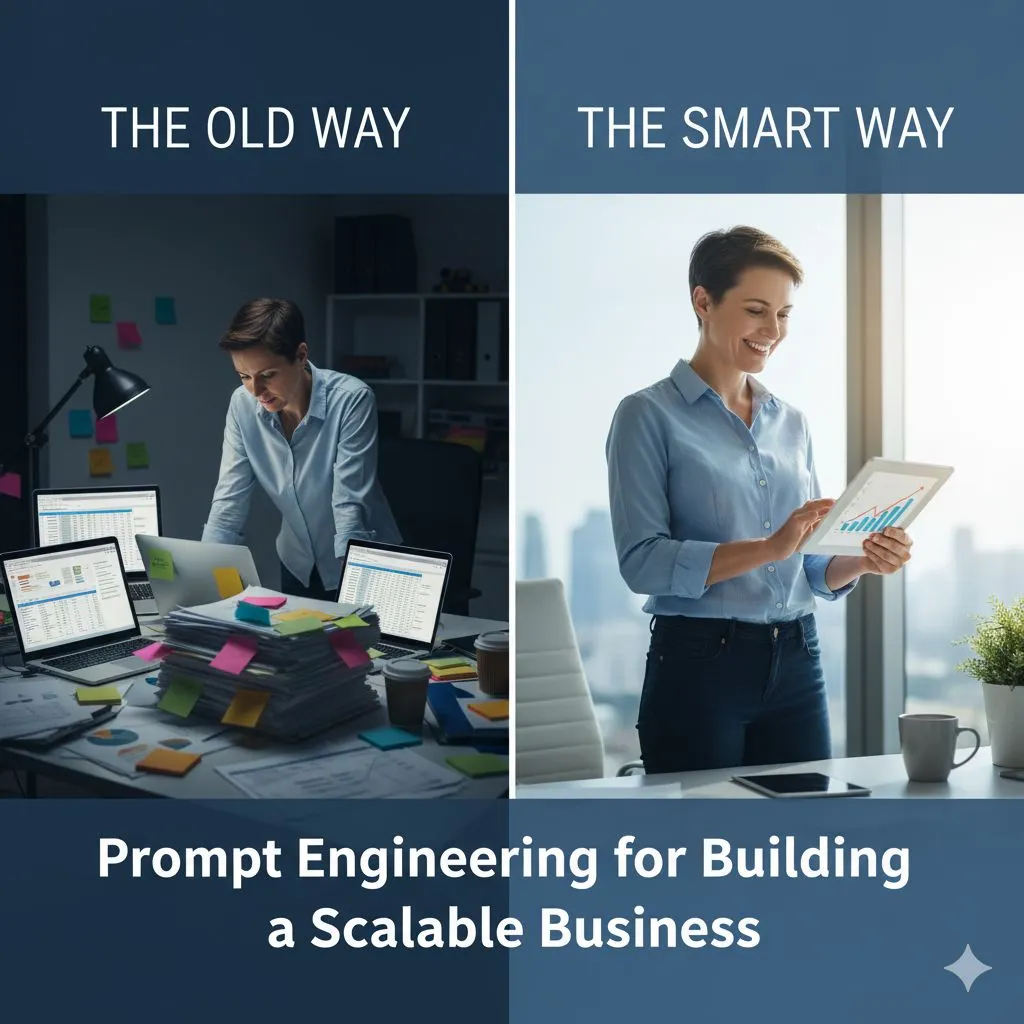
- The Old Way: You spend Sunday acting as the writer, editor, and designer. You manage to post twice a week. You are exhausted, and the content feels rushed.
- The AI Scaling Way: You spend 30 minutes defining a "Core Concept" (e.g., a unique insight or a client case study). You feed this concept into a structured AI workflow (using expert-level prompts).
- Step 1: AI expands the concept into a long-form article.
- Step 2: AI repurposes that article into 5 LinkedIn posts, a Twitter thread, and a newsletter script.
- Step 3: AI generates visual descriptions for the graphics.
You have moved from creating content piece-by-piece to acting as the Editor-in-Chief of your own media company. The output remains high because the original insight came from you; the AI simply handled the formatting and distribution labor. The Small Business Playbook for AI Content Creation lays out the complete system for scaling your content engine across every platform.
2. Operational Efficiency: Automating the "Boring"
Scaling breaks operations. A system that works for 3 clients breaks at 10. Administrative bloat is the silent killer of profitability.
- The Old Way: You manually reply to every lead inquiry, draft every contract from scratch, and manually schedule every meeting.
- The AI Scaling Way: You build a "Context Bank"—a document containing your pricing, service terms, and FAQ. The personal AI assistant delegation guide shows you how to build your Context Bank in under an hour. When a lead comes in, you use AI to draft a personalized response based on their specific inquiry and your Context Bank. You use AI to analyze your time-tracking data to see where you are leaking profit. You use AI to summarize hour-long client meetings into action items and draft the follow-up email immediately.
This allows you to maintain the "high-touch" feeling of a boutique agency without spending hours in your inbox.
3. Data Analysis: CEO-Level Decision Making
Solopreneurs often run on gut feeling because they lack the data teams that big corporations have. Scaling requires data-driven decisions.
- The Old Way: You look at your bank balance to guess if you had a good month.
- The AI Scaling Way: You can upload spreadsheets of your sales data, website traffic, or customer feedback into an AI model. You can ask questions like, "Which client demographic is the most profitable with the least amount of revision time?" or "Analyze these 50 negative reviews and summarize the top three actionable improvements."
Suddenly, you possess the analytical power of a Fortune 500 strategy team, allowing you to pivot faster than your larger competitors.
Calculate your exact time and cost savings with the free AI ROI Calculator for Small Business.
Overcoming the "Trust Gap"
Despite the obvious efficiency gains, a lingering objection remains for the quality-conscious entrepreneur like Alex Rivers: Can I trust it?
There is a valid fear that using AI will make your brand sound generic or "robotic." This is the Trust Gap. If your brand is built on personal expertise, automating it feels risky.
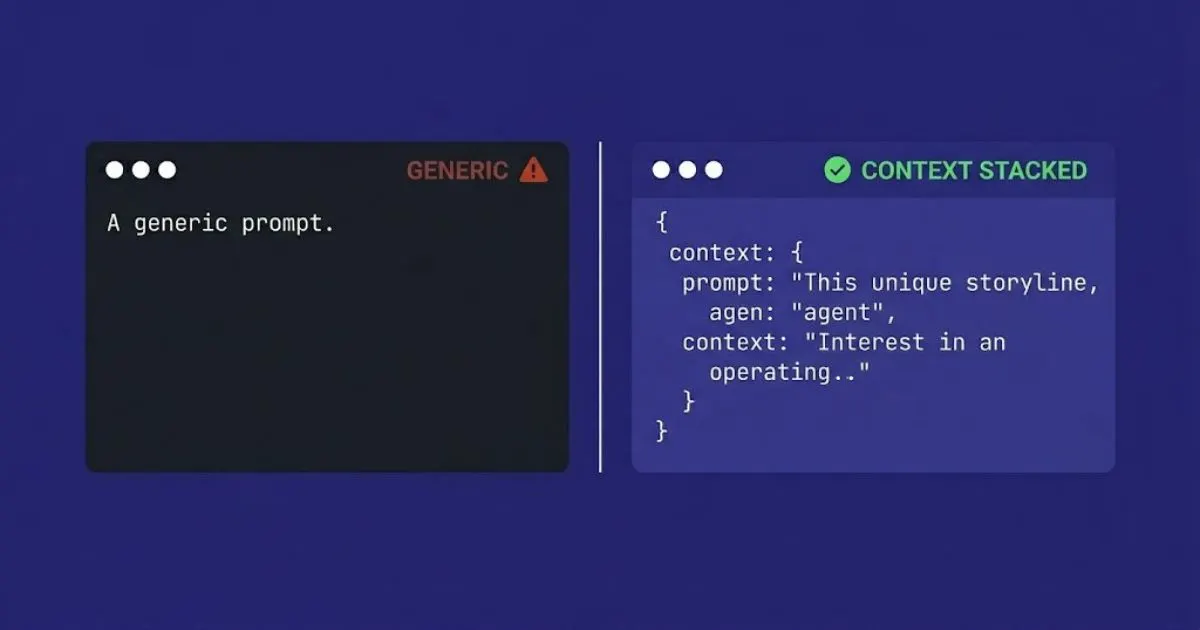
The solution is not to avoid AI, but to master Prompt Engineering as a strategic skill. The quality of the output is strictly determined by the quality of the input.
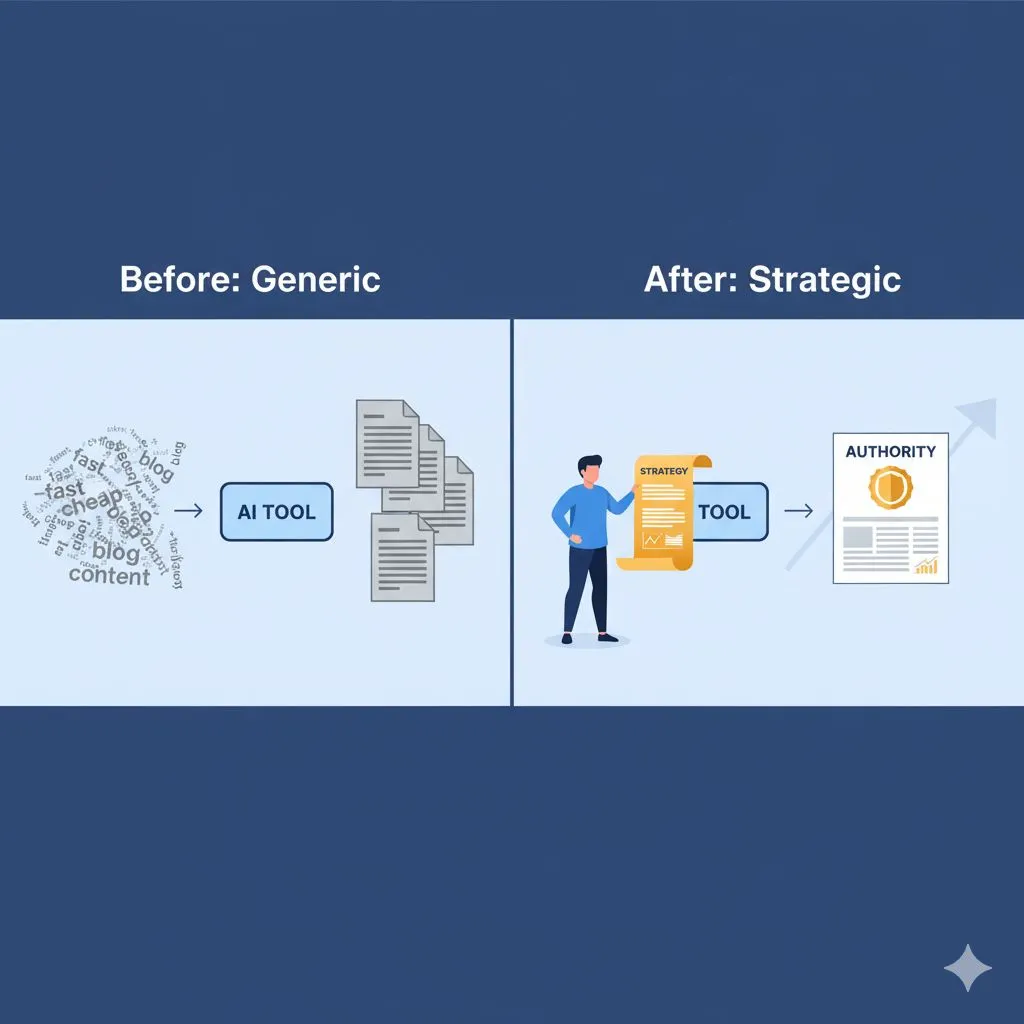
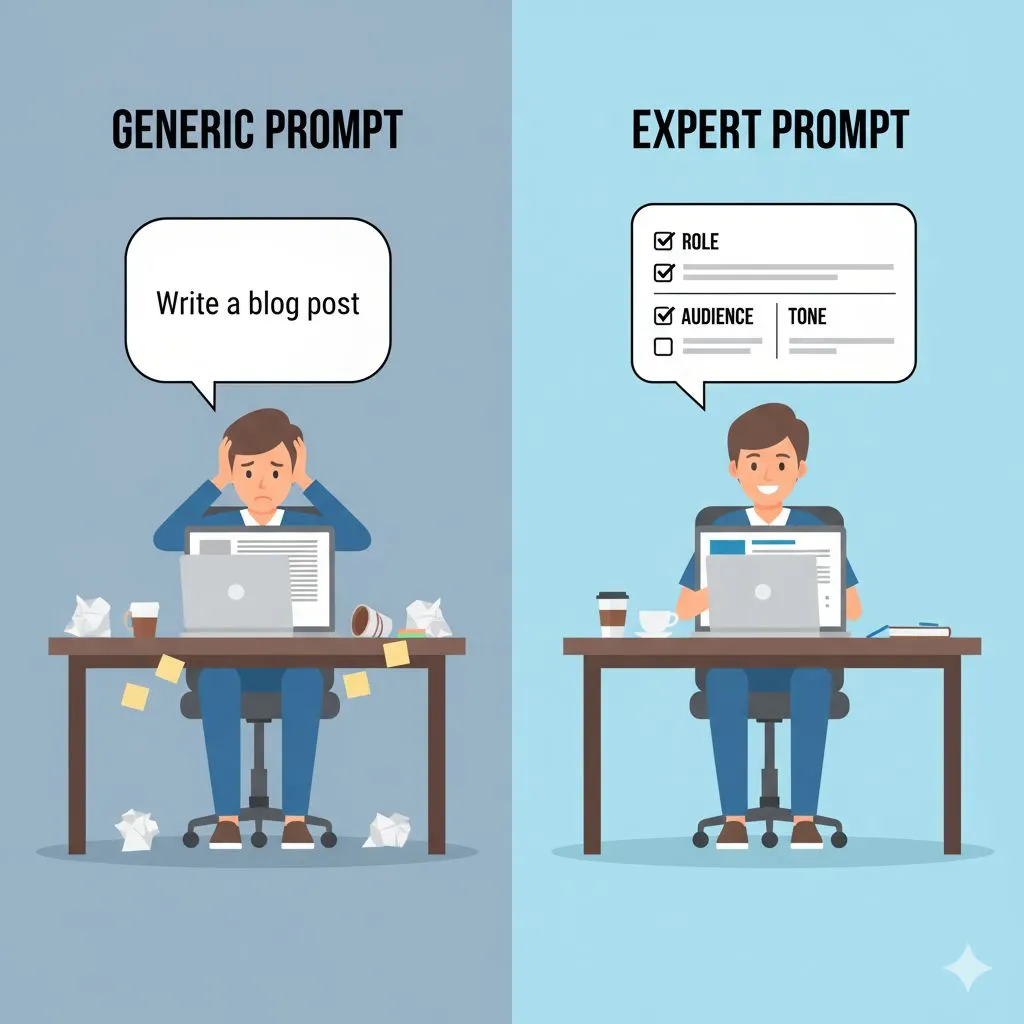
- Generic Input: "Write a marketing email about my consulting services." -> Result: Generic, spammy, unusable.
- Expert Input: "Act as a senior B2B consultant. Write a cold outreach email to a VP of Marketing at a mid-sized SaaS firm. Focus on the pain point of 'lead leakage.' Use a tone that is empathetic but authoritative. Reference the 'Context Switching' concept. Keep it under 150 words." -> Result: Sharp, targeted, professional.
The Human-in-the-Loop (HITL)
To scale safely, you must adopt a "Human-in-the-Loop" workflow. AI does the drafting (the 80% heavy lifting); you do the refining (the 20% high-value polish).
You are not outsourcing your brain. You are using AI to bypass the "Blank Page Syndrome" and the tedious formatting work. You add the nuance, the personal anecdotes, and the final strategic check. This ensures that while your business scales, your brand voice remains authentic.
From Operator to Architect
The ultimate shift is psychological. To succeed in scaling business operations with AI, you must stop identifying as the "doer."
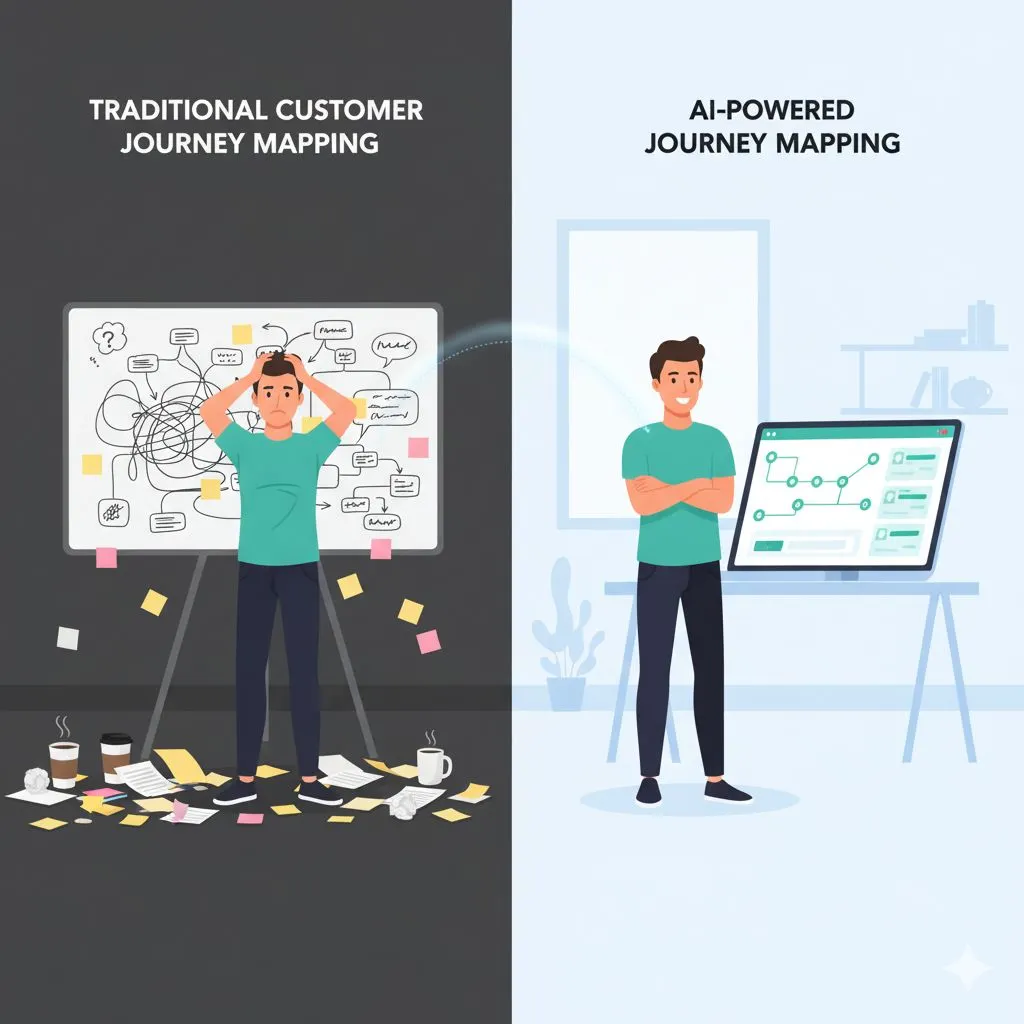
- An Operator prides themselves on how much work they can grind through in a day.
- An Architect prides themselves on the systems they build that allow the work to flow without them. Read the full mindset shift: From Operator to Strategist: Using AI to Escape the Daily Grind.
AI is the toolkit for the Architect. It allows you to build systems that run partially on autopilot, giving you the mental space to focus on the next big growth opportunity—or simply to take a Friday off without guilt.
Conclusion
The solopreneurs who will win in the next decade are not the ones who work the hardest. They are the ones who learn to leverage AI to clone their expertise and execute at a speed and scale that was previously impossible for a small team.
You have a choice. You can continue to hit the ceiling, trading your time for money until you burn out. Or, you can embrace the new infrastructure. You can stop being the bottleneck and start being the strategist.
The technology is ready. The only question is: are you ready to stop hustling and start scaling?
Explore all 11 free AI prompt packs and tools — zero cost, immediate access, no credit card required.
Ready to reclaim your time?
Don't waste months learning prompt engineering by trial and error. We have done the heavy lifting for you.
Get the Ultimate Guide: AI for Small Business and start scaling your operations today.
Or browse all 30 industry-specific prompt packs — see full pricing and what is included.
Further Reading
Scaling Without Hiring: The Solopreneur's Guide to AI
From Operator to Strategist: Using AI to Escape the Daily Grind
Bottlenecks Be Gone: Identifying Workflow Gaps AI Can Fix
How I Saved 10 Hours This Week Using These 3 Prompts
Case Study: Scaling Agency Operations with AI
Case Study: Consulting Business Growth Without Increasing Headcount