Write High-Converting Emails in Minutes: The Prompt-Led Strategy
Write High-Converting Emails in Minutes: The Prompt-Led Strategy
Jan 23, 2026

You know the feeling well. You sit down to write a newsletter or a sales email, intending to knock it out in twenty minutes. An hour later, you’re staring at a blinking cursor, second-guessing your subject line, and wondering if the tone is "professional" enough.
For business owners like you—juggling client delivery, operations, and finance—email marketing often falls to the bottom of the to-do list. It’s a bottleneck. You know you need to stay in front of your audience to grow, but you simply don't have the time to be a full-time copywriter.
This is where the conversation around email marketing AI usually goes wrong. You’ve likely heard the hype: "Click a button, get a million dollars!" But you’re skeptical, and rightly so. Generic AI content often sounds robotic, flat, and painfully obvious.
However, there is a middle ground between staring at a blank page and publishing robotic trash. It’s called the Prompt-Led Strategy.
This approach doesn't replace you; it elevates you. It transforms you from an overworked writer into a strategic director. By using structured, expert-level prompts, you can leverage AI to handle the heavy lifting of drafting and structuring, leaving you free to focus on strategy and connection.
In this guide, we’re going to walk through exactly how to execute a prompt-led strategy to write high-converting emails in minutes—allowing you to scale your communication without scaling your stress levels.
For a complete picture of how AI powers your entire sales and communication system, explore the Complete Guide to AI in Advertising and Sales.
Phase 1: The Setup – Treating AI as Your Junior Copywriter
If you’ve ever tried ChatGPT or similar tools and received a bland, generic response, it wasn’t necessarily the tool’s fault. It was likely a lack of context.
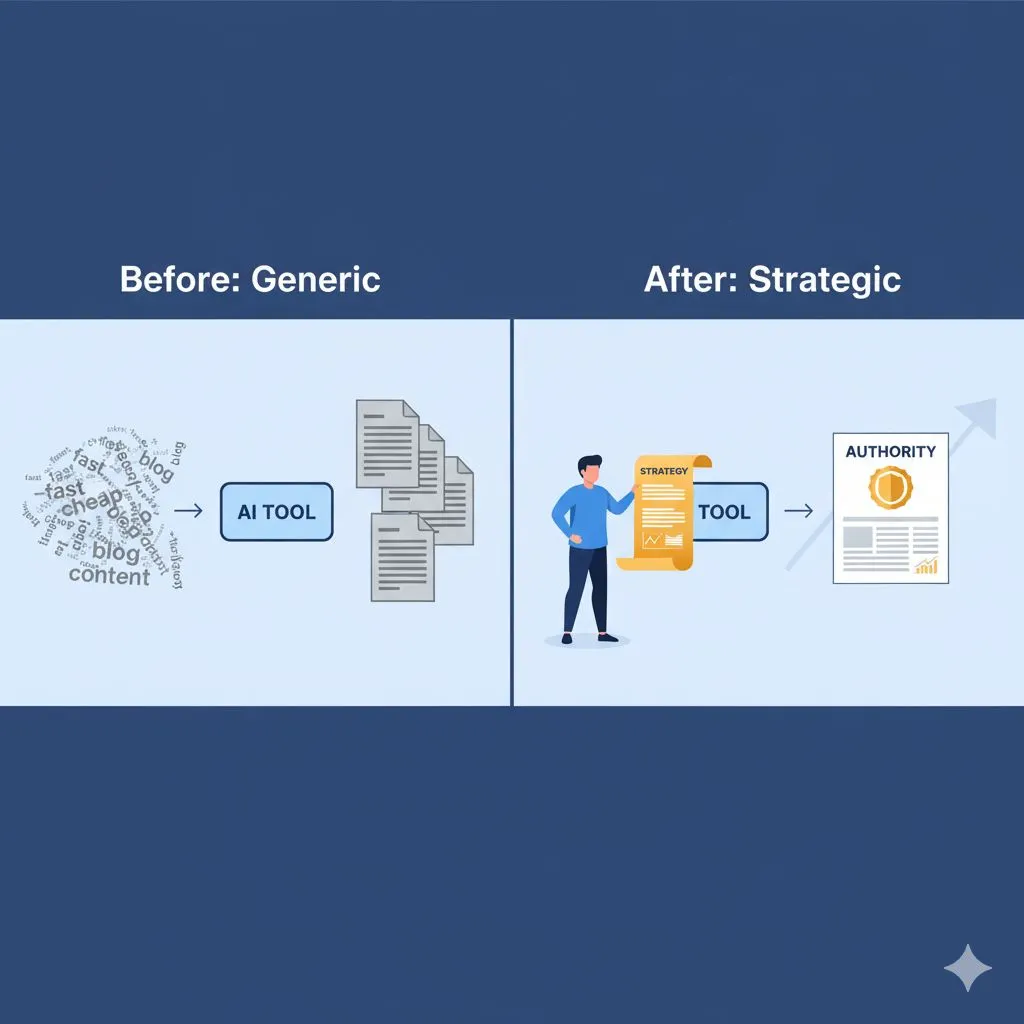
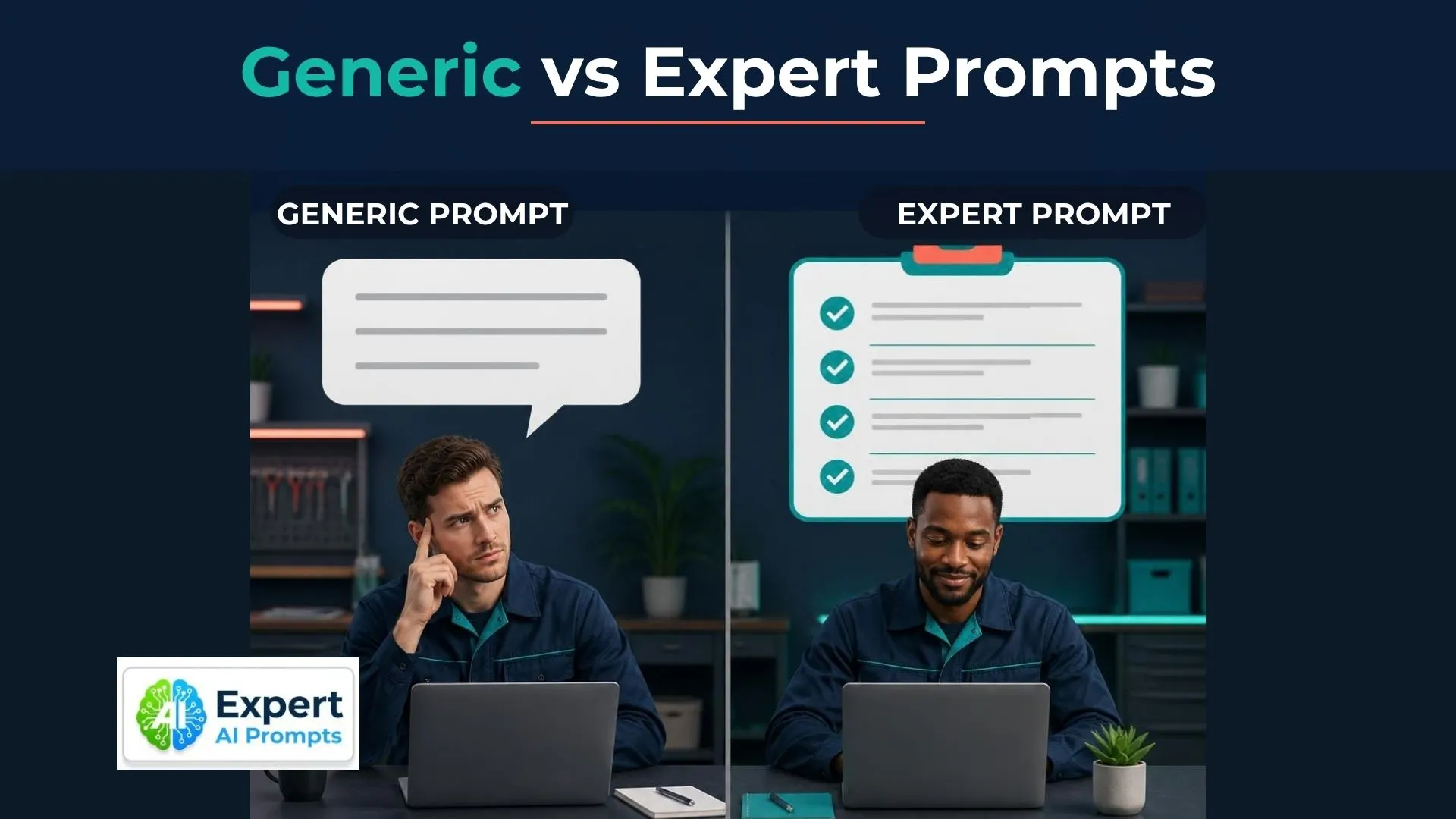
Think of AI not as a magic wand, but as a bright, eager, junior copywriter who just joined your team. If you tell a junior employee, "Write an email about our new service," they will write something vague and ineffective. But if you say, "Write a persuasive email to our existing clients who struggle with time management, introducing our new automation service using a friendly but professional tone," you’ll get a result you can actually use.
The "Garbage In, Garbage Out" Principle
In the world of email marketing AI, the quality of your output is directly tied to the quality of your input (the prompt). To compete with larger players who have dedicated marketing teams, you need to stop asking for "content" and start asking for "strategy."
Your goal isn't just to fill space; it's to build authority and drive ROI. To do that, every interaction with AI needs a foundation.
For the strategic framework behind every high-performance prompt, read the Entrepreneur's Playbook for Prompt Engineering — it builds the foundation your results depend on.
The Formula for High-Converting Prompts
To move fast without sacrificing quality, use this mental checklist for every prompt you write:
- Role: Who is the AI acting as? (e.g., "You are an expert direct-response copywriter.")
- Context: What is the background? (e.g., "We are a boutique consulting firm helping small businesses scale.")
- Task: What exactly do you need? (e.g., "Write a 3-email welcome sequence.")
- Constraint: What are the boundaries? (e.g., "Keep sentences under 20 words. Use a confident, empathetic tone. No jargon.")
By setting these parameters upfront, you strip away the "trial and error" time that plagues so many entrepreneurs. You stop wrestling with the tool and start producing results.
Speed this up even further — download the free 1-Page Perfect Prompt Framework Guide and keep the formula beside you for every writing session.
Phase 2: Strategy & Segmentation (Before You Write)
The biggest mistake overworked entrepreneurs make is diving straight into drafting sentences before they have a strategy. This leads to "rambling" emails that confuse readers and lower conversion rates.
With a Prompt-Led Strategy, you use AI to do the strategic thinking before a single line of copy is written. This ensures every email has a purpose.
Brainstorming Subject Lines That Stop the Scroll
Your email body copy could be Pulitzer Prize-worthy, but it doesn't matter if nobody opens it. Subject lines are the gatekeepers of ROI. Instead of staring at the ceiling trying to be clever, use email marketing AI to generate volume, then use your intuition to select the best one.
Try this approach:
"Generate 20 subject lines for an email about [Topic]. Make 5 of them curiosity-driven, 5 benefit-driven, 5 urgent/scarcity-driven, and 5 direct. The target audience is busy professionals who value efficiency."
Scanning 20 options takes thirty seconds. Coming up with them on your own takes thirty minutes. This is how you reclaim your time.
Instant Segmentation: Defining Your Avatar
You know your customers better than anyone. But sometimes, when you sit down to write, you forget who specifically you are talking to, and you end up writing to "everyone" (which means you write to no one).
Before drafting, ask your AI tool to put on a "Persona Hat."
"Analyze the following business description: [Insert your business info]. Create a psychological profile for our ideal client, 'Alex.' What keeps Alex up at night regarding [Topic]? What are their skepticism triggers? What is their desired transformation?"
Reading the output instantly re-aligns your brain. It reminds you that you aren't writing to a list; you're writing to a person with real problems. This psychological priming is the difference between a deleted email and a clicked link.
Mapping the Sequence
One-off emails are fine, but sequences build businesses. Whether it's a Welcome Series, a Nurture Sequence, or a Product Launch, you need a flow.
Don't try to hold the whole structure in your head. Ask the AI to outline it first.
"Outline a 5-day email sequence for a new lead. The goal is to move them from 'curious' to 'booked consultation.'
Day 1: Value/Welcome.
Day 2: Agitate the Problem.
Day 3: Case Study/Proof.
Day 4: Overcoming Objections.
Day 5: Hard Call to Action.
For each day, provide a bulleted list of key points to cover."
Now, you have a roadmap. You can look at the outline and see if the logic holds up before you waste time writing paragraphs that don't fit. This creates a streamlined workflow where bottlenecks disappear.
To extend this structure beyond email into your full advertising and sales pipeline, the Complete Guide to AI in Advertising and Sales shows you the whole system.
Phase 3: The Drafting Process – From Blank Page to Polished Draft
Now that you have your persona, your subject lines, and your outline, the actual writing becomes the easiest part. This is where the email marketing AI truly shines as a productivity engine.
We are going to look at three specific types of emails you likely need to send and how to prompt for them effectively.
1. The Welcome Series: Establishing Trust
The moment someone subscribes, the clock starts ticking. You need to validate their decision and establish credibility immediately.
The Prompt Approach:
Don't just ask for a "welcome email." Ask for a connection piece.
"Write a welcome email that validates the user's decision to download our [Lead Magnet]. The tone should be warm, professional, and reassuring. Acknowledge that [Pain Point] is difficult, but they are in the right place. deliver the Lead Magnet link clearly, and end with an open-ended question to encourage a reply."
This prompt ensures the email isn't just a delivery mechanism; it’s a conversation starter.
2. The Nurture Email: Value Without Burnout
Nurture emails keep your list warm. The trap here is over-teaching or becoming boring. You want to be the expert, but you also want to be readable.
The Prompt Approach:
Use a "Story-Lesson" framework.
"Write a newsletter email based on the concept: '[Core Lesson or Myth in your industry].' Start with a short, relatable anecdote about a common mistake people make regarding this. Then, pivot to the solution. Keep paragraphs short (1-2 sentences). Tone: 'Helpful Mentor'."
By forcing the AI to use a specific structure (Anecdote -> Pivot -> Solution), you avoid the "wall of text" that kills engagement.
3. The Sales Email: Driving Action
This is where most entrepreneurs freeze up. You don't want to sound "salesy," but you need to sell. The solution is to use proven copywriting frameworks like PAS (Problem-Agitation-Solution) or AIDA (Attention-Interest-Desire-Action).
The Prompt Approach:
"Write a sales email for [Product/Service] using the PAS Framework.
Problem: Describe the frustration of [Specific Pain Point].
Agitation: Explain the cost of ignoring this problem (time, money, stress).
Solution: Introduce [Product/Service] as the efficient, proven fix.
Include three bullet points of benefits and a clear, singular Call to Action."
Using a framework acts as a guardrail. It prevents the AI from rambling and ensures the psychological triggers required for a sale are present. You get a draft that is 90% ready to send, grounded in improved credibility and strategic framing.
The "Master Prompt" Shortcut
To truly scale this, you shouldn't be typing these prompts from scratch every time. Create a "Master Prompt" document. Paste your business context, your tone guidelines, and your customer persona at the top. When you start a new chat, paste that context first. Then, simply ask for the email you need.
This "Context Loading" technique ensures that every output sounds like your brand, not a generic robot. For a step-by-step system to build and preserve your Master Prompt, see Automated Prompt Engineering: The Shortcut for Consistent AI Outputs It allows you to produce expert-level content consistently, even on your busiest days.
Phase 4: The Human Polish – Refining for Connection
We have leveraged email marketing AI to strategize, outline, and draft. You have saved hours of work. But you are not done yet.
To truly stand out and compete with larger players, you must apply the "Human Polish." This is the step that separates the lazy marketers from the smart strategists.
The 80/20 Rule
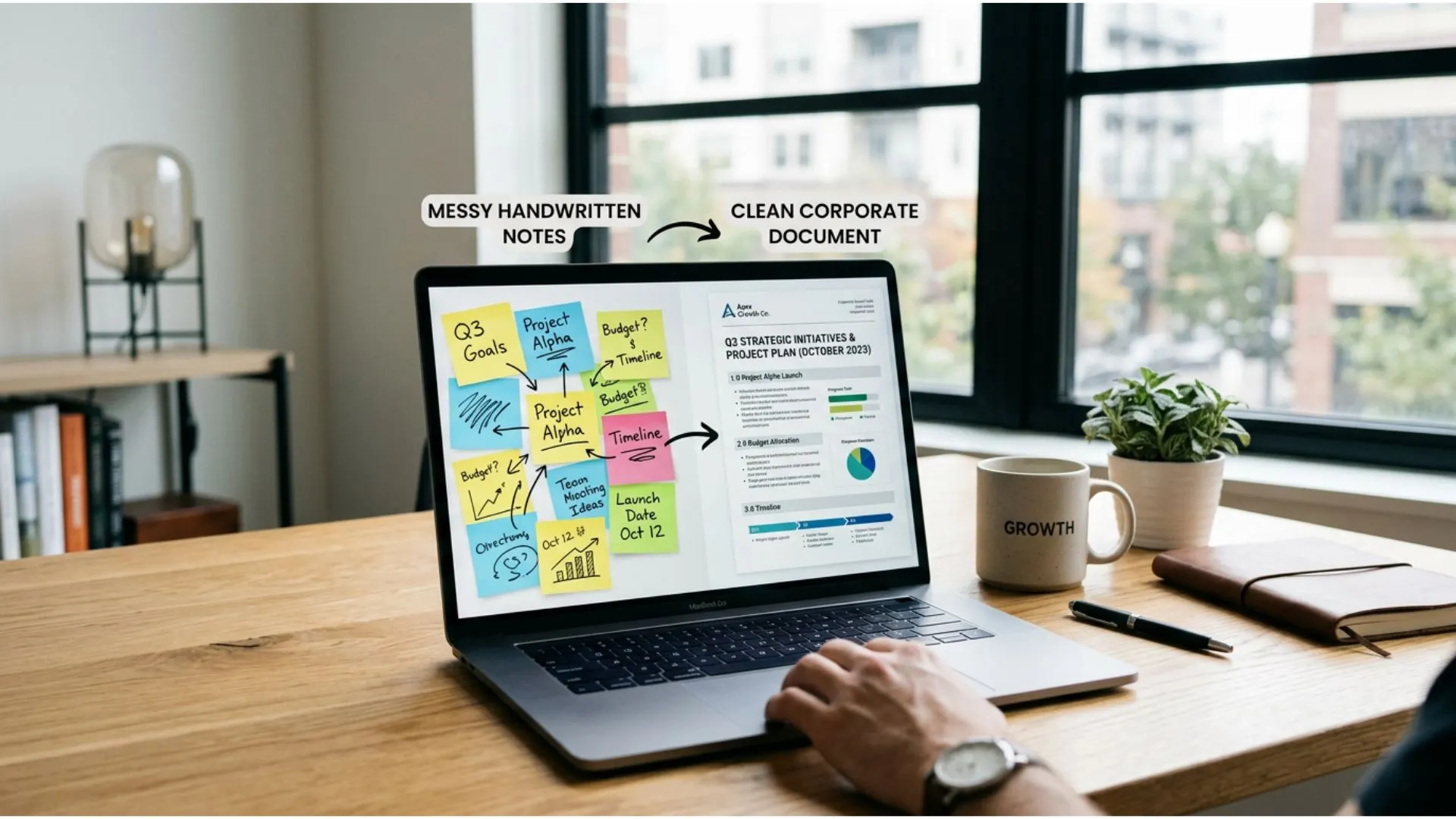
Treat the AI output as a solid "B+" draft. It has done 80% of the work (structure, clarity, phrasing). Your job is the final 20%: injecting your personality, verifying facts, and ensuring the tone matches your specific relationship with your audience.
Spotting and Fixing "AI-Speak"
Current AI models have "tells"—words they overuse. If you see words like "unlock," "unleash," "delve," "game-changer," or "tapestry," delete them. Replace them with simple, conversational language.
- AI: "Unlock your potential and unleash a new era of productivity."
- You (Edit): "Stop wasting time and finally get your weekends back."
See the difference? The edit is grounded, real, and speaks to Alex’s desire for time freedom.
For a structured approach to capturing your voice before it drifts, read How to Train AI to Write in Your Brand Voice — it turns the Human Polish step into a repeatable system.
Injecting Empathy
AI can simulate empathy, but it can't feel it. Read the draft aloud. Does it sound like you talking to a client over coffee? If a sentence feels stiff, rewrite it. Add a personal aside, a recent observation from your industry, or a specific detail that only you would know. This nuances your brand perception, proving there is a real expert behind the screen.
Conclusion: From Overworked Operator to Confident Strategist
For too long, small business owners have been told they need to "hustle harder" to compete. But when you are already wearing every hat in your business, working harder isn't an option. You need to work smarter.
Adopting a Prompt-Led Strategy for your email marketing is one of the highest-leverage moves you can make.
- You reclaim time: What took hours now takes minutes.
- You increase consistency: No more "ghosting" your list because you got busy.
- You elevate quality: You are no longer writing from a place of exhaustion; you are editing from a place of strategy.
By using expert-level prompts, you bridge the gap between your limited resources and your ambitious goals. You stop struggling with the blank page and start building a scalable asset that drives revenue while you sleep.
The technology is here. The strategy is proven. The only variable left is how you choose to use it.
Start for free right now — access your free AI resources and get your first win today.
Ready to Upgrade Your Workflow?
You could spend the next few months testing prompts, tweaking variables, and figuring out what works through trial and error. Or, you could skip the learning curve entirely.
We’ve developed a complete toolkit designed specifically for entrepreneurs who want ROI, not research.
Unlock Expert-Level Content in Minutes: Get the Prompt-Led Email Mastery Pack
Stop spinning your wheels. Start scaling your business.
Prefer to browse every industry-specific pack first? See all 30 prompt packs and pricing and find the one built for your business.
Further Reading
Personalization at Scale: The AI Email Strategy
Writing Sales Pages That Convert Using the PAS Framework and AI