Writing Sales Pages That Convert using the PAS Framework and AI
Writing Sales Pages That Convert using the PAS Framework and AI
Jan 29, 2026

If you are like most small business owners, sitting down to write a sales page is the most dread-inducing task on your weekly to-do list.
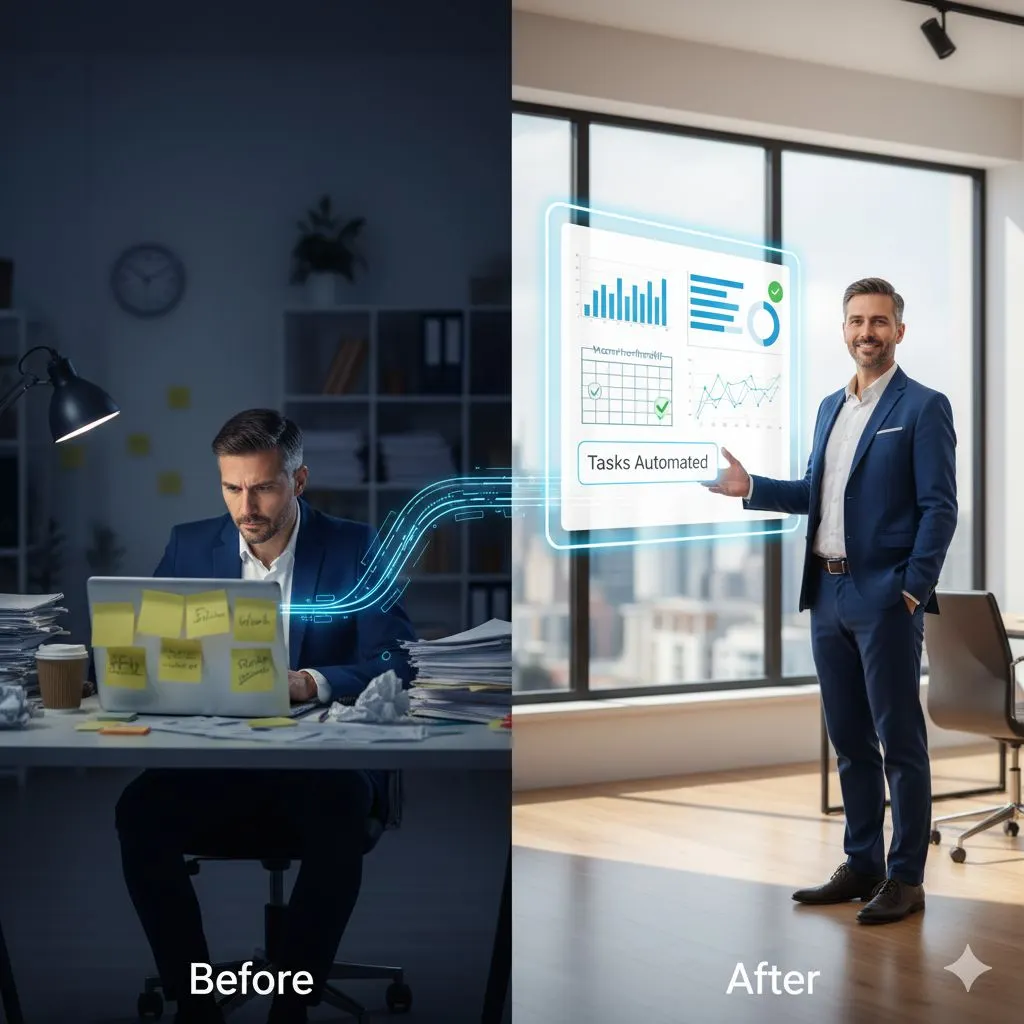
You know the scenario: You have finally carved out an hour between client calls, putting out fires, and managing your team. You open a Google Doc, staring at the blinking cursor. You know your product is excellent. You know it helps people. But getting the words out of your head and onto the screen in a way that convinces a stranger to pull out their credit card? That feels impossible.
For entrepreneurs like you—who wear the hats of CEO, CFO, and CMO simultaneously—copywriting often feels like a bottleneck. You don't have the budget to hire a $10,000/month agency, but you also don't have the time to spend 20 hours agonizing over headlines.
Enter Artificial Intelligence.
For a strategic overview of how AI is reshaping sales and advertising workflows, the complete guide to AI in advertising and sales gives you the architecture behind every tactic in this post.
However, you have likely tried asking ChatGPT to "write a sales page for my consulting business" and been disappointed. The result probably sounded robotic, generic, and frankly, boring. It didn't sound like you, and it certainly didn't sound persuasive.
See exactly why Expert AI Prompts outperforms ChatGPT Plus for scaling a business — the difference is structural, not cosmetic.
The missing link isn't better technology; it’s a better strategy.
AI is a Ferrari engine, but it needs a steering wheel. That steering wheel is the PAS Framework (Problem-Agitation-Solution). When you combine a proven psychological structure with the speed of AI sales copy generation, you stop staring at blank pages and start publishing high-converting assets.
This guide will show you exactly how to use AI not just as a writer, but as a strategist, allowing you to reclaim your time and scale your revenue without the stress.
Understanding the PAS Framework (The "Why")
Before we open any AI tool, we need to understand the architecture we are building. The PAS framework is one of the oldest and most effective formulas in direct response marketing. It works because it mirrors the way humans make decisions: we run away from pain and towards pleasure.
When you feed this structure into an AI, you prevent it from rambling. You give it guardrails. Here is how it breaks down:
P is for Problem
This is where you meet your customer exactly where they are. You aren't talking about your product yet; you are talking about them. You identify the specific struggle, bottleneck, or annoyance that is keeping them up at night.
- Example: "You are spending 12 hours a day working in your business, but your bank account isn't growing."
A is for Agitation
This is the emotional hook. It’s not enough to list a problem; you have to remind the reader of the cost of that problem. Agitation twists the knife—respectfully. It explores the consequences of not taking action.
- Example: "If you keep this pace up, you're going to burn out. And when you stop working, the income stops, leaving you trapped in a job you created for yourself."
S is for Solution
Only after the problem is felt do you introduce the relief. Your product or service is presented not as a "nice to have," but as the logical, inevitable answer to the pain you just described.
- Example: "The Scalable Systems Course helps you automate 50% of your workload so you can double your revenue while working half the hours."
Why this matters for AI:
If you ask AI to "sell my course," it starts listing features immediately. It skips the psychology. By forcing the AI to work through P, then A, then S, you ensure the copy connects emotionally before it tries to close the sale.
Phase 1: The Pre-Flight Check (Garbage In, Garbage Out)
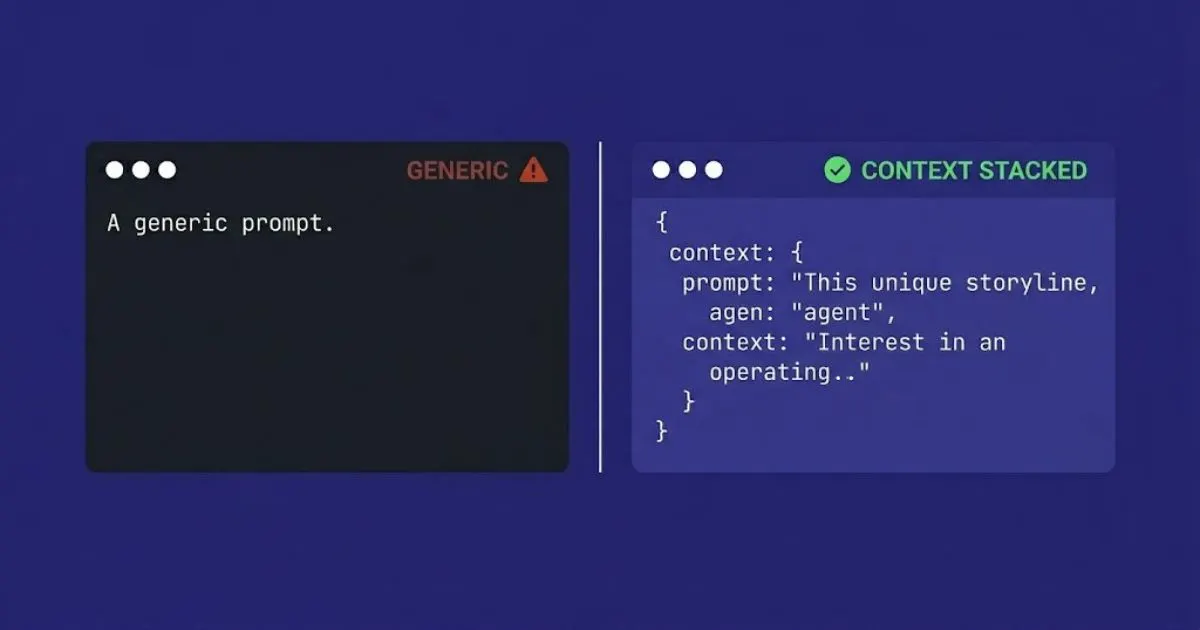
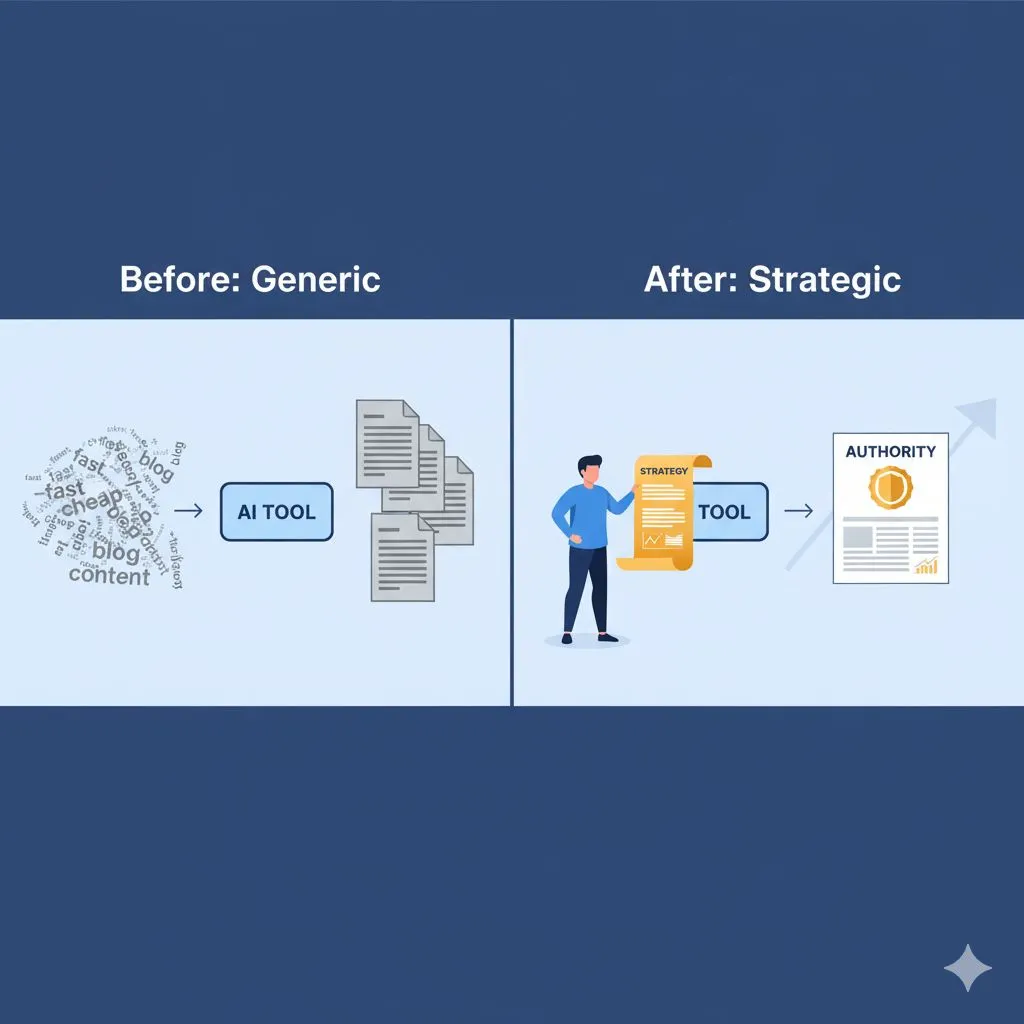
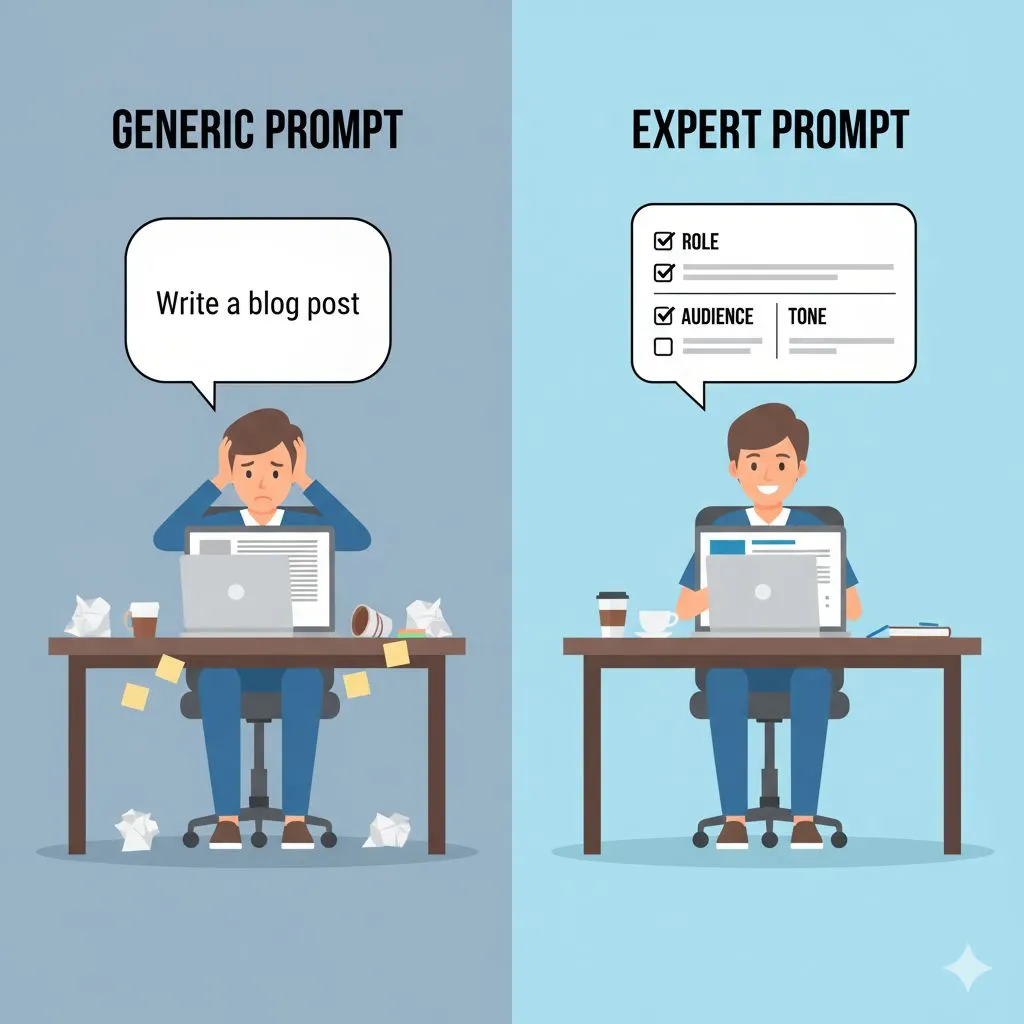
Most entrepreneurs fail with AI because they skip the briefing stage. They treat the AI like a magic 8-ball rather than a junior copywriter. Understanding generic vs strategic AI prompts — and why the difference changes everything is the briefing stage most entrepreneurs skip. If you don't tell the AI exactly who it’s talking to and what it’s selling, it will guess—and it will guess wrong.
To generate expert-level AI sales copy, you need a "Context Block." This is a paragraph of data you paste into the chat before you ask for a single word of copy.
Step 1: Define Your "Who"
Download the free 1-Page Perfect Prompt Framework Guide to have your audience context structured and ready before you open any AI tool.
You aren't selling to "everyone." You are selling to Alex, the overworked business owner, or Sarah, the new mom looking for fitness advice.
- The Prompt Strategy: specific demographics + psychographics (fears and desires).
Step 2: Define The "One Thing"
What is the specific offer? Is it a 6-week coaching program? A SaaS tool? A physical product? Be specific about the features and the deliverables.
Action Step: The Context Prompt
Copy and paste this into your AI tool (ChatGPT, Claude, etc.) to prime it. Do not skip this step.
*"Act as an expert direct-response copywriter. I am going to provide you with context about my product and my target audience. Please acknowledge that you understand, but do not write the copy yet.
Product: [Insert Product Name & Key Features]
Target Audience: [Insert specific persona details, their biggest fear, and their biggest desire]
Goal: To write a high-converting sales page using the PAS Framework."*
Once the AI says "I understand," you are ready to build.
Phase 2: Building the Copy Block-by-Block
We are not going to ask the AI to write the whole page at once. That leads to hallucinations and generic fluff. We are going to build it in modular blocks, starting with the Problem.
Step 1: Mining the Problem
As the business owner, you are often too close to the product. You suffer from the "Curse of Knowledge." You know why your solution is great, but you may have forgotten the visceral feeling of the problem. AI is excellent at brainstorming these angles.
The Prompt:
"Based on the context provided, list 10 specific, painful problems my target audience is facing right now related to [Your Topic]. Focus on tangible issues (e.g., losing money, wasting time) and internal feelings (e.g., anxiety, imposter syndrome). Bullet points only."
The Selection Process:
Review the list. Seven of them might be average, but three will be gold. Look for the "Bleeding Neck" problem—the one that is so urgent the customer feels they must fix it. For real-world examples of how precise problem framing changes copy outcomes, see 5 expert AI prompt examples for copywriting.
- Too Vague: "They want to grow their business."
- Bleeding Neck: "They are losing 3 qualified leads a week because they don't have a follow-up system."
Once you pick the best one, tell the AI:
"We will focus on Problem #3. Write a headline and an opening paragraph for a sales page that calls out this problem directly. Use a sympathetic but direct tone."
Now, you have an opening hook that actually resonates, created in seconds rather than hours.
Step 2: Turning up the Heat (Agitation)
This is the step most business owners are too polite to do effectively. We don't like to make people feel bad. However, in sales, if the customer doesn't feel the weight of the problem, they won't value the solution.
Agitation isn't about fear-mongering; it's about empathy. It's telling the customer, "I know this is hard, and I know where this road leads if you don't get off it."
The Prompt:
"Using the problem we just defined, write an 'Agitation' section. Describe the consequences of leaving this problem unsolved for another 6 months. Focus on the emotional toll and the financial cost. Make the reader feel understood, not judged. Use short, punchy sentences."
Refining the Output:
Watch out for melodrama. If the AI sounds too fatalistic (e.g., "Your business will inevitably crash and burn!"), dial it back. You want realistic consequences.
- Correction Prompt: "That is a bit too dramatic. Rewrite it to focus on the slow, exhausting drain of energy and lost opportunity, rather than total catastrophe."
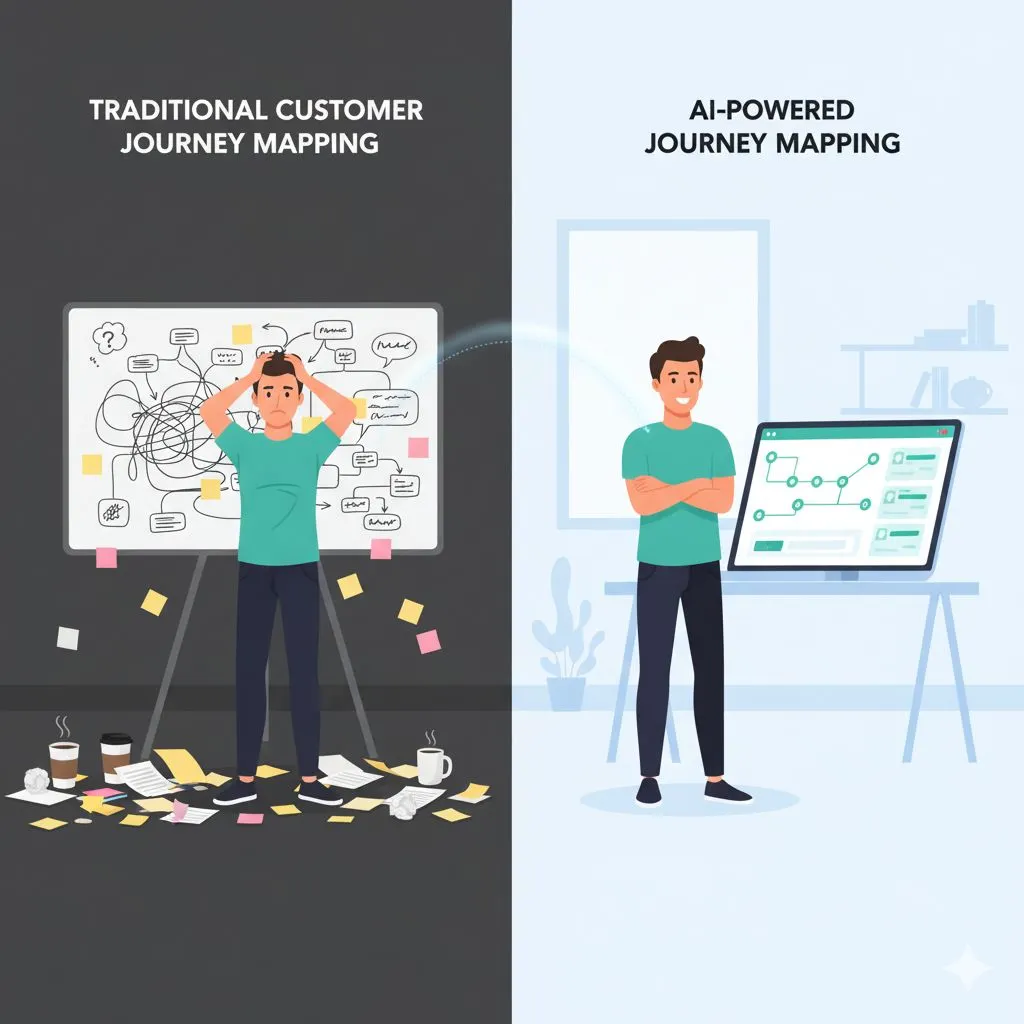
This back-and-forth is where you transition from an "operator" typing words to a "strategist" directing the output. You are saving hours of drafting time while maintaining creative control.
Step 3: The Grand Reveal (Solution)
Now comes the easy part: presenting your offer. However, even here, entrepreneurs get stuck in the weeds. We love our features (the specs, the modules, the hours), but customers buy benefits (the transformation).
You need the AI to translate your "what" into their "so what?"
The Prompt:
"Now, introduce [Product Name] as the solution. Do not list features yet. First, write a transitional paragraph that positions this product as the bridge away from the pain described above. Then, create a bulleted list of 5 key features, but rewrite each feature as a 'Benefit-First' bullet. (e.g., instead of '5 hours of video,' say 'Master the system in one afternoon with concise video lessons')."
Why This Works:
This prompt forces the AI to do the heavy lifting of marketing translation. It connects the Agitation directly to the Solution. For proven benefit-first copy structures ready to deploy, 7 AI prompts for high-converting ad copy gives you tested frameworks for any product type.
For example, if the Agitation was about "wasting time," the Solution bullet shouldn't be "Includes a calendar template." It should be "Reclaim 10 hours a week with our plug-and-play calendar template."
By the end of this step, you have the core skeleton of a sales page:
- The Hook (Problem): "Struggling with X?"
- The Emotion (Agitate): "It’s only going to get worse, and here is what that looks like."
- The Relief (Solution): "Here is the new way, and here is exactly how it makes your life better."
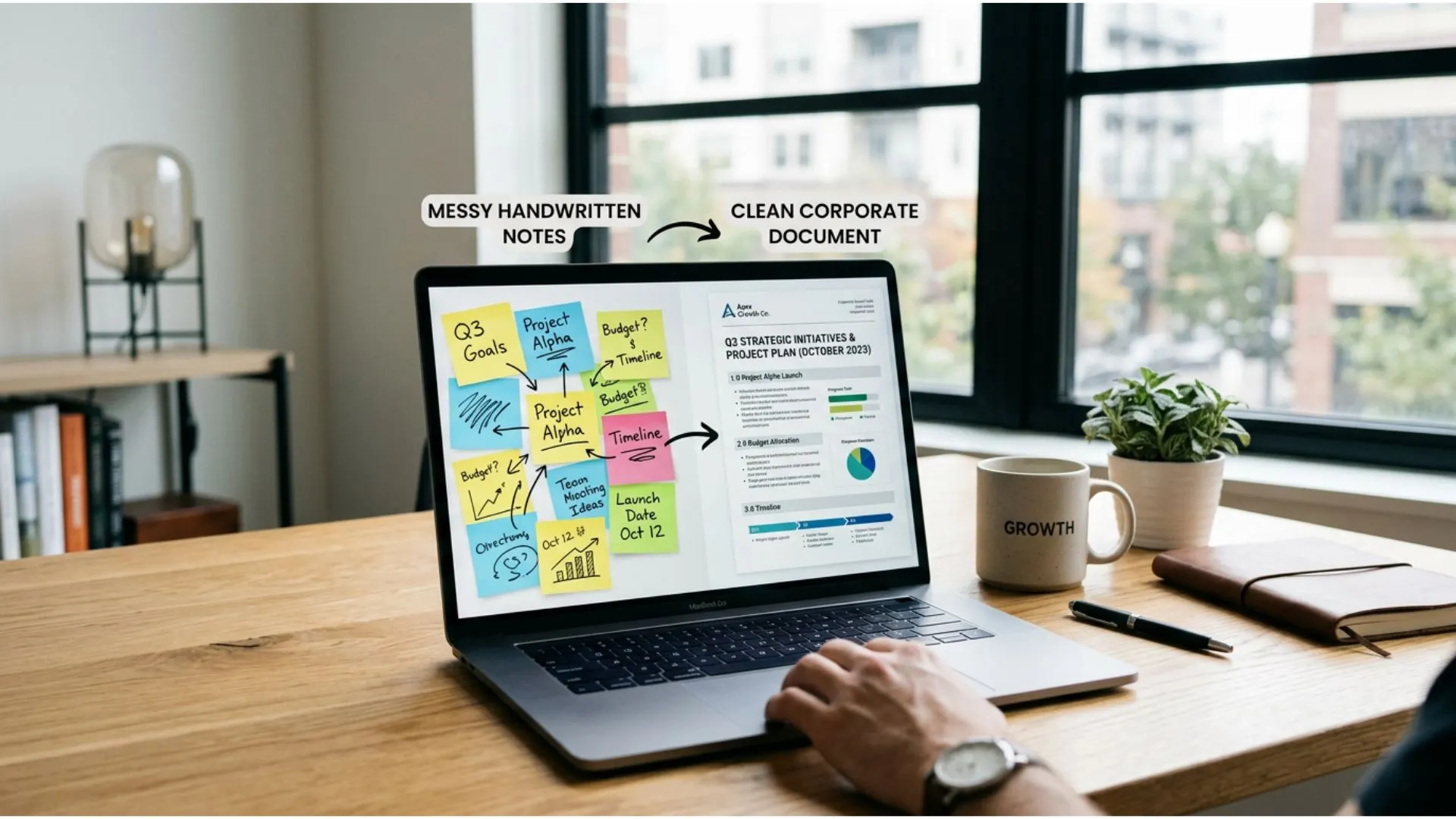
You have done this in perhaps 15 minutes, a task that used to take days. But we aren't done yet. Raw AI copy is rarely ready to publish. It needs the "Human Polish."
Phase 3: The Human Polish (The "Trust Factor")
If you publish raw AI content, you risk damaging your brand credibility. Readers are becoming savvy; they can smell a "ChatGPT Special" from a mile away. To convert skeptics into buyers, you must apply the 80/20 Rule: AI does 80% of the drafting, but you must do the critical 20% of refining.
Spotting "Robot Speak"
AI language models have favorite words that they overuse excessively. These words act as subconscious triggers that tell your reader, "A human didn't write this."
Action Step: Scan your generated copy and ruthlessly edit or delete the following words:
- "Unlock" (e.g., "Unlock your potential")
- "Unleash"
- "Elevate"
- "Game-changer"
- "In today's fast-paced digital landscape"
- "Delve"
- "Tapestry"
Replace these with simple, conversational language. If you wouldn't say it to a friend over coffee, don't leave it on your sales page.
To systematically train your AI to produce copy in your unique brand voice — not generic output — how to train AI to write in your brand voice is the process to follow.
Formatting for Scanners
Your customer persona, someone like Alex Rivers, is busy. They do not read sales pages; they scan them. They are looking for reasons to say "no" so they can close the tab.
Ask the AI to help you format for visual retention.
The Prompt:
"Take the 'Solution' section you just wrote and reformat it for better readability. Use bold text for key takeaways, keep paragraphs under 3 lines, and ensure there is plenty of white space."
This ensures your key value propositions pop off the screen, catering to the time-poor entrepreneur who needs to see ROI immediately.
Conclusion: From Operator to Strategist
Writing high-converting sales copy doesn't require a creative writing degree or a massive budget. It requires a clear understanding of your customer's pain and a system to articulate the solution.
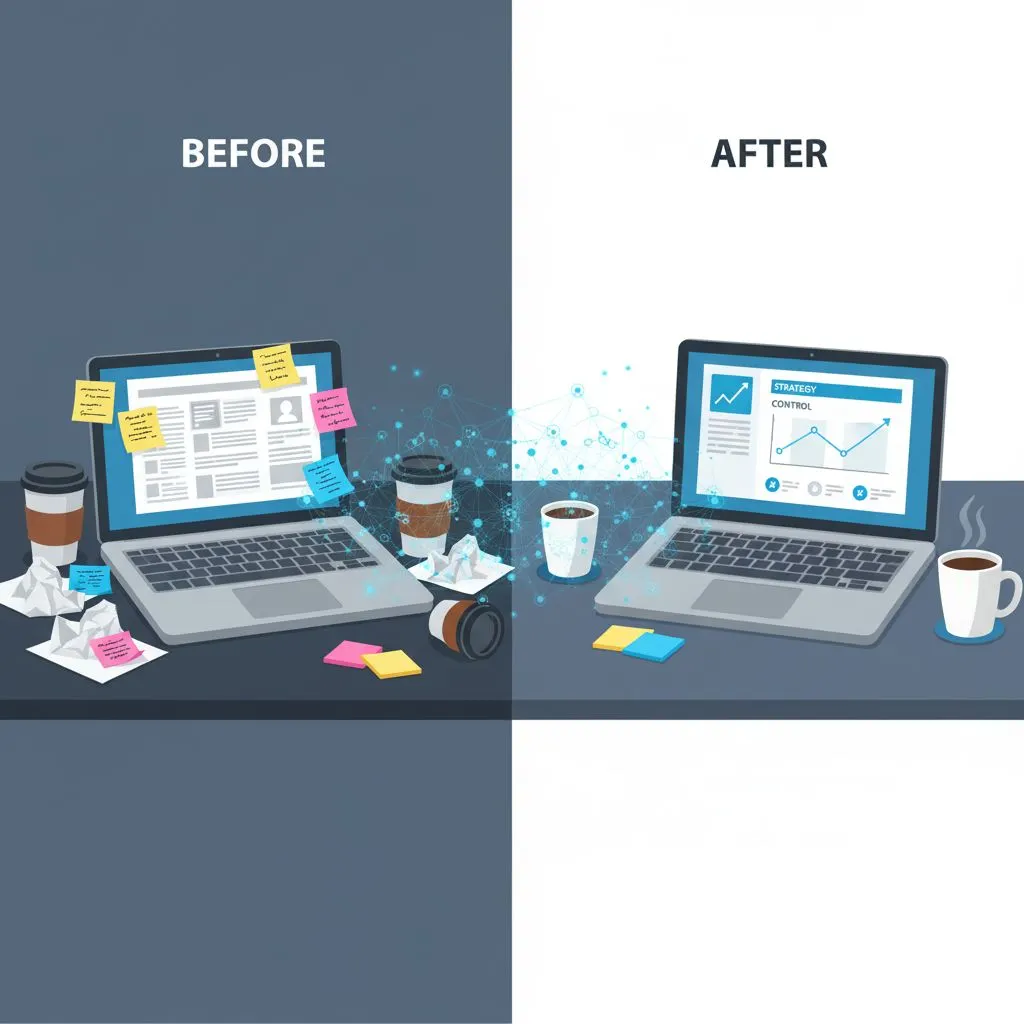
By combining the PAS Framework with the speed of AI, you transform a week-long struggle into a morning task. You stop being the overworked operator staring at a blinking cursor and become the confident strategist directing your digital tools.
The result? You get expert-level assets that build authority, a sales message that actually resonates, and most importantly, you get your time back.
You have the strategy. You have the tools. Now, it’s time to stop hustling and start scaling.
Ready to Scale Faster?
Knowing the framework is the first step, but having the exact prompts at your fingertips is the ultimate shortcut.
Not ready to invest yet? Explore 11 free AI prompt resources — no credit card, no commitment, instant access.
If you want to skip the trial-and-error and get access to 50+ pre-engineered prompts designed specifically to generate leads, write emails, and build sales pages that convert, we have done the heavy lifting for you.
Get the Sales Prompt Playbook for AI Copywriting
Don't let another day go by staring at a blank page. Grab the playbook, copy, paste, and start growing.
Ready to explore the full range? Browse all 30 industry-specific prompt packs and pricing.
Further Reading
Stop Wasting Ad Spend: Writing High-ROI Copy with Precision Prompts
Copywriting 2.0: Blending Human Creativity with AI Speed
10 Perfect Prompt Examples for Marketing Copy
The Complete Guide to AI in Advertising and Sales
Ad Copy Pros — AI Prompt Pack for High-Converting Advertising Copy