Beyond ChatGPT: Why You Need Specialized Prompts
Beyond ChatGPT: Why You Need Specialized Prompts
Jan 28, 2026

The Gap Between Potential and Performance & The "Generic Trap"
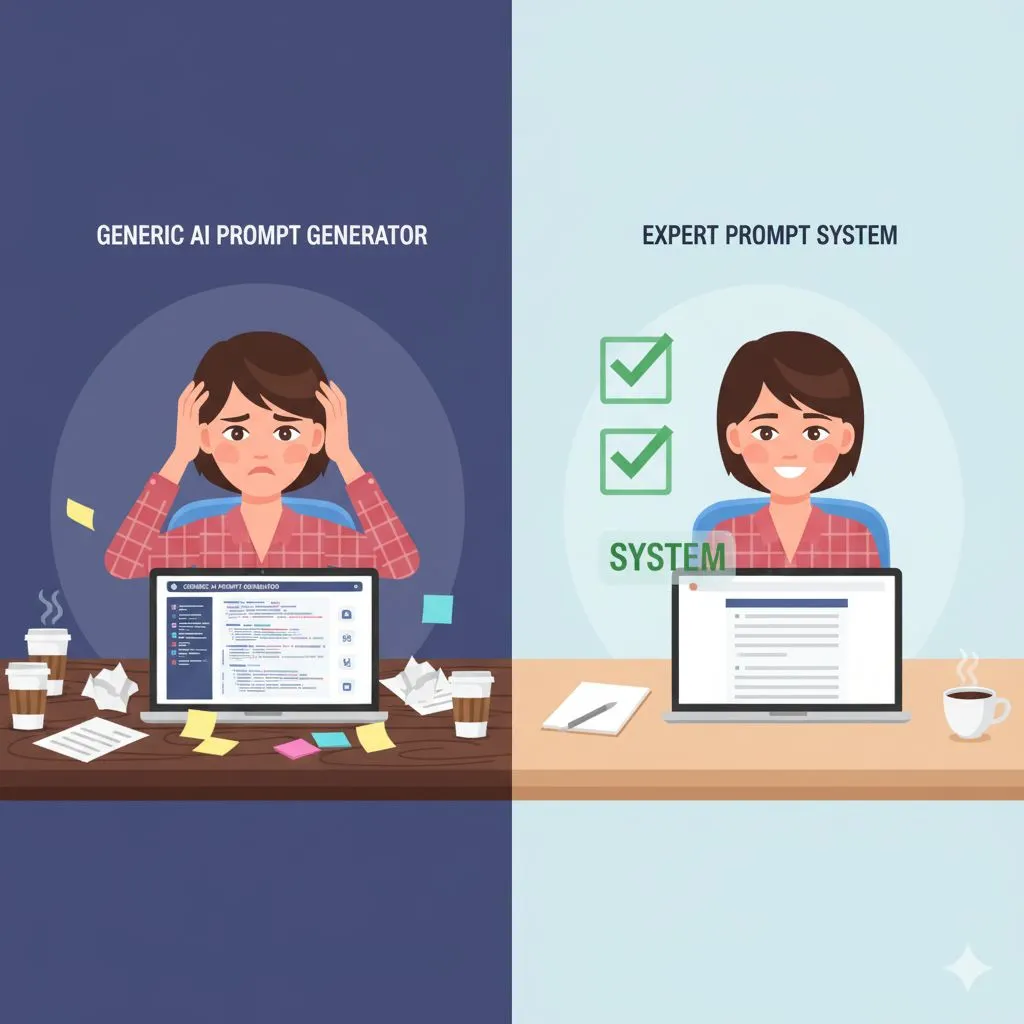
You’ve likely been there. It’s 9:00 PM, the office is quiet, and you’re staring at the blinking cursor of a ChatGPT window. You know this tool is supposed to be the revolution that levels the playing field for your business. You’ve heard the hype: "ChatGPT for marketing is the future," "AI will replace copywriters," and "Scale your business in minutes."
So, you type in a command: "Write a marketing plan for my consulting business."
The AI spits out 500 words instantly. You read it. It’s grammatically correct. It’s structured. But as you read closer, your heart sinks. It’s generic. It suggests things you tried three years ago. It lacks the nuance of your specific industry, the voice of your brand, and the strategic bite required to compete with the larger agencies in your niche.
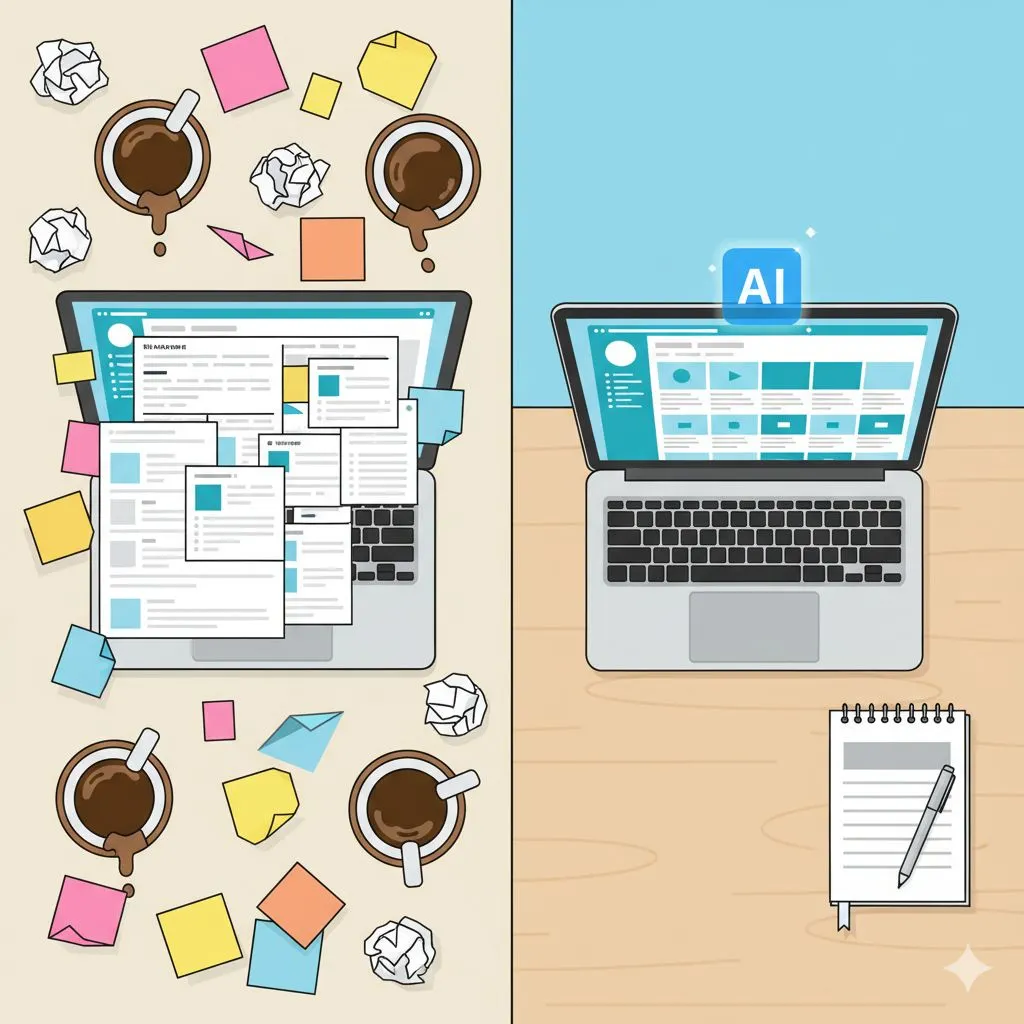
You spend the next hour rewriting it, tweaking sentences, and adding actual substance. By 10:30 PM, you close your laptop, exhausted, wondering if AI is actually saving you time or just giving you a different kind of homework.
This is the reality for countless small business owners and content creators like you, Alex. You are ambitious and tech-savvy enough to know AI is powerful, but stuck in the "Generic Trap." The problem isn’t the AI itself; the technology is a Ferrari engine. The problem is that most people are trying to drive that Ferrari using a bicycle manual.
To move from "playing with tech" to actually scaling your operations, you need to look beyond the basic chat interface. You need to understand that the magic doesn't lie in the tool, but in the instructions you give it. This is why you need specialized prompts.
The "Generic Trap": Why Standard Prompts Fail Your Brand
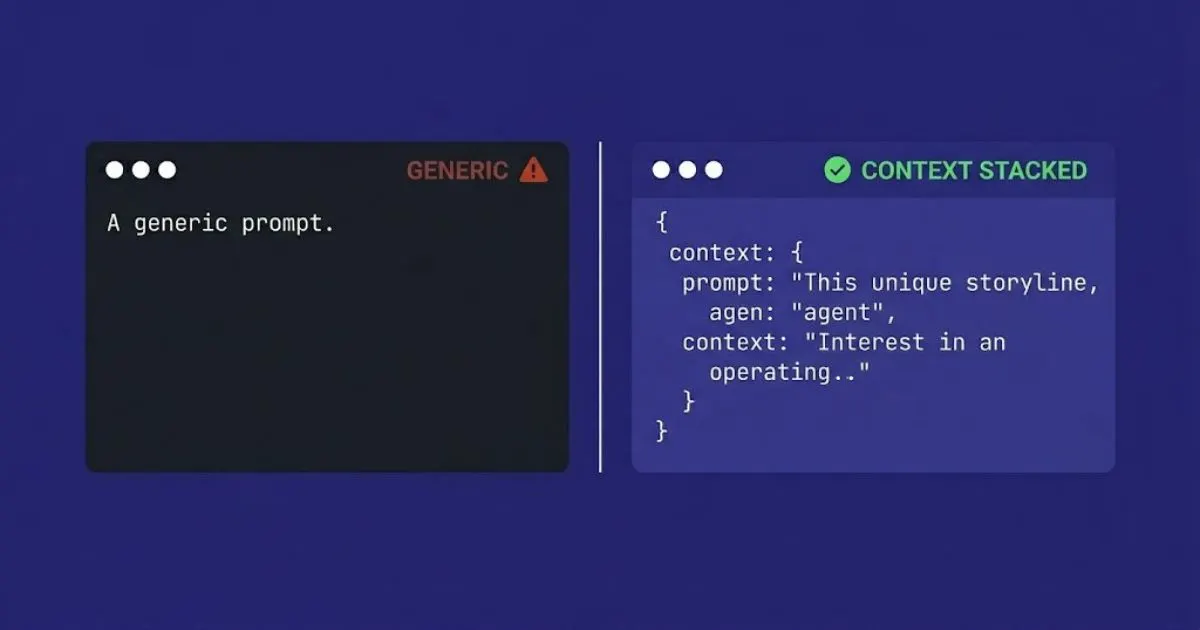
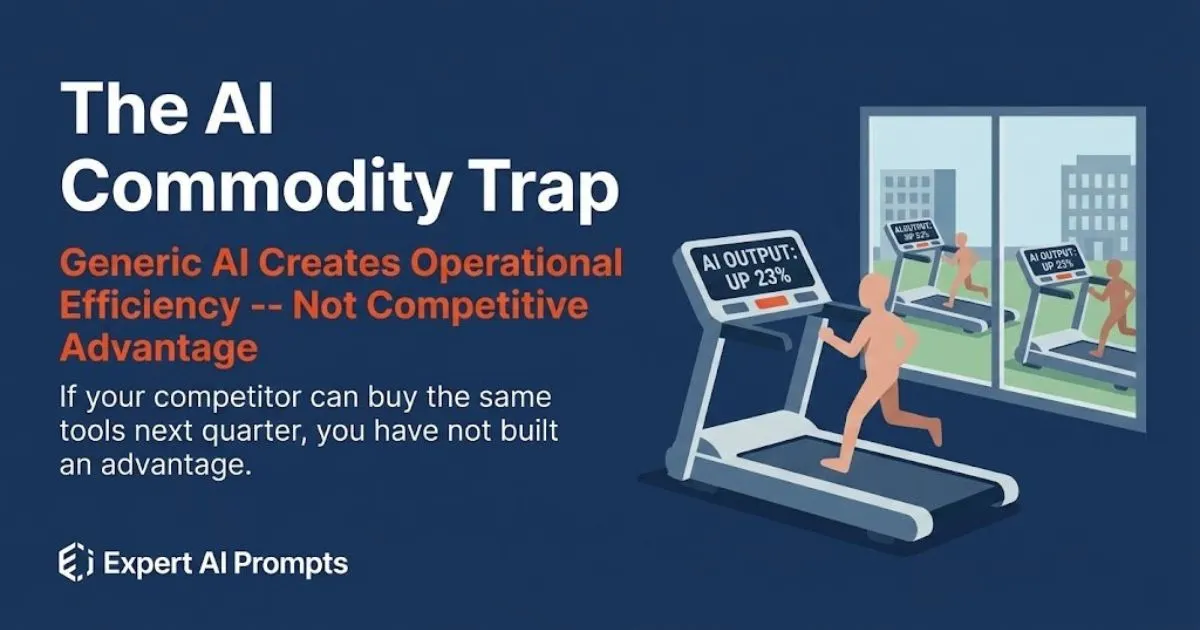
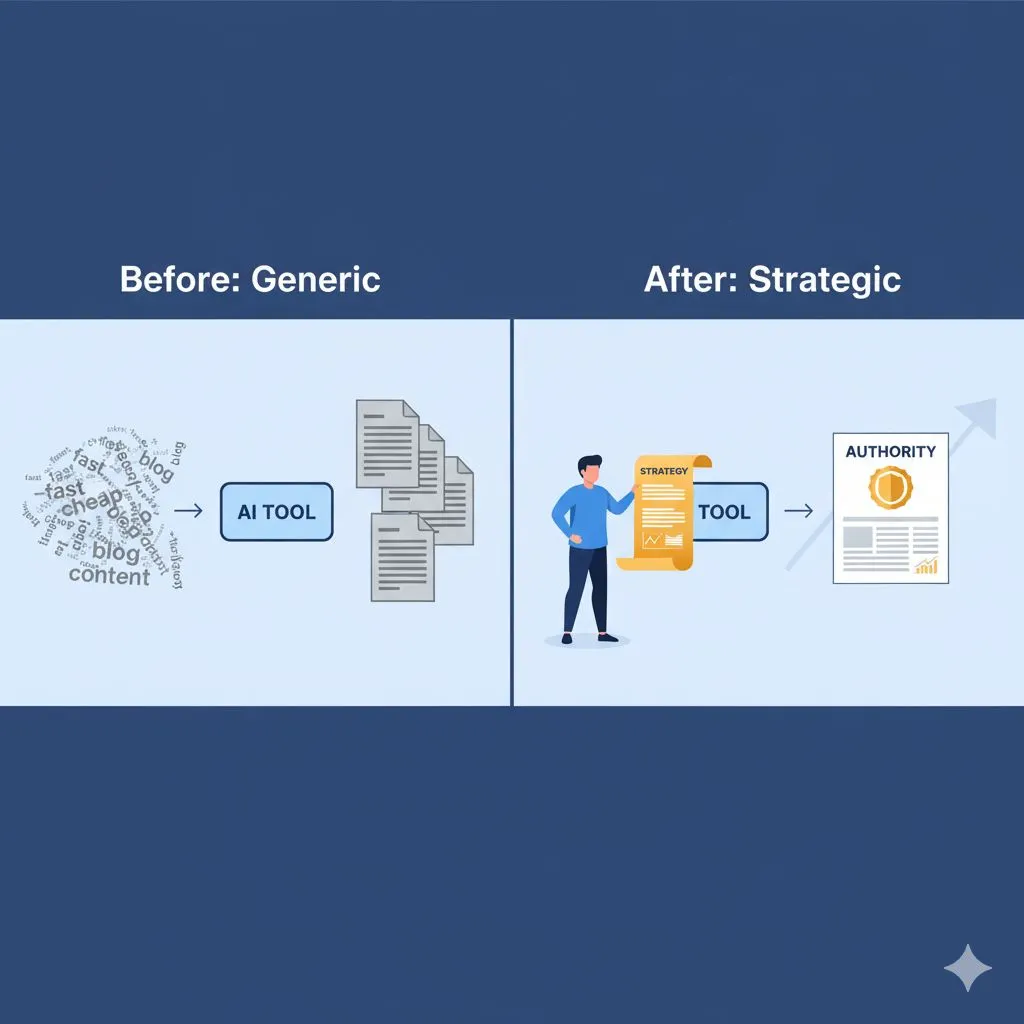
When you use ChatGPT for marketing with simple, one-sentence instructions, you are essentially asking the AI to guess your strategy. Since Large Language Models (LLMs) are designed to predict the next most likely word based on the average of the internet, a generic prompt yields an average result.
For a business trying to stand out, "average" is a death sentence.
There are three critical failures that occur when you rely on basic prompting:
- The Hallucination of Value: Basic prompts often result in surface-level content that looks good at a glance but falls apart under scrutiny. It’s the "fluff" content that fills up a page but fails to convert a visitor into a client.
- The Brand Identity Crisis: If you ask for a "professional email," the AI defaults to a stiff, corporate tone that sounds like a robot. If you’re a dynamic, innovative brand, this disconnect erodes trust with your audience. You end up sounding like everyone else because you’re using the same default settings as everyone else.
- The Time-Suck Paradox: This is the most painful one for the overworked entrepreneur. The promise of AI is time freedom. But if you have to spend 45 minutes editing a blog post that the AI wrote in 30 seconds, you haven't saved time—you’ve just shifted your labor from drafting to editing.
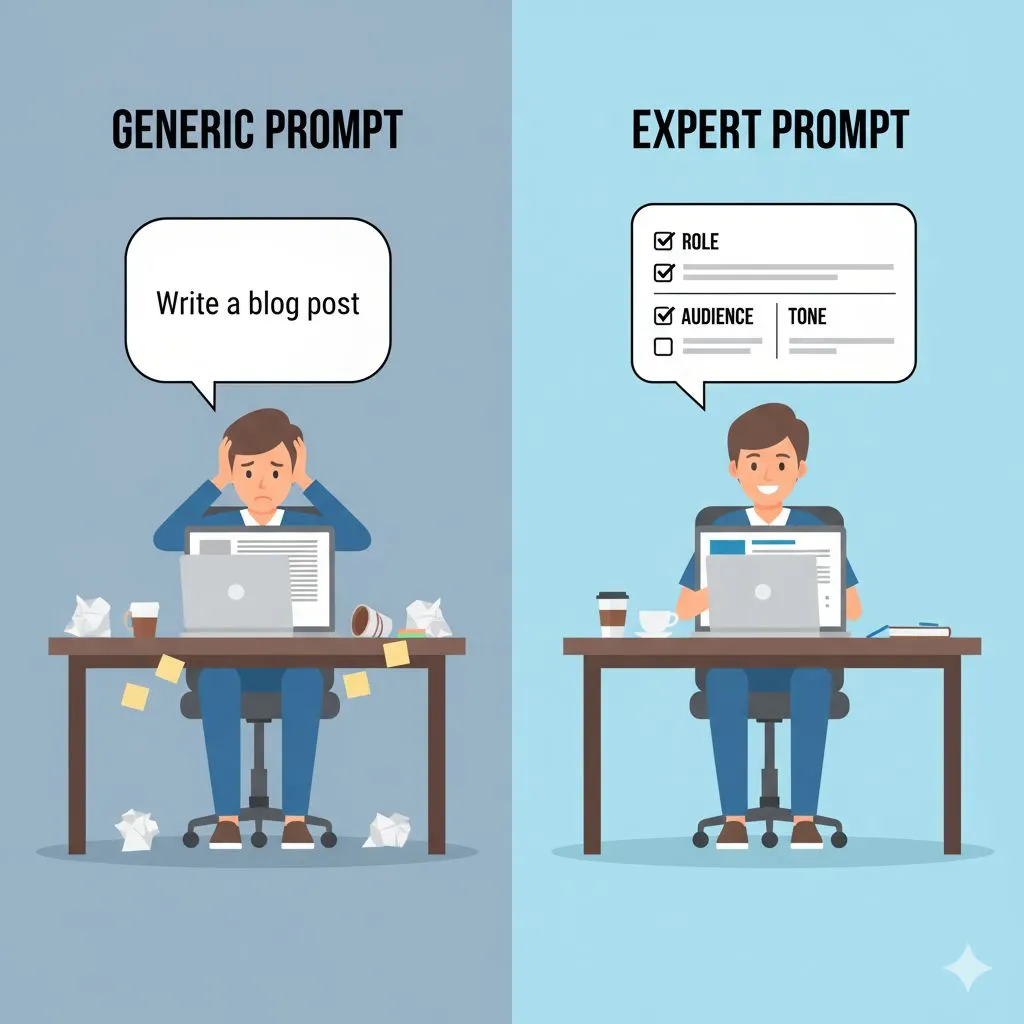
For a direct side-by-side breakdown of how these failures compare to strategic prompt outputs, generic vs. strategic AI prompts compared shows the real cost to your business.
Real growth happens when you stop treating AI like a magic 8-ball and start treating it like a highly skilled employee that requires specific, strategic management.
The Mechanics of Specialization
To escape the Generic Trap, we have to change how we interact with the machine. We need to move from "commands" to "specialized prompts." But what exactly makes a prompt "specialized"?
Think of it this way: If you hired a junior marketing intern and told them, "Go write some social media posts," you would get erratic results. However, if you hired a senior strategist and gave them a creative brief including the target audience, tone of voice, key objectives, and formatting requirements, you would get expert-level work.
Specialized prompts act as that creative brief. They are engineered instructions that force the AI out of its "average" mode and into a specific role.
The Anatomy of an Expert Prompt
A specialized prompt isn't just a longer sentence; it is a structured set of data points designed to constrain the AI’s focus. Here is the framework that separates a generic user from a power user:
1. Role & Persona Assignment
Instead of just asking for text, you assign a persona.
- Generic: "Write an ad for my product."
- Specialized: "Act as a Senior Direct Response Copywriter with 10 years of experience in SaaS sales. Your writing style is punchy, persuasive, and focuses heavily on psychological triggers."
- Why it works: This tells the AI which subset of its massive database to prioritize. It stops pulling from "general internet text" and starts mimicking high-converting sales copy.
Entrepreneurs who want the complete system for applying this framework across all content types will find the full methodology in the Entrepreneurs' Playbook for Prompt Engineering. If direct response ad copy is a recurring business priority, the Ad Copy Pros AI Prompt Toolkit delivers 50 campaign-ready prompts purpose-built for high-converting copy.
2. Context & Objectives
You must feed the AI the "Why."
- Specialized: "Our goal is to drive sign-ups for a webinar targeting overworked small business owners. The pain point is 'lack of time.' The desired outcome is for the reader to feel understood, then relieved that a solution exists."
- Why it works: This gives the content emotional resonance. The AI creates a narrative arc rather than a list of features.
3. Constraints & Formatting
This is where you regain your time.
- Specialized: "Do not use hashtags. Keep paragraphs under two sentences for readability. Output the result in a Markdown table with columns for 'Hook,' 'Body,' and 'Call to Action'."
- Why it works: By defining the negative constraints (what not to do) and the format, you eliminate the need for reformatting the output later. It comes out ready to paste.
4. Iterative Logic
Great specialized prompts often include a feedback loop. They might ask the AI to "Critique your own work before outputting the final version" or "Generate three variations ranging from conservative to aggressive." This forces the model to refine its own thinking before you ever see the result.
By mastering these mechanics, you transform ChatGPT from a novelty toy into a reliable business asset. You stop hoping for a good result and start engineering it.
Efficiency vs. Effectiveness
For the solopreneur or small team leader, there is a distinct difference between efficiency (doing things fast) and effectiveness (doing the right things well).
In the early days of the AI boom, the obsession was purely on speed. "Write 100 blog posts in an hour!" was the rallying cry. But for someone like you, Alex—who values credibility and ROI—churning out 100 pieces of garbage is worse than doing nothing. It dilutes your brand and clogs your channels with noise.
For entrepreneurs who want to quantify whether AI investment is genuinely delivering returns, the ROI, Pricing and Economic Value resource hub provides the frameworks and calculators to measure it accurately.
Specialized prompts bridge the gap. They allow you to be efficient and effective simultaneously.
Case Study: The Newsletter Strategy
Let’s look at a practical example of how this plays out in a typical week for a digital entrepreneur.
Scenario A: The Generic Approach
You need a newsletter for Tuesday. You’re busy. You ask ChatGPT: "Write a newsletter about productivity tips."
- Result: A generic list of tips like "Drink water" and "Make a to-do list."
- Impact: Open rates drop. Subscribers feel like they are reading spam. You realize it’s not good enough, so you rewrite the whole thing.
- Total Time: 1 hour (5 mins prompting, 55 mins fixing).
- ROI: Low/Negative.
Scenario B: The Specialized Prompt Approach
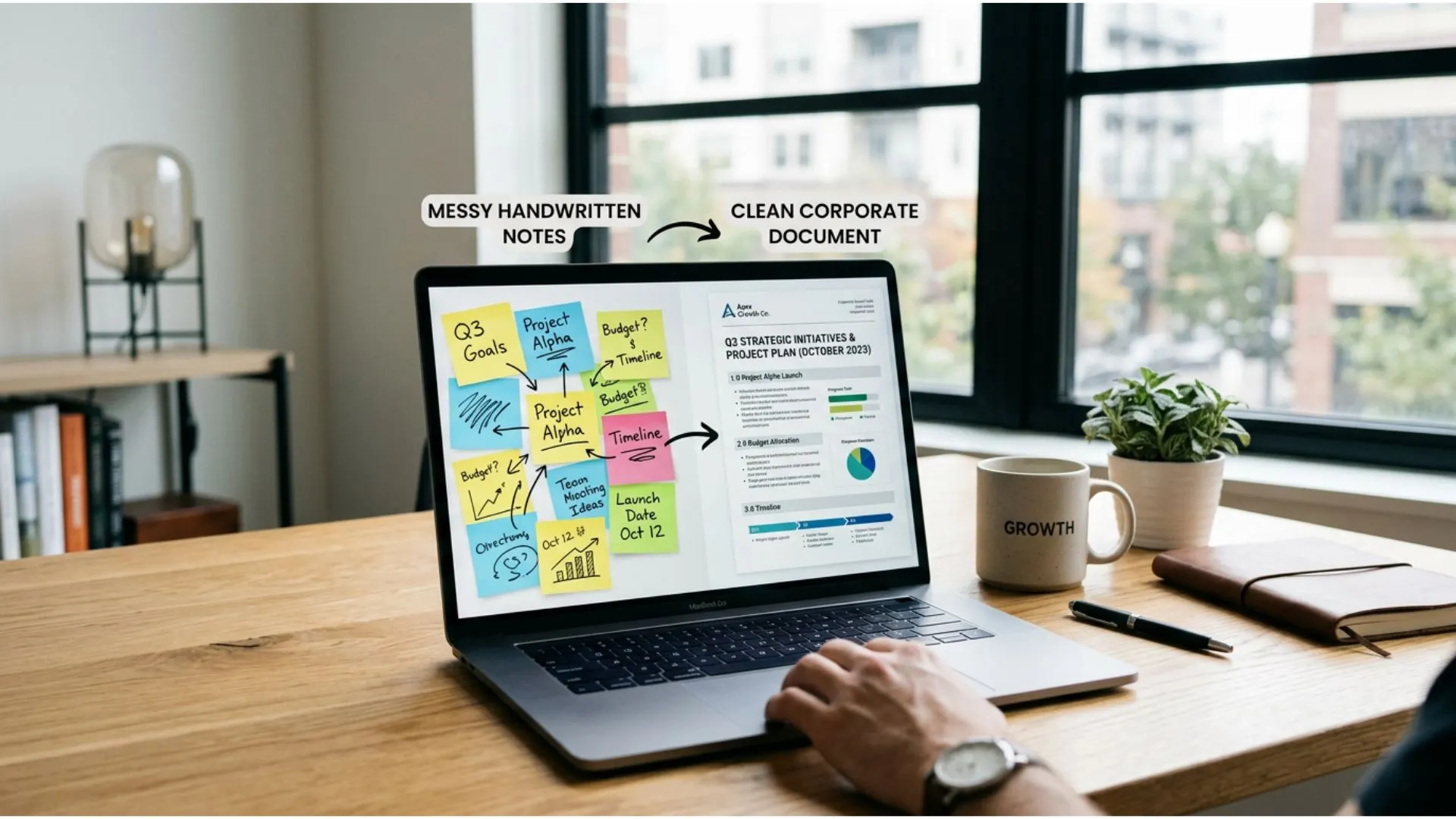
You open your prompt library and select a pre-built "Thought Leadership Newsletter Generator." This prompt is pre-loaded with your brand voice, a structure for storytelling, and instructions to link a specific pain point to your service. You input the topic: "The hidden cost of multitasking."
- Result: A nuanced, empathetic article that starts with a relatable story, pivots to a counter-intuitive insight, and ends with a soft pitch for your consulting services.
- Impact: Subscribers reply saying, "Did you write this just for me?" Trust increases. Sales inquiries trickle in.
- Total Time: 10 minutes (2 mins prompting, 8 mins reviewing/posting).
- ROI: High.
These results reflect real, documented outcomes — the Expert AI Prompts case studies track exactly this kind of time-to-output transformation across multiple industries and business types.
This is the leverage point. Specialized prompts allow you to produce content that competes with agencies that have teams of writers. You aren't just filling a content calendar; you are executing a strategy.
Prompts as Standard Operating Procedures (SOPs)
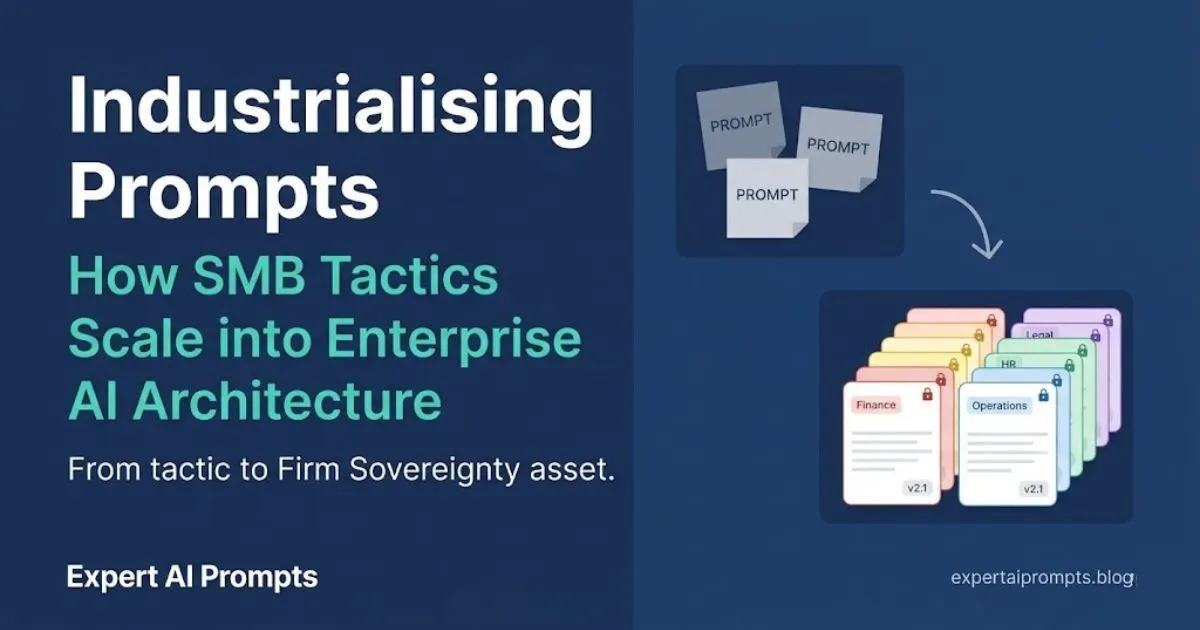
When you begin using specialized prompts, you are effectively digitizing your Standard Operating Procedures. If you have a specific way you like to answer client emails, or a specific structure for your proposals, encoding that into a prompt means you can delegate that task—either to a junior team member or to your future self.
You no longer have to rely on "remembering" how to write a great proposal. The prompt remembers for you. The practical guide on how to use a personal AI assistant to delegate tasks walks through exactly how to encode your workflows so every output meets your standard, every time. This creates consistency, which is the bedrock of a scalable brand.
Integrating into Workflow
Moving from "overworked operator" to "confident strategist" requires integration. You can’t just have these prompts sitting in a document you never open. You need to weave them into your daily workflow until they become muscle memory.
How to Build Your Prompt Ecosystem
- Audit Your Bottlenecks: Look at your week. Where are you spending 10+ hours? Is it client emails? Content creation? Market research? Identify the repetitive tasks that drain your energy.
- The "One-Time Build" Rule: Commit to never writing a generic prompt again. If you find yourself typing a prompt, take an extra five minutes to structure it properly (Role, Context, Constraints). Save that prompt. The next time you do that task, you won't start from zero; you'll start from an expert level.
- Use Verified Prompt Packs: Let’s be honest—you are already time-poor. You might not have the hours to learn prompt engineering from scratch. This is where investing in pre-built, industry-specific prompt packs becomes a strategic business decision. It allows you to skip the R&D phase and go straight to production.
Before committing to a full pack, download 5 free prompts that save 5 hours this week and prove the method works for your specific workflow at zero cost.
Overcoming the "Is This Cheating?" Mindset
A common objection among high-integrity entrepreneurs is the feeling that using AI—even specialized AI—is somehow "cheating" or inauthentic.
Flip that narrative. Is using a spell-checker cheating? Is using a template for your invoices inauthentic? No. These are tools that remove friction so you can focus on your zone of genius. Specialized prompts do not replace your ideas; they amplify them. They handle the structure and the drafting so you can focus on the insight and the relationship.
Conclusion: Reclaiming Your Time
Alex, the goal isn't just to use ChatGPT for marketing. The goal is to build a business that runs smoothly, grows consistently, and doesn't require you to burn the candle at both ends.
The difference between the entrepreneur who is drowning in tasks and the one who is scaling effortlessly often comes down to their systems. In the modern age, your prompts are your systems.
The Entrepreneurs' Playbook for Prompt Engineering is the complete guide to building that prompt-led business system — from your first structured prompt through to a fully automated content operation.
By moving beyond generic inputs and embracing specialized, strategic prompts, you are doing more than just saving time. You are ensuring that every piece of content, every email, and every strategy document you produce maintains an expert standard—regardless of how tired you are or how small your team is.
You have the vision. You have the drive. Now, you just need the right instructions to unlock the engine.
Stop struggling with the blank cursor. Stop settling for "average" outputs. It’s time to equip yourself with the tools that turn bottlenecks into breakthroughs.
Ready to upgrade your workflow instantly?
New to Expert AI Prompts? Explore 11 free AI prompt tools and downloads — no purchase needed.
Don't spend weeks learning to engineer prompts from scratch. Access 50 expert-crafted, industry-specific prompts designed to help you scale immediately.
Already know what you need? Browse all 30 industry-specific prompt packs and pricing and find the right match for your business.
Further Reading
• Entrepreneurs' Playbook for Prompt Engineering
• Your Complete AI Marketing Strategy Guide
• Generic vs. Strategic AI Prompts: What the Difference Costs You