How to Train Your AI Assistant to Sound Like You
How to Train Your AI Assistant to Sound Like You
Jan 27, 2026
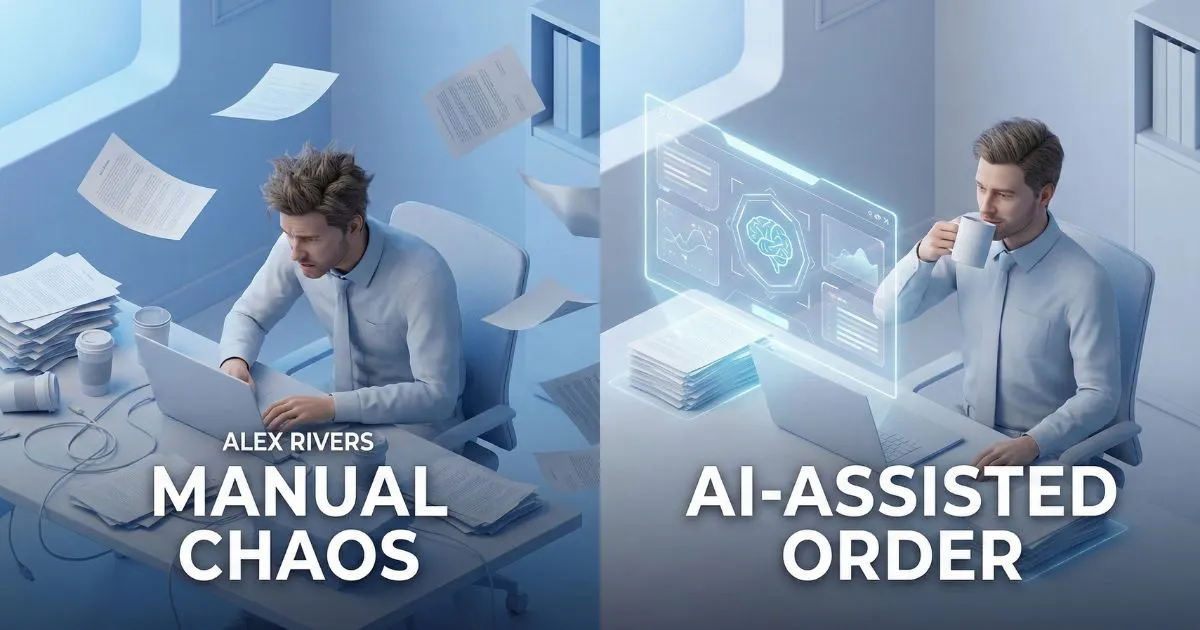
You know the feeling. You sit down to draft a newsletter or a LinkedIn post, but the day’s operations have drained your creative battery. So, you turn to AI. You type in a prompt, hit enter, and wait for the magic.
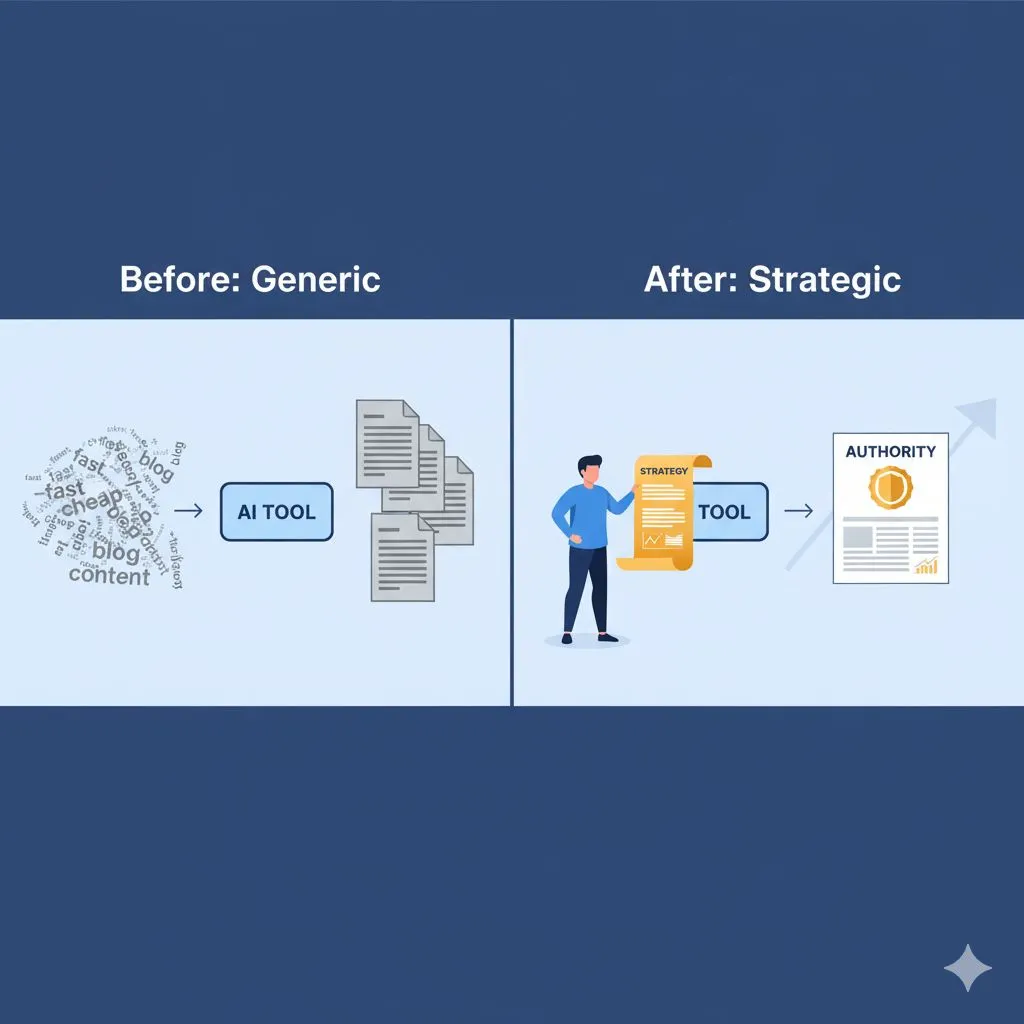
But what comes back isn’t magic. It’s… fine. It’s grammatically correct. It’s structured. But it sounds like it was written by a polite, hallucinating encyclopedia. It uses words like "delve," "tapestry," and "unlocking potential" in every other sentence. It doesn't sound like you. It doesn't sound like your brand.
For a business owner like you—juggling strategy, execution, and growth—this is a bottleneck. You can't afford to spend 45 minutes editing a 30-second AI generation. That defeats the purpose of the tool.
Here is the reality: Your AI assistant is currently the equivalent of a highly intelligent intern on their first day. They have read every book in the library, but they have never read your brand guidelines. They don't know your history, your skepticism of buzzwords, or the specific way you greet your clients.
To move from "generic robot text" to "expert-level content," you don't need a better AI model. You need a better training process. This guide will walk you through the exact system to train your AI assistant to mimic your unique voice, allowing you to scale your content without losing your soul.
Phase 1: The Audit – Deconstructing Your Voice
Most entrepreneurs struggle with AI outputs because they give vague instructions. Telling an AI to be "professional but engaging" is like telling a chef to cook something "tasty but healthy." It leaves too much room for interpretation. To get your AI assistant to sound like you, you first need to understand what "you" sound like analytically.
We need to break your voice down into data points the AI can understand.
The "Voice ID" Elements
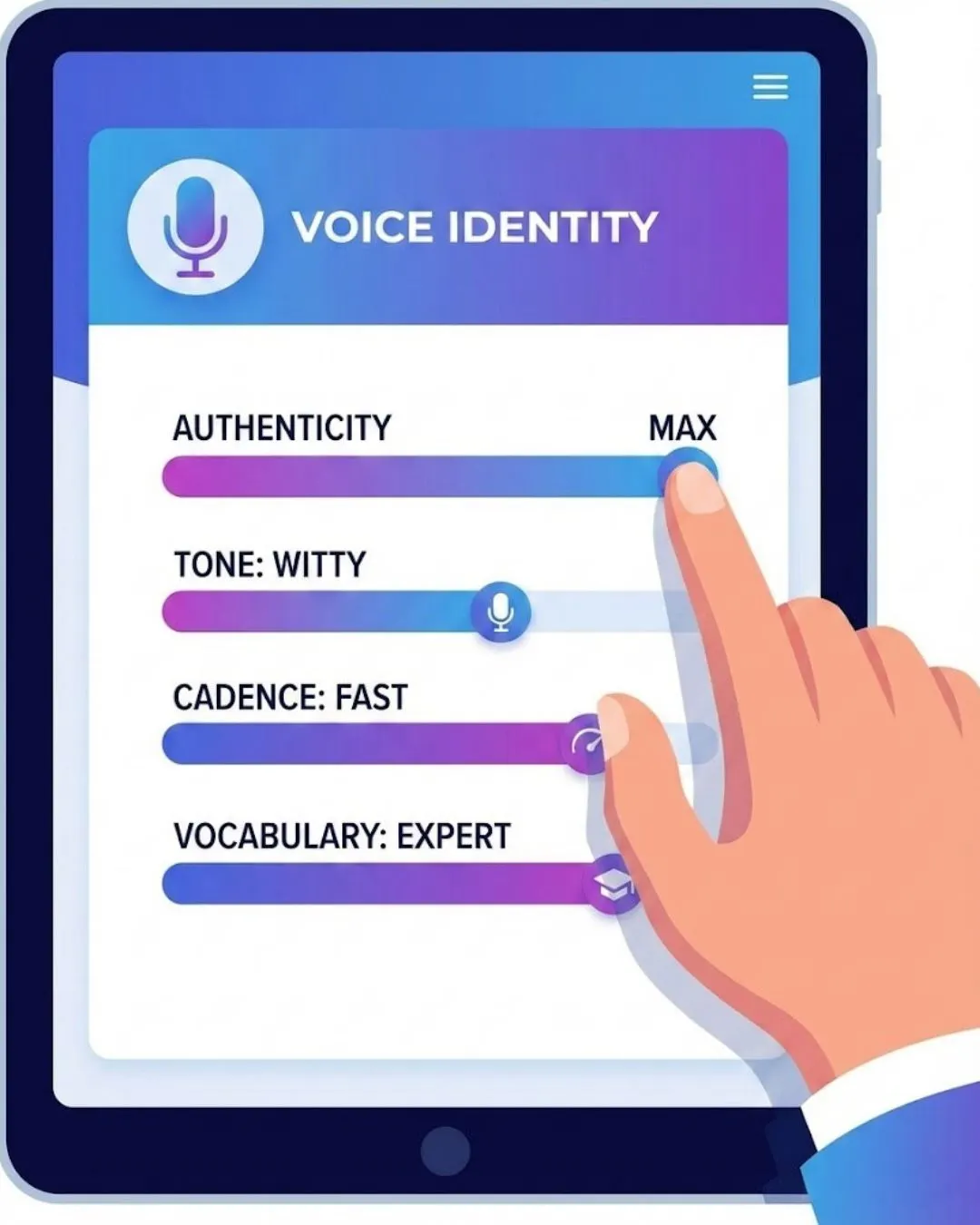
Before you open ChatGPT or Claude, look at your three best-performing pieces of content (emails, blogs, or social posts). Analyze them against these three pillars:
Vocabulary & Jargon:
- Do you use simple, punchy words (e.g., "get," "fix," "win") or elevated language (e.g., "acquire," "remedy," "succeed")?
- Do you use industry acronyms freely, or do you spell everything out?
- The AI Trap: AI defaults to "Corporate Safe." It loves words like "leverage," "synergy," and "transformative." If you hate those words, you must explicitly ban them.
Sentence Structure (Cadence):
- Do you write long, flowing paragraphs? Or do you like short, staccato sentences?
- Do you use bullet points often?
- The AI Trap: AI tends to write paragraphs of equal length. Human writing varies. We use one word. Then we use a long, winding sentence to explain a complex thought. This variation is called "burstiness."
Attitude & Stance:
- Are you the "Cheerleader" (encouraging, positive), the "Sage" (wise, slightly detached), or the "Realist" (blunt, no-nonsense)?
- The AI Trap: AI defaults to "Helpful Pleaser." It lacks opinion. Your brand likely has strong opinions.
Pro Tip: If you struggle to analyze yourself, paste your writing into the AI and ask it: "Analyze the tone, style, and sentence structure of this text. Create a style guide based on this writing."
Phase 2: The Training – Context and Examples
Now that you know what you sound like, you need to teach the machine. This relies on a technique called Few-Shot Prompting.
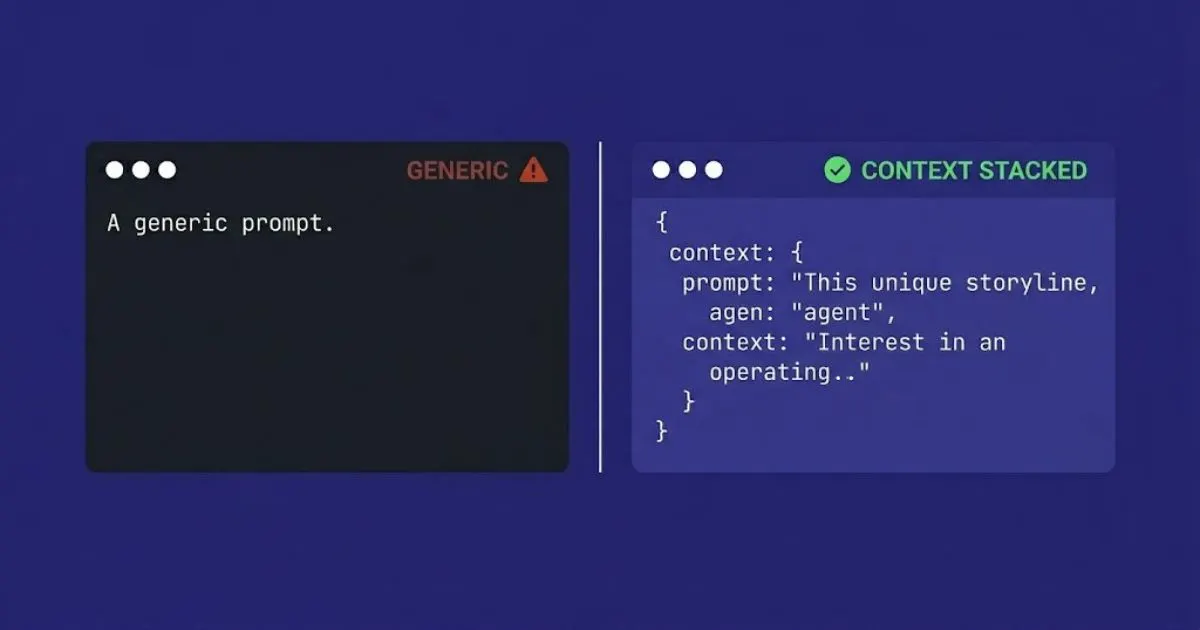
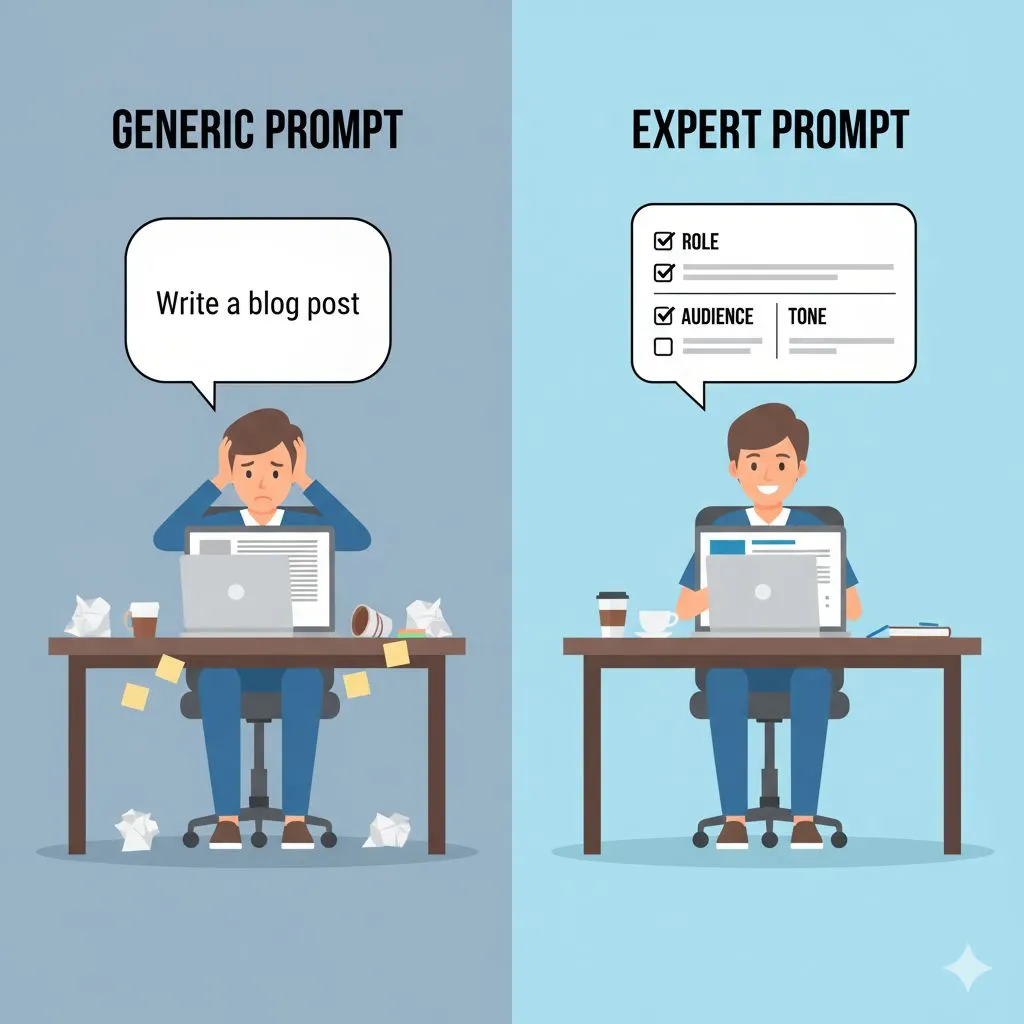
Zero-Shot Prompting is when you ask: "Write a post about productivity."
Few-Shot Prompting is when you say: "Here are three examples of how I write. Learn this style. Now, write a post about productivity."
The difference in quality is usually staggering.
Structuring the Perfect Training Prompt
To get an expert-level output, structure your prompt using the "Role-Context-Style-Task" framework.
1. Role: "Act as an expert content strategist for a boutique marketing agency."
2. Context: "My audience consists of overworked small business owners who are skeptical of fluff."
3. Style (The Critical Part): "Use a punchy, direct tone. Avoid adverbs. Use short sentences. Never use the word 'delve'. Here are three examples of my previous writing: [Insert Examples]."
4. Task: "Write a LinkedIn post about time blocking."
The "Prime the Pump" Method
If you are starting a long session with your AI assistant, start with this prompt:
"I am going to feed you three examples of my writing. I want you to analyze them for tone, vocabulary, and sentence structure. Do not generate anything yet. Just acknowledge you understand the style. Here is Example 1..."
By doing this, you align the AI's neural network to your specific pattern before it generates a single word. This saves you 20 minutes of editing later.
Phase 3: The Refinement – Feedback Loops
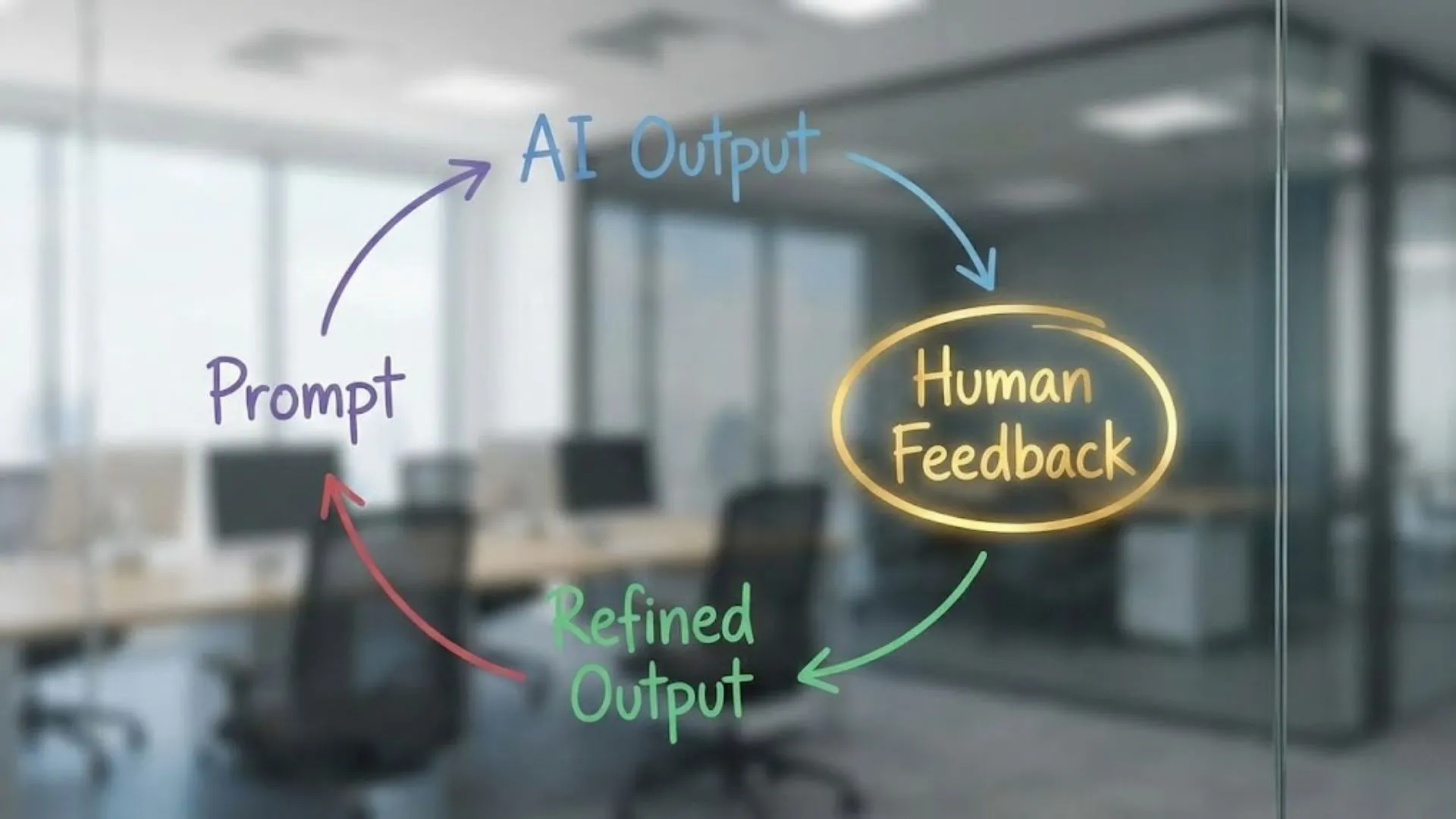
Even with a great prompt, the first draft might be 80% there. The mistake most people make is rewriting the bad 20% manually.
Don't rewrite. Instruct.
If you rewrite it manually, the AI learns nothing. If you tell the AI why it was wrong, it gets smarter for the next round. Treat your AI assistant like a junior employee sitting next to you.
Corrective Prompt Examples:
- Too Boring: "This sounds too stiff. Rewrite it to sound more conversational, like I'm talking to a friend at a coffee shop. Use contractions (e.g., 'don't' instead of 'do not')."
- Too Robotic: "You are using too many buzzwords. Remove 'game-changer,' 'paradigm shift,' and 'landscape.' Replace them with concrete nouns and verbs."
- Bad Flow: "The sentences are all the same length. Vary the sentence structure. Make some very short. Make others longer to explain the nuance."
- Lack of Opinion: "This is too neutral. Inject a contrarian opinion. Start the post with a controversial statement about the topic."
The "Perplexity" Hack
If the content feels flat, ask the AI this: "Rewrite this with higher perplexity and burstiness."
- Perplexity measures the randomness of text (making it less predictable/clichéd).
- Burstiness measures the variation in sentence structure.
- Raising these values almost always makes the content sound more human.
Phase 4: Systemization – Custom Instructions & Memory
You are busy. You do not have time to paste three examples of your writing every time you need an email. This is where systemization comes in.
Modern LLMs (like ChatGPT Plus or Claude) allow for "Custom Instructions" or "Memory." This is where you bake your voice into the system permanently.
Setting Up Your Custom Instructions
In your settings, you will usually find two boxes.
What should ChatGPT know about you?
- Input your business context: "I run a consulting firm for small businesses. I value efficiency and ROI. I am skeptical of trends."
How would you like ChatGPT to respond?
- Input your "Voice ID": "Always answer in a direct, punchy tone. No fluff. No moralizing. Use bullet points for lists. My audience is time-poor, so get to the point immediately. Never use the phrase 'In conclusion'."
Creating a Prompt Library
To truly scale, stop typing prompts from scratch. Create a simple document (or use a tool like Notion) to store your "Super Prompts."
A Super Prompt includes:
- Your context.
- Your style constraints.
- Your negative constraints (what NOT to do).
- A placeholder for the topic.
When you need content, you simply copy the Super Prompt, insert the new topic, and hit enter. This ensures that whether you are using the AI, or a team member is using it, the output always sounds like the brand owner.
Conclusion
Training your AI assistant is not a technical challenge; it is a communication challenge. The AI is a mirror—it reflects the quality of the instructions you give it.
If you accept generic outputs, you will build a generic brand. But if you take the time to audit your voice, provide concrete examples (few-shot prompting), and refine the output with strategic feedback, you transform the AI from a simple tool into a force multiplier.
You stop hustling to write every word, and start scaling your thought leadership. The goal isn't to let the AI do the thinking—it's to let the AI do the heavy lifting so you can focus on the strategy.
Ready to install your brand voice into your AI instantly?
You don't have to start from scratch. We have built a comprehensive framework to fast-track this process.
>> Get the Competitor-Proof Brand Voice Kit
Further Reading
Building a Brand Voice That Survives the AI Era
Fear of the Robot: Ensuring Your AI Content Still Sounds Human
Beyond ChatGPT: Why You Need Specialized Prompts
Explore on Expert AI Prompts
The Small Business Playbook for AI Content Creation
How to Train AI to Write in Your Brand Voice
Generic vs Strategic AI Prompts — Full Comparison
Prompt-Driven Branding Playbook for Brand Managers
Expert AI Prompts Blog | Expert AI Prompts — Main Site
Browse All Prompt Packs | Free AI Resources
Pricing Catalog | AI for Small Business Guide