The DIY Marketer's Playbook for 2026
The DIY Marketer's Playbook for 2026
Jan 31, 2026

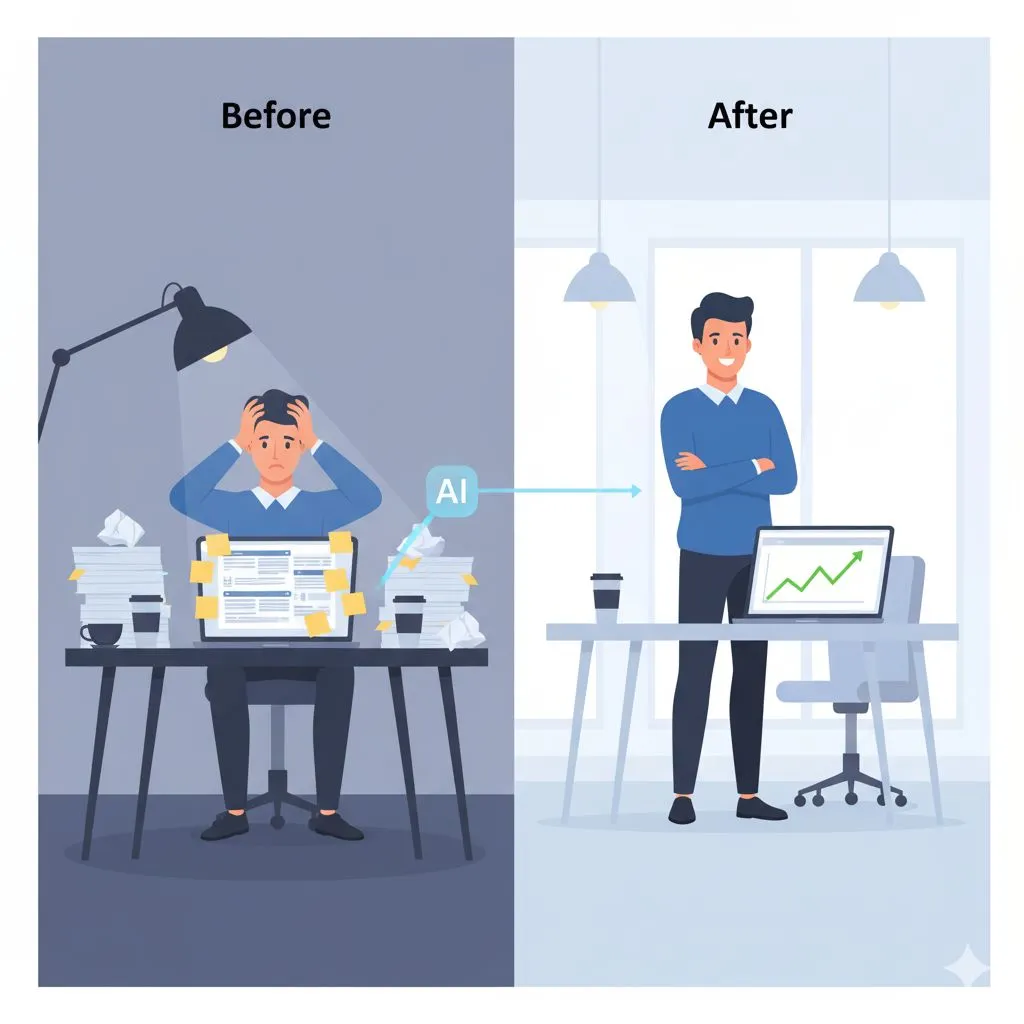
If you are reading this, you are likely tired.
You are the CEO, the cleaner, the sales lead, and—reluctantly—the entire marketing department. You know you need to grow your digital presence to compete with the bigger agencies and funded startups, but the thought of adding "content creator" to your 60-hour work week feels impossible.
Welcome to DIY marketing in 2026. To build a marketing system that actually drives revenue without burning out, start with our complete AI marketing strategy guide for small businesses.
The game has changed. Three years ago, "doing it yourself" meant late nights struggling with graphic design software and guessing what to write on LinkedIn. Today, it means something entirely different. It means becoming the architect of your marketing rather than the bricklayer.
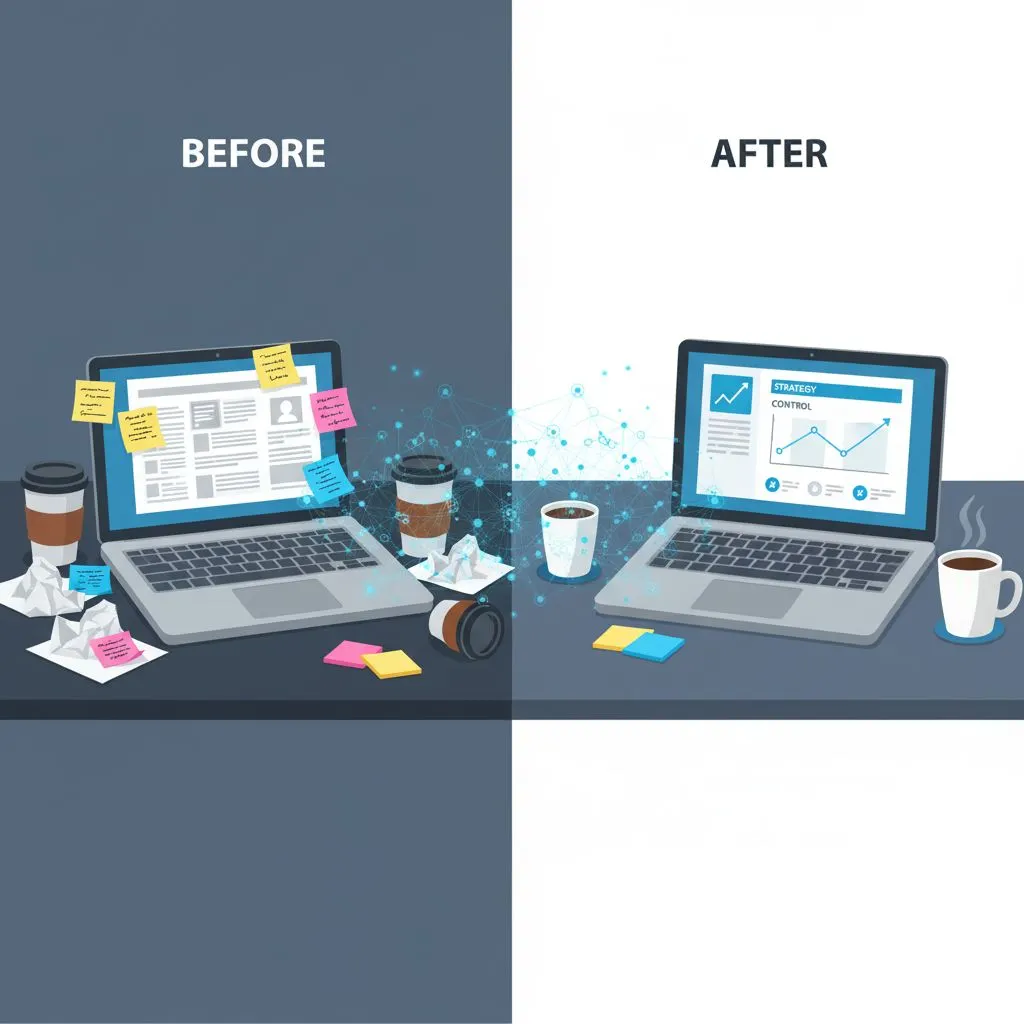
The goal of this playbook is simple: to help you reclaim your time. We are moving you from an overwhelmed operator to a confident strategist. We aren't going to tell you to "post more." We are going to show you how to build a system that posts for you, sounds like an expert, and drives revenue—without you burning out.
Here are the 11 essential plays for the modern small business owner.
Phase 1: The Strategy Layer (Stop Guessing)
Before you write a single caption or record a video, you must stop the "throw spaghetti at the wall" approach. It wastes your most precious resource: mental energy.
1. Defined Audience Architecture
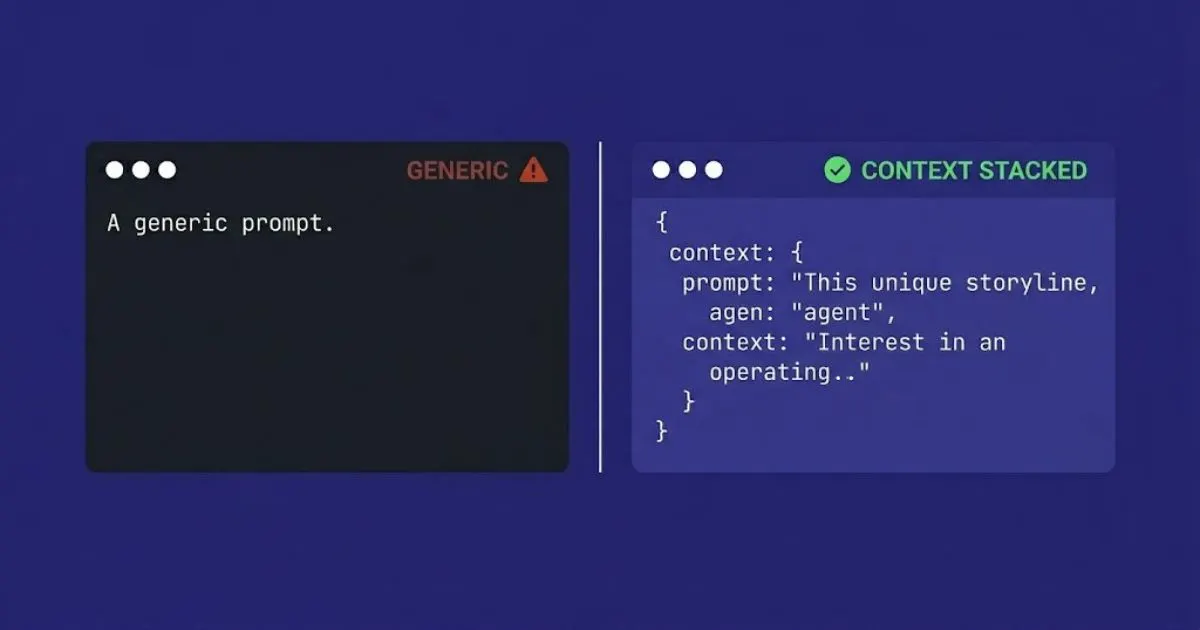
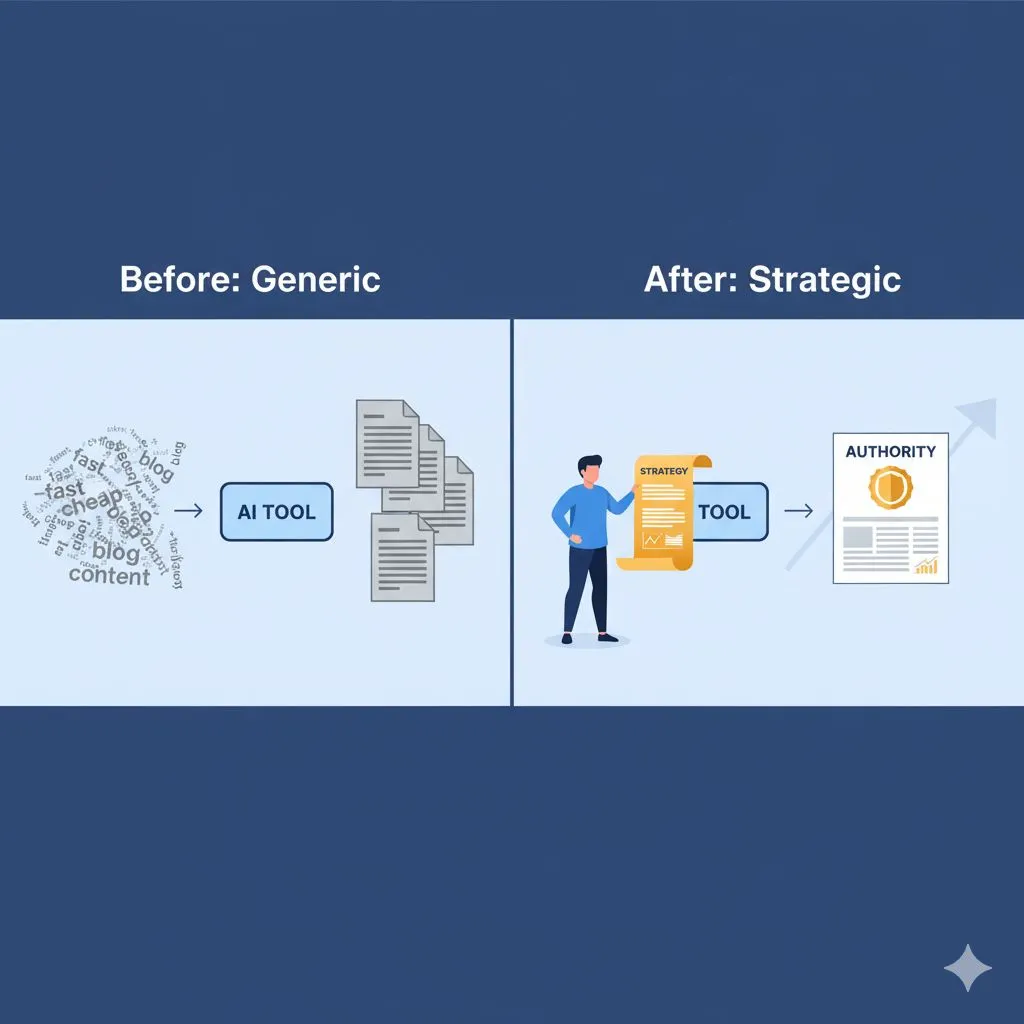
Most small business owners cast a wide net because they are afraid of missing out on a sale. The result? Generic messaging that appeals to no one. Understanding the difference between generic vs strategic AI prompts is the first step to fixing this. In 2026, specificity is the only currency that matters.
The Play: Use AI to reverse-engineer your perfect client.
Instead of guessing demographics, input your last five successful deals into a secure AI workspace. Ask it to analyze common psychographics, pain points, and decision triggers. You aren't looking for "males, 30-50." You are looking for "Alex, who values efficiency over fluff and is skeptical of hype because he’s been burned by agencies before."
- Why this works: When your copy speaks directly to a specific pain, you don't need to "sell." You just need to offer the solution.
2. The "Hub-and-Spoke" Content Model
A common trap in DIY marketing is trying to be famous on TikTok, LinkedIn, Instagram, and YouTube simultaneously. This is a one-way ticket to burnout.
The Play: Pick one "Hub" and three "Spokes."
Your Hub is where long-form, high-value content lives. This could be a blog, a podcast, or a newsletter. This is where you demonstrate deep expertise.
Your Spokes are simply distribution channels pointing back to the Hub.
- Action Step: Commit to ONE high-quality piece of Hub content per week. That is your only creative obligation. Everything else is just a derivative of that piece (more on this in Phase 3).
3. Brand Voice Standardization
One of the biggest objections entrepreneurs have to AI is, "It doesn't sound like me." That is usually because the AI hasn't been trained on who "you" are.
The Play: Create a Digital Style Guide.
You need a document — not for humans, but for your AI tools — that defines your tone. Our guide on how to train AI to write in your brand voice walks you through the exact process. Are you "professional yet approachable"? Are you "witty and contrarian"?
- The Prompt Strategy: Don't just say "write a post." Say, "Act as a senior consultant with a tone that is authoritative but empathetic. Avoid corporate jargon. Use short sentences."
- Result: This ensures every piece of content, whether written by you or a tool, feels like it came from the same person, building the consistency required for trust. Download the free Competitor-Proof Brand Voice Kit to build your Digital Style Guide in under 20 minutes.
Phase 2: The Content Engine (Stop Grinding)
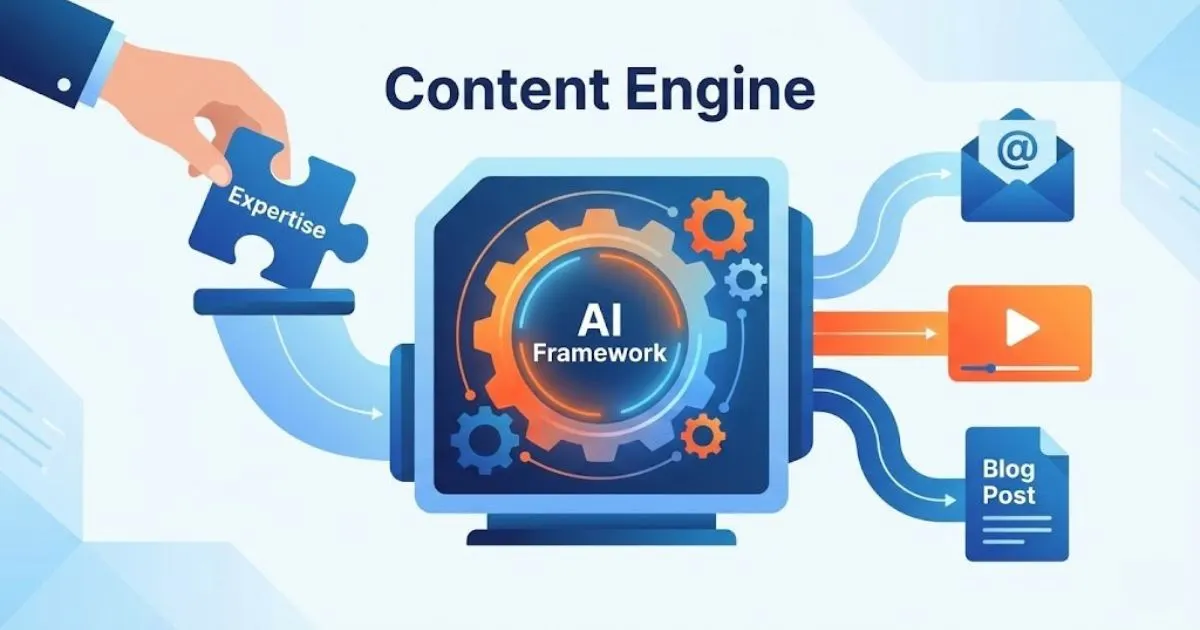
Now that you have a strategy, we need to solve the execution problem. How do you produce expert-level content when you have client deliverables due in an hour? You build an engine.
4. The 50-Prompt Framework
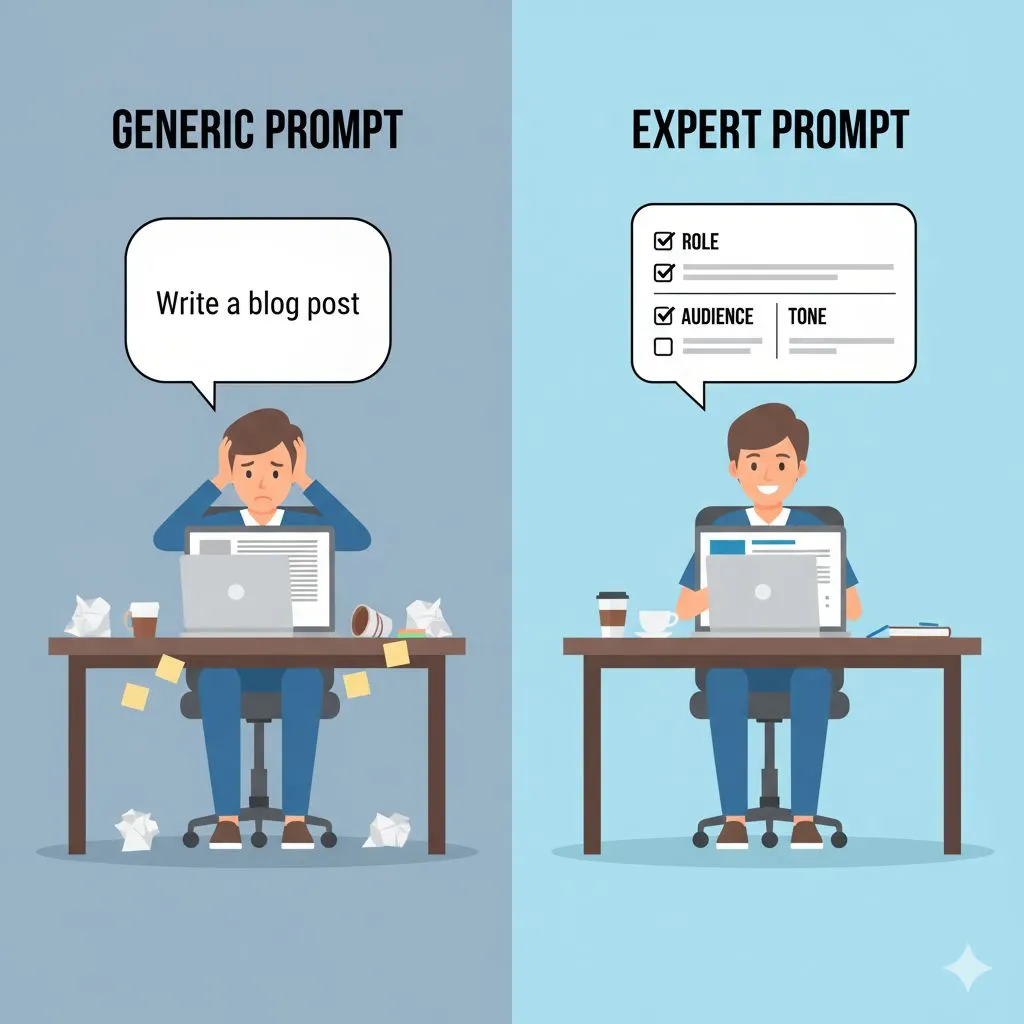
The difference between a generic output and an expert result lies entirely in the input. Most DIY marketing fails because the business owner treats AI like a search engine ("Write a blog about marketing") rather than a junior employee.
The Play: Stop chatting; start structuring.
You need a library of pre-validated prompts. These are not one-liners. They are structured commands that include:
- Role: Who is the AI acting as? (e.g., "World-class Copywriter")
- Task: What specifically are we making? (e.g., "A 3-part email nurture sequence")
- Constraint: What are the limits? (e.g., "Under 200 words per email, no passive voice")
- Goal: What is the desired outcome? (e.g., "Drive clicks to a booking calendar")
By relying on a "Prompt Pack" specific to your industry, you eliminate the "blank page syndrome." You aren't writing; you're editing. This shifts your workload from creation (high energy) to review (low energy).
For a deep-dive into structuring prompts that produce expert outputs every time, read The Entrepreneur's Playbook for Prompt Engineering.
5. Batch Creation vs. Daily Grind
Context switching is the enemy of productivity. If you interrupt deep client work to write a tweet, it takes you 20 minutes to refocus.
The Play: The "Monday Morning Maker" block.
Schedule one 90-minute block per week. That’s it.
- Minute 0-15: Review your Hub topic (from Strategy #2).
- Minute 15-45: Use your structured prompts to generate the core content.
- Minute 45-90: Edit, polish, and schedule.
By batching, you leverage "flow state." You can produce a month's worth of social updates in the time it usually takes to stress about doing one.
To scale this further across your entire content calendar, see the 1-day workflow to automate blog content with AI.
6. The "Human-in-the-Loop" Edit
Here is the uncomfortable truth: AI content, left unchecked, can damage your credibility. It can hallucinate facts or sound blandly perfect. As a small business owner competing on quality, you cannot afford to look generic.
The Play: The 10% Rule.
Let AI do 90% of the heavy lifting (structure, drafting, grammar). You must provide the final 10%.
- Inject Personal Experience: Add a specific story about a client you helped last week.
- Polarizing Opinions: AI tries to be neutral. You should have a stance. If you disagree with an industry trend, say so.
- Nuance: Soften absolute statements that sound robotic.
This 10% is what separates "spam" from "thought leadership." It signals to your prospects that a real expert is behind the screen.
For a step-by-step framework on editing AI output without losing your voice, read how to use an AI content writer and still sound human.
Phase 3: The Distribution System (Stop Vanishing)
You have created the content. Now, you need to make sure it works for you while you are sleeping. The goal of 2026 DIY marketing is ubiquity without the effort.
7. The Waterfall Repurposing Method
The biggest waste of time is creating a piece of content and using it once. That is like cooking a gourmet meal and throwing away the leftovers.
The Play: One Asset --> Twelve Assets.
Let’s say your "Hub" content is a 5-minute video answering a common client question.
- Transcription: Use AI to transcribe the video.
- Blog Post: Prompt your AI to turn that transcript into an SEO-optimized article.
- Newsletter: Summarize the key takeaways for your email list.
- LinkedIn Post: Extract the most controversial or insightful quote for a text post.
- Instagram/TikTok: Cut the video into three 60-second vertical clips.
- Twitter/X Thread: Turn the main points into a numbered list.
Suddenly, 30 minutes of recording becomes a week’s worth of presence across all channels. You appear to be everywhere, but you were only "working" on marketing for one session.
See the full repurposing framework in action: Repurposing Content: Turning 1 Blog Post into 10 Social Pieces with AI.
8. Automating the Boring Stuff
Posting manually is a trap. It forces you to log into social media platforms, where you will inevitably get distracted by notifications and cat videos.
The Play: The "Set and Forget" Tech Stack.
You need a scheduling tool (like Buffer, Hypefury, or Later) and an automation bridge (like Zapier or Make).
- The Workflow: When you approve a piece of content in your project management tool (like Notion or Trello), an automation should trigger that adds it to your scheduling queue.
- The Benefit: You never log into the social platform to post. You only log in to engage. This protects your attention span.
For the recommended tool stack and workflow setup, read AI-driven marketing automation: the right way.
9. Community Engagement Limits
Posting is broadcasting; engaging is selling. However, responding to comments can eat up your entire day if you let it.
The Play: The "15-Minute Sprint."
Do not keep social media tabs open on your desktop. Treat engagement like a meeting.
- Set a timer for 15 minutes per day.
- Reply to comments on your posts.
- Comment on 5 posts from potential leads or peers.
- Close the tab when the timer goes off.
This boundary is crucial for the Alex Rivers persona. It satisfies the need for business development without sacrificing operational time.
Phase 4: The Analytics Loop (Stop Wasting Money)
The final piece of the playbook is knowing when to pivot. In the past, you might have chased "likes" because they felt good. In 2026, we chase leverage.
10. Vanity vs. Sanity Metrics
It is easy to get depressed if a post only gets 3 likes. But if one of those likes is a CEO who sends you a DM and signs a $5,000 contract, that post was a massive success.
The Play: Track "Conversion Events," not "Engagement Rates."
- Vanity Metric: Number of followers.
- Sanity Metric: Number of newsletter subscribers (owned audience) or "Book a Call" clicks.
- The Shift: Stop optimizing for virality. Optimize for resonance with the right people. A post with 10,000 views and zero leads is a failure. A post with 100 views and 2 leads is a victory.
Quantify your real marketing ROI right now with the free AI ROI Calculator for Small Business — it shows you where to invest your 90-minute maker block for maximum return.
11. The Quarterly Audit
Marketing strategies rot over time. What worked in January might be obsolete by June.
The Play: The 90-Day Review.
Once a quarter, look at your "Hub" content.
- Which topics generated the most questions from clients?
- Which format took the least time to produce but had the highest reach?
- Which prompt produced the best output with the least editing?
Double down on what works. Ruthlessly eliminate what doesn't. If TikTok is taking 5 hours a week and bringing $0, kill it. Be a business owner, not an influencer.
Conclusion: From Hustler to Strategist
The era of the "grind" is over. The entrepreneurs who win in 2026 won't be the ones who work the hardest; they will be the ones who build the best systems.
By implementing this DIY marketing playbook, you are acknowledging a fundamental truth: Your time is too valuable to be spent on repetitive tasks that a machine can do. Your value lies in your strategy, your client relationships, and your unique expertise.
You don't need a bigger team. You don't need a massive budget. You just need to stop creating from scratch and start curating with intent.
You have the ambition. You have the expertise. Now, you just need the toolkit to execute it.
Ready to stop spinning your wheels and start scaling?
We have built the exact system you need to implement Phase 2 of this playbook immediately. Get the structured prompts, the workflow guides, and the strategy to reclaim your time today.
Start with 11 free AI tools and resources — no credit card, no commitment. Your first step toward a fully systematised marketing operation.
Get The Small Business Playbook for AI Content Creation
Ready to go all-in? Browse all 30 industry-specific prompt packs and pricing — one-time investment, lifetime access.
Further Reading
• Content Pillars and AI: Planning Your Quarter in an Afternoon
• Beyond ChatGPT: Why You Need Specialized Prompts