Content Pillars and AI: Planning Your Quarter in an Afternoon
Content Pillars and AI: Planning Your Quarter in an Afternoon
Jan 29, 2026

If you are like most business owners, your relationship with social media and content marketing likely oscillates between "I’m going to crush this quarter!" and "I haven't posted in three weeks and I’m too afraid to look at my analytics."
For entrepreneurs and small teams, the pressure to be everywhere at once is suffocating. You are the CEO, the delivery team, the finance department, and—reluctantly—the social media manager. You know that consistency builds trust, and trust builds revenue. But when you are buried in client work or trying to fix a workflow bottleneck, sitting down to write a LinkedIn post or film a Reel feels like an impossible luxury.
This is the "content hamster wheel." You run fast, you sweat a lot, but you don't actually go anywhere.
The solution isn't to work harder or hire an expensive agency you aren't ready for yet. The solution is ai content marketing—but not in the way most people use it. We aren’t talking about asking ChatGPT to "write a viral post" and pasting the generic result. We are talking about using AI as a strategic partner to build a sturdy framework that holds your marketing up for you.
By combining clear strategic Content Pillars with the speed of AI, you can plan an entire quarter of expert-level content in a single afternoon. This guide will show you how to move from reactive chaos to proactive strategy, reclaiming your time while amplifying your voice. If you want the full strategic framework behind this, read the complete AI content creation playbook for small businesses.
The Strategy: Why Content Pillars Matter More Than Tools
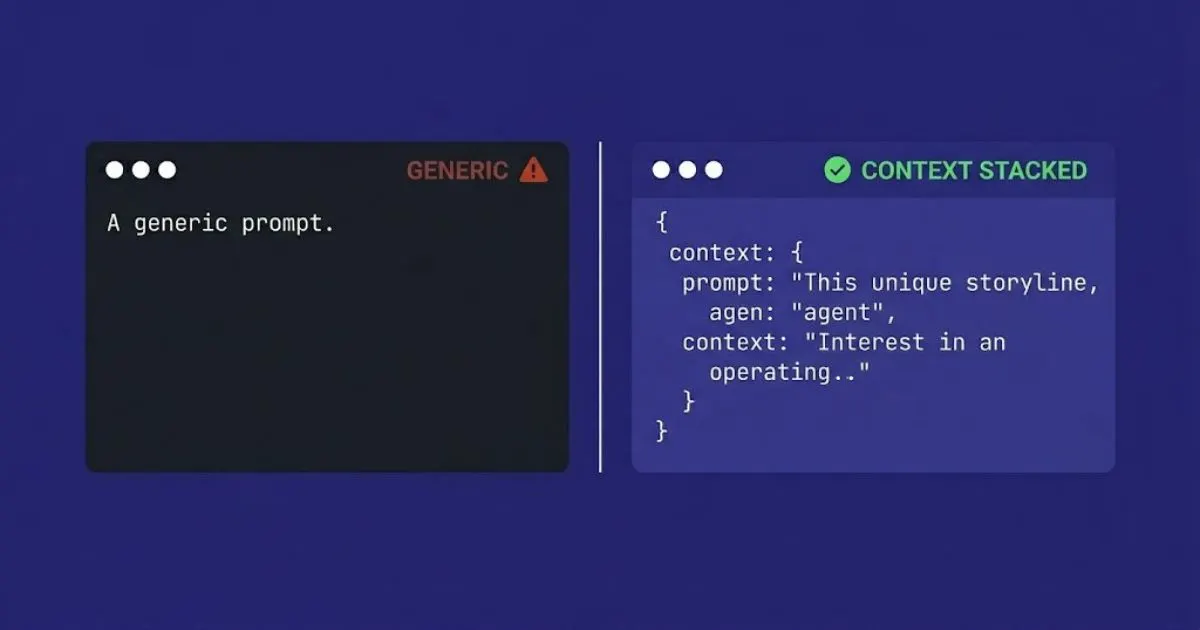
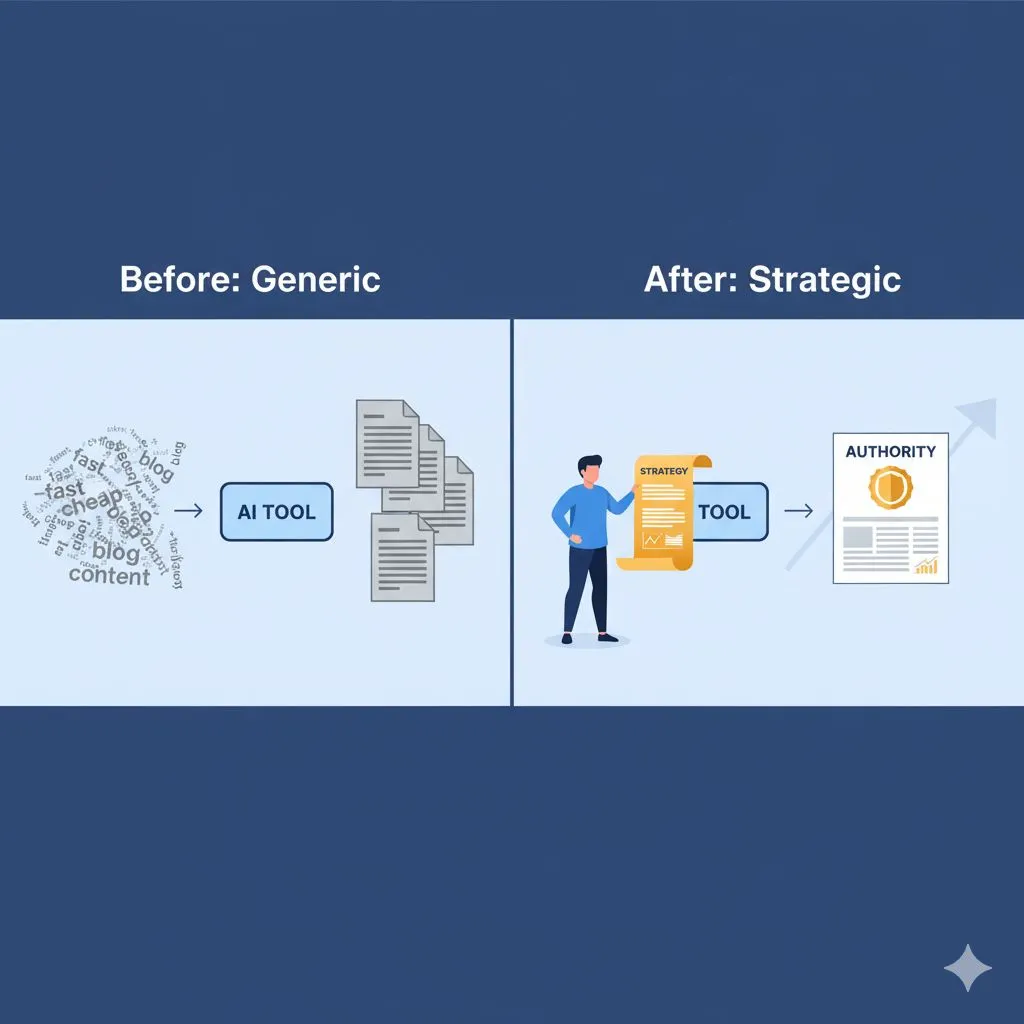
Before we type a single prompt, we have to talk about strategy. One of the biggest mistakes business owners make with AI is treating it like a magic wand rather than a power tool. If you hand a power drill to someone who doesn't know how to build a shelf, you don't get a shelf; you get a wall full of holes. The difference between results and noise comes down to generic vs strategic AI prompts — and knowing which type you are using.
The same applies to AI. If you ask for content without a framework, you get "hallucinations," generic fluff, and posts that sound like everyone else.
What Are Content Pillars?
Content pillars are the 3 to 5 core themes or topics your brand consistently discusses. They are the foundation of your authority. They represent the intersection of what you know best and what your customer needs most.
For example:
- A Fitness Coach’s Pillars: Nutrition Science, Strength Training Mechanics, Mindset & Habits, Client Success Stories.
- A B2B Consultant’s Pillars: Process Optimization, Leadership Dynamics, Industry Trends, Case Studies.
The "Mile Deep" Approach
Many ambitious entrepreneurs try to cover every trending topic. They see a competitor talking about crypto, so they post about crypto. They see a meme trend, so they try to be funny. This dilutes your brand.
To compete with larger players, you need to go a "mile deep" on a few topics rather than an inch wide on everything. Content pillars force this focus. When you stick to your pillars, your audience begins to associate you with those specific solutions. You become the "Process Optimization" guy or the "Nutrition Science" girl.
AI Needs Boundaries
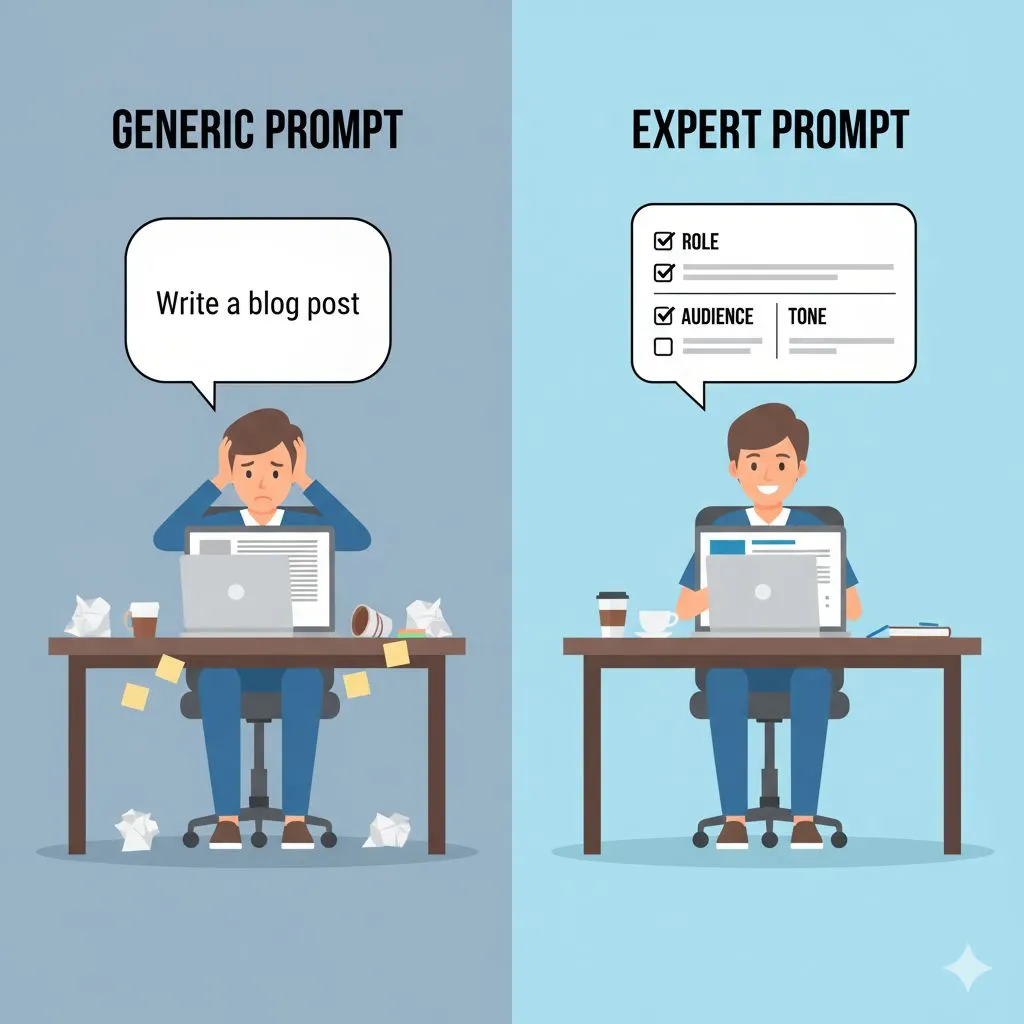
Here is why this matters for ai content marketing: AI thrives on boundaries. When you tell an AI, "Write content for my business," it guesses. When you tell AI, "I need 10 content ideas based strictly on the pillar of 'Process Optimization' for overwhelmed agency owners," it delivers gold.
Defining your pillars is the guardrail that keeps the AI on track. It ensures that the hundreds of ideas you generate in minutes are actually relevant to your business goals, rather than just filling space on a feed.
The Setup: Pre-Flight Checklist Before You Prompt
You wouldn’t build a house without a blueprint, and you shouldn’t start an AI session without a plan. To get a quarter’s worth of planning done in one afternoon, you need to gather your materials first. This "pre-flight" phase is what separates the frustrated dabblers from the efficient strategists.
1. Know Your Persona (The Mirror Test)
AI is a mimic. If you don't tell it who to speak to, it defaults to a generic, corporate tone that appeals to no one. Before you start, write down a clear paragraph defining your target audience.
- Who are they? (e.g., Alex, a 40-year-old agency owner).
- What keeps them up at night? (e.g., Cash flow inconsistency, staff management).
- What is their skepticism? (e.g., They hate "get rich quick" schemes).
Having this paragraph ready to paste into your AI tool ensures every output is tailored to the people you actually want to sell to.
2. Audit Your Assets
Spend 20 minutes looking at your last 6 months of content. What worked? Did a specific "How-to" guide get more shares? Did a rant about industry misconceptions get more comments? Note down the types of posts that resonated. You will feed this data to the AI later to help it understand your successful patterns.
3. Define Your 3–5 Pillars
If you haven’t done this yet, do it now. Don’t overthink it.
- Pillar 1: Educational/Expertise. (How you solve problems).
- Pillar 2: Objection Handling/Belief Shifting. (Addressing why clients hesitate).
- Pillar 3: Social Proof/Results. (Case studies and testimonials).
- Pillar 4: Personal/Behind the Scenes. (Building connection and trust).
- Pillar 5 (Optional): Industry News/Commentary. (Showing you are current).
Write these down. These are the buckets we are going to fill.
The Execution: The 4-Step AI Content Marketing Workflow
Now that the strategy is set, we can unleash the technology. This is where ai content marketing shines—taking the heavy lifting of brainstorming off your shoulders so you can focus on decision-making.
Step 1: Ideation & Expansion
The hardest part of writing is the blank page. We are going to eliminate that completely.
The Goal: Generate 50 raw ideas for each pillar.
Open your AI tool of choice (ChatGPT, Gemini, Claude, etc.) and use a prompt structure like this:
> "I am a [Your Role] helping [Your Persona] achieve [Result]. My content pillars are [List Your 5 Pillars]. Please generate 10 unique, high-value content ideas for Pillar 1. Focus on counter-intuitive advice, actionable steps, or common mistakes. Avoid generic fluff."
Repeat this for each pillar. In about 15 minutes, you will have 50 specific topics.
- Tip: If the ideas feel bland, ask the AI to "make it more controversial" or "focus on advanced strategies only."
Step 2: Format Diversification
A single great idea can be the source of five different pieces of content. This is how you scale without burning out.
Take one of the best ideas generated in Step 1—let's say, "Why hourly billing kills agency growth"—and ask the AI to map it to different formats.
> "Take the topic 'Why hourly billing kills agency growth' and outline the following:
- A 150-word LinkedIn post (text only).
- A script for a 60-second Reel/TikTok (hook, value, CTA).
- A 5-slide Instagram carousel structure."
Suddenly, one idea has filled three slots in your content calendar. To get 50 pre-built prompts purpose-built for this exact workflow, see the Social Media Mastery prompt pack. This creates a cohesive message across platforms without requiring you to reinvent the wheel for every channel.
Step 3: The "Voice" Calibration
One of the biggest objections entrepreneurs like you have regarding ai content marketing is the "robot voice." You know the one: sentences that start with "In today's fast-paced digital landscape..." It lacks soul, grit, and the unique perspective that makes you, you.
To fix this, we don't just accept the first draft. We calibrate. For a deeper dive into this process, see how to train your AI to write in your brand voice.
Before you ask the AI to flesh out those content calendars, feed it samples of your writing.
> "Here are three examples of my previous posts. Analyze the tone, sentence structure, and vocabulary. Describe my writing style."
Once the AI confirms it understands your style (e.g., "Direct, punchy, uses short sentences, professional but conversational"), ask it to apply that style to your new content ideas.
> "Great. Now, outline the content calendar using that exact 'Direct and Punchy' style."
This step takes five minutes but saves you hours of editing later. It bridges the gap between efficient automation and authentic branding.
Step 4: Mapping the Quarter
Now you have the pillars, the raw ideas, and the format variations. It is time to organize the chaos into a plan.
Instead of staring at a blank spreadsheet, ask the AI to be your project manager.
> "Based on the ideas we generated, create a 12-week content calendar. I post 3 times a week (Monday, Wednesday, Friday). Ensure there is an even mix of the 5 pillars. Monday is for Educational posts, Wednesday for Case Studies, Friday for Personal/Behind the Scenes. Output this as a table."
Watch as the AI populates a structured table for the next three months.
- Week 1, Monday: Pillar 1 (Education) - Topic: X
- Week 1, Wednesday: Pillar 3 (Case Study) - Topic: Y
- Week 1, Friday: Pillar 4 (Personal) - Topic: Z
In less than an hour, you have gone from "I don't know what to post" to a comprehensive 90-day roadmap. You can export this to Excel, Notion, or Trello. The mental load is gone.
The Refinement: The Human-in-the-Loop
You have the plan. You have the drafts. But you are not done yet.
As a business owner who values quality and credibility, you cannot just copy-paste and hit publish. This is where the "Human-in-the-Loop" methodology comes in.
Reviewing for ROI
Scan the 12-week plan the AI generated. Ask yourself: Does this actually help me sell?
Sometimes AI gets too focused on being "helpful" and forgets to be "commercial."
- Are the Calls to Action (CTAs) clear?
- Do the topics align with your current offers?
- If you are launching a new service in Month 2, manually adjust the topics in the weeks prior to build anticipation. AI creates the structure; you provide the business logic.
Fact-Checking & Nuance
AI is a generalist; you are the expert. AI might explain what a strategy is, but only you can explain why it worked for your client "Steve" last November.
Take the AI drafts and inject:
- Specific numbers/data from your business.
- Personal anecdotes ("I learned this the hard way when...").
- Strong opinions. (AI tries to be neutral; brands are built on stances).
This "human polish" takes a generic AI post and turns it into a thought leadership piece.
Batch Creation vs. AI Generation
There is a difference between planning and creating. You have planned the quarter in an afternoon. Now, schedule "creation blocks."
Since you already know exactly what you are writing for the next 12 weeks, you can batch-produce content. spend one Sunday afternoon writing all the captions for Month 1. Spend one morning filming all the Reels for Month 1.
Because the thinking part is done, the doing part becomes significantly faster.
The Tech Stack: Keep It Simple
To execute this ai content marketing strategy, you don't need expensive subscriptions to twelve different tools. Complexity is the enemy of execution, especially when you have a small team.
- The Brain: ChatGPT Plus, Gemini Pro or Claude Pro. (Worth the $20/month for the reasoning capabilities).
- The Organizer: Notion, Trello, or a simple Google Sheet. (To store the calendar).
- The Visuals: Canva. (For creating the carousels and graphics).
That’s it. You don’t need auto-posting bots or expensive AI writing suites to start. What you do need is the right prompts — browse all 30 industry-specific prompt packs designed for exactly this workflow. The power lies in the prompt strategy, not the software price tag.
Further Reading
- Stop Posting Randomly: A Data-Driven Content Plan for Busy Owners
- The Secret to Consistency: Batching Content with Prompts
Conclusion: Reclaiming Your Time
The goal of this process wasn't just to fill a calendar; it was to free your mind.
Think about how much mental energy you leak every day worrying about marketing. The guilt of silence. The frustration of writing a post that gets zero engagement. The feeling that you are falling behind competitors who seem to be everywhere at once.
By using AI to build your Content Pillars and map your quarter, you plug that energy leak. You transition from the overworked operator, scrambling to find something to say, to the confident strategist who knows exactly where the ship is steering.
You gain the ability to show up consistently, which builds trust.
You gain the ability to showcase your expertise, which builds authority.
And most importantly, you gain your afternoons back to focus on actually running your business.
This isn't about cheating the system. It's about operating at a higher level. It’s about ensuring that your expertise gets the audience it deserves without sacrificing your sanity to the algorithm.
Ready to Build Your Plan?
We have broken down the strategy, but the magic is in the specific prompts you use. You don't need to guess how to talk to the AI to get these results. We have created a comprehensive, "fill-in-the-blanks" prompt specifically designed to generate your Content Pillars and 90-Day Plan in one go.
Stop spinning your wheels. Get the exact tool you need to plan your quarter today.
Get Your Free Content Pillar Planner Template Prompt Here
Or explore all 11 free AI resources at the Expert AI Prompts Free Resources Hub.
Ready to invest in a done-for-you prompt system? View the full Expert AI Prompts pricing catalog and choose the pack built for your industry.