The 1-Hour Content Week: Is It Possible?
The 1-Hour Content Week: Is It Possible?
Jan 31, 2026

The Struggle and The Setup
It is Sunday night. For most people, this is a time for rest. For Sarah, the founder of a growing boutique consulting firm, it is "Content Panic" time.
Like many small business owners, Sarah falls into the Alex Rivers category: ambitious, talented, and dangerously overextended. She knows that in today's digital landscape, visibility is currency. If she isn't posting on LinkedIn, sending her newsletter, and updating her blog, she becomes invisible to potential clients. But looking at her calendar, the math doesn't add up.
She has client deliverables due Tuesday, a proposal to write Wednesday, and payroll to sort out by Friday. Somewhere in the margins of her life, she is supposed to be a "Thought Leader."
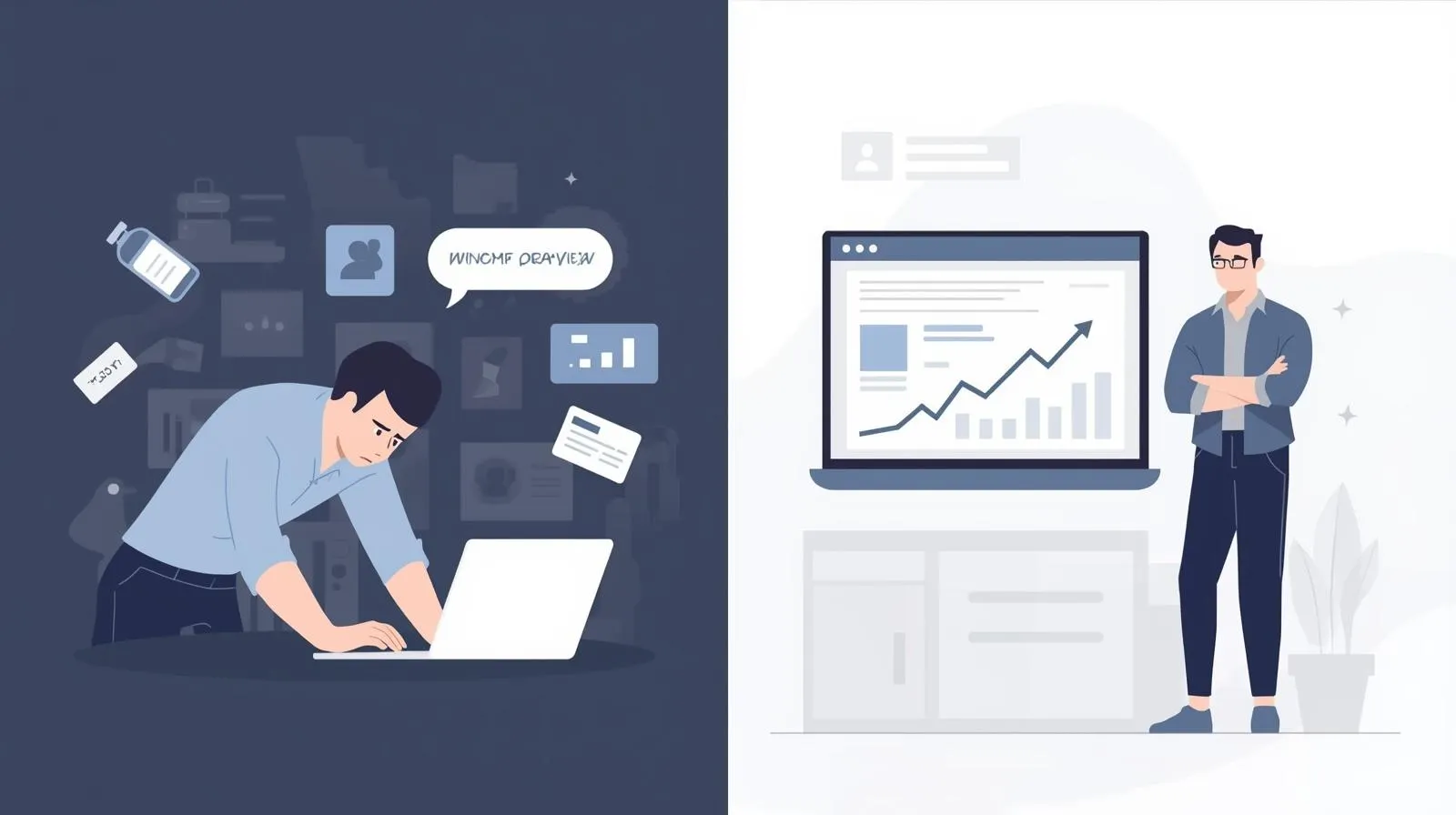
"I was spending 12 hours a week just trying to feed the content beast," Sarah admits. "I’d spend two hours staring at a blank screen, another three writing a newsletter that only 15% of my list opened, and the rest of the time stressing about what I should be posting. I wasn't running a business anymore; I was a full-time content churner." If the Alex Rivers struggle sounds familiar, the complete guide to AI for small business owners maps the exact path from operator to strategist.
This is the reality for the vast majority of entrepreneurs. We are sold the dream of scaling, but we are stuck in the weeds of operations. We want to compete with the big agencies, but we lack their 10-person marketing teams.
This case study poses a radical question: Is it possible to condense a grueling 12-hour content workload into a single, high-impact hour?
To answer this, we tracked Sarah’s transition from a "hustle-hard" manual workflow to a strategic, AI-assisted system. The goal wasn't just fast content creation—that’s easy if you want garbage outputs. The goal was expert-level content creation that builds authority, drives leads, and actually sounds like her.
The Bottleneck: The High Cost of "DIY"
Before we could fix the problem, we had to diagnose the cost. For a business owner billing at $200+ an hour, spending 10 to 12 hours a week on content creation isn't just annoying; it’s a $2,000 weekly expense. That is over $100,000 a year in billable time lost to writing captions and struggling with blog intros. For a deeper breakdown of these hidden costs, AI-powered content creation vs outsourcing: a cost analysis reveals what most service-based business owners overlook.
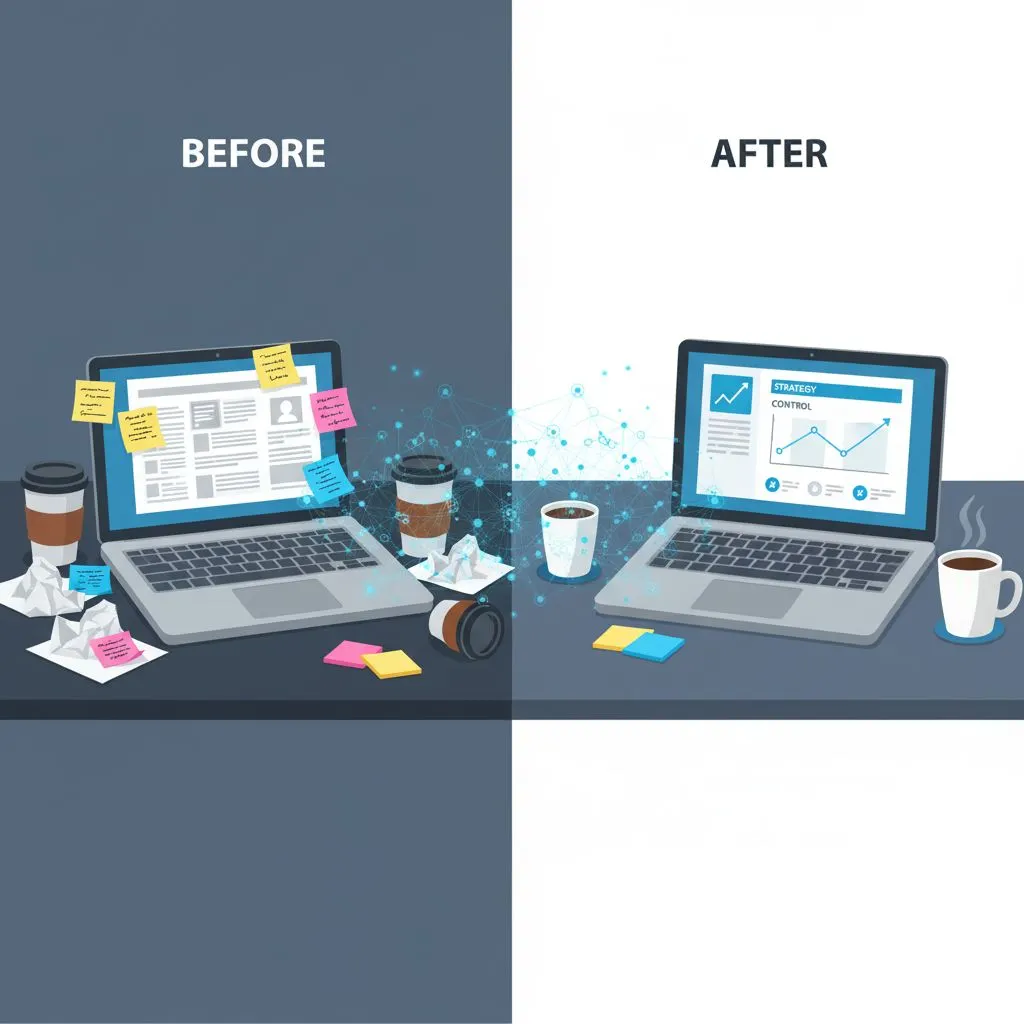
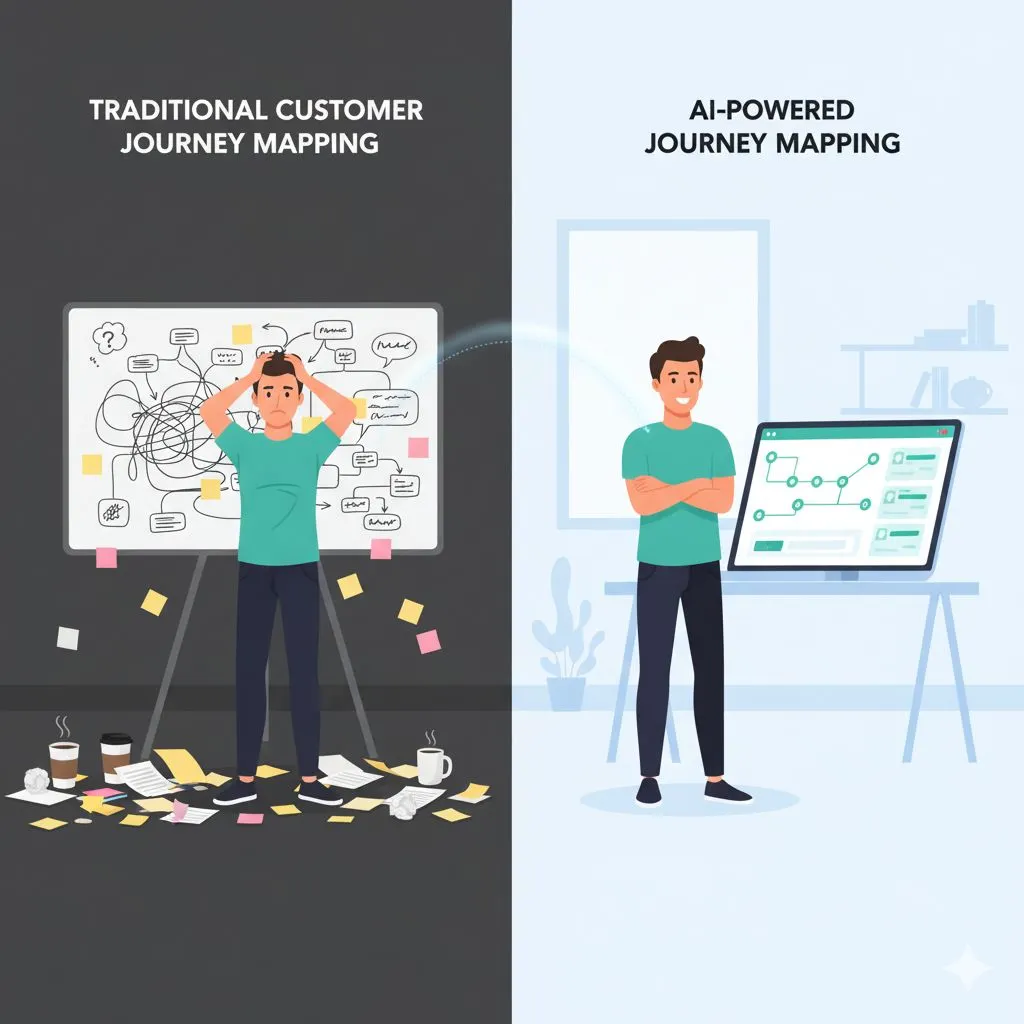
Sarah’s "Before" workflow looked like this:
- Monday: Panic scroll through industry news to find ideas.
- Tuesday: Write a draft, hate it, delete it.
- Wednesday: Force out a generic post just to "get something up."
- Thursday: realize the newsletter is due; stay up until midnight writing it.
"The worst part wasn't the time," Sarah says. "It was the inconsistency. My audience could smell the desperation. Some weeks I was brilliant; other weeks I was silent. You can't build a credible brand on inconsistent chaos."
She tried to solve it the way many of us do: she signed up for a generic AI tool. She typed, "Write me a LinkedIn post about consulting."
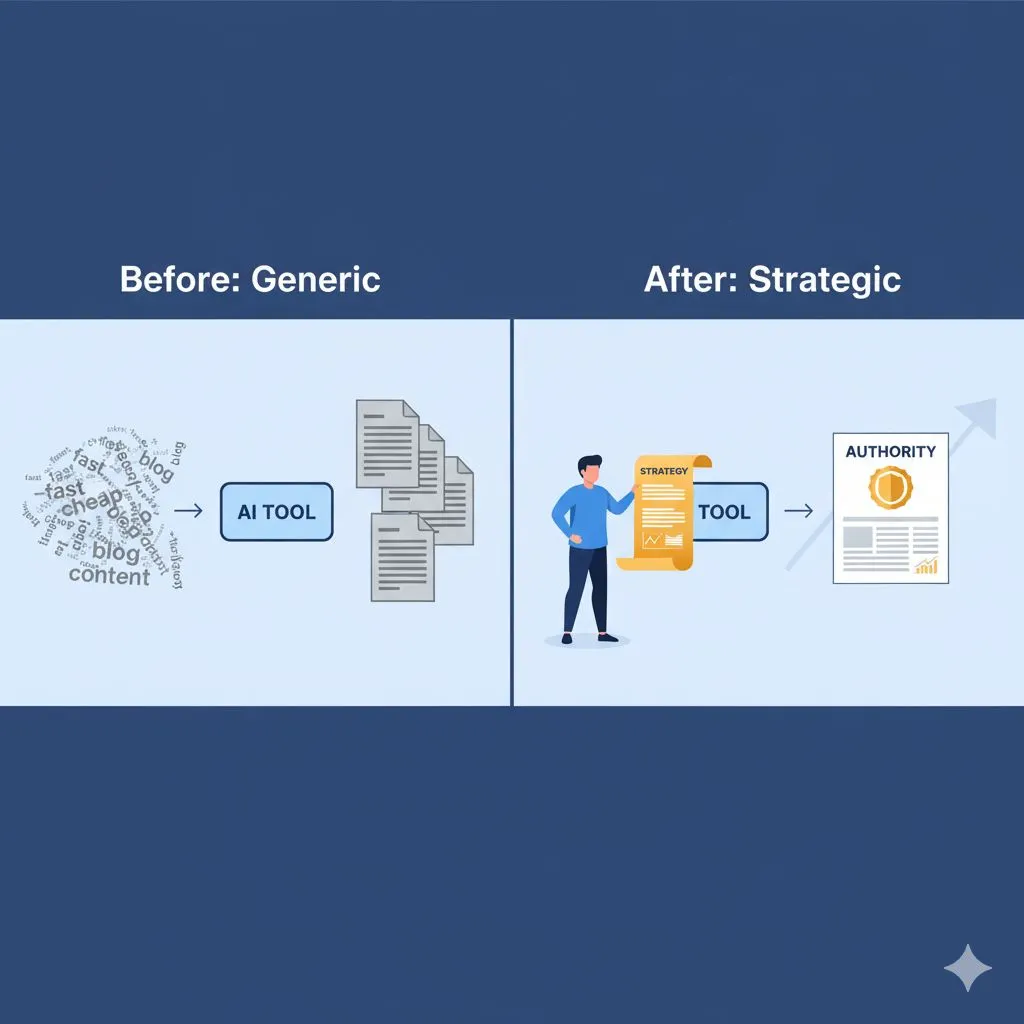
The result? A robotic, emoji-filled wall of text that started with "In today's fast-paced world..." and ended with "Delve into the landscape."
"It was unusable," Sarah recalls. "It sounded like a college intern pretending to be a CEO. I spent more time fixing the AI's output than if I had just written it myself. I assumed AI just wasn't ready for 'expert' work yet."
Sarah was wrong. The problem wasn't the AI. The problem was the prompt.
The Shift: Strategy Over Syntax
The turning point for Sarah came when she realized that fast content creation isn't about typing faster; it's about thinking smarter. Generic inputs yield generic outputs. To compete with larger players, she needed a system that injected her strategy into the AI before the writing even began.
This is where Expert AI Prompts entered the equation.
Unlike the "chat and pray" method, Expert AI Prompts treats the AI as a junior strategist, not just a writer. The distinction is critical. A writer asks, "What words do you want?" A strategist asks, "Who are we talking to, and what do we want them to feel?"
Sarah’s transition involved moving away from simple commands and adopting structured, industry-specific prompt frameworks. She didn't need a tool to "write a post"; she needed a tool to "analyze her unique value proposition and articulate it for a skeptical B2B audience."
The "Pre-Flight" Check
Before aiming for the 1-hour work week, Sarah had to spend 30 minutes (one time only) setting up her "Brand DNA" within the prompt structure. This involved defining:
- Tone: Professional yet approachable, authoritative but not arrogant.
- Audience: Small business owners (The Alex Rivers persona).
- Goal: To be seen as a scalable efficiency expert.
"Once I realized I could 'teach' the AI my context before asking for content, everything changed," Sarah notes. "I wasn't asking it to guess my business model anymore. I was giving it the blueprint."
The Methodology: Why Generic Prompts Fail
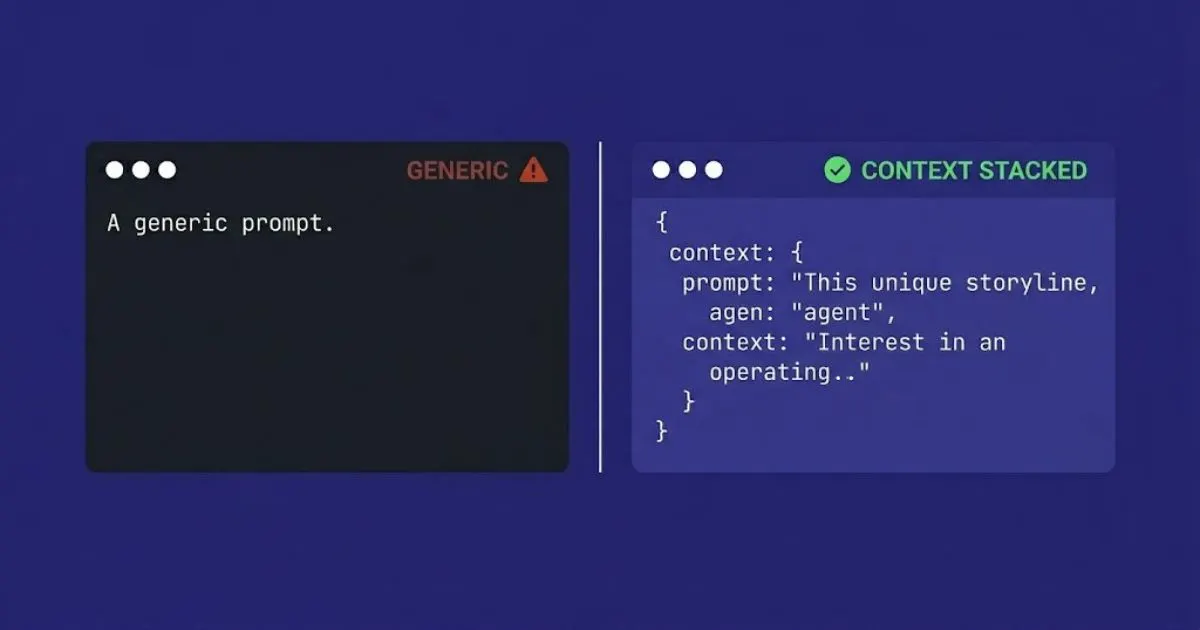
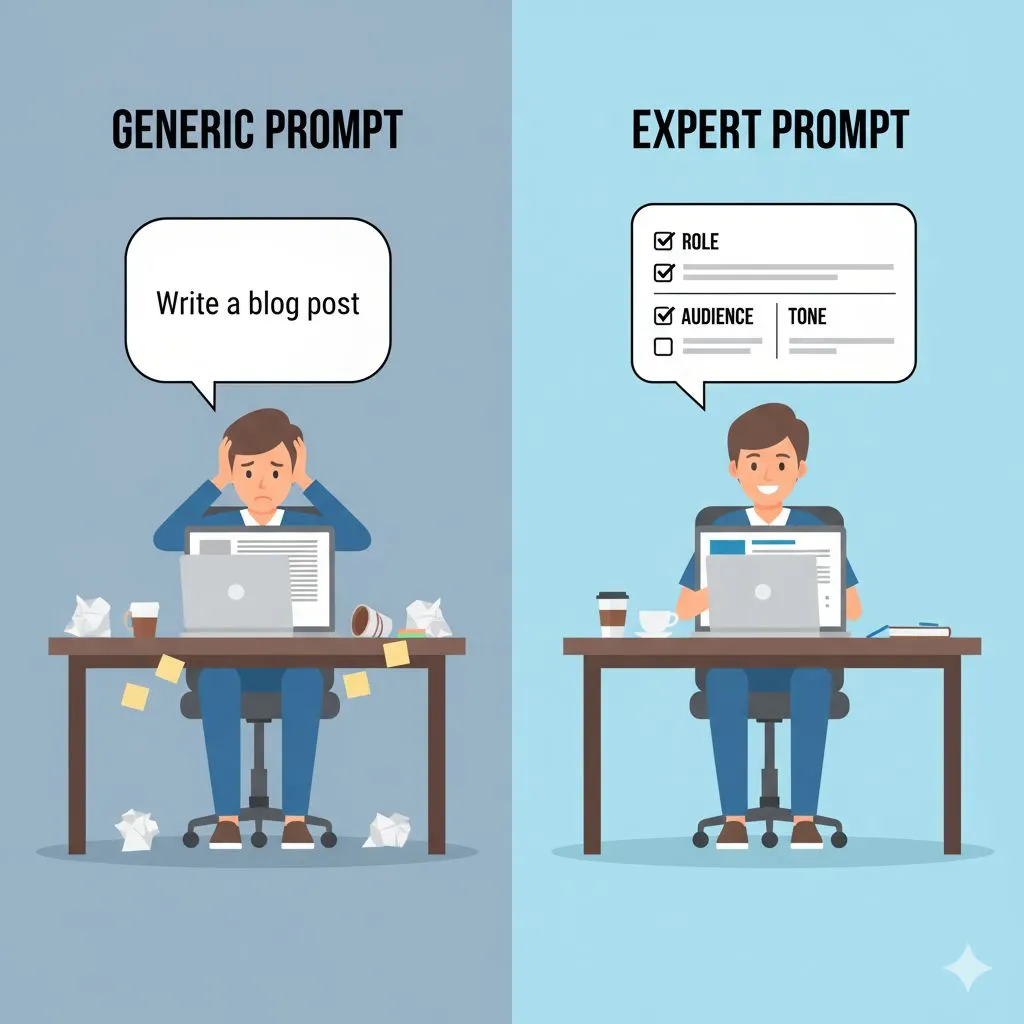
To understand why Sarah’s previous attempts failed, we analyzed the difference between a Standard Prompt and an Expert Prompt. This distinction is explored in depth in generic vs strategic AI prompts — what the difference costs your business.
- Standard Prompt: "Write 5 ideas for blog posts about business efficiency."
- Result: Generic lists (e.g., "Use a calendar," "Wake up early"). These add no value and damage brand authority.
- Expert AI Prompt: "Act as a Senior Operations Consultant. Analyze the top 3 bottlenecks for service-based businesses in the [Industry Name]. For each bottleneck, provide a contrarian viewpoint that challenges standard advice. Generate 5 headline ideas that promise a specific outcome."
The difference in output quality was immediate. The Expert Prompt didn't just give ideas; it gave angles. It provided depth. It moved Sarah from "Content Creator" to "Thought Leader."
With the tools in hand and the skepticism sidelined, Sarah was ready to test the 1-Hour Content Week.
The 1-Hour Workflow: A Minute-by-Minute Breakdown
On a Monday morning, Sarah sat down with her coffee, opened her Expert AI Prompts pack, and started the timer. The goal: One week of high-level content (5 LinkedIn posts, 1 Newsletter, 3 Twitter/X threads) in 60 minutes.
Here is the exact breakdown of how she achieved fast content creation without sacrificing quality.
Minutes 0–10: Strategic Ideation (The "Brain Dump")
Instead of staring at a blank page, Sarah used an Ideation Multiplier prompt.
- Action: She inputted a single client struggle she dealt with the previous week (e.g., "Clients have trouble pricing their services").
- The Prompt: She used a prompt designed to fracture that single topic into five distinct content pillars: a personal story, a data-backed insight, a contrarian take, a "how-to" guide, and a direct sales bridge.
- Result: In 8 minutes, she had 10 fully fleshed-out concepts. No scrolling news feeds. No guessing. Just relevant, pain-point-driven ideas.
Minutes 10–30: The "Drafting Sprint"
This is usually the longest phase. Sarah compressed it by batch-processing using specific templates from her prompt pack.
- The LinkedIn Posts (10 mins): She selected her top 3 ideas and ran them through the Viral Authority prompt structure. The AI generated posts with strong hooks ("stop scrolling" lines), formatted bodies (bullet points for readability), and clear Calls to Action.
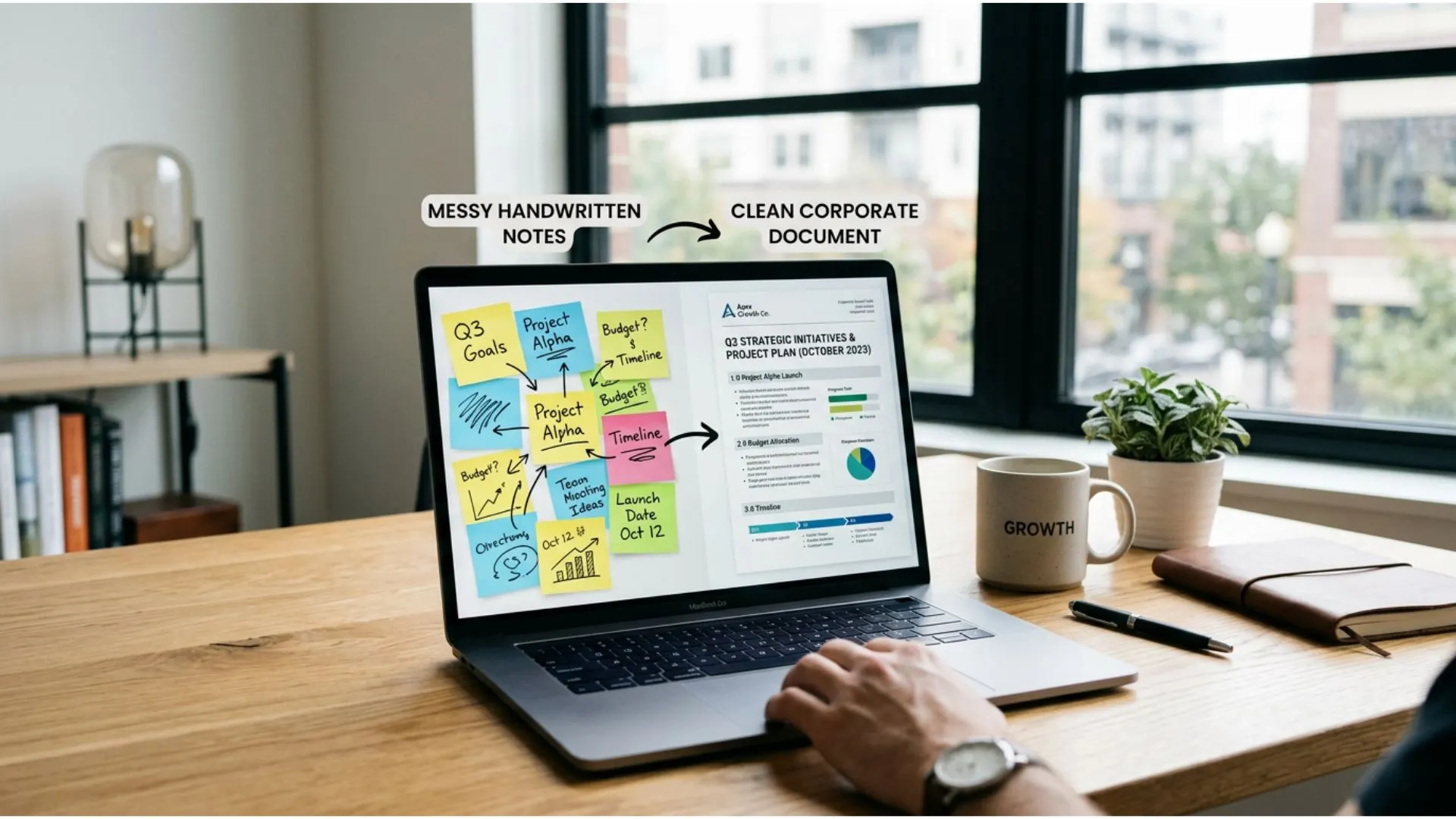
- The Newsletter (10 mins): She used the Newsletter Deep Dive prompt. She fed the AI a rough audio transcript of a thought she had while driving. The prompt restructured her rambling thoughts into a coherent, persuasive argument with an intro, body, and conclusion.
- Result: By minute 30, the raw text for a full week of content was generated. It wasn't perfect yet, but it was 85% there.
Minutes 30–50: The "Human Polish"
This is the most critical step that amateurs skip. AI gets you to the 10-yard line; you have to run it into the end zone.
- Action: Sarah spent 20 minutes reading through the outputs. She swapped out a generic adjective for a word she actually uses. She added a specific anecdote about a client named "Mike" to ground the theory in reality. She checked the tone to ensure it didn't sound too salesy.
- Why this matters: Because the structure was already there, she wasn't writing; she was editing. Editing is significantly faster and less cognitively draining than creating from scratch.
Minutes 50–60: Asset Creation & Scheduling
- Action: Sarah took the "hooks" generated by the text prompts and plugged them into an image generation prompt tool to create simple, branded text-overlay graphics for her posts.
- Final Step: She copied and pasted the final text and images into her scheduling tool.
The Timer Stopped: 58 Minutes.
Sarah sat back. "Usually, I'd still be writing the subject line for the newsletter at this point. Instead, I'm done for the week."
The Results: Metrics That Matter
Sarah’s experiment wasn't a one-off fluke. She implemented this system over a period of 90 days. The results went beyond just time savings; they fundamentally changed how her business operated.
1. Quantitative Results: The Efficiency Explosion
- Time Saved: Sarah reclaimed approximately 11 hours per week. Start recovering time this week with the free 5-Hour Saver Prompts — a no-cost toolkit that immediately reduces your content workload. That is 44 hours a month—an entire work week recovered.
- Output Volume: Her content output increased by 150%. She went from sporadic posting (2x a week) to daily presence.
- Cost Savings: By not outsourcing this to a junior freelancer (approx. $2,000/mo) or wasting her own billable hours, the ROI of the prompt pack was immediate.
2. Qualitative Results: The Authority Lift
The fear that "fast content" would damage her brand proved unfounded. In fact, the opposite happened. Because the Expert AI Prompts were structured around psychological frameworks and industry best practices, her content became more strategic.
- Engagement: LinkedIn impressions rose by 40% because the hooks were stronger. For a detailed look at results like these, the AI prompt ROI case study for scaling delivery walks through the metrics behind a similar 90-day business transformation.
- Credibility: Clients began mentioning her posts in sales calls. "I saw what you wrote about pricing models—that’s exactly why we called you."
- Confidence: Sarah moved from "imposter syndrome" to feeling in control of her voice.
The "New Normal" for Small Business
The skepticism Alex Rivers (and Sarah) feels toward AI is justified when looking at the hype. But when you strip away the magic tricks and focus on utility, the picture changes.
Fast content creation isn't about cutting corners. It's about removing the friction between your expertise and your audience. The bottleneck was never a lack of ideas; Sarah had plenty of those. The bottleneck was the manual labor of translating those ideas into digital formats.
By utilizing a system specifically designed for high-level execution, Sarah proved that the 1-Hour Content Week is not only possible—it is the competitive advantage small business owners have been waiting for.
Conclusion: Stop Hustling, Start Scaling
If you are an entrepreneur reading this, you likely see a bit of yourself in Sarah’s story. You have the expertise. You have the drive. You just don't have the time.
The market has shifted. You no longer need a massive team to compete with the industry giants. You need a better process. You need to to stop staring at a blinking cursor and start leveraging tools that respect your intelligence and your time.
Sarah didn't become a better writer overnight. She became a smarter operator. She traded stress for strategy, and overwhelm for opportunity.
The technology exists. The frameworks are ready. The only question left is: What will you do with the 11 hours you get back next week?
Ready to build your own 1-Hour Content System?
Not ready to invest yet? Explore all 11 free AI prompt tools and templates — zero cost, immediate value for overworked business owners.
Or start with one specific resource: grab the free 1-Week Content Plan Template and map out your first AI-assisted content week in under 30 minutes.
Don't start from scratch. We’ve built the exact frameworks used in this case study to help you scale your authority without the burnout.
Get The Small Business Playbook for AI Content Creation Here
Further Reading
• The Secret to Consistency: Batching Content with Prompts
• Repurposing Content: Turning 1 Blog Post into 10 Social Pieces with AI
• Content Pillars and AI: Planning Your Quarter in an Afternoon
• How to Create a Month of Social Media Content in One Hour
• Stop Posting Randomly: A Data-Driven Content Plan for Busy Owners