Local SEO for Small Business: Ranking Without an Agency
Local SEO for Small Business: Ranking Without an Agency
Feb 01, 2026
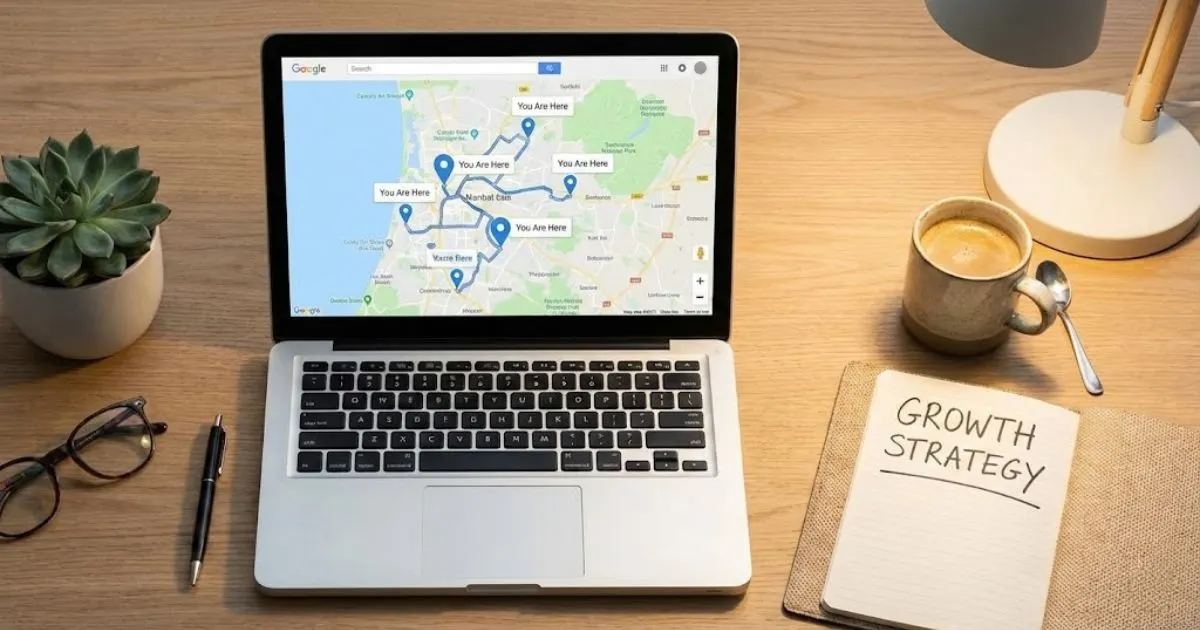
You wear every hat in your business. You are the CEO, the marketing department, the customer service lead, and occasionally the IT support. You know you need to be visible online—specifically, you need to show up when local customers search for your services. But when you look at the price tag of a dedicated SEO agency, usually starting at $2,000 a month with no guarantee of results, it feels impossible.
Here is the truth the agencies won’t tell you: For small business SEO, you don’t need a massive budget. You need a strategy.
Local SEO is the great equalizer. It is the one arena where a nimble, focused small business can outrank a national giant. When someone searches for "best graphic designer near me" or "emergency plumber in [City Name]," Google doesn't care who has the biggest marketing budget. It cares who is the most relevant, trustworthy, and local.
For a complete playbook on how AI amplifies every tactic in this guide, explore the ROI-driven guide to AI for SEO.
If you are tired of relying on word-of-mouth or expensive ads, this guide is your roadmap. We are going to strip away the technical jargon and focus on the high-impact actions that move the needle. You will learn how to turn your digital presence from invisible to irresistible—without hiring an agency.

Pillar 1: The Google Business Profile (Your Digital Storefront)
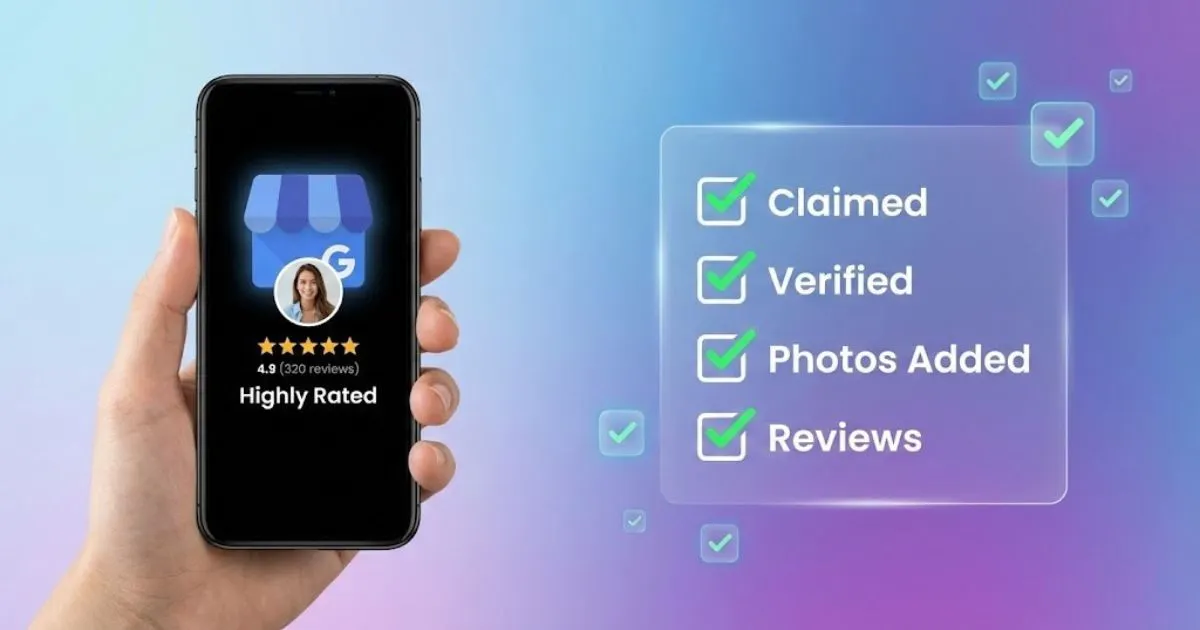
If you do only one thing from this guide, let it be this. Your Google Business Profile (GBP) is not just a listing; it is your new homepage. For many local searches, customers will decide whether to call you without ever visiting your actual website.
Claiming and Verifying
It sounds basic, but heavily impacts your ranking. Ensure you have claimed your profile. If you operate out of your home and service a local area (like a consultant or tradie), you can hide your physical address and set a "Service Area" instead. This protects your privacy while still telling Google exactly where you do business.
Optimization Essentials
A "set it and forget it" approach kills rankings. You need to complete every single field Google offers:
- Categories: Be specific. Don't just select "Consultant" if you are a "Marketing Consultant." Choose the primary category that best fits your core offering, then use secondary categories for other services.
- Hours: specific and accurate hours prevent bad customer experiences. Update them for holidays immediately.
- Description: This is your elevator pitch. Include your main keywords (e.g., "Small Business Accounting in Townsville") naturally in the first 150 characters.
Visual Strategy
Google’s AI looks at your photos. Businesses with more than 100 photos get 520% more calls than those with fewer. You don't need a professional photographer; you need authenticity. Upload photos of your team, your office, your finished projects, and even your happy clients (with permission). This signals to Google that the business is active and "real."
The Secret Weapon: GBP Updates
Most businesses ignore the "Updates" section. This is a free space to post news, offers, or short articles. Posting once a week signals to Google that your business is alive and engaged. It’s a low-effort signal with high-ranking returns.
Pillar 2: On-Page SEO (The Technical Basics)
Now that your Google Business Profile is working for you, we need to ensure your website is speaking Google’s language. This is "On-Page SEO." Do not let the terminology scare you; for small business SEO, this is mostly about organization and clarity.
Structuring for Locals: Location Pages
If you service multiple cities or suburbs, do not clutter your homepage with a laundry list of locations. Instead, create specific pages for each major area you serve.
- Bad: A homepage that says "Serving New York, New Jersey, and Connecticut."
- Good: A dedicated page for "Small Business Consulting in Newark, NJ" and another for "Business Coaching in Stamford, CT."
Each page should feature content specific to that location—mentions of local landmarks, specific local client testimonials, or case studies from that area. This helps you cast a wider net without diluting your brand.
NAP Consistency: The Golden Rule
NAP stands for Name, Address, and Phone Number. Google is a robot; it gets confused easily. If your website lists your address as "123 Main St, Suite B," but your Facebook page says "123 Main Street #B," Google might treat these as two different entities, splitting your ranking power.
Ensure your NAP is identical across the footer of your website, your contact page, your Google Business Profile, and your social media. This consistency builds a "trust signal" that tells search engines you are a legitimate, established business.
Keyword Strategy: The "Low Hanging Fruit"
You don’t need expensive software like Ahrefs or Semrush to start. Put yourself in your customer's shoes. What are they typing when they are stressed and need your help?
- They likely aren't typing generic terms like "Consulting."
- They are typing intent-driven phrases: "Affordable HR consultant for startups," "Emergency roof repair," or "Vegan bakery open Sunday."
Use these long-tail keywords in your page titles, your headers (H1 and H2 tags), and the first paragraph of your content. Avoid "keyword stuffing" (repeating the word unnaturally). If it sounds robotic to read, it’s bad for SEO.
For a full breakdown of which AI-powered tools help you find these intent-driven phrases without the agency price tag, see our review of the best AI SEO tools for small business.
Mobile Experience
More than 60% of searches happen on mobile devices. If your site takes more than 3 seconds to load, or if buttons are too small to click with a thumb, Google will penalize you. Use Google's free "PageSpeed Insights" tool to check your site. Often, simply compressing your images (making the file size smaller) is enough to drastically improve your speed and mobile ranking. To see how this fits into a complete AI-assisted publishing process, read about streamlining your entire SEO workflow with AI.
Pillar 3: Reputation & Authority
You have built the store (Website) and put up the sign (Google Business Profile). Now, you need word-of-mouth. In the digital world, this is measured by reviews and citations. This pillar is about proving to Google—and your future clients—that you are trustworthy.
The Review Economy
Reviews are a direct ranking factor for small business SEO. A business with a 4.8-star rating and 50 reviews will almost always outrank a business with a 5.0 rating and 2 reviews. Volume and recency matter.
You cannot wait for reviews to happen passively; people usually only leave reviews when they are angry. You must build a system to ask for them.
- The Workflow: Send an automated email or text 24 hours after a service is delivered.
- The Ask: Keep it simple. "It was great working with you! If you have 30 seconds, sharing your experience helps our small team grow." Include the direct link to your Google review form.
Responding to Feedback
You must respond to every review. Yes, even the bad ones. Especially the bad ones.
- Positive Reviews: a simple "Thanks, Alex! Glad we could help save you time," validates the customer and adds more keywords to your profile.
- Negative Reviews: Do not get defensive. Respond calmly: "I’m sorry we missed the mark. We value quality and would love to fix this. Please call us at..."
- Future customers aren't looking for a perfect 5.0; they are looking to see how you handle problems. A professional response to a bad review can actually increase trust.
Citations: Being Found Everywhere
A "citation" is simply a mention of your business Name, Address, and Phone number (NAP) on another website. Google treats these like votes of confidence.
Start with the "Big Four" data aggregators:
- Facebook (Business Page)
- Yelp
- YellowPages
- Bing Places
Once those are secured, look for hyper-local or industry-specific directories. Is there a local Chamber of Commerce? A specialized directory for graphic designers or accountants? These niche citations are often more valuable than generic ones because they carry high topical relevance.
Pillar 4: Content Strategy (The Growth Engine)
This is where most small business owners hit a wall. You know you need a blog, but you don't have time to write. However, content is the bridge between a stranger asking a question and finding your business as the answer.
Blogging for Locals
Stop writing generic articles like "5 Benefits of Accounting." You are competing with Forbes and huge firms for that traffic. You will not win.
Instead, write for your neighbor. Write: "Tax Incentives for Small Businesses in [Your State]" or "The Best Venues for Corporate Events in [Your City]."
This content has lower search volume, but the people searching for it are your exact target audience. It establishes you as a local authority.
Demonstrating E-E-A-T
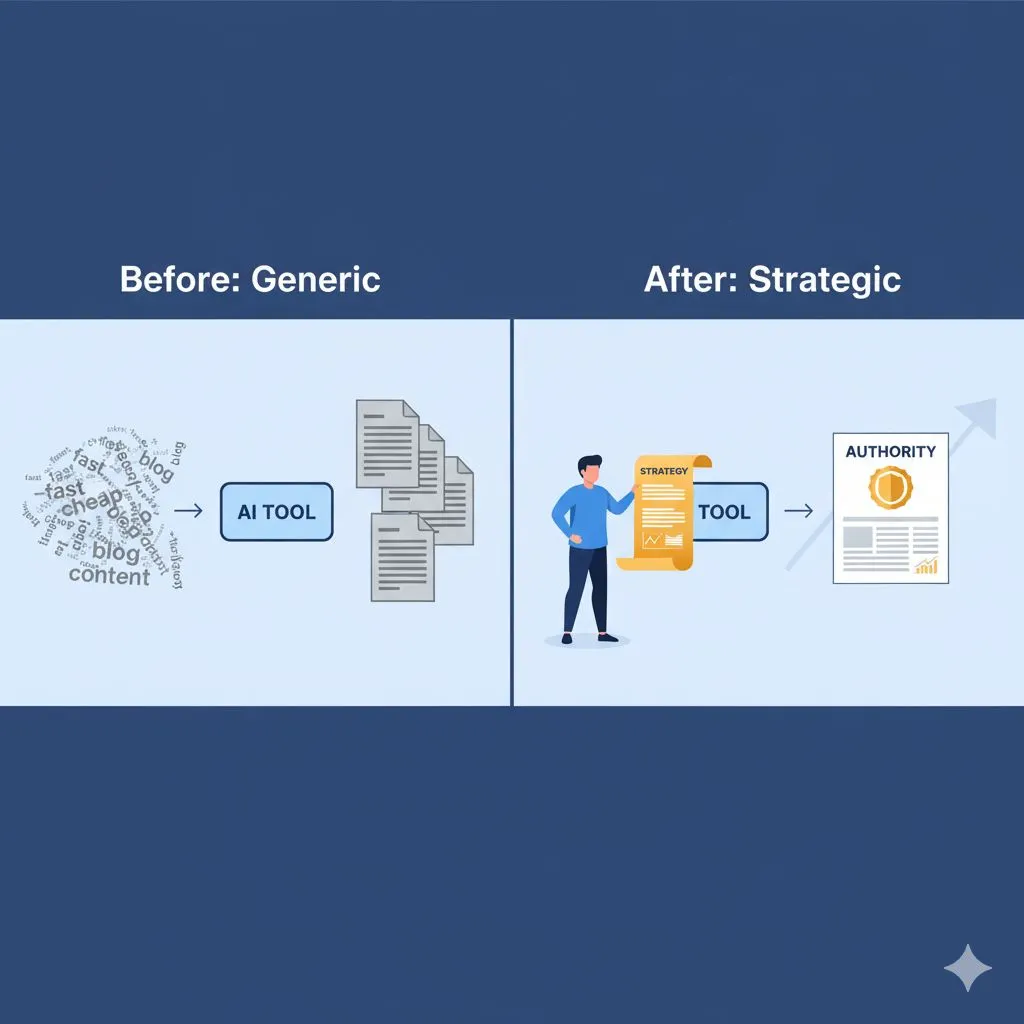
Google uses a framework called E-E-A-T (Experience, Expertise, Authoritativeness, and Trustworthiness) to grade content. You can demonstrate this by — and this is the human strategy plus AI execution winning SEO formula:
- Using "I" statements to share personal experience.
- Including author bios that highlight your credentials.
- Linking to local sources (like local news or government sites) to show community integration.
Scaling Content with Efficiency
This is where the "Overworked & Ambitious" persona meets a solution. You cannot spend 4 hours writing one blog post. You need to leverage tools. This doesn't mean letting AI write junk; it means using AI to structure your thoughts, outline your expertise, and draft the heavy lifting so you can polish it with your personal touch.
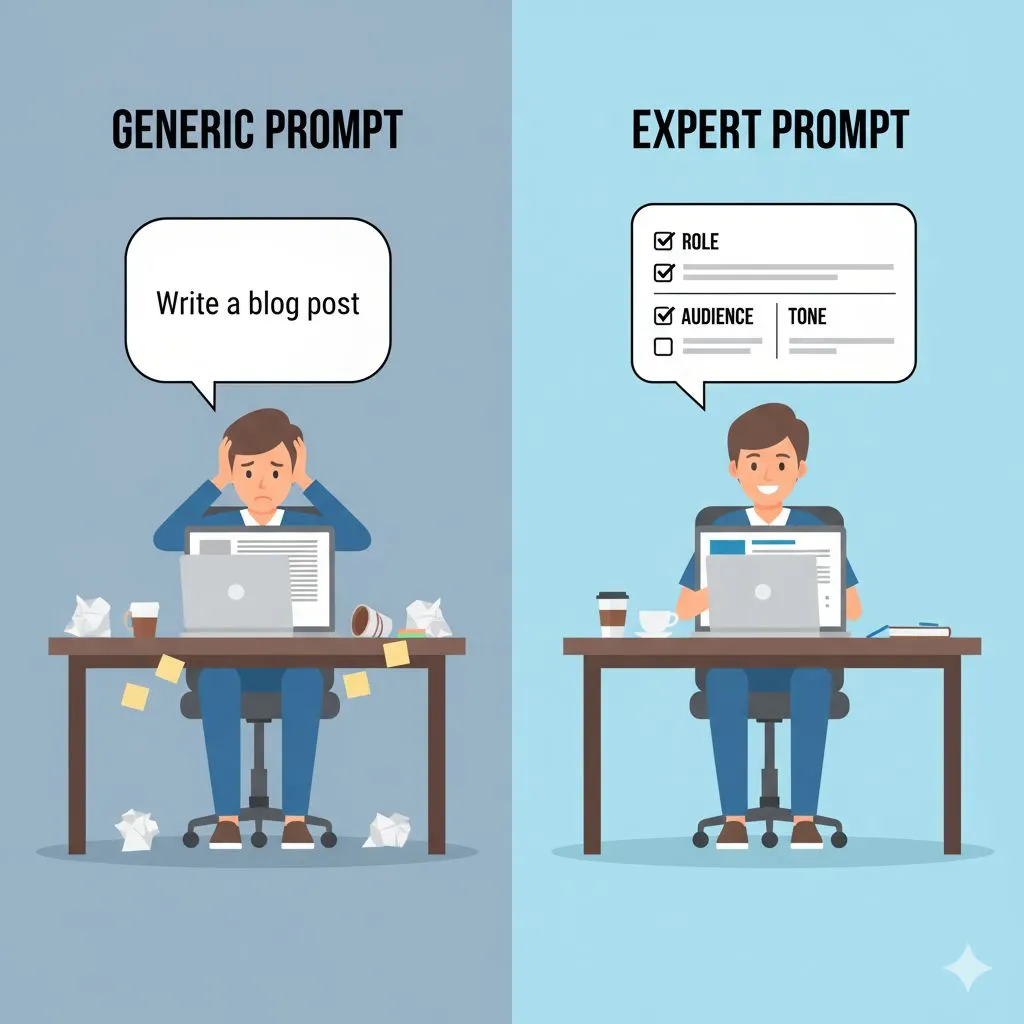
Start with a free resource right now — the Expert AI Prompts free library gives you 11 zero-cost tools to fast-track your local content output today.
Conclusion: Moving from Operator to Strategist
Implementing a small business SEO strategy is not an overnight fix. It is a compound interest game. The work you do today—claiming your profile, fixing your NAP, writing that one local guide—will continue to bring you leads six months and six years from now.
You do not need a $2,000/month agency to start. You have the knowledge, the local expertise, and now, the roadmap. The only missing piece is time. When you’re ready to scale beyond this guide, browse all 30 industry-specific prompt packs to find the toolkit built for your exact business type and budget.
As a business owner wearing many hats, your time is your most expensive asset. You need to move fast. You need to produce expert-level descriptions, blog posts, and review responses without staring at a blank cursor for hours.
Ready to scale your presence without the burnout?
Stop spinning your wheels and start dominating your local market. Get the tools that turn hours of writing into minutes of execution.
Get the Expert AI Prompts SEO Toolkit Now
Further Reading
SEO in 2026: Why You Need Strategic Prompts to Rank on Google
Can AI Write SEO Content That Actually Ranks?
How Answer Engines Are Killing Traditional SEO
Stop Posting Randomly: A Data-Driven Content Plan for Busy Owners