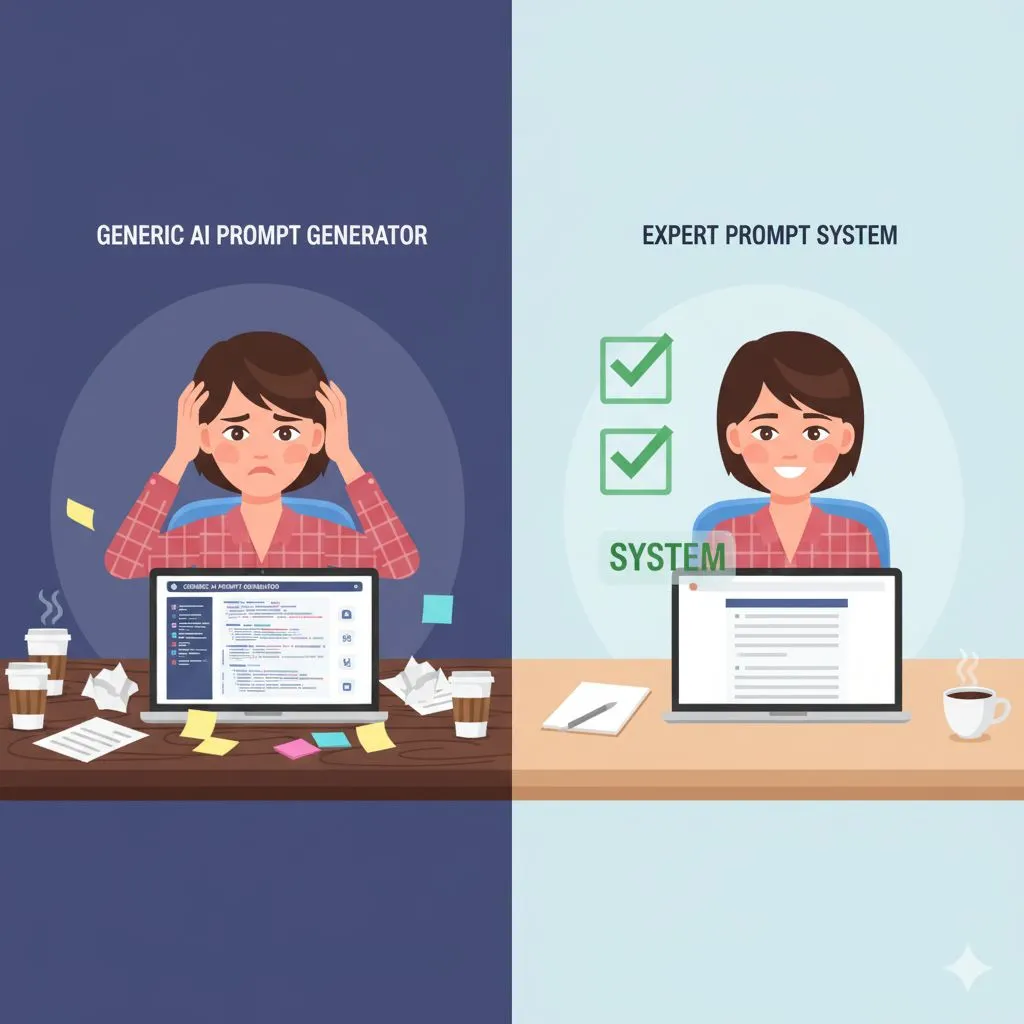
SEO in 2026: Why You Need Strategic Prompts to Rank on Google
SEO in 2026: Why You Need Strategic Prompts to Rank on Google
Jan 23, 2026

If you are reading this, you are likely tired.
You are tired of the constant algorithm updates. You are tired of pouring hours into blog posts that get buried on Page 3. And mostly, you are tired of hearing that "Content is King" while you struggle to find the time to manage your business, let alone run a full-scale media operation.
For small business owners and digital entrepreneurs, the promise of AI for SEO was supposed to be the great equalizer. Tools like ChatGPT were sold as the "easy button"—a way to generate infinite content in seconds.
But as we settle into 2026, the reality has hit hard.
The internet is now flooded with mediocre, robot-written content. Google’s Search Generative Experience (SGE) and AI Overviews have pushed organic links further down the page. The game has changed. Using AI to blast out generic articles isn't just ineffective; it’s a liability.
But there is good news. You don't need a massive team to compete. You don't need to work 80 hours a week. You just need to stop asking AI to "write" and start commanding it to "strategize."
This guide is for the ambitious yet overworked entrepreneur. It is your roadmap to reclaiming your time and ranking on Google using the power of strategic prompts.
The New Rules of Engagement: Google as an Answer Engine
To understand why your current SEO strategy might be failing, we have to look at how Google has evolved.
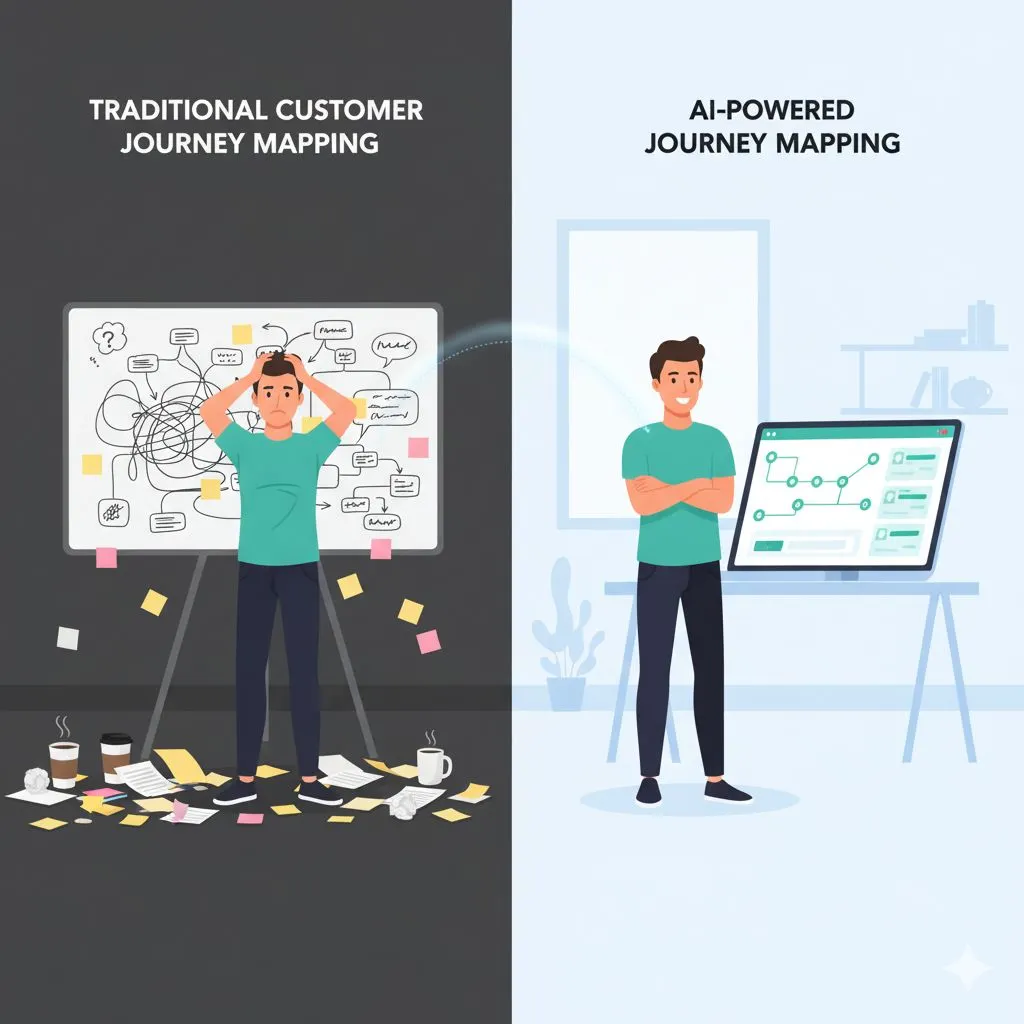
In the past, Google was a librarian. You asked for a book (keyword), and it gave you a list of books (links). Today, Google is a research assistant. It reads the books for you and summarizes the answer right at the top of the page.
This shift to an "Answer Engine" means two things for your business:
- Zero-Click Searches are Rising: Users often get their answer without ever clicking a link.
- The Bar for clicks is Higher: If a user does scroll past the AI summary, they are looking for deep expertise, personal experience, or a unique perspective that the AI summary missed.
For a deeper look at this shift, see how answer engines are changing traditional SEO.
The "Information Gain" Imperative
Google’s algorithms in 2026 prioritize "Information Gain." This concept is simple: Does your content add something new to the internet?
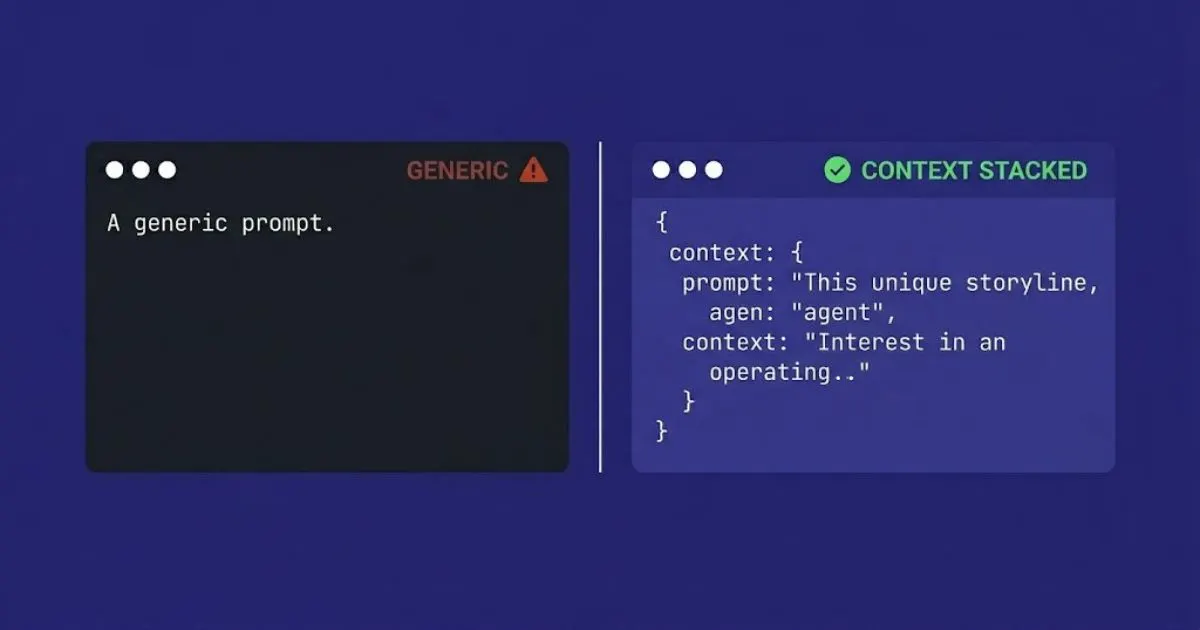
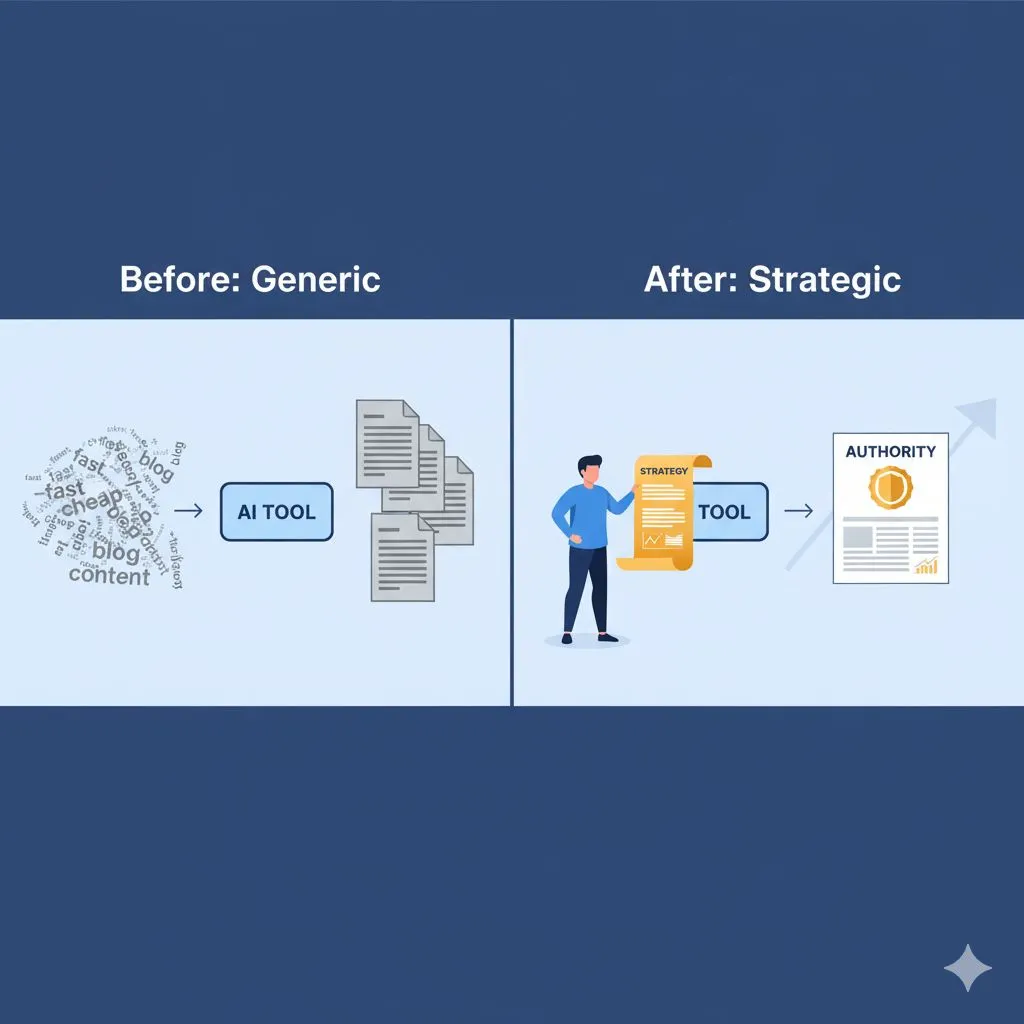
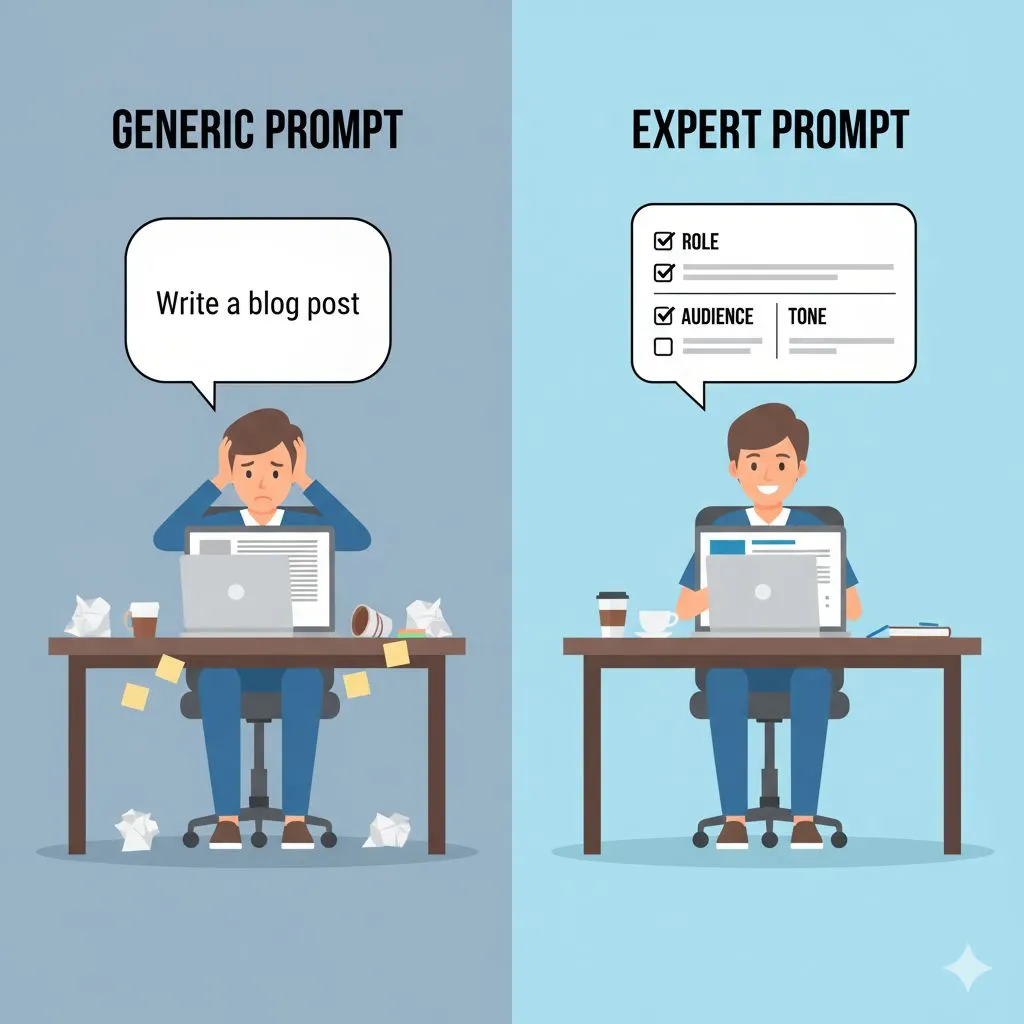
If you use a generic AI prompt like "Write a blog post about the benefits of digital marketing," the AI will scrape the internet for the most common, average consensus. It will give you the same five points that everyone else has.
Result: Zero Information Gain. Zero rankings.
To rank in 2026, your content must possess E-E-A-T (Experience, Expertise, Authoritativeness, and Trustworthiness). You need to inject unique data, contrarian viewpoints, and brand-specific voice into your content.
For a practical breakdown of why this matters for rankings, see human strategy plus AI execution — the winning SEO formula.
Most people think AI can't do this. They are wrong. AI can do it—but only if you use the right prompts.
The Problem with "Generic" AI for SEO
Let’s look at the typical workflow of an overwhelmed business owner—let’s call him Alex.
Alex runs a boutique consulting firm. He knows he needs to blog to get clients. He opens ChatGPT and types:
"Write a 1,000-word SEO article about how to improve team productivity."
The AI spits out a perfectly grammatically correct article. It creates headers. It uses the word "productivity" 15 times. Alex copies, pastes, and publishes. He feels productive.
Three months later, traffic is flat. Why?
- The "Sea of Sameness": Alex’s article looks exactly like the 10,000 other articles generated by the same prompt. Google filters this out as "unhelpful content." See the full breakdown in the best AI prompts for business: expert vs generic comparison.
- Lack of Intent: The AI didn't know who Alex was targeting. It wrote for a general audience, not for the high-ticket corporate clients Alex actually wants.
- Hallucinations & Fluff: Without constraints, AI tends to "waffle." It uses filler words ("In today's fast-paced digital landscape...") that signal low quality to readers and search engines alike. The solution is strategic over generic AI prompts — a distinction that changes your results.
This is the "Lazy AI" trap. It saves time in the short term but destroys ROI in the long term.
Strategic Prompts: The Secret Weapon
If Generic AI is a blunt instrument, a Strategic Prompt is a scalpel.
A strategic prompt doesn't just ask for output; it defines the process of creation. It bridges the gap between your unique business knowledge and the AI’s processing power.
The Anatomy of a Strategic Prompt
To make AI for SEO work, every prompt you use must contain four critical elements:
- The Persona (Who): You must tell the AI exactly who it is.
- Generic: "Act as a writer."
- Strategic: "Act as a Senior SEO Content Strategist with 10 years of experience in B2B SaaS marketing. You specialize in creating high-conversion content for C-suite executives."
- The Context (Why): Give the AI the background.
- Generic: "Write about plumbing."
- Strategic: "We are a local plumbing company in Chicago. Our target audience is homeowners in historic districts who are worried about old pipe corrosion. We want to position our 'Non-Invasive Pipe Relining' service as the premium solution."
- The Constraint (How): Tell the AI what not to do.
- Strategic: "Do not use fluff phrases like 'landscape,' 'game-changer,' or 'delve in.' Keep sentences under 20 words. Use active voice only."
- The Goal (What): Define the specific outcome.
- Strategic: "The goal is to rank for 'Chicago vintage pipe repair' and drive the reader to book a free video inspection."
When you combine these elements, you stop generating "content" and start generating "assets."
The 4-Step "AI for SEO" Workflow
You are busy. You don't have time to become a prompt engineer. That’s why we have broken this down into a practical workflow you can use today to upgrade your content strategy.
Step 1: Strategic Ideation (Beyond Keywords)
Most people use tools to find keywords with high volume. In 2026, volume matters less than intent.
Instead of asking AI for a list of keywords, use a prompt to uncover pain points.
Try this Prompt:
"I sell [Product/Service] to [Target Persona]. Please analyze the top psychological triggers, anxieties, and urgent problems this persona faces regarding [Topic]. Based on this, suggest 10 article titles that target 'informational intent' but naturally lead to a 'commercial solution.'"
Why this works: It forces the AI to think about the customer, not just the search engine. This creates topics that people actually want to read.
Step 2: The "Expert" Brief (Information Gain)
Before you write a single word, you need a brief. This is where you beat the competition. You need to know what is currently ranking and how to do it better.
Try this Prompt:
"Analyze the standard advice given for [Topic]. Identify the gaps, the clichés, and the outdated information that most competitors are likely repeating. Then, outline an article structure that challenges these norms and provides a 'contrarian' or 'advanced' perspective using the [Specific Framework/Method] unique to my brand."
Why this works: This ensures your content has high "Information Gain." You aren't repeating the internet; you are upgrading it.
Step 3: Drafting with Density
Now we write. But we don't let the AI ramble. We want "Information Density"—a high ratio of value to words.
Try this Prompt:
"Using the outline above, draft Section 1. Use a punchy, journalistic tone. Avoid all corporate jargon. Incorporate the following unique data point: [Insert Your Data/Experience]. Ensure every paragraph transitions logically to the next. Write for an 8th-grade reading level but with expert-level concepts."
Why this works: By feeding the AI your specific data point or experience, you inject E-E-A-T into the content. The AI handles the grammar; you handle the expertise.
Step 4: The Optimization Polish
Once the draft is done, don't publish yet. Use AI as your "Ruthless Editor."
Try this Prompt:
"Review the text below against Google's 'Helpful Content' guidelines. Critique it for fluff, repetition, and lack of clarity. Highlight areas where the user intent is not fully satisfied and suggest specific improvements to make the content more actionable."
Why this works: It creates a feedback loop that elevates the quality of your content before it ever goes live. For a complete walkthrough of this approach, see streamlining your entire SEO workflow with AI.

Scaling Without Burnout: Reclaiming Your Time
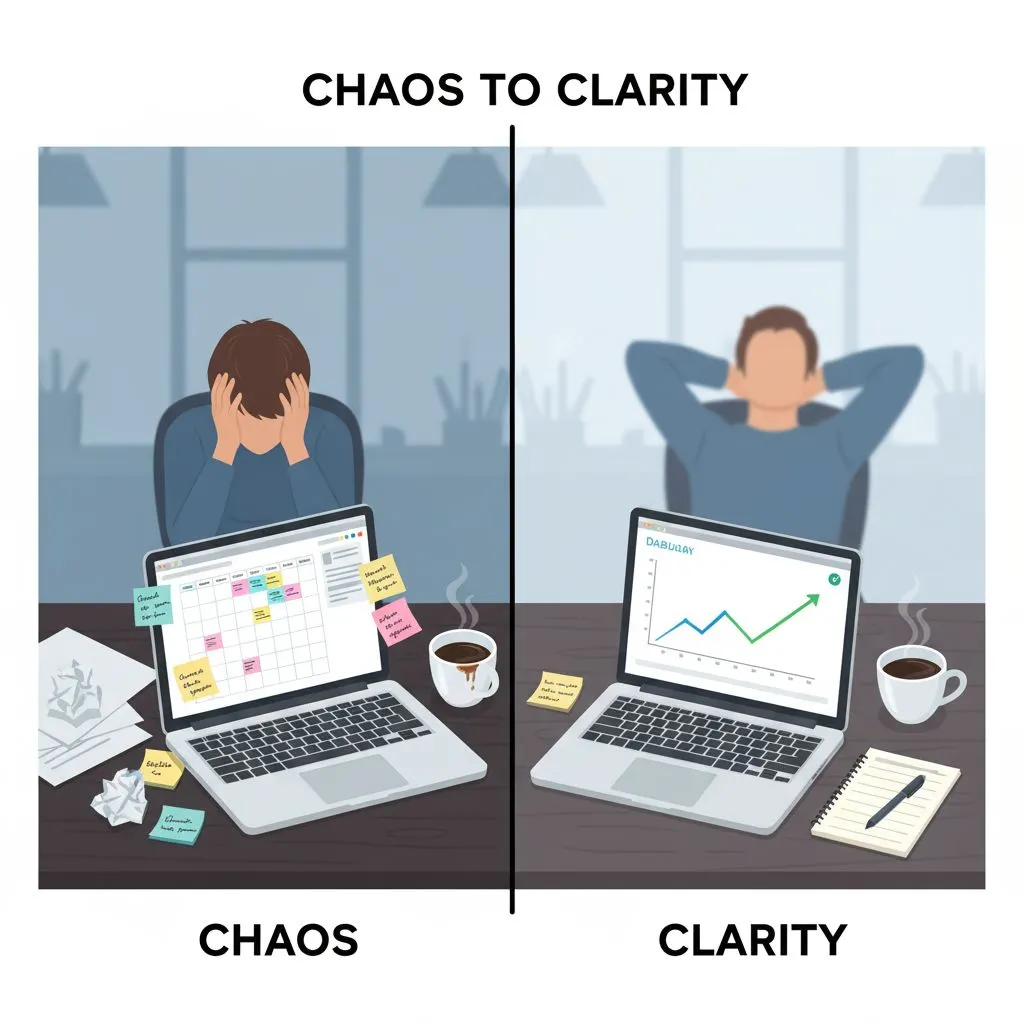
The workflow above might sound like it adds steps. In reality, it compresses a 10-hour writing process into 30 minutes of strategic management.
For a business owner like Alex, this is the difference between working in the business and working on the business.
From "Writer" to "Architect"
To scale your business in 2026, you must shift your mindset. You are no longer the writer. You are the Content Architect.
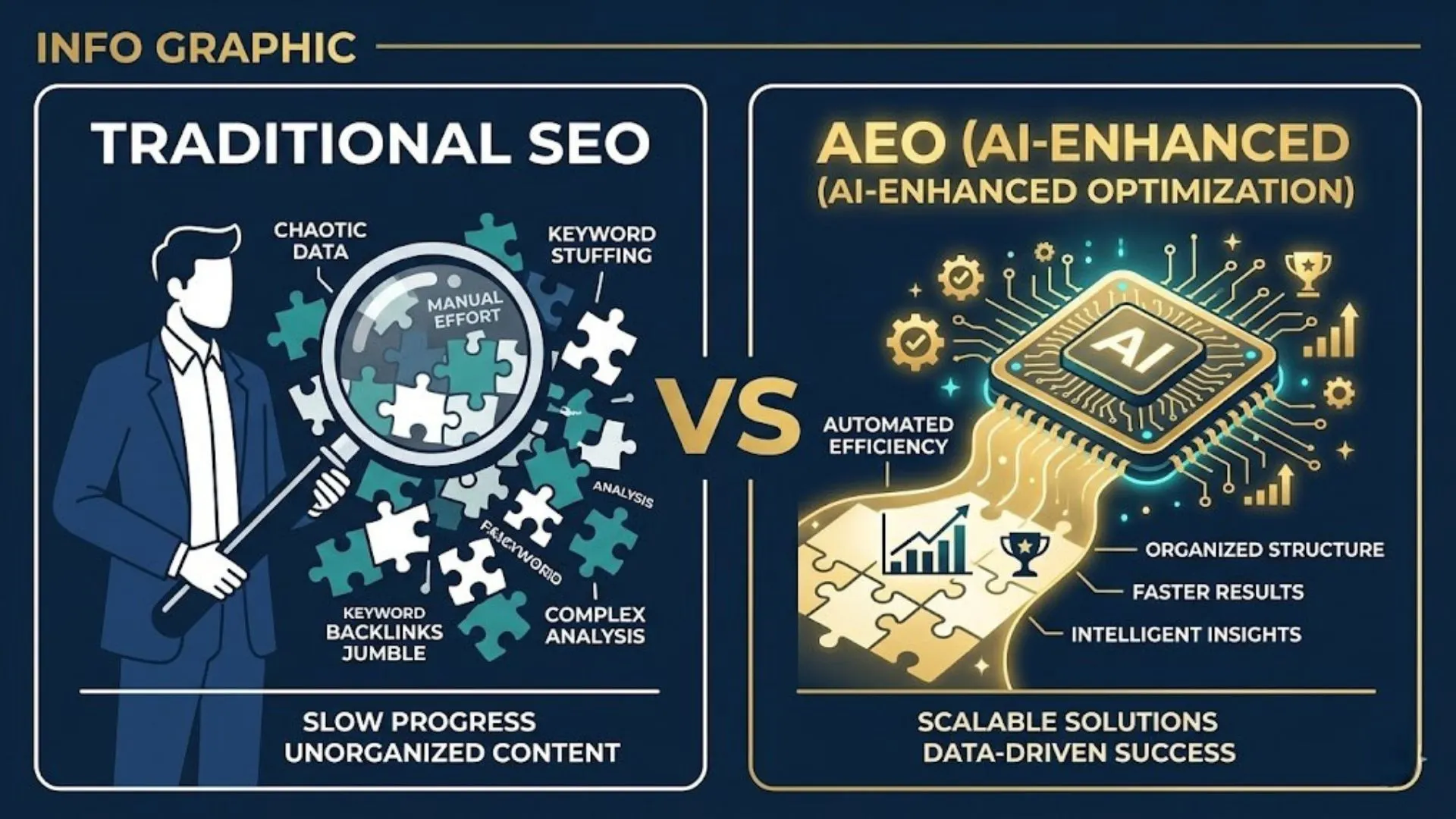
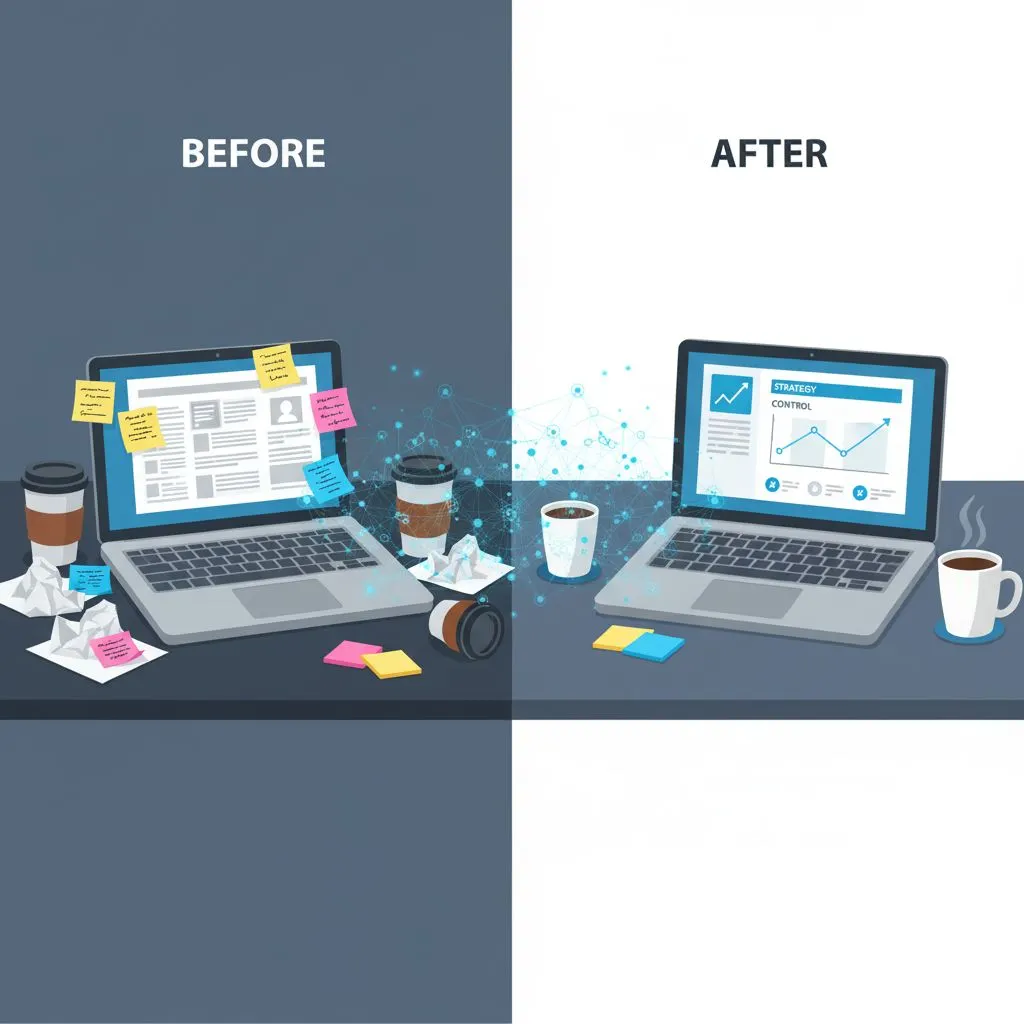
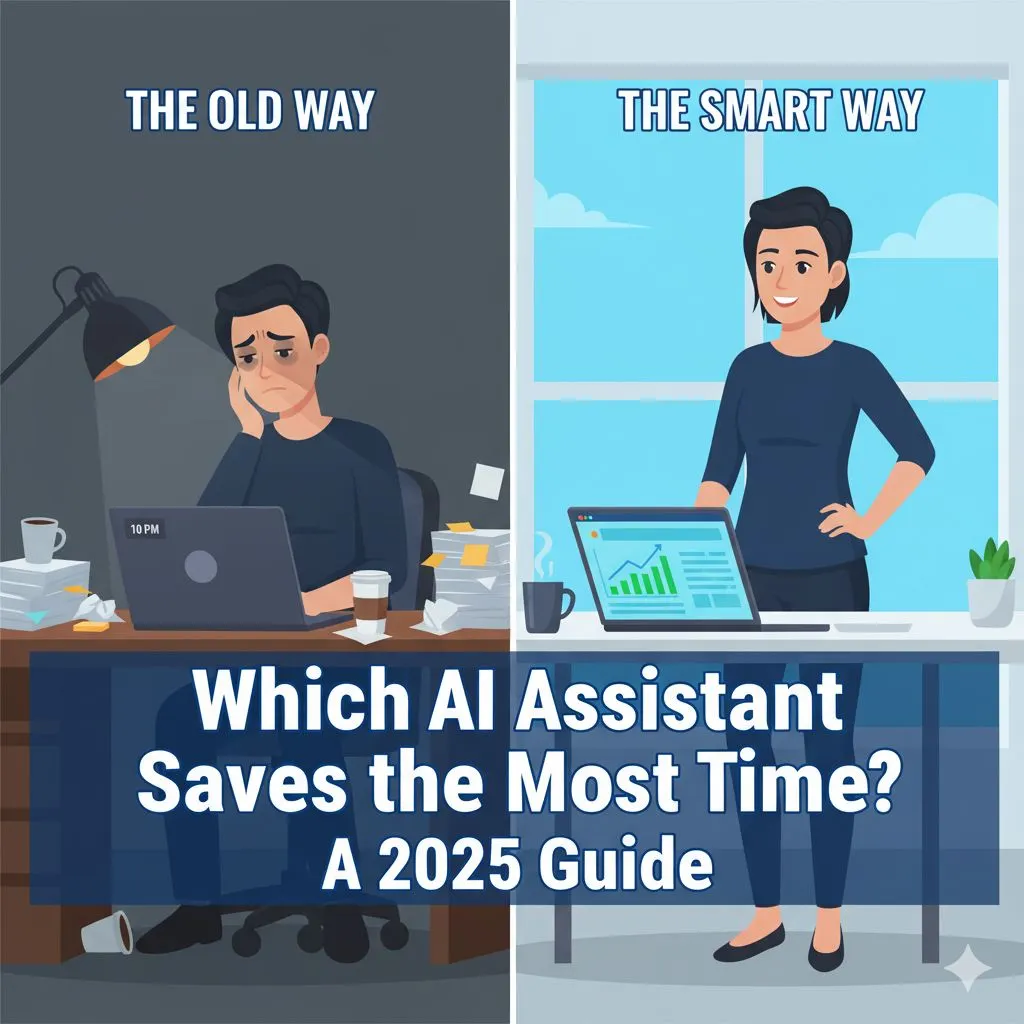
- The Old Way: You stare at a blank cursor, struggle to find words, research for hours, write, edit, and stress. (Time: 6 hours/post).
- The Strategic AI Way: You spend 5 minutes defining the strategy, 5 minutes customizing the prompts, and 20 minutes reviewing and refining the AI's output. (Time: 30 minutes/post). Want to try it immediately? Download the free 5-Hour Saver Prompts pack — no cost, instant access.
This efficiency allows you to:
- Publish consistently: Google loves regular updates.
- Repurpose content: Use prompts to turn that blog post into 10 LinkedIn posts, a newsletter, and a video script in seconds.
- Focus on growth: Use the saved time to close clients or develop new products.
The ROI of Reliability
The biggest objection business owners have to AI is trust. "Will this sound like me?" "Will this actually rank?"
Strategic prompts solve the reliability issue. When you use tested, engineered prompts, you get a predictable output. You eliminate the "slot machine" effect of generic chatbots where you hope for a good result but often get garbage.
Reliability leads to scalability. Scalability leads to freedom.
Use the AI ROI Calculator to put a dollar figure on the time you are currently losing.
Conclusion: Stop Hustling, Start strategizing
The era of "tricking" Google is over. The era of generic content farms is over. 2026 belongs to the strategic experts who know how to wield AI to amplify their authority.
Read how one business scaled AI-driven content delivery with measurable ROI.
You have the expertise. You have the business experience. You just need the translation layer to get that expertise out of your head and onto the screen efficiently.
Don't let the technical complexity of SEO paralyze you. You don't need to be a data scientist to rank on Google. You just need to be smarter than the competition who is still using "Write me a blog" prompts.
You can reclaim your time. You can build a brand that dominates your niche. You can turn your workflow from a source of stress into a source of strength.
It all starts with the right prompt.
Ready to Upgrade Your Workflow?
You could spend the next six months learning prompt engineering through trial and error. Or, you could plug in a proven system today.
Start with something free — explore 11 free AI resources for small business owners including prompt swipe files, content plans, and a Brand Voice Kit
We have curated the SEO Prompt Power AI Toolkit—a collection of 50+ industry-specific, high-leverage prompts designed specifically for business owners who want results, not research.
Get Your SEO Prompt Power AI Toolkit Here
Stop spinning your wheels. Start ranking.
Ready to invest in your full AI toolkit? View all 30 prompt packs and pricing — one-time investment, industry-specific results.