Getting Press Coverage in 2026: The AI Pitching Strategy
Getting Press Coverage in 2026: The AI Pitching Strategy
Jan 24, 2026

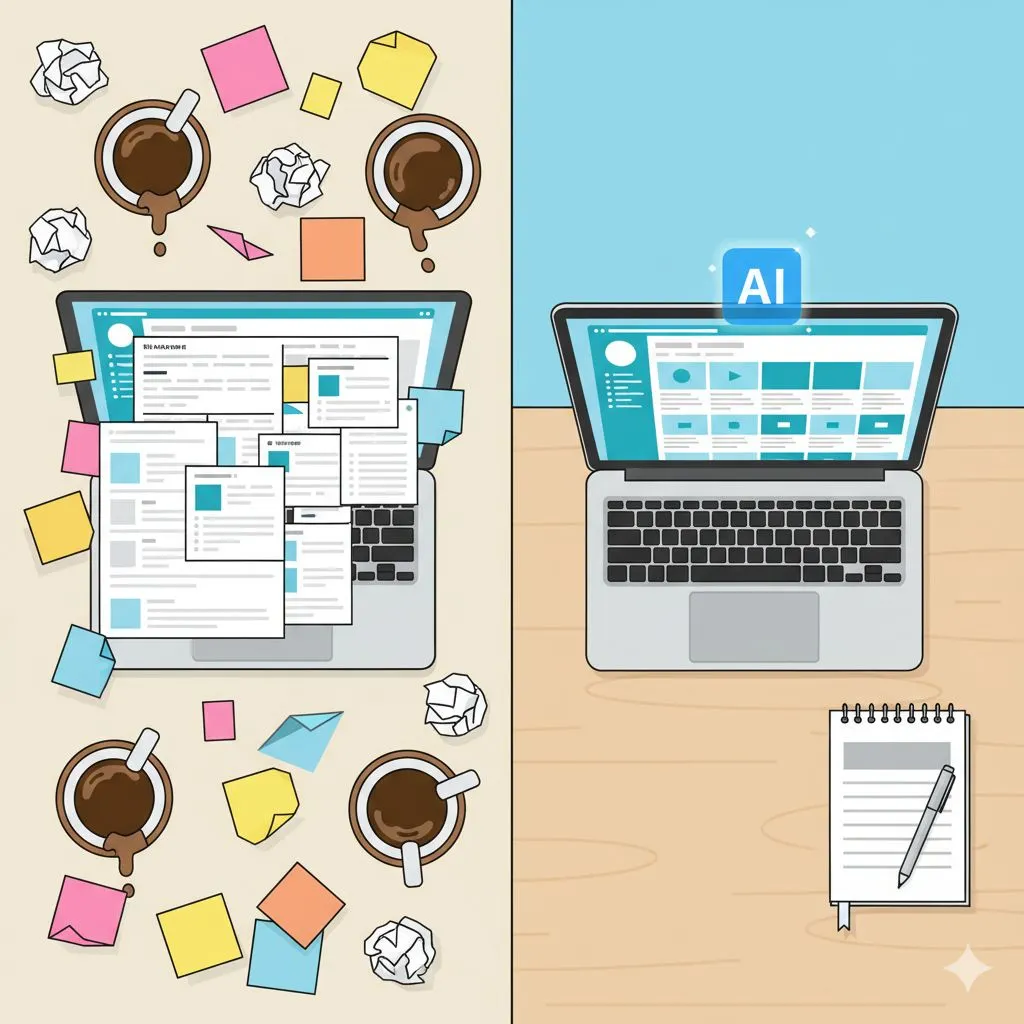
If you are like most business owners, "Public Relations" is likely a task that sits perpetually at the bottom of your to-do list. It’s the task you know you should do to build credibility, but the reality is harsh: researching journalists takes hours, drafting pitches feels like shouting into the void, and the fear of rejection—or worse, silence—is paralyzing.
For the overworked entrepreneur, traditional PR is a luxury they can't afford. But in 2026, the game has changed.
We have entered an era where AI for PR is no longer a futuristic concept; it is the baseline for competitiveness. However, there is a catch. Because AI is accessible to everyone, journalists’ inboxes are currently flooded with generic, robotic, "ChatGPT-sounding" pitches. The noise is louder than ever.
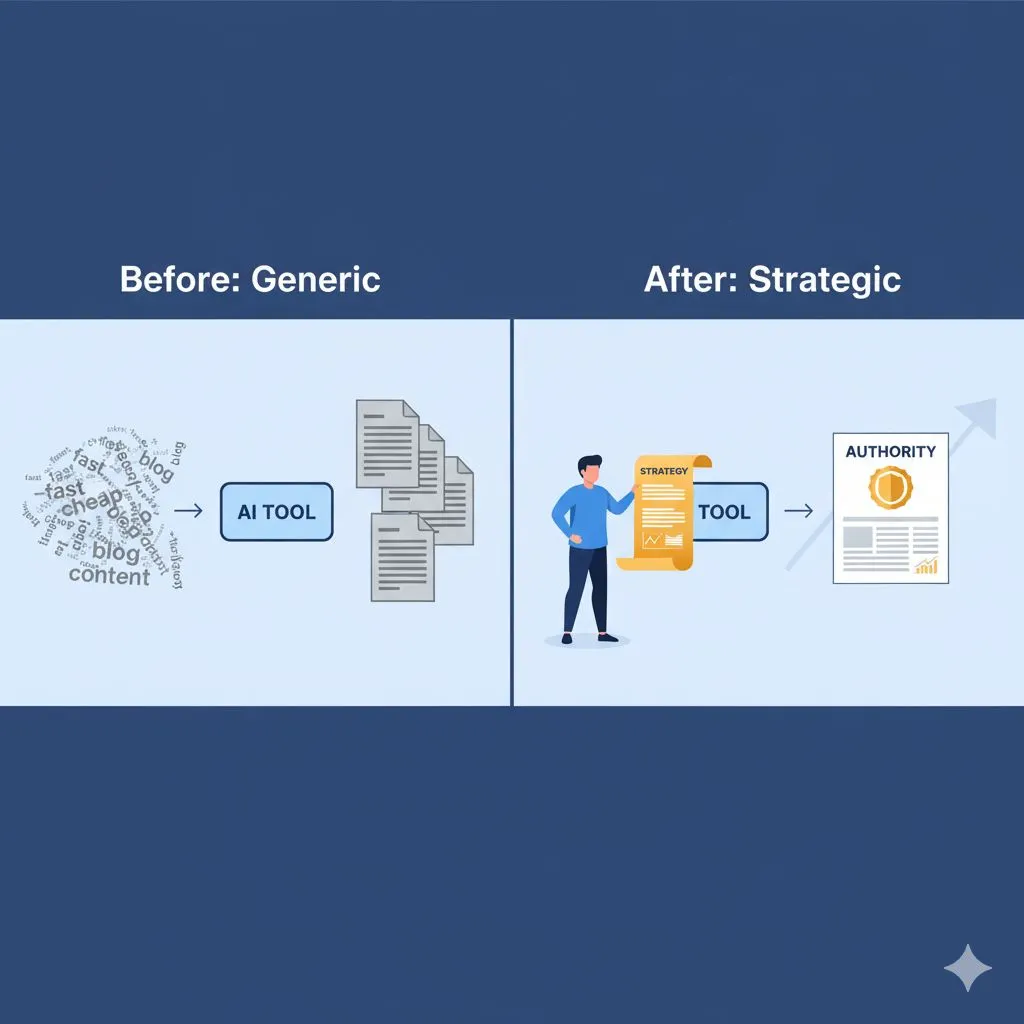
To get press coverage in 2026, you cannot simply ask AI to "write a press release." You must use AI as a high-level strategist to cut through that noise. You need to move from being a stressed operator blasting out emails to a calculated strategist building relationships. This guide will show you how to leverage AI to secure expert-level coverage, reclaim your time, and finally scale your brand’s authority without hiring an expensive agency.
If you’re building your broader AI marketing strategy alongside your PR work, start with the complete guide to AI in advertising and sales.
Phase 1: The "Digital Detective" Strategy
The biggest mistake small business owners make is the "spray and pray" approach—sending the same generic pitch to 50 different journalists. It doesn't work, and it burns bridges. The secret to a 2026 PR strategy is hyper-personalization, and this is where AI shines.
Analyzing the Journalist, Not Just the Outlet
Before you write a single word of your pitch, you need to understand who you are pitching to. In the past, this meant reading dozens of articles to understand a journalist's "beat." Now, you can do this in minutes.
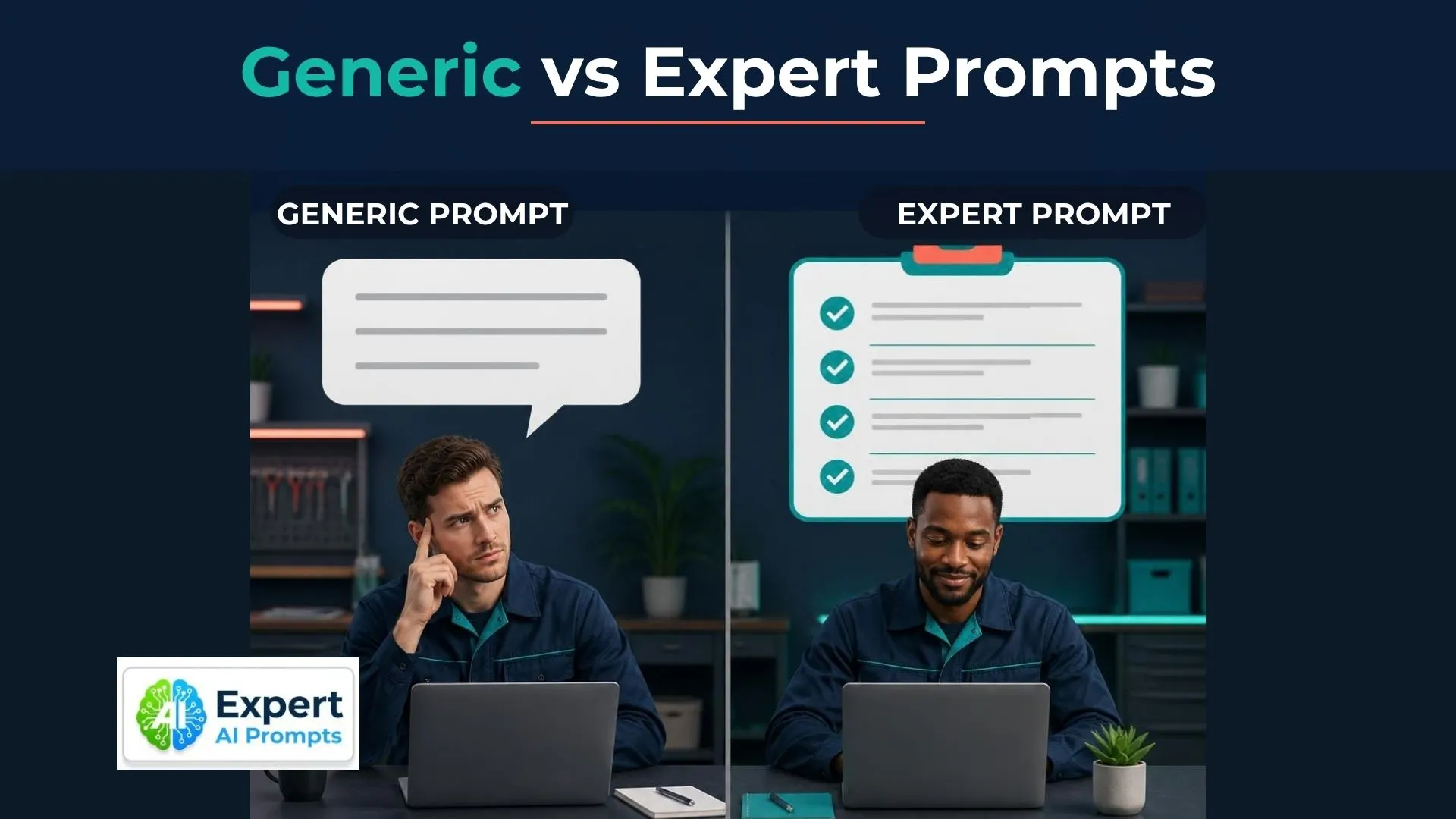
You can feed an AI model (like ChatGPT, Claude, or Perplexity) the last three articles a journalist has written. Your prompt strategy here is crucial — and if you want to master this skill across your entire business, the entrepreneurs’ playbook for prompt engineering is your next read. Instead of asking for a summary, ask for a psychographic analysis.
Try a prompt structure like this:
"Analyze these three articles by [Journalist Name]. Identify their preferred storytelling style, the types of data they usually cite, their tone (skeptical, optimistic, data-driven?), and the specific pain points they highlight for their audience. Based on this, what is a gap in their coverage that my business [Brief Description] could fill?"
This transforms AI from a typewriter into a research assistant. You aren't just looking for an email address; you are looking for an angle.
Identifying the "Blue Ocean" Gap
Journalists are constantly looking for the "new." They don't want to report on what has already happened; they want to report on what is coming next.
Use AI to scan current industry trends and cross-reference them with your brand's unique value proposition. If you run a boutique marketing consultancy, don't pitch "Marketing Services." Use AI to identify a rising trend—for example, "The return of direct mail in a digital world"—and position yourself as the expert source on that specific micro-topic.
By doing this "Digital Detective" work upfront, you ensure that when you eventually send your pitch, it lands in the inbox of someone who is actually looking for it. You are respecting the journalist's time, which is the quickest way to earn their trust.
For a deeper look at how small agencies are winning media attention at scale, read how boutique agencies compete with big firms using AI prompts.
Phase 2: Crafting the "Un-Ignoreable" Pitch
Once you have identified the right target and the right angle, the next hurdle is the blank page. For many entrepreneurs like Alex Rivers, writing the pitch is the bottleneck. You stare at the cursor, wondering how to sound professional without sounding stiff.
This is where AI for PR transitions from research to execution — a transformation fully mapped in the complete guide to AI in advertising and sales. But remember: we are not asking AI to write the final email. We are asking it to build the structure.
Subject Line Science
In 2026, the subject line is 80% of the battle. If they don't open it, the quality of your story doesn't matter. AI is exceptional at generating variations based on copywriting frameworks.
Don't settle for "Story Idea." Ask your AI tool to generate 10 subject lines using proven frameworks like curiosity gaps, data-driven hooks, or contrarian statements.
Example Prompt Strategy:
"Generate 10 subject line options for a pitch about [Topic] to a journalist at [Publication]. Use a mix of 'How-to', 'Data-backed', and 'Contrarian' styles. Keep them under 50 characters. The goal is to spark curiosity without sounding like clickbait."
You will likely find that options 4, 7, and 9 are the strongest. Combine them to create a winner.
If writing high-converting copy is a consistent challenge, the PR-Powered Prompts toolkit includes 50 ready-to-use prompt frameworks covering pitches, subject lines, and follow-up sequences.
The "Newsjacking" Advantage
Speed is the currency of modern PR. "Newsjacking" is the art of injecting your brand into a breaking news story. If a new regulation passes in your industry, journalists are scrambling for expert commentary that day.
You don't have time to agonize over a draft. You can paste the breaking news article into your AI tool and ask it to draft a "response pitch" from your perspective as an industry expert.
The Workflow:
- Input: The breaking news summary.
- Context: Your bio and expertise.
- Command: "Draft a 150-word email pitching me as an expert source for this story. Highlight my contrarian take that [Insert Your Unique Opinion]. Keep it urgent and concise."
This allows you to be in the inbox while your competitors are still reading the headlines.
Drafting the Core Pitch
A winning pitch in 2026 follows a specific anatomy: The Hook, The Value, The Proof, and The Ask.
When prompting AI to draft your body copy, be specific about length. Journalists read emails on their phones. If your pitch is longer than two thumb scrolls, it’s too long.
To build this skill systematically, download the free Perfect Prompt Framework guide — a one-page cheat sheet that structures every AI prompt for expert outputs.
Key Prompt Instruction:
"Draft a pitch email under 200 words. Start with a customized hook referencing their recent article on [Topic]. Transition to my story about [Your Angle]. Include 3 bullet points of data/evidence. End with a low-friction call to action (e.g., 'Open to a quick comment?'). Tone: Professional, helpful, concise."
The Human Polish (The Mandatory 10%)
Here is the Golden Rule of AI PR: Never copy and paste directly.
AI tends to use transition words like "Moreover," "Furthermore," or "In the rapidly evolving landscape." These are dead giveaways. Before you hit send, spend two minutes humanizing the text.
- Remove adjectives (AI loves to say "thrilled," "excited," "revolutionary").
- Make it sound like you.
- Double-check the facts.
This 10% human effort is what separates a successful placement from the "Delete" folder.
Phase 3: Customization at Scale
One of the greatest struggles for a small team or solopreneur is resource allocation. You have one great story or product launch, but you need to reach diverse audiences. A pitch that works for Forbes will fall flat with a niche industry trade blog, and neither of those will work for a conversational podcast host.
Traditionally, rewriting a pitch five different ways would take an entire afternoon. With AI for PR, it takes minutes. This allows you to scale your outreach without diluting your message.
This multi-angle content approach is a core principle in the small-business playbook for AI content creation, which shows how to repurpose a single piece of content across every channel.
One Story, Five Angles
Imagine you are launching a new eco-friendly packaging solution for e-commerce businesses.
- For the Business Press: The angle is about cost-savings and supply chain efficiency.
- For the Sustainability Blog: The angle is about reducing carbon footprints and plastic waste.
- For the Local News: The angle is "Local business owner innovates to help the environment."
- For the Startup Podcast: The angle is the "Founder's Journey" and the struggle of building the product.
- For the Customer Newsletter: The angle is purely benefit-driven (it looks better and saves money).
You can feed your "Core Pitch" into your AI tool and issue the following command:
"Take this core pitch and rewrite it for these 5 specific audiences. Adjust the 'What's in it for them' hook for each. Keep the core facts the same, but change the lead and the closing ask."
Suddenly, you aren't just blasting one message; you are conducting a symphony of targeted communications. This increases your placement rate significantly because the editor at the trade blog sees you understand their specific readership.
Tone Matching
Every publication has a "voice." Vice is different from The Wall Street Journal. BuzzFeed is different from Harvard Business Review.
If you send a stuffy, academic pitch to a hip, fast-paced digital outlet, you signal that you haven't done your homework. AI is excellent at style mimicry. You can paste a paragraph of the publication's "About Us" page or a recent article into the AI and say:
"Rewrite my pitch to match this tone. If they use slang, use appropriate slang. If they are formal, be formal. Match their sentence structure length."
This psychological mirroring makes the journalist feel comfortable with you immediately. It subconsciously signals, "This person is one of us." For an entrepreneur like Alex Rivers, who may not be a natural chameleon writer, this is a superpower.
For entrepreneurs who want pre-built prompt sequences for copywriting across every channel, the Sales Prompt Playbook for AI Copywriting does the heavy lifting.
Handling Objections Before They Arise
Skepticism is high in 2026. Journalists are wary of "vaporware" and unproven experts. You can use AI to stress-test your pitch before you send it.
Ask the AI: "Act as a cynical editor at a top-tier tech magazine. Read this pitch and tell me why you would reject it. What proof is missing? Is the hook too weak?"
The feedback will likely be brutal—and incredibly useful. It might tell you that your claims lack data or that your story isn't timely. You can then refine the pitch before burning the opportunity.
Phase 4: The Follow-Up and Relationship Nurture
The fortune is in the follow-up. Most placements don't happen on the first email; they happen on the second or third. However, for the empathetic business owner, following up feels intrusive. You worry you are being annoying.
AI strips the emotion out of this process and turns it into a workflow.
This same principle applies across outbound sales: see how AI is reshaping cold outreach in B2B Lead Gen: Using AI to Warm Up Cold Outreach.
The "Nudge" Sequence
You can generate a sequence of polite, low-pressure follow-ups in advance.
- Follow-up 1 (3 days later): "Just bubbling this up in case it got buried."
- Follow-up 2 (1 week later): "I saw you just published X; this might add a new dimension to that conversation."
- The Break-up Email: "I'll assume this isn't a fit right now. I'll keep you in mind for future updates."
By having these pre-written by AI (and vetted by you), you remove the friction of "What do I say?" You simply schedule the emails. This consistency is often the only difference between coverage and silence.
Turning Rejection into Data
Even with the best AI strategy, rejection happens. But in a strategic workflow, rejection is just data. If you get a "No," paste that response into your AI thread.
"The journalist replied saying 'This is too commercial for us.' How should I adjust my pitch for the next journalist to avoid this objection? Rewrite the hook to be more educational and less salesy."
This creates a feedback loop where your pitching gets smarter with every attempt. You aren't failing; you are optimizing.
Conclusion: From Overworked to Outstanding
For Alex Rivers and entrepreneurs like you, the goal isn't just to "get press." It's to build a business that can compete with the giants without burning out the founder.
By adopting this AI for PR strategy, you are doing more than just saving time. You are ensuring that every minute you spend on PR is high-leverage.
- You are researching deeper than your competitors.
- You are customizing faster than your competitors.
- You are following up more consistently than your competitors.
You move from the exhausted business owner wearing too many hats to the confident strategist pulling the right levers. The technology is here. The barrier to entry has never been lower, but the barrier to quality has never been higher. Use AI to bridge that gap.
Not ready to invest yet? Start with the free resources at Expert AI Prompts — Free Offers. Eleven lead magnets — including time-saving prompt swipe files and content plan templates — are available at no cost.
Ready to Stop Guessing and Start Pitching?
You now know the strategy, but the execution still requires the right prompts. You don't need to spend hours engineering them yourself.
We have developed a comprehensive toolkit designed specifically for entrepreneurs who want expert-level results without the learning curve.
Get the Expert AI Prompts PR Pack Here
Unlock 50 industry-specific prompts that handle everything from journalist psychographics to crisis management responses. Stop hustling for coverage—start engineering it.
Ready to browse the full suite? View all 30 industry-specific prompt packs and pricing — one-time investment, lifetime access.
Further Reading
• Public Relations is Changing: Data-Backed Pitching
• 10 Perfect Prompt Examples for Marketing Copy
• How Boutique Agencies Compete with Big Firms Using AI Prompts
• Stop Wasting Ad Spend: Writing High-ROI Copy with Precision Prompts