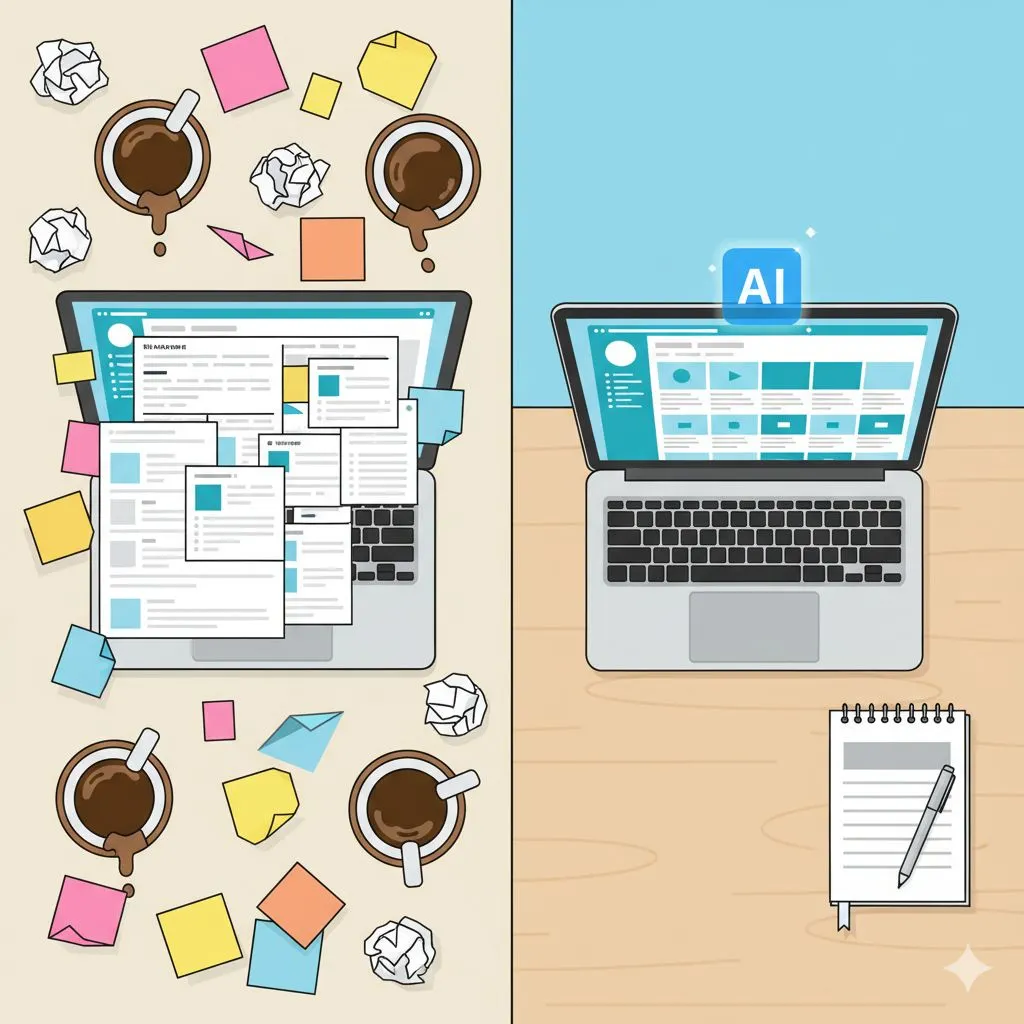
Copywriting 2.0: Blending Human Creativity with AI Speed
Copywriting 2.0: Blending Human Creativity with AI Speed
Jan 25, 2026

If you are like most ambitious small business owners, your to-do list is a mile long, and "writing high-converting marketing copy" is often the task that gets pushed to the very bottom. You know you need to be visible. You know you need to communicate your value. But finding the time to sit down, stare at a blinking cursor, and craft the perfect email or landing page feels impossible when you are also the CEO, the head of sales, and the customer support lead.
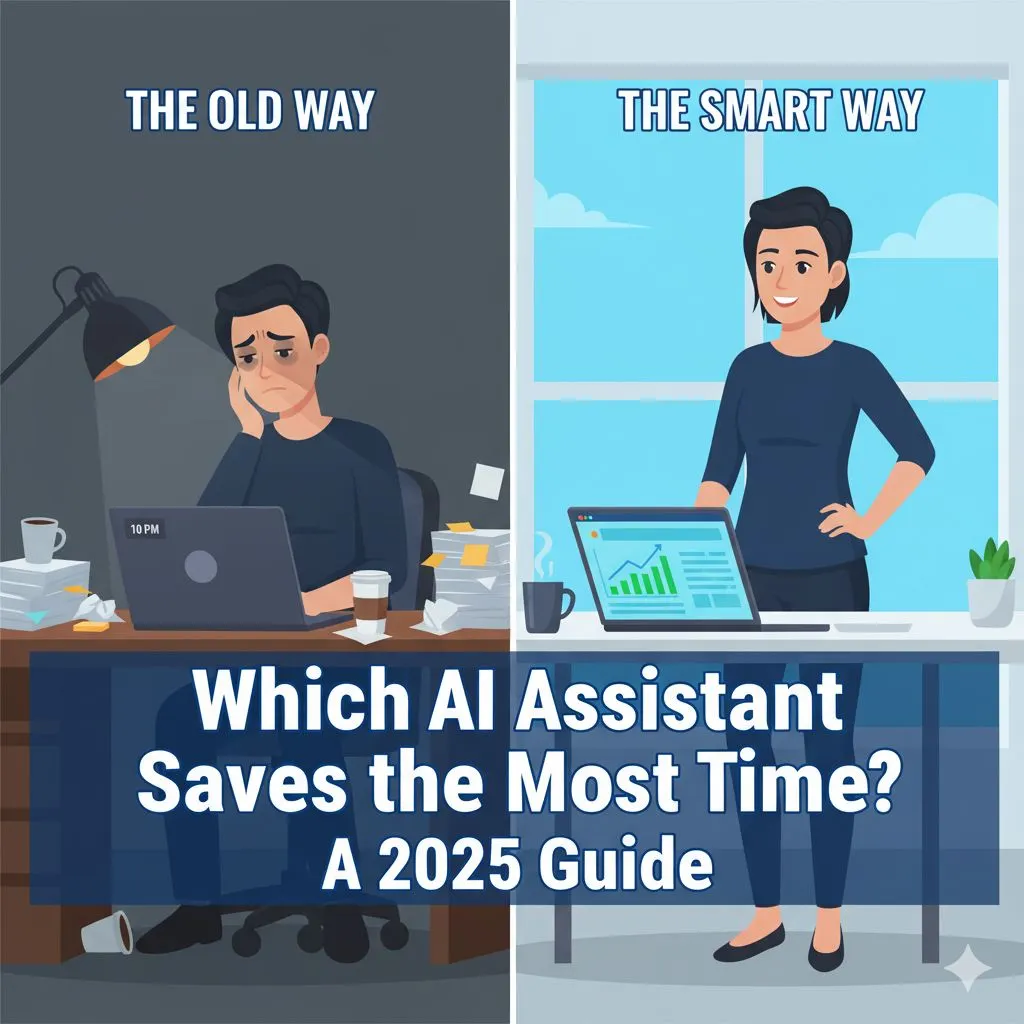
For years, the choice was binary: spend hours you don't have doing it yourself (and risk burnout), or hire expensive agencies that drain your limited resources.
Enter ai copywriting.
Before you roll your eyes—perhaps thinking of the robotic, soulless text you’ve seen generated by basic free tools—pause. We aren't talking about letting an algorithm run your business on autopilot. We are talking about Copywriting 2.0. This is a fundamental shift in how successful entrepreneurs operate. It is the transition from writing every word yourself to becoming the editor-in-chief of your brand.
For the full strategic framework, explore our complete guide to AI in advertising and sales.
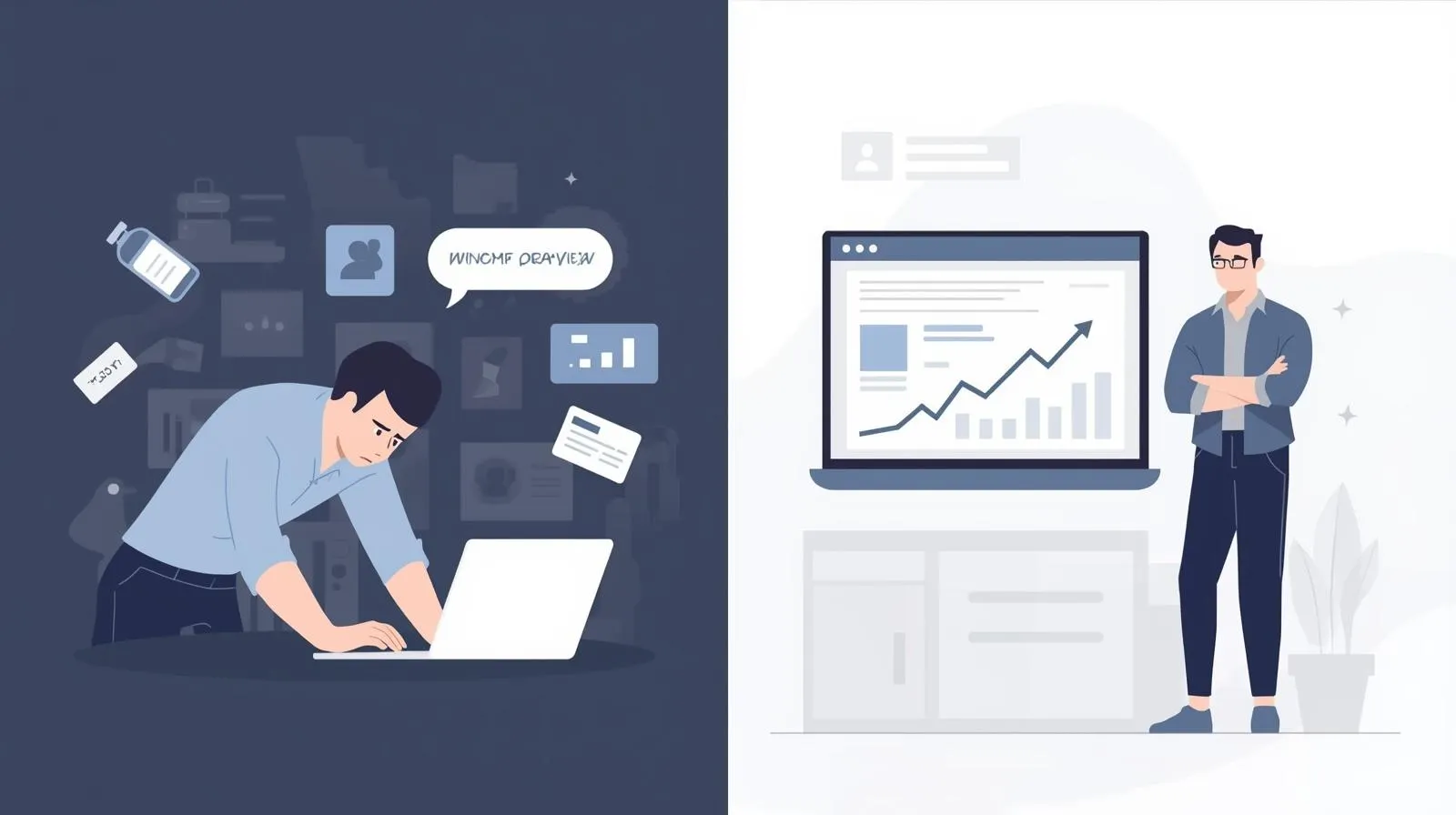
Copywriting 2.0 isn't about replacing your unique voice or your strategic insight. It is about removing the friction of creation. It’s about taking the 10 hours a week you spend struggling with content and compressing it into 90 minutes of high-level strategy.
This guide is written for the business owner who wants to compete with the big players but lacks their headcount. It is for the skeptic who values quality but needs efficiency. Here is how to blend your human creativity with AI speed to scale your business without losing your mind.
Defining Copywriting 2.0: The Hybrid Model
There is a misconception in the market right now. On one side, purists claim that "real" copy must be 100% human-written to have soul. On the other side, tech-hypers claim you can click a button and retire while AI does the work.
Both are wrong.
The sweet spot—the competitive advantage—lies in the middle. This is the Hybrid Model.
The 80/20 Efficiency Split
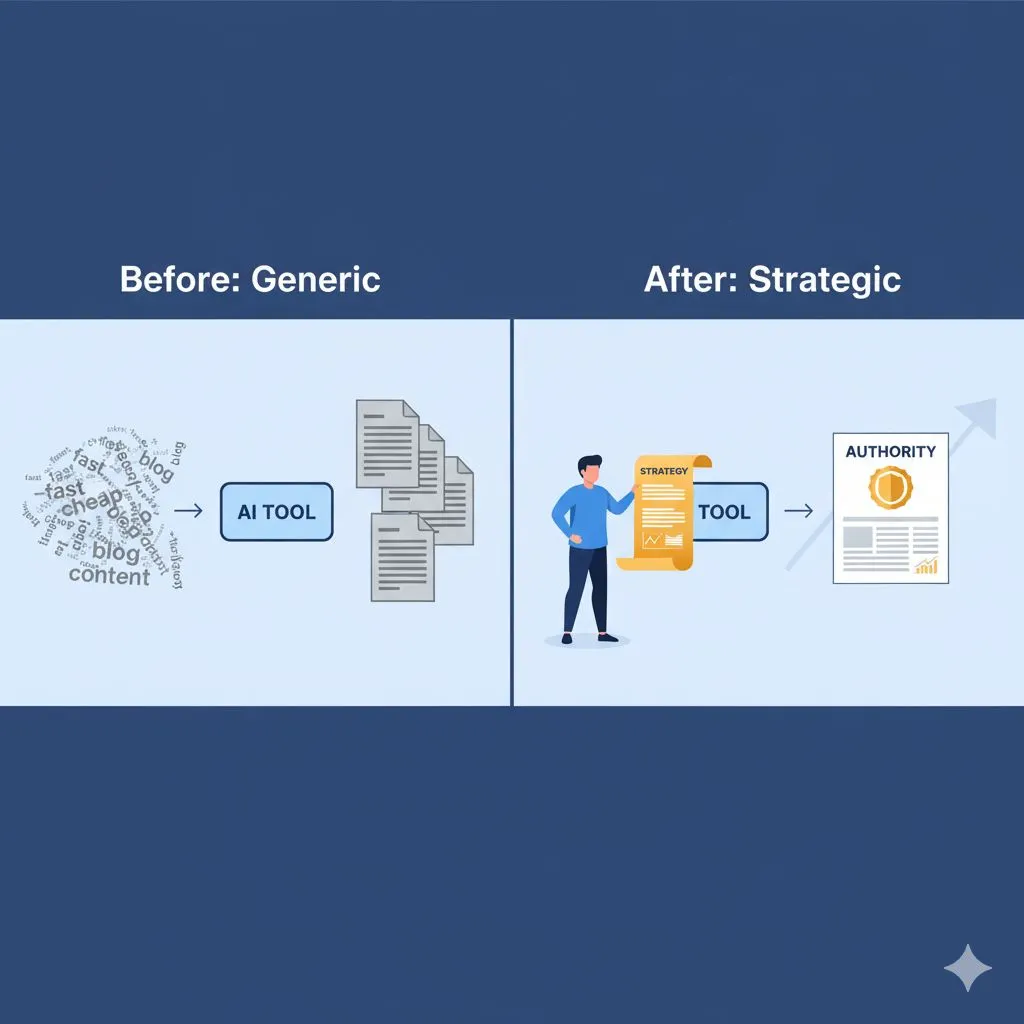
In the traditional copywriting process, 80% of your energy is spent on "grunt work": brainstorming ideas, researching competitor angles, outlining structures, and writing terrible first drafts. Only 20% is spent on polishing the message.
AI copywriting flips this ratio.
With the right prompts and strategy, AI handles that exhausting 80%. It can generate fifty headline variations in ten seconds. It can structure a 2,000-word guide in a minute. It can research customer pain points instantly. This leaves you with 100% of your energy reserved for the final 20%: the high-value work.
Your job shifts from generator to curator. You are no longer laying every brick; you are the architect ensuring the wall is straight, sturdy, and beautiful.
Why the "Human Touch" Still Matters
You might be asking, "If AI is so fast, why do I need to be involved at all?"
Because AI, for all its brilliance, lacks lived experience. It doesn't know the specific frustration your client felt on a Tuesday morning before they called you. It doesn't know the inside jokes of your industry or the specific tone that builds trust with your unique demographic.
If you rely 100% on AI, you risk sounding like everyone else—generic, polite, and forgettable.
If you rely 100% on yourself, you risk silence due to lack of time.
Copywriting 2.0 creates a "Cyborg" workflow: AI provides the speed and volume; you provide the strategy and soul. This combination allows a three-person team to output the volume of a thirty-person agency, leveling the playing field in a way we haven't seen since the advent of the internet.

Phase 1: Ideation and Research (Stopping the Stare)
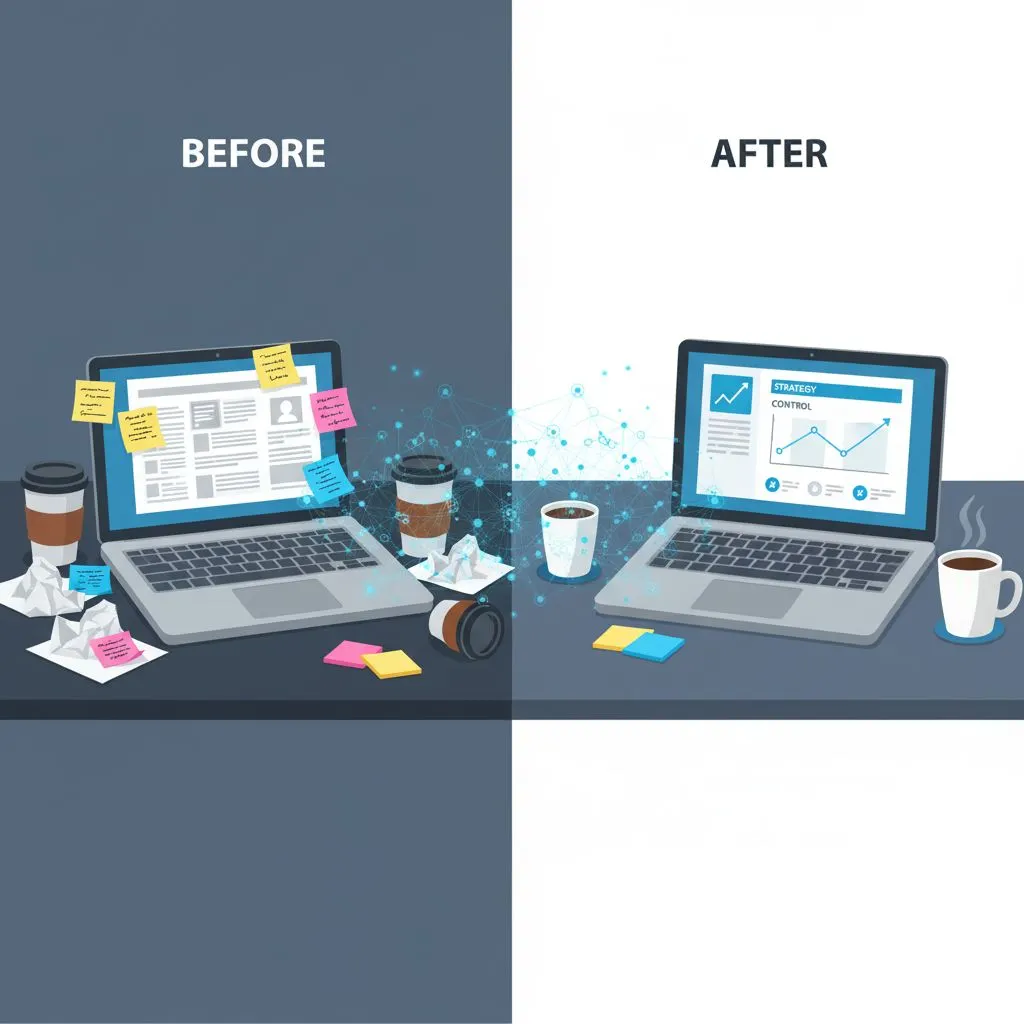
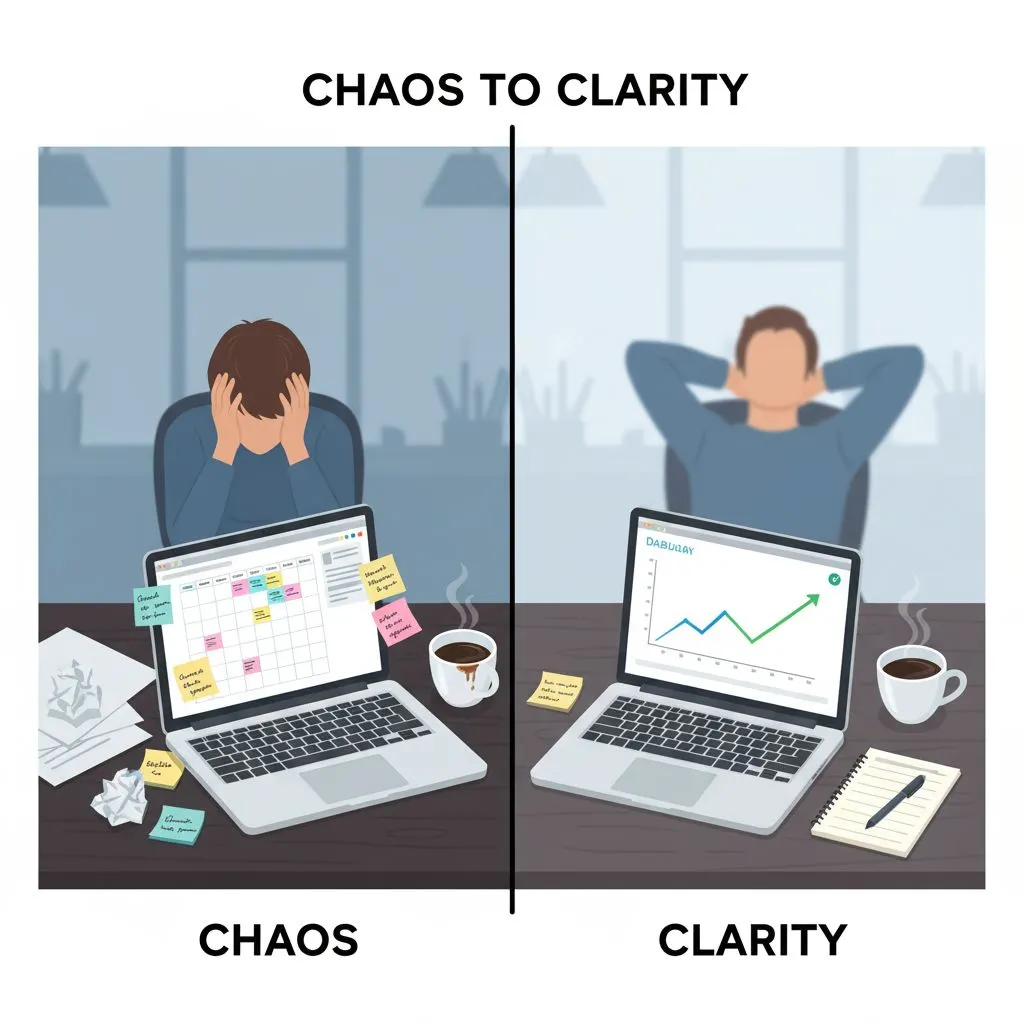
The single biggest time-waster in copywriting isn’t the writing itself; it’s the thinking before the writing. It’s the "Blank Page Paralysis." You sit down to write a LinkedIn post or a sales email, and suddenly your mind goes blank. You check your phone. You grab a coffee. Twenty minutes pass, and you have written nothing.
AI copywriting solves this immediately by acting as an infinite brainstorming partner that never gets tired.
Killing the Blank Page
Instead of asking yourself, "What should I post today?", you can leverage AI to generate strategic angles based on your specific business goals.
For example, rather than staring at the screen, you could input a prompt like:
"I run a consulting firm for small business owners. Give me 10 counter-intuitive content ideas that challenge the status quo of 'hustle culture' and position efficiency as the ultimate goal."
In seconds, you have a list of provocative, relevant topics. You didn't have to rack your brain; you just had to curate the best option from the list.
For a ready-made set of prompts that instantly break blank page paralysis, download the free Writer’s Block Buster swipe file.
Audience Deep Dives
To write copy that converts, you need to understand your customer’s internal monologue. Traditionally, this requires hours of browsing forums, reading reviews, and interviewing clients. AI can accelerate this research phase significantly.
You can ask an AI model to roleplay as your customer persona (let's call him Alex).
"Act as a stressed, 40-year-old small business owner who creates content. List your top 5 daily frustrations regarding marketing, and for each frustration, describe the specific emotion it makes you feel."
The output will give you visceral, emotional language—words like "drowning," "invisible," or "bottleneck"—that you can weave directly into your copy to make it resonate deeply. This isn't cheating; it's rapid empathy mapping.
Phase 2: The Drafting Sprint (Speed with Strategy)
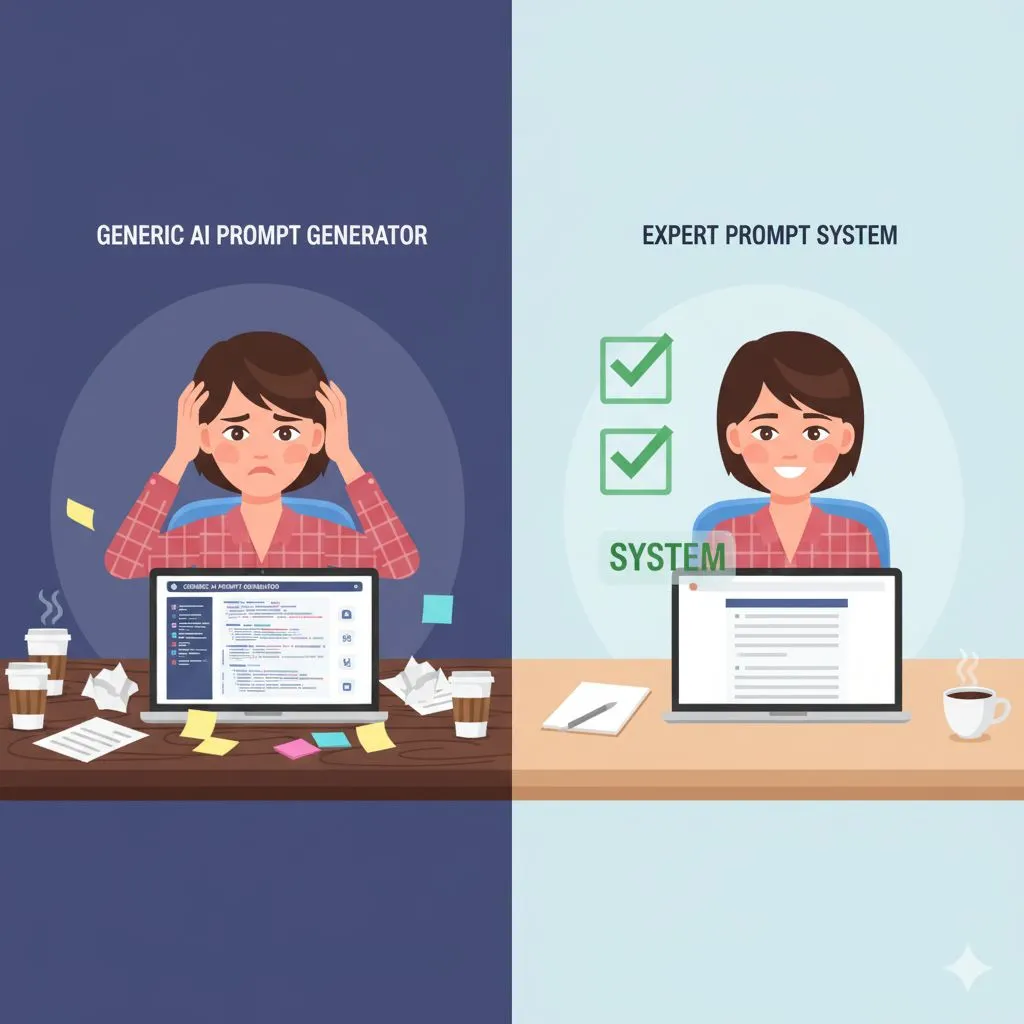
Once you have your idea and your angle, it’s time to draft. This is where most people get ai copywriting wrong. They treat the AI like a magic 8-ball, asking a vague question and hoping for a perfect result.
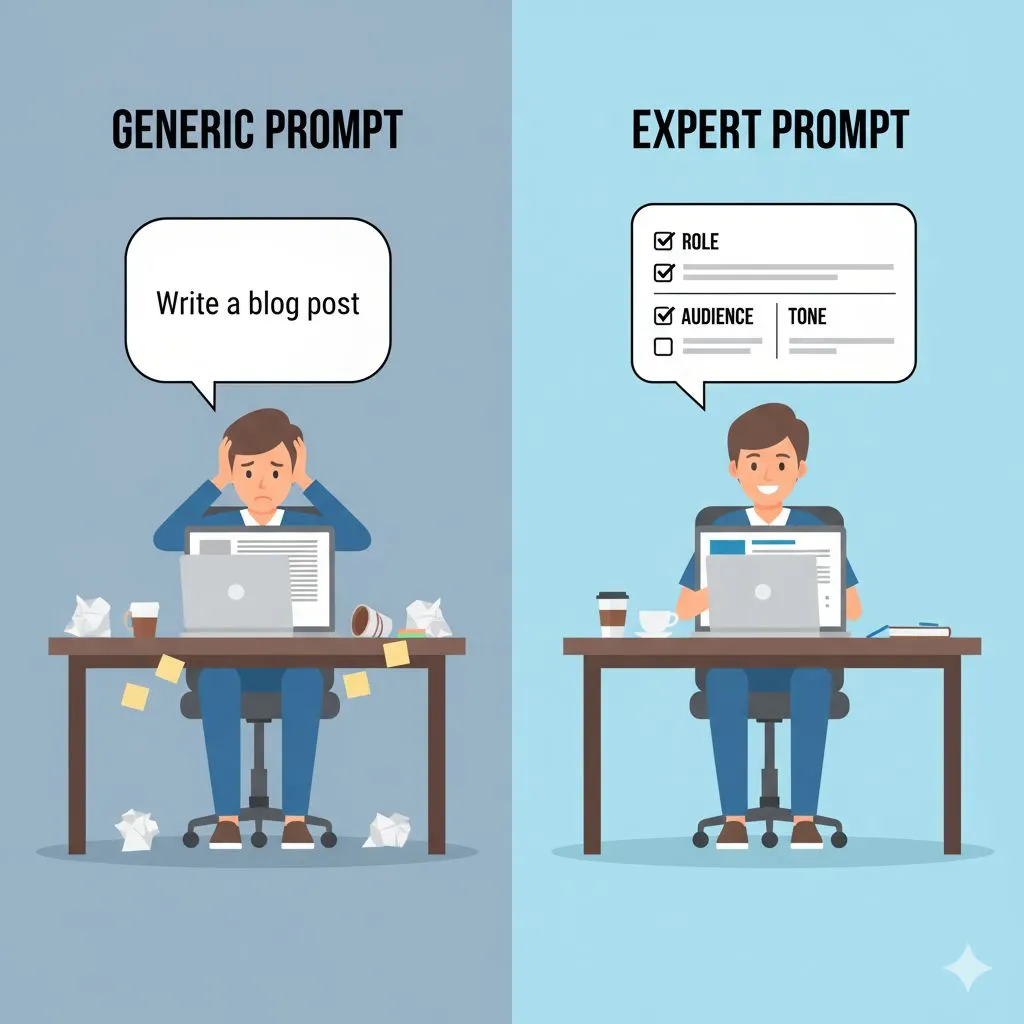
To get expert-level outputs, you must treat the AI like a junior copywriter. If you give a junior employee a vague instruction like "Write a sales email," they will bring you back something mediocre. But if you give them context, constraints, and examples, they will succeed.
Context is King
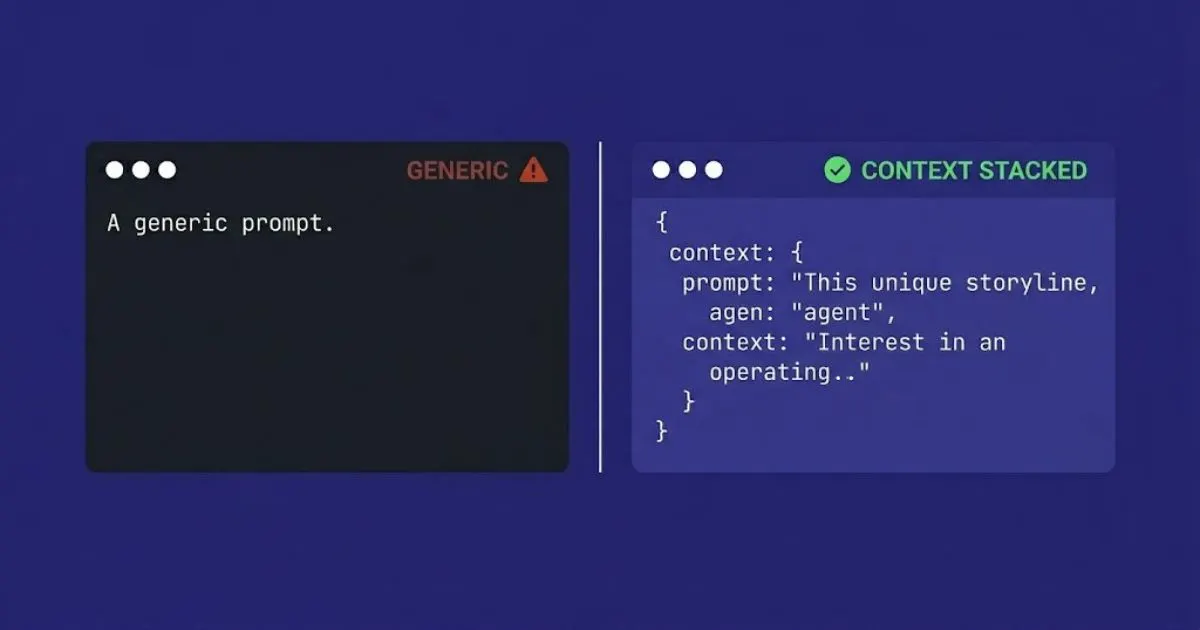
The quality of your output is directly determined by the quality of your input (the prompt). To draft effectively, you must "prime" the AI with context.
Before asking for the draft, tell the AI:
- Who it is: (e.g., "You are an expert direct-response copywriter...")
- Who the audience is: (e.g., "The audience is skeptical business owners...")
- The Goal: (e.g., "The goal is to get them to book a demo...")
- The Tone: (e.g., "Professional, empathetic, but authoritative.")
See 5 expert AI prompt examples for copywriting to see how each context element transforms output quality.
By setting these guardrails, you ensure the draft isn't just grammatically correct, but strategically aligned with your brand.
Iterative Prompting: The Layering Technique
Don't try to generate a 2,000-word guide in one click. AI models often lose focus over long distances. Instead, use Iterative Prompting.
- Step 1: Ask for a detailed outline. Review and refine it.
- Step 2: Ask the AI to write the Introduction based on the outline.
- Step 3: Ask it to write Section 1, ensuring it includes a specific example.
- Step 4: Ask it to write Section 2, asking for a bulleted list for readability.
By building the content piece by piece, you maintain control over the flow and depth. You are directing the ship, not just watching it drift. This method allows you to produce long-form content that reads as if it took days to write, in a matter of minutes.
For a deeper guide on maintaining authenticity throughout this process, read how to use an AI content writer to sound human.
Phase 3: The Human Polish (Where Quality Happens)
This is the most critical section of this guide. If you stop at the drafting phase, you are merely flooding the internet with noise. To truly stand out and build a brand that commands high ticket prices, you must apply the "Human Polish."
This is the 20% of the work that yields 80% of the results in terms of trust and authority. This is where you transform "AI content" into "Your Brand's Content."
The Trust Check: Fact-Checking and Hallucinations
AI models are large language models, not knowledge bases. They are designed to predict the next plausible word in a sentence, not necessarily to tell the truth. Occasionally, they "hallucinate"—making up statistics, quotes, or case studies that sound real but are entirely fiction.
As the expert, your first job in the editing phase is the Trust Check.
- Verify any data points or percentages included in the copy.
- Ensure technical terms are used correctly for your specific industry.
- Check that the advice given actually aligns with your methodology.
If an AI suggests a strategy you disagree with, delete it. You are the expert; the AI is the scribe. Your credibility is your currency, so never publish blindly.
Tone Injection and Emotional Resonance
AI defaults to a tone that is helpful, polite, and slightly bland. It rarely takes a stand, uses sarcasm effectively, or displays vulnerability unless explicitly told to.
To make the copy yours, you need to inject your brand voice:
- Break the Grammar Rules: AI loves perfect grammar. Humans speak in fragments. Change "It is important to..." to "Here's the thing..."
- Add Personal Stories: Insert a sentence like, "I learned this the hard way back in 2019 when..." AI cannot replicate your memories. These micro-stories act as proof of humanity.
- Use Industry Shorthand: If your audience uses specific slang or acronyms, weave them in. This signals to the reader, "I am one of you."
For a step-by-step guide to doing this systematically, explore how to train AI to write in your brand voice.
The "So What?" Test
AI is great at describing features, but sometimes struggles with deep benefits. It might say, "This software has an automated dashboard."
A human copywriter knows to ask: "So what?"
- So what? -> "So you don't have to update spreadsheets manually."
- So what? -> "So you can leave the office at 5 PM."
- So what? -> "So you can see your kids before bedtime."
Review your AI draft. Wherever you see a dry feature, rewrite it to emphasize the emotional benefit. This is the difference between informational text and persuasive copy. By applying this polish, you ensure your content doesn't just fill space—it actually sells.
Scaling: Repurposing Like a Media Company
Once you have mastered the workflow of Ideation > Drafting > Polishing, you unlock the ability to scale. This is the holy grail for the overworked business owner: producing a volume of content that makes you look omnipresent, without actually working more hours.
With ai copywriting, one core asset becomes an entire week's worth of marketing material.
One to Many
Let’s say you used the process above to write a high-quality, 1,200-word blog post. In the past, you would hit publish and move on. Now, you can feed that finished blog post back into the AI and ask it to repurpose the content.
- Prompt: "Take this blog post and write three LinkedIn posts. The first should be a contrarian take, the second a personal story, and the third a 'how-to' list."
- Prompt: "Summarize this article into a 200-word newsletter intro that teases the click."
- Prompt: "Turn the key points of this article into a script for a 60-second Instagram Reel."
In ten minutes, that single article has populated your social media calendar for the week. You are no longer scrambling for daily content; you are strategically distributing your core message across every channel where your customers hang out.
For the complete batch content production system, explore the small business playbook for AI content creation.
Consistency Compounds
The hardest part of marketing is consistency. Algorithms favor those who show up every day. Clients trust brands that are constantly visible.
By using AI to handle the repurposing and formatting, you remove the friction of being consistent. You can batch create a month’s worth of content in one afternoon. This consistency builds momentum. It makes your business look larger, more robust, and more successful than it is—which, ironically, attracts the business needed to actually make it that big.
The Sales Prompt Playbook for AI copywriting gives you 50 ready-to-deploy prompts to fuel every piece of that content engine.
Conclusion
The era of the "overworked operator" is ending. We are entering an age where the size of your team matters less than the quality of your systems.
For business owners like you—ambitious, resource-constrained, and quality-obsessed—ai copywriting is the lever you have been waiting for. It is not about letting a robot take the wheel; it is about upgrading the engine so you can drive faster.
By adopting Copywriting 2.0, you stop trading your time for words. You stop staring at blank pages. You stop worrying if your competitors are outpacing you. Instead, you reclaim your evenings. You elevate your brand authority. You produce expert-level work at a scale that was previously impossible without a massive budget.
The tools are here. The strategy is clear. The only variable left is your willingness to adapt.
Don't let skepticism keep you stuck in the weeds while others scale. The future of your business isn't about working harder; it's about working with better intelligence.
Start with a zero-risk quick win — grab free AI prompts to save 5 hours this week and put Copywriting 2.0 into practice today.
Ready to go deeper? Browse all 30 industry-specific prompt packs and find the exact toolkit built for your business.
Ready to Scale Your Copywriting?
You understand the strategy, but the key to success with AI is knowing exactly what to ask. The difference between a mediocre output and a world-class result is the prompt.
Stop guessing and start converting. We have curated a collection of expert-level prompts designed specifically for business owners who need ROI, not just text.
Get the Sales Prompt Playbook for AI Copywriting Here