Why No One Opens Your Newsletters (And the AI Fix)
Why No One Opens Your Newsletters (And the AI Fix)
Feb 01, 2026
Introduction: The Sound of Silence in the Inbox
It’s 10:30 PM on a Thursday. You’ve just spent the last two hours polishing your weekly newsletter. You’ve checked the links, proofread the copy, and found what you think is a decent image. You hit "Send," expecting a flurry of replies or sales the next morning.
But Friday morning arrives, and the silence is deafening.
For small business owners and solopreneurs like you, this scenario is all too familiar. You are wearing every hat in the business—CEO, operations manager, customer support, and lead marketer. You don’t have the luxury of a dedicated copywriting team or a data analyst to dissect your metrics. You are doing it all, often operating on sheer grit and caffeine.
When you pour that limited energy into email marketing only to see your email open rates hover in the single digits, it’s not just frustrating; it’s expensive. Every unopened email represents a missed connection, a lost sale, and wasted time you could have spent billing clients or resting.
The hard truth is that the inbox is the most competitive real estate in the digital world. Your carefully crafted update is fighting for attention alongside massive retail brands, urgent client requests, and family updates. If you are struggling to break through the noise, you aren't alone, and it’s not because you lack expertise in your field. It’s likely because you’re stuck in an operational bottleneck, trying to brute-force a marketing strategy that requires finesse and data.
The good news? You don’t need to hire an agency to fix this. You need to shift your approach from "hustling harder" to "scaling smarter." By combining your industry knowledge with a complete AI marketing strategy guide, you can systematically close the gap between effort and results. By identifying exactly why your emails are being ignored and applying strategic AI solutions, you can turn that silence into a conversation—and that conversation into revenue.
The Diagnostics: Why Your Emails Are Being Ignored
Before we can apply the fix, we have to perform the autopsy. Why are subscribers scrolling past your name? It usually boils down to four critical points of failure.
1. The Subject Line Failure
The subject line is your storefront window. If the display is cluttered, boring, or confusing, no one walks in. Many entrepreneurs fall into the trap of being either too descriptive ("March Newsletter Update") or too clever ("You won't believe this..."). The descriptive approach is easily ignored because it promises no immediate value. The "clickbait" approach erodes trust. If your subject line doesn't strike a specific chord of curiosity or utility within three seconds, the battle is lost.
2. The "Sender" Fatigue
Consistency builds trust, but sporadic outbursts breed annoyance. If you ghost your list for three months because you got busy with client work, then suddenly blast them with three sales emails in a week, you trigger "Sender Fatigue." Subscribers forget who you are or why they signed up. When they see your name pop up, they don't associate it with value; they associate it with a demand for their money. Low email open rates are often a symptom of a damaged relationship, not just bad writing.
3. The Mobile Mismatch
Roughly nearly half of all emails are opened on mobile devices. If you are drafting your newsletters on a desktop monitor and failing to optimize for the phone, you are likely getting deleted immediately. Long subject lines get cut off. Pre-header text (the snippet visible before opening) that reads "View in browser" is a wasted opportunity. If the experience feels like work for the reader, they will swipe left.
4. The Value Gap
This is the most painful diagnostic. Sometimes, people don't open your emails because the last three you sent didn't help them. If your content is strictly "Here is what I am doing" or "Buy my stuff," rather than "Here is how to solve your problem," you have created a Value Gap. Your reader is asking, "What's in it for me?" If your history doesn't answer that question effectively, your future emails will remain unopened.
The fix starts upstream: learn to write AI content that speaks directly to each stage of your customer's journey, so every email lands at exactly the right moment.
The Psychology of the Click (Analysis)
To fix your email open rates, you have to stop thinking like a business owner who needs to send an email, and start thinking like a human being who receives hundreds of them. The decision to open an email is rarely logical; it is a split-second psychological reaction. Understanding the triggers behind that reaction is how you compete with the big players without their big budgets.
Curiosity vs. Clarity
There is a constant tension in the inbox between curiosity and clarity. Pure clarity ("50% Off Consulting Services") works if the customer is already ready to buy. Pure curiosity ("The one mistake costing you thousands...") works if the customer trusts you enough to click.
For the solopreneur, the sweet spot is usually a hybrid: the "Curiosity Gap." This psychological concept suggests that we have a deep desire to fill gaps in our knowledge. If your subject line highlights a pain point the reader feels but doesn't solve it immediately, their brain itches to close the loop. However, this only works if the content inside delivers the scratch. If you use curiosity to trick a user into opening a boring email, your open rate might go up temporarily, but your unsubscribe rate will skyrocket.
The "Me" Filter
Every person has a subconscious filter applied to their inbox. We scan for our names, we scan for urgent problems, and we scan for benefits. We gloss over corporate announcements, "Updates," and general musings.
When analyzing successful newsletters in the B2B and consulting space, a pattern emerges: the emails that get opened are the ones that validate the reader’s identity or struggles. A subject line like "How I saved time this week" triggers the "Me" filter less effectively than "How you can save 10 hours this week." It’s a subtle shift in framing, but it aligns with the reader’s ego and immediate needs.
Trust Signals and The Preview Text
Most email clients display three things: Sender Name, Subject Line, and Preview Text (or pre-header). Many business owners obsess over the subject line but leave the preview text to chance.
Psychologically, the preview text acts as the "second opinion." If the subject line catches their eye, the eye drops to the preview text to verify if the email is worth the click. If your preview text says, "Having trouble viewing this email? Click here," you have signaled to the reader that this is a mass-marketing blast, not a personal communication.
Furthermore, your "Sender Name" is your brand reputation. If you are Alex Rivers, the consultant, sending from "[email protected]" or just "Rivers Consulting," it feels transactional. Sending from "Alex at Rivers Consulting" or simply "Alex Rivers" capitalizes on the human connection. People buy from people. In a digital world, your name is your handshake.
The Fear of Missing Out (FOMO) vs. The Joy of Missing Out (JOMO)
For years, marketers relied heavily on FOMO ("Last chance!", "Don't miss this!"). While effective in short bursts, relying on anxiety to drive email open rates is exhausting for your audience.
A modern shift is occurring toward JOMO—the Joy of Missing Out on the noise, but finding the signal. If your newsletters are positioned as the "one thing you actually need to read this week to stay sane/profitable/efficient," you tap into a desire for curation. You become the filter for your clients. They open your email not because they are scared to miss a deal, but because they know you offer clarity in a chaotic world.
The AI Fix: Transforming Strategy with Artificial Intelligence
We have diagnosed the problems: lack of curiosity, poor segmentation, and the immense time burden of writing. For an overworked entrepreneur like Alex, solving these issues manually is impossible. You simply don't have the hours to A/B test 20 subject lines or write individual emails for every client segment.
This is where Artificial Intelligence shifts from a "hype tool" to a legitimate business asset. Start with free AI resources and prompt packs to see exactly how structured prompts outperform generic AI tools before you commit to a full pack. But let's be clear: we aren't talking about asking ChatGPT to "write a newsletter." That results in generic, robotic fluff that hurts your brand. We are talking about using Expert AI Prompts to act as a high-level strategist and copy editor.
Moving Beyond "Write Me an Email"
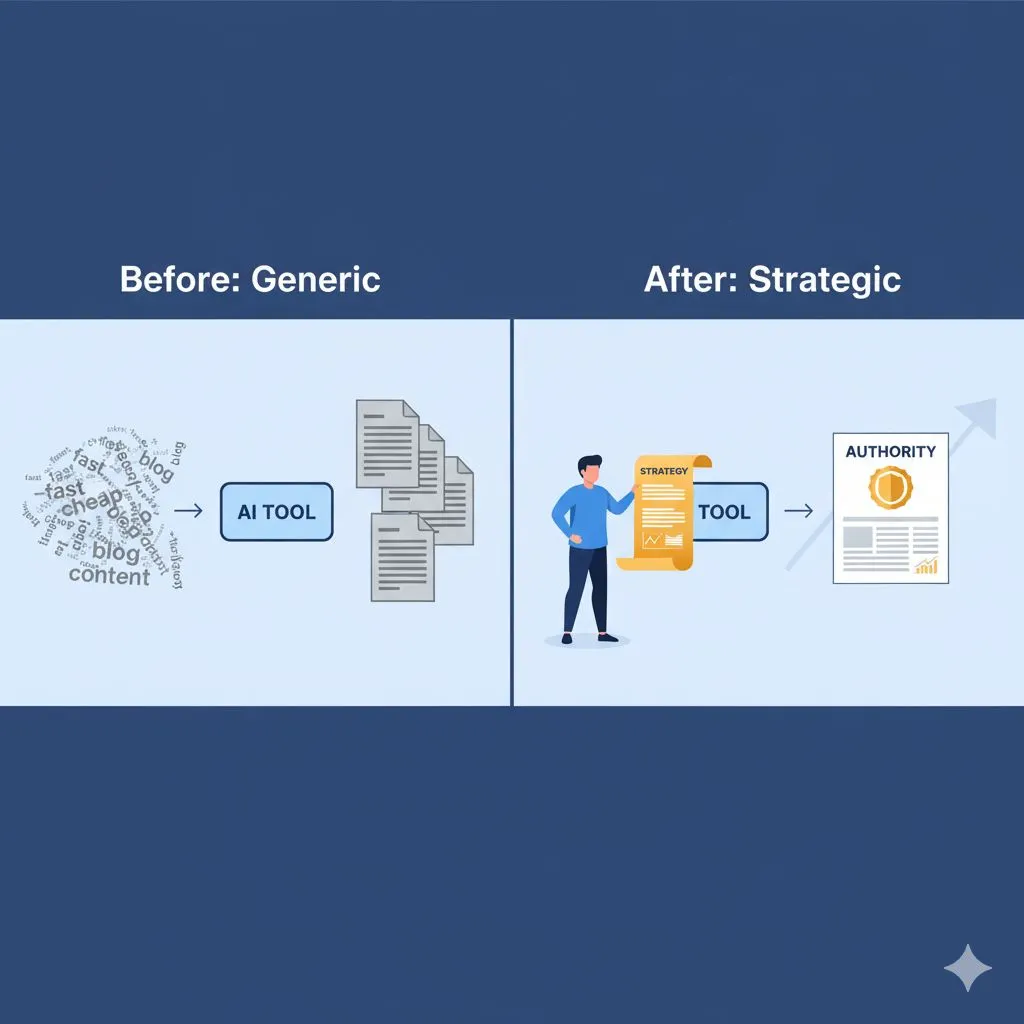
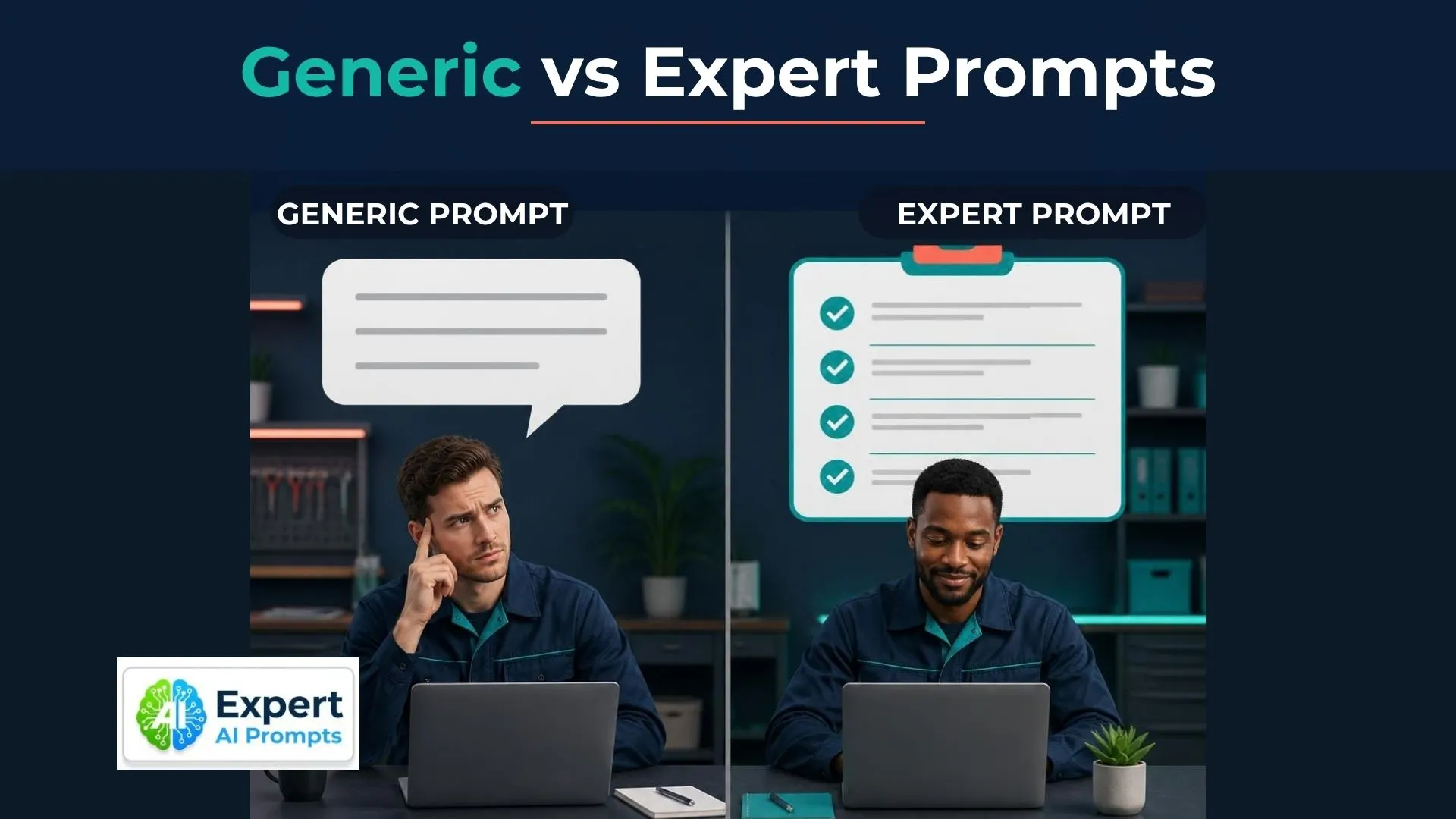
The evidence is clear when you examine the difference between generic vs strategic AI prompts side-by-side: one produces publishable, persuasive output; the other produces filler your readers scroll past. If you ask an AI, "Write a subject line for my marketing newsletter," it will give you: "Unlock Your Marketing Potential." Boring. Ignorable.
The "AI Fix" requires structure. It means using prompts that force the AI to adopt specific copywriting frameworks (like PAS: Problem-Agitation-Solution) and personas. Instead of a generic generator, you use a prompt designed to mimic a world-class copywriter, analyzing your specific topic to pull out the most compelling hook. This ensures the output is expert-level—something that upholds the credibility you’ve worked so hard to build.
Strategic Subject Line Testing
The biggest lever for email open rates is volume testing. A human might come up with three subject line ideas before their brain gets tired. AI can generate 50 in seconds, categorized by psychological trigger (Urgency, Curiosity, Benefit, Social Proof).
By using a structured prompt, you can feed the AI your newsletter topic and ask for:
- 10 Subject lines based on curiosity gaps.
- 10 Subject lines focused on direct ROI.
- 10 Subject lines formatted for mobile optimization (under 40 characters).
You can then scan these options, pick the best three, and test them. You are no longer guessing; you are curating.
The Prompt-Led Email Mastery toolkit includes ready-built subject line generator prompts, pre-header writers, and hook refiners purpose-built for this exact workflow.
Personalization at Scale
Segmenting your list is the gold standard for high open rates, but writing different intros for different segments is a time sink.
With the right prompt engineering, you can take the core body of your newsletter and ask the AI to:
- "Rewrite the introduction of this email to specifically appeal to e-commerce store owners struggling with inventory."
- "Rewrite the introduction to appeal to service-based consultants struggling with lead generation."
Now, you have one core piece of content with tailored hooks for different parts of your audience. You are providing hyper-relevance without tripling your workload. This is how you compete with agencies that have teams of writers—you use leverage.
For a deeper dive into this tactic, read Personalization at Scale: The AI Email Strategy.
The "Hook" Architecture
Getting the open is step one; keeping them reading is step two. AI excels at analyzing the "Hook Architecture." You can feed your draft into a prompt designed to critique and improve the first 50 words.
A prompt might look like: “Act as a ruthless editor. Analyze the first paragraph of this email. Is it passive? Does it bury the lede? Rewrite it to start with a startling statistic or a direct question that forces the reader to scroll.”
This turns the AI into a collaborative partner that sharpens your blade, ensuring that when you do get that open, you don't waste it.
The Workflow: From Overwhelmed to Inbox Authority
Understanding the theory is great, but as a business owner wearing many hats, you need a workflow that actually functions on a Tuesday morning when you're juggling three client calls. Here is how to implement the AI Fix to boost your email open rates without adding hours to your week.
Step 1: The Ideation Phase (Stopping the blank page stare)
Stop trying to conjure brilliance from thin air. Use a "Topic Generator" prompt. Input your industry and your customer’s current pain points, and ask for 10 contrarian or high-value newsletter angles.
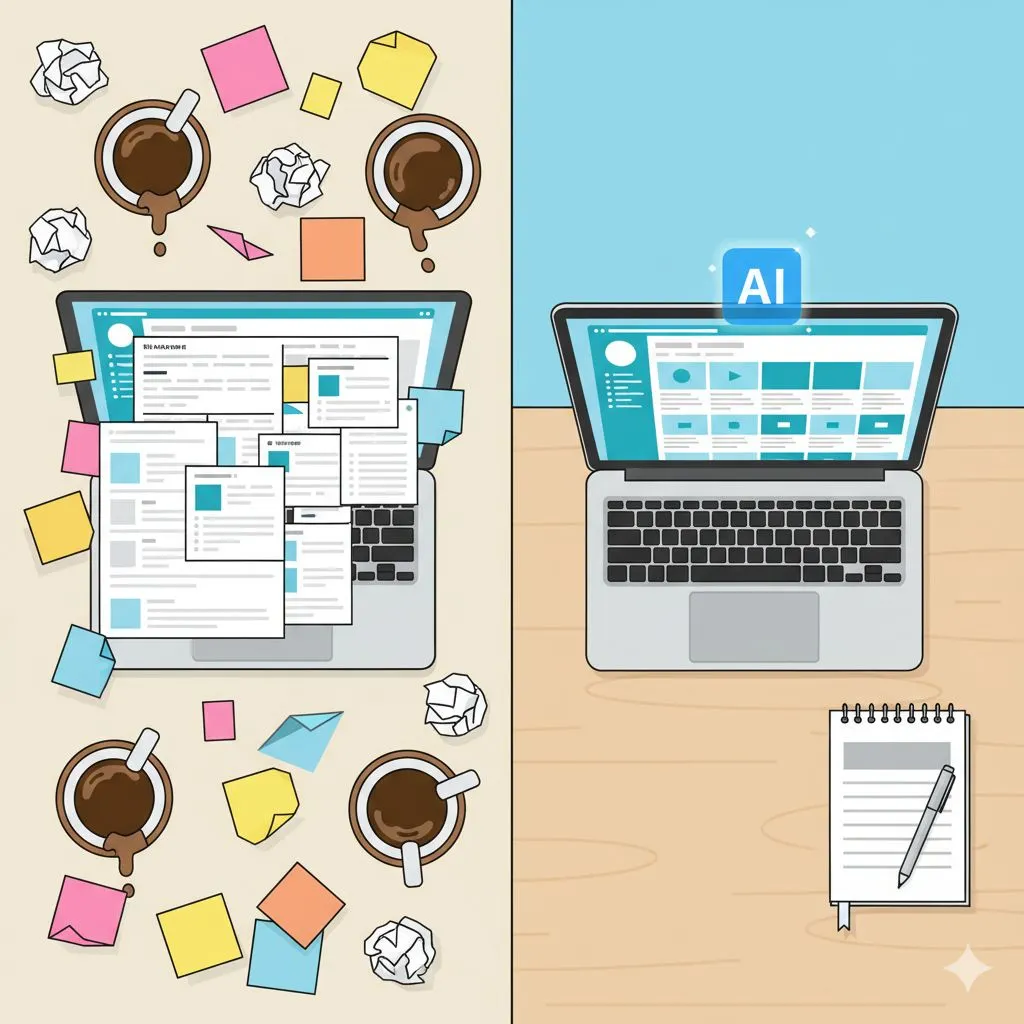
- Old Way: Staring at a blinking cursor for 20 minutes.
- New Way: spending 2 minutes reviewing 10 AI-generated concepts and picking the one that aligns with your weekly goals.
Step 2: The Optimization Phase (Refining for open rates)
Once your draft is written (or co-written with AI assistance), do not hit send. Run your content through an "Optimizer" prompt.
This prompt should specifically ask the AI to:
- Generate 5 subject lines using the "Curiosity Gap" framework.
- Write a pre-header text that complements the subject line (not repeats it).
- Check the reading level (aim for Grade 6-8 for maximum readability).
- Identify any "spam trigger words" (like "Free," "Guarantee," "$$$") that might banish you to the junk folder.
Step 3: The Consistency System (Scaling without burnout)
The secret to scaling isn't intensity; it's consistency. By using a pre-built prompt pack, you can batch-create your content. Download the free 5-hour saver prompt pack to test the batching workflow yourself — no cost, no commitment, immediate results. You can sit down for one hour, generate four weeks' worth of newsletters, subject lines, and social media teasers, and schedule them.
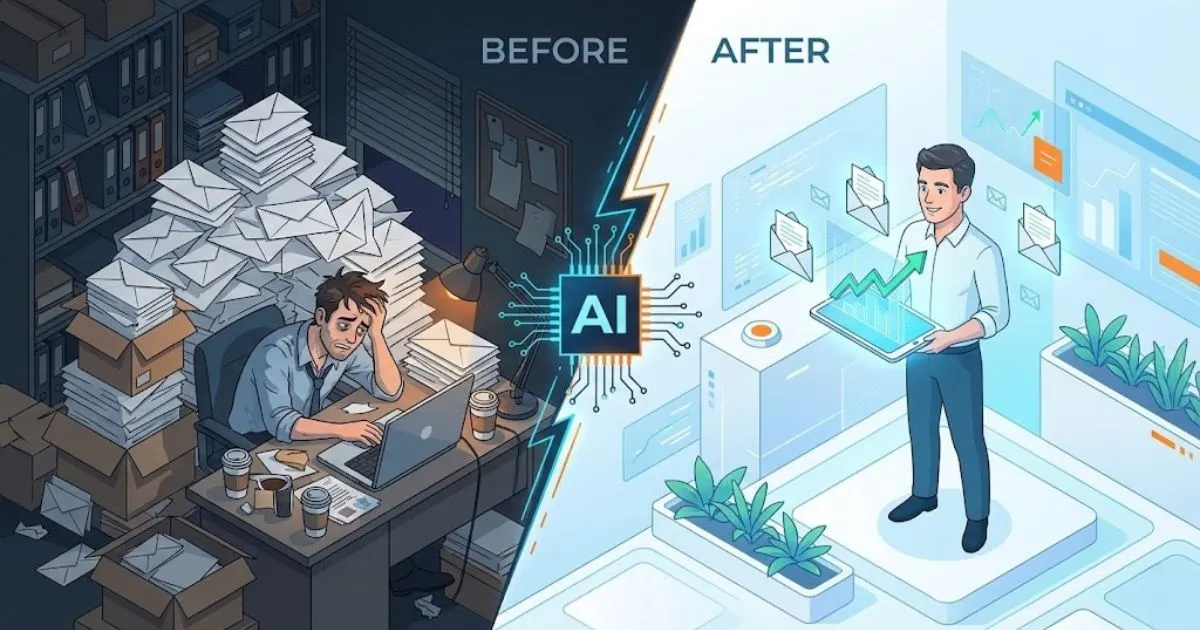
This changes your posture in the business. You move from being reactive (scrambling to write on Friday morning) to proactive (strategically planning growth).
The Solution: Expert AI Prompts
You could spend the next six months learning prompt engineering, testing which inputs get the best results, and refining your own library. Or, you could skip the trial-and-error.
The Sales Landing Page & Newsletter Prompt Power pack from Expert AI Prompts is designed specifically for this bottleneck. It isn't just a list of questions; it's a strategic toolkit tailored for 30 industries. Explore and browse all 30 industry prompt packs to find the pack that matches your business model and audience. It includes the exact "Subject Line Generators," "Hook Refiners," and "Content Scalers" discussed in this analysis. It gives you the expert-level output of a senior copywriter for a fraction of the cost, ready to paste into your workflow immediately.
Conclusion
For too long, you’ve accepted that low open rates are just "part of the game" or a sign that you aren't a good enough writer. That ends today. The silence in the inbox isn't a reflection of your value; it's a reflection of a broken strategy—one that is easily fixed with the right tools. Claim your free AI prompts to start saving time this week — no signup friction, no trial period. Just results.
You have the expertise. You have the business. Now, you need the leverage. By combining your industry knowledge with structured, strategic AI prompts, you can break through the inbox noise. You can move from the overworked operator wondering why no one is listening, to the confident strategist commanding attention.
Don't let your best insights die in the "Promotions" tab. Take control of your message, reclaim your time, and start seeing the engagement you deserve.
Scale Smarter. Grow Faster. Begin Here.
Ready to go deeper? See all 30 prompt packs and pricing — a one-time investment in tools that compound every week.
Get the Sales Landing Page & Newsletter Prompt Power Pack
Further Reading
Write High-Converting Emails in Minutes: The Prompt-Led Strategy
How to Start a Profitable Newsletter with AI Assistance
The Secret to Consistency: Batching Content with AI Prompts
Content Pillars and AI: Planning Your Quarter in an Afternoon