Visual Content Trends for 2026: AI vs. Authentic Photography
Visual Content Trends for 2026: AI vs. Authentic Photography
Feb 04, 2026
For small business owners and ambitious solopreneurs, the digital landscape has always been a battleground for attention. To understand how visual content fits into your overall AI strategy, start with the definitive guide to AI for social media. But as we settle into 2026, the rules of engagement have shifted dramatically. We are no longer asking, "Is AI good enough to use?" That question was answered two years ago. The question keeping entrepreneurs awake now is far more nuanced: "In a sea of perfect, algorithmically generated images, how do I actually connect with a human being?"
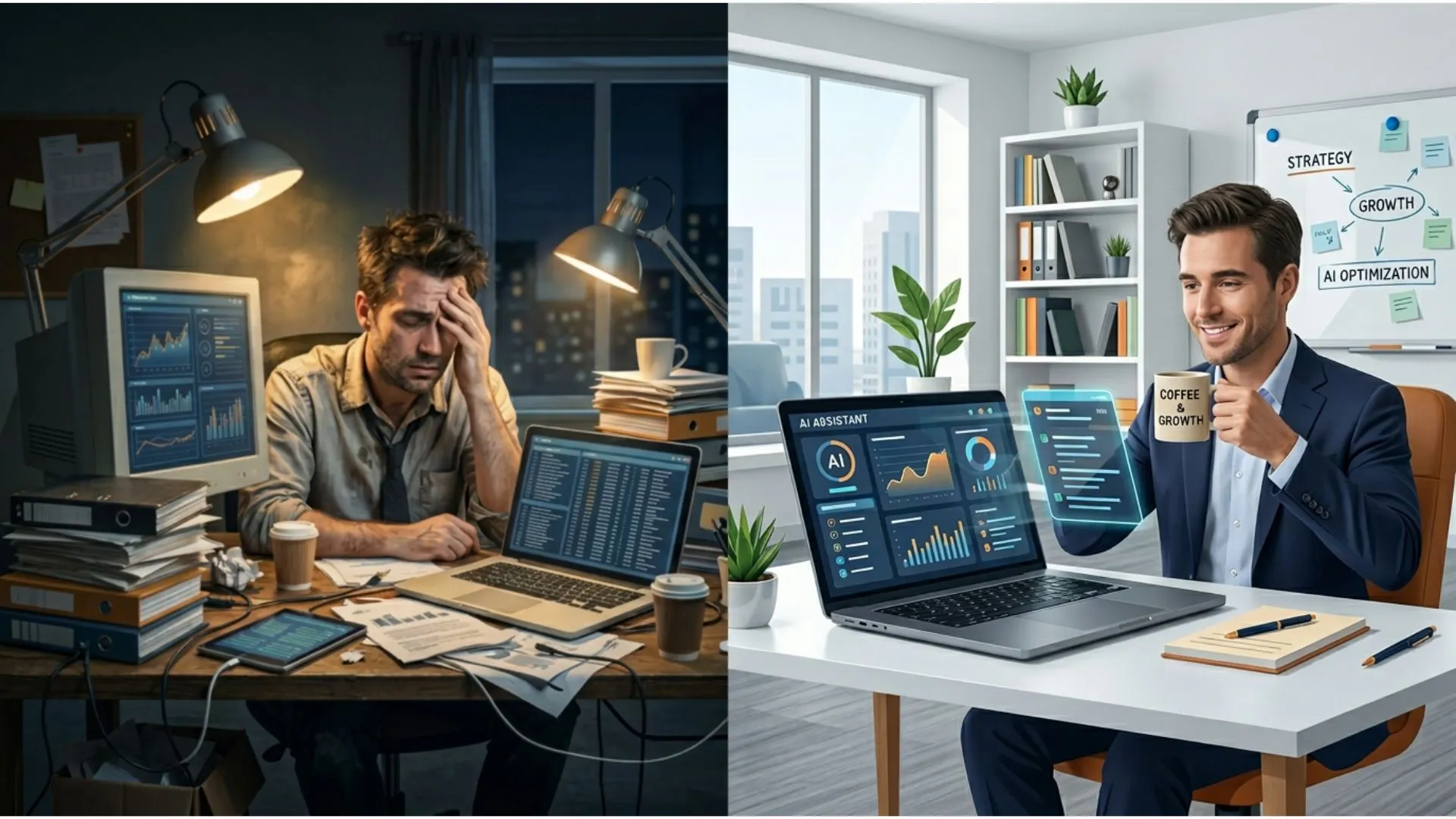
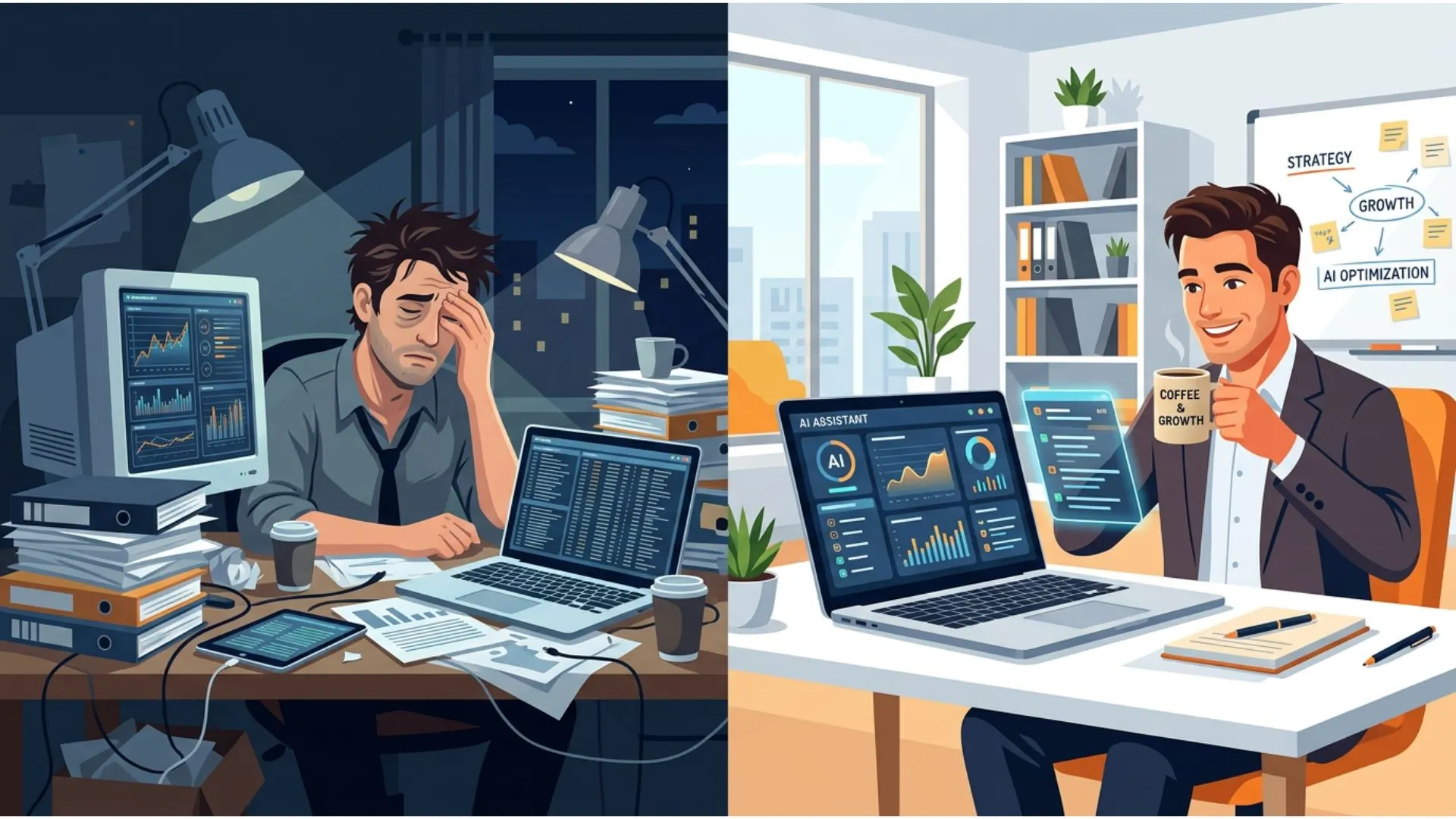
If you are feeling the pressure, you aren't alone. You are likely juggling client delivery, operations, and the relentless demand to "feed the beast" of social media. You want the speed and cost-savings of AI, but you fear looking generic or, worse, untrustworthy. This analysis dives deep into the visual content trends defining 2026, specifically the tug-of-war between Artificial Intelligence and authentic photography. The goal isn’t to pick a winner, but to arm you with a strategy that saves you time without sacrificing your brand’s soul.
The Maturity of AI Imagery: Efficiency at Scale
By 2026, AI image generation has graduated from a novelty to a fundamental business utility. Gone are the days of six-fingered hands and defying the laws of physics. Today’s generative models understand lighting, texture, and brand aesthetics with frightening accuracy. For the time-poor business owner, this represents a massive opportunity to scale production without scaling costs.
The Death of Generic Stock Photography
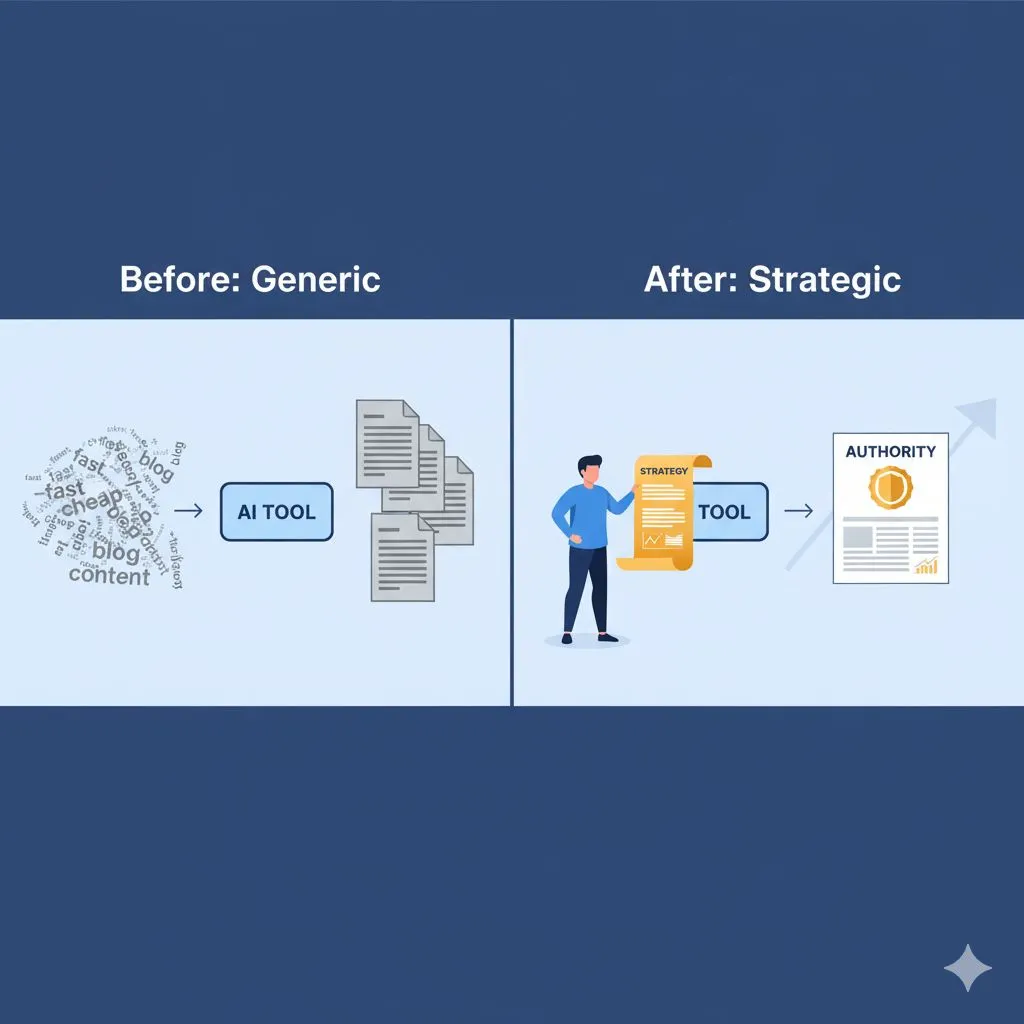
Remember spending hours scrolling through stock photo sites, looking for an image of "business meeting" that didn't look staged? AI has effectively solved this. In 2026, the trend is bespoke asset creation. Instead of settling for a generic image that five of your competitors are also using, you can generate a specific visual that matches your brand colors, lighting preferences, and specific context in seconds. If you want a repeatable system, how to create a month of AI-generated social media content walks you through a proven workflow.
For the small business owner, the ROI here is undeniable. You are no longer paying per image or locked into expensive subscriptions for assets you rarely use. You are generating exactly what you need, on demand.
For a head start on AI-powered brand consistency, grab the free Competitor-Proof Brand Voice Kit.
Where AI Wins: Abstract and Conceptual
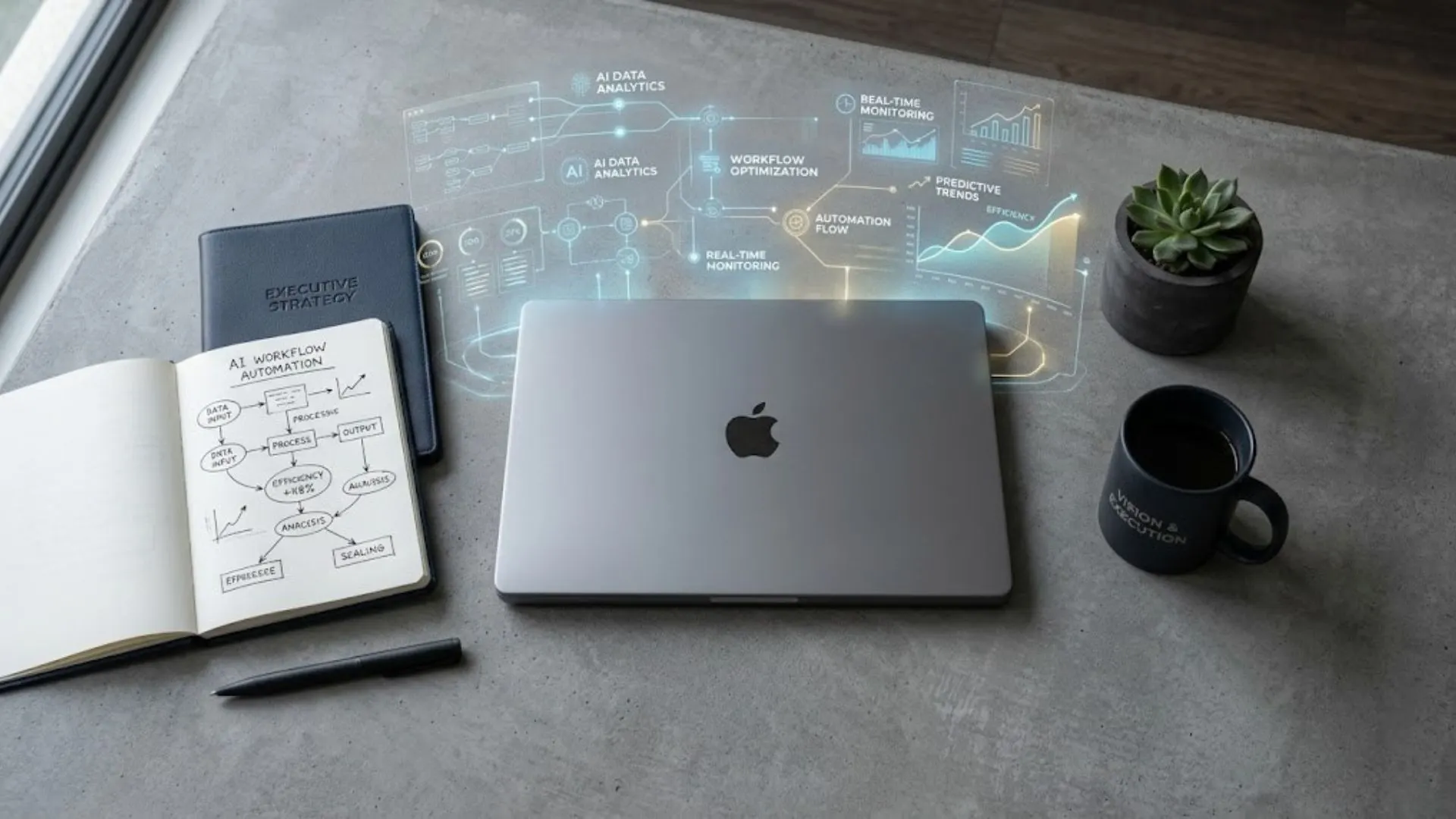
The strongest trend we are seeing this year is the domination of AI in conceptual imagery. If you are a consultant writing about "scaling operations," photographing that concept is difficult and often results in cheesy visual metaphors. AI, however, excels here. It can visualize "growth," "complexity," or "data integration" in artistic, compelling ways that stop the scroll.
Key Efficiency Gains for 2026:
- Blog & Newsletter Headers: Create thematic headers in minutes rather than hours of searching.
- Presentation Decks: Custom backgrounds and illustrations that make pitch decks look agency-grade.
- Ideation: Before you ever hire a photographer for a product shoot, AI allows you to storyboard the exact look, lighting, and props you want, reducing trial-and-error on set.
However, efficiency has a ceiling. While AI can create a "perfect" image, 2026 has brought with it a craving for something AI cannot synthesize: imperfection.
The Counter-Movement: Raw Authenticity and "Lo-Fi" Trust
As Newton’s third law suggests, for every action, there is an equal and opposite reaction. As the internet floods with hyper-polished, flawless AI-generated visuals, a powerful counter-trend has emerged: the return to raw authenticity.
In 2026, "perfect" is often viewed with suspicion. Consumers, burnt by deepfakes and mass-produced content, have developed a sophisticated radar for what is real. When a potential client visits your LinkedIn profile or Instagram page, they aren't just looking for competence; they are looking for proof of life. They want to know that there is a real person behind the business, someone who actually exists and delivers results.
The "Human Premium"
We are seeing a marked increase in engagement on content that is visibly unpolished. This is what we call the Human Premium — why real stories matter more than ever. Smartphone photography, slightly grainy behind-the-scenes videos, and candid shots of team members working are outperforming studio-quality assets in metrics related to trust and conversion.
For the small business owner like Alex Rivers, this is good news. It means you don't need a five-figure production budget to compete. In fact, your "limitations"—a smartphone and an office—are actually your greatest assets for building connection.
Where Photography Wins: Connection and Credibility
While AI handles the abstract, authentic photography owns the relational. You simply cannot use AI to replace:
- The Founder Story: People buy from people. A generated avatar cannot replicate the specific energy you bring to your business. For practical guidance on protecting your brand voice in an AI-first world, read Building a Brand Voice That Survives the AI Era.
- Client Interactions: Real photos of you shaking hands with a client, leading a workshop, or visiting a job site carry weight that no prompt can replicate.
- Physical Products in the Wild: While AI can render a product perfectly, customers in 2026 want to see the texture, the scale, and how it looks in a messy, real-world living room, not just a pristine void.
The trend for 2026 is "Lo-Fi" content—images that say, "I was here, I did this work, and I am real." This visual evidence acts as a trust anchor, allowing your audience to believe in the polished, AI-assisted content you share elsewhere.
The Strategic Hybrid Model: How to Compete Without Burnout
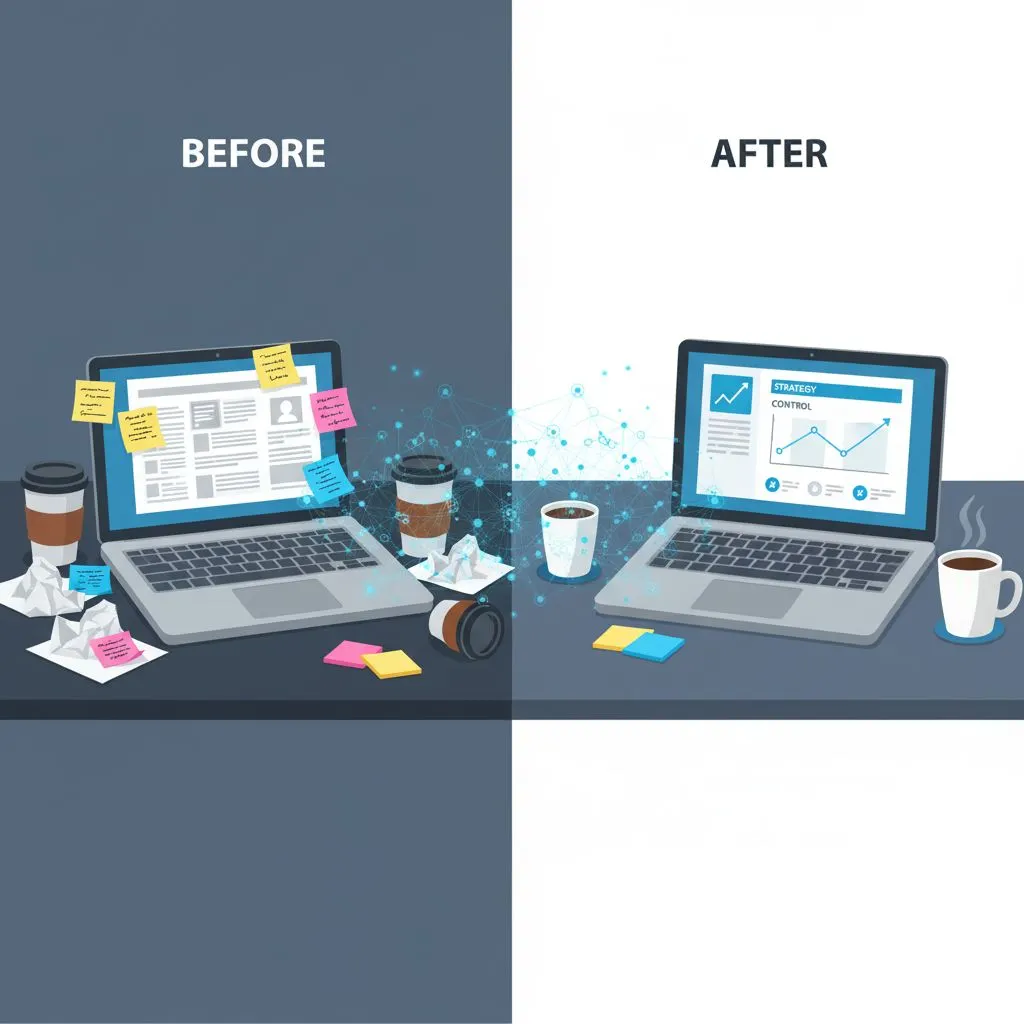
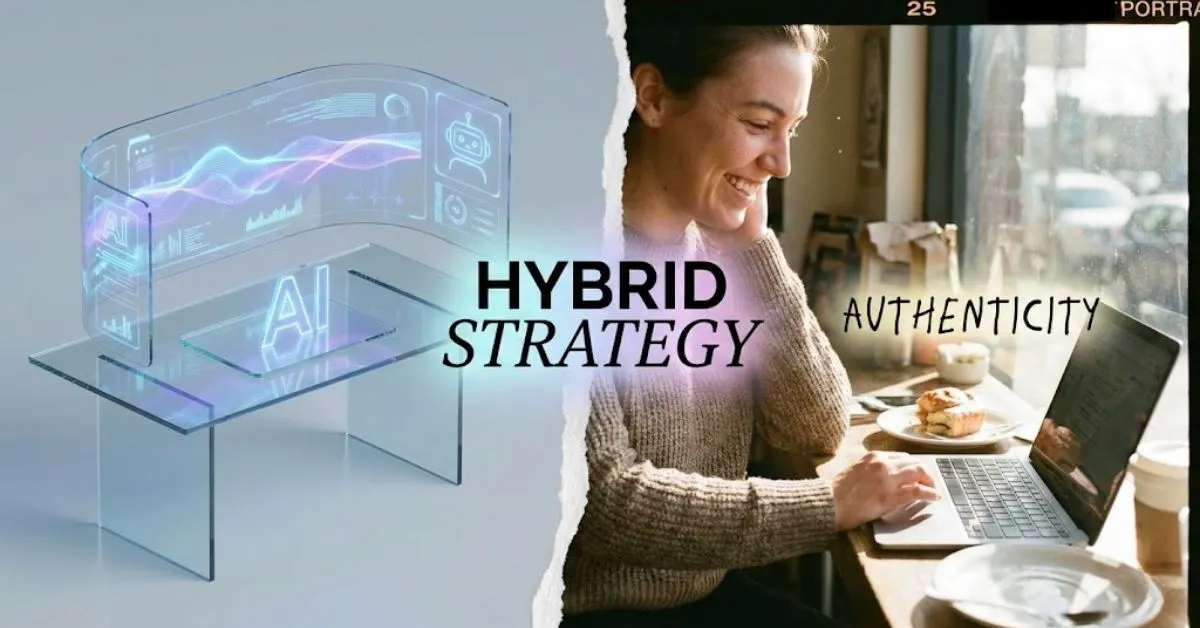
So, we have two conflicting visual content trends: the need for AI-driven efficiency and the demand for human authenticity. For the overwhelmed operator, choosing one over the other is a mistake. The winning strategy for 2026 is the Hybrid Model.
This approach allows you to compete with larger agencies by leveraging AI for scale while using authentic photography to close the trust gap. It is not about working harder; it is about deploying the right asset for the right psychological trigger.
The 70/30 Rule
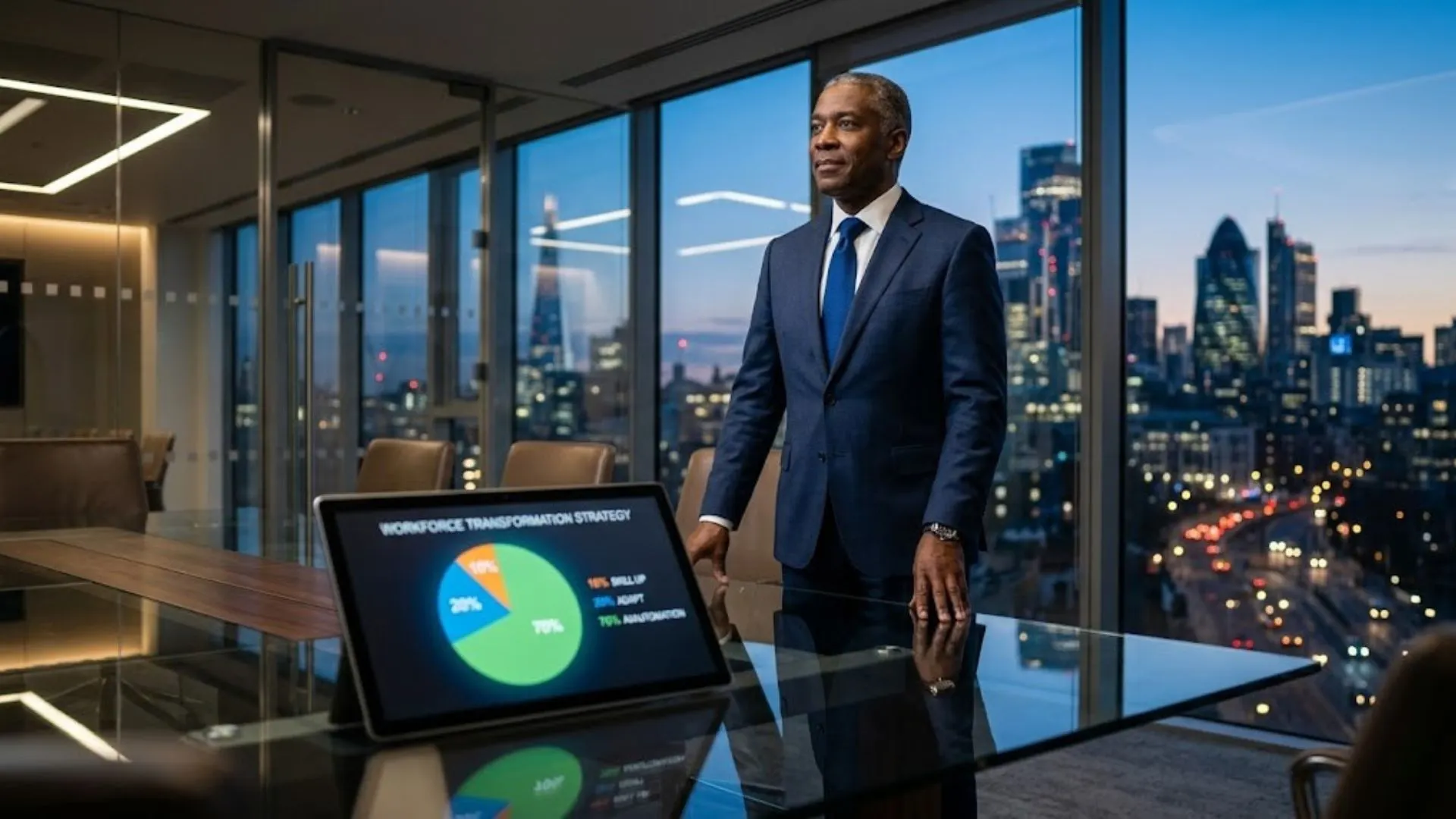
To reclaim your time without sacrificing brand power, consider adopting the 70/30 Rule:
- 70% AI-Assisted (The Polish): Use AI for the content that requires high volume and low emotional intimacy. This includes your educational carousels, blog thumbnails, website hero backgrounds, podcast covers, and abstract social media fillers. This is where you save hours of manual design work.
- 30% Authentic (The Proof): Reserve your time and energy for the high-impact trust builders. This includes your profile pictures, "day in the life" stories, client case study photos, and team celebrations.
This balance prevents the "uncanny valley" effect where a brand feels too robotic, while also preventing the burnout that comes from trying to photograph every single concept manually.
Workflow Integration: AI as the Editor, Not the Creator
Another massive trend in 2026 is using AI to enhance reality rather than replace it. This is a massive time-saver for the DIY entrepreneur.
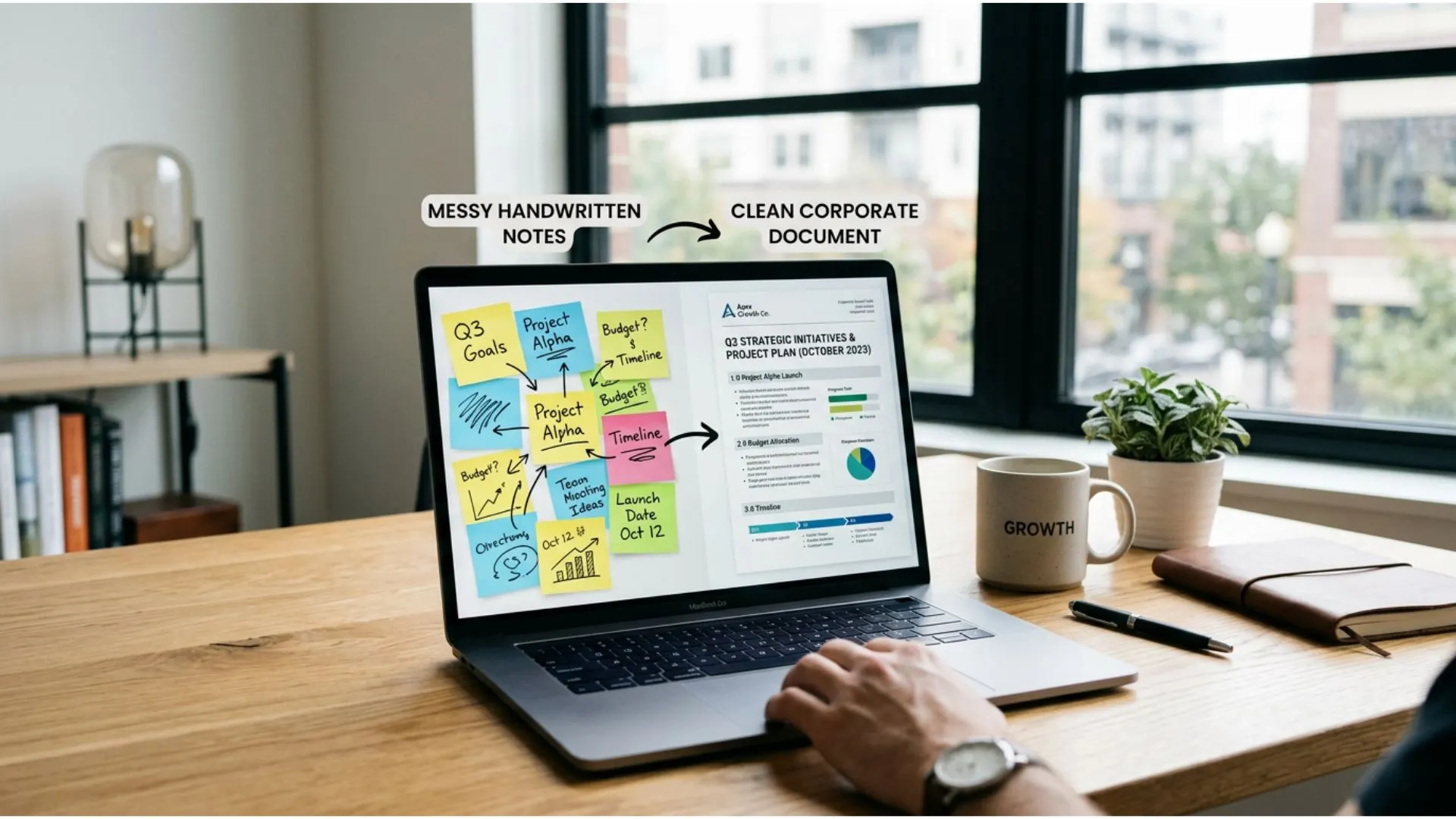
Imagine you take a great photo of a client meeting, but the lighting is poor and there is a distracting coffee cup in the foreground. If AI-quality control in your content is a concern, Fear of the Robot: Ensuring Your AI Content Still Sounds Human covers this in detail. In the past, you would have scrapped the photo. Now, you use AI tools to "cleanup" and "relight" that authentic photo. You keep the genuine human connection (the faces, the interaction) but use AI to bring the quality up to professional standards.
This hybrid workflow—Capture Real -> Polish with AI—is the secret weapon of high-performing small businesses. The Prompt Driven Branding Playbook gives brand managers and solopreneurs a ready-built system for doing exactly this at scale. It allows you to maintain the "Human Premium" while ensuring your brand aesthetic remains consistent and professional.
Navigating Ethics and Brand Perception
As we integrate this hybrid model, we must address the elephant in the room: Ethics and Perception. In 2026, transparency is not just a legal requirement in many regions; it is a branding choice. To understand how Expert AI Prompts handles data, privacy, and platform security, visit the Trust, Security and Risk Mitigation resource hub.
The Credibility Check
Audiences are smart. If you use AI to generate an image of a packed conference room and claim it was your event, you aren't just "marketing"—you are lying. The backlash to deceptive visuals is swift and damaging.
The trend for sustainable brands is contextual honesty. For a deeper look at how expert-built prompts reduce the risk of generic or misleading AI output, see the best AI prompts for business comparison: expert vs generic. It is perfectly acceptable to use AI for a metaphorical image illustrating "market volatility." It is unacceptable to use AI to fake a portfolio piece. For the small business owner, the rule of thumb is simple: If the image implies proof (of work, of attendance, of results), it must be real. If the image implies concept (an idea, a mood, a feeling), AI is fair game.
Conclusion
The visual content trends of 2026 offer a unique liberation for the small business owner. You are no longer held back by a lack of budget for high-end graphic design, nor are you required to be a professional photographer to build trust.
The landscape has evolved into a sophisticated blend of Artificial Intelligence and Authentic Photography. The winners in this new era won't be the ones who automate everything to save a buck, nor will they be the purists who refuse to touch new technology. The winners will be the strategists—entrepreneurs like you who use AI to buy back their time and authentic photography to win their audience's heart.
You have the tools to scale your presence and look like a Fortune 500 company, while retaining the personal touch of a boutique consultancy. The key is to stop seeing these tools as enemies and start seeing them as distinct instruments in your orchestra.
Ready to get started without the trial-and-error? Download free AI resources and lead-ready prompt tools — no credit card required.
Ready to Build Your Hybrid Strategy?
Transitioning to this hybrid model requires more than just knowing what to do—it requires the right tools to execute quickly. You don't have time to experiment with thousands of prompts to get that perfect "70%" of polished content.
We have done the heavy lifting for you. Streamline your workflow, reclaim your time, and produce expert-level visuals that scale with your business.
Get the AI Prompts for Social Media Managers Toolkit
Or view the full pricing catalog to explore all 30 industry-specific prompt packs.
Further Reading
• The Definitive Guide to AI for Social Media
• How to Create a Month of AI-Generated Social Media Content
• Building a Brand Voice That Survives the AI Era
• The Human Premium: Why Real Stories Matter More Than Ever
• Fear of the Robot: Ensuring Your AI Content Still Sounds Human