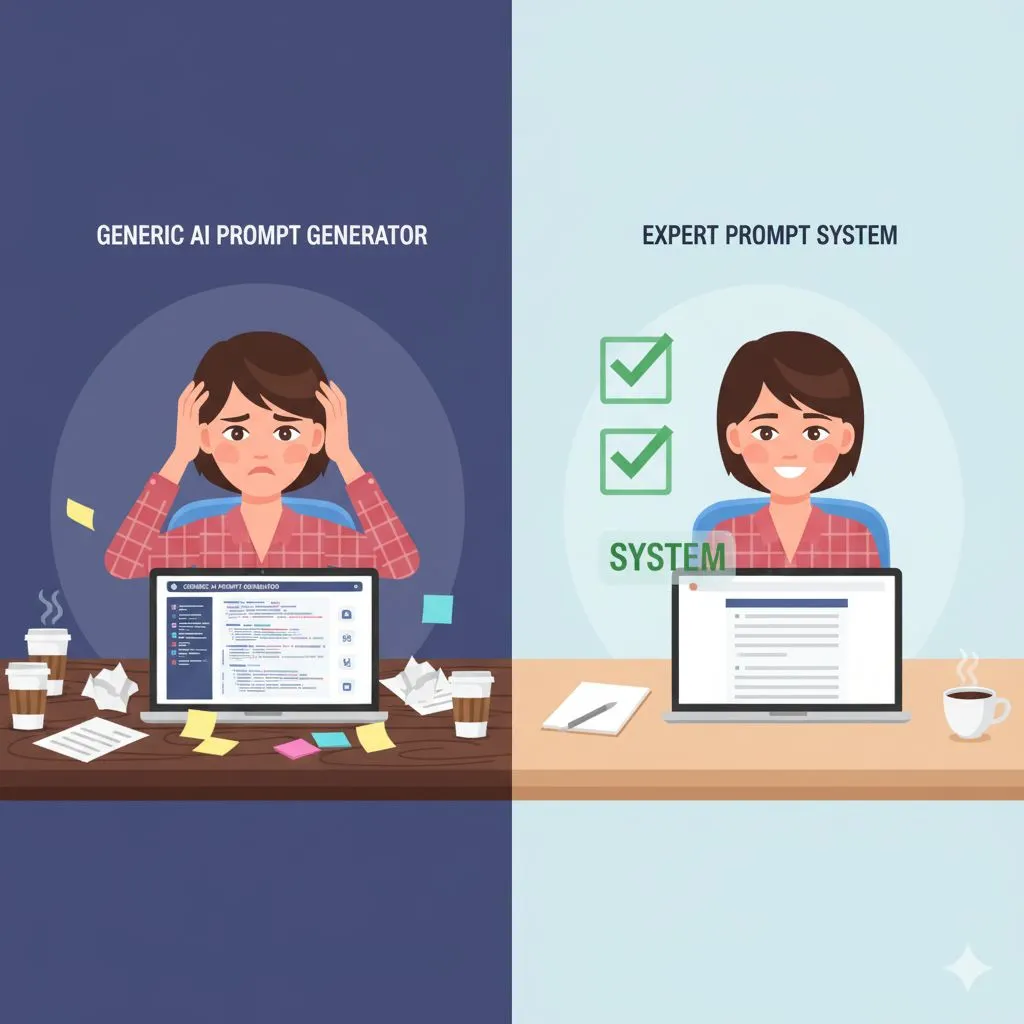
Transitioning from Freelancer to Agency Owner using Systems
Transitioning from Freelancer to Agency Owner using Systems
Jan 31, 2026

You started your business for freedom. You wanted to choose your clients, set your hours, and cap your income only by your ambition. But if you are like most successful freelancers, you’ve likely hit a wall. You are working 12-hour days, juggling client delivery, accounting, and business development. You’re successful, but you’re tired. You’ve built a job, not a business.
The bottleneck is you.
For ambitious solopreneurs like you, Alex, the dream isn't just to make more money—it’s to reclaim your time while maintaining the quality you’re known for. The good news: scaling with systems is now achievable for any freelancer. Start with the complete guide to AI for small business to see the framework behind the leap. The only way to cross that chasm is to navigate the transition from freelance to agency.
This isn't just a change in title; it is a fundamental reconstruction of how you operate. It requires moving from a model where you are the product to a model where the system is the product. Here is the strategic roadmap to making that leap without sacrificing quality or sanity.
Phase 1: The Mindset Shift (Operator vs. Owner)
The biggest hurdle in scaling isn't finding clients or hiring staff; it is the psychological shift required by the founder. As a freelancer, your value is tied to your personal output. Your clients hire you. They want your eye, your code, or your words.
To build an agency, you must fire yourself from being the primary deliverable.
Escaping the Technician Trap
You may be familiar with the concept of the "E-Myth." You are the Technician—the one doing the work. But an agency requires you to be the Entrepreneur—the one designing the machine that does the work. Every hour you spend cropping an image, debugging code, or writing a social caption is an hour you are stealing from your future agency.
The "Good Enough" Paradox
Freelancers are often perfectionists. It’s what makes you good. But perfectionism is the enemy of scale. When you transition to an agency model, you must accept that a team member (or an AI tool) might do the task 85% as well as you, but they can do it 100% without you. That is a net win. See how one agency owner scaled operations with AI — and what the system looked like at every stage. Your job shifts from "doing it perfectly" to "creating a system where 90% quality is the standard default."
Phase 2: Systematizing Delivery
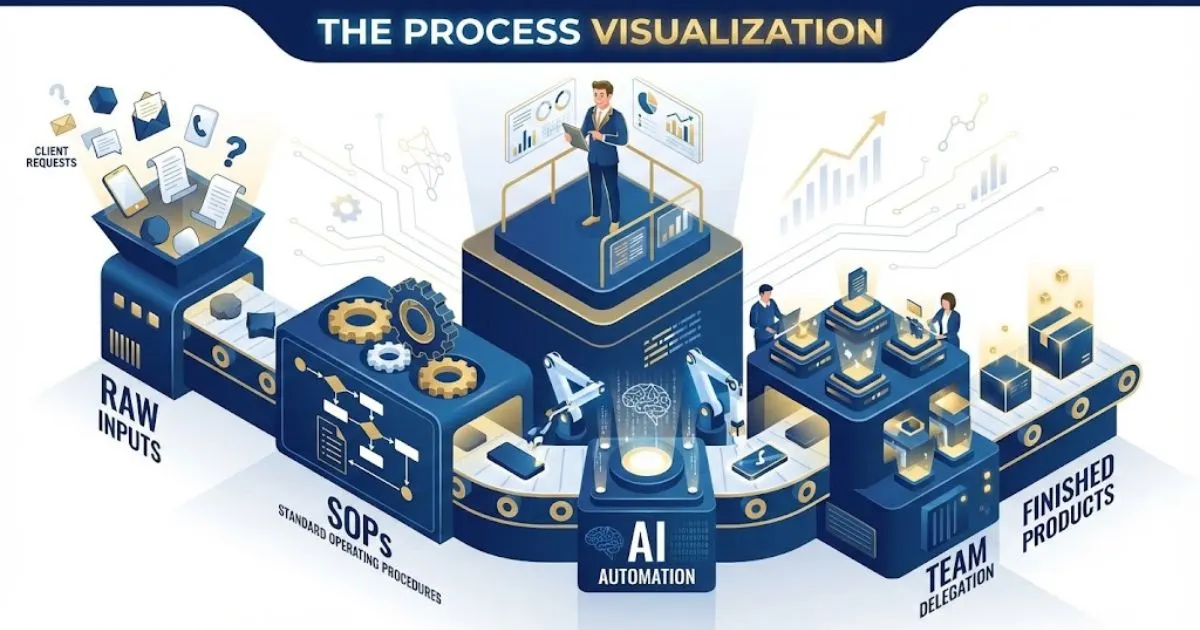
You cannot scale chaos. If every client project is a custom, from-scratch endeavor, you will never build an agency. You will simply build a high-stress consultancy. To scale, you must productize.
The Service Productization Matrix
Look at your last ten projects. What were the commonalities? Did they all require a discovery call? Did they all need a brand audit? A wireframe?
Stop selling "time" and start selling "products." Instead of "I’ll do your SEO for $100/hour," sell "The 30-Day SEO domination Package."
- Define the Scope: Rigidly define what is included and what is not.
- Standardize the Price: Eliminate the proposal writing time drain.
- Templatize the Deliverable: The output should look the same structurally for every client.
SOPs: Your Intellectual Property
Standard Operating Procedures (SOPs) are the asset value of your agency. If you don't have SOPs, you don't have a business; you have a personality cult.
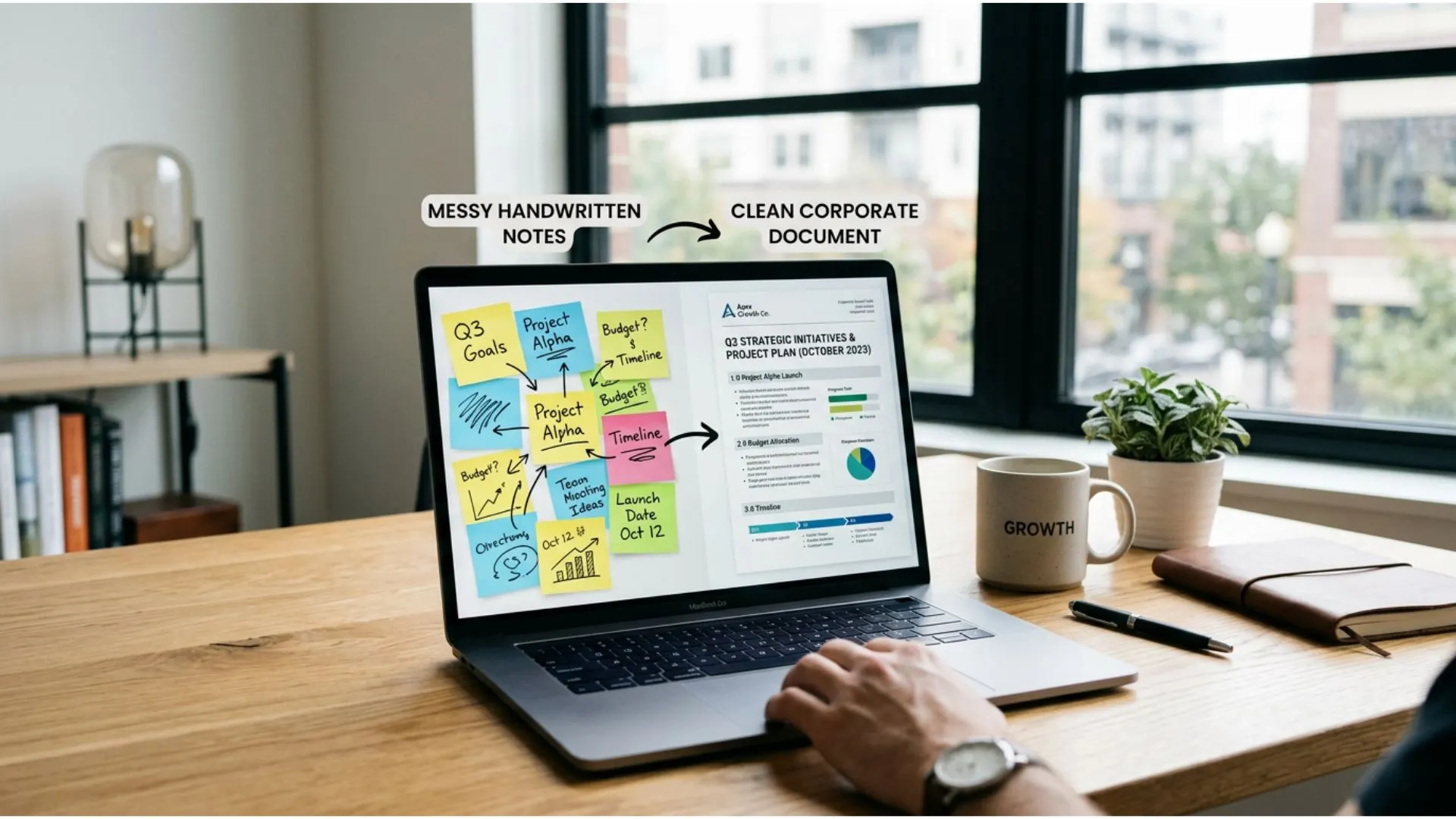
For every task you do more than twice, record it. Use a screen recorder (like Loom) and talk through your process. Then, use an AI transcription tool to turn that video into a checklist.
- The Goal: If you were hit by a bus tomorrow, could a stranger with basic skills pick up your SOPs and deliver the product to the client? If the answer is no, you aren't ready to be an agency owner.
Use the AI ROI Calculator to baseline your current time costs before you systematize — it makes the before-and-after undeniable.
Phase 3: Building the "Hybrid" Workforce (AI + Talent)

Ten years ago, moving from freelance to agency meant hiring expensive staff, renting an office, and managing payroll immediately. Today, the bridge is much shorter thanks to the hybrid workforce model: You + AI + Freelancers.
The AI Advantage
Before you hire a human, hire AI. AI tools are not just for generating text; they are your first line of defense against administrative overwhelm.
- Drafting: Use AI to create the "ugly first draft" of emails, blogs, or strategies.
- Analysis: Use AI to analyze client data or competitor research.
- Operations: Use AI to sort your inbox or schedule meetings.
At Expert AI Prompts, we believe AI is the lever that allows a one-person shop to compete with a ten-person team. It creates the volume and consistency required to look like an agency before you actually have the payroll of one.
The Delegation Matrix
Once AI has taken the low-level administrative and generative tasks, you hire humans for judgment and strategy.
- The Operator (Project Manager): Usually the first hire. Someone to manage the timelines and client communication so you can focus on growth.
- The Subject Matter Experts: Contractors who execute specific tasks (design, coding) based on your SOPs.
Rule of thumb: Only delegate a task once you have a system for it. Dumping chaos onto a new hire is a recipe for high turnover and low quality.
The fastest way to build those systems is with the right toolkit. Browse 30 industry-specific prompt packs and find the one that fits your agency model.
Phase 4: Automating Acquisition
The freelancer's nightmare is "Feast or Famine." You work hard to get clients, then you stop marketing to do the work. When the work is done, the pipeline is empty. An agency cannot survive on this cycle.
Separating Sales from Service
You need a marketing engine that runs while you sleep. This is where your new "System Mindset" applies to lead generation.
- Content Systems: You need to publish expert-level content daily to build authority. Use AI prompts for agency growth to generate high-value posts for LinkedIn, newsletters, and blogs in batches.
- Lead Magnets: Create a valuable resource that solves a small problem for your ideal client — browse free AI resources and lead magnet templates to see proven formats ready to deploy.
- Nurture Sequences: Automated email flows that warm up leads before they ever get on a call with you.
Establishing Agency Credibility
Your brand needs to look bigger than you. "I help clients" needs to become "We help clients."
- Update your website copy to "We."
- Showcase case studies that focus on the results of the system, not the effort of the freelancer.
- Use professional invoicing and project management portals.
Phase 5: Financial Systems for Scaling
As a freelancer, your bank account is often a mix of personal and business funds. As an agency, cash flow is oxygen.
Value-Based Pricing
You must decouple your income from your hours. If you charge by the hour, you are penalized for being fast and efficient. Agency pricing is based on the value of the solution.
- Freelancer mindset: "This took me 5 hours at $100/hr, so it's $500."
- Agency mindset: "This system generates $10k/month for the client, so the price is $2,000."
Not sure how to calculate your own value-based price? The AI ROI Calculator for Small Business gives you the numbers to back the conversation.
The Retainer Model
Agencies thrive on Recurring Revenue (MRR). Project work is exhausting because you have to resell every month. Shift your productized services into retainers. Maintenance, optimization, and reporting are excellent retainer vehicles. This stabilizes cash flow and allows you to forecast hiring needs.
Conclusion: The Freedom Roadmap
Transitioning from freelance to agency is a journey of letting go. You must let go of the control over every pixel, let go of the belief that only you can do the work, and let go of the safety of hourly billing.
But in exchange, you gain something far more valuable: a scalable asset. You move from being an overworked operator to a strategic owner. You reclaim your time. You build a brand that has value independent of your presence.
The gap between where you are (overwhelmed) and where you want to be (empowered) is filled by systems. And the fastest way to build those systems is by leveraging the right tools.
You don't have to guess how to build these SOPs, marketing messages, or strategic frameworks. You can use the same leverage the big players use.
Start free: grab one of the free AI resources for agency owners — no credit card, no commitment.
Ready to stop hustling and start scaling?
We have curated the exact workflows, SOP generators, and content strategies you need to make this jump.
Get the Expert AI Prompts Agency Growth Toolkit
Ready to go further? See all prompt packs and pricing — 50 prompts per pack, 30 industries covered, one-time investment.
Further Reading
How Boutique Agencies Are Competing with Big Firms Using AI Prompts
The Freelancer's Edge: How to Win More Proposals with AI