The Self-Driving Sales Funnel: A 2026 Reality?
The Self-Driving Sales Funnel: A 2026 Reality?
Feb 03, 2026
Introduction & The Anatomy of Automation
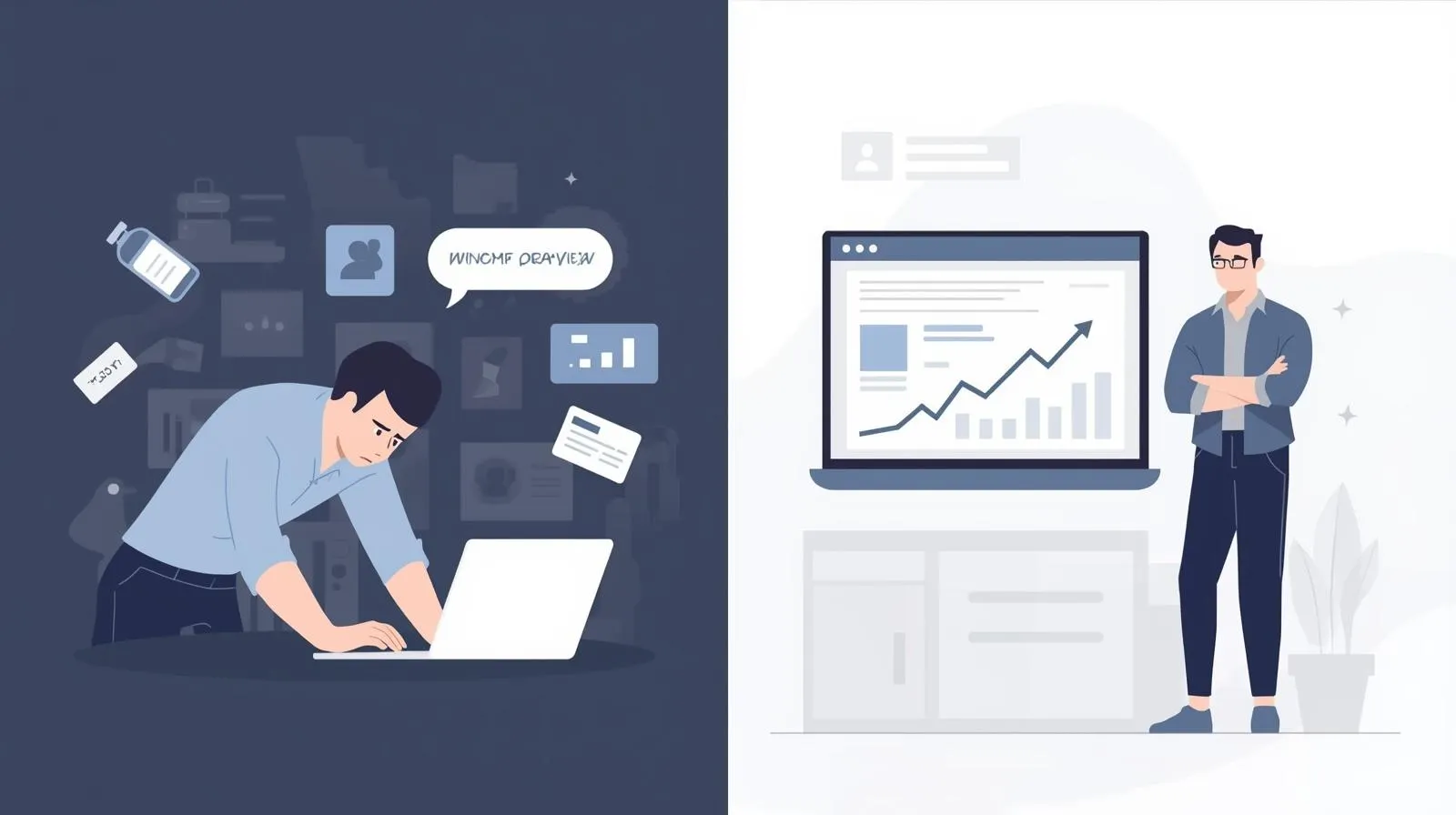
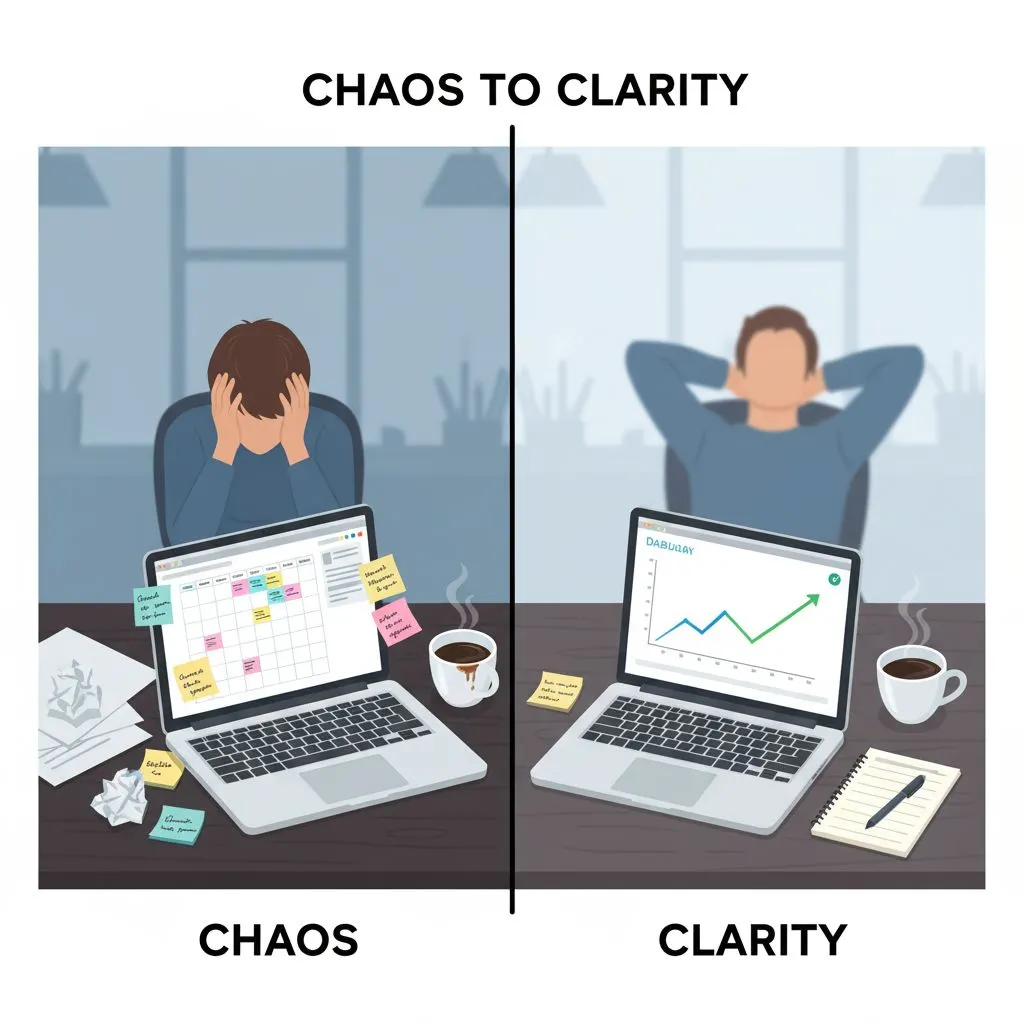
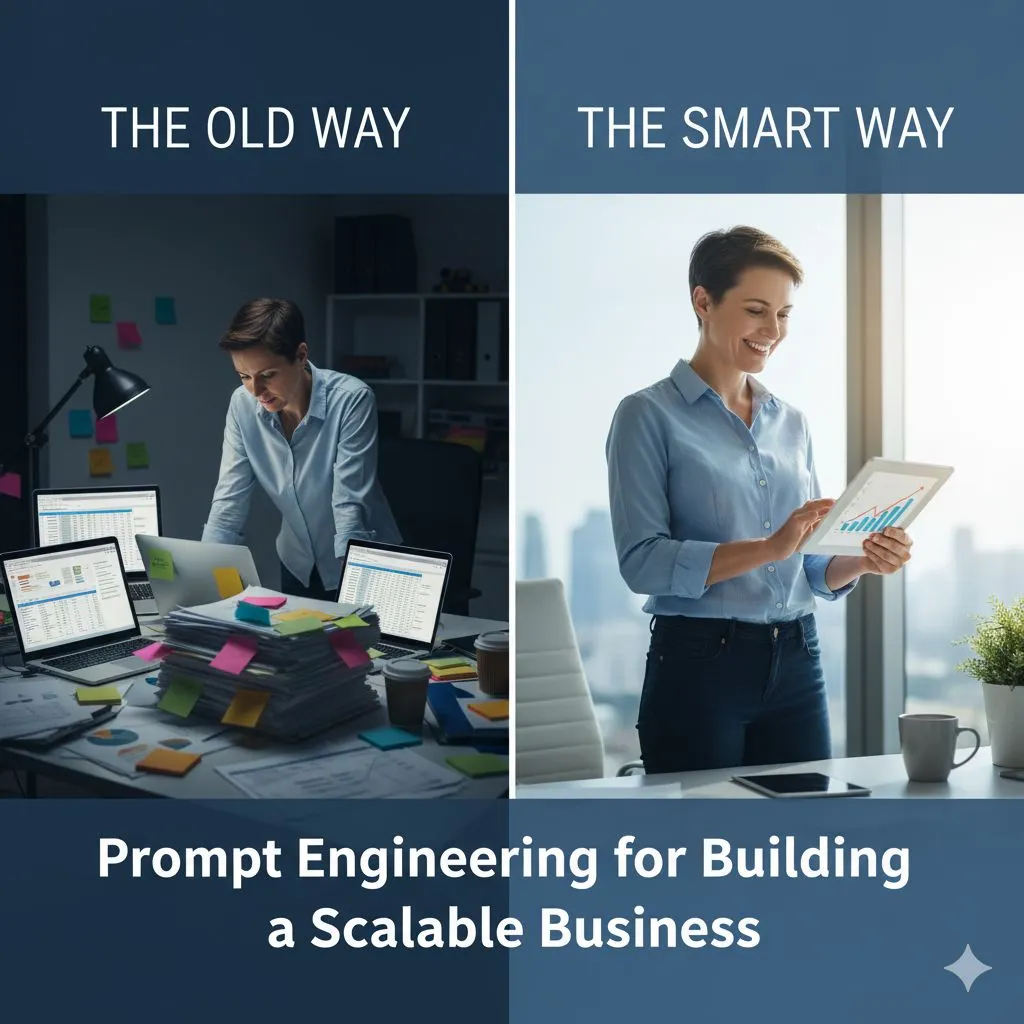
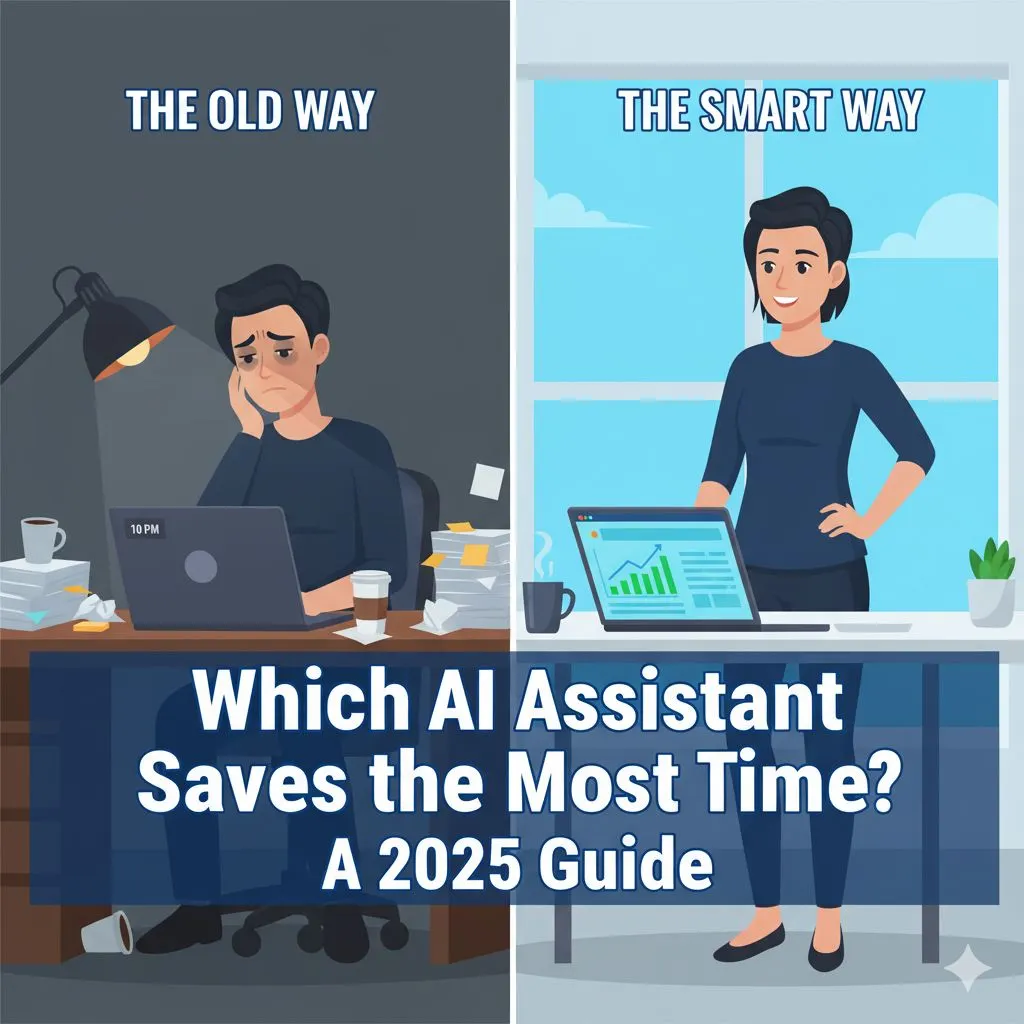
It is 2:00 AM. You are finally closing your laptop, eyes burning, mind racing with a checklist of tasks you didn’t get to: the follow-up emails, the LinkedIn post for tomorrow, the proposal for that new lead. You are the CEO, but you are also the marketing department, the sales team, and the customer support lead.
This is the reality for most small business owners. You have the ambition to scale, but you are shackled by the limitations of your own time.
For years, digital marketers have dangled a tantalizing promise in front of overworked entrepreneurs: The Passive Income Dream. They sell the idea of a business that runs entirely on autopilot while you sip coconuts on a beach. But if you have been in business for more than a month, you know that "passive" is often a synonym for "neglected."
However, as we move through the mid-2020s, the conversation has shifted. We aren't talking about "passive" anymore; we are talking about leverage. The concept of automated sales funnels has matured from a clunky, robotic series of spam emails into a sophisticated, responsive ecosystem that mimics high-touch human interaction.
By 2026, the "Self-Driving Sales Funnel" isn't just a buzzword—it is the dividing line between businesses that stagnate in the weeds of daily operations and those that scale. But here is the critical distinction: A self-driving car still needs a destination, a map, and a driver ready to take the wheel when the terrain gets rough.
For an ambitious entrepreneur like you—managing a team of ten or flying solo—the goal isn't to remove yourself from the business. It is to remove yourself from the administrivia of the business. It is about building a system that prospects, nurtures, and converts leads with the precision of a sniper, 24/7, so you can get back to being the strategist.
The Anatomy of an Automated Sales Funnel
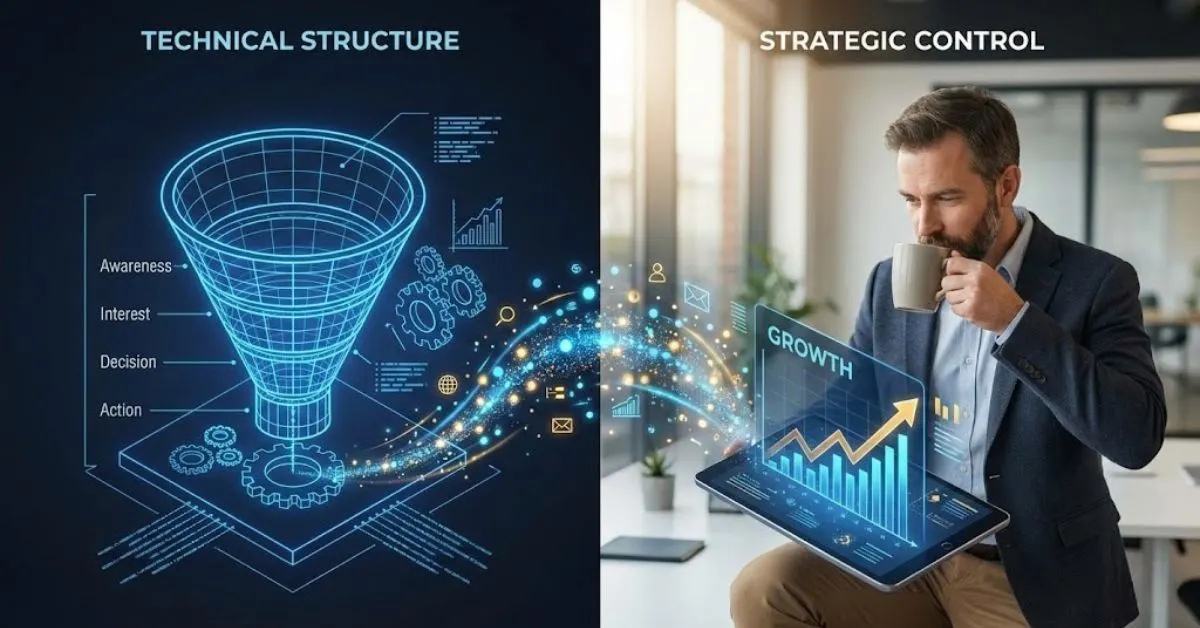
To understand how to reclaim your time, we must first dismantle the engine. An automated sales funnel is not magic; it is a series of strategic checkpoints designed to move a stranger toward becoming a loyal client, with minimal manual interference.
In the past, this required a dedicated marketing team. Today, it requires a smart tech stack and a library of high-impact content.
1. The Top of Funnel (TOFU): Automated Attraction
The first stage is where most small business owners burn out. You feel the pressure to be everywhere—LinkedIn, Instagram, YouTube, email newsletters. The "feed the beast" mentality consumes hours of your week.
In a self-driving funnel, attraction is systematized. It relies on "evergreen" assets—content that works as hard today as it will six months from now. Instead of writing fresh posts every morning, a strategic funnel uses AI to repurpose one core idea into twenty assets. A single webinar becomes a blog post, a week of social content, and a lead magnet.
The goal here isn't just "traffic"; it's qualified traffic. Automation tools now allow us to segment audiences before they even subscribe. By using interactive quizzes or specific targeted ads, the funnel acts as a bouncer, letting in only the prospects who are genuinely a good fit for your service, saving you from wasting time on dead-end sales calls. For a complete framework on building AI-powered evergreen content assets at the top of your funnel, explore the small business playbook for AI content creation.
2. The Middle of Funnel (MOFU): The Nurture Engine
If the top of the funnel is the handshake, the middle is the conversation over coffee. This is where trust is built. Historically, this is also where leads fall through the cracks. You get a business card or an email address, you send one follow-up, get busy with client work, and never speak to them again.
The "Self-Driving" approach changes this dynamic entirely. The Nurture Engine is the heart of automated sales funnels. It is designed to simulate a one-on-one relationship at scale.
But here is the catch: In 2026, consumers are smarter. They can smell a generic "Just checking in!" automated email from a mile away. To compete, your automation must be behavioral.
Imagine a prospect clicks a link in your email about "pricing packages" but doesn't buy. A standard automation does nothing. A smart automation tags that user as "Price Conscious" and triggers a specific email sequence addressing ROI, payment plans, or a limited-time bonus. If they click a link about "case studies," they receive a sequence focused on social proof and results.
This isn't about spamming; it's about relevance. It allows a solopreneur to treat 1,000 leads with the same attentiveness as 10 leads. To calculate the business value of behavioural automation like this, use the AI ROI calculator for small business. The system remembers what the prospect cares about, so you don't have to keeping that mental load in your head.
3. The Bottom of Funnel (BOFU): The Conversion Mechanism
This is the moment of truth. The goal of the funnel is to present a "Buy Now" button or a "Book a Call" calendar link exactly when the prospect is ready to decide.
For service-based businesses (agencies, consultants), the bottleneck is often the back-and-forth scheduling dance or the manual creation of proposals. An automated funnel integrates these steps.
- The Calendar Bridge: High-intent leads are directed to a calendar that pre-qualifies them. If they don't meet the budget criteria (based on a form they fill out), the system politely redirects them to a lower-tier offer or a waitlist, protecting your calendar for high-value opportunities.
- The "Abandon Cart" Recovery: Just like e-commerce, service businesses can automate recovery. If a prospect views your proposal page but doesn't sign, an automated—but personal-sounding—email can be triggered four hours later: "Hey, I saw you were checking out the proposal. Did you have a question about the timeline?"
This level of responsiveness makes your small team look like a Fortune 500 operation. It creates a perception of extreme competence and organization—two traits every client looks for in a service provider. See how one service business used this kind of automated responsiveness to scale a consulting operation without increasing headcount.
The "Self-Driving" Myth vs. Strategic Reality
Now, we must address the elephant in the room. If automated sales funnels are so powerful, why do so many of them fail? Why do so many entrepreneurs spend thousands on software only to hear crickets?
The answer lies in the "Self-Driving" metaphor itself. A self-driving car is a marvel of engineering, but if you program the GPS for the wrong destination, or if you run out of fuel, the car becomes a very expensive paperweight.
In the world of sales funnels, Content is the Fuel.
The biggest mistake overworked entrepreneurs make is assuming that the tool is the solution. They buy the fancy CRM, the email marketing platform, and the landing page builder. They connect the wires. And then... they populate it with generic, boring, uninspired copy.
Avoid the most expensive traps by reviewing the 5 costly AI implementation mistakes small business owners make when ignoring ROI
Automation amplifies your message. If your message is unclear, boring, or irrelevant, automation just allows you to annoy more people, faster.
Why the "Human-in-the-Loop" is Non-Negotiable
There is a dangerous temptation to let AI do everything. You might think, "I'll just let the AI write all my emails and build the funnel."
This is a trap. While AI is exceptionally good at execution, it lacks your intuition, your brand voice, and your specific understanding of your customer's pain. A fully robotic funnel feels... robotic. It lacks the warmth and nuance that closes high-ticket deals.
To build a funnel that actually converts in 2026, you must act as the Architect. You define the strategy. You understand Alex Rivers' pain points because you are Alex Rivers. You know that your clients care about ROI and speed.
Your role is to inject that strategy into the automation. You need to ensure that every automated email sounds like it came from your personal outbox. This is where the intersection of Strategy and AI Prompts becomes your greatest competitive advantage.
The Prompt: The Code for Your Engine
Think of AI prompts not as "questions you ask a chatbot," but as the software code that runs your marketing department.
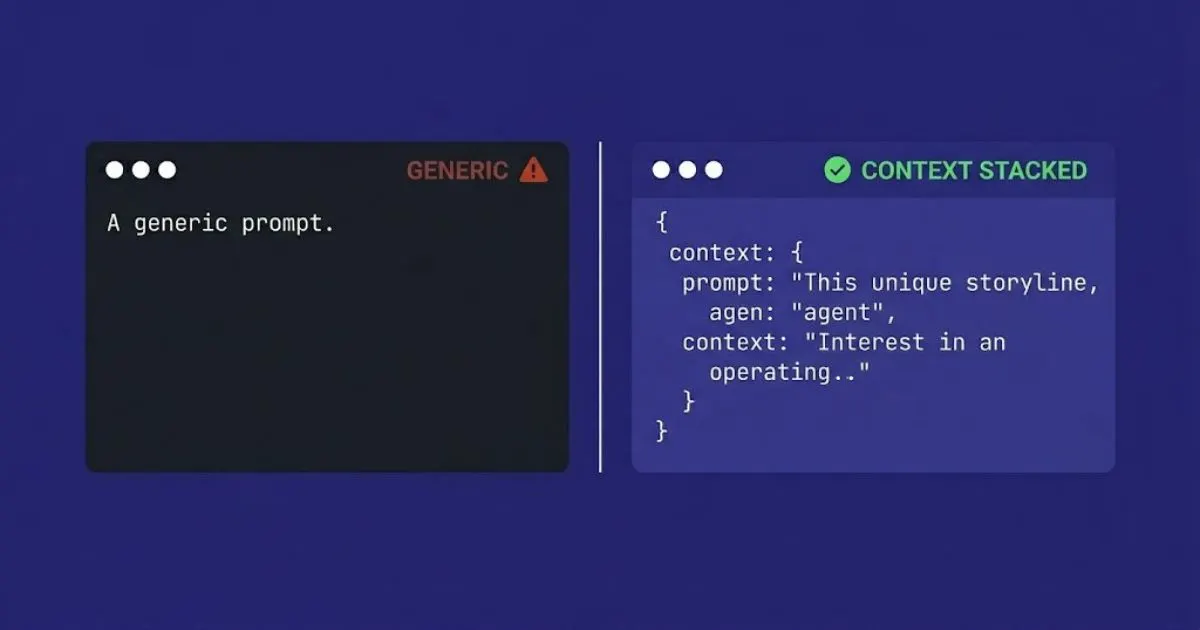
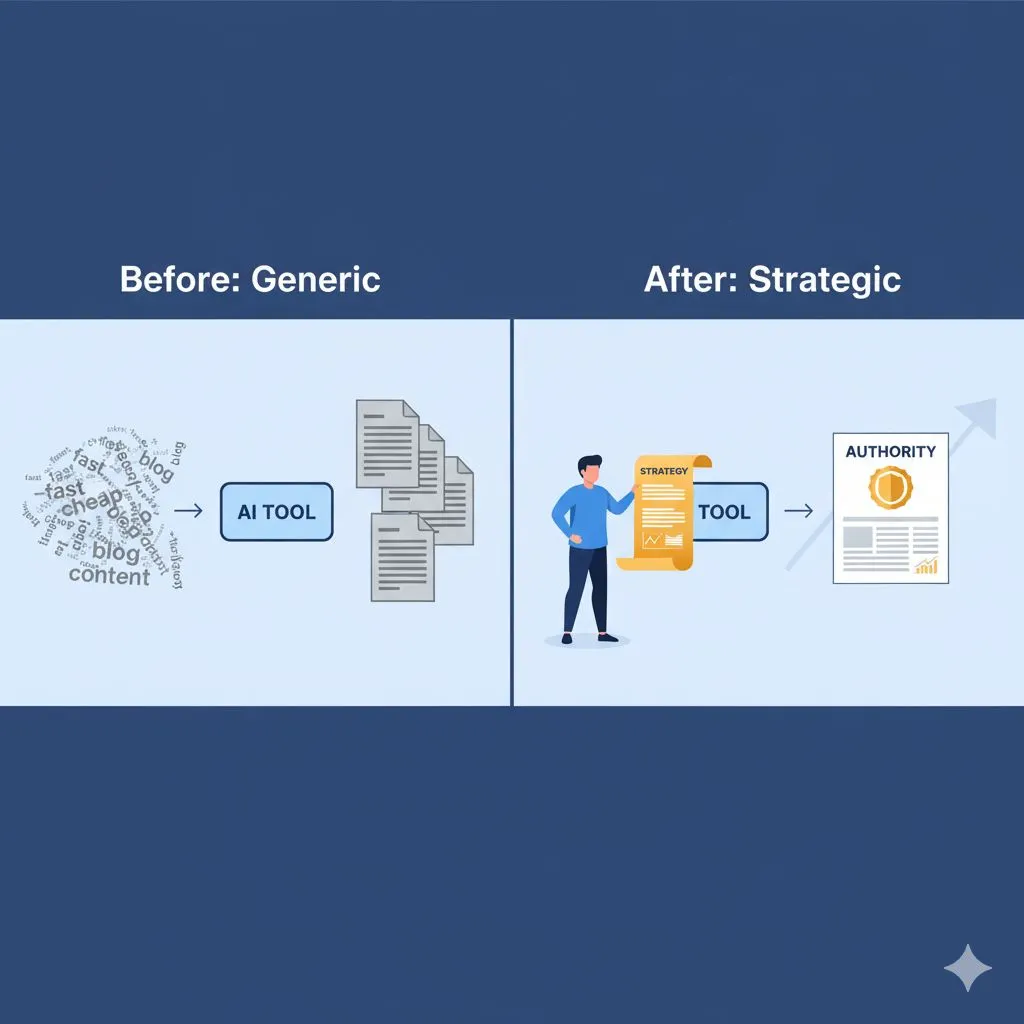
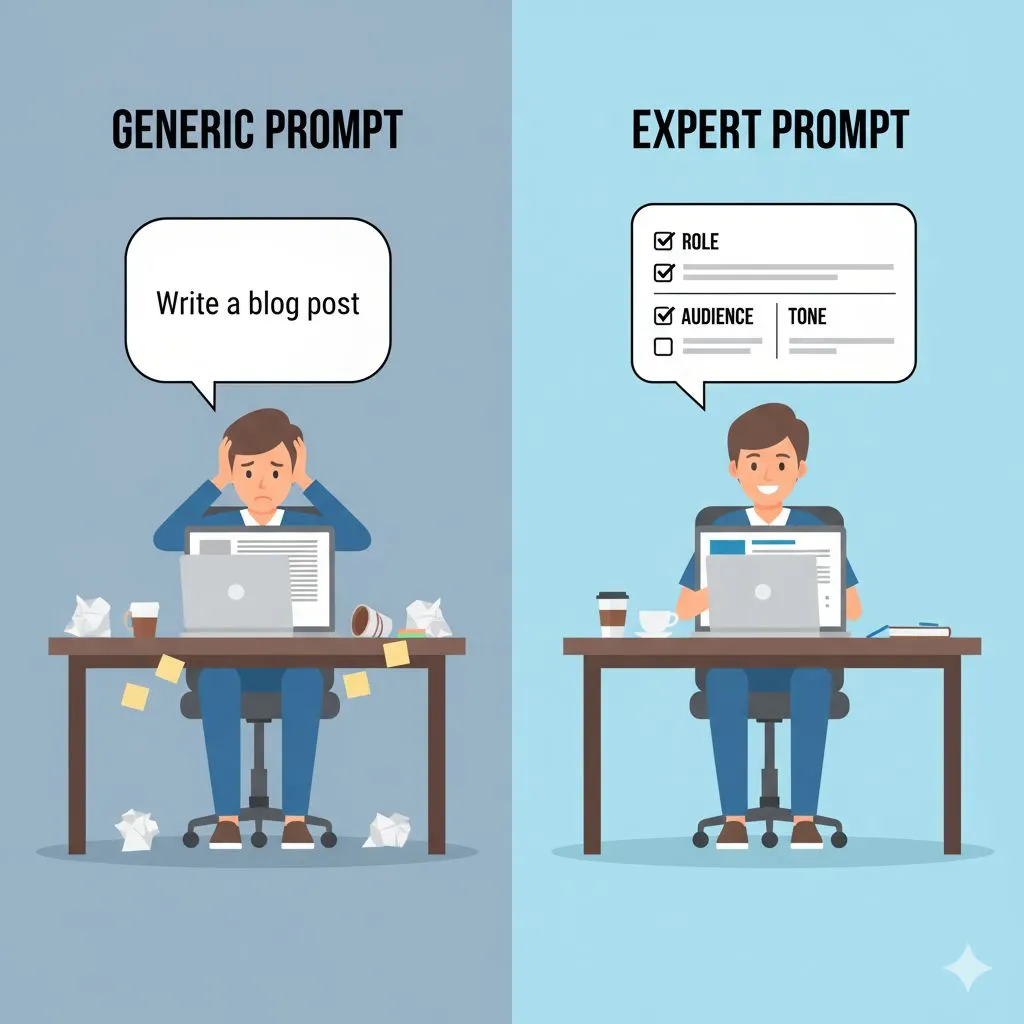
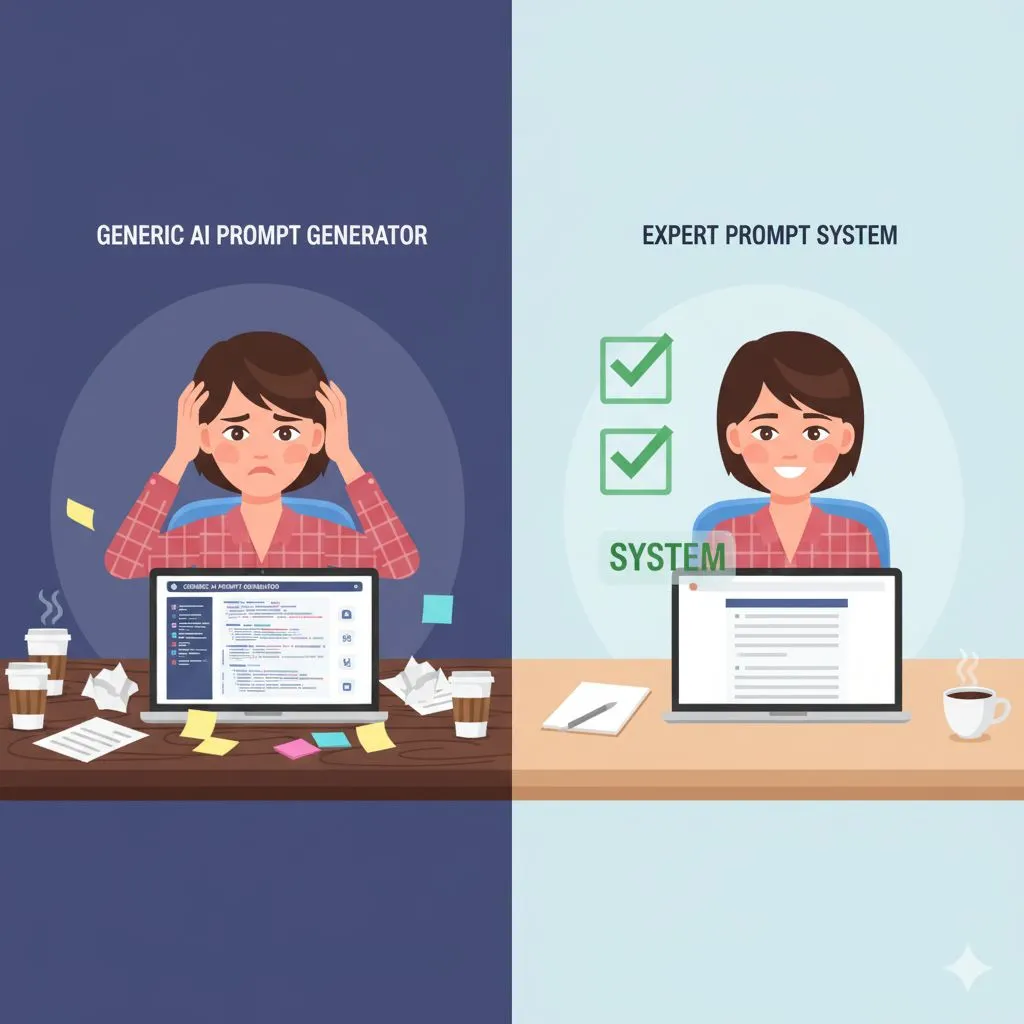
If you use generic prompts like "Write a sales email for my marketing agency," you will get generic drivel that ignores your unique value proposition. The generic vs. strategic AI prompts breakdown reveals exactly why prompt structure — not AI capability — determines the quality of your funnel content. The output will be stiff, salesy, and indistinguishable from your competitors.
However, if you use Expert AI Prompts—structured, strategic inputs that account for tone, audience psychology, and persuasion frameworks—you transform the output.
A strategic prompt looks like this:
> "Act as a senior copywriter. Write a 3-email nurture sequence for a small business owner who is skeptical of SEO services. The goal is to overcome the objection that 'SEO takes too long.' Use a tone that is empathetic but authoritative. Incorporate the 'Problem-Agitation-Solution' framework."
Suddenly, the AI isn't just generating text; it is executing a high-level sales strategy.
This is the secret to scaling a small team. You don't need to hire a $10,000/month copywriter. You need a library of expert-level prompts that allow you (or a junior assistant) to generate $10,000-quality copy in minutes.
Strategic Implementation: Building Your Machine
So, how do you move from "overwhelmed operator" to "funnel architect"? You stop treating marketing as a daily chore and start treating it as an asset build.
Step 1: Map the Journey (Pen and Paper First)
Before you touch a piece of software, map the path.
- Trigger: How do they find you? (e.g., LinkedIn content).
- Lead Magnet: What value do you trade for their email? (e.g., A checklist, a template).
- The Gap: What do they need to believe before they buy? (e.g., "I can afford this," "This will work for my industry").
- The Offer: What is the next logical step? (e.g., A discovery call).
Step 2: The Tech Stack (Keep It Simple)
You do not need enterprise software. You need integration.
- CRM/Email: ActiveCampaign or ConvertKit (great for tagging behaviors).
- Landing Pages: Leadpages, Groove or ClickFunnels.
- Calendar: Calendly or TidyCal.
- The Brain: Gemini, ChatGPT or Claude, powered by an Expert Prompt Library.
Step 3: Content Production at Scale
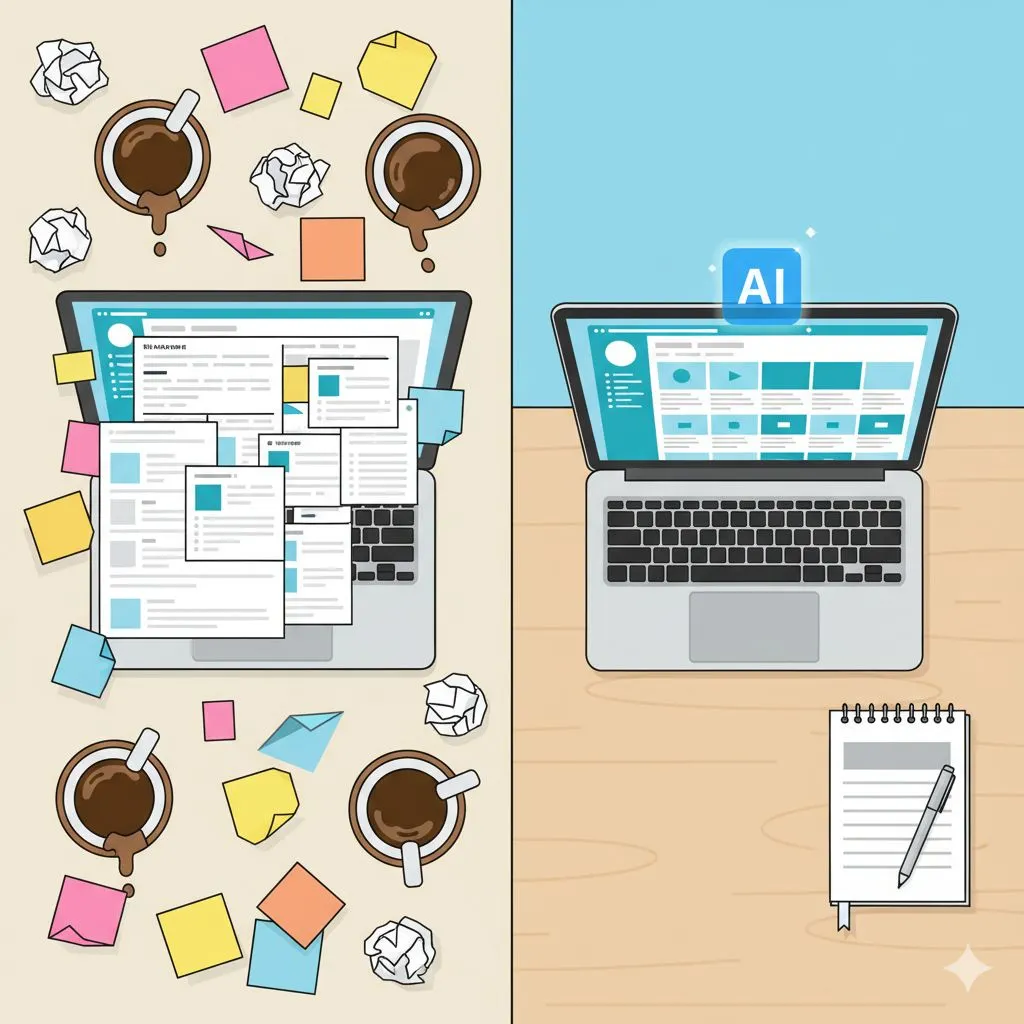
This is where the rubber meets the road. Most funnels die because the business owner gets stuck writing the seven emails, the three landing pages, and the ad copy. It feels like a mountain of work.
This is where you deploy your Expert AI Prompts.
Instead of staring at a blinking cursor for four hours, you use a "Landing Page Structure" prompt to generate your headline, subheads, and bullets. You use a "Nurture Sequence" prompt to draft your email follow-ups.
By using high-quality prompts, you ensure the content represents your brand's credibility. You aren't "cheating"; you are accelerating. You are taking the strategy in your head and getting it onto the screen instantly. This turns a three-week project into a three-hour task.
The Sales Prompt Playbook for AI Copywriting includes purpose-built prompts for landing pages, email nurture sequences, and ad copy — structured for small teams running full-funnel campaigns.
Step 4: Testing and Optimization
Once the funnel is live, you switch from "Builder" to "Monitor." You look at the data. Are people opening email #1 but ignoring email #2?
- Old Way: Panic and ignore it.
- New Way: Use an AI prompt: "Analyze this email subject line and suggest 5 variations that utilize curiosity gaps to improve open rates."
You iterate. You refine. And slowly, the machine starts to run itself.
Conclusion: From Operator to Strategist
The dream of the self-driving sales funnel is a reality in 2026, but only for those willing to build the engine correctly.
For the small business owner, this is the ultimate form of liberation. An automated funnel does the heavy lifting of prospecting and nurturing, allowing you to focus on what you actually love—delivering results for your clients and growing your business.
You no longer have to choose between doing the work and selling the work. The system sells; you deliver.
But remember: The system is only as good as the words inside it. Automation without strategy is just noise. To compete with the larger players, you need your automated content to read like it was written by a world-class expert. You need your brand to shine through every automated touchpoint.
You have the ambition. You have the tools. Now you just need the fuel.
Are you ready to stop staring at a blank page and start building your sales engine?
Start with our free AI prompts that save 5 hours this week — a zero-risk way to experience what expert-structured funnel prompts can do for your business.
We have curated the ultimate toolkit to help you generate expert-level funnel content in minutes, not months. Don't let writer's block be the bottleneck that holds your business back.
Get the Sales Prompt Playbook for AI Copywriting and turn your AI into your best sales rep today.
Or browse all 30 industry-specific prompt packs and pricing to find the right toolkit for your sales funnel and industry.
Further Reading
The Complete Guide to AI in Advertising and Sales
Entrepreneurs’ Playbook for Prompt Engineering
Writing Sales Pages That Convert Using the PAS Framework and AI
Automating the Boring Stuff: A Practical Guide to AI Workflows
Developing an AI Marketing Strategy That Actually Drives ROI