Stop Guessing: Using AI to Analyze Social Media Engagement
Stop Guessing: Using AI to Analyze Social Media Engagement
Jan 28, 2026

Let’s be honest about your current social media workflow. You spend hours brainstorming topics, crafting captions, and finding the perfect image. You hit publish. Then, you wait.
Maybe you get a flurry of likes. Maybe you get silence.
If you are like most ambitious entrepreneurs, you look at the notification bell, make a mental note of "that worked" or "that flopped," and then you move on to the next fire you have to put out in your business. This is the "Post and Pray" method. While it might keep your feed active, it is not a strategy for growth. It is a recipe for burnout.
As a small business owner, you don’t have the luxury of guessing. You don’t have the budget for a dedicated data science team, and you certainly don’t have the time to manually categorize thousands of interactions in a spreadsheet.
This is where social media marketing AI changes the game.
Most people think of AI as a content generator—a way to churn out captions and blog posts faster. But its true power for a scaling business lies in analysis. AI can look at your engagement data, spot patterns invisible to the human eye, and tell you exactly what your audience craves. It transforms you from an overworked content creator into a strategic director.
In this guide, we are going to stop the guessing game. We will explore how you can use accessible AI tools to audit your engagement, understand your audience deeply, and refine your strategy to compete with the big players—without adding more hours to your day.
Why Traditional Analytics Are Failing You
If you are relying on the native analytics dashboards provided by Instagram, LinkedIn, or Facebook, you are only seeing half the picture.
The Vanity Metric Trap
Traditional dashboards are great at showing you "Vanity Metrics"—likes, follower counts, and impressions. These numbers make us feel good, but they rarely pay the bills. A post might get 500 likes because it was a funny meme, but did it drive authority? Did it lead to a consultation booking?
Native analytics tell you what happened. They tell you that your post on Tuesday got 20% more reach than your post on Wednesday. But they fail to tell you why. Was it the headline? The color of the image? The specific pain point you addressed? Without the "why," you cannot replicate success. You are stuck rolling the dice every time you post.
You are stuck rolling the dice every time you post. Discover whether an AI social media manager can run your content calendar without the guesswork.
The Time Cost of Manual Review
To truly understand your engagement manually, you would need to:
- Read every comment.
- Categorize the sentiment (positive, neutral, negative, inquisitive).
- Cross-reference the topic with your sales figures.
- Compare format types (video vs. carousel vs. text).
For a solopreneur or a small team of three, this is impossible. You are already wearing too many hats. The result? You skip the deep analysis. You rely on gut feelings. And while your gut is good, it isn’t scalable. To grow a business that runs efficiently, you need data-driven certainty, not intuition.
The Context Gap
Data without context is just noise. Traditional analytics view posts in isolation. They don't see the narrative arc of your brand. They don't understand that the "low engagement" post was actually a high-intent sales post that generated three high-ticket leads in your DMs.
This is where the frustration sets in. You feel like you are working harder than ever, feeding the content machine, but unsure if the gears are actually turning the engine of your business. It’s time to bring in a smarter tool.
How AI Unlocks Hidden Insights (The "Why")

If traditional analytics gives you a map, social media marketing AI gives you a GPS with traffic updates and route optimization. AI doesn’t just count numbers; it reads language, interprets visuals, and recognizes complex patterns. It bridges the gap between raw data and actionable strategy.
Here is how AI digs deeper than your standard dashboard ever could.
Sentiment Analysis: Beyond the "Like"
Not all engagement is created equal. A comment that says, "Great post!" counts the same in traditional metrics as a comment that says, "I’ve been struggling with this exact problem for months, how do I work with you?"
AI tools can ingest your comment sections and categorize them by sentiment and intent. It can separate:
- Surface-level praise: "Nice pic!"
- Objections: "I don't think this works for B2B."
- Buying signals: "Do you have a link for this?"
- Pain points: "I wish I knew how to automate this part."
By filtering for sentiment, you can identify which content is actually building trust and driving desire, rather than just entertaining the masses. This allows you to stop optimizing for "viral" and start optimizing for "valuable."
This allows you to stop optimizing for "viral" and start optimizing for "valuable." See how AI prompts for viral hooks and social media engagement can translate this insight into content that actually builds trust.
Pattern Recognition
Humans are terrible at spotting patterns across large datasets, especially when variables change. AI excels at it.
You might think your audience loves video. But an AI analysis might reveal that your audience loves short-form videos, specifically ones that start with a controversial hook and feature a blue background. Or, it might find that your text-only posts on LinkedIn outperform your image posts, but only when posted on Thursday mornings.
AI looks at the variables you ignore:
- Sentence length and complexity.
- Use of emojis.
- Tone of voice (authoritative vs. empathetic).
- Visual composition.
It connects these subtle dots to show you the "DNA" of your most successful content. This removes the trial-and-error phase. Instead of guessing what format to use, you have a blueprint based on historical success.
Audience Segmentation
Who is actually engaging with you? You might have a target persona in mind—let’s say, corporate executives. But is that who is commenting?
AI can analyze the profiles and language of your engaged users to create dynamic segments. You might discover that while you are targeting executives, your most engaged audience is actually freelancers looking to emulate you.
This insight is critical. It forces a strategic decision: Do you pivot your product to serve the freelancers who love you? Or do you adjust your voice to better resonate with the executives you originally wanted? Without AI analysis, you might spend years selling the wrong offer to the wrong crowd.
Practical Workflow: Using AI to Audit Your Engagement
Theory is great, but as a business owner, you need practical steps. You don’t need to buy expensive enterprise software to get started. You can perform a high-level AI audit using tools you likely already have, like ChatGPT or Claude, combined with your social platforms.
Here is a streamlined workflow to audit your social media engagement in under 30 minutes.
Step 1: Data Extraction
First, you need to get the data out of the "walled gardens" of social media.
- The "Dirty" Copy-Paste: For a quick audit, simply go to your top 5 performing posts and bottom 5 performing posts of the month. Copy the captions, the engagement stats (likes, shares, comments), and the actual text of the comments into a document.
- The CSV Export: Platforms like LinkedIn and verified Instagram accounts often allow you to export analytics data to a .CSV file.
- Third-Party Tools: If you use a scheduler like Buffer or Metricool, you can easily export a report of your last 90 days of content.
Step 2: The Analysis Prompt
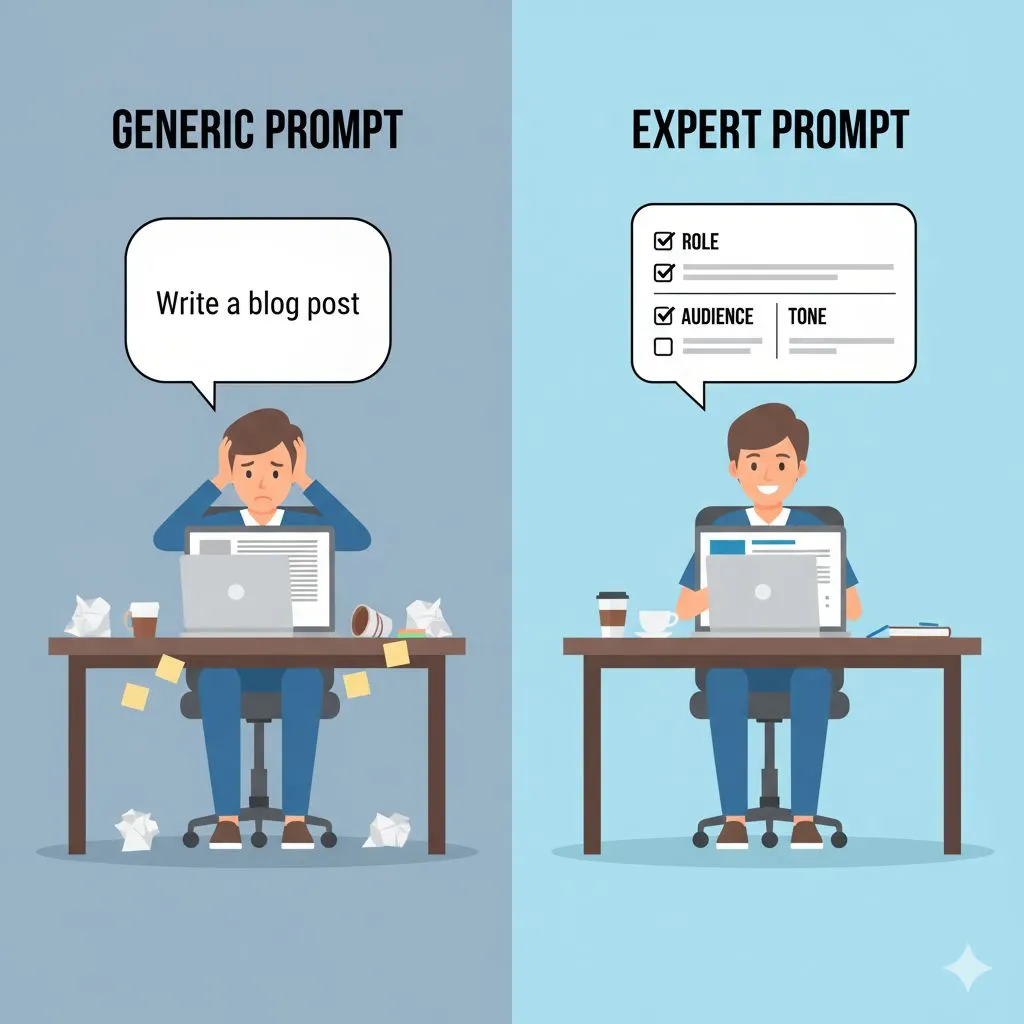
Once you have your data, it’s time to feed it to the AI. The quality of your insight depends on the quality of your prompt. You want the AI to act as a senior marketing strategist.
Try this prompt structure:
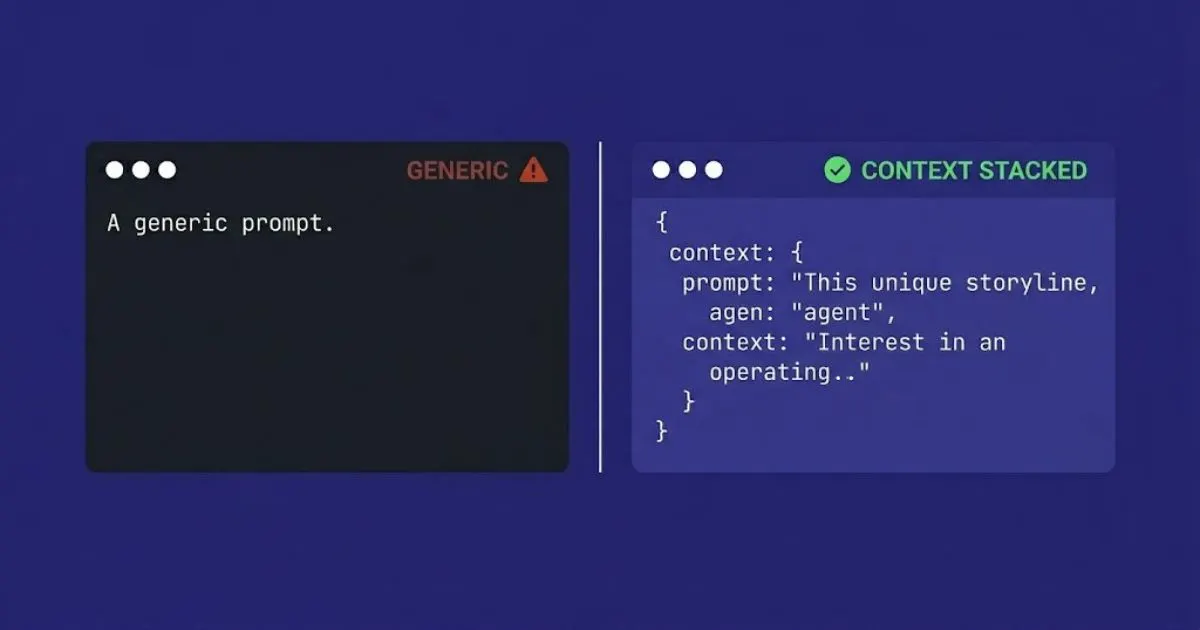
"I am uploading data from my last 30 social media posts. The data includes the post topic, format, likes, shares, and comments.
Act as an expert Social Media Analyst. Review this data and tell me:
- What are the common themes among the top 20% of posts? Look for patterns in tone, topic, and length.
- What are the commonalities in the bottom 20%?
- Analyze the comments: What questions are people asking most frequently? What are their primary frustrations?
- Based on this, suggest 5 specific content ideas for next week that are likely to generate high engagement."
This prompt moves the AI from a passive reader to an active consultant.
It forces the output to be actionable. It forces the output to be actionable. If you want 50 pre-built prompts structured for exactly this kind of strategic analysis, the AI Prompts for Social Media Managers Toolkit is purpose-built for this workflow.
Step 3: Qualitative Auditing
Numbers are one thing; language is another. Use AI to analyze the quality of your DMs and comments.
Take a week's worth of DMs (anonymized for privacy) and feed them into the AI. Ask: "Based on these inquiries, what is the #1 objection preventing people from buying from me? And what is the most confusing part of my offer?"
You might find that people love your content but don't understand how to hire you. That is a quick fix—add a clearer Call to Action (CTA)—but one you might have missed without aggregating the data.
Step 4: Visual Analysis (Optional)
If you are using ChatGPT Plus or another multimodal AI, you can upload screenshots of your Instagram grid. Ask the AI: "Analyze the visual aesthetic of my top-performing posts versus my low-performing ones. Is there a color scheme, text density, or image style that my audience prefers?"
You may discover that your audience ignores stock photos but engages heavily with "messy," behind-the-scenes photos. This gives you permission to stop polishing everything and start being authentic—saving you time and increasing results.
Turning Insights into Strategy
The goal of social media marketing AI isn't just to generate a report—it's to change how you operate. Once you have these insights, you must pivot.
Iterative Content Creation
Use your findings to build a feedback loop. If the AI identifies that your audience loves "contrarian takes on industry news," your content calendar for next month should be 50% contrarian takes.
Don't reinvent the wheel every week. Use the data to refine your "Content Pillars." If a pillar isn't performing, cut it. If one is booming, double down. This allows you to produce content with confidence, knowing it is mathematically more likely to succeed.
Resurrecting "Zombie" Content
We all have posts that flopped because of bad timing or a weak headline, even though the core idea was gold.
Ask your AI: "Look at the bottom 10 posts. Which of these had strong topical relevance but likely failed due to poor formatting or hooks? Rewrite the hooks for these posts to make them more engaging based on my successful content."
Now, you have "new" content ready to go without having to brainstorm from scratch. You are recycling your hard work intelligently.
Scaling the Winners
When you find a format that works—say, a carousel explaining a complex concept—turn it into a template. Create an AI prompt specifically for that format: "Take this topic and outline it into a 5-slide carousel following the structure of my successful 'SEO Guide' post."
This is how you scale. You systematize your wins so you can repeat them effortlessly.
You systematize your wins so you can repeat them effortlessly. For a step-by-step system to build and lock in your best-performing formats, see automated prompt engineering shortcuts for consistent AI outputs.
Conclusion: From Operator to Strategist
The difference between a stressed business owner and a scaling entrepreneur is often the ability to step back and look at the big picture.
When you are stuck in the weeds of daily posting, you are guessing. You are hoping something sticks. But when you use AI to analyze your efforts, you turn the lights on. You stop hustling for likes and start engineering your growth.
You reclaim your time by ignoring the metrics that don't matter. You reduce stress by knowing exactly what your audience wants. And most importantly, you build a brand that resonates on a deeper level because it is listening—really listening—to the data.
You don't need a massive agency to compete. You just need to be smarter with the tools available to you. AI is your leverage. Use it not just to create, but to understand.
AI is your leverage. Use it not just to create, but to understand. Start with a free resource — download your free AI prompt starter kit from Expert AI Prompts and put your first AI-powered social media workflow in place today.
Ready to stop guessing and start scaling?
Take the next step in automating your growth. We’ve compiled the ultimate resource to help you master these workflows.
Get The Definitive Guide to AI for Social Media and unlock the expert-level prompts you need to transform your business today.
When you're ready to scale beyond strategy and deploy a complete AI toolkit, browse all 30 industry-specific prompt packs and pricing to find the right pack for your business.
Further Reading
• The Social Media Manager's Toolkit: Scaling Client Content with AI
• Stop Posting Randomly: A Data-Driven Content Plan for Busy Owners
• Viral on TikTok: Using AI to Generate Scripts That Hook Viewers
• LinkedIn Personal Branding: How to Write Authentic Posts with AI