The Lean Team: Doing the Work of 10 People with 2
The Lean Team: Doing the Work of 10 People with 2
Feb 01, 2026

Part 1: The New Mathematics of Scale
You know the feeling. It’s 10:00 PM on a Tuesday. You are currently the CEO, the cleaner, the Head of Sales, and the lead copywriter for your business. Somewhere between answering a client crisis email and trying to draft a LinkedIn post that doesn’t sound desperate, you wonder: How do the big players do it?
The traditional answer has always been "hire more people." If you want 10 times the output, you need 10 times the staff. But for a bootstrapped agency, a niche consultancy, or a growing e-commerce brand, adding headcount is a dangerous game. It bloats your overhead, eats your margins, and introduces management headaches that steal even more of your time.
This is the trap that catches the ambitious entrepreneur like Alex Rivers. You have the vision to compete with the giants, but you lack the army to fight the battle. If that description resonates, the Ultimate Guide to AI for Small Business covers the full strategic playbook for breaking out of this cycle.
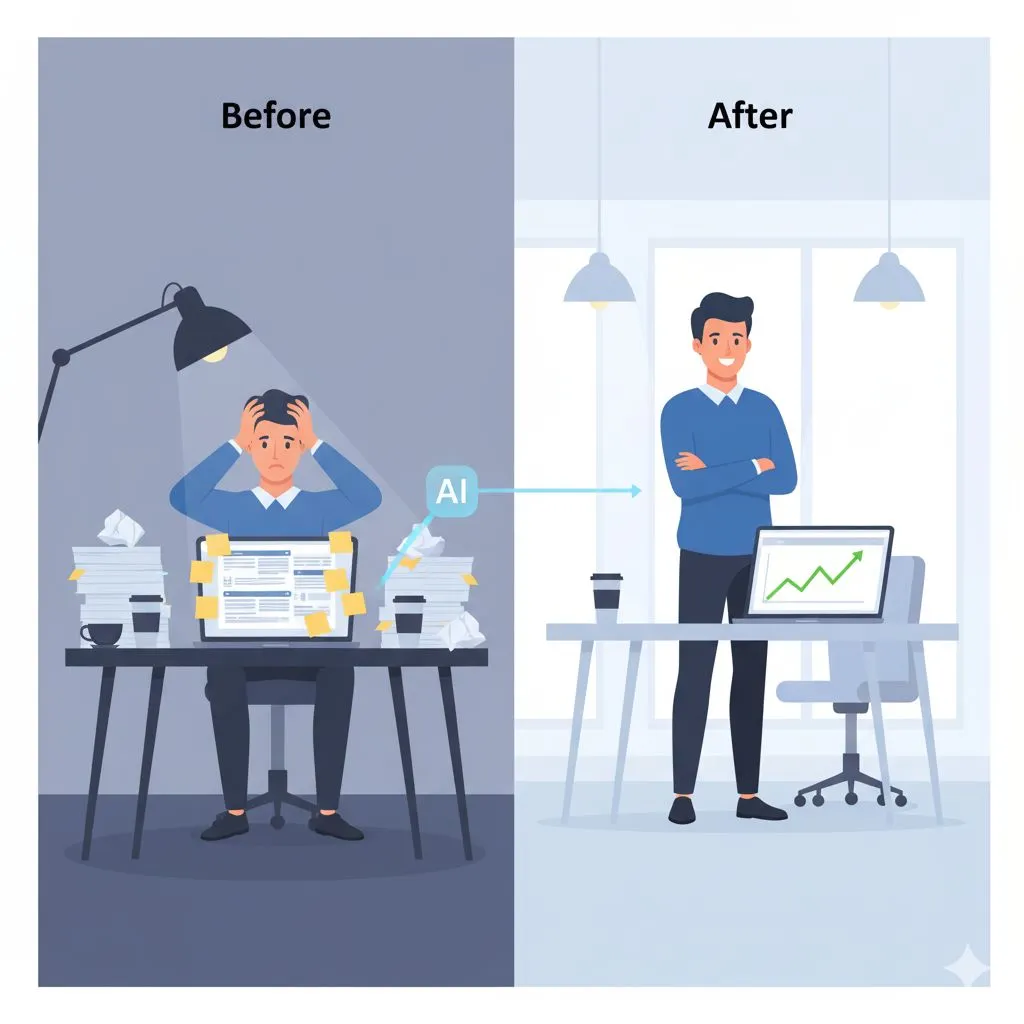
But the rules of engagement have changed. Startup efficiency is no longer about who can hire the most interns; it is about who can leverage technology to multiply their output. We are entering the era of the "Lean Team," where a duo—a Strategist and an Integrator—can effectively replicate the output of a 10-person department.
This isn't about working harder. You are already doing that. This is about structural leverage. It is about accepting that "doing it yourself" is the enemy of scaling, and that "hiring a human" isn't the only way to delegate.
The Multiplier Mindset
To achieve this, you must fundamentally shift your identity from "Operator" to "Architect."
An Operator wakes up and asks, "What do I have to do today?" An Architect wakes up and asks, "How does the system get this done today?"
When you are a team of two trying to do the work of ten, you cannot afford to waste mental energy on low-leverage execution. You need to strip your workload down to the studs. Look at your calendar for the last week. Circle every task that required your unique human empathy, your specific industry relationships, or your high-level strategic judgment.
Everything else? That is not your job anymore. That is the job of your "Ghost Department."
Part 2: Building Your "Ghost Department"
If you want to compete with a 50-person agency, you need to simulate their infrastructure without their payroll. This is where AI moves from a fun toy to a critical business asset. However, most business owners fail here because they treat AI like a search engine rather than a specialized employee.
To achieve true startup efficiency, you must compartmentalize your AI usage into distinct "departments."
1. The "Ghost" Marketing Department
In a traditional firm, you would have a Content Manager, a Copywriter, and a Social Media Coordinator. Their combined salaries could easily top $150k a year.
- The Lean Approach: You, the Architect, define the campaign goal. Your teammate (or you, wearing your Strategist hat) utilizes industry-specific prompt packs to generate the deliverables.
- The Output: Instead of staring at a blinking cursor for two hours to write one blog post, you use a structured framework to generate a 1,500-word SEO-optimized article, five LinkedIn posts derived from it, and a newsletter script—all in 20 minutes. You aren't writing; you are editing and approving.
For a structured approach to building this workflow, The 1-Day Workflow to Automate Blog Content with AI provides the exact step-by-step framework.
2. The "Ghost" Operations Department
Admin kills growth. Scheduling, drafting client updates, and organizing project files are essential but non-revenue-generating activities.
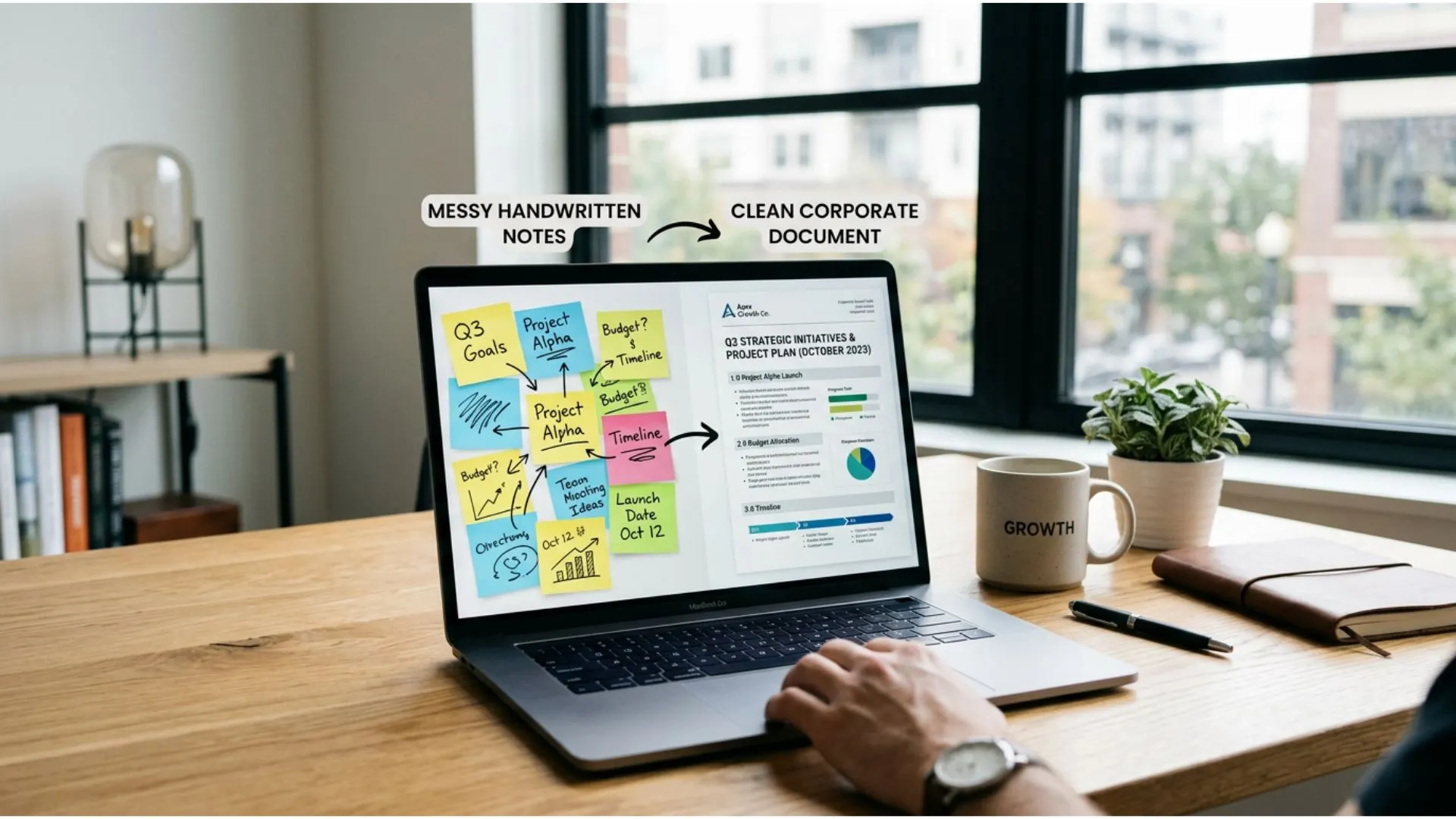
- The Lean Approach: AI tools (and specifically, well-engineered prompts) can take a rough brain dump of meeting notes and convert them into a polished client proposal, a project timeline, and a follow-up email sequence.
- The Result: The friction of moving a project forward disappears. You look hyper-organized to your clients, even if you’re operating out of a home office.
3. The "Ghost" Strategy Department
This is the one most people miss. Large companies have data analysts. You have gut instinct.
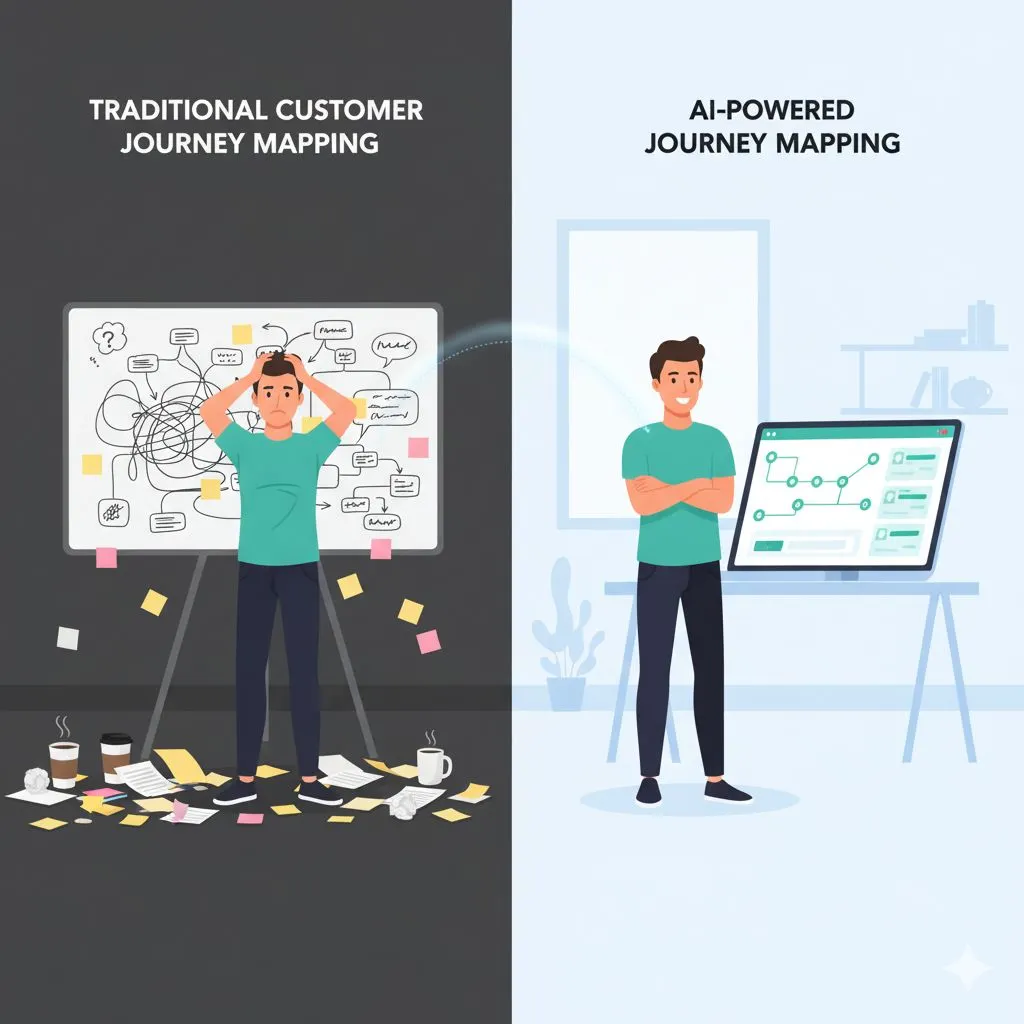
- The Lean Approach: You can paste anonymized sales data or competitor reviews into an AI model and ask for a gap analysis. "Based on these 50 negative reviews of my competitor, what are the three features the market is begging for?"
- The Result: You get C-suite level insights without the McKinsey price tag.
By treating AI as distinct roles rather than a single tool, you effectively staff your org chart with digital employees who never sleep, never complain, and cost pennies on the dollar.
Part 3: The Quality Trap (And How to Escape It)
At this point, the skepticism usually kicks in. You might be thinking: “I’ve tried ChatGPT. The writing was bland, robotic, and sounded like everyone else. I can’t risk my brand reputation on that.”
You are absolutely right.
Most AI content is garbage. But that isn't a failure of the technology; it is a failure of the input. This is the single biggest bottleneck to startup efficiency.
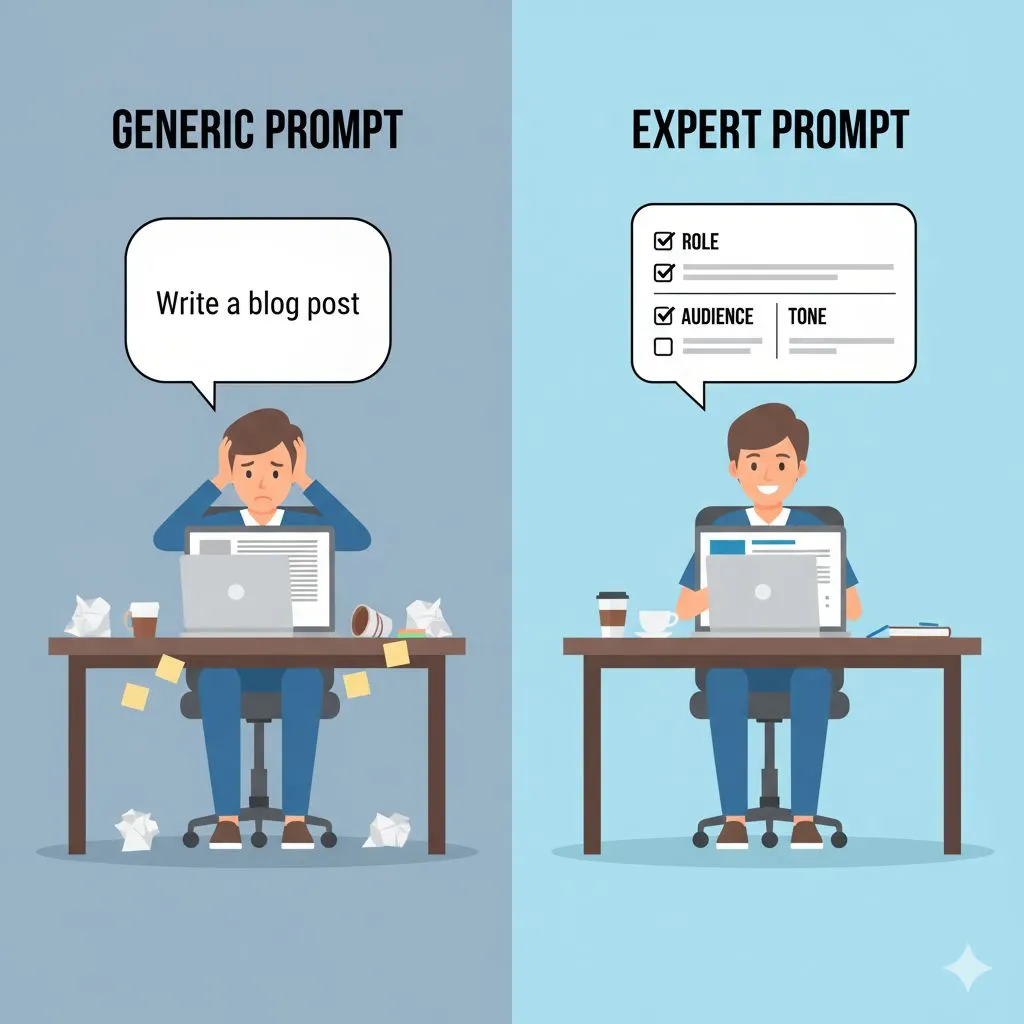
If you treat AI like an intern and give it vague instructions ("Write a blog post about marketing"), you will get intern-level work. If you treat it like a senior consultant and give it deep context, constraints, and stylistic guidelines, you will get expert-level work.
The "Generic In, Generic Out" Rule
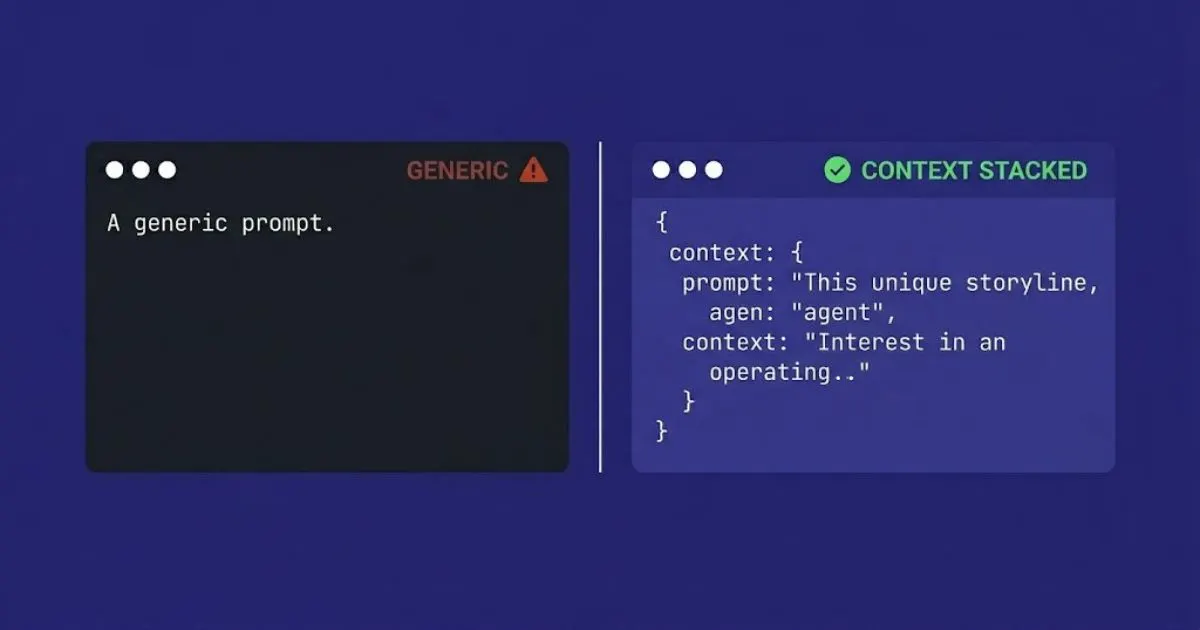
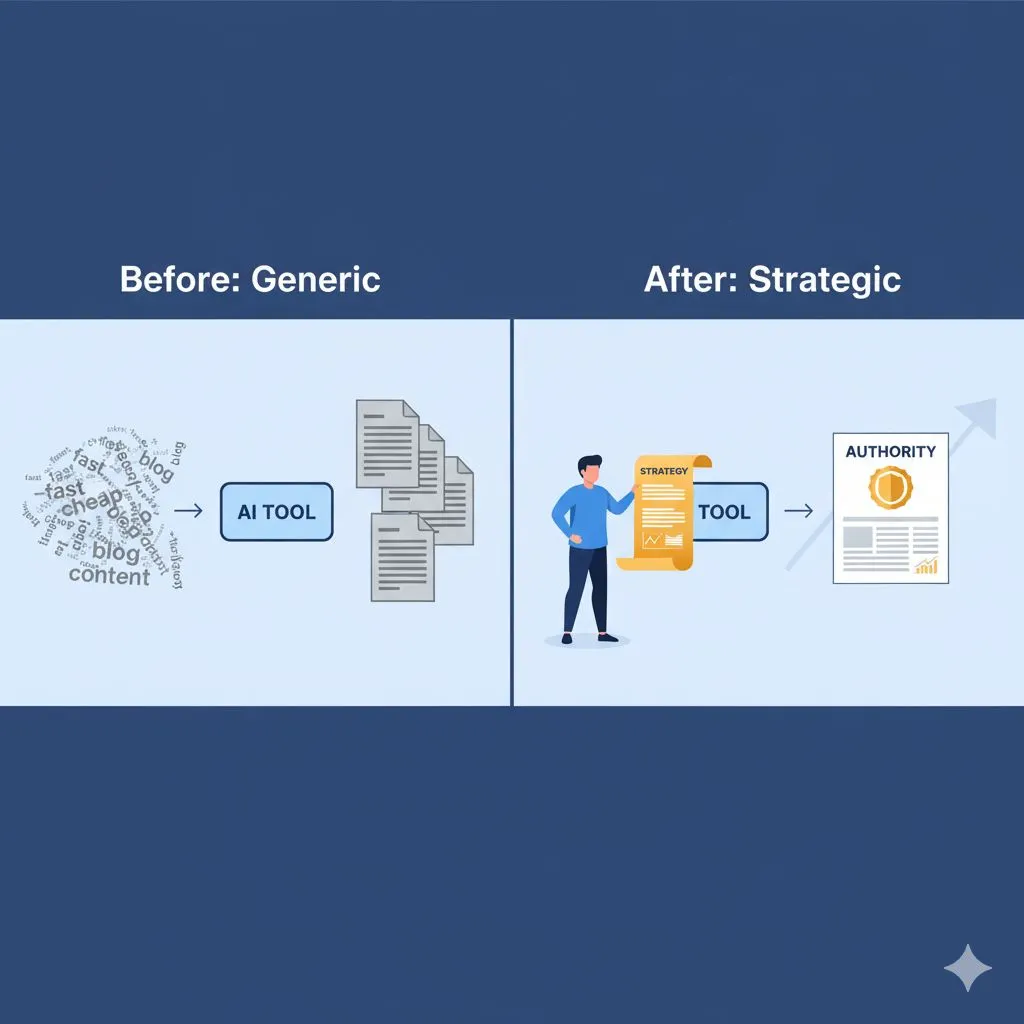
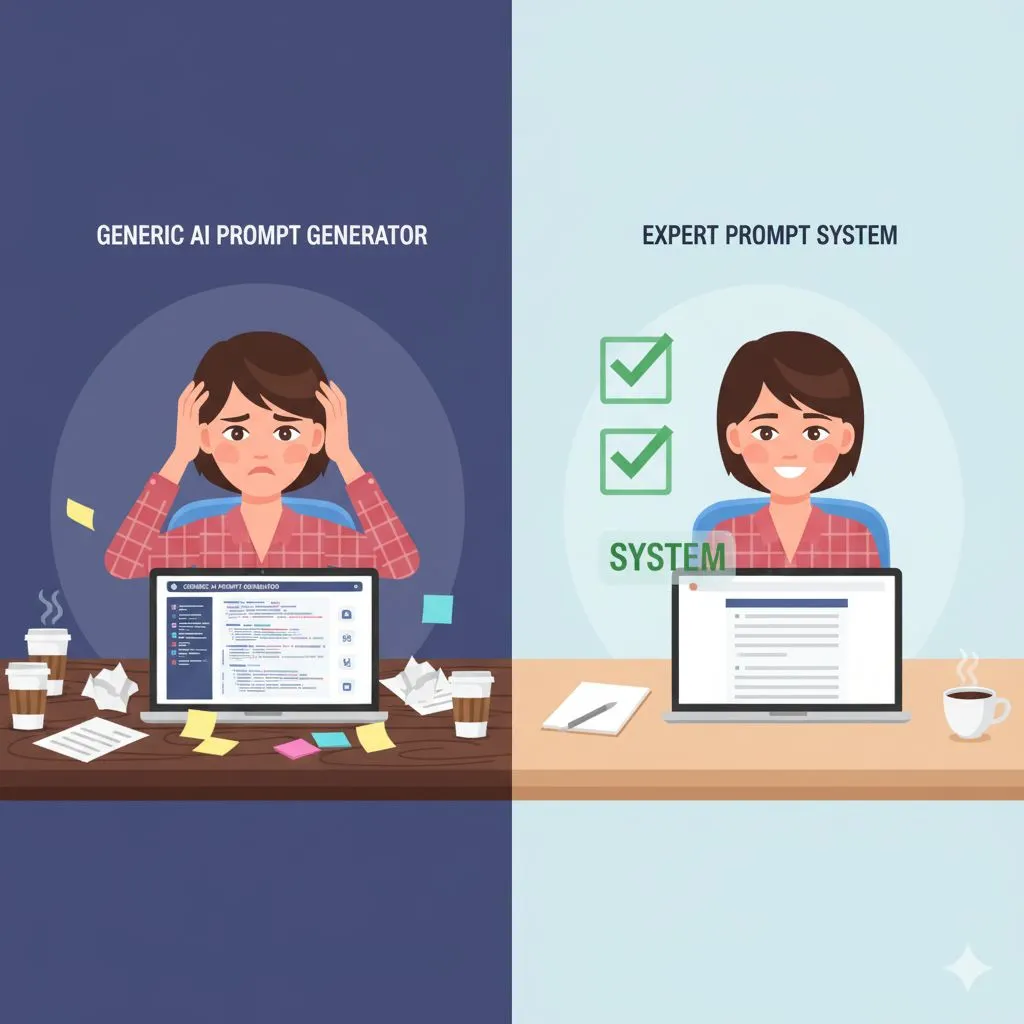
The difference between the Lean Team that scales and the one that stalls is the quality of their prompts. A generic prompt yields generic noise. A strategic prompt yields a business asset.
To make a team of two look like a team of ten, you cannot rely on trial and error. You do not have time to sit there tweaking a prompt for 45 minutes—that defeats the purpose. You need a library of proven frameworks. Download the free 1-Page Perfect Prompt Framework Guide — a single-page cheat sheet to structure every prompt for expert-level output.
For example, a standard prompt asks for a "sales email." A strategic prompt defines the buyer persona, the pain points (using the PAS framework: Problem-Agitation-Solution), the desired tone (authoritative but empathetic), and the specific call to action.
Protecting Your Brand Voice
The fear of losing your "human touch" is valid. The solution is not to avoid AI, but to train it. The Lean Team creates a "Brand Voice Guide" not just for humans, but for their AI tools. The free Competitor-Proof Brand Voice Kit gives you a ready-to-use template for training any AI tool to replicate your tone instantly. They feed the system examples of their best previous work and say, "Analyze this tone and apply it to the following output."
When you master this, the AI doesn't replace your expertise—it amplifies it. It allows you to project your unique perspective across 20 channels simultaneously, rather than just one.
Part 4: The Execution Plan & Conclusion
So, what does this actually look like on a Tuesday morning? How do you organize a 2-person workflow to handle this volume?
The Architect & The Builder
In a team of two, roles must be fluid but defined.
- Person A (The Architect/You): Focuses on Strategy, Relationships, and Final Approval. You decide what needs to be built and why.
- Person B (The Builder/Teammate): Focuses on Prompt Engineering, Assembly, and Distribution. They run the "Ghost Departments."
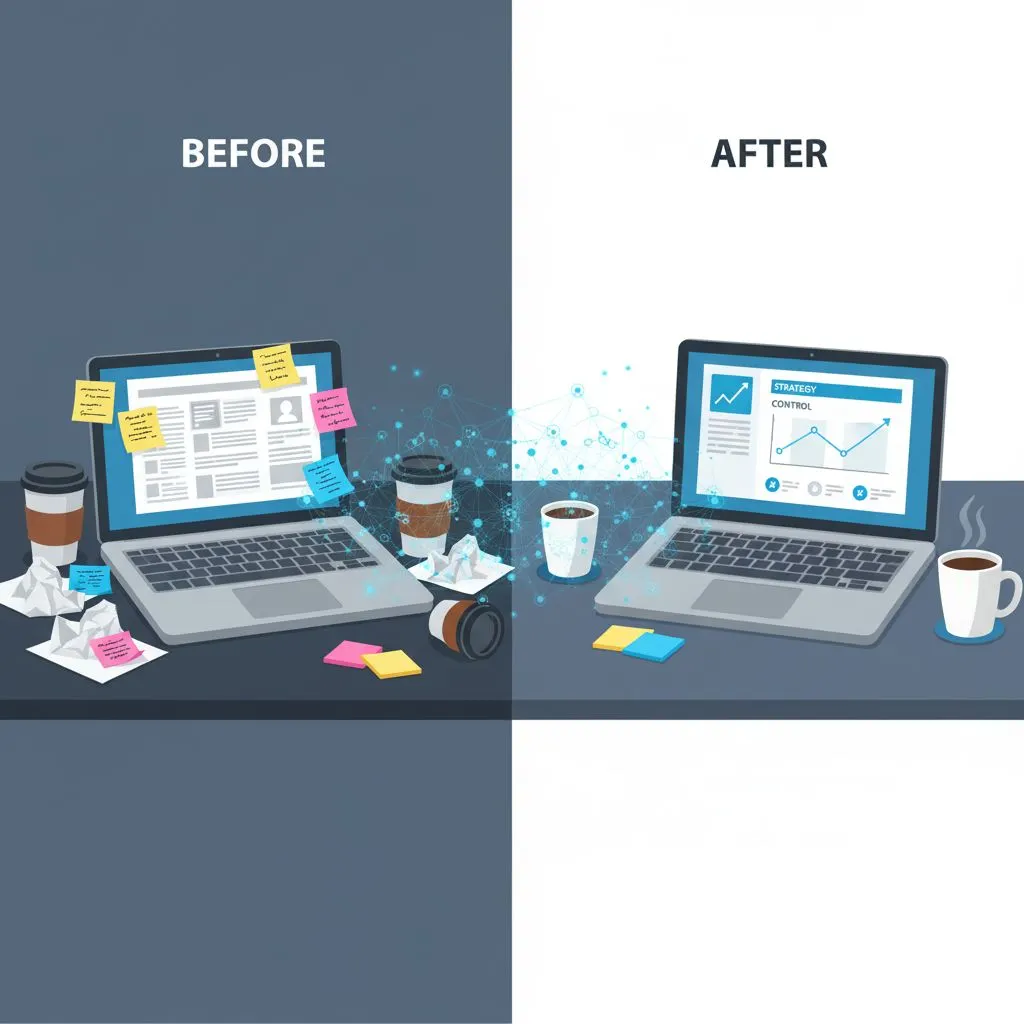
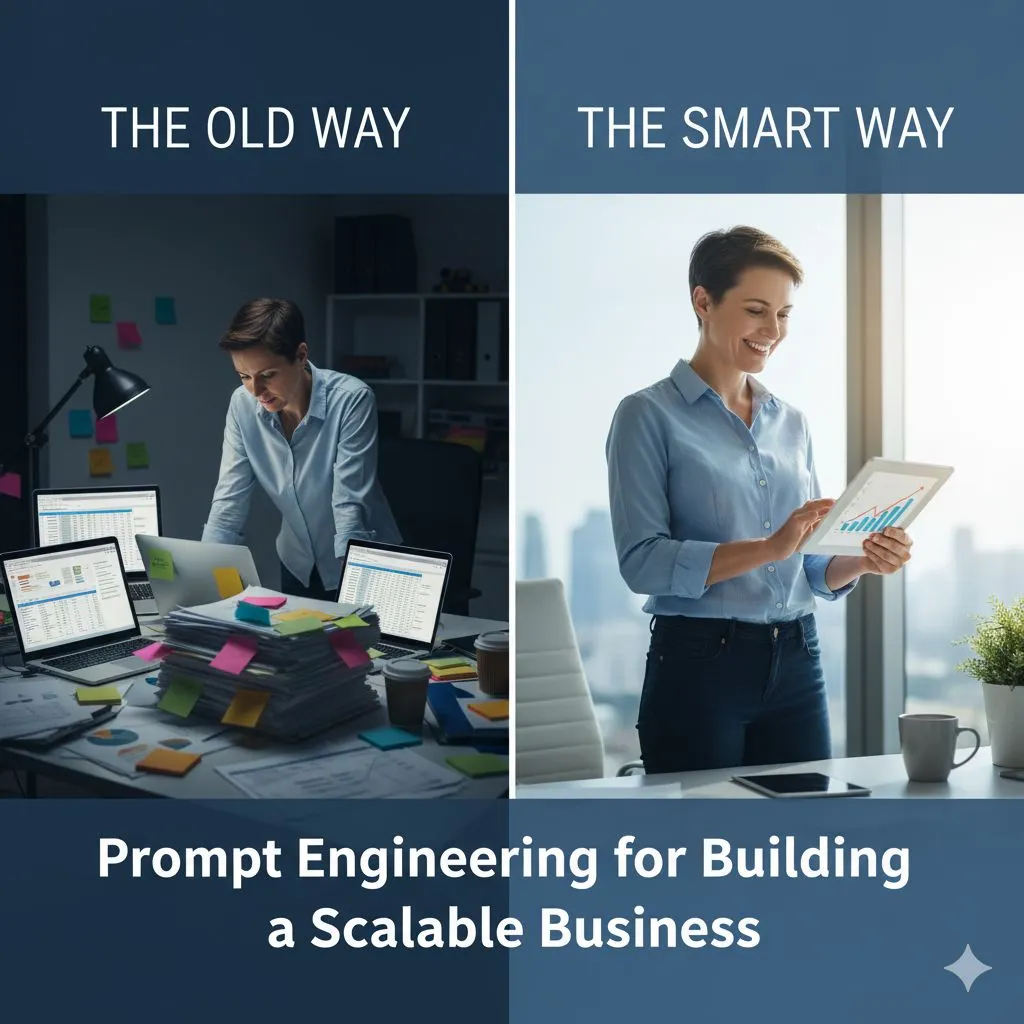
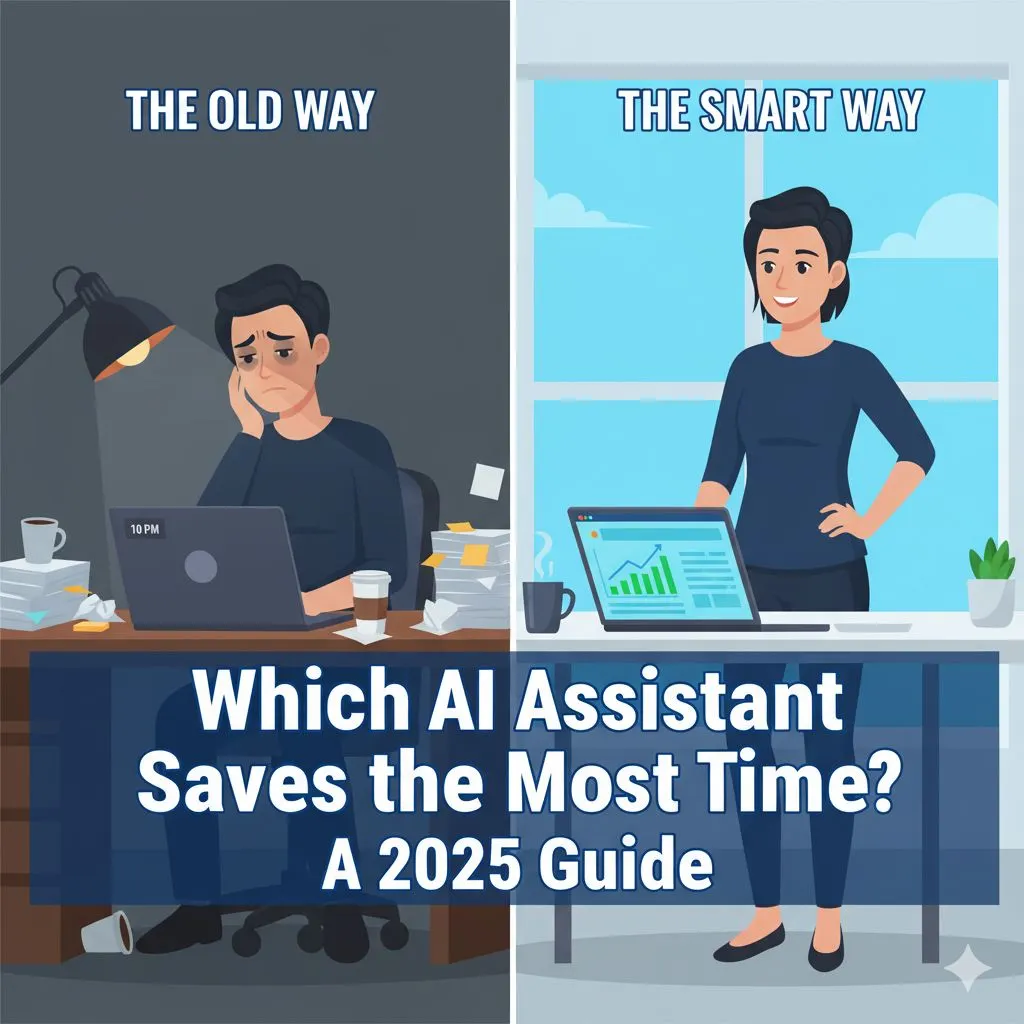
A Day in the Life: The "Old Way" vs. The "Lean Way"
- 09:00 AM - Content Creation
- Old Way: You stare at a blank screen, struggle to write one LinkedIn post, get distracted, and give up. (Time: 1.5 hours. Output: 1 post).
- Lean Way: The Architect records a 3-minute voice note of their thoughts on a industry trend. The Builder runs it through a "Thought Leadership Prompt" stack. (Time: 20 mins. Output: 1 Article, 3 Posts, 1 Newsletter).
- 11:00 AM - Client Proposal
- Old Way: You hunt for an old template, copy-paste, forget to change a name, stress about the pricing section. (Time: 2 hours).
- Lean Way: The Builder inputs the meeting notes and pricing parameters into a "Proposal Generator" prompt. The Architect reviews the polished draft for nuance. (Time: 30 mins).
- 02:00 PM - Market Research
- Old Way: You open 50 tabs, read aimlessly, get overwhelmed. (Time: Indefinite).
- Lean Way: You use a "Competitor Analysis" prompt to summarize the top 5 players in your niche and identify their weak spots. (Time: 15 mins).
Conclusion: From Survival to Supremacy
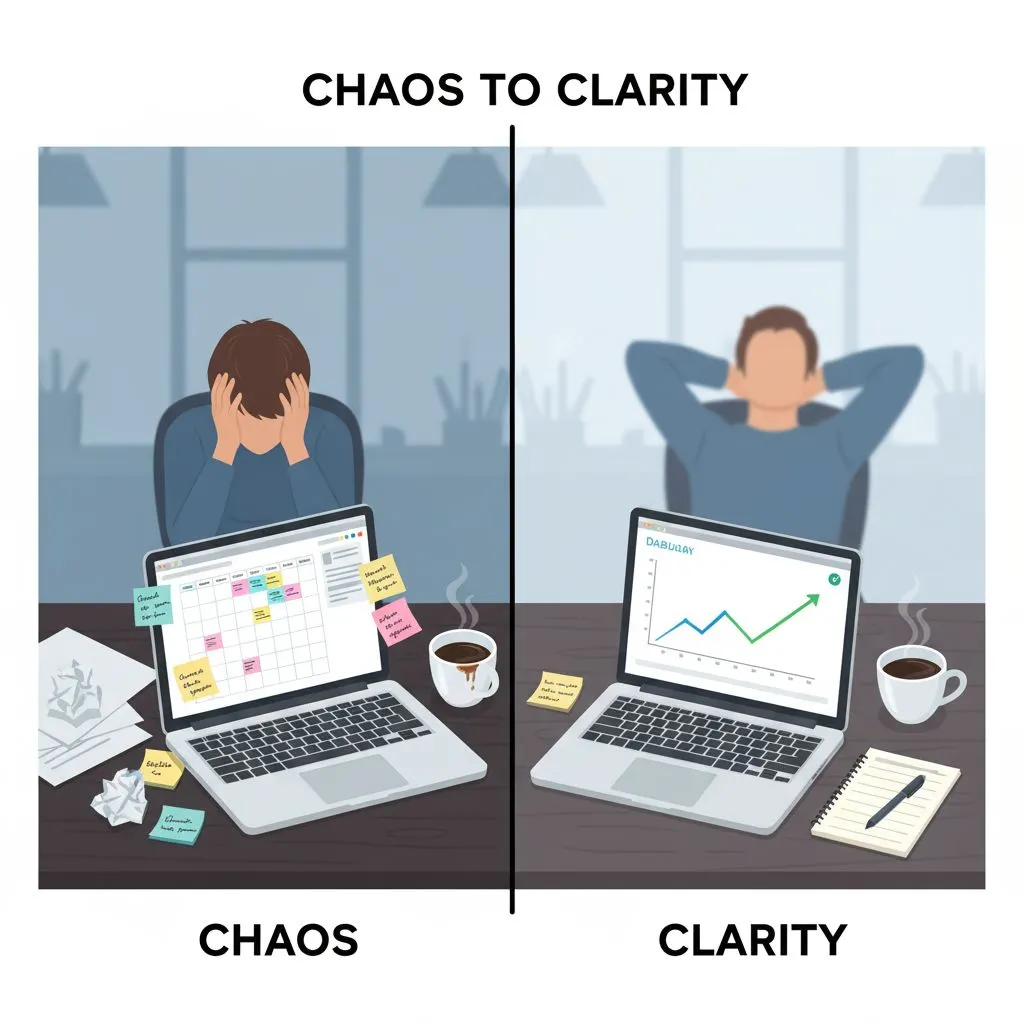
The math is simple. By adopting the Lean Team model, you reclaim 20+ hours a week. That is 20 hours you can spend on closing deals, developing new products, or actually enjoying the financial freedom you started this business to find.
You do not need to wait for a Series A funding round to compete with the big agencies. You do not need to mortgage your house to hire a massive payroll. You just need to stop working harder and start working smarter.
The barrier to entry isn't money anymore; it's knowledge. It’s knowing which prompts turn a generic chatbot into a world-class employee.
You have the ambition. You have the vision. Now, you just need the toolkit to execute it.
Don't let the "busy work" kill your business. Direct the "Ghost Department," scale your output, and realize the true potential of startup efficiency.
Want to test the quality before committing? Access 11 free AI prompt resources — lead magnets, frameworks, and toolkits purpose-built for lean teams and solopreneurs. Zero cost, instant access.
Ready to build your Lean Team?
Stop guessing which prompts work and start scaling immediately. We have curated the exact frameworks used by high-growth startups to automate strategy, marketing, and operations.
Get The Startup Prompt Advantage Today
Want to compare all 30 industry-specific prompt packs? View the full Expert AI Prompts pricing catalog and choose the right toolkit for your business.
Further Reading
• Ultimate Guide to AI for Small Business
• Case Study: How We Scaled Agency Operations with AI
• Scaling Without Hiring: The Solopreneur’s Guide to AI
• How Boutique Agencies Compete with Big Firms Using AI Prompts