Lean Startup Fast Growth: The AI Stack for Founders
Lean Startup Fast Growth: The AI Stack for Founders
Jan 24, 2026

If you are like most small business owners, your job description doesn't fit on a single page. On any given Tuesday, you are the CEO, the marketing director, the lead salesperson, the customer support agent, and the IT troubleshooter. You are ambitious and you want to scale, but you are stuck in the weeds of daily operations.
The traditional advice for this "founder's trap" has always been the same: hire more people. But hiring is expensive, risky, and time-consuming. It requires capital that lean startups often want to preserve for product development or ad spend.
Enter the new era of the Lean Startup.
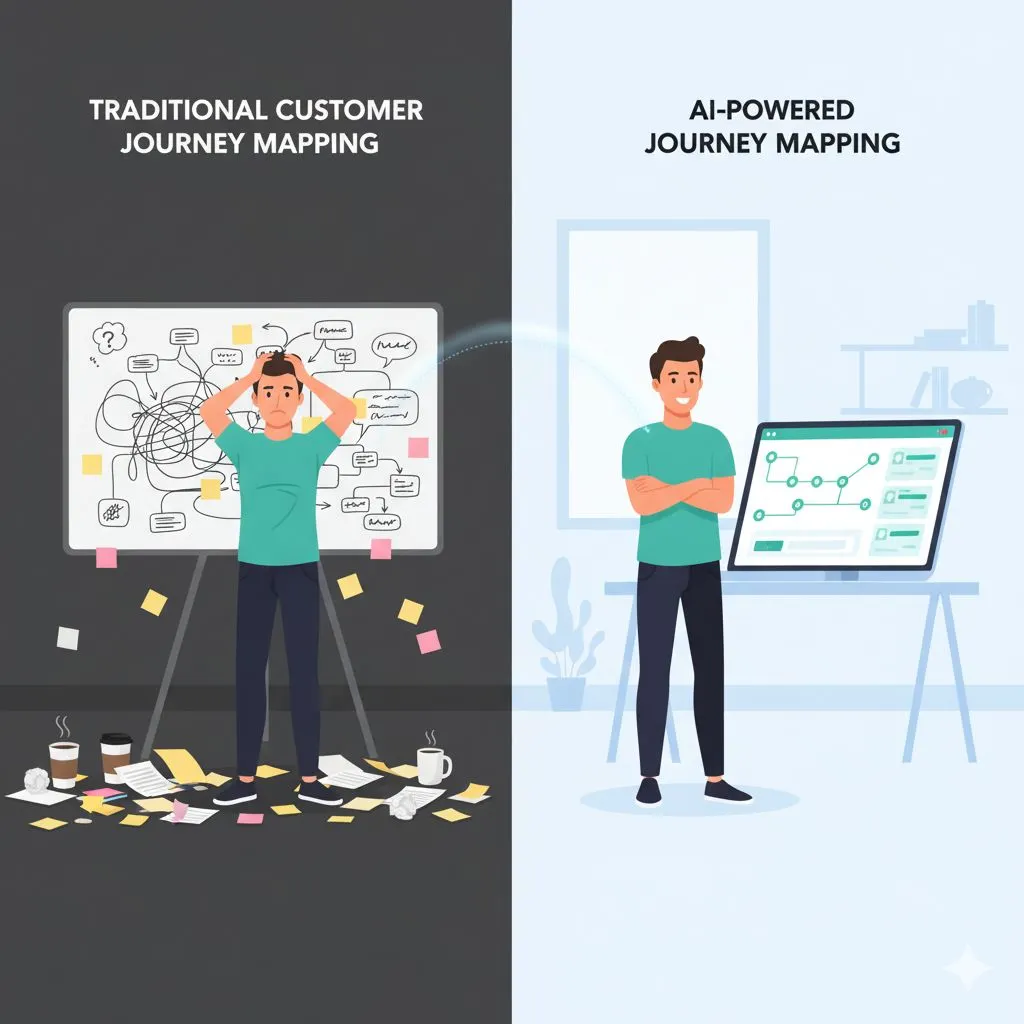
Today, the barrier to entry for competing with massive corporations has collapsed. You no longer need a headcount of 50 to produce the output of 50. You need the right ai for startups. Our ultimate guide to AI for small business breaks down exactly how solopreneurs are outpacing much larger teams using a structured AI approach. By building an "AI Stack"—a layered approach to using artificial intelligence across different business functions—you can replicate the efficiency of a large department for a fraction of the cost.
This isn't about handing your business over to robots or generating generic, robotic spam. It is about leverage. It is about reclaiming your time so you can stop just operating your business and start growing it.
In this guide, we are going to break down the essential AI stack for founders who want to move fast, keep costs low, and maintain expert-level quality.
The Strategy Stack: Your 24/7 Board of Advisors
The biggest mistake overworked founders make is skipping strategy because they are too busy putting out fires. When you are buried in emails, you don't have time to research market trends or stress-test your business model. This is where AI shines brightest—not just as a creator, but as a thinker.
Market Research on Autopilot
Traditionally, deep market research required expensive consultants or weeks of Googling. Today, LLMs (Large Language Models) can act as your dedicated research analyst.
You can feed an AI tool specific parameters about your industry—say, boutique consulting or SaaS for dentists—and ask it to analyze current trends, identify gaps in competitor offerings, and summarize customer sentiment from reviews.
- The Startup Advantage: Instead of guessing what your customers want, you can use AI to simulate focus groups. You can ask an AI to "Act as a skeptical CTO with a tight budget" and pitch your product to it. The feedback you get allows you to refine your messaging before you ever spend a dollar on ads.
Business Model Refinement
Great businesses often stall because their value proposition is slightly off. Maybe you are selling "efficiency" when your customers actually want "status."
AI allows you to iterate on your business model at warp speed. You can input your current value proposition and ask the AI to generate ten alternative angles, ranked by psychological impact. You can ask it to identify potential bottlenecks in your delivery model that will break as you scale.
Think of this as having a McKinsey consultant in your pocket, ready to critique your strategy at 2:00 AM.
Data Analysis for Non-Analysts
You likely have data you aren't using: email open rates, website traffic patterns, or sales figures sitting in a spreadsheet. For most founders, analyzing this data falls to the bottom of the to-do list.
Modern AI tools allow you to upload a CSV file and simply ask questions in plain English:
- "Which service had the highest profit margin last quarter?"
- "Is there a correlation between my newsletter open rates and sales calls booked?"
This turns data into immediate insights, allowing you to double down on what works without needing a degree in data science.
For a practical breakdown of how solopreneurs use AI to compete with larger teams, including the specific tools and approaches that deliver the best ROI, see our full resource guide.
The Content Engine: Scaling Authority Without Burnout
For the modern founder, content isn't optional—it's currency. But for Alex Rivers (and perhaps you), it is also a massive source of stress. You know you need to post on LinkedIn, update the blog, and send a newsletter, but sitting down to write from scratch feels impossible when you have client deadlines looming.
The "Content Engine" layer of your AI stack is designed to solve the Blank Page Problem and the Volume Problem simultaneously.
The Writing Assistant (Not Replacement)
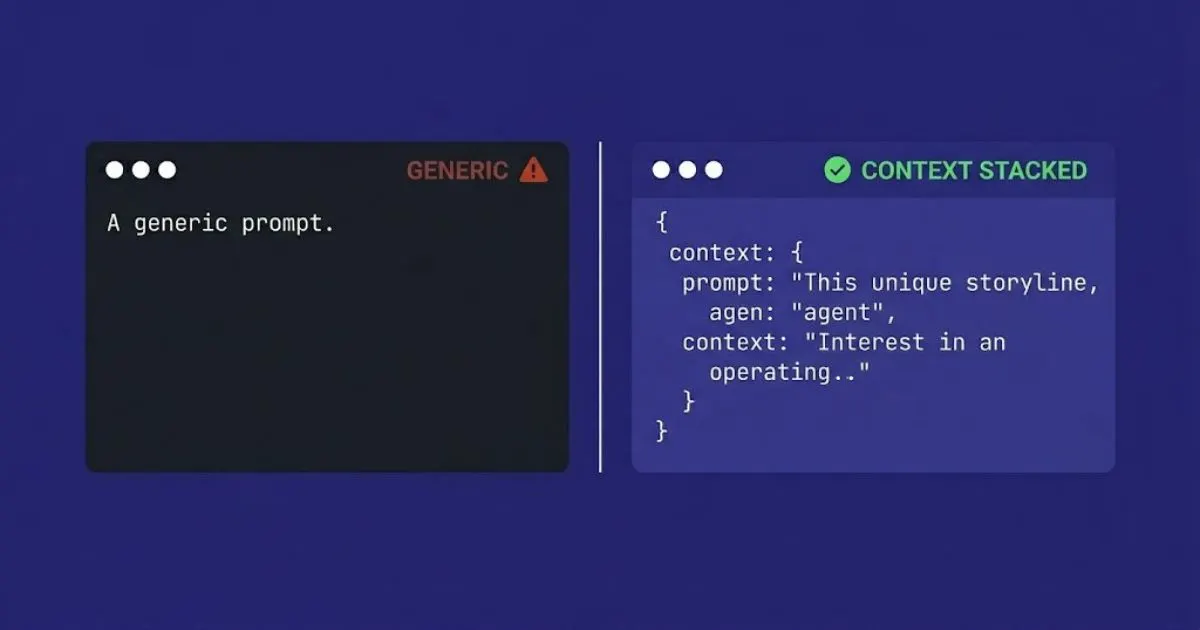
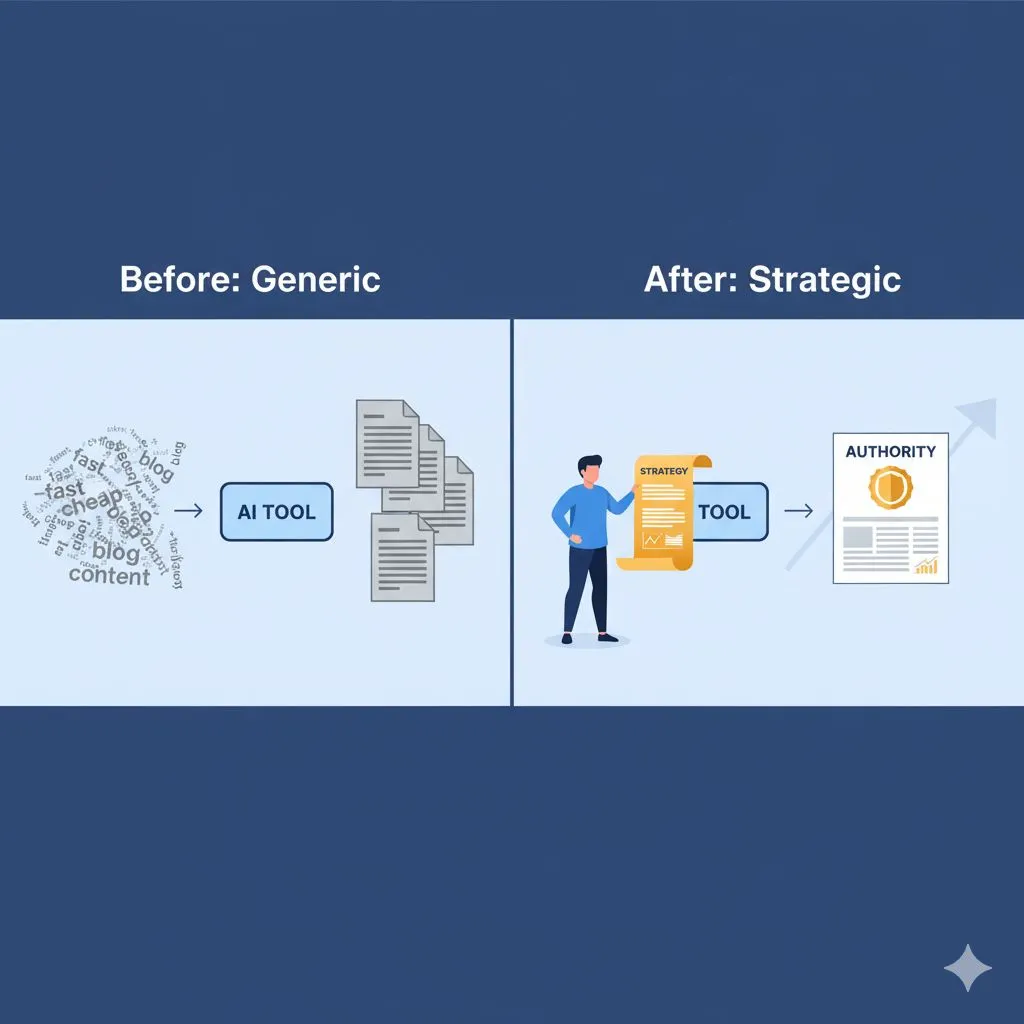
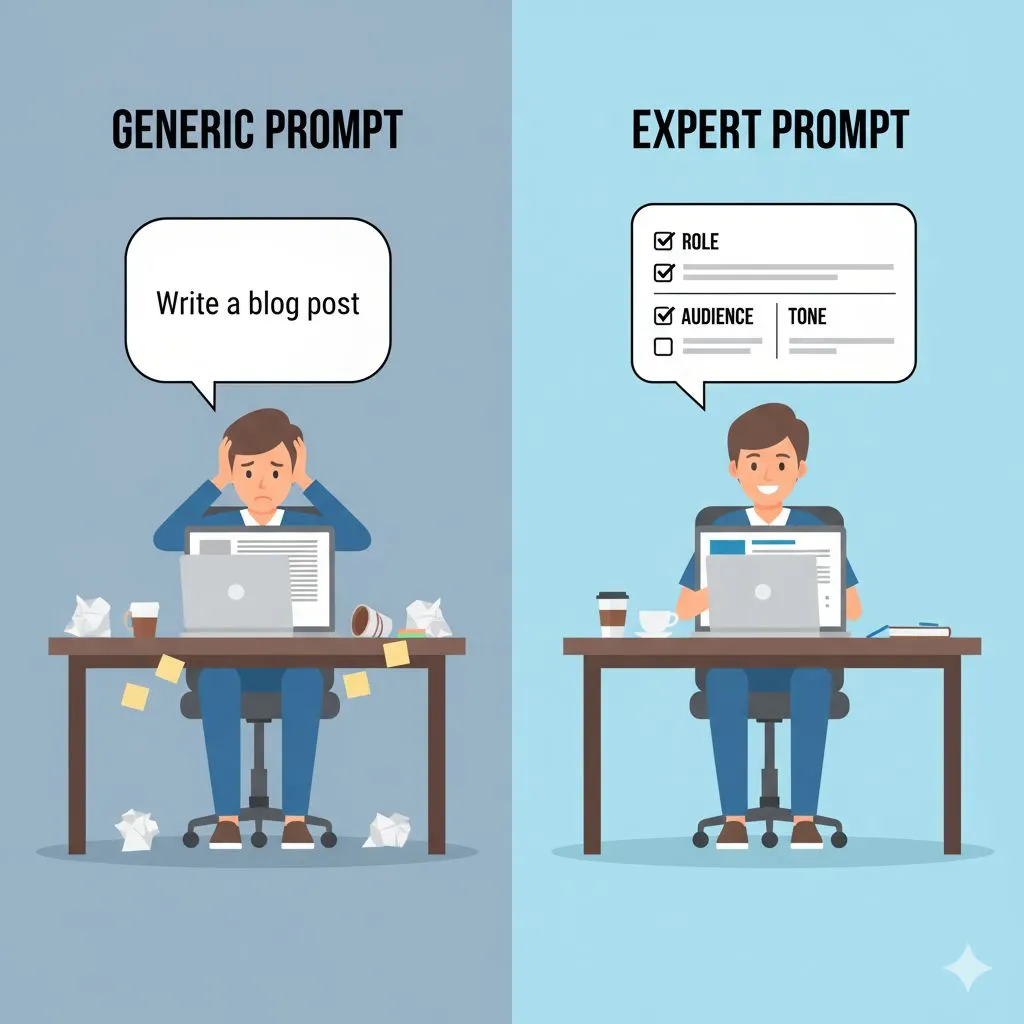
Let’s be clear: relying on AI to write your content from scratch with a generic prompt like "Write a blog post about marketing" will destroy your brand credibility. The output will be vanilla, repetitive, and obviously machine-generated.
However, when you use ai for startups correctly, it becomes a high-speed drafting arm. The key is in the prompt engineering.
Instead of asking for a post, you provide the AI with your unique point of view, your tone of voice guidelines, and a specific structure. You act as the Editor-in-Chief; the AI acts as the staff writer.
- Ideation: Ask for 20 blog post titles based on the pain points of your specific customer persona.
- Drafting: Feed the AI a rough bulleted list of your thoughts and ask it to expand them into a coherent article.
- Polishing: Paste your rough draft and ask the AI to "act as a professional copyeditor" to fix grammar and improve flow without changing your voice.
This process reduces a 4-hour writing task to 45 minutes, allowing you to maintain expert-level quality with a quarter of the effort.
See our AI content creation playbook for small business for the complete system — from ideation to publishing — that high-output founders are using to dominate their niche.
Social Media at Scale
Consistency is the hardest part of social media. You might write one great LinkedIn post, but then you go silent for two weeks because you get busy.
Your AI stack fixes this through repurposing. A single "pillar" piece of content (like the blog post mentioned above) can be transformed into a month’s worth of social content.
You can prompt your AI to:
- Extract 5 tweetable quotes from the article.
- Summarize the key takeaways into a LinkedIn carousel text.
- Write a script for a 60-second Instagram Reel based on the intro.
- Draft a persuasive email newsletter teaser linking to the post.
Suddenly, one effort multiplies into presence across every platform where your customers hang out. You appear ubiquitous, even if you are a team of two.

Visual Branding on Demand
In the past, if you wanted a custom image for a presentation or an ad, you had two choices: use a cheesy stock photo everyone has seen, or pay a designer.
Generative AI image tools have changed the game. You can now create custom, on-brand visuals in seconds. Need a flat-lay illustration of a futuristic office for a slide deck? Need a specific vector icon for your website?
By mastering image prompts, you ensure your visual brand looks just as polished as your written content. This elevates your perceived value. When your pitch deck looks like it cost $5,000 to design, potential clients assume your services are equally premium.
The Revenue Stack: Sales and Customer Experience
Strategy and content build the brand, but sales build the bank account. For many founders, sales is an emotional rollercoaster. You are either feasting (closing deals) or famining (scrambling for leads). There is rarely a middle ground because you don't have the time to prospect consistently.
The Revenue layer of your AI stack is about automating the "hunt" and personalizing the "close."
Lead Scoring & Qualification
If you are generating leads but they aren't converting, you are likely suffering from a qualification problem. You are spending 30 minutes on Zoom with someone who was never going to buy.
AI-driven CRMs and sales tools can now analyze incoming leads based on their data points (company size, industry, behavior on your site) and score them. This tells you exactly who to call first.
Furthermore, AI tools can enrich your lead data. If you have an email address, AI can scour the web to find that person’s LinkedIn profile, recent company news, and potential pain points. Before you ever get on a call, you have a dossier prepared, making you look hyper-prepared and professional.
The Perfect Pitch: Hyper-Personalization
Cold outreach is a numbers game, but effective cold outreach is a relevance game. Generic "Dear Sir/Madam" emails are dead.
Using ai for startups allows you to personalize outreach at a scale that was previously impossible. You can feed an AI tool a prospect's LinkedIn "About" section and their company's latest press release, then ask it to draft an intro paragraph connecting their recent news to your service.
The result? You can send 50 emails that look like they were written one by one.
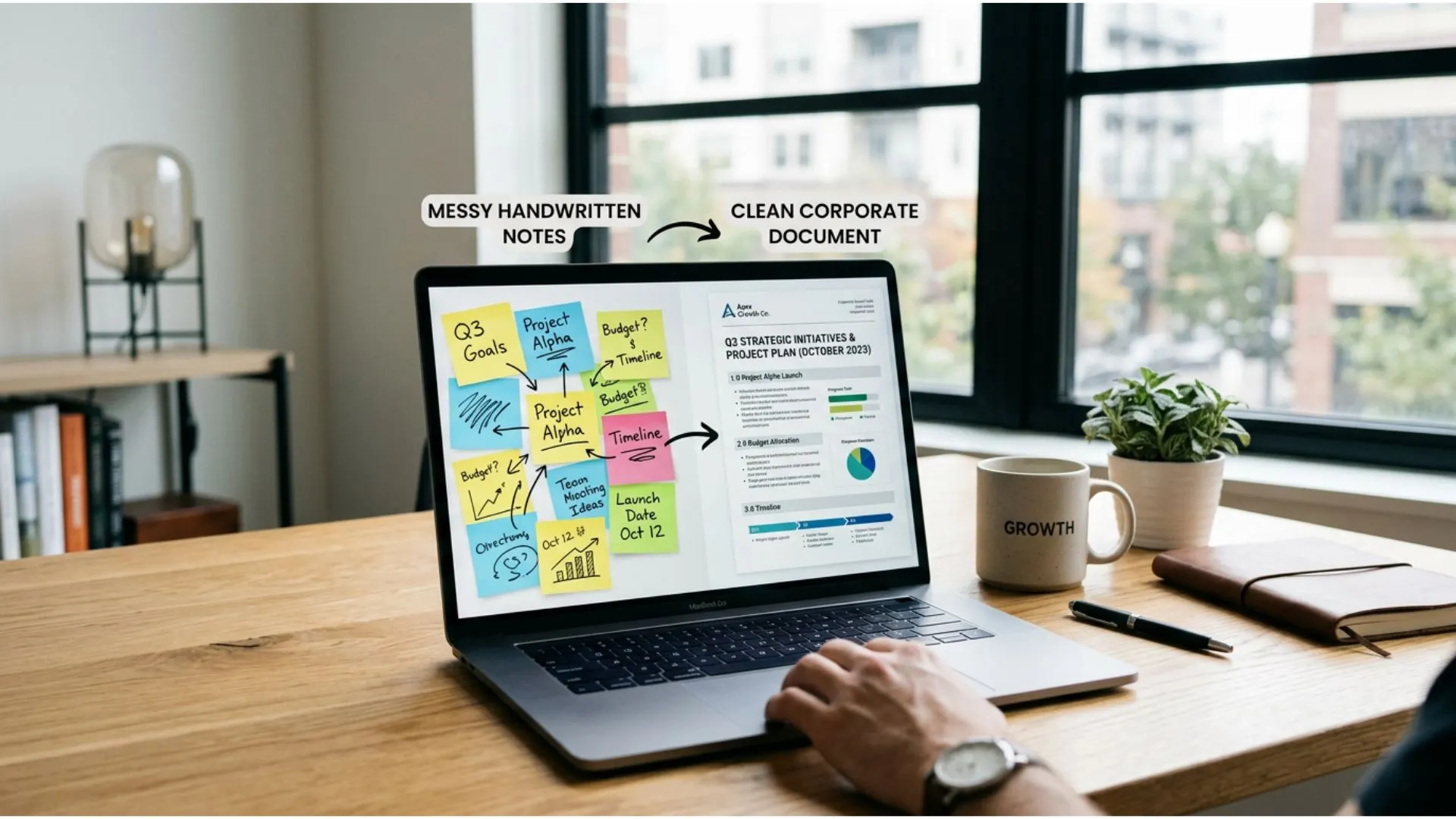
This extends to proposals as well. Writing proposals is often the biggest bottleneck for service-based businesses. By using a modular AI approach, you can have a tool assemble a custom proposal based on your notes from the discovery call—inserting the client’s specific pain points into your proven solution framework. What used to take two hours now takes 15 minutes.
For a complete framework covering AI-powered sales copy, outreach sequences, and funnel strategy, our complete guide to AI in advertising and sales is the definitive resource for founders ready to build a scalable revenue engine.
Customer Support Automation
Nothing kills a founder’s productivity like being interrupted every 10 minutes by simple customer questions. "How do I reset my password?" "Do you offer refunds?"
If you are answering these manually, you are wasting your most valuable asset: your attention.
Modern AI chatbots (far superior to the clunky bots of five years ago) can ingest your entire knowledge base, past emails, and product documentation. They can handle 80% of Tier 1 support tickets instantly, 24/7, in a natural, conversational tone.
This does two things:
- Improves Customer Experience: Customers get instant answers rather than waiting 24 hours for you to reply.
- Protects Your Flow State: You only get notified when a complex issue requires a human touch.
The Operations Layer: Automating the Boring Stuff
The final layer of your stack is the "glue" that holds everything together. Operations are the unsexy, invisible tasks that slowly bleed a founder's energy—scheduling, note-taking, file management, and data entry.
Meeting Intelligence
How many times have you finished a great client call, promised to send a follow-up summary, and then forgot exactly what was decided?
AI meeting assistants join your Zoom or Teams calls, record the audio, transcribe it, and—most importantly—summarize it. They extract action items, deadlines, and key decisions.
Immediately after the call, you (and your client) receive a perfectly formatted summary. This not only saves you the cognitive load of note-taking but also creates a paper trail of professional accountability. It makes you look organized and on top of every detail, even if you are rushing to the next meeting.
Workflow Integration
The true power of ai for startups unlocks when tools talk to each other. This is often called "agentic" workflow or automation.
Imagine this scenario: A potential client fills out a form on your website.
- Automation: Zaps that data to your CRM.
- AI Analysis: Reads the form submission and determines the tone (urgent, curious, skeptical).
- AI Drafting: Drafts a personalized email response based on that tone and saves it as a draft in your Gmail.
- Notification: Slacks you a summary of the lead and the drafted email.
All you have to do is review the draft and hit send. You have eliminated the friction of data entry and initial drafting, allowing you to focus purely on the relationship.
Legal & Admin (With Caution)
AI can draft contracts, privacy policies, and non-disclosure agreements based on standard templates. While you should always have a qualified human lawyer review critical documents, AI gets you 90% of the way there for free. It can also scan contracts sent to you and highlight "red flag" clauses that seem non-standard, acting as a first line of defense for your business.
Conclusion: From Operator to Strategist
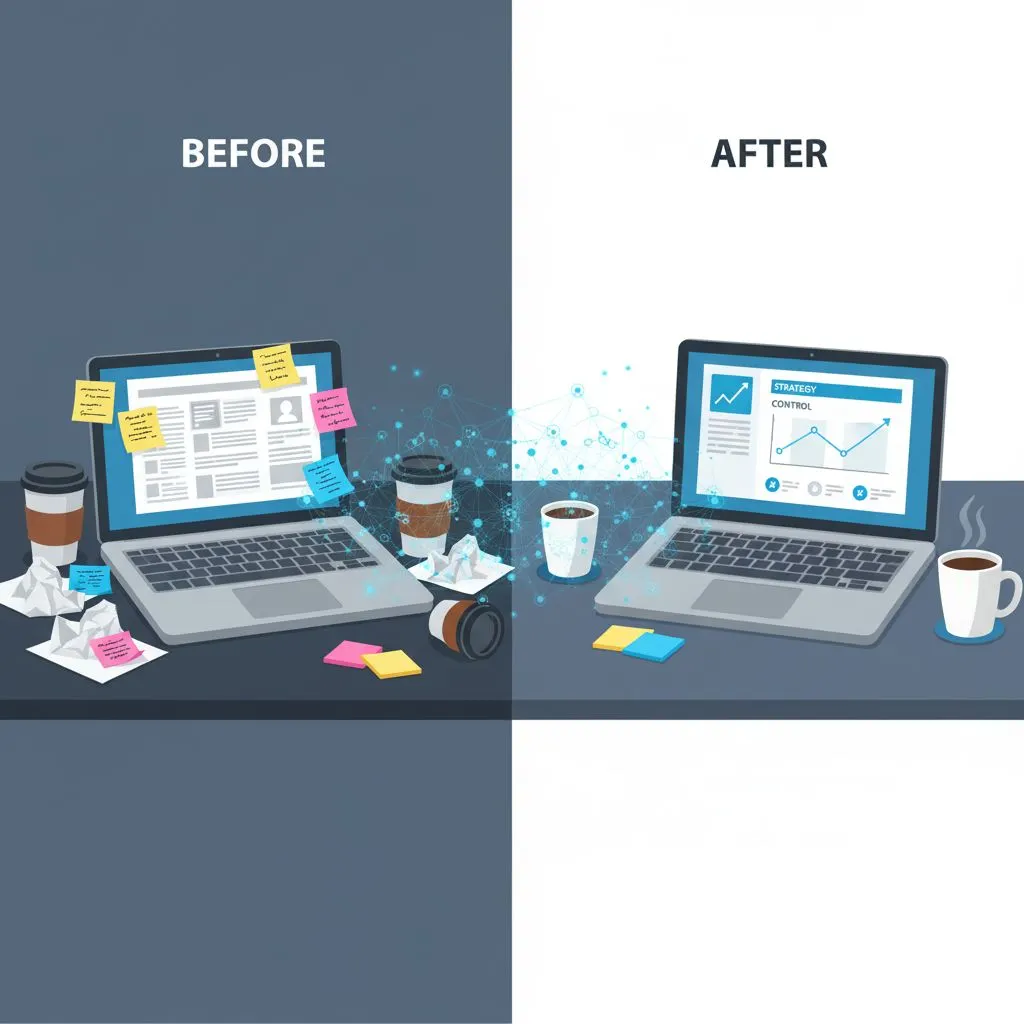
The difference between a stressed solopreneur and a scalable startup founder isn't how hard they work; it's how much leverage they employ.
By building this AI stack, you are effectively hiring a Strategy Director, a Content Team, a Sales Development Rep, and an Executive Assistant—all for the monthly subscription cost of a few software tools.
If you want proof this works, read how a consulting firm scaled delivery without adding headcount — a real-world example of a service business replicating the impact of a larger team using exactly this approach.
But there is a catch.
AI tools are like high-performance race cars. They have incredible potential, but they are useless without a skilled driver. The quality of your output depends entirely on the quality of your inputs. If you give generic instructions, you will get generic results that damage your brand.
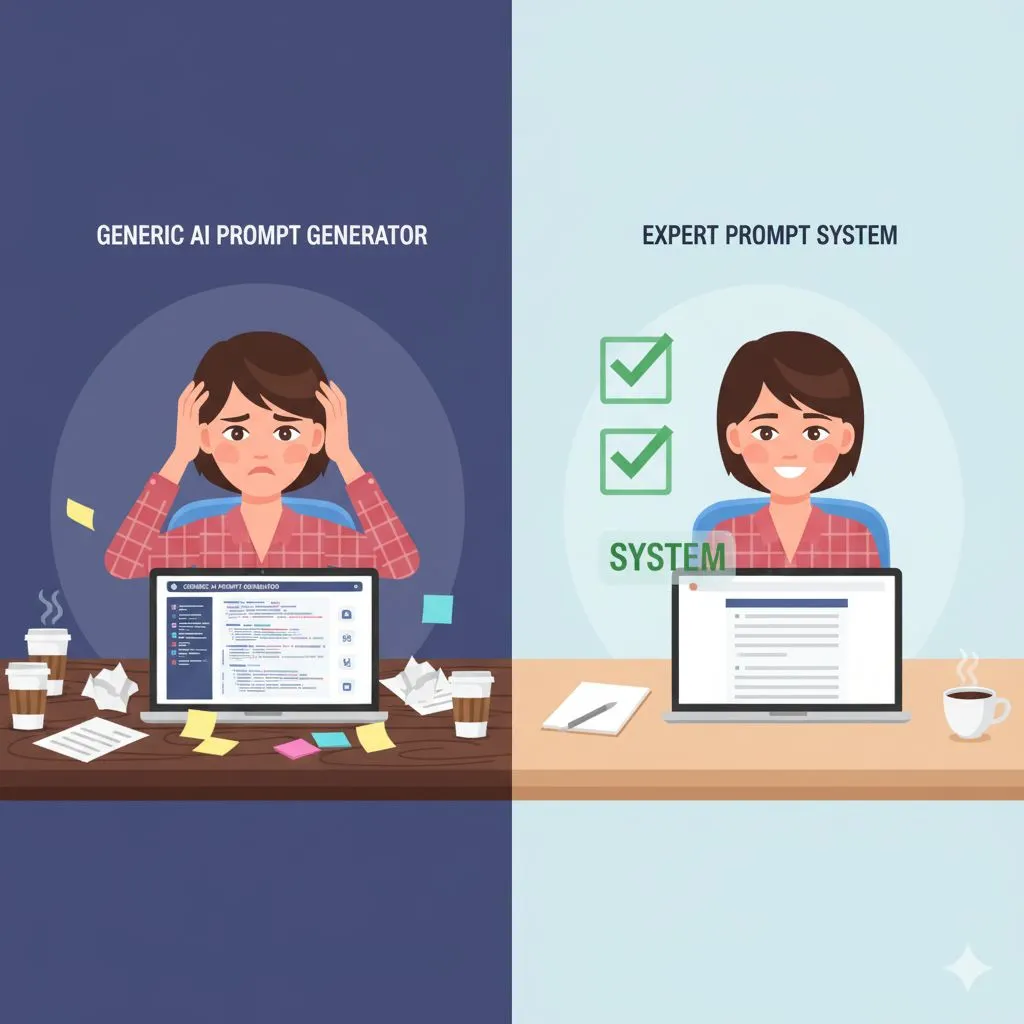
To truly compete with larger players, you need to master the art of the prompt. You need proven frameworks that turn these powerful tools into reliable business assets. You don't have time to experiment with thousands of prompts to find the one that works.
You need the strategy built in.
Ready to Scale Smarter?
Don't waste months on trial and error. We have developed the ultimate toolkit for founders who want to skip the learning curve and start seeing results immediately.
Not ready to commit yet? Download 5 free AI prompts and save 5 hours this week — no credit card required. Then decide.
Get the Expert AI Prompts Startup Advantage Pack today.
Unlock 50 expert-level, industry-specific prompts designed to streamline your workflow, elevate your content, and scale your sales.
Click here to Stop Hustling and Start Scaling
Or browse all 30 industry-specific prompt packs and pricing to find the right pack for your startup stage.