Firm Sovereignty: How to Build an AI Moat Your Competitors Cannot Buy
Firm Sovereignty: How to Build an AI Moat Your Competitors Cannot Buy
May 13, 2026
Every competitor has access to the same AI platforms on identical terms. Microsoft Copilot, Google Gemini Enterprise, Anthropic Claude for Enterprise, AWS Bedrock -- all of them available to your competitors at the same price, with the same feature set, subject to the same pricing changes, governed by the same vendor's terms of service. The technology layer of enterprise AI is a commodity. Your competitors can buy everything you have bought.
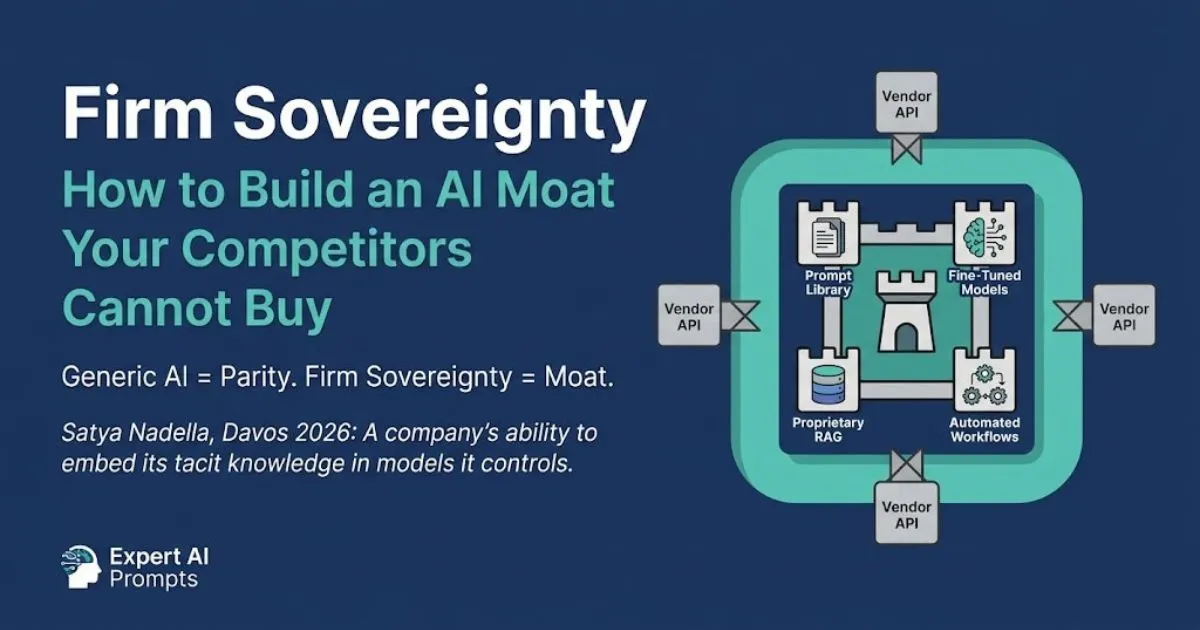
The competitive advantage is not in the platform. It is in the proprietary intelligence layer built on top of the platform. The governed prompt library calibrated to your organisation's specific documents and processes. The fine-tuned model trained on your unique operational data. The RAG system built on your proprietary document estate. The automated workflows encoding 20 years of accumulated institutional knowledge. These things cannot be purchased. They are built, governed, and owned. Satya Nadella called this Firm Sovereignty.
Enterprise AI Transformation Playbook
'Firm Sovereignty is the Phase 5 outcome of the five-phase Enterprise AI Transformation Playbook -- the strategic destination that the previous four phases are building toward.
Section 1 - What Firm Sovereignty Actually Means
The term comes from Satya Nadella's Davos 2026 address, where he identified the defining strategic AI question for every organisation: are you building AI that encodes what your organisation uniquely knows, or are you deploying the same AI that every competitor is deploying? The answer to that question determines whether your AI investment produces a competitive moat or operational parity.
The Davos 2026 Framing
Satya Nadella, Davos 2026: 'A company's ability to embed its tacit knowledge in models it controls.' Firm Sovereignty is not a technology position. It is a strategic position. It answers the question: what does our organisation know that no one else knows -- and is that knowledge encoded in AI systems that we own and control?
Tacit knowledge is the most valuable and the least transferable form of organisational intelligence. It is the accumulated expertise of 20 years of doing the work: the patterns that experienced practitioners recognise before they can articulate them, the domain-specific language that communicates precise meaning within the organisation, the process knowledge that has been refined through thousands of iterations, the client relationship context that makes every communication more effective. This is what competitors cannot buy. They can buy the model. They cannot buy what the model has been trained on.
Section 2 - The AI Commodity Trap: What Generic AI Actually Produces
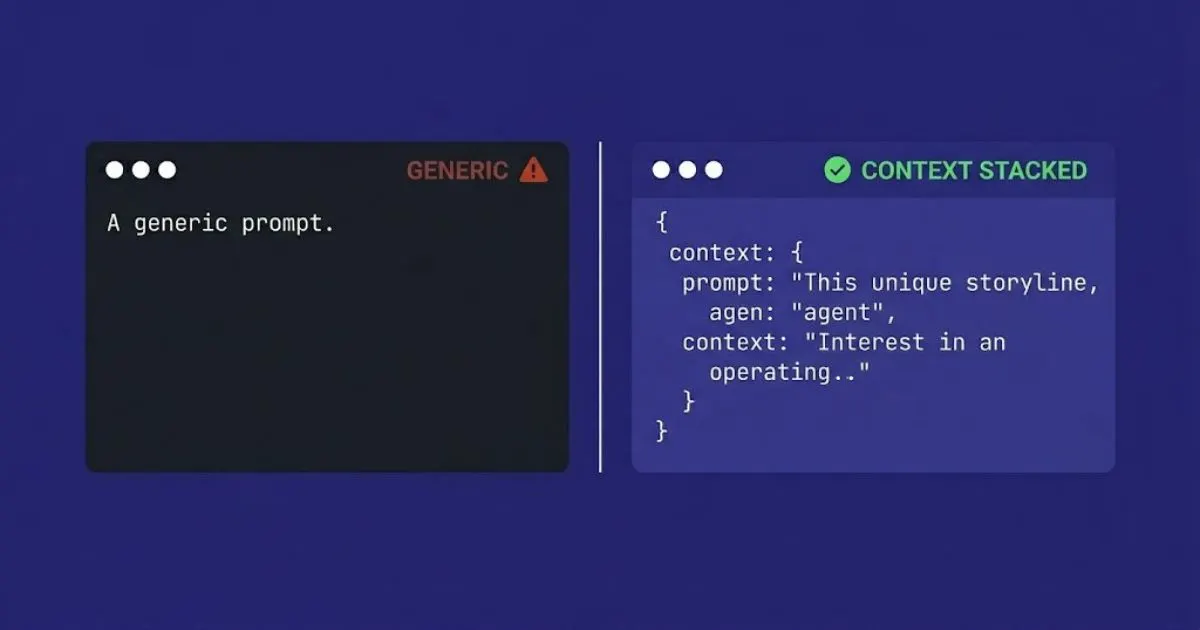
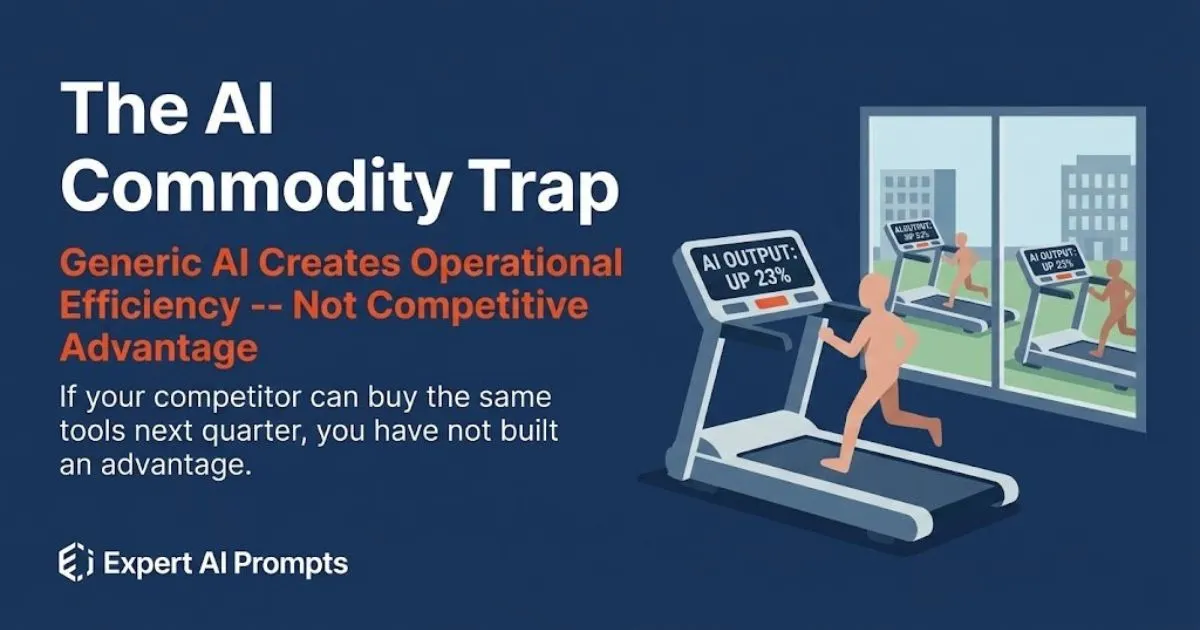
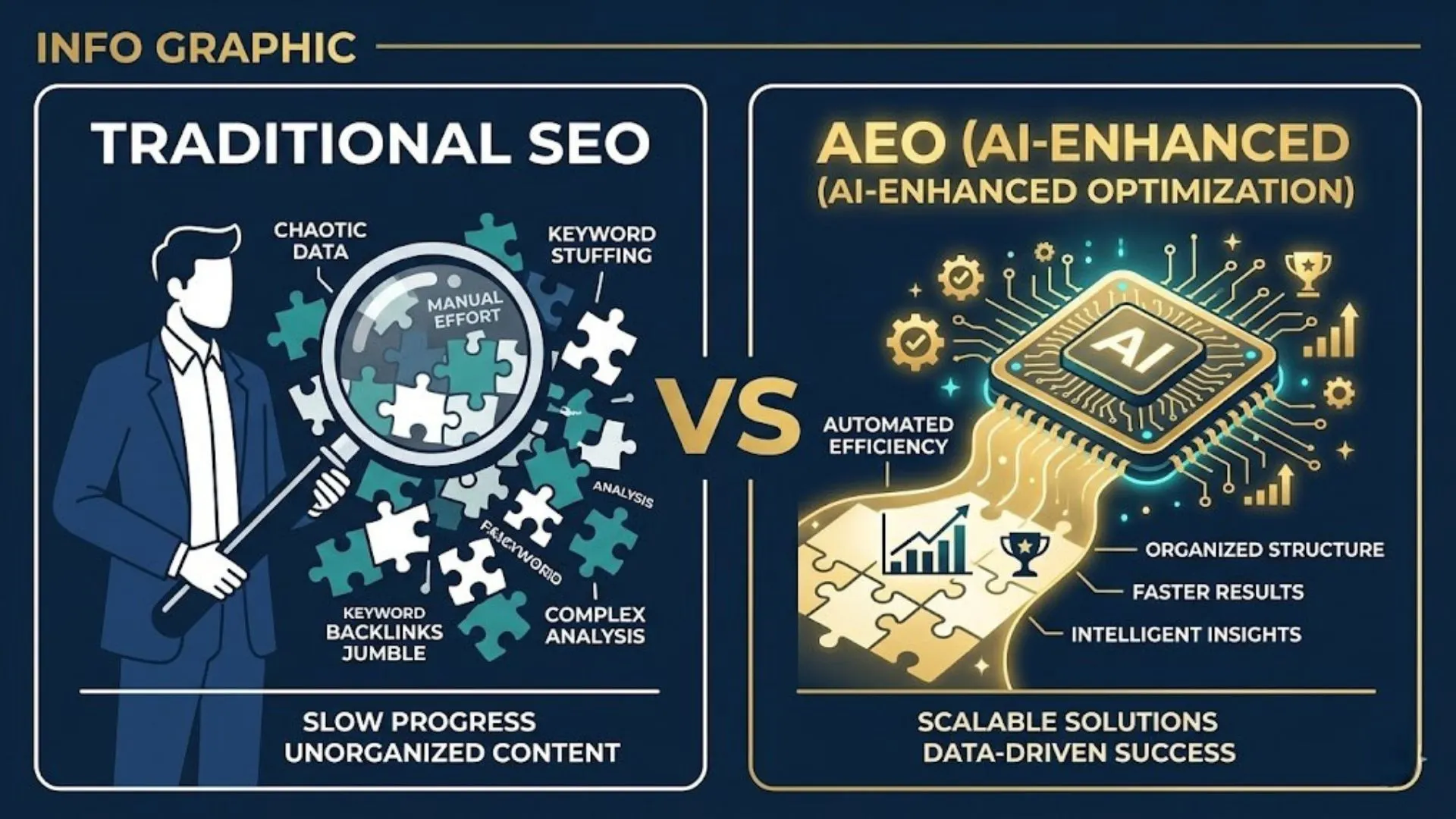
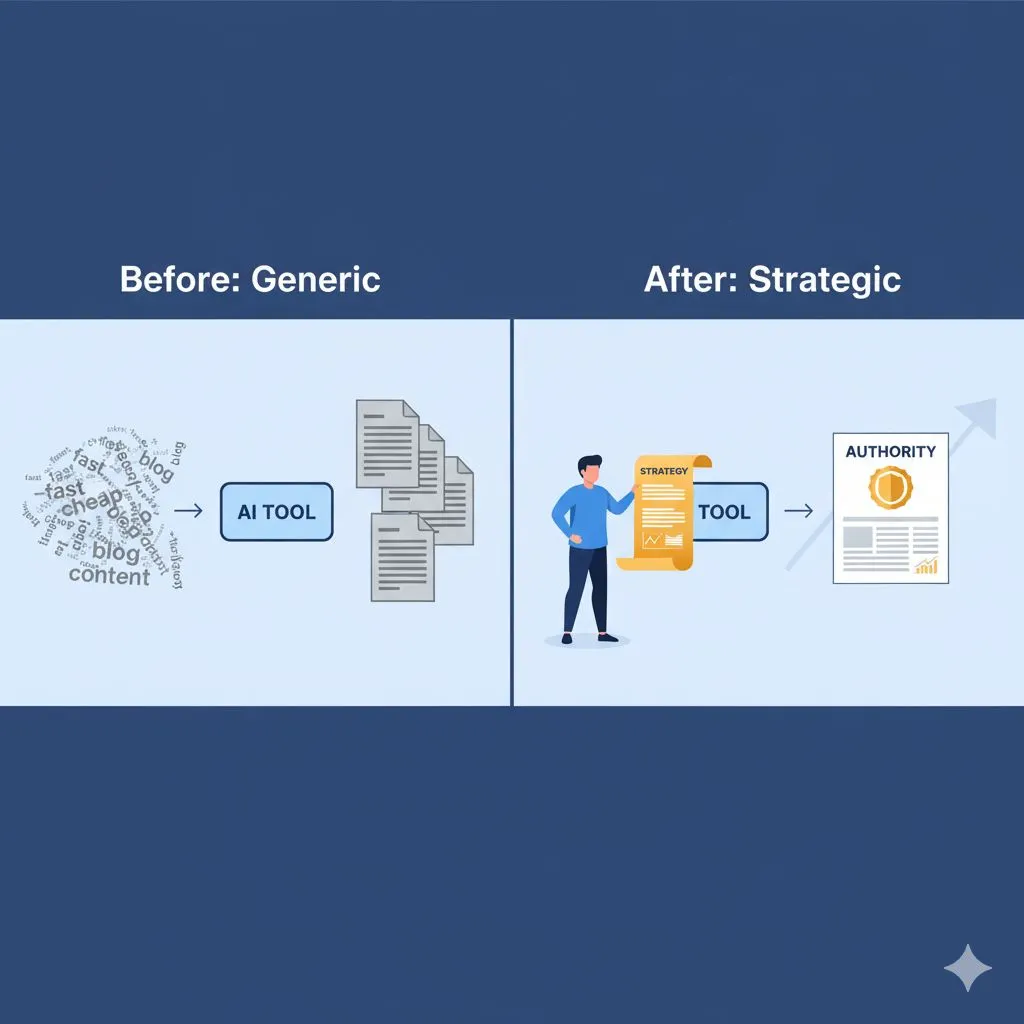
The AI Commodity Trap is the most common failure mode of enterprise AI strategy. It looks like success -- AI is deployed, employees are using it, productivity metrics are improving -- but it produces no durable competitive advantage because every improvement is available to every competitor on identical terms.
Generic AI deployment optimises the existing process. Faster contract drafting. Quicker research synthesis. More efficient email communication. These are real productivity gains, and they are worth capturing. But they are worth the same to your competitor who deploys the same tool next quarter. The process is better. The competitive position is identical.
When Efficiency Becomes a Competitive Liability
The efficiency paradox of generic AI: if every competitor in your sector deploys the same AI platforms and achieves the same productivity improvements, the competitive landscape resets at a higher efficiency level. The gain is real but relative. You are not better than your competitors -- you are keeping pace with the sector's rising productivity floor.
The organisation that remains in the Commodity Trap indefinitely is exposed to a second risk: vendor dependency without proprietary protection. When the vendor changes pricing -- and at the scale at which enterprise AI platforms are being deployed in 2026, vendor pricing changes are a near-certainty within 36 months -- the organisation has no leverage, no alternative, and no proprietary layer that would survive a platform migration. The Commodity Trap is not just a strategic failure. It is a commercial vulnerability.
Section 3 - Firm Sovereignty vs Commodity Trap: The Six Contrasts
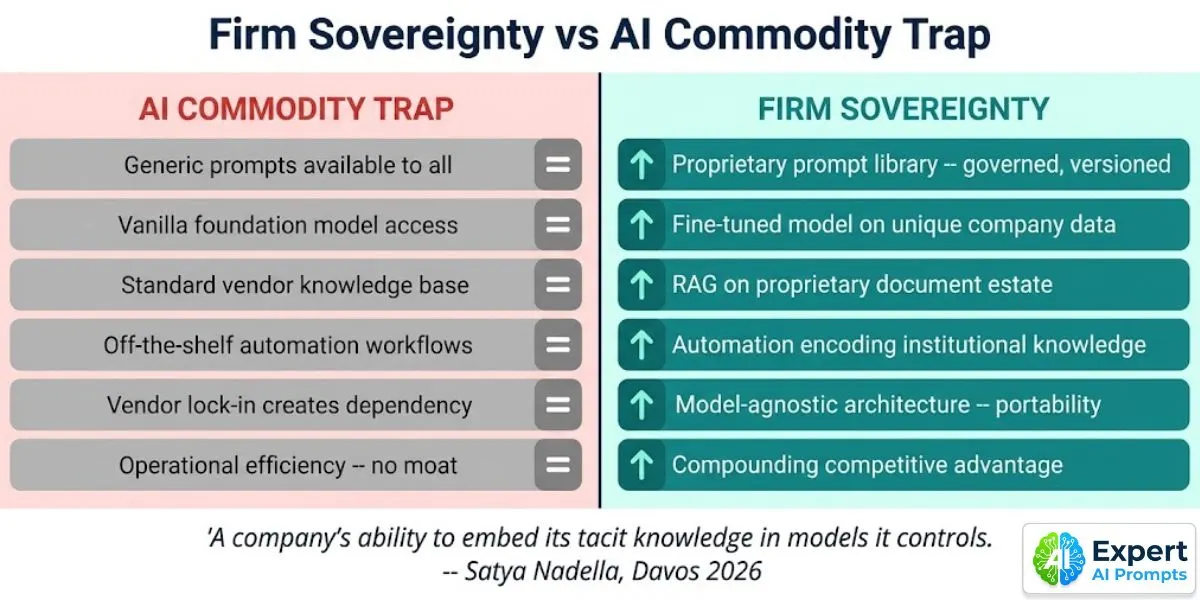
These six contrasts are the diagnostic framework. For each AI system your organisation is building or has deployed, ask which column it belongs to.
COMMODITY TRAP: Generic prompts available to every competitor on identical terms.
FIRM SOVEREIGNTY: Proprietary prompt library -- governed, versioned, domain-specific, CoE-owned, inaccessible to competitors.
COMMODITY TRAP: Vanilla foundation model access with no differentiation layer beyond default capability.
FIRM SOVEREIGNTY: Fine-tuned models trained on unique organisational data -- calibrated to domain-specific quality standards that generic models cannot match.
COMMODITY TRAP: Standard vendor knowledge base with shared infrastructure -- the same retrieval layer that every customer of the vendor has access to.
FIRM SOVEREIGNTY: RAG on proprietary document estate -- retrieval built on the organisation's own documents, contracts, research, client records, and operational knowledge. Unique by definition.
COMMODITY TRAP: Off-the-shelf automation identical to competitor deployments -- process efficiency with no encoded institutional differentiation.
FIRM SOVEREIGNTY: Automated workflow systems encoding the organisation's institutional knowledge -- the accumulated process refinement of years of operational experience.
COMMODITY TRAP: Vendor lock-in creating dependency on infrastructure that the vendor controls and prices.
FIRM SOVEREIGNTY: Model-agnostic architecture protecting the proprietary intelligence layer from vendor pricing changes and platform obsolescence.
COMMODITY TRAP: AI investment creating operational efficiency that resets to sector-wide parity as competitors deploy the same tools.
FIRM SOVEREIGNTY: AI investment creating compounding competitive advantage that deepens over time as the proprietary intelligence layer grows.
Section 4 - The Four Firm Sovereignty Asset Types
Firm Sovereignty is not built through a single initiative. It is built through the governed accumulation of four distinct types of proprietary AI assets. Each compounds. Each creates a layer of competitive intelligence that makes the next layer more valuable.
Asset 1: The Governed Proprietary Prompt Library
What it is: A version-controlled, access-governed, domain-specific prompt library calibrated to the organisation's actual documents, processes, quality standards, and domain language. Not a collection of generic prompts -- a curated, tested, maintained library of prompts that produce outputs that generic prompts cannot match.
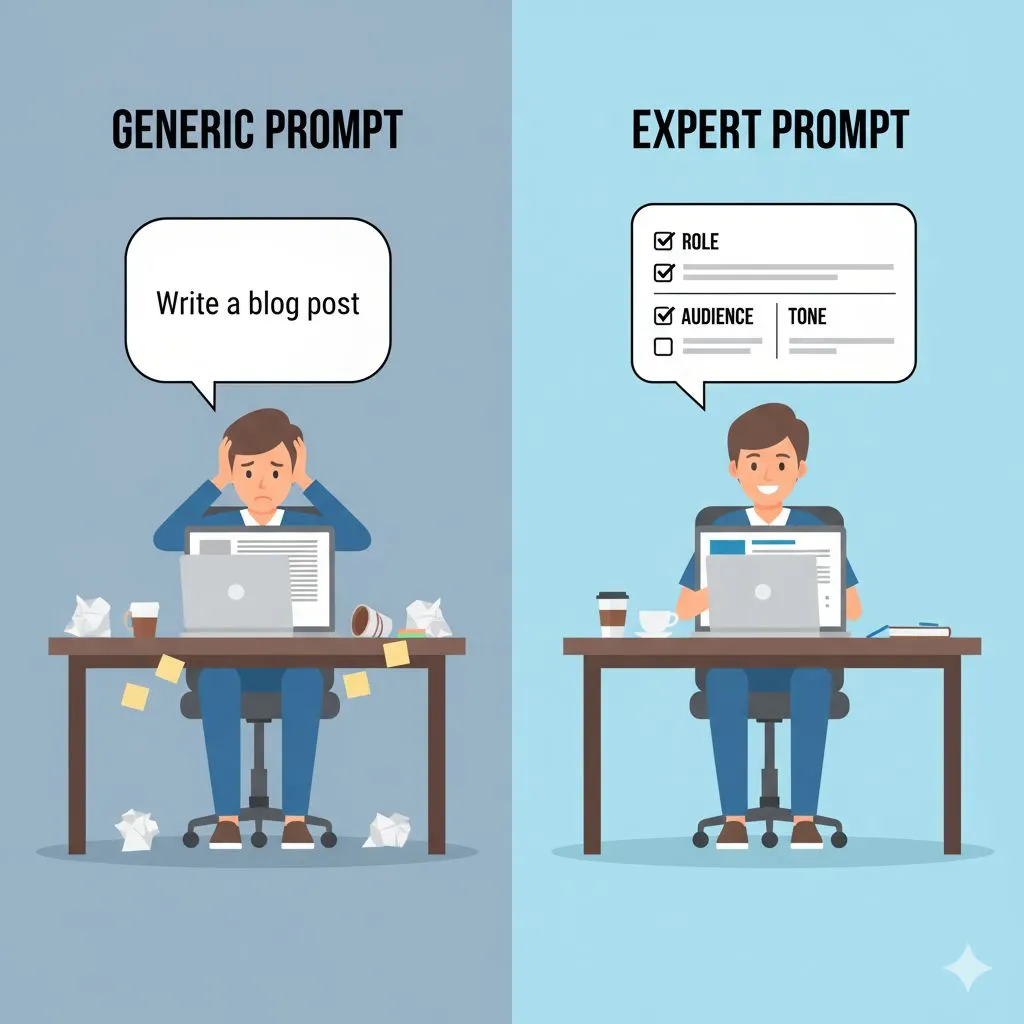
Why it creates a moat: A competitor that deploys the same AI platform produces generic outputs. An organisation with a governed prompt library calibrated to 20 years of domain knowledge produces domain-specific outputs that are demonstrably better. The library improves with each use, each refinement, each domain adaptation -- it compounds. A competitor cannot buy or replicate this library because it encodes the organisation's specific knowledge, not generic AI capability.
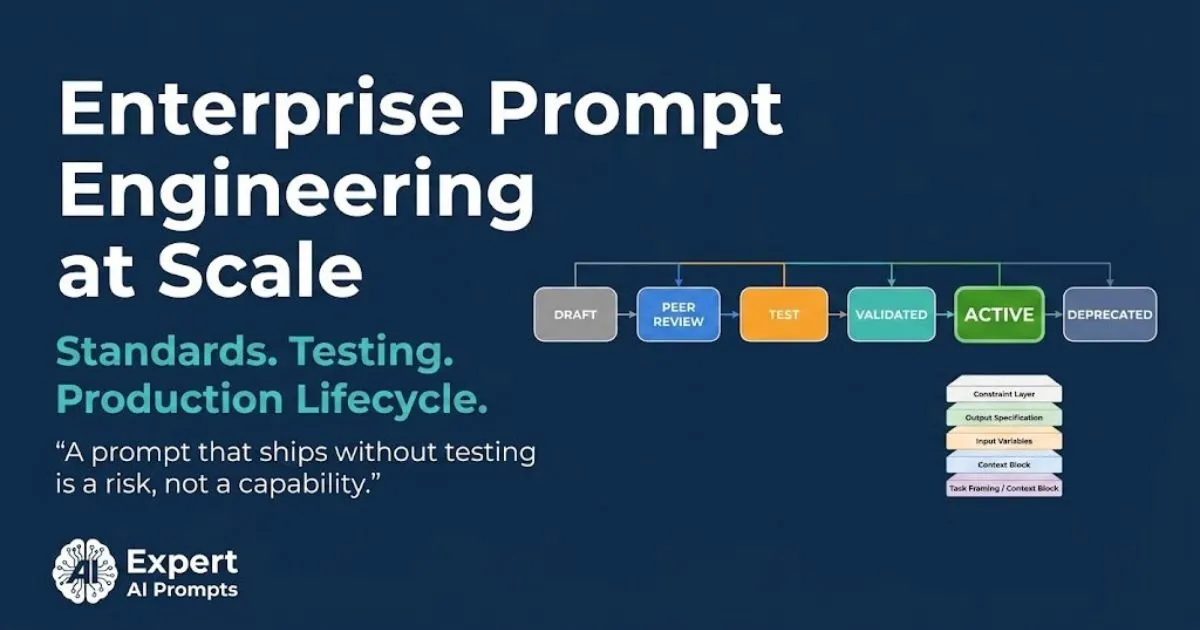
Governance requirement: Version control, access management, quality review for all new entries, retirement protocol, and CoE ownership. An ungoverned prompt collection is not a Firm Sovereignty asset -- it is Level 3 on the prompt maturity scale. Firm Sovereignty requires Level 4 or 5.
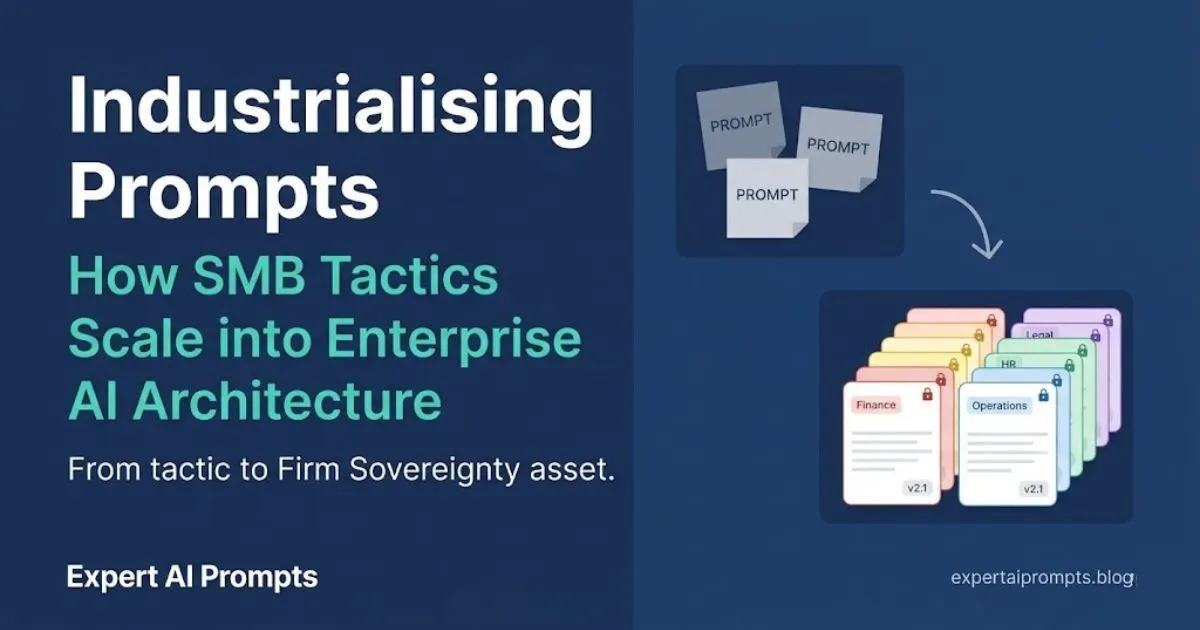
'The full framework for building the governed proprietary prompt library -- from tactic to Firm Sovereignty asset -- is in Industrialising Prompts.
Asset 2: Fine-Tuned Models on Unique Organisational Data
What it is: Foundation models fine-tuned on the organisation's unique dataset -- proprietary client records, internal research, domain-specific documents, historical decision data, operational logs. The fine-tuned model produces outputs calibrated to the organisation's specific context that a general foundation model cannot match.
Why it creates a moat: The fine-tuned model encodes the organisation's domain expertise in the model weights themselves. A competitor that buys the same foundation model on the same terms gets a generic capability. The organisation with the fine-tuned version gets a capability that is specific, demonstrated, and inaccessible -- because the fine-tuning dataset is proprietary.
Critical contract requirement: Model weights produced by fine-tuning on company data must be company-owned IP -- not vendor IP. This clause must appear in every AI vendor contract where fine-tuning is possible. Verify this now for every existing vendor relationship.
Asset 3: RAG on Proprietary Document Estates
What it is: Retrieval-Augmented Generation (RAG) systems built on the organisation's own document estate -- contracts, research reports, client records, technical documentation, operational playbooks, historical decisions. The retrieval system surfaces the right organisational knowledge at the right moment to enhance AI outputs with unique institutional context.
Why it creates a moat: Standard RAG on vendor knowledge bases retrieves generic information. RAG on a proprietary document estate retrieves the organisation's specific knowledge -- the precedents, the client context, the institutional memory that experienced employees know and new employees spend years acquiring. This is tacit knowledge made machine-accessible. It is unique by construction. No competitor has access to your document estate.
'The AI Centre of Excellence owns the data governance standards that make proprietary RAG systems safe to build and maintain.
Asset 4: Automated Workflow Systems Encoding Institutional Knowledge
What it is: AI workflow systems that automate multi-step processes using the organisation's accumulated operational intelligence: the refined step sequences, the decision trees developed over years of practice, the exception-handling patterns that only emerge after thousands of process iterations. Each workflow encodes how the organisation actually does the work, not how a generic process template says it should be done.
Why it creates a moat: An off-the-shelf workflow automation product delivers a generic process. An organisation that has encoded its proprietary process knowledge in AI workflow systems delivers the refined, exception-aware, domain-specific version that years of operational experience produced. The competitor buys the template. The organisation owns the 20 years of refinement.
Section 5 - The Five Lock-In Layers to Escape Before You Build
Building Firm Sovereignty assets on top of vendor-locked infrastructure creates an inverted moat: the organisation's most valuable AI assets become dependent on infrastructure it does not control. The five lock-in layers must be identified and mitigated before the Firm Sovereignty build begins. An organisation that builds its proprietary prompt library inside a single vendor's platform, with no portability, has not created a moat -- it has created a hostage.
1. Model lock-in: AI outputs tightly coupled to a single model's behaviour. When the model is updated, deprecated, or repriced, the organisation's outputs change and its cost structure changes with no alternative. Mitigation: model-agnostic abstraction layer so the proprietary intelligence layer can be served by multiple model providers without modification.
2. Orchestration lock-in: workflow automation built on a single vendor's orchestration platform, with proprietary workflow formats that cannot be migrated. Mitigation: open-standard orchestration frameworks where proprietary workflow logic is separable from the execution platform.
3. Data lock-in: training data, fine-tuning datasets, and RAG indices stored in vendor-controlled infrastructure with no export mechanism. Mitigation: contractual data portability clause (all data exportable in portable format within 48 hours of contract termination) and regular local backups of all proprietary data assets.
4. Governance evidence lock-in: audit trails, model documentation, and compliance evidence stored in vendor systems that may not be accessible after contract termination. Mitigation: EU AI Act Annex IV documentation maintained in organisation-controlled systems; Regulatory Access clause in every vendor contract specifying that all compliance evidence survives contract termination.
5. Organisational knowledge lock-in: the tacit knowledge about how to use the vendor's platform -- the configuration knowledge, the optimisation techniques, the undocumented behaviour patterns -- held by a small team who would leave with the vendor relationship. Mitigation: systematic documentation of all proprietary configuration and optimisation knowledge as an organisational asset, not individual expertise.
Section 6 - The Hybrid Default: Buy Infrastructure, Build the Intelligence Layer
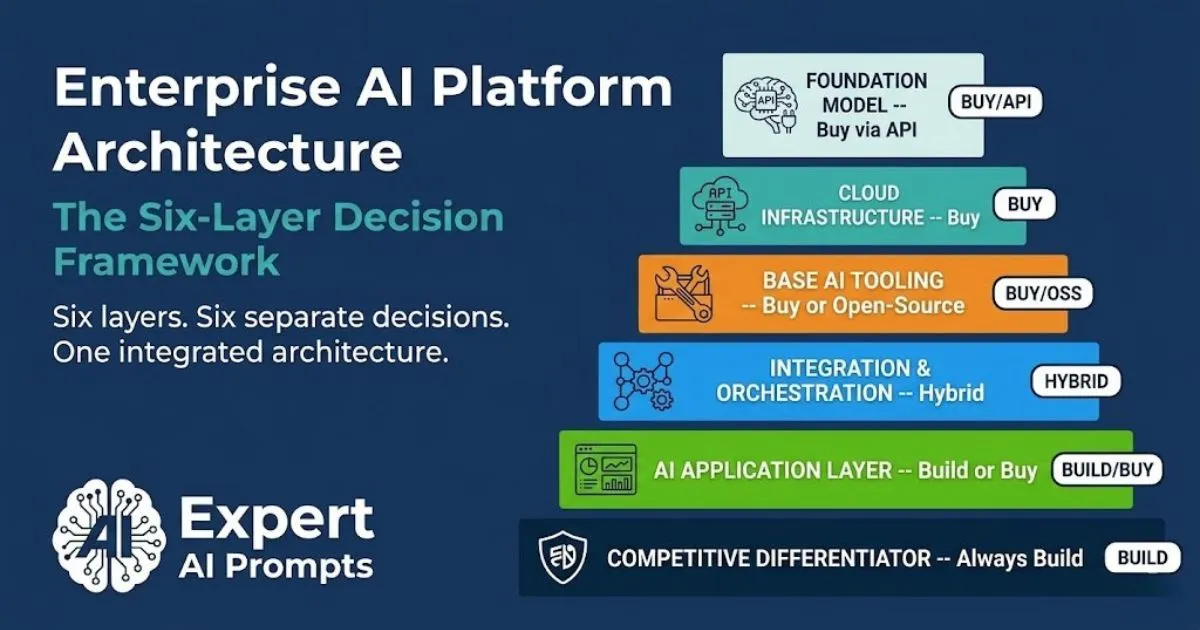
The practical recommendation for most enterprise AI programmes is the Hybrid Default: purchase commodity AI infrastructure from the best available vendor, then build the proprietary intelligence layer on top. This approach captures the speed-to-value benefit of purchased infrastructure while building the Firm Sovereignty assets that create long-term competitive advantage.
The principle: buy what every competitor can buy. Build what only your organisation can build. The commodity infrastructure -- the foundation model API, the vector database, the MLOps platform, the orchestration framework -- is available to competitors at the same price and provides no differentiation. The proprietary intelligence layer -- the governed prompt library, the fine-tuned models, the RAG on your document estate, the institutional workflow automation -- is available only to organisations that have built it. The moat is in the intelligence layer, not the infrastructure.
Why the Moat Is Never in the Model
The most common strategic error in enterprise AI investment is the belief that the model is the moat. Organisations spend significant effort and cost on model selection -- evaluating GPT-4o against Claude 3.5, Sonnet against Gemini Ultra, open-source against proprietary -- as if the choice of foundation model creates competitive advantage. It does not. Every competitor can select the same model. Every competitor gets the same capability.
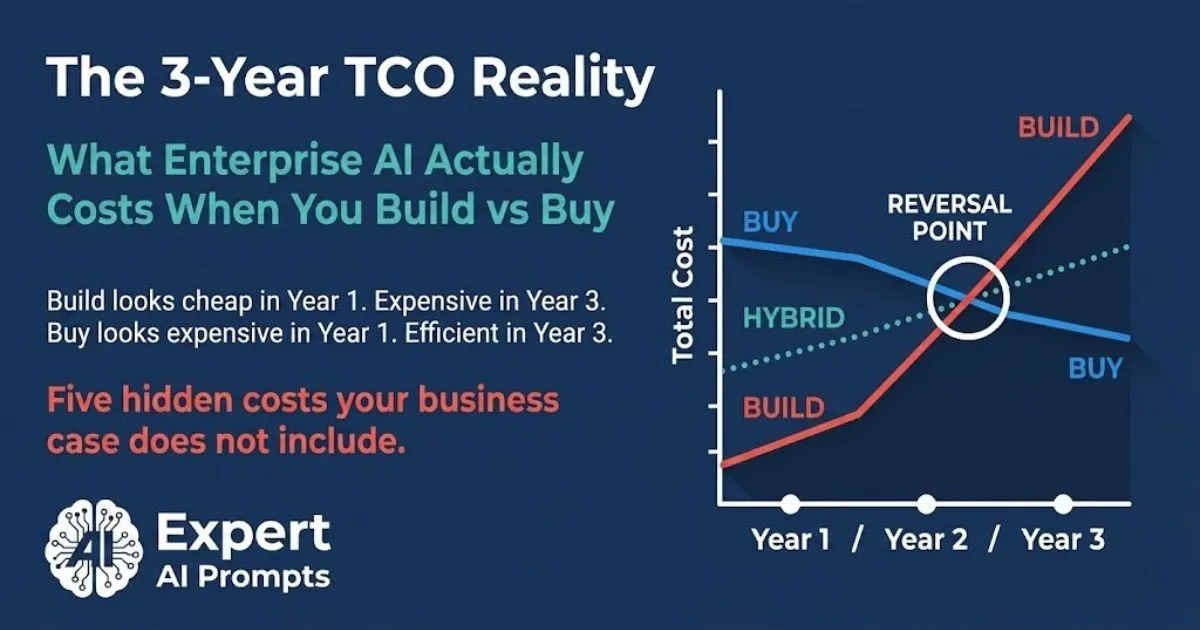
The MIT NANDA 2025 research is instructive on this point: purchased AI succeeds 67% of the time versus 22% for internal builds -- but only when the decision is made with the correct framework. The research's implicit finding is that most organisations are making buy vs build decisions incorrectly: building commodity AI capability (where purchased is better) and buying proprietary intelligence layer access (where building is better). The Hybrid Default reverses this: buy commodity, build proprietary.
Section 7 - Governance as the Technical Prerequisite for Firm Sovereignty
Firm Sovereignty cannot be built without governance infrastructure. This is not a compliance argument -- it is a technical argument. The four Firm Sovereignty asset types all require governance infrastructure to build safely, to maintain quality, and to protect the proprietary intelligence they encode.
• The governed proprietary prompt library requires version control, access management, and quality governance from the CoE. Without these, the library decays into an ungoverned collection that produces unreliable outputs.
• Fine-tuned models trained on proprietary data require a data governance standard that defines which data is safe to train on, which carries regulatory or IP risk, and who has authority to approve fine-tuning datasets. Without governance, fine-tuning exposes the organisation to EU AI Act liability and IP contamination.
• RAG on proprietary document estates requires data classification standards that determine which documents can be indexed, access controls that prevent retrieval of sensitive information in inappropriate contexts, and audit trails that satisfy EU AI Act transparency requirements.
• Automated workflow systems encoding institutional knowledge require version control, change management processes, and incident response procedures. A workflow system without these is a production AI system without monitoring -- a sandbox with real users.
The organisation without governance infrastructure cannot govern access to proprietary training data. Cannot maintain proprietary prompt libraries. Cannot satisfy the EU AI Act documentation requirements for the Firm Sovereignty AI systems it is building. Governance is not the overhead that slows the Firm Sovereignty build. It is the technical prerequisite that makes it possible.
Enterprise AI Governance Framework
The complete governance architecture required to build Firm Sovereignty assets safely is in the Enterprise AI Governance Framework.
AI Governance in 2026: Competitive Advantage
How governance creates competitive advantage -- and why it is the infrastructure of Firm Sovereignty -- is in AI Governance in 2026: Why Compliance Is Your New Competitive Advantage.
Section 8 - The Expert AI Prompts Proof of Concept
Expert AI Prompts is the live demonstration of Firm Sovereignty at SMB scale -- and the proof that the architecture works before it is applied at enterprise scale. 1,500+ domain-specific prompts across 30 industries, maintained as governed, versioned, productised assets. 15 integrated AI workflow systems operating as a compound AI operating system. Near-zero daily operational intervention within 60 days. 4x speed with quality validated in production.
The architecture is identical to the enterprise Firm Sovereignty model. The proprietary prompt library encodes domain-specific expertise that generic prompts cannot replicate. The workflow systems automate compound multi-step processes that encode the methodology's accumulated refinement. The governance model maintains quality, controls access, and prevents the library from decaying. The result is a system that produces outputs no competitor can replicate by purchasing the same AI platform.
The enterprise scaling challenge is to take this architecture and add the governance infrastructure, access controls, and change management delivery that makes it work at 200, 2,000, or 20,000 users. The methodology is proven. The scale is different. The principles are identical.
Section 9 - The Firm Sovereignty Audit: What to Check Right Now
For each production AI system your organisation operates, ask five questions:
1. What percentage of this system's value depends on vendor-controlled infrastructure that our competitors can access on identical terms?
2. What percentage of this system's value is encoded in proprietary data, prompts, fine-tuning, or workflows that only we own?
3. If this vendor changes pricing by 40%, can we migrate our proprietary intelligence layer to an alternative platform without losing the value we have built?
4. Does our vendor contract include data portability, IP ownership of fine-tuned model weights, and regulatory evidence access that survives contract termination?
5. Is our proprietary intelligence layer documented, versioned, and governed as an organisational asset -- or does it live in the heads of the team members who built it?
Systems that score high on Question 1 and low on Question 2 are Commodity Trap deployments. They deliver operational efficiency with no competitive moat. Systems that score high on Question 2 and can answer Yes to Questions 3 through 5 are Firm Sovereignty assets. Build more of those. Govern them more carefully. They are the only AI investments that compound into a competitive advantage that competitors cannot purchase.
Closing - Building the Moat
The question for every enterprise AI programme is not whether to deploy AI -- the competitive pressure to deploy is already non-negotiable. The question is whether the AI investment produces a moat or produces parity.
Parity is the default. Every vendor sells it, at scale, to every customer. Moat requires architecture decisions, governance investments, and the deliberate accumulation of proprietary intelligence assets over a multi-year horizon. It compounds. A competitor who starts the same build two years later will always be two years behind -- and the gap grows faster than the catch-up investment can close it.
The organisations that are in the most defensible competitive position in 2028 are those that made the correct architecture decisions in 2026 -- and built the governance infrastructure that allows Firm Sovereignty assets to be built safely, maintained reliably, and protected from the vendor dependency that would otherwise make them vulnerable.
Your next steps:
Enterprise AI Transformation Playbook
Phase 5 of the five-phase framework covers Firm Sovereignty in full.
AI Governance Framework Template
The governance infrastructure required to build Firm Sovereignty assets safely.
Building the governed proprietary prompt library that is Asset 1 of Firm Sovereignty.
About the Author
Matthew Bulat is the Founder of Expert AI Prompts and a 20+ year technology and AI strategy executive. Former CTO, Federal Government Technical Operations Manager across 20 cities and 4,000 users, and 8+ year University Lecturer at CQUniversity. The Firm Sovereignty framework in this article is the same architecture applied in the Expert AI Prompts live platform -- 1,500+ domain-specific prompts, 30 industries, 15 AI workflow systems, and the live proof that proprietary AI intelligence compounds into advantage that generic AI cannot replicate.