Bottlenecks Be Gone: Identifying Workflow Gaps AI Can Fix
Bottlenecks Be Gone: Identifying Workflow Gaps AI Can Fix
Jan 31, 2026

The Reality of the "Grind" and the Anatomy of Bottlenecks
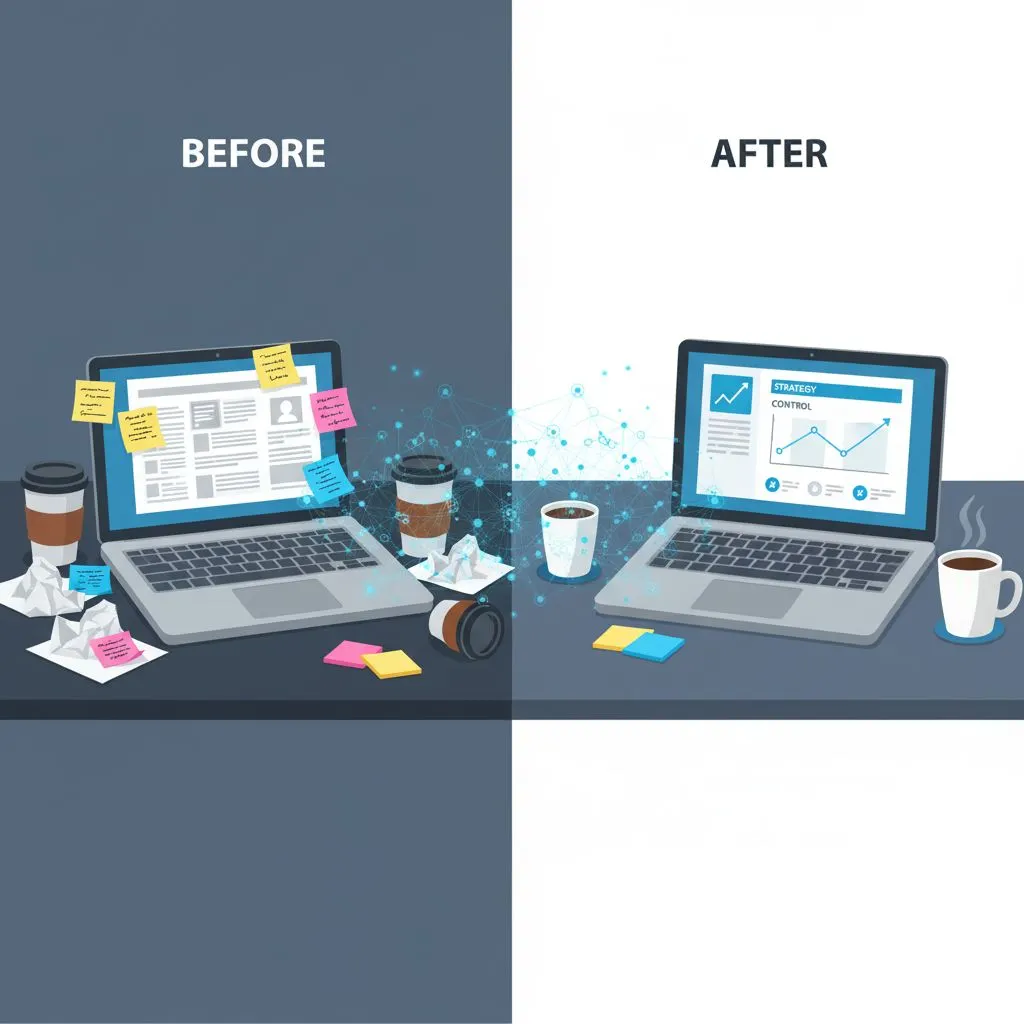
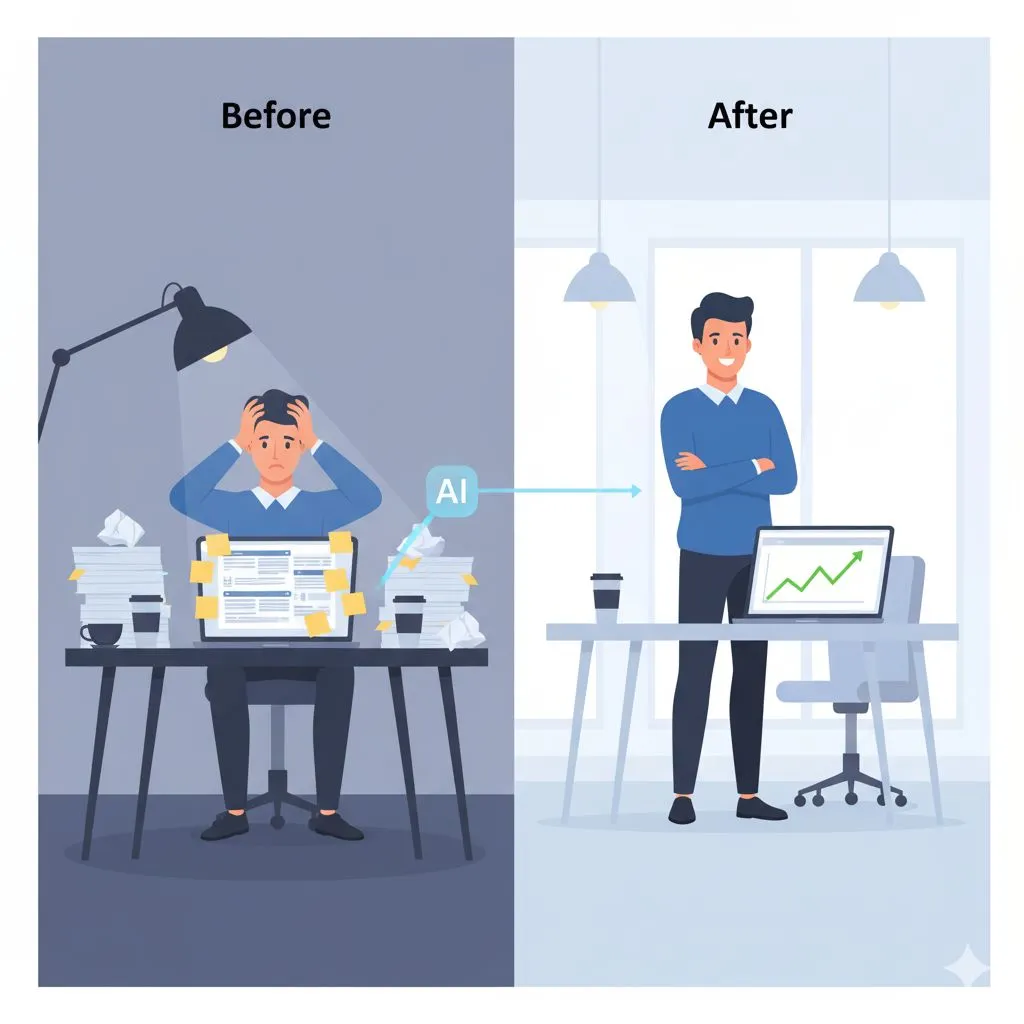
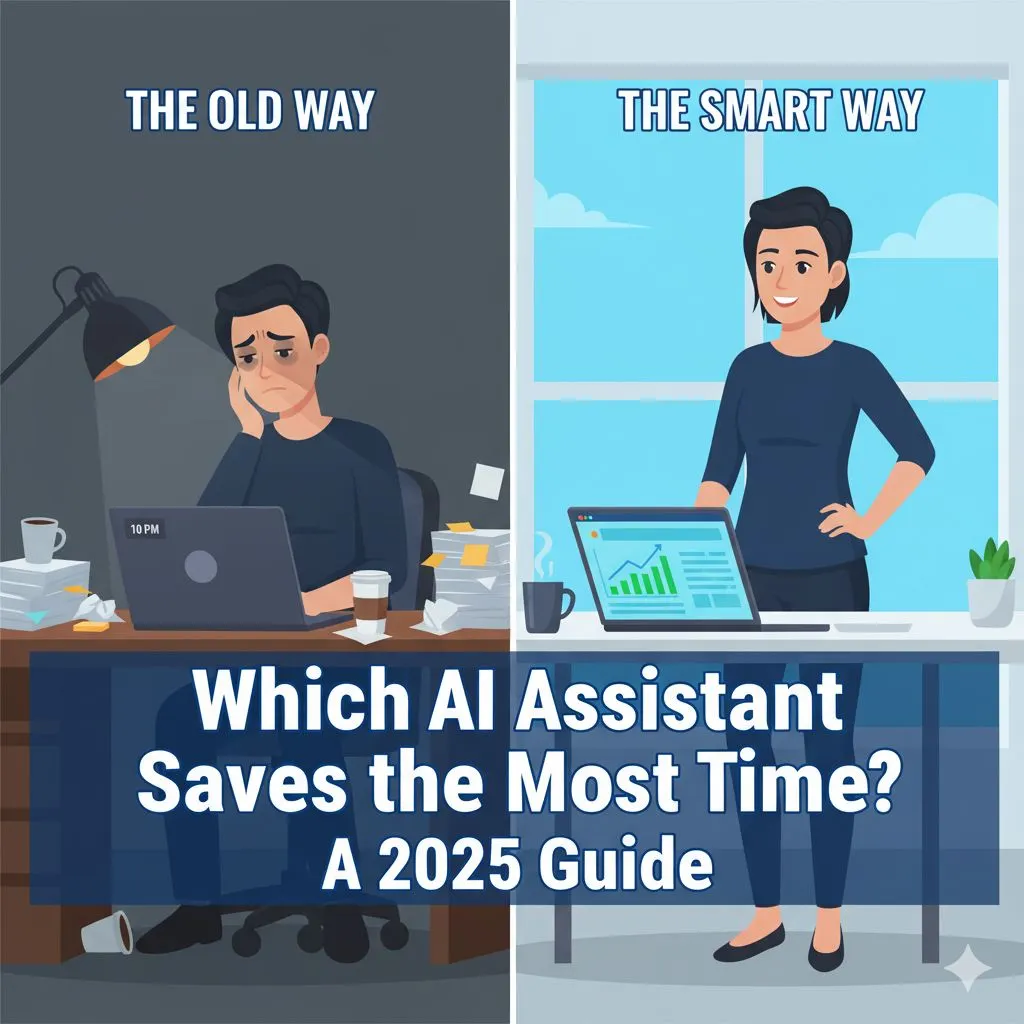
It is 8:00 PM. You are finally sitting down to do the "real work"—the strategy, the planning, the big-picture thinking that actually grows your business. But you’re exhausted. Why? Because you just spent the last nine hours trapped in the weeds. You’ve been answering repetitive emails, formatting blog posts, tweaking proposals, and putting out small fires that didn't require your expertise, just your time.
If this sounds familiar, you aren’t alone. For small business owners and solopreneurs, this is the default state of existence. You are ambitious, you have a vision, and you are willing to put in the work. But somewhere along the line, "working hard" morphed into "barely keeping up."
This is a crisis of business efficiency.
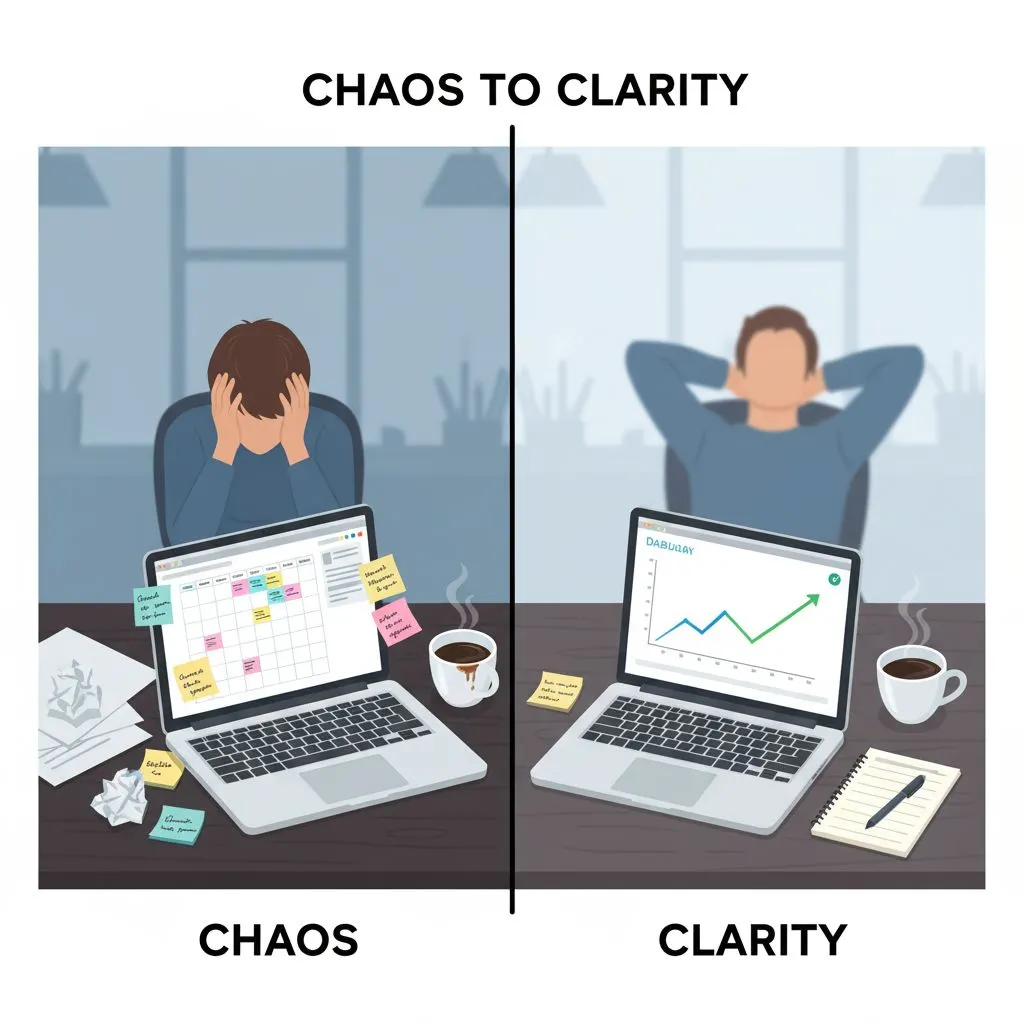
In the digital age, we often mistake busyness for productivity. We wear our exhaustion like a badge of honor, believing that if we are constantly moving, we are constantly growing. But movement isn't progress if you are running in circles. To compete with larger players without burning out, you don't need to work more hours; you need to identify where your workflow is breaking down. You need to find the bottlenecks. For a complete framework on deploying AI across every area of your business, read our ultimate guide to AI for small business.
The good news? We are living in the age of Artificial Intelligence. But we aren't talking about using AI to write a generic poem or a funny caption. We are talking about using expert-level AI strategies to dismantle the workflow gaps that are stealing your time and capping your revenue.
The Anatomy of a Bottleneck
Before we can fix the problem, we have to diagnose it. A bottleneck isn't just a difficult task. A bottleneck is a point of congestion in a system that slows down the entire process. In a manufacturing plant, it’s the machine that can’t keep up with the assembly line. In your business, that machine is usually you. Discover the exact tactics in our guide on how solopreneurs use AI to compete with larger teams.
How do you know if you have a workflow gap? Look for these three symptoms:
- The Dread Factor: Is there a task on your to-do list that you push back every single day? Usually, we procrastinate not because we are lazy, but because the task is high-friction. It requires heavy mental lifting for low reward.
- The "Groundhog Day" Effect: Do you find yourself typing the same email responses, explaining the same concepts to clients, or formatting the same type of document over and over? Repetition is the silent killer of business efficiency.
- The Information Silo: Does work stop when you step away from the computer? If a client can’t get an answer, a post can’t go live, or a project can’t move forward without your specific, manual input, you are the bottleneck.
The cost of these bottlenecks is higher than you think. It’s not just the hour you spent writing an email; it’s the "context switching" cost. Every time you switch from "CEO Mode" to "Admin Mode," it takes an average of 23 minutes to regain your focus. If you do that five times a day, you have lost nearly two hours of deep work—time that could be used to scale your business.
The "Big Three" Workflow Gaps
Most entrepreneurs think their business is unique, and while your brand and vision are unique, your operational problems likely fall into one of three specific buckets. These are the "Big Three" workflow gaps where business efficiency goes to die. Identifying which one hurts you the most is the first step toward reclaiming your time.
Gap 1: The Communications Trap
For many service-based businesses and agencies, communication is the primary product. You have to onboard clients, provide updates, answer questions, and chase invoices.
- The Bottleneck: You feel the need to personally craft every message to ensure it sounds "like you." You worry that automation will feel robotic, so you type out manual replies to similar inquiries.
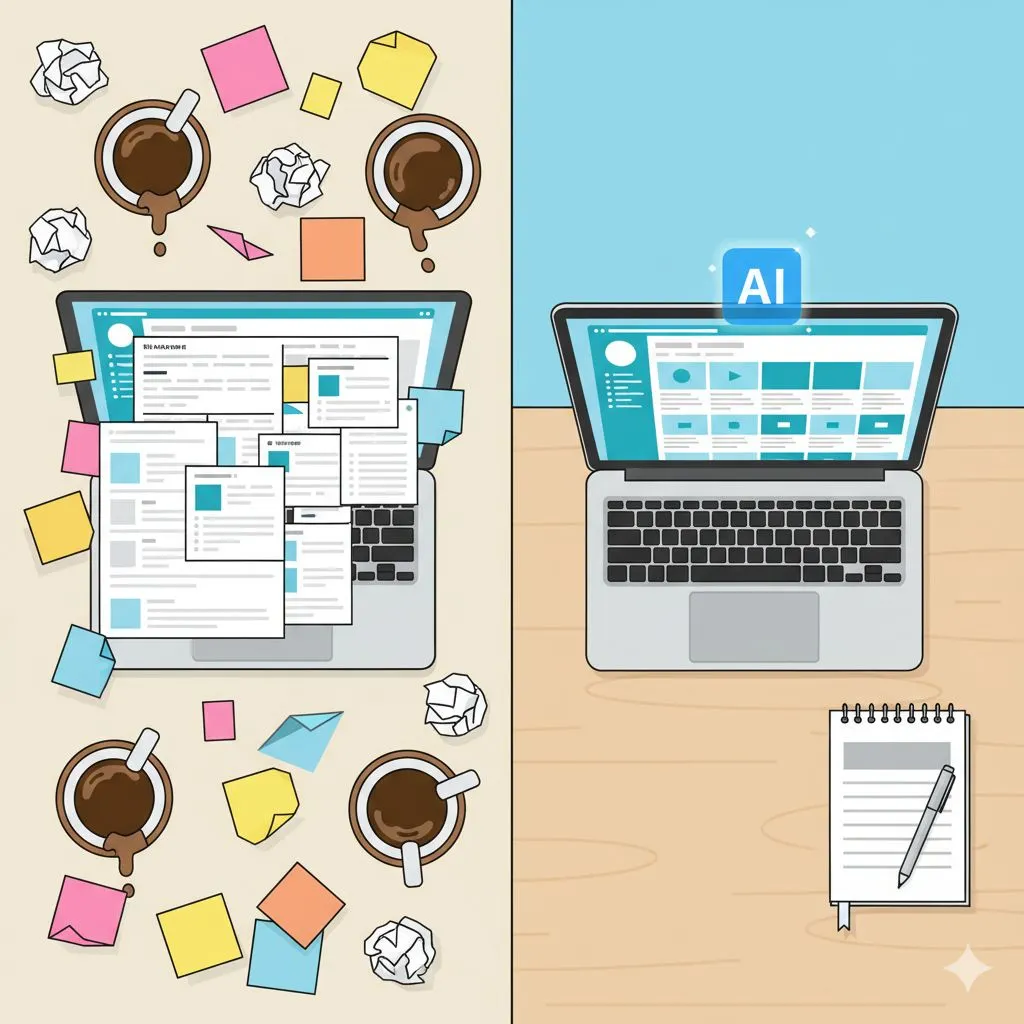
- The Result: Your inbox dictates your schedule. You start your day reacting to other people's needs rather than executing your own strategy. You become a highly paid secretary in your own company.
Gap 2: The Content Hamster Wheel
We all know that content is king. To build authority and trust, you need a consistent presence on LinkedIn, a newsletter, a blog, and social media.
- The Bottleneck: The gap between having an idea and hitting "publish" is massive. You have the concept, but then you get stuck drafting, editing, formatting, searching for hashtags, and resizing images.
- The Result: Inconsistency. You post five times in one week when you’re inspired, then go silent for a month when you get busy. Your audience loses track of you, and your brand authority suffers. You spend hours creating content that should have taken minutes, killing your ROI.
Gap 3: Strategic Paralysis
This is the most dangerous gap of all. It happens when you are so overwhelmed by data, research, and options that you fail to make a decision.
- The Bottleneck: You need to research a new market, analyze a competitor, or learn a new software tool. You open twenty browser tabs, read three articles, and get overwhelmed by the sheer volume of information.
- The Result: You default to the status quo. You delay launching the new offer or upgrading your pricing because you "need to do more research." This analysis paralysis stalls growth and keeps you playing small.
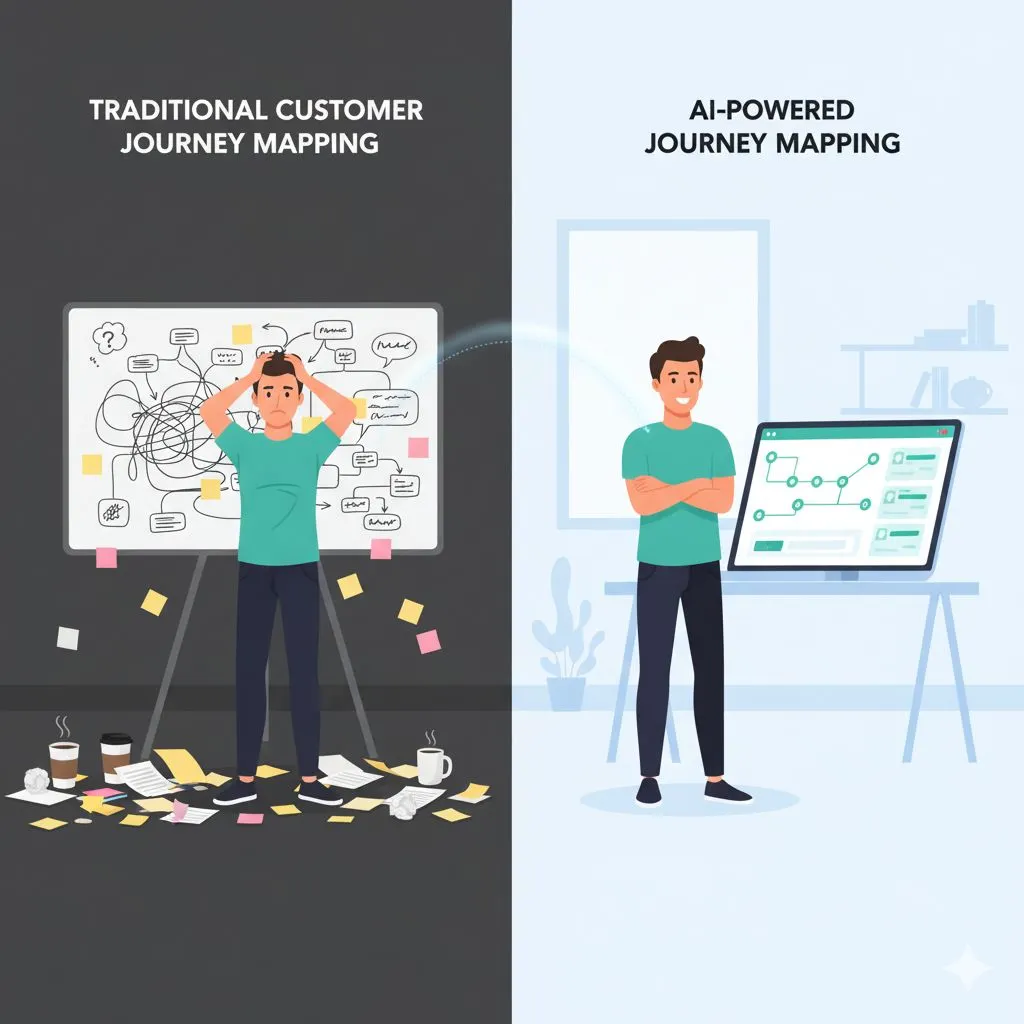
These gaps are not personal failures; they are structural flaws. The "hustle culture" solution is to wake up earlier and work harder. The intelligent solution is to deploy tools that bridge these gaps for you. This is where Expert AI Prompts transition from a novelty to a necessity.
Mapping the Fix — From Operator to Architect
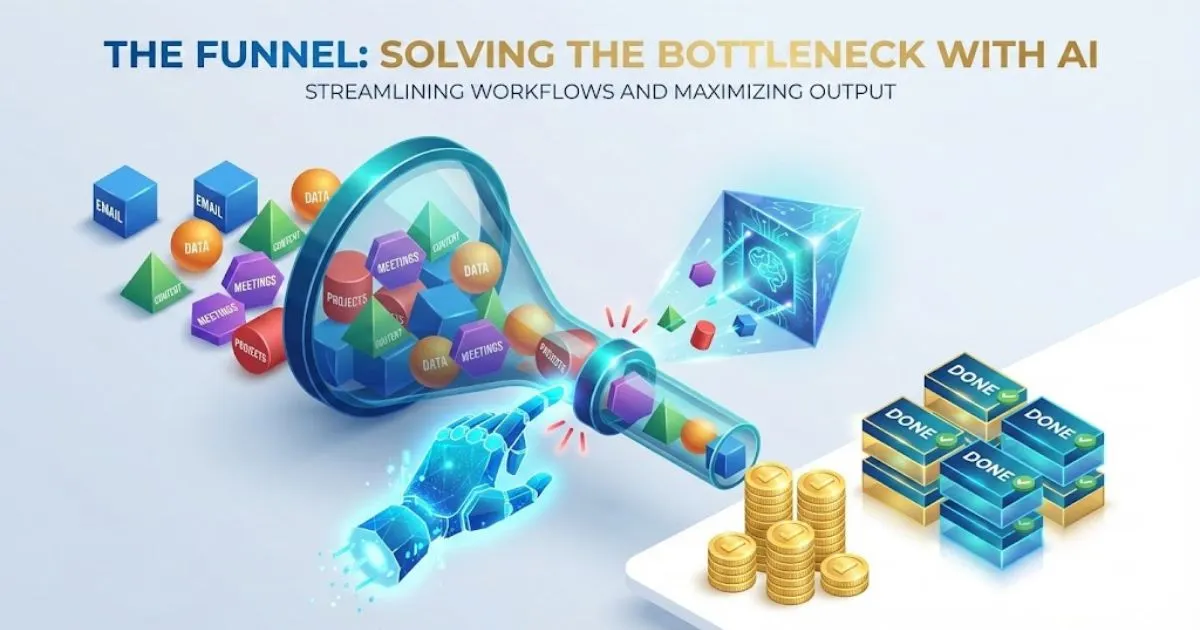
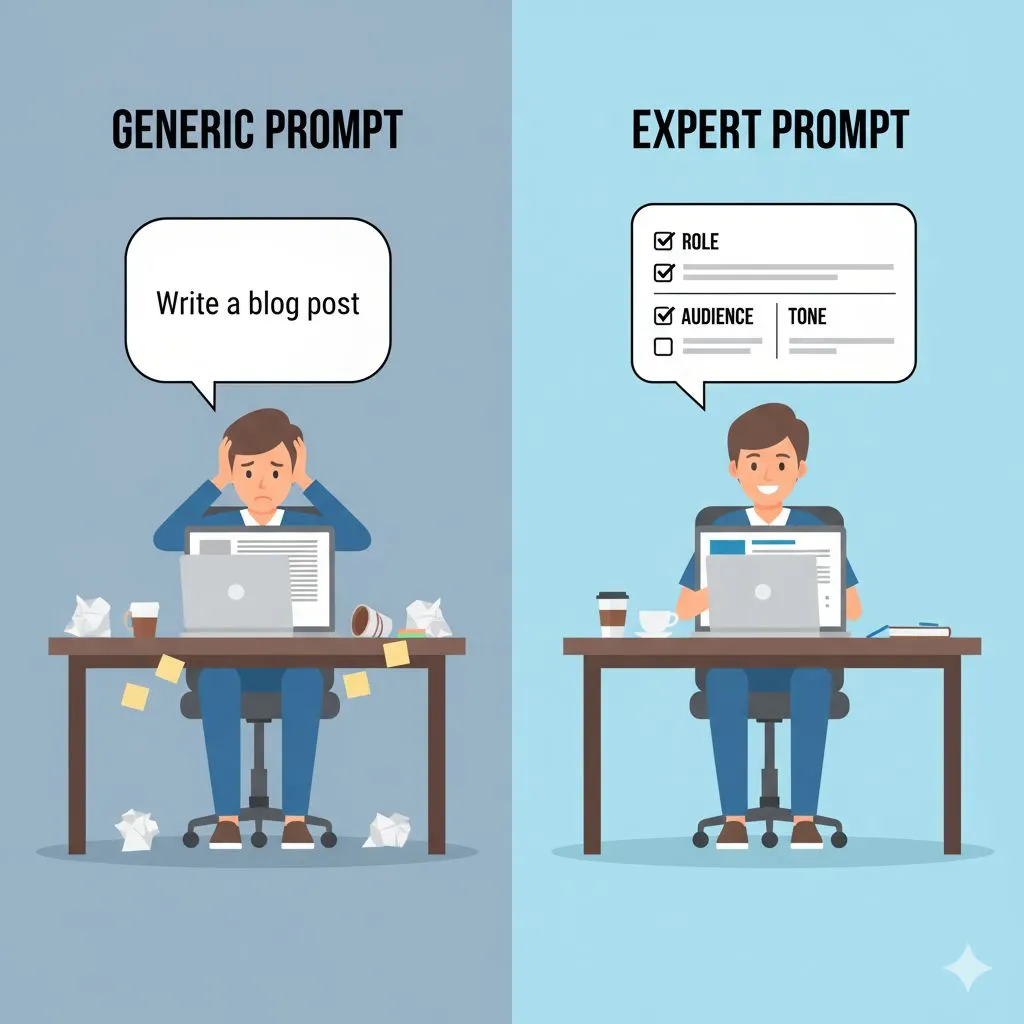
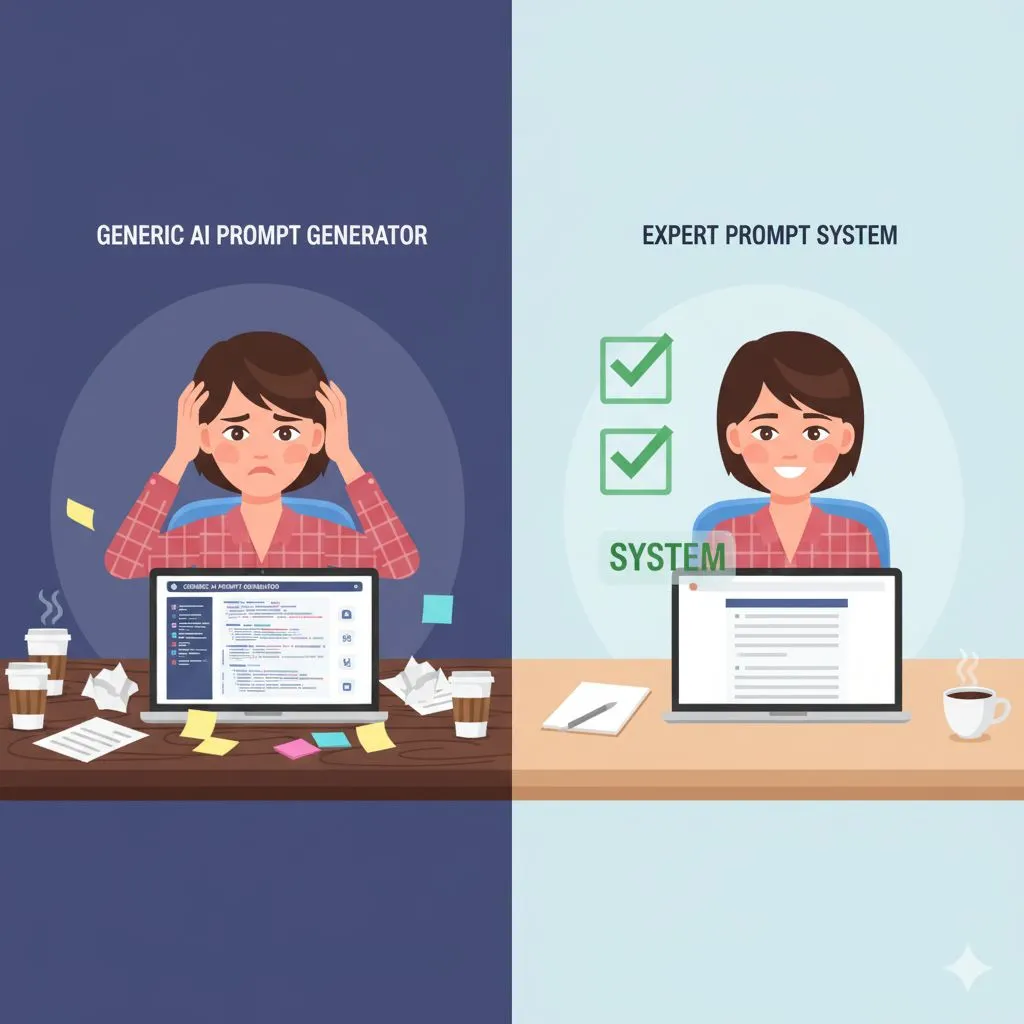
To fix these bottlenecks, you must shift your mindset. Stop viewing AI as a tool that generates text, and start viewing it as a junior employee that requires clear instructions. When you hire an assistant, you don't say, "Write something about marketing." You give them a template, a tone of voice guide, and a specific objective. You must treat your AI tools with the same strategic rigor.
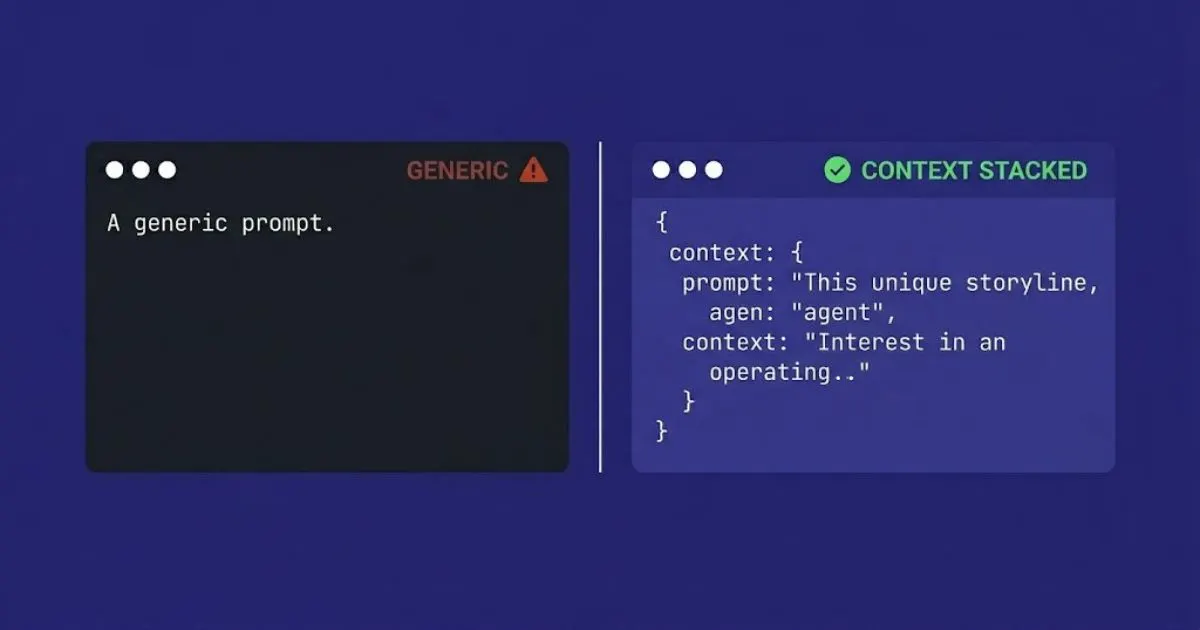
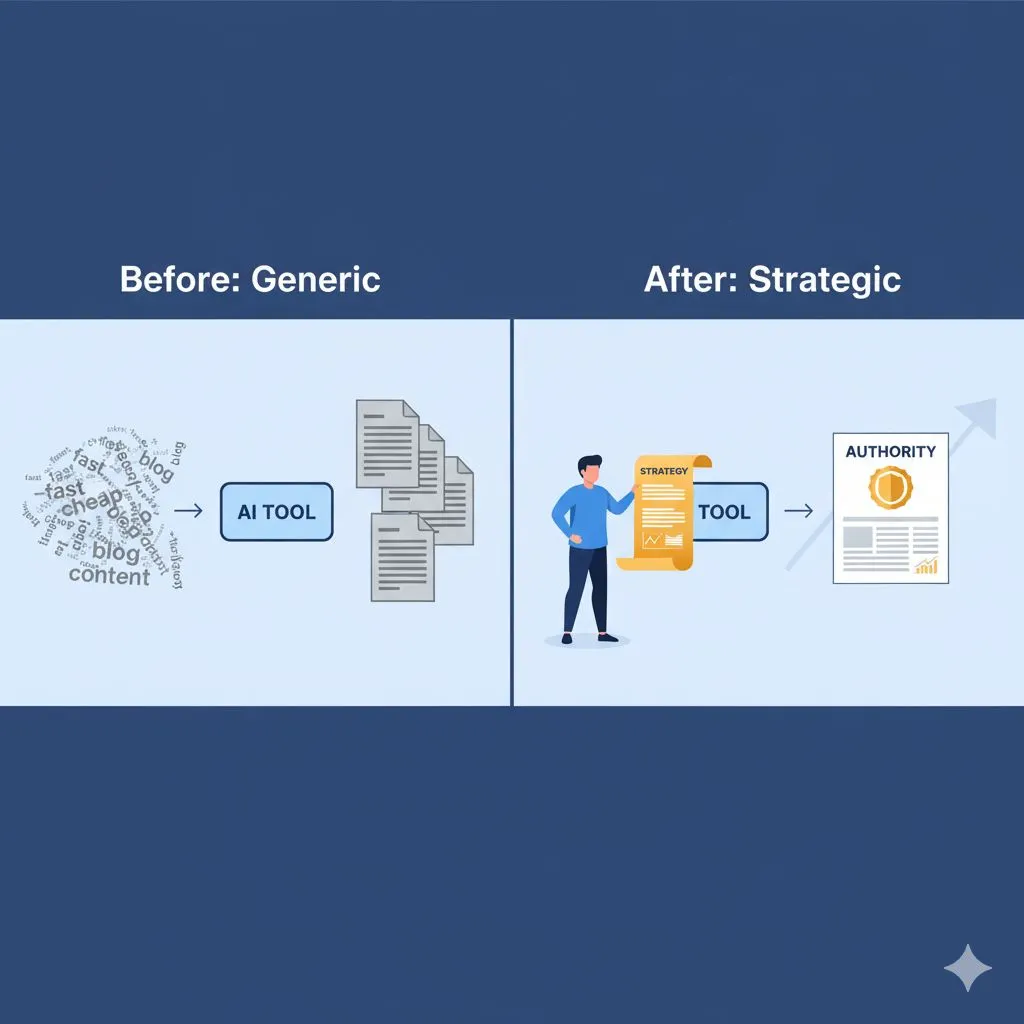
This is the core difference explored in our deep-dive on generic vs strategic AI prompts — and it changes everything about your results. A generic prompt gives you fluff; a structured, expert prompt gives you a usable asset.
Fixing the Communications Trap
Instead of typing out the same "Welcome Aboard" email or "Project Delay" notification, you can use AI to standardize your empathy.
- The AI Fix: Create a library of "Prompt Stacks" for common scenarios.
- Example: Instead of asking ChatGPT to "write an email to a client," use a structured prompt that defines the Persona (Professional Account Manager), the Context (Project is delayed by 2 days due to software update), and the Tone (Apologetic but confident).
- The Efficiency Gain: You transform a 15-minute anxiety-inducing task into a 30-second review process. You aren't removing the human element; you are using AI to draft the structure so you can simply polish the nuance. To get a full library of done-for-you email and communication prompts, explore our Prompt-Led Email Mastery prompt pack.
Fixing the Content Hamster Wheel
The goal here is not to have AI do all the thinking, but to have it do the heavy lifting of structure and formatting.
- The AI Fix: Use prompts that act as "Content Multipliers."
- Example: Take one core idea—a thought you had in the shower about industry trends. Feed that idea into a prompt designed to generate a LinkedIn post, a newsletter intro, and three short-form video scripts simultaneously.
- The Efficiency Gain: You move from creating one piece of content in an hour to creating a week’s worth of content in 20 minutes. The bottleneck of "formatting" is gone, leaving you to focus purely on the creative spark.
Our AI Prompts for Social Media Managers toolkit gives you ready-to-run prompts that do exactly this for every platform.
Fixing Strategic Paralysis
AI is the ultimate research assistant. It can synthesize hours of reading into minutes of insight.
- The AI Fix: Summarization and Framework generation.
- Example: Paste a complex competitor article or a new industry regulation into your AI tool. Use a prompt that asks for: "A 3-point summary of the key risks, 2 opportunities for my specific business model, and a recommended action plan."
- The Efficiency Gain: You skip the "information overload" phase and jump straight to the "decision making" phase. You are no longer drowning in data; you are surfing on top of it.
By applying these targeted fixes, you aren't just saving time; you are upgrading the quality of your output. You are ensuring that every email, every post, and every decision creates the perception of a larger, more capable team—even if it’s just you behind the screen.
The Implementation Framework
Knowing how AI can help is different from actually integrating it into your daily chaos. If you try to overhaul your entire business workflow overnight, you will just create a new bottleneck: learning curve overwhelm.
To truly achieve business efficiency, you need a systematic approach. We call this the "Audit, Automate, Optimize" loop.
For more step-by-step AI workflow guides, visit our implementation workflows and how-to guides hub.
Step 1: The 3-Day Time Audit
For the next three days, keep a notepad on your desk. Every time you switch tasks, write down what you are doing. Be specific. Don't write "working"; write "searching for an old invoice," "formatting blog headers," or "replying to Jim about the meeting time."
At the end of three days, highlight the tasks that you did more than three times. These are your targets.
Step 2: The "One Prompt" Test
Pick one highlighted task. Just one. Do not try to fix your whole business. Let’s say it’s "Client Monthly Updates."
Find or build a robust, expert-level prompt specifically for this task. Test it. Run it once. Did it save you time? Did the quality hold up? Tweak the prompt until the output is 90% ready to go.
Step 3: Standardize the Asset
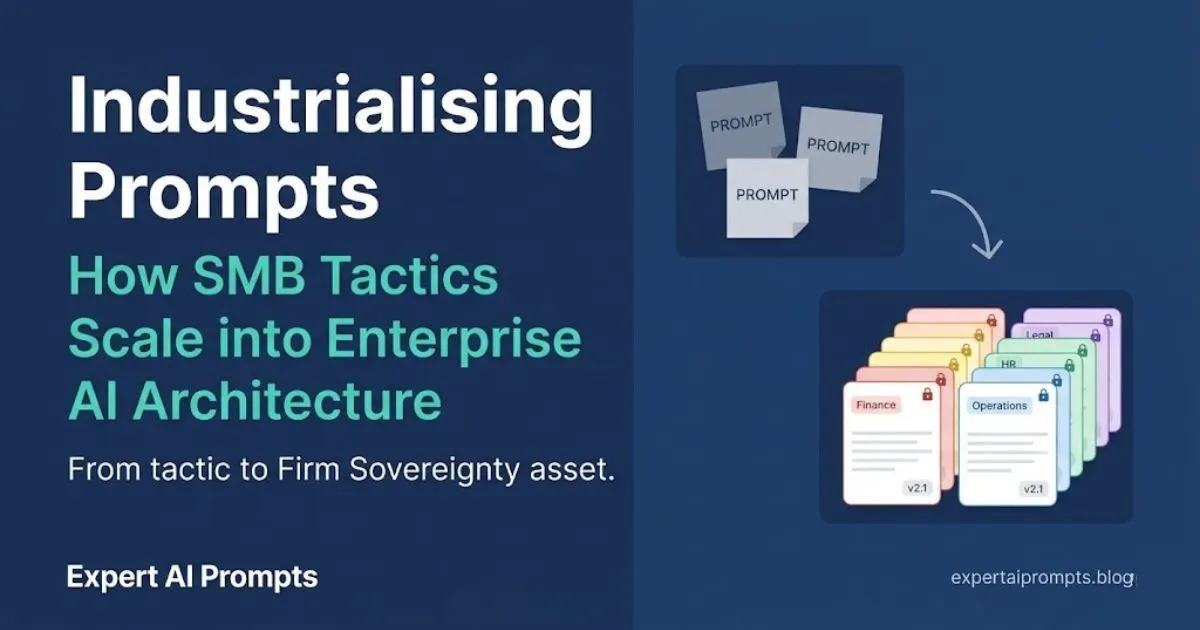
Once you have a prompt that works, save it. Don't let it disappear into your chat history. Save it in a document or a prompt management system. Name it clearly (e.g., "CLIENT_UPDATE_GENERATOR").
Now, the next time that task arises, you don't "do" the work; you "run" the prompt. You have officially automated a bottleneck.
Conclusion: From Operator to Strategist
The difference between a struggling small business and a scaling enterprise is rarely the quality of the product—it is almost always the efficiency of the operations. As a business owner, your time is your most finite resource. Every minute you spend fighting a bottleneck is a minute you steal from your future growth.
You don't need a bigger team to compete with the big players. You don't need more hours in the day. You need to stop accepting friction as a normal part of your workday.
By identifying your workflow gaps and plugging them with expert, strategic AI solutions, you do more than just clean up your to-do list. You liberate your mind. You regain the mental bandwidth to innovate, to strategize, and to remember why you started this business in the first place.
Don't let the "busy work" bury your ambition. The tools are ready. The strategy is clear. The only question is: are you ready to stop spinning your wheels and start scaling?
Before you dive in, explore all free AI resources — 11 tools designed to help you reclaim time and remove bottlenecks today.
Ready to pinpoint exactly where you’re losing time and money?
Don’t guess—know for sure. Download our free resource to audit your workflow and find the gaps today.
Get Your Free Generic to Expert AI Content Audit Checklist Here
Ready to go deeper? See all 30 prompt packs and pricing — industry-specific toolkits built to eliminate bottlenecks and scale your output.
Further Reading
Ultimate Guide to AI for Small Business
5 AI Business Tools to Reclaim Your Week
How to Use a Personal AI Assistant to Delegate Tasks