Should You Hire an AI Marketing Agency or DIY?
Should You Hire an AI Marketing Agency or DIY?
Jan 28, 2026
If you are running a small business or a lean team, you likely wake up to the same reality every morning: your to-do list is longer than the hours in the day. You are the CEO, the strategist, the customer support lead, and, more often than not, the marketing department.
If you're mapping out where AI fits into every part of your strategy, Your Complete AI Marketing Strategy Guide lays out the full picture for small teams — from content to campaigns to automation.
You know that Artificial Intelligence (AI) is the lever that could finally lift the weight off your shoulders. You see the headlines, the LinkedIn posts, and the promises of "content on autopilot." But moving from knowing AI exists to actually using it to grow your business is a massive leap.
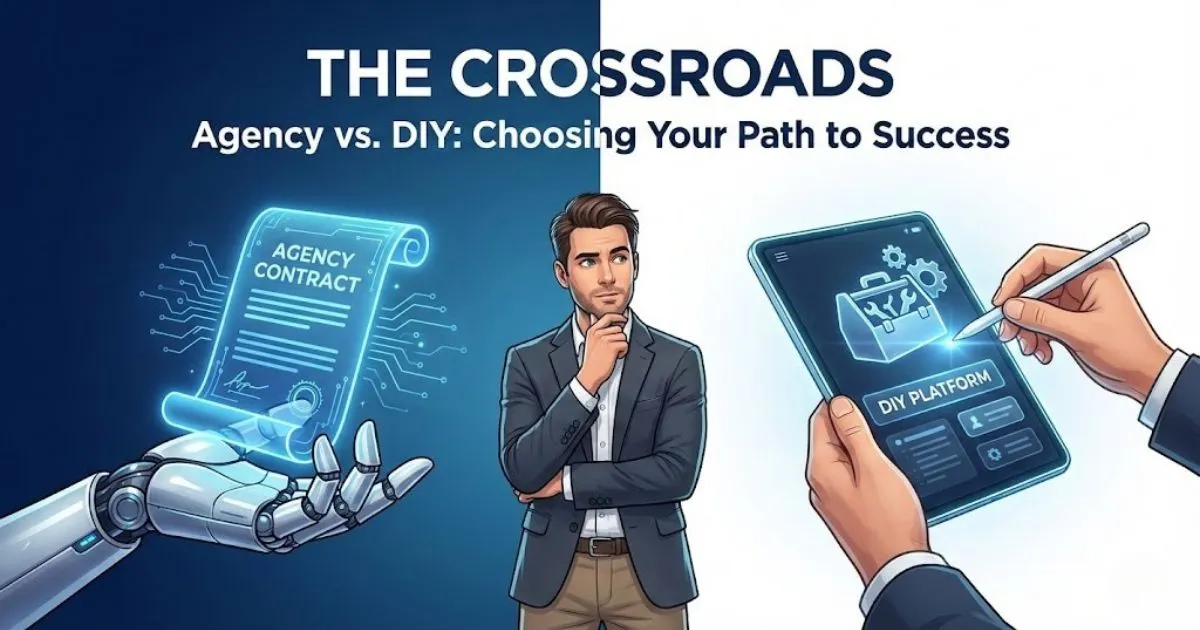
This brings most ambitious entrepreneurs to a crossroads. Do you hire a specialized ai marketing agency to handle everything for you? Or do you roll up your sleeves, subscribe to the tools, and figure it out yourself (DIY)?
For someone like you—focused on efficiency, ROI, and reclaiming your time—this isn’t just a financial decision. It’s a strategic one. Make the wrong choice, and you either burn cash you need for growth or burn out trying to learn complex prompt engineering.
In this guide, we are going to break down the pros, cons, and hidden costs of both options. We will also explore a third path that might just be the "Goldilocks" solution for the overworked entrepreneur.
Option A: Hiring an AI Marketing Agency
First, let’s clarify what we mean by an ai marketing agency. These aren't just traditional agencies that happen to use ChatGPT to write captions. A true AI marketing agency builds its entire infrastructure around automation, data analysis, and generative content. They use enterprise-level tools to automate workflows, segment audiences, and produce content at a scale that a human team simply cannot match.
For a business owner tired of the daily grind, the promise is intoxicating: Hand over the keys, and let the machines (and their handlers) drive growth.
The Pros: Why You Would Hire Them
1. Immediate Access to Sophisticated Tech Stacks
AI is moving fast. Keeping up with the latest Large Language Models (LLMs), image generators, and automation integrators (like Zapier or Make) is a full-time job. An agency already has these stacks built. By hiring them, you bypass the technical setup and jump straight to the output.
2. True "Done-For-You" Time Reclamation
The biggest asset an agency sells isn't marketing; it's time. If you are spending 15 hours a week writing blogs, crafting emails, and tweaking ad copy, outsourcing this releases you to focus on high-level strategy or business development. For a small team of 2–10 people, removing the marketing execution bottleneck can be transformative.
3. Scalability Without the Headcount
Scaling a human team is expensive and risky. You have salaries, benefits, and training. An AI agency allows you to scale your output—going from one blog post a week to five, plus daily social content—without adding a single permanent employee to your payroll.
The Cons: The Friction Points
1. High Monthly Retainers
Expertise comes at a premium. While AI reduces their labor costs, agencies often don't pass those savings fully to the client because they are charging for the value of the strategy. You might be looking at retainers ranging from $2,000 to $10,000+ per month. For a small business watching cash flow, this is a significant commitment.
2. The "Generic" Trap & Loss of Voice
This is a common complaint among business owners who care deeply about their brand. AI, by default, reverts to the mean—it produces safe, average content. Unless the agency spends significant time training their models on your specific voice, tone, and history, the content can feel detached. It might look professional, but does it sound like you? Often, the answer is "not quite." For a deeper comparison of what agency-level AI marketing looks like versus going it alone, see Is an AI Marketing Agency Worth It for Small Business.
3. Dependency
When you outsource the "brain" of your marketing, you build a dependency. If you part ways with the agency, you don't just lose the labor; you lose the prompts, the workflows, and the strategic setup. You aren't building an internal asset; you are renting an external one.
The Verdict on Agencies
Hiring an ai marketing agency is the right move if you have a healthy budget and zero desire to understand the mechanics of how the marketing is built. It is for the business owner who wants to write the check and see the graph go up, accepting that the "voice" might be slightly less personal in exchange for volume and speed.
But what if you aren't ready to hand over that much cash—or that much control?
Option B: The DIY Route (Learning AI Yourself)
If the idea of a $5,000 monthly retainer makes you flinch, or if you are the type of entrepreneur who believes "nobody can sell my business better than I can," then the DIY route is your natural inclination.
The DIY approach involves signing up for tools like ChatGPT, Claude, Jasper, or Midjourney and integrating them into your daily workflow. It’s the path of the resourceful solopreneur who wants to stay lean and agile.
The Appeal: Why You Would Do It Yourself
1. Cost Efficiency
This is the most obvious driver. A ChatGPT Plus subscription is $20 a month. Even with a suite of other AI tools (image generation, automation), your total tech stack might cost less than $100 a month. Compare that to an agency retainer, and the ROI potential looks massive. For a bootstrapped business, keeping overhead low is survival.
2. Total Control Over Brand Voice
No one knows your customer’s pain points like you do. No one knows the history of your business like you do. When you are the one driving the AI, you can catch hallucinations or "robotic" phrasing instantly. You can inject personal anecdotes, specific industry insights, and the emotional nuance that an external agency account manager might miss.
3. Agility and Speed
Need a newsletter out now because of breaking industry news? If you are DIY-ing, you open your tool, prompt it, edit it, and hit send. With an agency, you might have to submit a request, wait for a draft, provide feedback, and wait for the final version. In the digital economy, speed often wins.
The Reality Check: The Hidden Struggles
However, the "Magic Button" fantasy of AI often crashes into the wall of reality.
1. The "Blank Page" & Prompt Fatigue
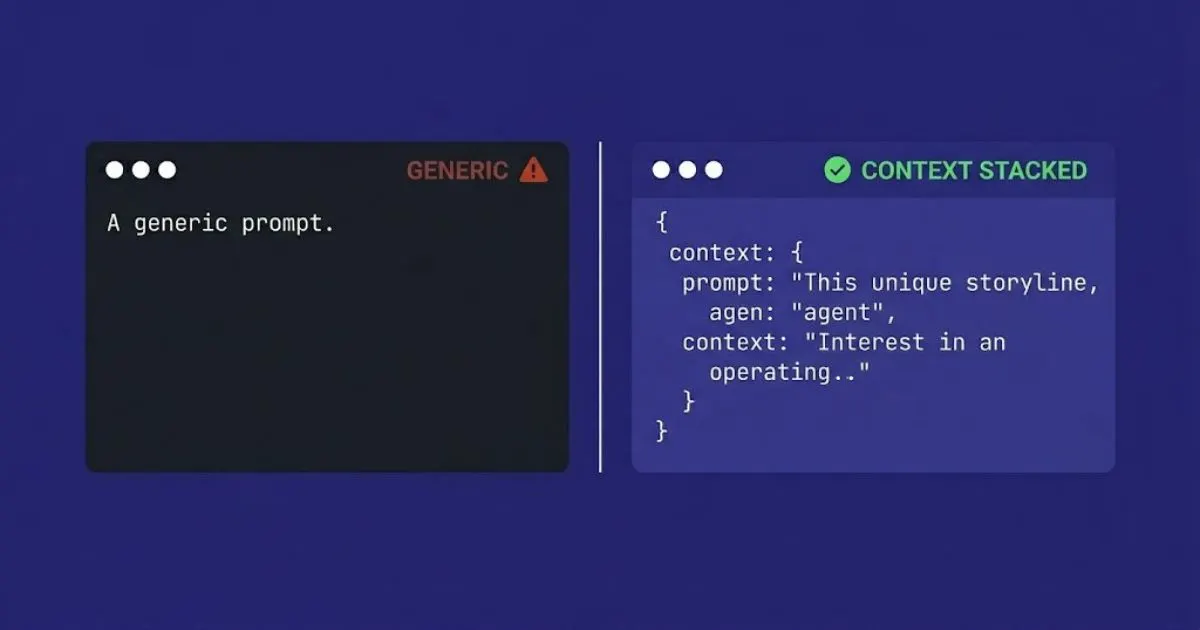
You sit down to write a marketing campaign. You open the AI chat box. The cursor blinks. You type: "Write a marketing plan for my consulting business."
The AI spits out a generic, fluffy list of tactics that looks like it was copied from a Business 101 textbook.
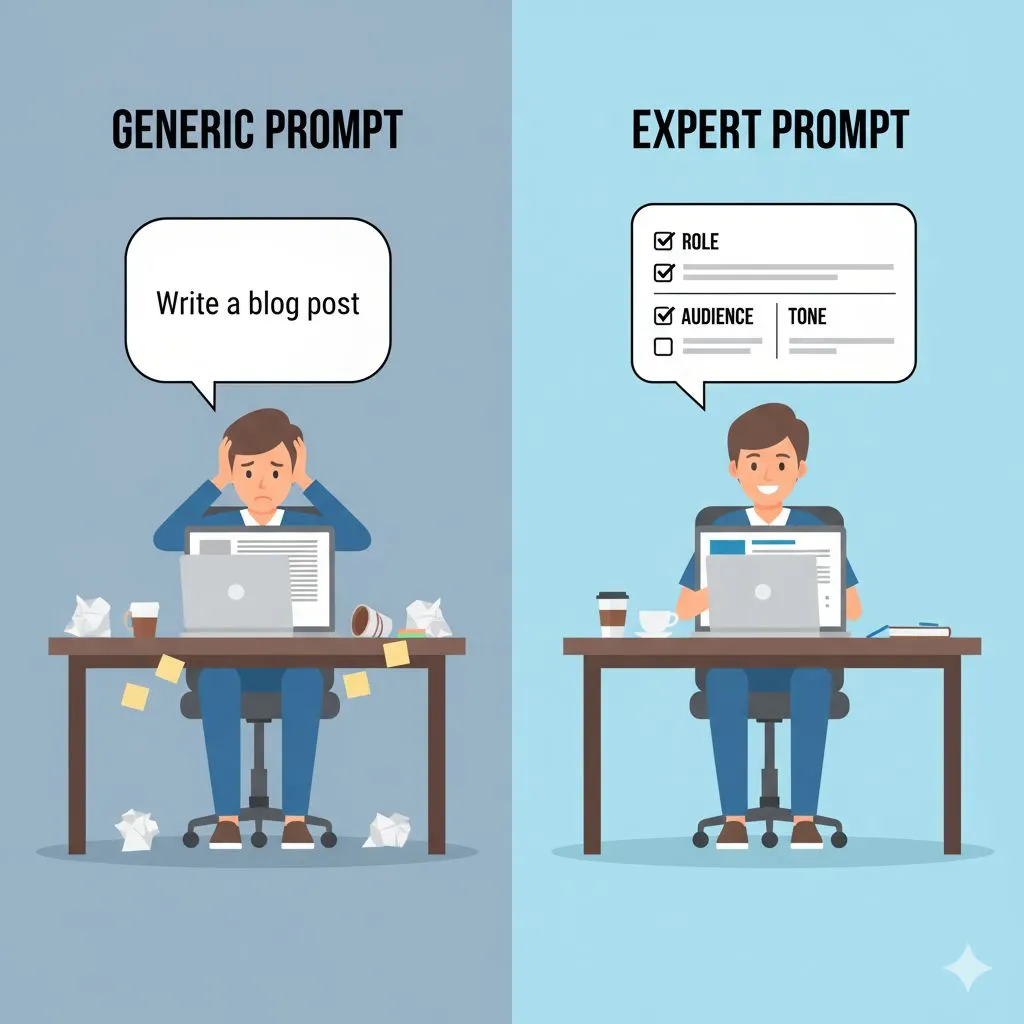
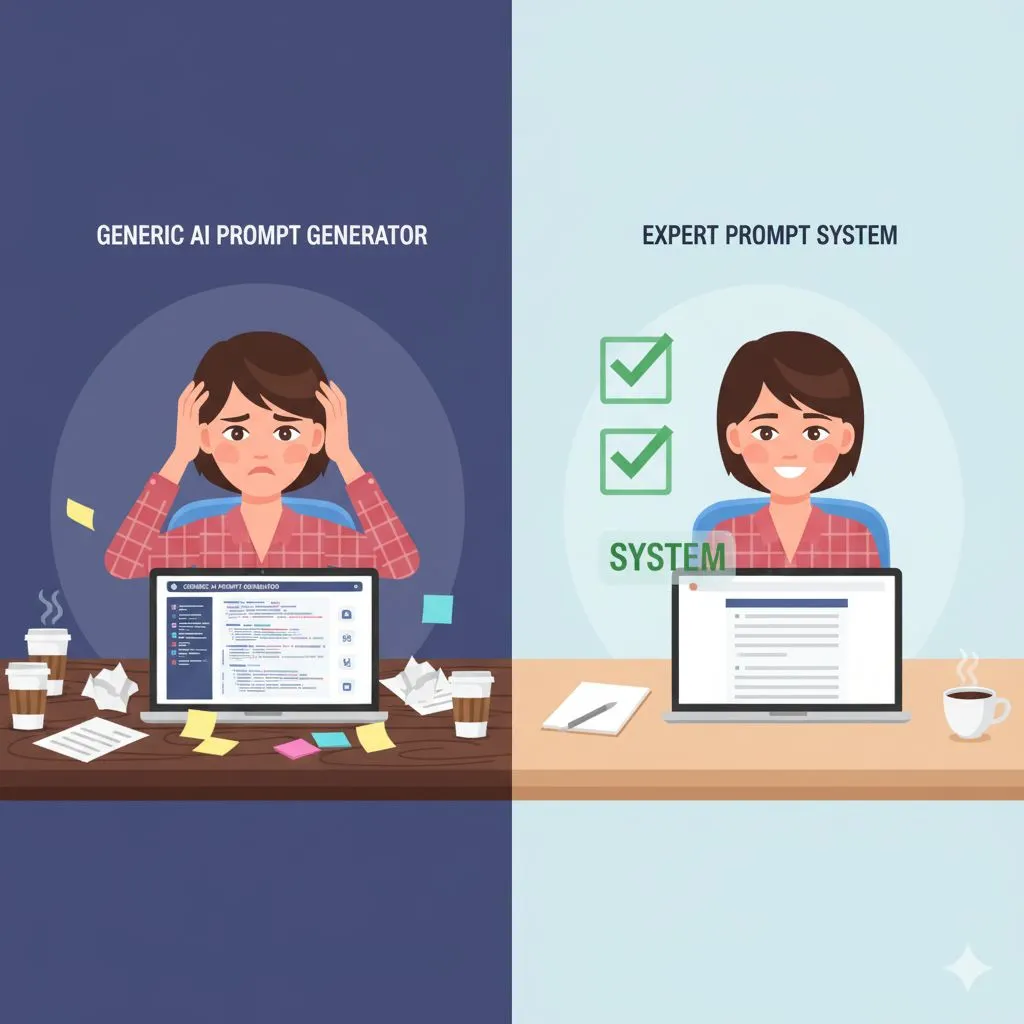
This is the DIY trap. The quality of the output depends entirely on the quality of the input (the prompt). Learning to structure prompts—giving context, constraints, tone guidelines, and examples—is a skill in itself. It takes time to master, and for an already overworked business owner, it can feel like just another task on the pile.
The Entrepreneur's Playbook for Prompt Engineering is built specifically to shortcut this learning curve — it shows you the exact prompt structure that consistently produces expert-level output.
2. The Time Sink of Editing
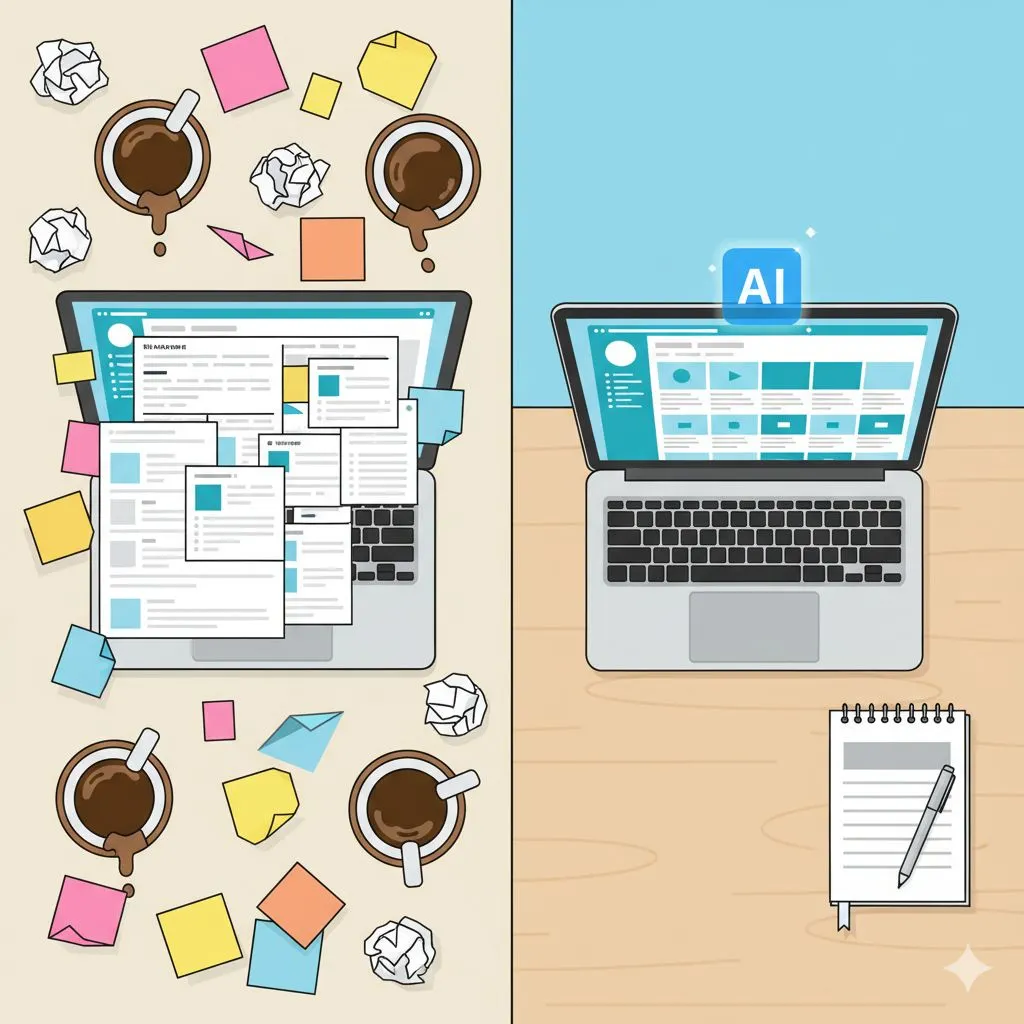
A common frustration for DIY-ers is the "Editing Loop." The AI generates 800 words. It’s okay, but not great. You spend 45 minutes rewriting it. At that point, you wonder, "Would it have been faster to just write this from scratch?"
If you don't have a proven system or framework, AI can sometimes add time to your workflow rather than reduce it.
3. Inconsistency
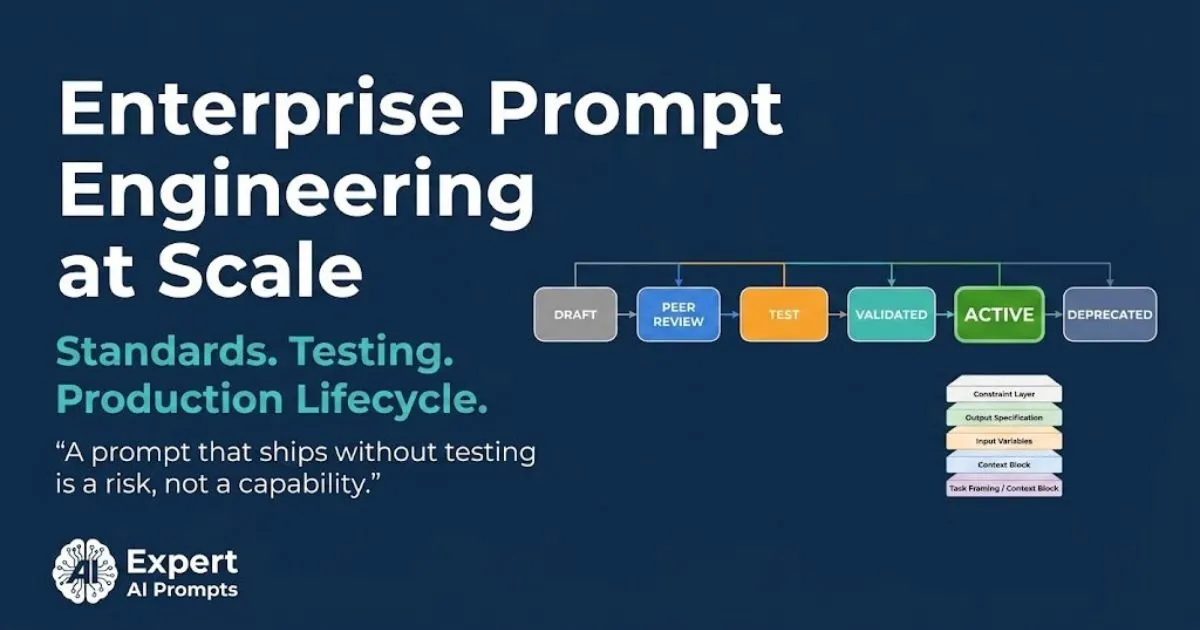
One day, the AI gives you gold. The next day, using a similar prompt, it gives you garbage. Without a library of standardized, tested prompts, your marketing output becomes inconsistent. This inconsistency can hurt your brand credibility—one of the very things you are trying to build.
The Verdict on DIY
The DIY route is ideal for the cash-strapped but time-rich entrepreneur (a rare breed) or the tech enthusiast who enjoys tinkering. But for Alex Rivers—the persona who is ambitious but already stretched thin—pure DIY can often lead to "tool fatigue," where you are paying for subscriptions you rarely use because you haven't figured out how to fit them into your workflow efficiently.
The Critical Comparison: ROI, Time, and Brand Integrity
To make the best decision for your business, we need to move beyond feelings and look at the hard factors: resources, quality, and return on investment. Let’s break down the Agency vs. DIY battle across three critical dimensions.
1. The Cost Analysis
- Agency: High fixed cost. You are paying for labor, software, overhead, and profit margin. However, the cost is predictable.
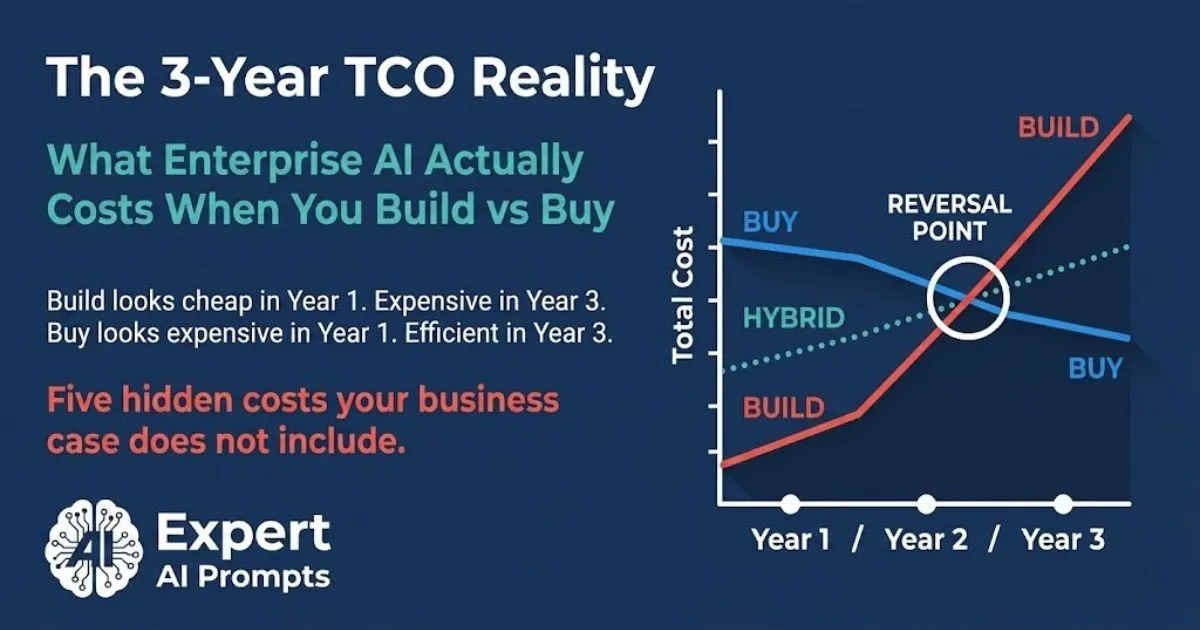
- DIY: Low monetary cost, but high opportunity cost. If your hourly rate as a business owner is $100/hour, and you spend 10 hours a week struggling with prompts, that "cheap" DIY solution is actually costing you $4,000 a month in lost productivity.
The Insight: If you cannot execute the DIY strategy efficiently (under 2 hours a week), the "savings" are an illusion.
For a detailed side-by-side breakdown, see Solopreneur Marketing AI System vs Hiring a VA — ROI Guide, which quantifies the real cost difference across common small business scenarios.
2. Speed of Execution vs. Quality of Output
- Agency: Slow start-up (onboarding takes weeks), but consistent execution once live. The quality is generally "Good to Very Good," but rarely "Deeply Authentic" without massive input from you.
- DIY: Instant start-up, but inconsistent execution. The quality swings wildly from "Amazing" to "Unusable" depending on your energy levels and prompting skills that day.
The Insight: Agencies offer reliability; DIY offers potential brilliance mixed with potential failure.
3. Brand Authenticity and Long-Term Value
This is the most subtle but dangerous factor.
- Agency: If the agency relies on generic templates, your brand begins to sound like everyone else using AI. You risk becoming "content noise."
- DIY: You retain your soul, but you might lack the strategic polish. You might have the voice, but not the marketing framework (AIDA, PAS, StoryBrand) to convert that voice into sales.
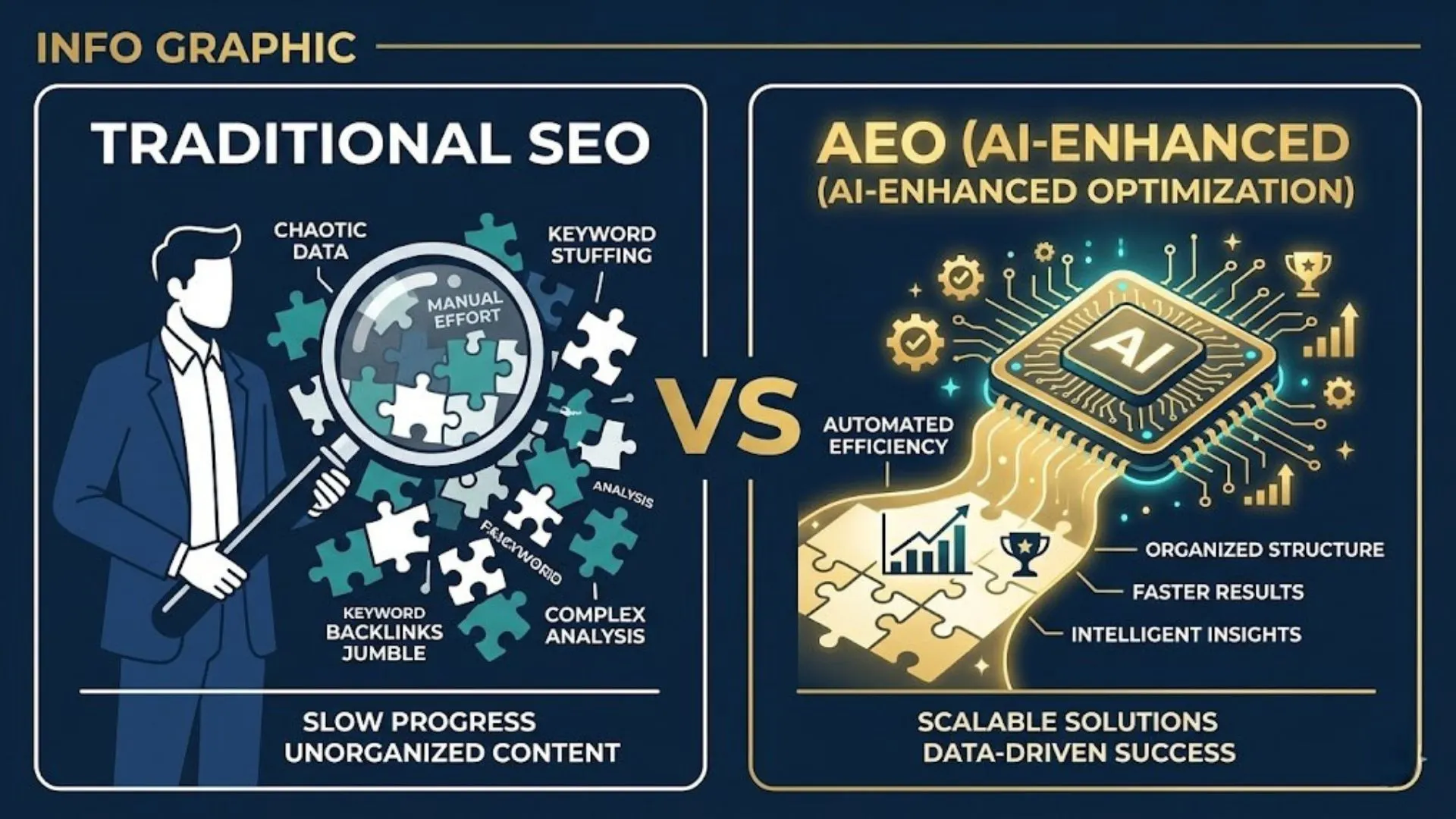
The Insight: The ideal scenario is a solution that combines the strategic framework of an agency with the authentic voice and cost-savings of DIY.
Does such a middle ground exist?
Option C: The Strategic DIY (Hybrid) Approach
There is a third option that is rapidly becoming the secret weapon for scaling small businesses. It is called Strategic DIY, or "Agency-Level DIY."
This approach recognizes a fundamental truth: You don't need the agency's people; you need the agency's processes.
See how this compares in practice: DIY Prompt Engineering vs Expert AI Prompts — Pricing Analysis walks through the exact cost and quality differences between building your own prompts versus using a proven expert library.
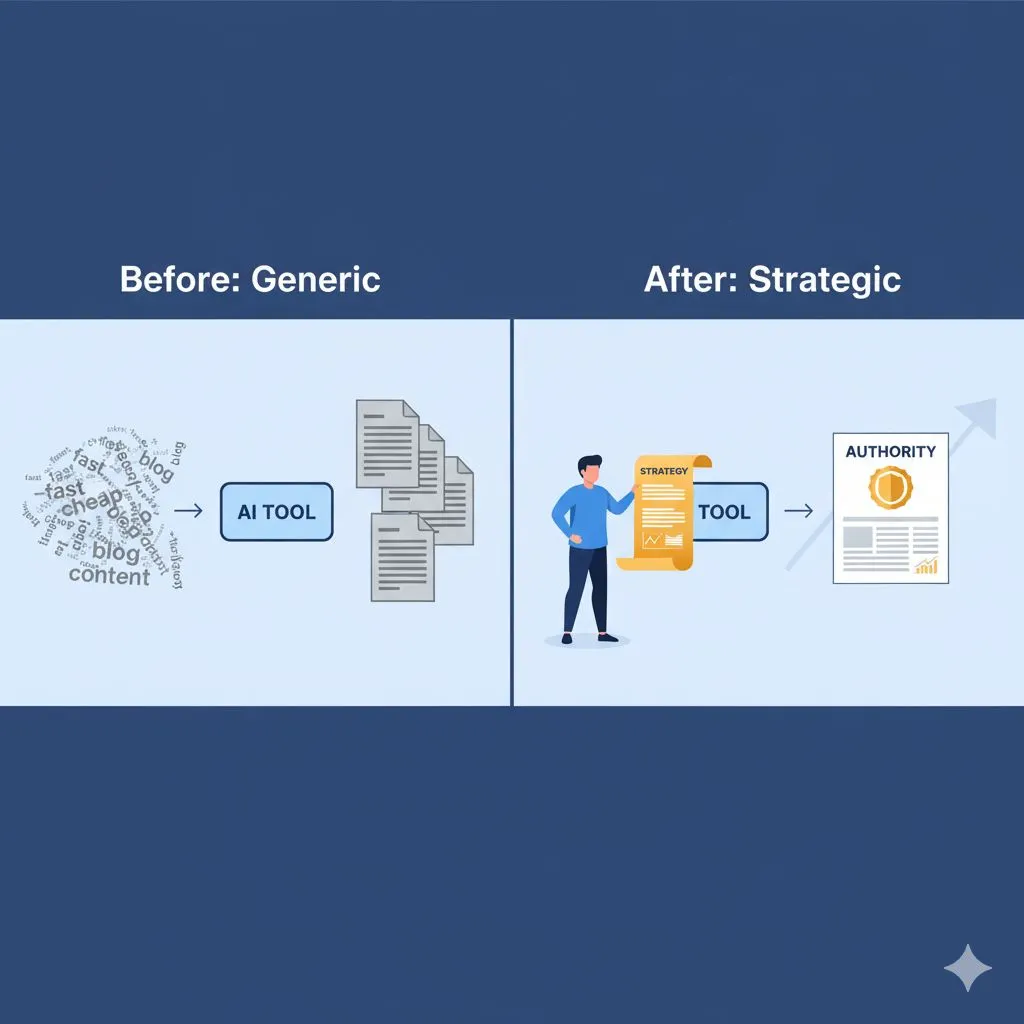
AI models like GPT-5 or Claude are powerful enough to act as senior marketers, if they are given expert instructions. The gap between a frustrated DIY-er and a high-performing agency isn't the software—it's the prompts.
Bridging the Gap with Expert Prompts
Imagine having a library of prompts that were written by expert copywriters and strategists. Instead of typing "Write an email for my new product," you paste in a structured, 500-word prompt that includes:
- Contextual constraints.
- Customer persona definitions.
- Specific persuasion frameworks.
- Tone modifiers.
Suddenly, the AI isn't guessing; it's executing a strategy.
This is exactly what Expert AI Prompts delivers across 30 industries. Browse all 30 industry-specific Prompt Packs and find the toolkit built for your business type.
Why This Fits the "Alex Rivers" Persona
For the ambitious, overworked business owner, this hybrid model offers the best of both worlds:
- Cost: You pay for the prompt library once, which is a fraction of a monthly agency retainer.
- Control: You are still the one clicking "generate," so you maintain final approval on your brand voice.
- Efficiency: You eliminate the "blank page" problem. You aren't tinkering; you are executing. You get the agency-quality output in minutes, not days.
This is how you scale without hiring. You build an "internal agency" consisting of you and the AI, but the AI is running on an expert operating system.
Why Structured Prompts Are the Future of Small Business Growth

The difference between a struggling freelancer and a scaling agency owner often comes down to systems. When you use structured, strategic prompts, you are essentially importing a proven business system into your AI workflow.
This solves the biggest pain points we discussed earlier:
- Overwhelm: You stop trying to "figure out" AI and start using it.
- Quality: The outputs are polished, professional, and credible—ready to publish with minimal editing.
- Credibility: You can produce content that positions you as a thought leader, competing head-to-head with larger competitors who have big marketing teams.
By adopting a Strategic DIY approach, you transform from an operator into a Creative Director. You provide the vision (and the prompt), and the AI does the heavy lifting.
Conclusion: Making Your Decision
So, should you hire an ai marketing agency or DIY? Here is your final decision matrix:
Hire an Agency If:
- You have a marketing budget of $3k+ per month.
- You have zero interest in marketing execution.
- You are scaling rapidly and your internal team is maxed out on operations/delivery only.
Go Pure DIY (Trial & Error) If:
- You have $0 budget.
- You have 10+ hours a week to learn prompt engineering.
- You treat marketing as a hobby or a secondary experiment.
Choose Strategic DIY (Expert Prompts) If:
- You want agency-level results but want to keep overhead low.
- You want to retain full control over your brand voice.
- You need to save time immediately and cannot afford a steep learning curve.
- You are ready to scale from "hustler" to "business owner."
The goal isn't just to "use AI." It's to use AI to build a sustainable, profitable business that gives you your life back. Don't let the technology intimidate you, but don't let it waste your time with generic results, either.
Ready to Scale Without the Agency Fees?
If you are ready to stop spinning your wheels and start generating expert-level marketing assets in minutes, you don't need a new hire—you need better instructions for the tools you already have.
We have curated a specific toolkit designed for agency owners, consultants, and service providers who want to grow. It includes pre-built, high-impact prompts that handle everything from client acquisition strategy to content creation.
Stop guessing. Start growing.
Get the Agency Growth Toolkit Today
Not sure where to start? Grab your free AI resources and prompt templates — 11 free tools including the 5-Hour Saver Prompts, Perfect Prompt Framework, and Brand Voice Kit.
Ready to compare costs? View the full pricing catalog — one-time investment, 30 industries — to see exactly what the Strategic DIY approach costs versus a monthly agency retainer.
Further Reading
How Boutique Agencies Are Competing with Big Firms Using AI Prompts
The ROI of AI: How to Calculate Time Saved vs. Tool Costs