Building Authority When You Don't Have Time to Network
Building Authority When You Don't Have Time to Network
Feb 01, 2026

If you are like most small business owners, your relationship with LinkedIn is complicated. You know your customers are there. You know that LinkedIn growth is essential for B2B credibility. But the moment you log in, you are hit with a wall of noise: influencers posting humble-brags, peers writing 2,000-word essays, and an inbox full of automated spam.
You have a business to run. You are juggling client deliverables, managing a lean team, and trying to keep the lights on. You do not have three hours a day to "engage with the community" or schedule virtual coffee chats that go nowhere.
Here is the truth that the "growth gurus" won’t tell you: You don’t need to be a full-time networker to build authority. In fact, if you are busy operating a real business, you have a competitive advantage. You have actual expertise—not just fluff.
The goal isn't to spend more time on LinkedIn; it's to make LinkedIn work for you while you are doing other things. This is your strategy for building massive authority when you simply don't have the time to network.
For a complete strategic framework covering every major social platform, read The Definitive Guide to AI for Social Media.
Phase 1: The Silent Salesman (Optimizing for Conversion)
Before you write a single post, we need to fix the leak in your bucket. Many entrepreneurs treat their LinkedIn profile like a digital CV—a static list of past jobs and skills. This is a wasted opportunity.
If you want LinkedIn growth without the hustle, your profile needs to function as a high-converting Landing Page. It needs to sell for you while you sleep.
The Headline: Solve, Don’t State
Your headline follows you everywhere—on every post you write and every comment you leave. If it simply says "Founder at [Company Name]," you are invisible. No one cares who you are; they care about what you can do for them.
- Weak: CEO of River Consulting.
- Strong: Helping SaaS Companies Scale Operations Without Hiring More Staff.
The strong version immediately flags your ideal client and states the value proposition. It does the networking for you.
The "Featured" Section: Your Funnel
Stop making people hunt for your website. The "Featured" section is prime real estate. This is where you place your best assets: a case study, a link to your newsletter, or a direct calendar booking link.
For the time-poor entrepreneur, this is crucial. When your content (which we will discuss next) hooks a reader, they will click on your profile. Your Featured section needs to catch that traffic and convert it into a lead without you lifting a finger.
Actionable Step: dedicating 30 minutes this week to rewriting your headline and pinning your strongest lead magnet to your Featured section.
If your bio and headline still need work, the free Instant Authority Bio Builder gives you ready-to-run AI prompts that transform your LinkedIn profile into a lead-generating asset in under 30 minutes.
Phase 2: Strategic Content Batching (The 80/20 Rule)
The biggest myth in LinkedIn growth is that you need to post every single day to be relevant. This is a fast track to burnout. For a business owner with limited resources, consistency matters more than frequency.
You need a system, not a burst of inspiration.
The 3-Pillar Strategy
Stop trying to be an expert on everything. Pick three "Pillars" that represent your business and stick to them. For example, if you run a boutique marketing agency, your pillars might be:
- Strategic Insight: High-level trends (shows you are a leader).
- Tactical "How-To": Actionable tips (shows you are capable).
- Social Proof: Client wins and case studies (shows you deliver results).
By narrowing your focus, you eliminate the "what should I post?" fatigue.
Use the free Content Pillar Planner Template to map out your three pillars and plan your quarter's content in an afternoon.
Systematizing Creation
This is where the magic happens. You cannot afford to stare at a blank cursor for an hour every morning. You need leverage.
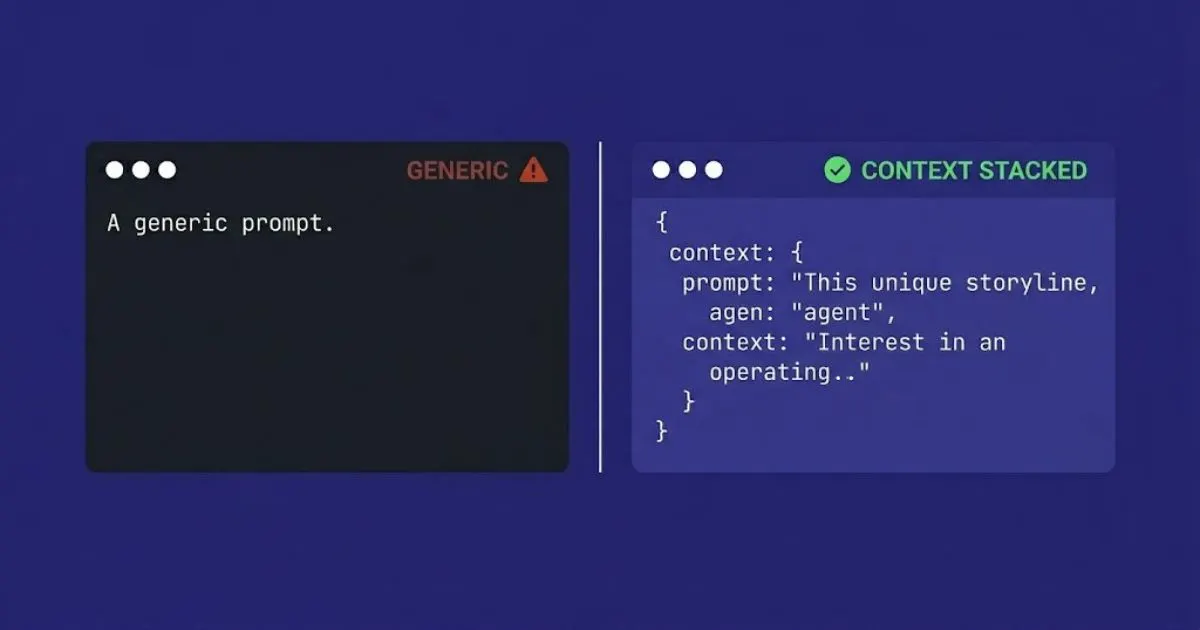
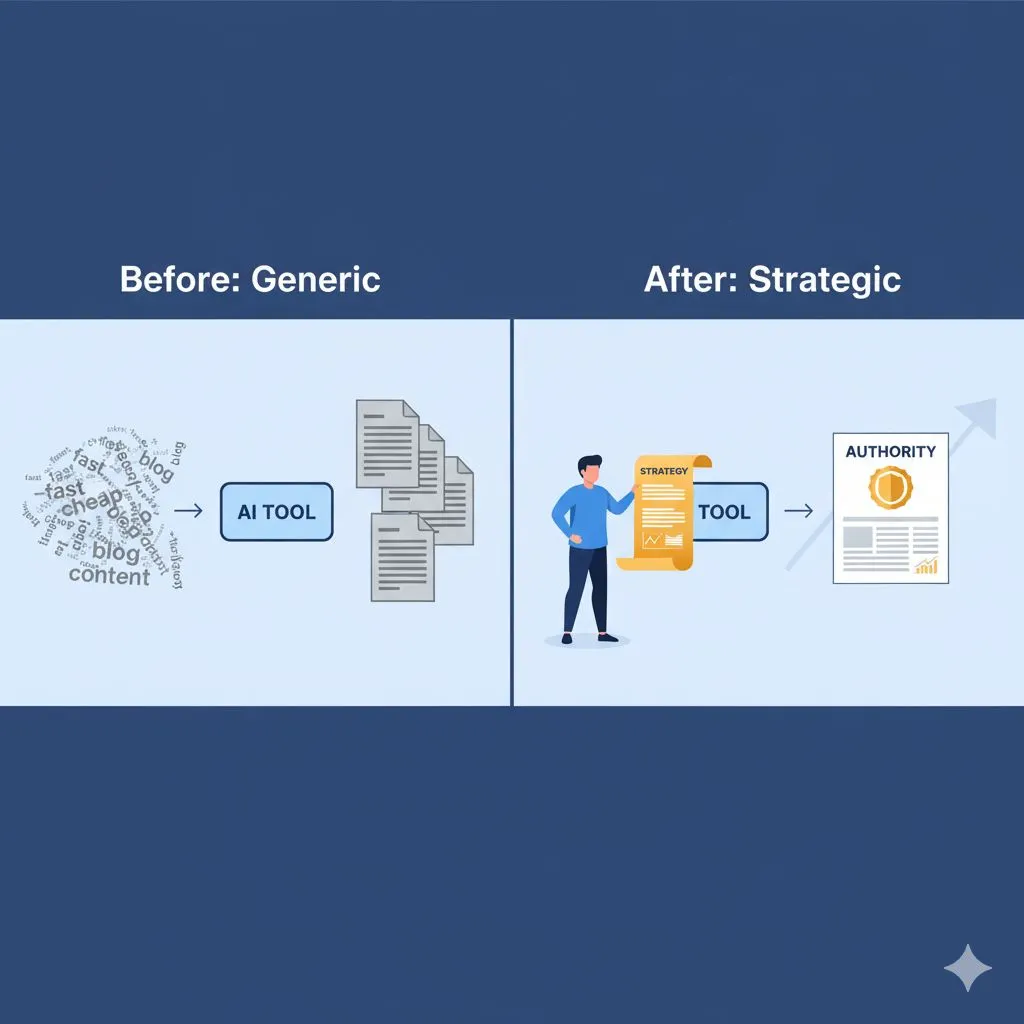
This is where AI becomes a strategic partner rather than a shortcut for spam. Using specific, structured prompts, you can create a month of AI-generated social media content in under 20 minutes. But—and this is critical—you cannot just ask ChatGPT to "write a post about marketing." That yields generic fluff that hurts your brand.
You need to input your unique point of view and use frameworks that are proven to work. You need to verify the output. But once you have a system, you can batch-create content on a Sunday afternoon and schedule it out for the month. This ensures you stay top-of-mind without being glued to your phone.
Phase 3: Surgical Engagement (15 Minutes a Day)
You have optimized your profile, and you have scheduled your content. Now comes the part most people hate: engagement.
The standard advice is to scroll through your feed and comment on everything. This is inefficient. Instead, adopt a "Sniper" approach to engagement.
The Strategy: Value-Add Comments
Identify 10-15 "Big Fish" in your industry—people who share your target audience but aren't direct competitors. Turn on notifications for their posts.
When they post, don't just say "Great post!" That is filler. instead, leave a Value-Add Comment.
- Add a nuance they missed.
- Share a counter-perspective respectfully.
- Summarize their point with a specific example from your experience.
Why does this work? Because their post has the traffic. By leaving a high-value comment, you are siphoning a portion of their audience back to your profile. You are borrowing their authority.
Time-Boxing
Set a timer. 15 minutes. That’s it.
- 5 minutes replying to comments on your posts.
- 10 minutes leaving surgical comments on industry leaders' posts.
- Then, close the tab.
This strictly limits the time drain while maximizing the visibility of your brand name.
Phase 4: Turning Content into Evergreen Assets
The final piece of the puzzle for the overworked entrepreneur is the "Asset Mindset."
Most people treat social media posts as disposable—here today, gone tomorrow. But when you are resource-constrained, you cannot afford to create disposable work. Every piece of content should be an asset.
Repurpose and Recycle
Did you write a post that got great engagement three months ago? Rewrite the hook and post it again. New followers haven't seen it, and old followers have forgotten it.
Did you write a long strategic post? That is now a newsletter edition.
Did you get a great client question via email? That is now a LinkedIn post.
Scaling Perception
This approach creates the illusion of omnipresence. To the outside world, it looks like Alex Rivers is everywhere—posting insights, commenting on top threads, and sharing case studies. In reality, Alex Rivers spent two hours on Sunday scheduling posts and 15 minutes a day engaging, leaving the rest of the week free to actually run the business.
This is how small teams compete with giants. They don't out-work them; they out-strategize them.
Conclusion: Reclaiming Your Time
Building authority on LinkedIn doesn't require you to become a full-time content creator. It requires a shift in mindset. It demands that you treat your LinkedIn presence as a business operation—optimized, systematized, and measured by ROI, not vanity metrics.
You have the expertise. You have the drive. The only thing missing was a workflow that respects your time.
By optimizing your profile to convert, batching strategic content, engaging surgically, and treating posts as assets, you move from "hustling for likes" to building a scalable engine for LinkedIn growth.
Not ready to invest yet? Explore the free resources at Expert AI Prompts — including the Brand Voice Kit, Bio Builder, and Content Pillar Planner — and start saving time today with zero risk.
Ready to Stop Guessing and Start Scaling?
Strategy is powerful, but execution is where you get stuck. You know what to post, but staring at that blank page still eats up hours of your week.
Imagine if you had a team of expert copywriters and strategists sitting next to you, handing you the exact frameworks you need to write authority-building content in minutes, not hours.
We have built exactly that.
Stop spinning your wheels. Get the system that turns you into an industry authority instantly.
To see all 30 industry-specific prompt packs and pricing, visit the Expert AI Prompts pricing catalog.
Click here to get the Expert AI Prompt System for LinkedIn Growth.
Further Reading
• The Definitive Guide to AI for Social Media
• AI Prompt System for LinkedIn Growth
• LinkedIn Personal Branding: How to Write Authentic Posts with AI