The Solopreneur’s Guide to Personal Branding at Scale
The Solopreneur’s Guide to Personal Branding at Scale
Jan 25, 2026

You are excellent at what you do. Your clients know it. Your small team knows it. But does the rest of the world?
For the overworked solopreneur or small business owner, personal branding often feels like a luxury reserved for those with infinite free time. You are stuck in the weeds of daily operations—putting out fires, managing delivery, and overseeing finances. The idea of sitting down for two hours a day to write "thought leadership" content on LinkedIn likely induces more stress than excitement.
Yet, you also know the cost of staying invisible. You see competitors with half your expertise winning contracts simply because they are louder. You know that a strong personal brand acts as a 24/7 sales team, attracting leads and building trust before you even enter the room.
The dilemma is clear: You need to be visible to grow, but you need to work to survive.
This is where personal branding AI changes the equation.
We aren't talking about generating spammy, robotic text that damages your reputation. We are talking about using AI as a strategic lever—a way to clone your expertise, streamline your workflow, and amplify your voice without adding hours to your workday.
This guide is for the Alex Rivers of the world: the ambitious operators who are ready to stop hustling for every lead and start scaling their authority.
Section 1: Shifting from Operator to Strategist
The biggest misconception about using AI for personal branding is that it replaces you. It doesn’t. It replaces the drudgery.
As a business owner, your most valuable asset is your unique perspective—your "earned secrets" from years of industry experience. The bottleneck isn't a lack of ideas; it's the mechanical process of getting those ideas out of your head and into a polished format.
The Trap of Manual Branding
If you are writing every social post, newsletter, and script from scratch, you are doing $10/hour work on a CEO’s salary. This manual approach is unscalable. It leads to the "feast or famine" content cycle: you post consistently for two weeks, get overwhelmed by client work, and then disappear for two months. This inconsistency kills trust.
To compete with larger players, you must stop viewing content creation as a creative art project and start viewing it as a business system.
The Mindset Shift: AI as Your Staff
Imagine you hired a junior marketing assistant. You wouldn't say to them, "Go write something good," and walk away. You would give them a brief, a topic, and your stance on the issue.
You must treat personal branding AI the same way. When you shift your mindset from "AI writes for me" to "AI processes my strategy," the quality of your output skyrockets. You become the Editor-in-Chief of your own media company, rather than the exhausted writer trying to fill a blank page at 9 PM. To see how this system works across every major platform, read The Definitive Guide to AI for Social Media.
Defining Scale
Scaling your brand doesn’t mean posting 50 times a day. It means maximizing the ROI of your energy. It means that one core idea you have during a morning shower can be transformed into a LinkedIn post, a newsletter segment, and a video script by the time you finish your first coffee.
Scale is about leverage. And with the right prompts and systems, you can build an industry-leading brand in less than 30 minutes a day.
Section 2: Building the Foundation (The "DNA" Phase)
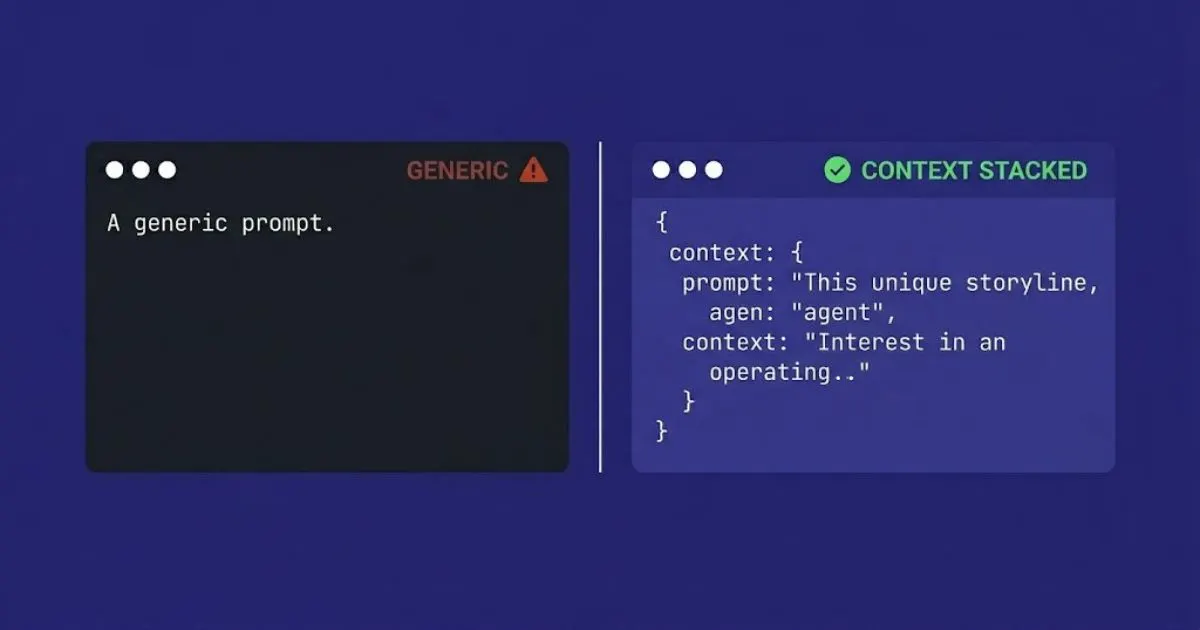
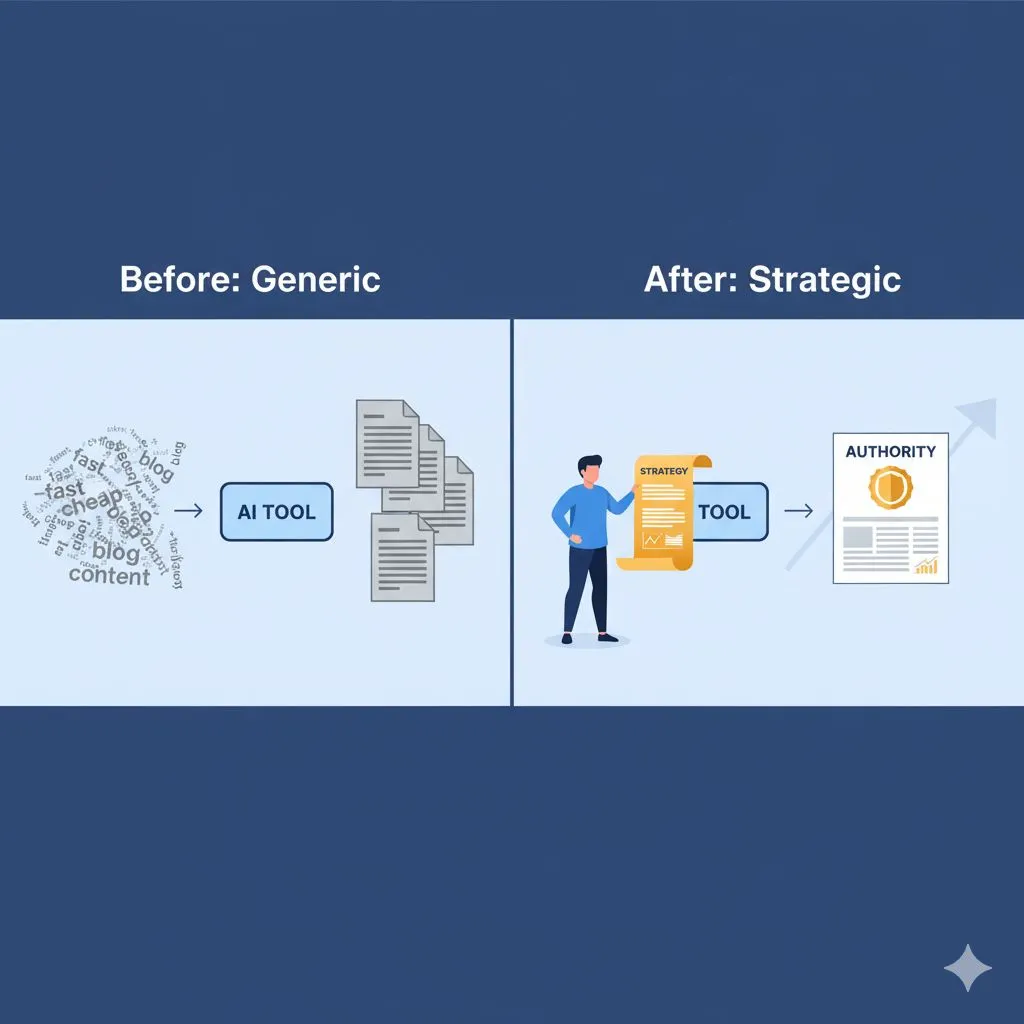
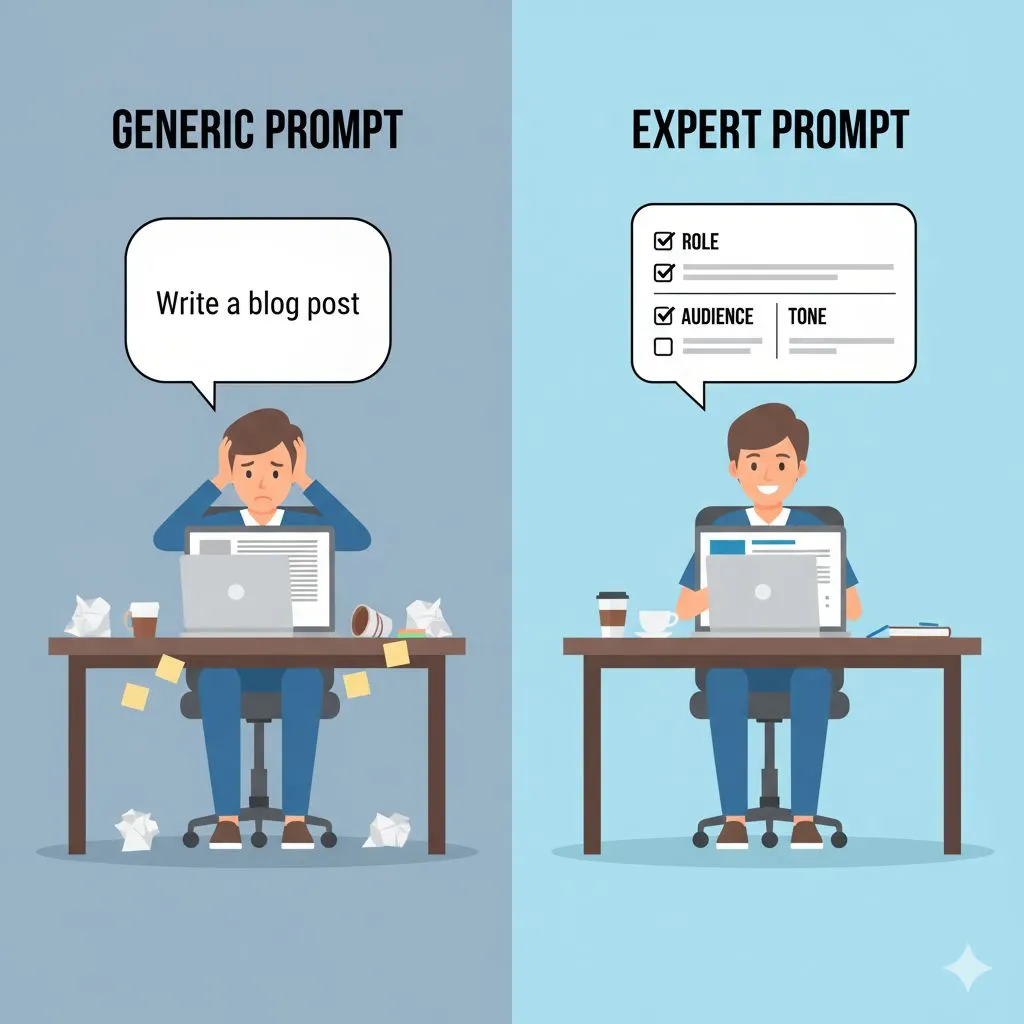
Before you generate a single piece of content, you must teach the AI who you are. The reason most business owners fail with personal branding AI tools is that they skip this step. They jump straight to generic prompts like "Write a post about marketing," and the result is vanilla, corporate jargon that blends into the background.
To stand out, you need to codify your brand DNA.
Codifying Your Voice
Your brand voice is a mix of your vocabulary, sentence structure, tone, and worldview. AI cannot guess this; you must feed it.
Start by gathering three to five examples of your best writing—emails you’ve sent to clients, proposals that won deals, or social posts that got high engagement. Use these samples to create a "Voice Guide" prompt. You can ask an AI tool to analyze these texts and describe the style.
Does it sound authoritative but empathetic? Punchy and contrarian? Formal and data-driven?
Once the AI understands your style, save that description. Every time you generate content in the future, you will instruct the AI to "write in the following voice/style," ensuring consistency across every channel. For a step-by-step setup process, see How to Train AI to Write in Your Brand Voice.
Pillar Development: Focusing on ROI
You don't need to be an expert on everything. You need to be the go-to expert for specific problems your clients face.
Use AI to brainstorm high-ROI content pillars. Instead of guessing, input your target audience's pain points (e.g., "overwhelmed small business owners," "marketing directors with limited budgets") and ask the AI to generate 10 controversial or high-value topics that address those specific pains.
Choose the top three themes where you have deep experience. These become your "Content Pillars." The free Content Pillar Planner Template gives you the AI prompt structure to build and lock in your three pillars in one sitting. By sticking to these pillars, you train your audience to associate your name with specific solutions, building authority faster.
The "Anti-Generic" Rule
The hallmark of a lazy AI user is the listicle: "5 Ways to Improve X." Everyone is posting this. To scale your brand effectively, you must apply the "Anti-Generic" rule.
Whenever you prompt your AI, require it to include:
- A personal anecdote: "Start with a story about a time this failed."
- A contrarian take: "Explain why the common advice on this is wrong."
- Specific constraints: "Use short, punchy sentences. No buzzwords like 'synergy' or 'landscape'."
This forces the technology to work harder and produces content that feels human and insightful.
Section 3: The Content Engine—From One Idea to Many Assets

Now that the foundation is set, let’s look at the workflow. This is where you reclaim your time. The goal is to separate ideation (which you do) from production (which personal branding AI does).
The Repurposing Workflow
The most efficient way to build a personal brand is the "Waterfall Method." You create one "Hero Asset"—a core piece of thinking—and cascade it down into smaller pieces.
Let’s say you had a great conversation with a client where you solved a complex problem.
- Step 1: Dictate your thoughts on that solution into your phone for 3 minutes.
- Step 2: Transcribe that audio.
- Step 3: Feed the transcript into your AI tool.
Now, ask the AI to:
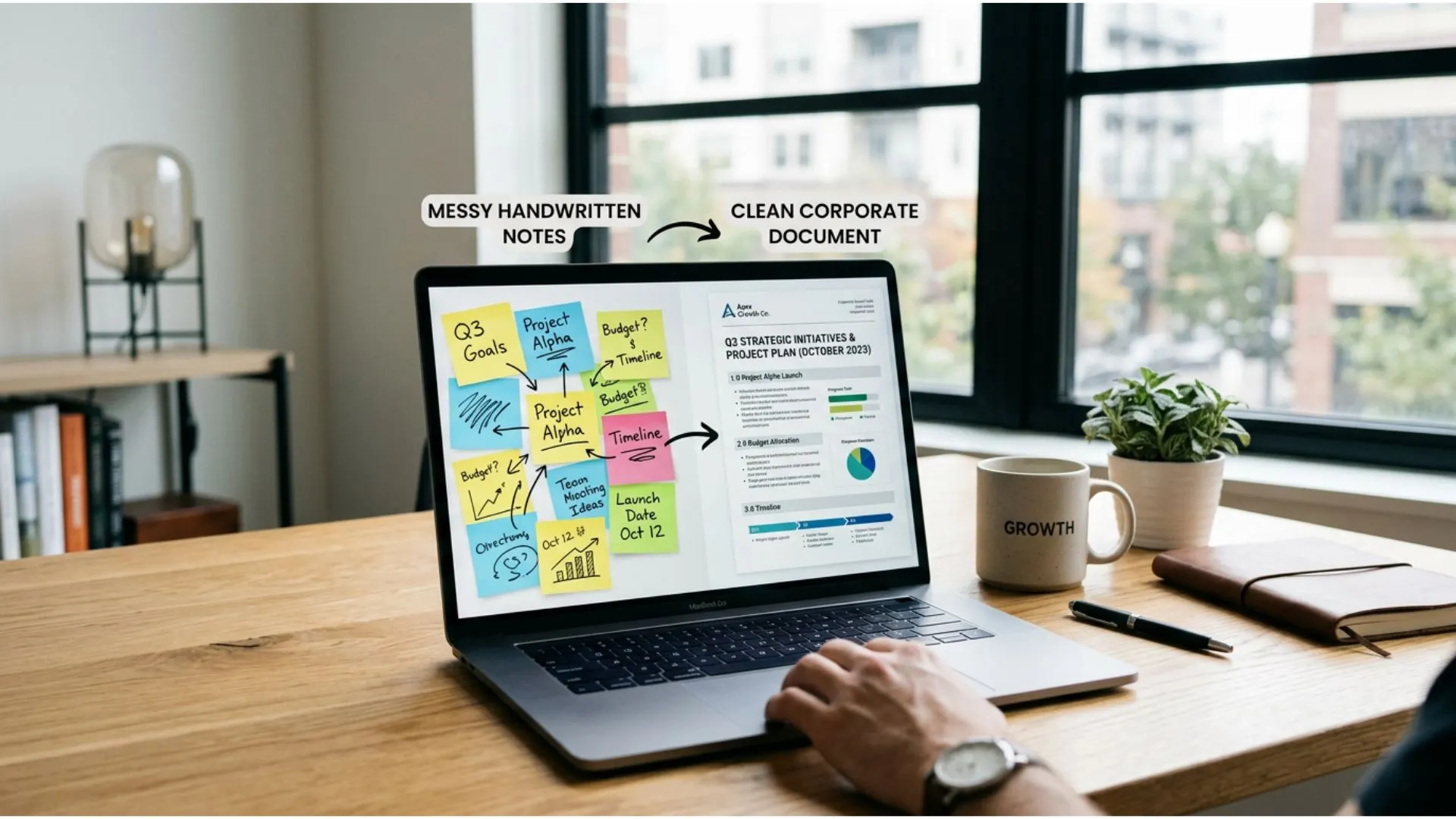
- "Turn this transcript into a comprehensive LinkedIn post highlighting the 'aha' moment."
- "Extract three key quotes for Twitter/X."
- "Draft a short email to my list summarizing this lesson."
You have just created three days' worth of content from one 3-minute voice note.
Format Adaptation
Different platforms require different "dialects." What works on LinkedIn (professional, story-driven, spaced out text) will flop in a newsletter (intimate, detailed) or on Instagram (visual, hook-heavy).
Trying to manually rewrite your core idea for every platform is a recipe for burnout. This is the perfect task for personal branding AI.
Once you have your core draft, use specific modifiers in your prompts to adapt the format.
- For LinkedIn: "Rewrite this to be scannable. Use short paragraphs, bullet points for the main data, and a strong opening hook that challenges conventional wisdom." For a complete set of LinkedIn-specific prompt templates covering thought leadership posts, outreach messages, and profile copy, see the AI Prompt System for LinkedIn.
- For Newsletters: "Rewrite this as a personal letter from me to a peer. Keep the tone conversational and focus on the 'why' behind the strategy."
- For Video Scripts: "Convert this text into a 60-second video script. Include visual cues for the camera and ensure the first 3 seconds grab attention."
By automating the formatting, you ensure your message remains consistent while native to every platform where your potential clients hang out.
Batching vs. Real-Time
A common fear for entrepreneurs like Alex Rivers is that automation kills engagement. The solution is the 80/20 split.
Use your AI workflows to batch create 80% of your content—your educational posts, your "how-to" guides, and your case studies. Schedule these out once a week (perhaps on a Friday afternoon). This ensures your brand is alive and visible even when you are stuck in meetings all day.
This frees you up to spend the remaining 20% of your energy on real-time engagement: replying to comments, jumping on trending industry news, or sharing a quick "behind the scenes" photo. Because the heavy lifting is done, you can actually enjoy the social aspect of social media.
Section 4: Maintaining Authenticity in an AI World
As we lean into automation, we must address the elephant in the room: Authenticity. Your clients buy from you because they trust you, not a machine. If your content starts to "feel" synthetic, you lose that trust.
The Human-in-the-Loop
The most successful personal brands use a "Human-in-the-Loop" (HITL) system. AI is the drafter; you are the finisher. Download the free Competitor-Proof Brand Voice Kit to document your voice profile and give every piece of AI-assisted content a recognisably human fingerprint.
Never copy and paste raw AI output directly to social media. Always do a "Human Pass."
- Add "I" statements: Ensure the content reflects your personal ownership.
- Inject Current Events: Mention something that happened this week in your industry to ground the content in the present.
- Check the nuance: AI struggles with sarcasm and subtle humor. If the draft feels too earnest or dry, punch it up with your own wit.
Editing for Impact
AI tends to be verbose. It likes to explain things that don't need explaining. Your job as the editor is to cut the fluff.
Look for "bridge words" that AI loves to use, like "Furthermore," "In conclusion," or "Moreover." Delete them. Real people rarely speak like that. Look for adjectives that add no value (e.g., "transformative journey," "exciting opportunity"). Cut them.
Overcoming Skepticism
You might worry, "Will people know I used AI?"
Here is the truth: People care about value. If your content solves their problem, inspires them, or teaches them something new, they do not care if an algorithm helped you structure the paragraphs.
However, transparency can actually be a brand asset. Sharing how you use these tools shows that you are innovative and efficient—traits any client would want in a service provider. You aren't hiding behind technology; you are mastering it to deliver better results.
Conclusion
The difference between a frantic business operator and a recognized industry leader often isn't the quality of their work—it's the visibility of their brand.
For years, the choice was binary: either sacrifice your billable hours to write content, or hire an expensive agency that doesn't quite "get" your voice. Personal branding AI offers a third path. It provides the scale of an agency with the authenticity of your own voice, all at a fraction of the time and cost.
By shifting your mindset from "doing" to "directing," codifying your brand voice, and building a repurposing engine, you can finally escape the feast-or-famine cycle. You can maintain a dominant digital presence that attracts premium clients, all while you focus on what you do best—running your business.
You have the expertise. You have the experience. Now, you have the tools to make sure the world knows it. Start with zero risk — access all 11 free AI tools and prompt resources at the Expert AI Prompts Free Offers Hub.
Stop Spinning Wheels—Start Winning Clients
Building these systems from scratch takes time—time you probably don’t have. You could spend weeks experimenting with prompts, trying to get the tone right, and figuring out the best workflows.
Or, you could skip the trial and error.
We have developed a comprehensive toolkit specifically for solopreneurs and small business owners who want expert-level results immediately. It includes 50+ industry-specific prompts, voice-calibration tools, and repurposing workflows designed to turn you into a market authority in minutes, not months.
Ready to reclaim your time and elevate your brand?
Get the "Prompt Your Power" Personal Branding AI Toolkit Here
Explore all 30 industry-specific prompt packs at the Expert AI Prompts Pricing Catalog to find the right toolkit for your business.
Further Reading
• The Entrepreneur's Playbook for Prompt Engineering
• The Definitive Guide to AI for Social Media
• How to Train AI to Write in Your Brand Voice
• Prompt Your Power: Personal Branding AI Toolkit
• LinkedIn Personal Branding: How to Write Authentic Posts with AI