Going Global: Translating and Localizing Content with AI
Going Global: Translating and Localizing Content with AI
Feb 03, 2026

For years, "global marketing" was a game reserved for the giants. If you wanted to sell in Tokyo, Berlin, or São Paulo, you needed international offices, local agencies, and a translation budget that could bankroll a small nation. For the ambitious solopreneur or small team, the world map was full of "Keep Out" signs.
But the landscape has shifted. The digital storefront has no borders, and your next biggest client might be waking up just as you are going to sleep. For business owners like Alex Rivers—juggling client delivery, content creation, and operations—the desire to scale is there, but the bandwidth isn't. You know your product has global appeal, but the logistical nightmare of language barriers and cultural nuance keeps you tethered to your local market.
This is where Artificial Intelligence changes the calculus. It’s no longer about hiring a generic translation firm; it’s about leveraging AI to act as your always-on localization team. By combining strategic AI prompts with smart workflows, you can dismantle language barriers and position your brand as a credible international player without doubling your headcount. This guide will walk you through exactly how to translate and localize your content effectively, turning the "overwhelm" of expansion into a streamlined process.
For the complete framework on building an AI-powered marketing engine, read the complete AI marketing strategy guide for small business owners.
The Critical Distinction: Translation vs. Localization

Before you type a single prompt into an AI tool, you must understand the difference between translation and localization. Confusing the two is the fastest way to damage your brand’s credibility abroad.
Translation is about words. It is the literal conversion of text from a source language to a target language. If your website says, "Check out our cool new sneakers," a basic translation tool ensures the words "check," "out," "cool," "new," and "sneakers" appear in Spanish or French. While accurate in a dictionary sense, it often lacks soul.
Localization is about context. It adapts your message to the culture, behavior, and expectations of a specific market. It asks: Does "cool" translate to "temperature" or "fashionable" in this context? Is the color red associated with excitement or danger in this region? Do they use dollars, euros, or yen?
Why It Matters for Your Brand
Imagine a U.S. company launching a "Fall Blowout Sale" in Australia. In the U.S., "Fall" is autumn. in Australia, that same season is "Spring." A direct translation that ignores geography makes the brand look ignorant and disconnected.
For a small business owner, efficiency is key, but quality cannot be sacrificed. If your content reads like a robot wrote it, you lose trust. If it reads like a local wrote it, you gain authority. AI is exceptionally good at translation, but it needs you—the strategist—to guide it toward localization. You need to provide the context, the tone, and the cultural guardrails. When you do, you stop just converting words and start converting customers.
To build this kind of prompt precision across every aspect of your business, the Entrepreneur's Playbook for Prompt Engineering is the complete strategic reference.
Step 1: Strategic Market Selection (Don't Boil the Ocean)
The most common mistake eager entrepreneurs make when eyeing global marketing is trying to be everywhere at once. You might look at your analytics, see traffic from ten different countries, and think, "Great! Let’s translate the website into ten languages."
This is a recipe for burnout and diluted results. As someone wearing multiple hats, you need to protect your time and resources. The goal is scalable growth, not logistical chaos. Instead of a "spray and pray" approach, you need to be surgical.
Data-Driven Decisions
Start by looking at your existing data. Open your Google Analytics or social media insights. Where are your visitors coming from right now? If you have a cluster of users in Germany engaging with your English content, that is a signal. They are interested enough to consume content in their non-native language. Imagine how much better you would convert them if you spoke their language.
Identify one or two key markets that show:
- Existing Interest: High traffic or engagement.
- Purchase Intent: Are these visitors actually buying, or just browsing?
- Ease of Entry: Does your product require heavy modification for this market (e.g., shipping logistics or legal compliance)?
Cultural Fit and Problem Awareness
Once you have identified a target region, ask yourself: Does my product solve the problem in the same way here?
For example, if you sell productivity consulting for "overworked entrepreneurs," that pain point is universal. However, the expression of that pain differs. In some cultures, working long hours is a badge of honor; in others, it's a sign of inefficiency.
Use AI to research this before you start creating content. You can prompt an AI tool with:
"I am a productivity consultant expanding into the Japanese market. What are the current cultural attitudes toward work-life balance for small business owners in Japan? What are the common pain points and key terminology used?"
This preliminary research saves you from creating content that falls flat. It allows you to tailor your value proposition to fit the local mindset.
Resource Allocation
By focusing on just one new market effectively, you create a repeatable system. You can troubleshoot your AI workflows, refine your prompts, and measure ROI without overwhelming your schedule. Once you have cracked the code for one region—say, the Spanish-speaking market—you can simply duplicate that successful workflow for the next one. This is how you scale: systematically and sustainably.
Step 2: The AI Translation & Localization Workflow
Now that you have chosen your market, it’s time to execute. This is where we move from theory to the practical "How-To." The objective here is to use AI to generate 80-90% of the work, allowing you to produce expert-level global content in a fraction of the time it would take to write it manually.
1. Preparation: Clean Your Source Text
AI is smart, but it struggles with ambiguity. Before you ask AI to translate, review your English source content.
- Remove Idioms: Phrases like "hit it out of the park" or "ballpark figure" are baseball metaphors that confuse AI and mean nothing to a European audience.
- Simplify Structure: Use clear, direct sentences.
- Clarify Ambiguity: Ensure one word doesn't have double meanings in the context of your sentence.
2. Prompt Engineering for Context
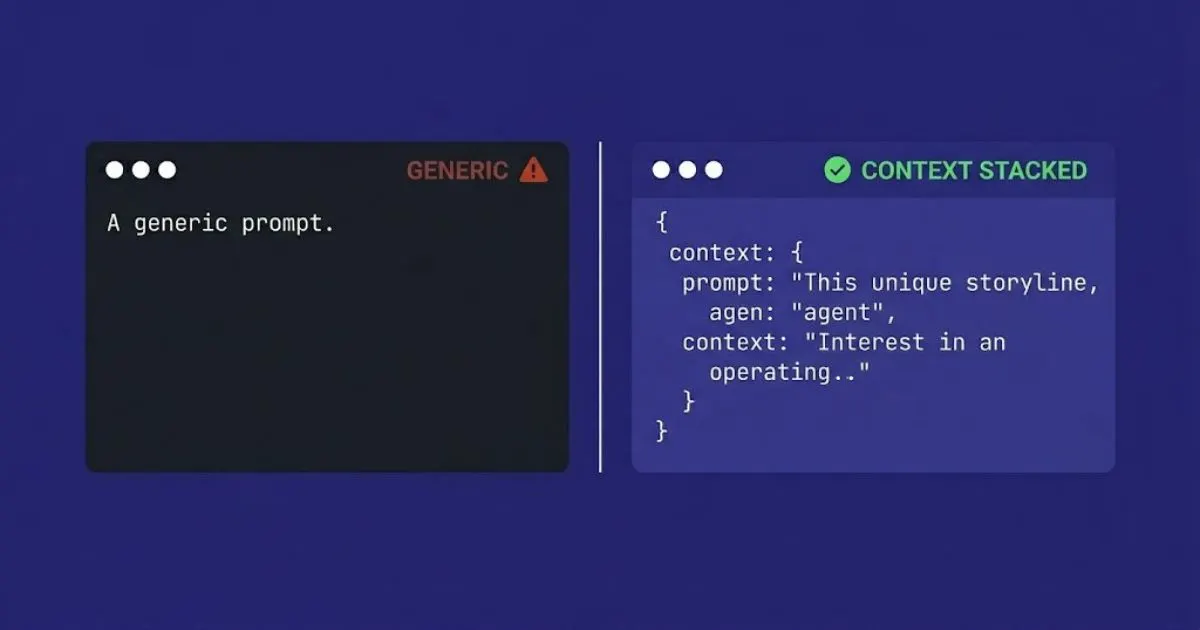
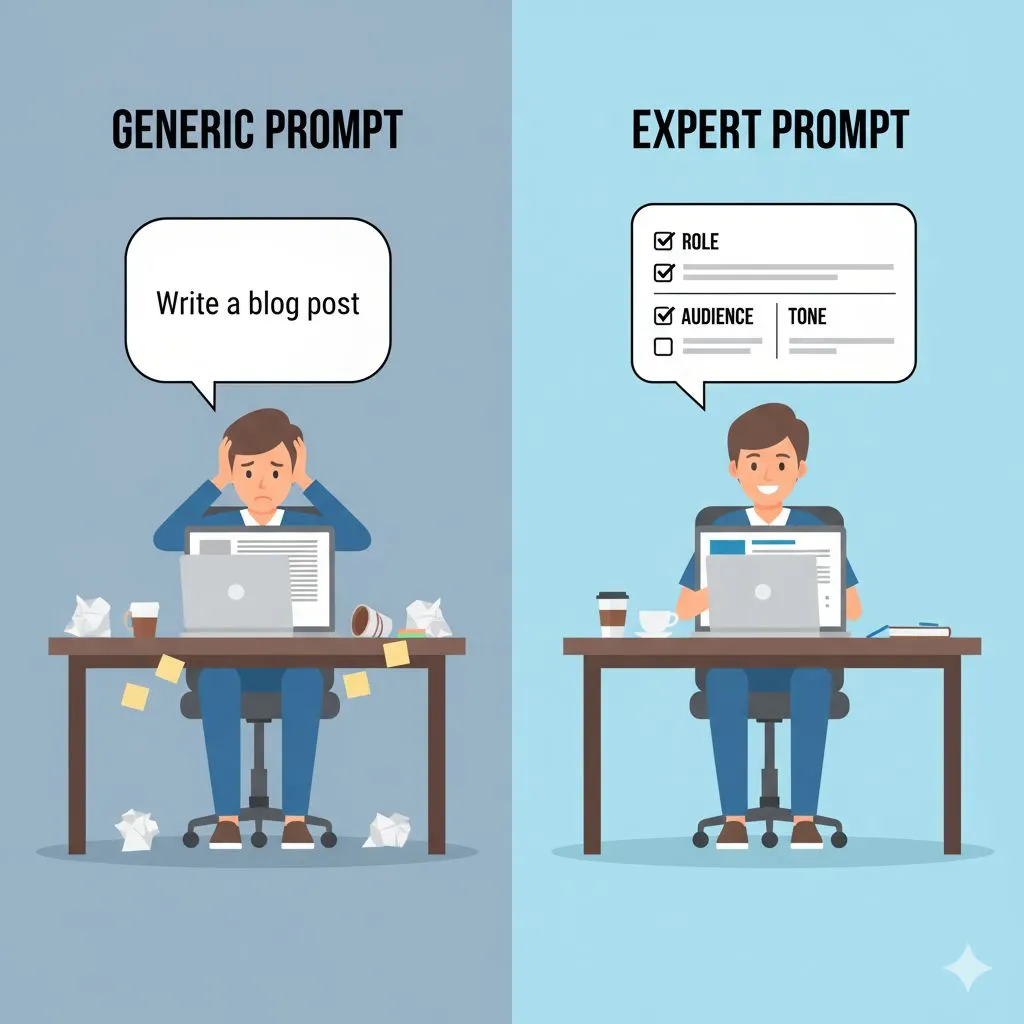
This is the secret sauce. Most people fail at AI translation because they use lazy prompts like "Translate this blog post into French."
This results in a literal, robotic translation. To get localized content that sounds human and professional, you must provide context. You need to act as the Creative Director giving instructions to a junior copywriter.
Try a Structured Prompt like this:
"Role: You are a professional translator and native marketing copywriter for the [Target Country] market.
Task: Translate and localize the following text from English to [Target Language].
Context: This text is for [Target Audience, e.g., small business owners]. The goal is to [Goal, e.g., sell a productivity course].
Tone: Professional, encouraging, and authoritative.
Constraints: Adapt all idioms to local cultural equivalents. Ensure formatting (dates/currency) matches local standards. Keep the brand voice distinct."
By explicitly asking the AI to act as a "native marketing copywriter," you signal that the output needs to be persuasive, not just accurate.
3. Maintaining Brand Voice
Your brand voice is your competitive advantage — and training AI to write in your brand voice is the skill that makes localization consistent across every language. You don't want to sound like a generic corporation just because you switched languages. If your brand is witty and casual in English, it needs to be witty and casual in German.
Include examples of your tone in the prompt. If you use emojis, short sentences, or specific power words, instruct the AI to replicate that style. You can even paste a sample of your "Brand Voice Guidelines" into the AI context window before starting the translation task.
The free Competitor-Proof Brand Voice Kit gives you a ready-made brand voice document you can paste directly into any AI localization prompt.
4. Technical Localization
Don't overlook the boring details. They are often the first thing to destroy trust.
- Dates: The US uses MM/DD/YYYY. Most of the world uses DD/MM/YYYY.
- Measurements: Switch inches to centimeters, miles to kilometers.
- Currency: Don't just change the symbol ($ to €). You may need to adjust the pricing numbers to look psychological appealing (e.g., 97€ instead of a direct conversion like 94.32€).
AI can handle this automatically if you instruct it to: "Ensure all measurements and currencies are converted to local standards for [Country]."
Step 3: The "Human-in-the-Loop" Quality Control
Skepticism about AI often stems from the fear of looking foolish. We have all seen the screenshots of bad translations. Alex Rivers cannot afford to look like an amateur; credibility is the currency of a consultant or agency.
This is why the "Human-in-the-Loop" model is non-negotiable.
The 80/20 Rule
AI gets you 80% of the way there instantly. It handles the heavy lifting of vocabulary, grammar, and structure. Your job—or the job of a freelancer—is the final 20% polish.
For a proven workflow that keeps AI-generated content sounding genuinely human, see how to use an AI content writer and still sound human.
Cost-Effective Editing
You don't need to hire an expensive agency to write content from scratch. Instead, hire a native speaker on a freelance platform for "Proofreading and Editing." This is significantly cheaper than "Copywriting."
Send them your AI-generated draft with a note: "This was translated using AI. Please review for cultural flow, awkward phrasing, and tone consistency."
This validates your content, ensures safety from embarrassing errors, and keeps costs low.
Iterative Testing
Before you overhaul your entire website, test your new global marketing assets on social media. Run a few LinkedIn posts or Instagram ads targeting that specific region using your localized copy. Measure the engagement. Are people commenting? Are they confused? Use this feedback loop to refine your AI prompts for the next batch of content.
Conclusion
Going global used to be a vanity metric for small businesses—something nice to have "one day." Today, it is a viable strategy for growth and stability. By diversifying your market, you insulate your business from local economic dips and open the door to millions of new customers.
For the overworked entrepreneur, AI is the lever that makes this possible. It allows you to punch above your weight class, turning a one-person team into a global operation. But remember: AI is the engine, not the driver. Your strategy, your prompt engineering, and your commitment to quality are what steer the car.
You no longer have to choose between efficiency and quality. With the right tools and the right approach, you can have both. The world is waiting for your value—don't let language be the barrier that keeps them from finding it.
Ready to Scale Smarter?
To truly master global marketing, you need prompts that go beyond the basics. You need a system that ensures consistency, tone, and persuasion in every language.
Access free AI prompt resources — including brand voice templates, content planners, and time-saving prompt packs — at the Expert AI Prompts Free Offers Hub. No cost, no commitment.
Stop Spinning Wheels — Start Winning Clients with Expert AI Prompts
Ready to invest in a full prompt pack for your industry? See all 30 industry-specific prompt packs and pricing.
Further Reading
• Your Complete AI Marketing Strategy Guide
• How to Train AI to Write in Your Brand Voice
• How to Use an AI Content Writer and Sound Human
• Entrepreneur's Playbook for Prompt Engineering
• The Small Business Playbook for AI Content Creation