Why Community is the Only Moat Left Against AI Content
Why Community is the Only Moat Left Against AI Content
Feb 03, 2026
Why Community is the Only Moat Left Against AI Content
If you feel like the internet has become noisier in the last twelve months, you aren’t imagining it. We are standing in the middle of a content tsunami.
For a business owner like you—juggling client delivery, operations, and the eternal pressure to "grow"—this shift is terrifying. In the past, the formula for digital growth was relatively simple: write helpful articles, produce decent social media posts, and optimize for search engines. If you put in the work, you built a moat around your business.
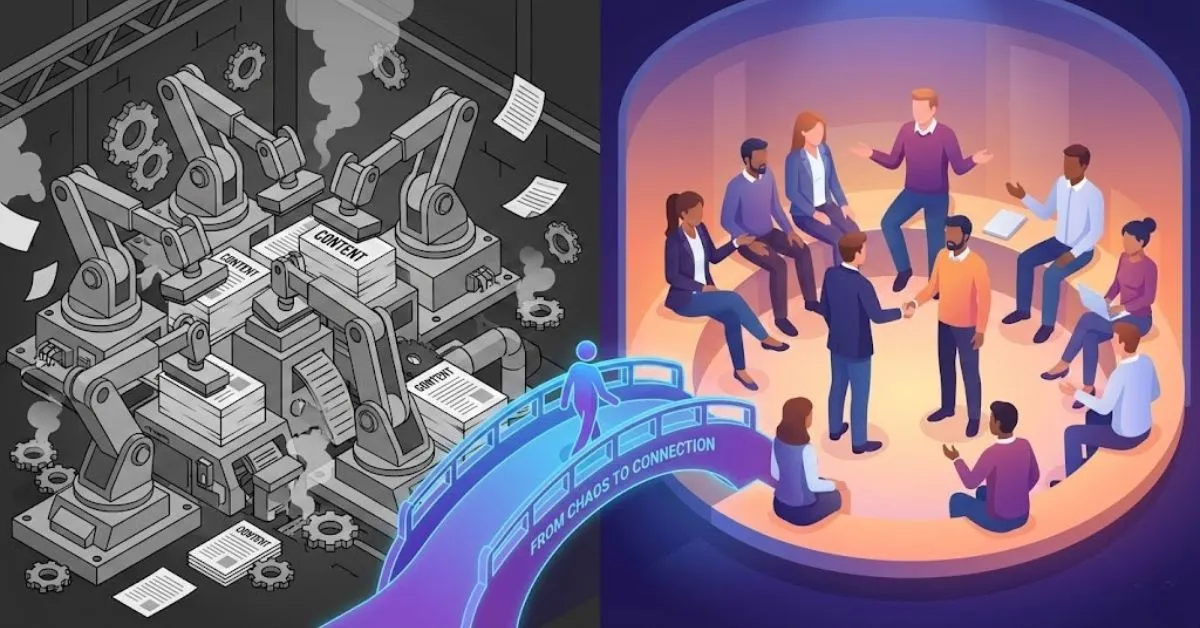
But the drawbridge has been lowered. Generative AI has democratized content creation. Today, a competitor with zero experience can spin up 50 blog posts, 200 tweets, and a white paper in an afternoon.
The question isn’t how to produce more. You, Alex, cannot out-hustle a server farm. You cannot out-publish an algorithm. Explore the small business playbook for AI content creation to understand how to compete on quality and community rather than volume. If your strategy relies solely on information transfer—giving people answers—you are now competing with a free, instant, and infinite competitor.
So, where does that leave the ambitious small business owner? It leaves you with the one asset AI cannot synthesize, simulate, or steal: Human connection.
The Death of Content as a Differentiator
Let’s be brutally honest about the state of digital marketing. For a decade, "Content is King" was the mantra. We were told that if we provided value, customers would come.
However, AI has fundamentally changed the economics of "value."
- The Floor Has Raised: Mediocre content is now effortless to produce. The baseline for quality has shot up.
- The Ceiling Has Lowered: Because everyone has access to the same LLMs (Large Language Models), distinctiveness is vanishing. We are seeing a "beige-ing" of the internet—perfectly grammatical, highly structured, and utterly soulless content.
Learn how to make AI-generated content sound authentically human — the skill that separates brand-building content from commodity filler.
For a resource-constrained entrepreneur, this sounds like a nightmare. You don't have the budget of a Fortune 500 company to hire a fleet of brand journalists. You’re likely writing your own copy between Zoom calls. When you see competitors flooding the zone with AI-generated articles, the instinct is to try and keep up.
Stop.
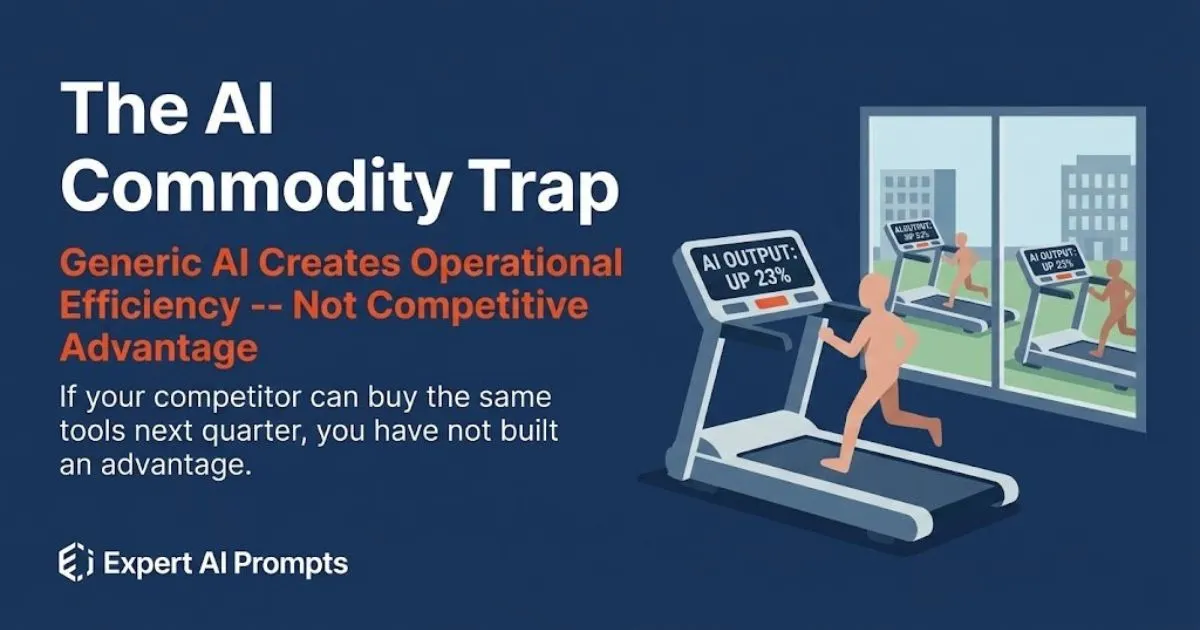
Trying to beat AI at the volume game is a one-way ticket to burnout. The more content that floods the web, the less value any single piece of content holds. This is basic supply and demand. When information is infinite, its value approaches zero.
But here is the silver lining: When information becomes cheap, trust becomes expensive.
Your customers are drowning in generic advice. They don't need another "Top 10 Tips for Productivity" list generated by a bot. They are desperate for context. They crave the messy, real-world experience that only a human—and a community of humans—can provide.
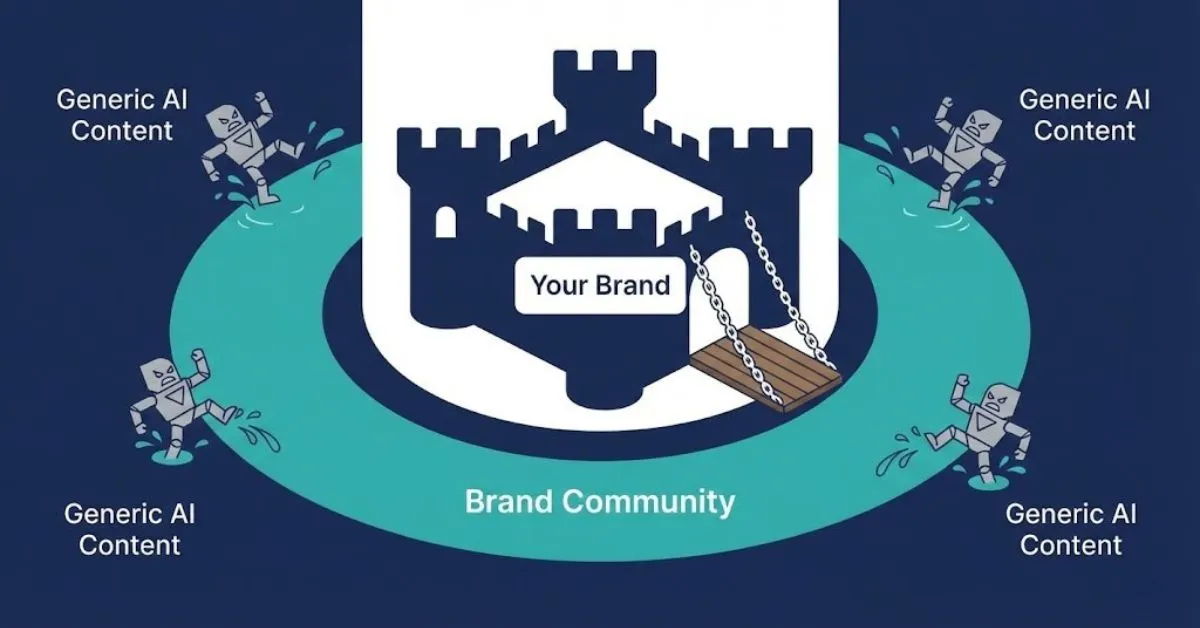
The only moat left is Brand Community.
Defining the Moat & The Psychology of Belonging
What is a Brand Community? (And What It Isn’t)
Before we dive into strategy, we need to clear up a misconception. An email list is not a community. An Instagram following is not a community. Those are audiences.
- An Audience creates a one-way relationship. You speak; they listen (or scroll past). It is transactional.
- A Brand Community creates a multi-directional web of relationships. You speak to them, they speak to you, and crucially, they speak to each other.
For a small business, a community isn’t about having millions of members. It’s about cultivating a "minimum viable tribe." It is a group of people who aren’t just buying your service; they are buying into your worldview.
Think about your own values: Efficiency. Quality. Scalability without burnout.
Your brand community consists of people who share those struggles and aspirations. They aren't just looking for a tool; they are looking for a way to operate their businesses better. When you build a space—whether it’s a LinkedIn group, a private Slack, or just a highly engaged comment section—where these people can interact, you build a moat.
Why? Because AI can copy your blog post. It can copy your landing page copy. It can even mimic your brand voice.
But AI cannot copy the relationship between Member A and Member B.
Start protecting your brand identity today with the free Competitor-Proof Brand Voice Kit — a practical framework to make your brand voice AI-proof.
Once your customers are talking to each other, sharing wins, and validating your methods, you have created an ecosystem that is impossible to replicate. You are no longer a commodity provider; you are a host.
The Psychology of Belonging in an AI World
Why is this shift happening now? It comes down to the "Trust Audit" we all perform when we browse the web today.
When you search for a solution to a complex business problem, do you trust the polished, SEO-perfect article on the first page of Google? Or do you add "Reddit" to the end of your search query to see what real humans are saying?
We are seeing a massive flight toward human validation.
- Peer-to-Peer Validation: Your potential clients are skeptical. They’ve been burned by over-promised digital products. They don’t want to hear you say your solution works; they want to hear peers say it works. A community facilitates this social proof automatically.
- The Craving for Context: AI creates content in a vacuum. It provides facts. But business is nuanced. A community provides context. It says, "Yes, this strategy works, but only if you tweak it for this specific industry constraint." That nuance is high-value.
- Emotional Resilience: We are lonely. Entrepreneurship, specifically the kind you and your clients engage in, is isolating. A brand community offers emotional utility—a sense of "we are in this together."
When you provide belonging, you create loyalty that transcends price. A competitor might undercut your fees or launch a shinier AI tool, but they cannot steal the friends and mentors your customer has found inside your ecosystem.
The Strategy – AI as the Facilitator
How AI Actually Helps You Build Community
This is where the paradox lies. You might be thinking, "Alex, I barely have time to answer my emails. How am I supposed to manage a community?"
This is the plot twist: You need AI to build a human community.
The mistake most entrepreneurs make is using AI to replace the human connection (e.g., auto-generated comments, fully automated DMs). That is a reputation killer.
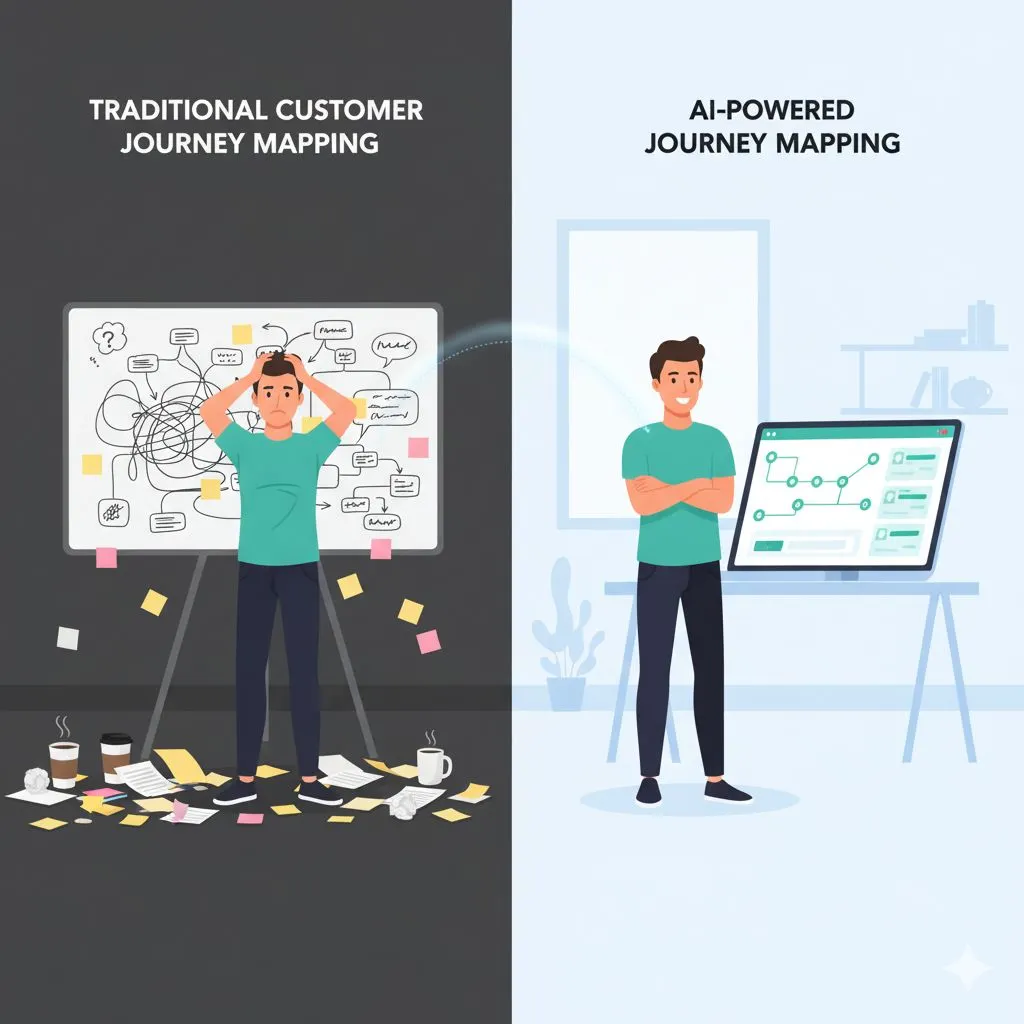
Instead, you must use AI to automate the operational drag so you have the energy for the relational work.
The "Operator to Facilitator" Shift
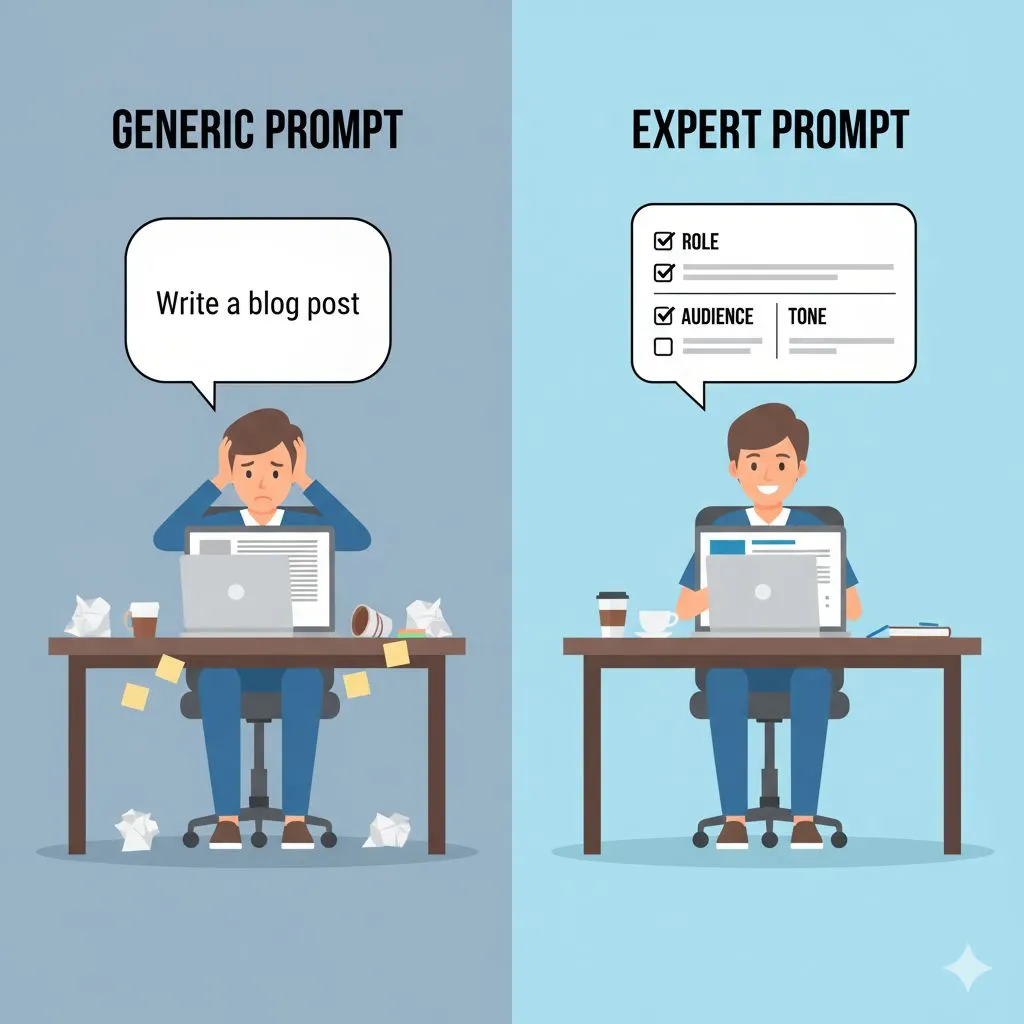
To build a moat, you must stop viewing yourself as a "Content Creator" and start viewing yourself as a "Community Facilitator." Here is how Expert AI Prompts allows you to make that shift:
1. Automate the Research and Structure
Don't spend three hours staring at a blank page trying to outline a discussion topic for your group.
- The Old Way: Manually researching trends and drafting posts.
- The Community Way: Use a prompt to "Identify 5 contrarian talking points regarding [Industry Trend] that will spark debate among experienced [Job Titles]."
- Result: AI does the heavy lifting of ideation; you step in to moderate the fiery discussion that follows.
2. Repurpose for Reach, Engage for Depth
You need content to attract people into the community. Use AI to streamline this.
- Take a deep, insightful conversation from your community (anonymized).
- Use AI to turn that thread into a LinkedIn post, a newsletter intro, and a tweet thread.
- The Key: You aren't asking AI to invent thoughts; you are asking it to package human thoughts. This ensures the content remains credible and grounded in reality.
3. Operational Efficiency as a Service
Community management involves a lot of admin. Welcoming new members, summarizing weekly threads, and identifying top contributors.
- Use AI to summarize long discussion threads into "Weekly value blasts" for your members.
- Use AI to draft personalized welcome messages that you then tweak and send.
The Strategy: Use Expert AI Prompts to reduce your workload by 50% on the backend. Take that reclaimed 50% and pour it entirely into responding to comments, hosting Q&As, and connecting members.
The ROI of "Unscalable" Work
In the startup world, we are obsessed with "scale." But in an AI world, the things that don't scale are the things that hold value.
- AI cannot empathize with a client who just lost a big deal.
- AI cannot facilitate an introduction between two members who could partner up.
- AI cannot look a customer in the eye (virtually) and say, "I've been there, here is how I fixed it."
For a real-world example of this in action, see how a therapist reduced content costs and reclaimed hours using AI prompts — without losing the human touch clients depend on.
By using AI to handle the "robot work" (data, drafting, scheduling), you liberate yourself to do the "human work."
The Future is Hybrid
The era of "set it and forget it" content marketing is over. The algorithm will not save you. The volume game is a race to the bottom that small teams cannot win.
But the era of the Community-Led Brand is just beginning.
For the ambitious, overworked business owner, this is actually good news. It means you don't need to be a media empire. You don't need to post 100 times a day. You just need to be the most trusted node in your network.
Building that authority starts with a clear strategic foundation — your complete AI marketing strategy guide shows you how to position community as your competitive edge, not an afterthought.
You need to be the person who brings people together. You need to be the brand that stands for something specific—efficiency, clarity, growth—and gathers people who believe in that too.
This is your competitive advantage. Large corporations struggle to build authentic communities because they are hamstrung by legal teams and PR departments. You, Alex, can be real. You can be agile. You can be present.
The Only Way Out is Through (With the Right Tools)
Building a community requires a shift in voice. It requires moving from "broadcasting" to "conversing." It requires content that invites response rather than just consumption.
This transition from Overworked Operator to Community Leader is the key to scaling your business without adding headcount. It allows you to build a brand that is resilient, defensible, and deeply human.
But you have to start by reclaiming your time. You cannot lead a tribe if you are buried in tasks.
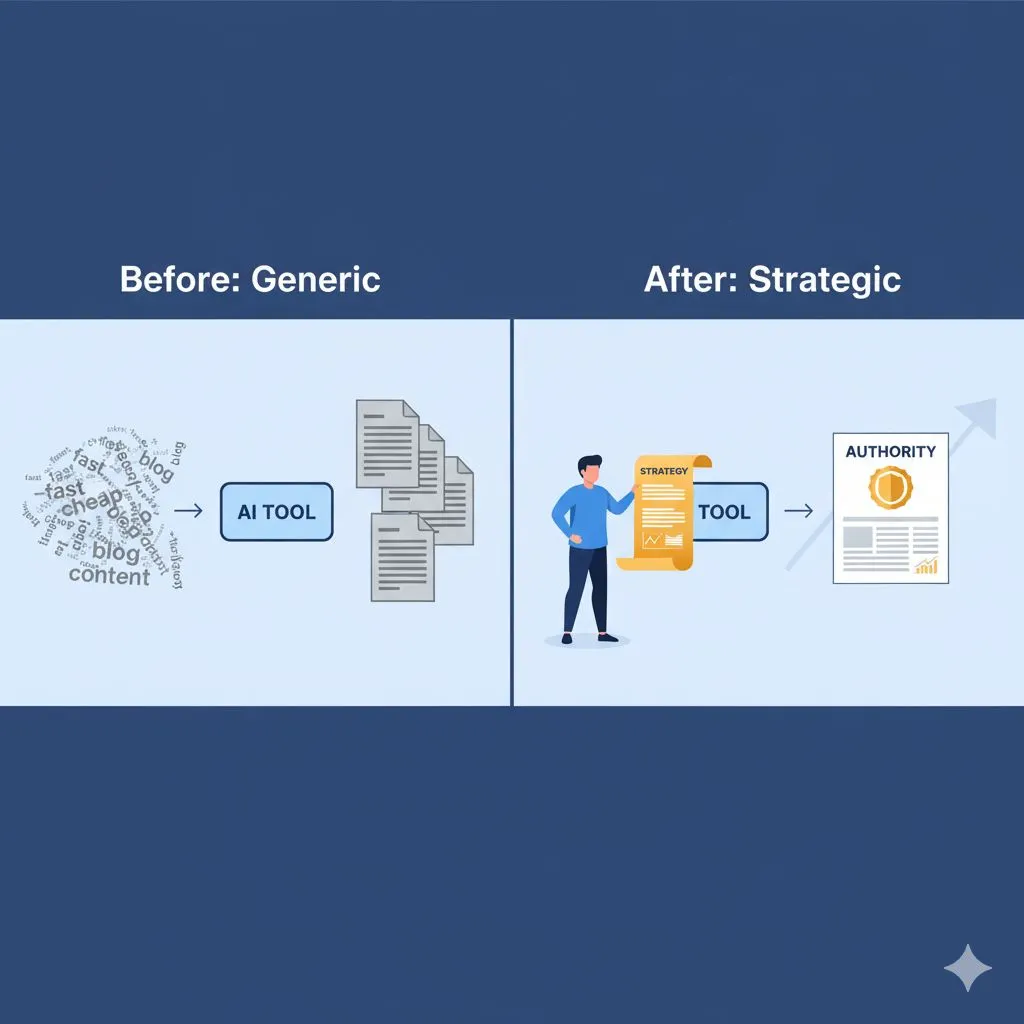
We have developed a strategic framework to help you make this pivot. It’s not just about writing faster; it’s about writing smarter to build the authority required to lead a community.
Ready to build your moat? Not ready to invest yet? Access 11 free expert AI prompt resources — lead magnets, templates, and toolkits to start building your brand community today. No credit card required.
Stop spinning your wheels with generic content. Start building a brand that AI can’t touch.
Get the Prompt-Driven Branding Playbook for Brand Managers
Or browse all 30 industry-specific prompt packs — one-time investment, lifetime access — and find the right toolkit to scale your brand.
Further Reading
• How to Train AI to Write in Your Brand Voice
• Generic vs. Strategic AI Prompts: What's the Real Difference?
• Your Complete AI Marketing Strategy Guide
• AI-Powered Content Creation vs. Outsourcing: Cost Analysis