How to Turn 15 Years of Corporate Experience into a Consulting Brand with AI
How to Turn 15 Years of Corporate Experience into a Consulting Brand with AI
Apr 04, 2026

You have spent the last 15 years building someone else’s empire. You’ve navigated complex boardroom politics, managed demanding teams, optimized broken processes, and delivered millions of dollars in value to your employers. You possess a rare, hard-earned commodity: deep, tactical expertise.
But as you contemplate the transition to consulting, a familiar anxiety sets in. You know how to do the work, but building a brand from scratch, marketing your services, and writing winning proposals while managing the day-to-day administration feels like a monumental task. You are stepping out of a structured corporate machine and into a reality where you are the CEO, the marketing department, the sales team, and the lead executor.
For many ambitious professionals, this overwhelming workload becomes the ultimate bottleneck. You don't have the budget of a massive agency, and you certainly don't have the time to waste on endless trial and error. You need to reclaim your time, reduce stress, and scale your operations to compete with the bigger players from day one.
Enter Artificial Intelligence—not as a gimmick or a generic shortcut, but as your strategic digital co-founder. When utilized with intent and precision, AI bridges the gap between your raw corporate experience and a polished, highly profitable consulting brand. It eliminates the blank page, accelerates your output, and allows you to present an expert-level brand to the market instantly.
Here is the step-by-step guide to making a successful transition to consulting, using AI to do the heavy lifting.
Step 1: Audit and Productize Your Corporate Expertise
The biggest mistake new consultants make is marketing themselves like job applicants. In the corporate world, your value is often measured by your job title and your resume. In the consulting world, clients do not care about your resume; they care about the specific, painful problems you can solve for them. You must shift from a "resume mindset" to a "solutions mindset."
To do this, you need to productize your expertise. This means taking 15 years of institutional knowledge and breaking it down into distinct, structured, and highly sellable service pillars.
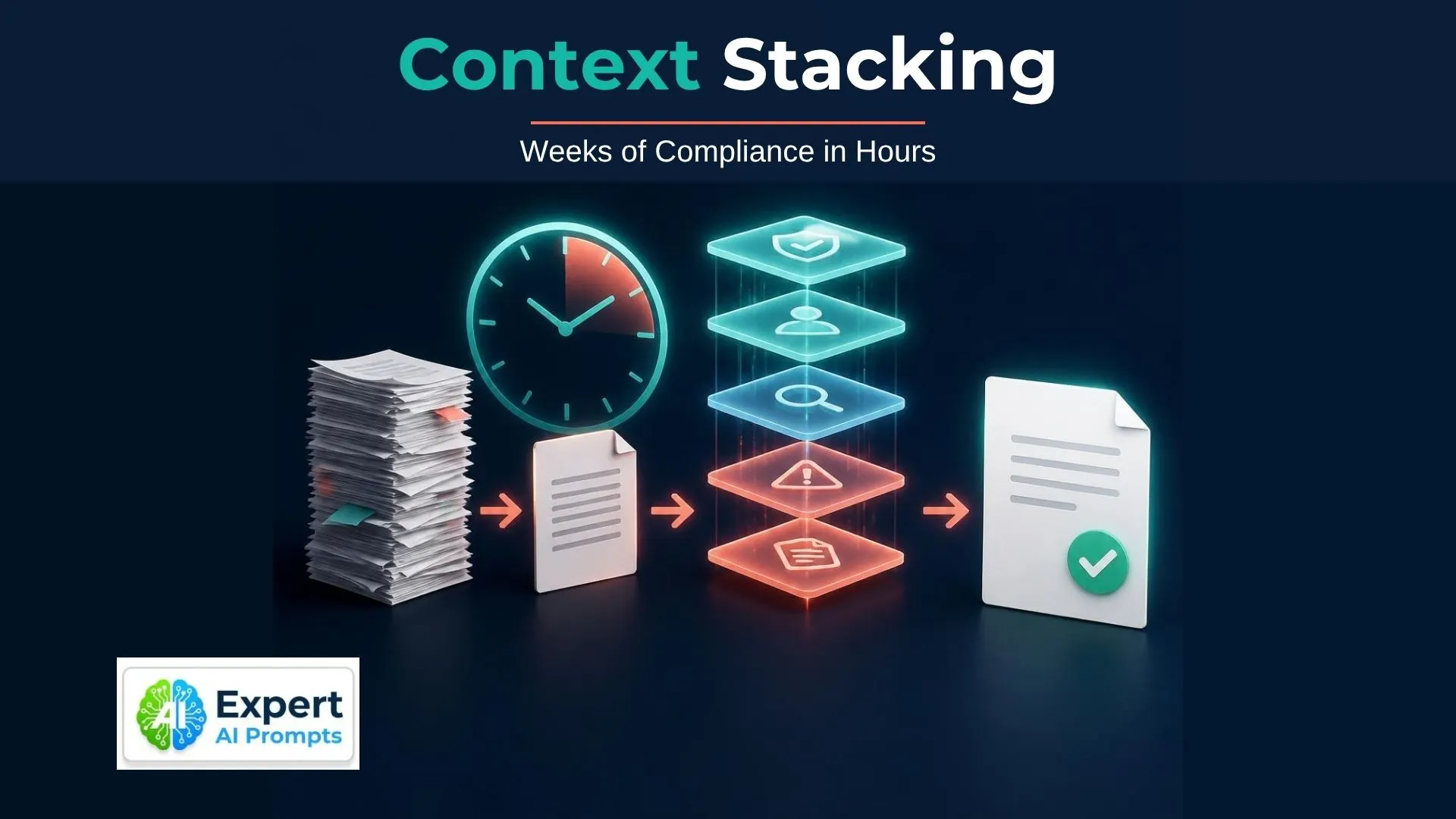
Doing this manually can take weeks of agonizing over whiteboards. With a strategic AI prompt, you can condense this process into minutes.
How to Execute This with AI:
Instead of staring at a blank screen, you can feed your professional history into an AI model (like Gemini or ChatGPT) and ask it to act as a strategic business coach. You aren't asking it to write a bio; you are asking it to analyze patterns in your career and identify high-value consulting opportunities.
The Strategy: Provide the AI with your last three job descriptions, your key achievements, and the specific tasks you excelled at. Direct the AI to identify three core consulting "products" or "pillars" based on this data. Ask it to define the target audience for each, the core problem it solves, and the estimated ROI for the client.
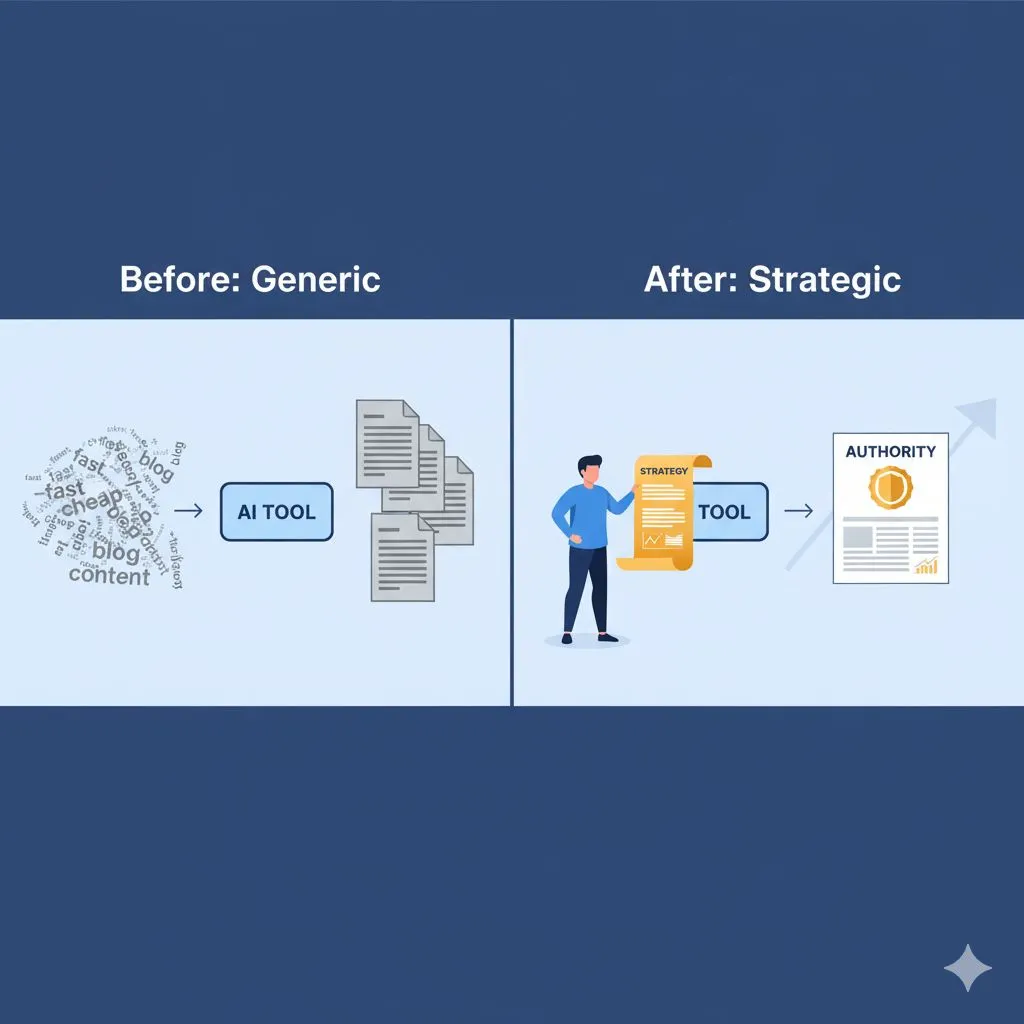
By doing this, you instantly cut through your own bias. You might think your greatest asset is "project management," but the AI might analyze your data and reveal that your most profitable niche is actually "post-merger operational integration for mid-sized tech firms." That level of specificity is what allows a solopreneur to charge premium rates and compete with established firms. You are no longer a generic consultant; you are a specialized expert with a defined product suite.
Step 2: Build a High-Caliber Consulting Brand Identity
Once you have productized your expertise, you must build a brand that reflects the caliber of your work. When making the transition to consulting, one of the most common psychological hurdles is the "small business stigma." You are transitioning from representing a recognized corporate giant to representing... yourself.
How do you convince a B2B client to hand you a six-figure contract when your team size is exactly one? You do it through impeccable brand positioning, unshakeable credibility, and expert-level messaging.
You cannot afford to sound like a novice testing the waters. Your messaging across your website, your LinkedIn profile, and your introductory emails must be sharp, authoritative, and deeply resonant with your target audience’s pain points.
Structuring Your Value Proposition
Your Value Proposition is the foundation of your brand. It is a clear, concise statement that explains exactly what you do, who you do it for, and why you are the definitive choice. Crafting this manually often results in corporate jargon that sounds impressive but means nothing.
How to Execute This with AI:
Use AI to iterate rapidly on your brand positioning. You can prompt the AI with the service pillars you developed in Step 1 and ask it to generate ten variations of a Value Proposition designed for a specific buyer persona (e.g., a stressed Chief Operating Officer).
The Strategy: Instruct the AI to avoid fluff words like "synergy," "innovative," or "best-in-class." Demand that it uses the PAS framework (Problem, Agitation, Solution).
For example: “Many mid-market logistics firms bleed 15% of their revenue due to inefficient supply chain handoffs (Problem). This causes missed deadlines and lost contracts (Agitation). We implement streamlined operational frameworks that recover that 15% and stabilize your delivery cycles in 90 days (Solution).”
Establishing Authority on LinkedIn
For a B2B consultant, LinkedIn is your storefront. It validates your existence. When you transition to consulting, your LinkedIn profile must evolve from a static CV into a dynamic landing page.
You can leverage AI to rewrite your "About" section to focus entirely on the client's needs rather than your past duties. You can also use AI to help you generate a 30-day content calendar. Simply input your new consulting pillars and ask the AI to generate 15 distinct post ideas—ranging from actionable frameworks to contrarian industry takes—that position you as a thought leader. This ensures you maintain a consistent, expert-level brand presence without spending 10 hours a week writing social media copy.
Step 3: Engineer High-Converting Proposals and Frameworks
If there is one area where corporate professionals struggle the most during the transition to consulting, it is sales. In the corporate arena, you were likely handed projects or budgets. Now, you must convince someone to part with their budget to hire you.
This requires writing proposals. But a consulting proposal is not a corporate report. A corporate report informs; a consulting proposal persuades. If your proposals look like dry, internal memos, you will lose to competitors who know how to sell the transformation.
You need a structured, ROI-driven toolkit to close deals. You need to present a proprietary methodology—your unique framework—that shows the client exactly how you will take them from their current state to their desired state.
Developing Your Proprietary Methodology
Clients do not buy your time; they buy your system. Having a named, step-by-step framework (e.g., "The 4-Phase Revenue Recovery Protocol") instantly elevates your credibility. It proves you aren't just making it up as you go along.
How to Execute This with AI:
You can use AI to build this framework. Input the standard process you use to solve a client's problem, and ask the AI to organize it into a visually appealing, 4-to-5 step methodology. Ask the AI to name the methodology, outline the specific deliverables at each phase, and define the success metrics for each step.
Writing the Proposal
Writing proposals is a massive time sink. It can take days to draft a custom proposal, eating into the time you should be spending on actual client delivery or business development.
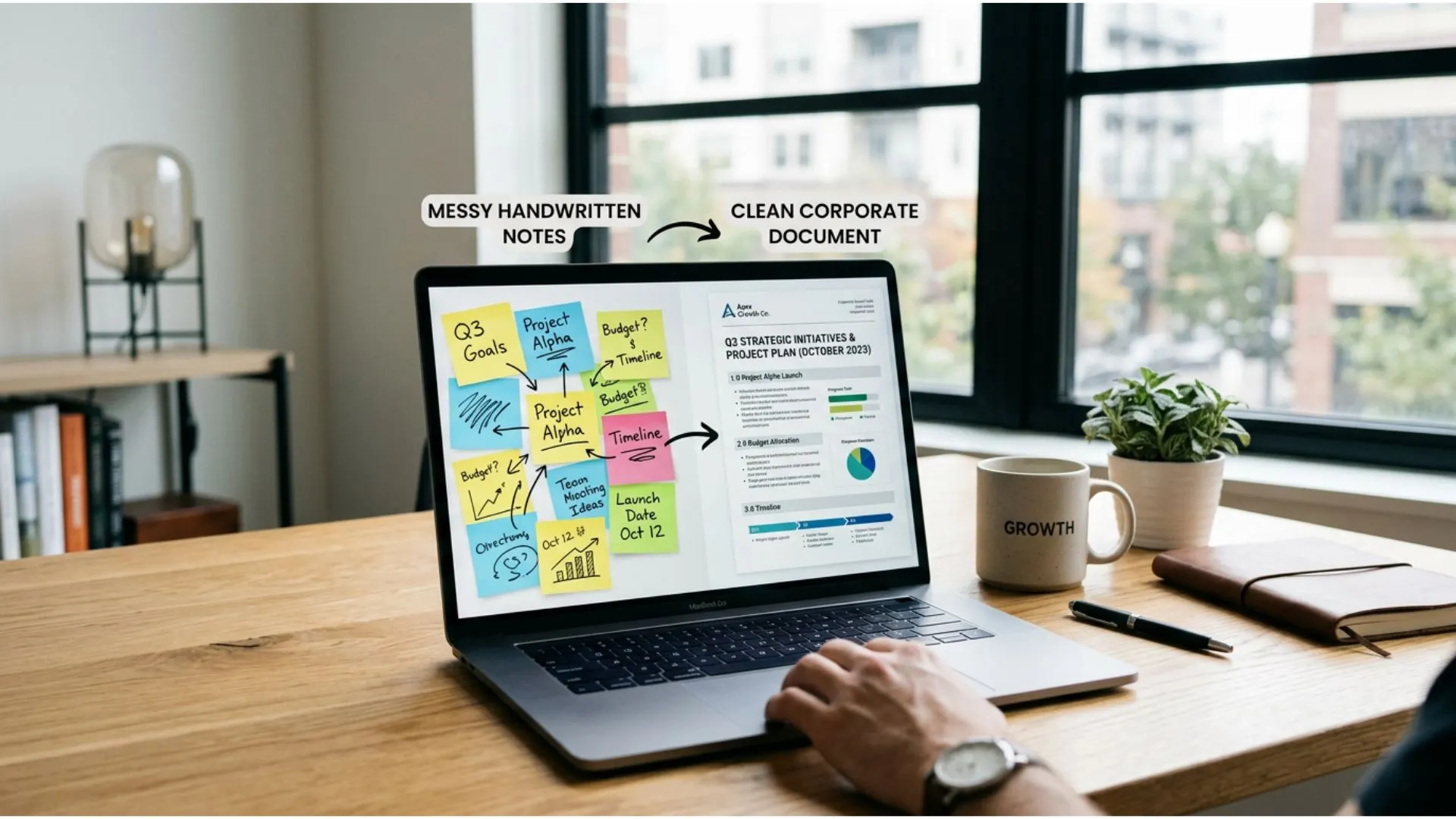
AI allows you to automate the heavy lifting of proposal writing without sacrificing personalization. You can create a master prompt that contains your brand voice, your methodology, and your pricing structures. When you finish a discovery call with a prospect, you simply feed your raw notes into the AI and apply your master prompt.
The Strategy: Direct the AI to structure the proposal meticulously:
- Executive Summary (focused purely on their pain points and your solution).
- The Objectives (what success looks like).
- The Methodology (your AI-refined framework).
- Investment & ROI (framing your cost as a fraction of the value created).
By using AI strategically here, you cut proposal writing time from 8 hours to 45 minutes, resulting in a polished, expert-level output that wins the business.
Step 4: Streamline Operations to Scale Without the Stress
The ultimate goal of your transition to consulting is not just to replace your corporate salary, but to achieve time freedom and financial independence. However, the reality for many solopreneurs is that they end up working 60-hour weeks, drowning in administrative tasks, reporting, and client communication. You escape the corporate rat race only to build a customized hamster wheel for yourself.
To scale smartly and compete with larger agencies, you must ruthlessly eliminate workflow bottlenecks. You cannot afford to trade time for money on repetitive tasks.
Automating the Day-to-Day
AI is your operational leverage. You can use it to standardize the entire client lifecycle.
- Client Onboarding: Use AI to draft comprehensive onboarding questionnaires and welcome packets that make your new clients feel like they just hired a premium, top-tier firm.
- Status Reporting: Do not spend your Friday afternoons writing project updates. Feed your weekly bullet points into an AI tool and have it generate a crisp, professional status report that highlights wins, flags risks, and outlines next steps.
- Deliverable Generation: Whether you are creating a market analysis, a change management communication plan, or a training workshop outline, AI can generate the foundational first drafts. You then use your 15 years of expertise to refine, edit, and perfect the output. AI does the 80% baseline work; you apply the 20% expert polish.
This is the secret to scaling a boutique consulting business. By letting AI handle the heavy lifting of content creation and administration, you reclaim hours every week. That time can be reinvested into high-level strategy, business development, or simply enjoying the personal freedom you started this business to achieve.
Conclusion: From Corporate Operator to Confident Strategist
Making the transition to consulting after 15 years in the corporate world is a profound shift. It requires courage, adaptability, and a willingness to step out of your comfort zone. But you do not have to do it armed only with sheer willpower and a blank word document.
By integrating AI strategically into your business model from day one, you bypass the overwhelming trial-and-error phase that sinks so many new entrepreneurs. You can instantly productize your expertise, establish a credible brand, engineer high-converting proposals, and streamline your operations.
You already have the knowledge. You already have the experience. AI is simply the leverage you need to package that value and deliver it to the market efficiently. It is time to stop hustling in the weeds and start scaling with intention.
Ready to stop spinning your wheels and start winning high-value clients? You don't need to build your AI prompts from scratch. Get the exact, field-tested frameworks designed specifically for consultants to automate proposals, reports, and client workflows.
Scale Smarter. Grow Faster. Begin Here: https://expertaiprompts.com/consultants-toolkit-ai-proposals-reports