Validating Your Side Business Idea This Weekend Using AI Prompts
Validating Your Side Business Idea This Weekend Using AI Prompts
Apr 04, 2026

You already have a full plate. Between juggling client delivery, putting out daily fires, and managing the endless operational tasks of your current business or career, your calendar is tapped out. Yet, that ambition—the drive to scale, create new revenue streams, and build something bigger—hasn't faded. You want to start a new venture, but the thought of spending another 10 hours a week on trial-and-error research feels impossible.
The harsh reality? Ideas are cheap; validation is expensive. Most entrepreneurs waste weeks, sometimes months, researching markets, defining audiences, and second-guessing their positioning. But you don't have months. If you want to start a side gig with AI, you need to leverage technology not just to do the work faster, but to do it with strategic depth.
Welcome to your weekend validation playbook. This isn't about generic, copy-and-paste shortcuts that produce robotic fluff. This is about using high-leverage, expertly crafted AI prompts to compress a month’s worth of business development into a single weekend. By Monday morning, you won't just have an idea—you'll have a fully validated, market-ready concept, built on a foundation of expert-level strategy.
Section 1: The Problem with Traditional Validation (and Your Unfair Advantage)
The traditional path to validating a business idea is a bottleneck. It involves tedious competitor research, surveying audiences who may not even exist yet, and drafting endless variations of a business plan. For the time-poor entrepreneur, this process is a massive barrier to entry.
You don't lack the expertise; you lack the bandwidth.
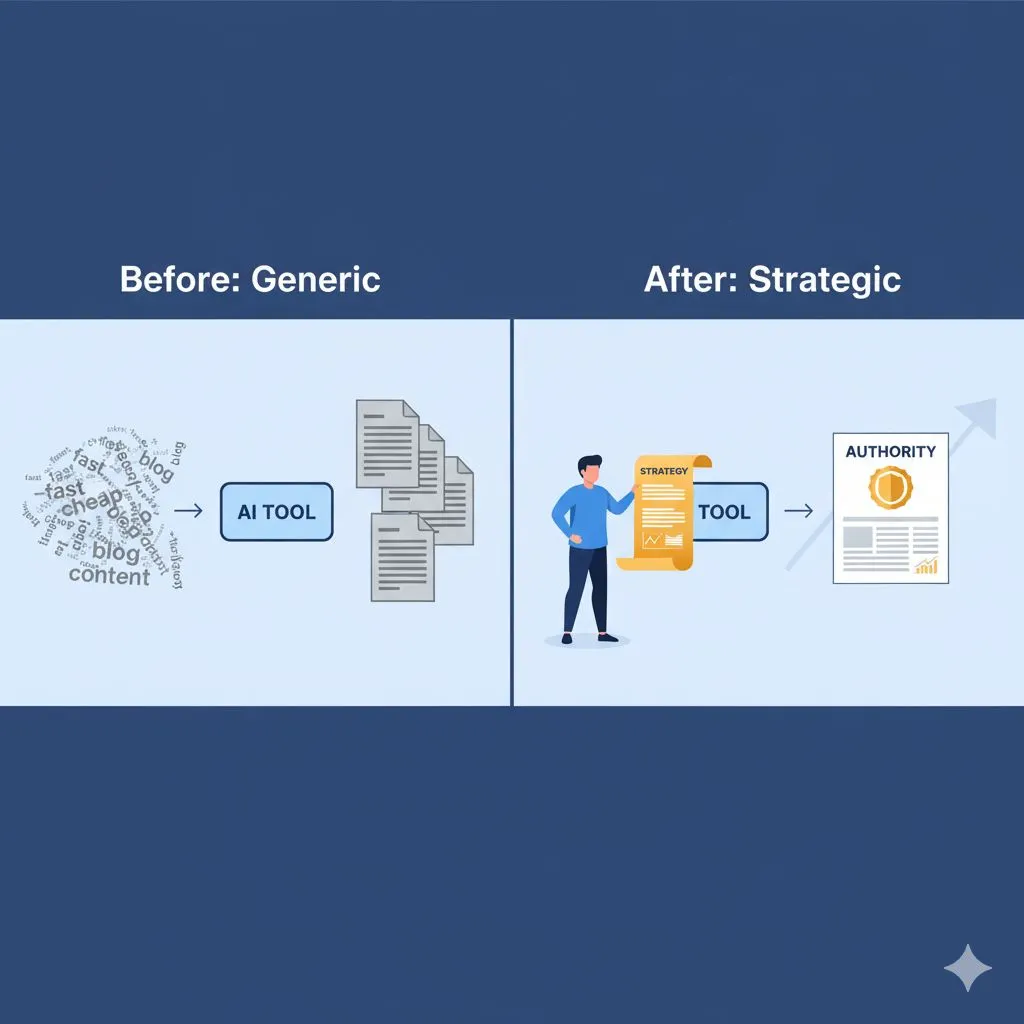
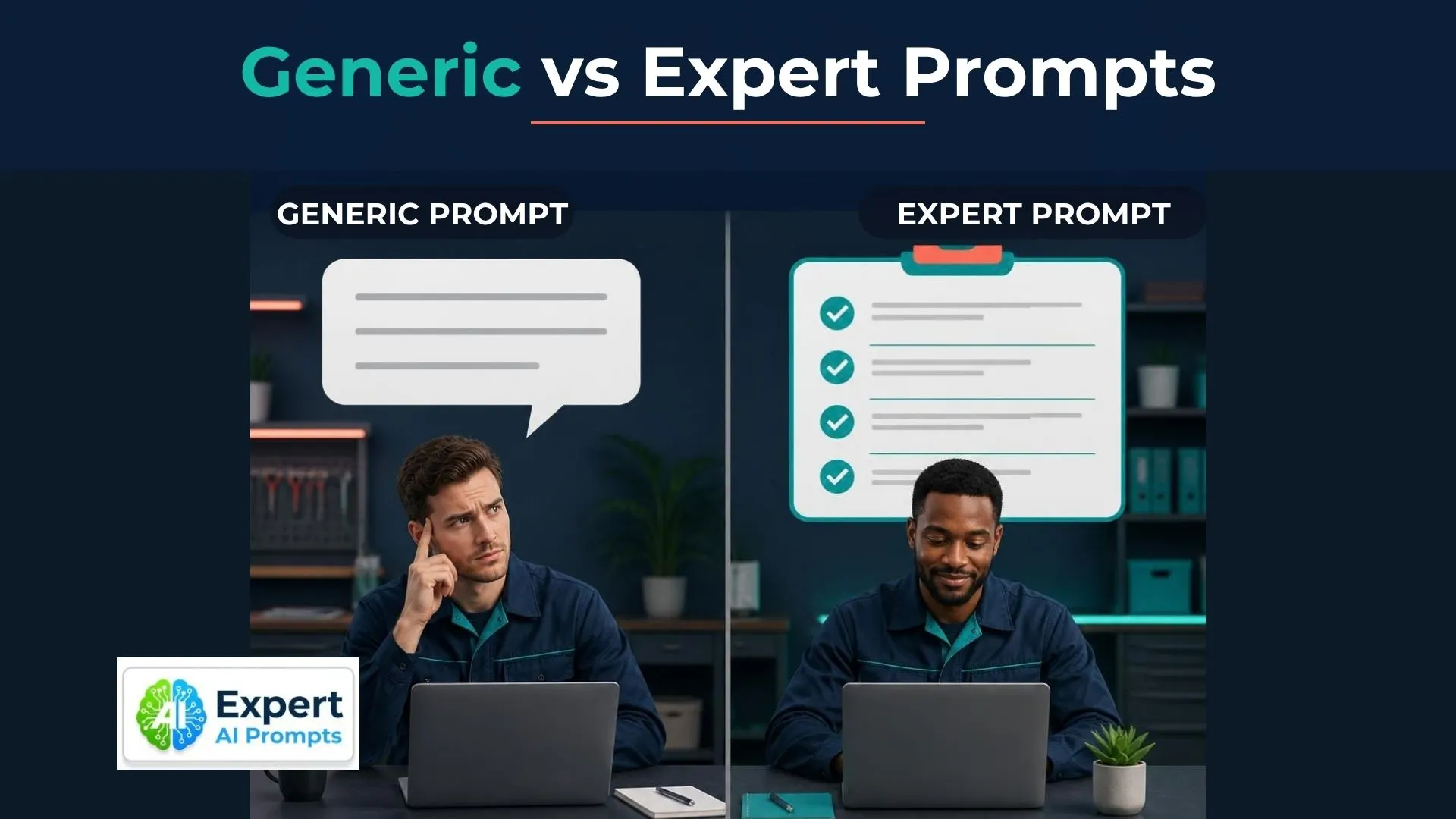
When you decide to start a side gig with AI, you are effectively hiring a world-class strategic sounding board. However, there is a catch. Generic AI tools fed with lazy prompts ("Write me a business plan for a marketing agency") yield generic, unusable results. It leads to the exact skepticism many business owners feel after trying AI—it sounds promising, but the output isn't high-quality enough to represent your brand.
Your unfair advantage lies in the prompt architecture. By using structured, industry-specific prompts that demand expert-level frameworks, you turn an AI from a basic text generator into a high-level strategic consultant. This playbook will guide you through a tightly structured, three-day sprint. We are replacing the heavy lifting of raw data processing with high-level decision-making. You will step out of the operator role and into the strategist role, exactly where you belong.
Section 2: Friday Night — Defining Your Offer and Audience
The weekend begins now. Your goal for Friday night isn't to write a 50-page business plan. It’s to gain absolute clarity on what you are selling and who desperately needs it. We are going to eliminate the blank page syndrome entirely.
Step 1: Crystalizing the Value Proposition
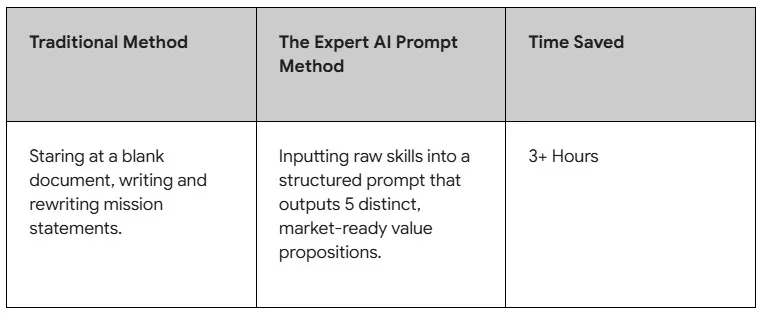
Most new businesses fail because their offer is too vague. Instead of brainstorming from scratch, we use AI to refine your raw idea into a sharp, irresistible value proposition.
The AI Strategy:
Instead of asking AI to "guess" your business, feed it your core skills, your target industry, and the primary problem you want to solve. Instruct the AI to use established frameworks, like the "Value Proposition Canvas," to generate distinct angles.
Step 2: Building the Customer Persona
You cannot sell a high-quality service or product if you don't intimately understand the buyer's pain points.
The AI Strategy:
Prompt your AI to build a comprehensive psychographic and demographic profile. Don't just ask for an "ideal client." Ask the AI to identify their daily workflow bottlenecks, their skepticism toward current market solutions, and the specific triggers that make them buy.
- Actionable Tip: Ask the AI to generate a "Day in the Life" narrative for your target customer. This provides immediate, empathetic insight into exactly when and where your new side gig will intersect with their daily routine.
By the end of Friday night, you should have a one-page document detailing a razor-sharp offer and a deep psychological profile of your exact buyer. You haven't written a single line from scratch—you've acted as the executive editor, curating the best strategic outputs generated by your AI. You are now ready to see if the market actually wants this.
Section 3: Saturday — Competitor Analysis and Market Positioning
Saturday is about reality-checking your Friday night concept. A great idea in a vacuum is useless; it must survive in a competitive landscape. Traditionally, competitor analysis requires hours of Googling, reading through competitors' websites, and analyzing their pricing models.
When you start a side gig with AI, you put market research on autopilot. Your goal today is to find the "white space"—the exact gap in the market where your competitors are failing and where you can dominate.
Step 1: Identifying the Industry Gaps
Your competitors, especially the larger players, have blind spots. They might be too expensive, too slow, or their customer service might be lacking.
The AI Strategy:
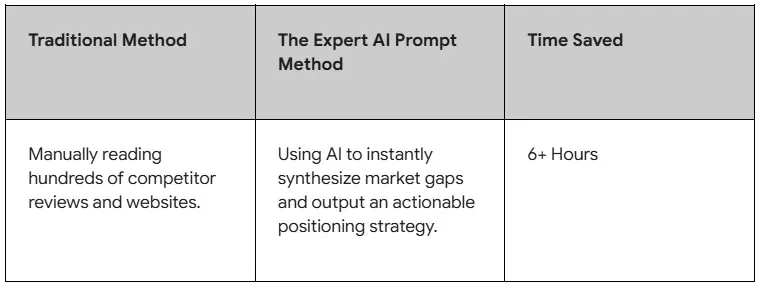
Feed the AI a list of 3-5 major players in your intended niche. Prompt the AI to act as a critical market analyst. Ask it to synthesize common negative reviews, identify gaps in their service offerings, and highlight trends they are currently ignoring.
Step 2: Defining Your Unique Competitive Advantage
Once you know where the big players are failing, you can position your side gig as the direct solution to those failures.
The AI Strategy:
Use AI to cross-reference your Friday night Value Proposition with your Saturday morning Competitor Gaps. Prompt the AI to generate a "Positioning Matrix."
- The Output: The AI should provide you with three distinct positioning strategies. For example, if competitors are known for being complex and bloated, your AI-generated strategy will position you as the "lean, affordable, and rapid-deployment" alternative.
By Saturday evening, you have moved past the "good idea" phase. You now have a strategically positioned business concept that is designed specifically to exploit the weaknesses of current market leaders. You are building a scalable, competitive model without having spent a single dollar on market research firms.
Section 4: Sunday — Building Your Minimum Viable Pitch (MVP)
Sunday is about execution. You have the offer, the audience, and the positioning. Now, you need the assets to actually validate this in the real world. You need a Minimum Viable Pitch (MVP). This is the messaging you will use to attract your very first clients or customers.
Step 1: Structuring Core Messaging
You need copy that converts, not just words that sound pretty.
The AI Strategy:
Prompt the AI to act as an expert direct-response copywriter. Feed it the data you've gathered over the last two days. Instruct it to generate a core landing page outline, a cold outreach email template, and three LinkedIn posts designed to test market resonance. Demand that it uses proven copywriting frameworks like PAS (Problem, Agitation, Solution) or AIDA (Attention, Interest, Desire, Action).
Step 2: The Pre-Launch Strategy
Validation requires getting your pitch in front of eyeballs.
The AI Strategy:
Ask the AI to generate a 14-day lean launch roadmap. This roadmap should dictate exactly what you need to do every day—using just 30 minutes a day—to get your MVP in front of your target audience.
By Sunday night, you possess a fully fleshed-out business concept, a strategic positioning document, high-converting copy assets, and an execution roadmap.
Conclusion: From Concept to Confident Launch
Starting a new venture shouldn't mean sacrificing your weekends to the grind of endless, unstructured research. By strategically choosing to start a side gig with AI, you have leveraged expert-level prompts to compress weeks of business development into just 48 hours. You’ve bypassed the overwhelming trial-and-error phase and moved straight to a credible, professional, and competitive launch strategy.
You’ve proven that you can scale smarter, not harder. But to truly give this new side gig the attention it deserves, you need to ensure your current daily operations aren't draining your time. If you’re still bogged down by manual tasks in your primary business, this new venture will eventually stall.
It is time to reclaim your freedom from day-to-day overwhelm. Are workflow bottlenecks and repetitive tasks stealing the time you need to grow?
Stop spinning your wheels and start scaling. Take 2 minutes to identify exactly where you are losing hours in your week. Click here to take the Business Time-Killer Quiz and discover how Expert AI Prompts can streamline your operations today.