Navigating AI Copyright Laws: A Survival Guide for Creators
Navigating AI Copyright Laws: A Survival Guide for Creators
Feb 03, 2026
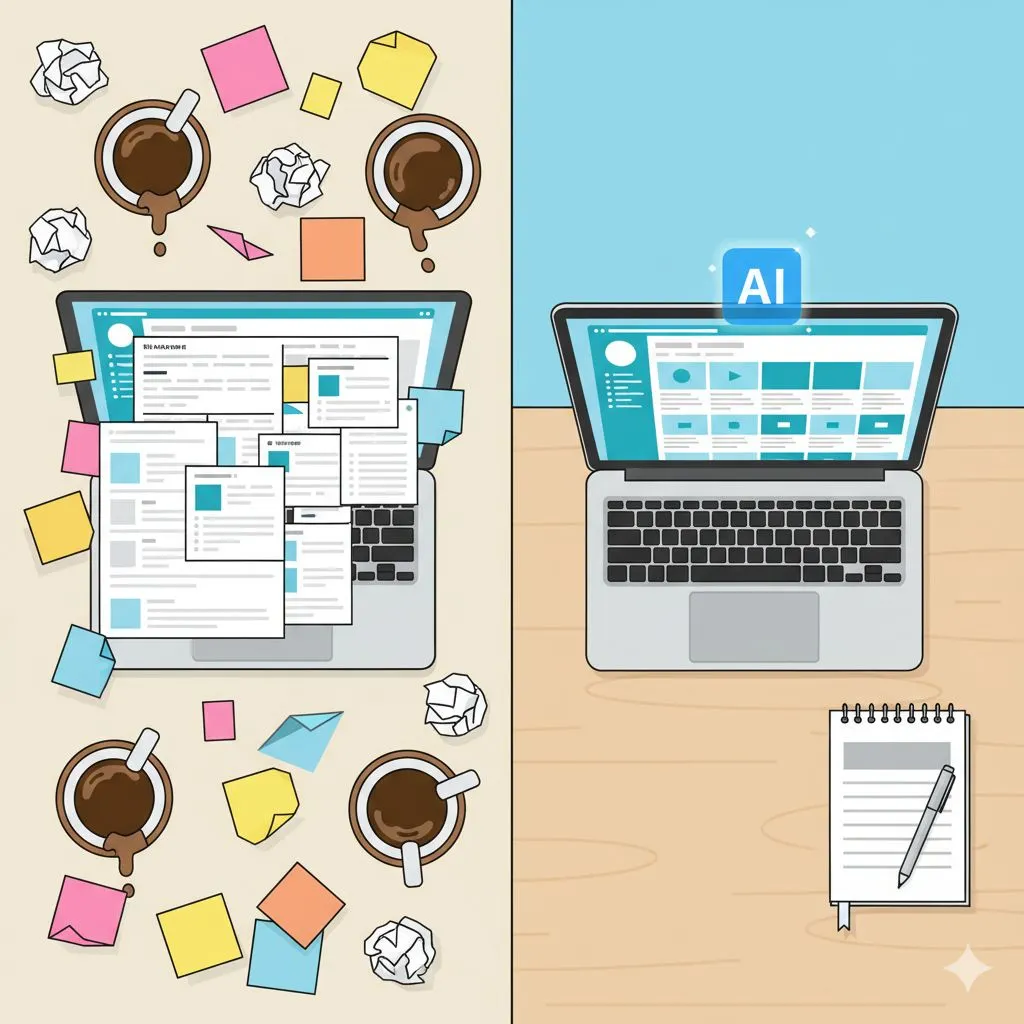
For a small business owner like you, Alex, Artificial Intelligence feels like the miracle cure for a chronic lack of time. It promises to handle the blog posts, the email sequences, and the graphic design tasks that usually keep you working until midnight. Our complete guide to using AI in your small business covers exactly how entrepreneurs integrate these tools safely and efficiently from day one. But alongside the excitement of scaling your business without hiring more staff, there is a nagging question that often halts progress: Is this actually legal?
You’ve likely seen the headlines. Artists suing tech giants, writers striking over digital rights, and governments scrambling to draft ai regulation. For an entrepreneur trying to build a credible, long-term brand, the uncertainty can be paralyzing. You want to use these tools to compete with the big players, but you can’t afford a lawsuit or a reputation crisis.
This guide isn’t about scaring you away from innovation. It’s about equipping you with the knowledge to navigate the legal grey areas confidently. By understanding the current landscape of AI copyright, you can integrate these powerful tools into your workflow safely, ensuring that your pursuit of efficiency doesn't cost you your intellectual property.
Disclaimer: I am an AI, not an attorney. This content is for informational purposes and should not be considered legal advice. For specific legal concerns regarding your business, always consult with a qualified intellectual property lawyer.
The Core Dilemma: Who Owns the Output?
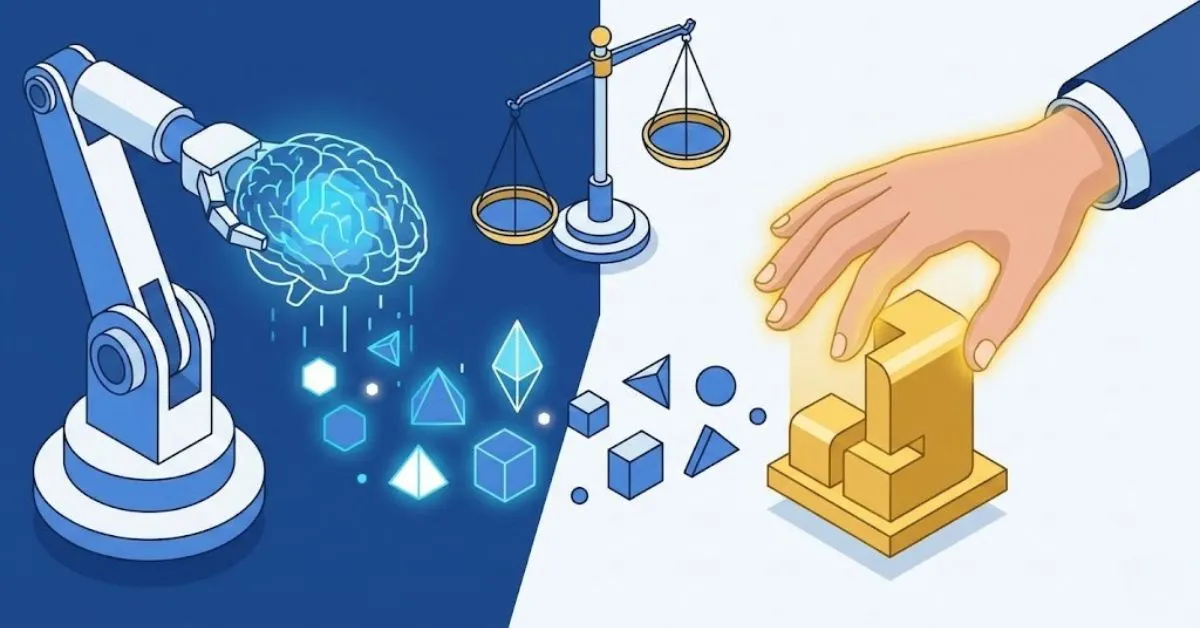
The first hurdle in navigating ai regulation is understanding ownership. If you prompt an AI to write a marketing strategy or design a logo, do you own the copyright to that asset?
As of 2024, the answer from the United States Copyright Office (USCO) and many international bodies is a resounding: No, not entirely.
Explore our Trust, Security and Risk Mitigation hub to understand how structured prompt systems protect your brand reputation and legal standing.
The "Human Authorship" Requirement
Copyright law has traditionally been predicated on the idea of human creativity. The USCO has explicitly stated that works created solely by artificial intelligence are not eligible for copyright protection. This stance was solidified in recent high-profile decisions, such as the rejection of copyright for imagery created by the AI system "Creativity Machine" (Thaler v. Perlmutter).
Why does this matter to you?
If you generate a blog post using ChatGPT and paste it directly onto your website without editing, you effectively have no copyright claim over that text. Theoretically, a competitor could copy-paste that same text onto their site, and you would have limited legal recourse to stop them.
Prompts vs. Creative Control
Many creators argue that the prompt is the creative act. After all, you spent time crafting the perfect prompt to get the result, right?
Currently, regulators view prompts more like "instructions to a commissioned artist" rather than the creative act itself. If you hire a painter and say, "Paint me a sunset," you don't own the copyright just because you gave the instruction—the painter does. But since an AI isn't a human "painter," the copyright falls into a void. The machine can't own it, and you didn't "make" it in the eyes of the law.
The "Zarya of the Dawn" Precedent
A pivotal case involved a comic book titled Zarya of the Dawn. The author, Kristina Kashtanova, used AI to generate the images but wrote the text and arranged the layout herself.
- The Ruling: The USCO granted copyright for the text and the arrangement of the images (which were human decisions) but excluded the individual AI-generated images themselves from protection.
Key Takeaway for Alex Rivers:
You cannot rely on AI to generate your "crown jewels." If your business relies entirely on a logo or a character generated 100% by AI, you do not own your brand's most valuable asset. However, this doesn't mean AI is useless—it means your workflow needs to shift from "generation" to "collaboration," which we will cover in later sections.
The Infringement Risk: Using AI Without Getting Sued
While ownership is about protecting what you make, infringement is about making sure you don't accidentally steal from someone else. This is where the ai regulation landscape gets particularly thorny for business owners who prioritize credibility.
Generative AI models (like GPT-5, Midjourney, or Claude) are trained on massive datasets scraped from the internet. These datasets contain billions of images, articles, and code—much of which is copyrighted.
The "Fair Use" Debate
Currently, major lawsuits are playing out in courts globally (e.g., The New York Times vs. OpenAI). The tech companies argue that training an AI on copyrighted data falls under "Fair Use"—similar to a student reading textbooks to learn a subject. The copyright holders argue that it is theft, especially when the AI can reproduce the style or substance of the original works.
Until these court cases are settled, the legal ground is shifting. However, for a user like you, the risk generally lies in the output, not the training.
Substantial Similarity: The Danger Zone
Copyright infringement occurs when a new work is "substantially similar" to a protected original work.
- Text Risks: If you ask an AI to "write an opening scene for a wizard story in the exact style of J.K. Rowling," and it produces text that closely mimics Harry Potter, you are treading on dangerous ground.
- Image Risks: This is more volatile. If you prompt an image generator to create "a plumber jumping on a turtle in the style of Nintendo," and use that image in your ads, you are inviting a trademark or copyright lawsuit.
Warning Sign: Overfitting.
Sometimes, if an AI has seen an image too many times during training (like the Mona Lisa or Mickey Mouse), it might "memorize" it. If you ask for a generic prompt and the AI returns a recognizable character or logo, do not use it.
Brand Reputation and Trust
For Alex Rivers, the risk isn't just legal—it’s reputational. You are fighting to compete with larger agencies and businesses. Your value proposition relies on quality and trust.
- The Hallucination Problem: AI can confidently state false facts. Publishing AI content without fact-checking can destroy your authority in your niche. We cover this risk in detail in our advisory on AI hallucination risks for consultants and credibility-focused businesses.
- The Plagiarism Trap: Even unintentional plagiarism can get your site penalized by Google or called out on social media.
If your marketing materials look like a cheap knock-off of a famous artist, or if your blog post is flagged for plagiarism, the damage to your brand perception can be more costly than a lawsuit. Larger competitors have legal teams to check this; you have to rely on smart processes.
Navigating Terms of Service
Beyond federal laws, you are also bound by the Terms of Service (ToS) of the tools you use.
- Commercial Rights: Most paid tiers of AI tools (like Midjourney or ChatGPT Plus) grant you commercial rights to the images you generate.
- Free Tiers: Some free versions of AI tools explicitly forbid commercial use.
Action Step: Audit your tool stack. Are you on the free plan of an image generator? Check the fine print. Using a free-tier image for a client’s paid advertising campaign could be a breach of contract with the software provider.
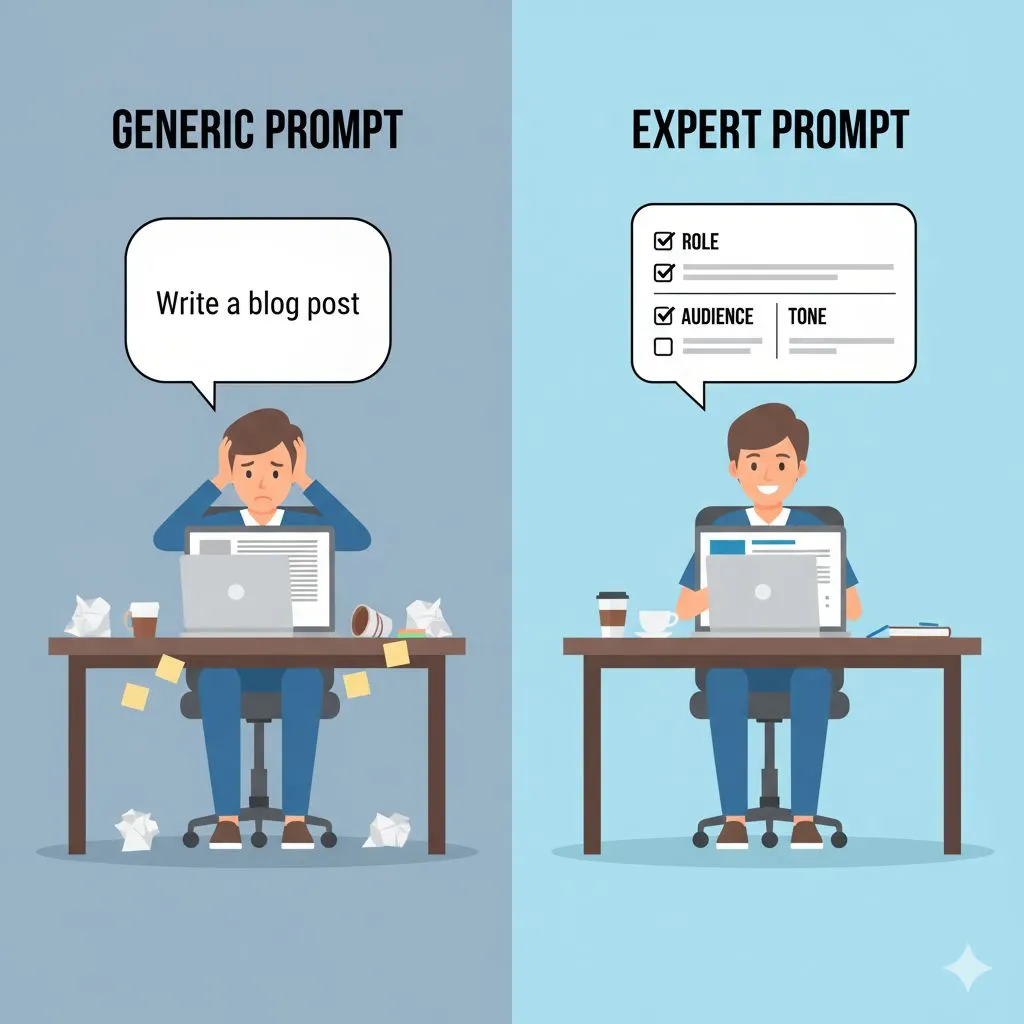
Use our free Generic-to-Expert AI Content Audit Checklist to review your current tool stack and flag any compliance or quality gaps before they become costly problems.
Practical Workflows: The "Human-in-the-Loop" Strategy
Now that we’ve covered the risks, let’s talk about the solution. You need efficiency, but you also need ownership and safety. The answer lies in the "Human-in-the-Loop" methodology. This is how you transform AI from a liability into a high-powered assistant.
To gain copyright protection (and avoid feeling like a fraud), there must be "significant human transformation" of the AI's output. Here is a workflow designed for the ambitious solopreneur.
1. The Sandwich Method
Think of your content creation process as a sandwich. The bread is human; the meat is AI.
- Top Slice (Human Strategy): You define the strategy, the tone, the unique angle, and the structure. You write the detailed prompt based on your industry expertise.
- The Meat (AI Generation): The AI does the heavy lifting—drafting the 2,000-word article, generating 50 variations of a headline, or creating a base texture for a design.
- Bottom Slice (Human Refinement): This is where copyright is born. You rewrite the intro, fact-check the data, inject personal anecdotes, adjust the voice, and edit the structure.
By the time you hit publish, the work should be a hybrid. If you can prove that the final output is significantly different from the raw AI draft, you have a much stronger claim to copyright.
2. Document Your Process
In the unlikely event that your ownership is challenged (or if you try to register a copyright), you need receipts.
- Save Your Prompts: Keep a log of the prompts used. Our free 1-Page Perfect Prompt Framework Guide gives you a structured template to document, refine, and reuse your best prompts with consistent results.
- Version Control: Save the "Raw AI Output" as Version 1, and your "Human Edits" as Version 2. This trail proves the human effort involved.
3. Use AI for Ideation and Structure, Not Final Product
The safest way to use AI is for tasks that don't require copyright.
- Safe: "Give me 10 ideas for blog posts about gardening." (Ideas aren't copyrightable, so you're safe).
- Safe: "Create an outline for a sales proposal." (You fill in the actual content).
- Risky: "Write a poem about the ocean" -> Published without edits.
4. The 60/40 Rule
Aim for a balance where at least 40% of the final value comes from your human insight.
- For Writers: Use AI to conquer the blank page, but rewrite every sentence to match your brand voice. The Prompt-Driven Branding Playbook equips you with 50 industry-specific prompts designed to produce on-brand, expert-level content every time — without starting from scratch.
- For Designers: Use AI to generate elements (a background, a texture), but composite them into a final design using Photoshop or Canva. The composition is your human creation.
5. Utilize Private Mode and Opt-Outs
Many AI tools use your inputs to train their future models. If you are inputting sensitive client data or proprietary business secrets, this is a major leak.
- Check Settings: Go to the settings of your AI tools and look for "Data Controls."
- Opt-Out: Turn off "Chat History & Training" (in ChatGPT, for example) when discussing sensitive IP.
- Enterprise Solutions: If you scale enough, consider Enterprise licenses which usually guarantee that your data is not used for training.
This workflow doesn't just protect you legally; it protects your quality. It ensures that the content you put out is "Expert-Level"—the kind that builds trust—rather than generic robotic text that clients ignore.
Looking Ahead: The Future of AI Regulation
You are building a business for the long haul, so you need to look at where the puck is going. AI regulation is moving fast, and what is a "grey area" today might be black and white tomorrow.
The EU AI Act: The Global Standard?
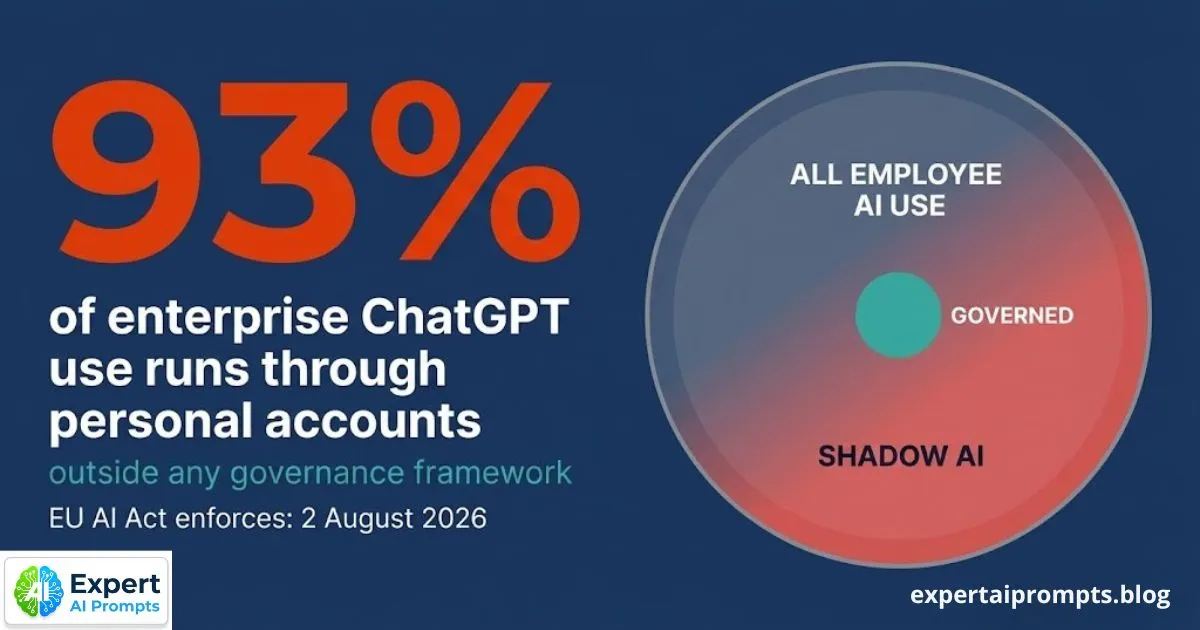
The European Union recently passed the AI Act, the world's first comprehensive AI law. Even if you are based in the US or Australia, this matters. Just as GDPR changed website cookies globally, the EU AI Act will force major AI companies to be more transparent.
- Transparency: AI models will likely be required to disclose more about their training data.
- Labeling: There is a push for mandatory labeling of deepfakes and AI-generated content.
Watermarking and Detection
Tech companies are developing "invisible watermarks"—metadata hidden in AI images and text that identifies them as machine-made.
- The Impact on You: In the future, Google and social platforms may automatically downrank content detected as "100% AI" without human editing. This reinforces the need for the "Human-in-the-Loop" strategy we discussed.
US Policy: The Copyright Office is Watching
The USCO has launched an initiative to study AI and copyright. We can expect clearer guidelines in the next 1–2 years regarding exactly how much human modification is needed to qualify for protection. Staying informed is key.
Conclusion: Turn Compliance Into Confidence
For an entrepreneur like Alex Rivers, the goal isn't to become a legal scholar; it's to operate with freedom. The fear of ai regulation shouldn't stop you from using the most powerful productivity tool of our generation. It should just make you smarter about how you use it.
By accepting that you are the "Director" and the AI is the "Intern," you solve the ownership problem. You ensure quality control. You inject the human strategy that commands high rates. And most importantly, you insulate your business from legal risks.
To recap:
- Don't rely on raw AI for your brand's core IP (logos/mascots).
- Assume raw output isn't copyrighted, so add significant human value.
- Audit your tools to ensure you have commercial rights.
- Stay human-centric. Your clients buy from you, not the robot.
The businesses that win in the next decade won't be the ones that avoid AI, nor the ones that let AI run on autopilot. The winners will be the hybrids—the strategic owners who use AI to amplify their human expertise.
Ready to scale your business safely? We’ve curated a list of tools, legal templates, and checklists specifically for creators navigating this new landscape.
Get Your AI Resource Pack Here
Start with a free resource — get instant access to our free prompts and tools and build your compliant, efficient AI workflow today.
Ready to go further? View the full Expert AI Prompts pricing catalog and choose the prompt pack built specifically for your industry.
Further Reading
1. AI for Beginners: A No-Jargon Guide for Entrepreneurs
2. Trust, Security and Risk Mitigation — Expert AI Prompts
3. Common AI Prompt Mistakes to Avoid
4. Honest Expert AI Prompts Review: Are the Time Savings Worth the Cost?