Micro-Influencers and AI: The New Power Couple
Micro-Influencers and AI: The New Power Couple
Feb 04, 2026

Introduction
For a small business owner or solopreneur, the digital marketing landscape often feels like a rigged game. You are competing for attention against industry giants who have seven-figure budgets, dedicated agency teams, and the ability to plaster their brand across every available screen. Meanwhile, you are wearing every hat in your business—CEO, marketing director, customer support lead, and content creator. The ambition to scale is there, but the resources are not.
However, a significant shift is occurring in influencer marketing trends that is leveling the playing field. Our complete guide to AI for social media covers the full strategic picture of how these forces are reshaping digital marketing for small businesses. The era of the million-dollar celebrity endorsement is fading, replaced by a craving for authenticity and niche expertise. At the same time, Artificial Intelligence (AI) has matured from a novelty into a practical business utility.
When you combine these two forces—Micro-Influencers (high trust, low cost) and AI (high efficiency, low time)—you create a new power couple. For the overworked entrepreneur, this intersection isn't just a trend; it is a lifeline. It offers a way to scale brand credibility and reach without hiring a massive team or bankrupting the business.
The Rise of the Micro-Influencer (Why Smaller is Better)
To understand why this strategy works, we must first analyze the shift in consumer psychology. The modern consumer is skeptical. They are tired of polished, overly produced ads that feel disconnected from reality. They crave connection, and they trust "people like them."
Defining the Micro-Tier
Micro-influencers are typically defined as creators with follower counts ranging from 10,000 to 100,000. Unlike mega-influencers or celebrities, these creators usually manage their own accounts and engage directly with their comments. They aren't just broadcasting; they are community building.
Trust Over Reach
For a business owner like Alex Rivers, chasing "reach" (the total number of eyes on a post) is often a vanity metric. The real currency is "trust." Analysis consistently shows that micro-influencers boast significantly higher engagement rates than their celebrity counterparts. Their audiences view them as experts or peers rather than untouchable stars. When a micro-influencer recommends a product, it feels like a tip from a knowledgeable friend, not a paid slot on a billboard.
Cost-Efficiency for the ROI-Focused
Perhaps the most critical factor for the small team is cost. Collaborating with a macro-influencer can cost tens of thousands of dollars for a single post—a risk most small businesses cannot afford. Micro-influencers, however, are often open to product-exchange deals, affiliate models, or modest fees that fit within a tight P&L. This allows you to diversify your risk by working with five or ten micro-influencers for the price of one mid-tier creator.
The AI Revolution: Removing the "Time Tax"
If micro-influencers are so effective, why hasn't every small business owner adopted this strategy? The answer is simple: Time.
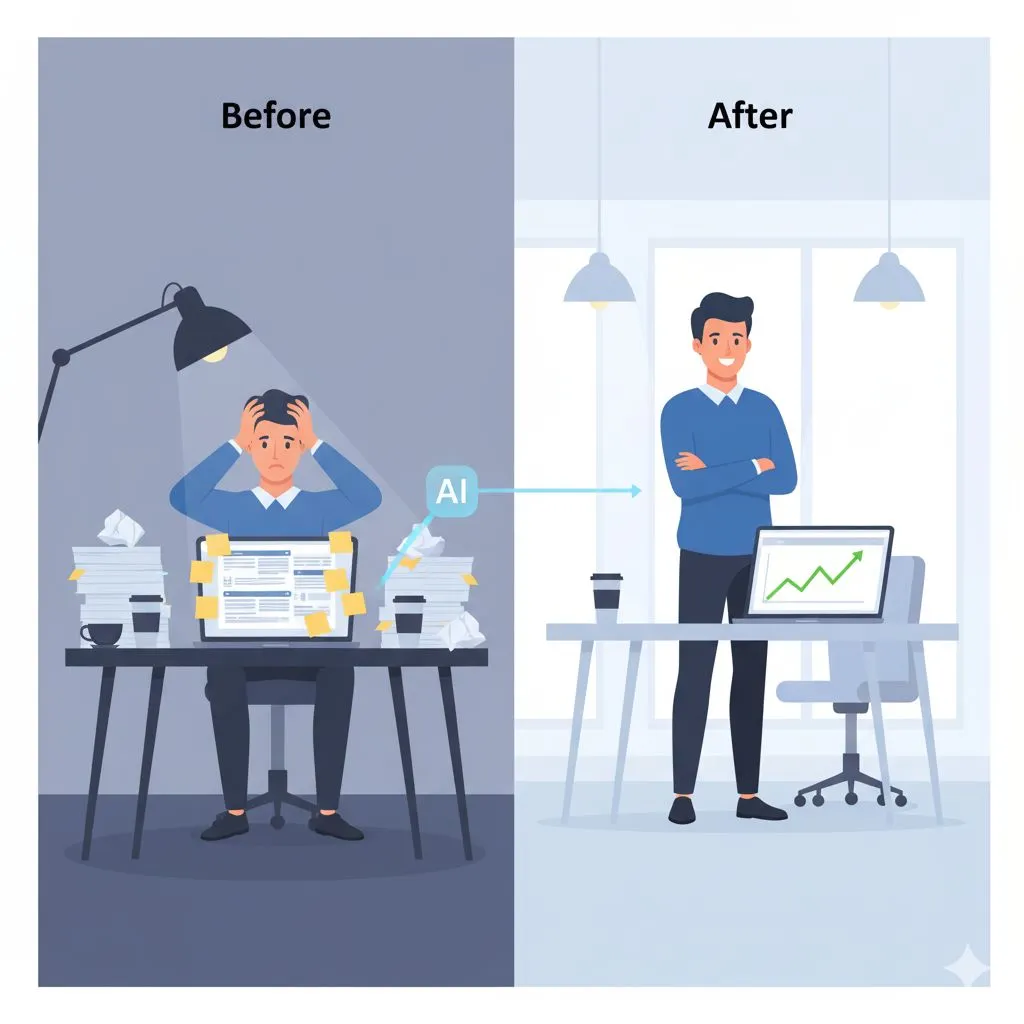
Finding, vetting, negotiating with, and managing ten different influencers is a logistical nightmare. It creates a workflow bottleneck that leads to stress and burnout—the exact opposite of the freedom you are trying to build. This is where AI enters the equation, transforming a time-intensive manual process into a streamlined strategic operation.
The Bottleneck of Discovery
Historically, finding the right influencer meant hours of scrolling through hashtags, analyzing profiles manually to spot fake followers, and guessing if their audience aligned with your brand. AI tools now automate this. They can scan thousands of profiles in seconds, analyzing keywords, visual styles, and audience demographics to present you with a shortlist of partners who are a mathematical match for your brand.
Streamlined Communication and Management
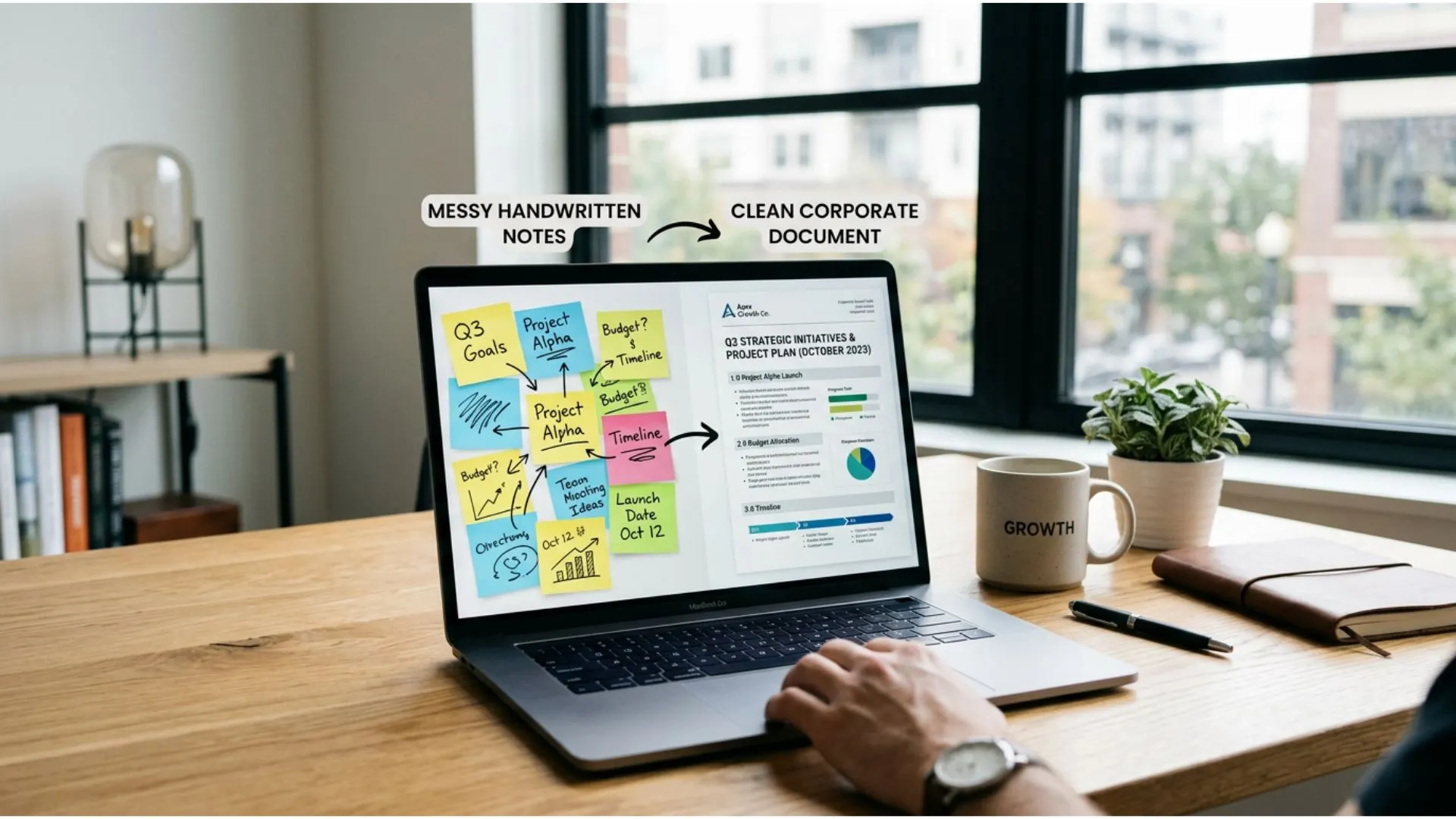
Once you have identified potential partners, the administrative load kicks in. Writing outreach emails, negotiating rates, and creating campaign briefs can eat up your entire week. This is where AI prompts become your secret weapon. By using structured, strategic prompts, you can generate personalized outreach messages, clear legal contracts, and detailed creative briefs in minutes rather than hours. AI doesn't just write for you; it thinks through the structure of a negotiation, helping you sound professional and established, even if you are a team of one.
Analyzing the Trends: Where AI Meets Influence
To truly compete, it is not enough to just use tools; you must understand the influencer marketing trends shaping the industry. The convergence of AI and influencer marketing is creating three distinct shifts that small businesses can exploit.
Trend 1: Data-Driven Authenticity
There is a misconception that AI kills authenticity. In reality, it protects it. One of the biggest risks in influencer marketing is partnering with a creator whose values clash with your brand, leading to a PR disaster. AI-driven sentiment analysis can review a creator’s past content history to flag potential red flags or controversial topics. This allows you to make partnership decisions based on data, not just a "gut feeling," ensuring your brand reputation remains pristine.
Trend 2: Hyper-Personalized Campaigns
One-size-fits-all briefs result in generic content. However, you don't have time to write unique strategies for ten different influencers. AI solves this by allowing you to input a core message and then "spin" it to match the specific tone of voice of different creators. You can generate a "Tech-Savvy" brief for one influencer and a "Lifestyle-Focused" brief for another, all derived from the same core value proposition. This ensures the content feels native to the influencer’s feed while staying on-brand for you.
Trend 3: Predictive ROI
For the skeptical business owner, the biggest question is always: "Will this work?" New AI modeling tools can analyze an influencer's past performance data to predict the likely outcome of your campaign. While not a crystal ball, this predictive capability allows you to allocate your limited budget toward the creators most likely to deliver a tangible return on investment, reducing the anxiety of trial-and-error marketing.
Use the AI ROI Calculator for Small Business to model your expected returns before committing to an influencer partnership.
Strategic Implementation: A Workflow for the Overworked Entrepreneur
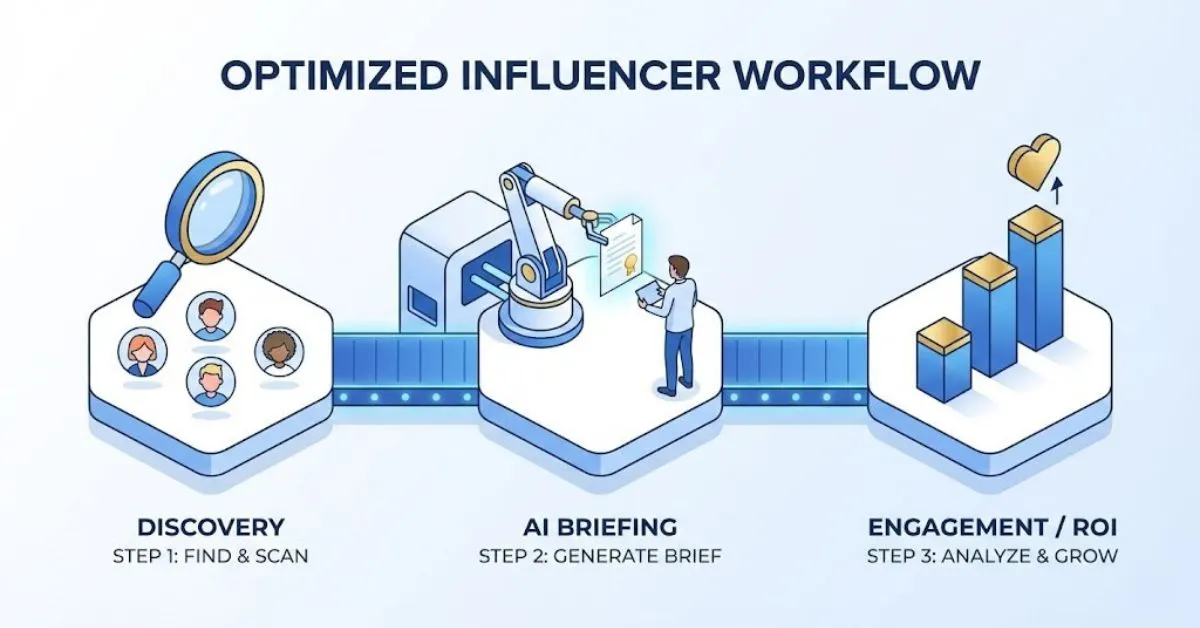
Knowing the trends is useful, but executing them without adding to your workload is the goal. Here is a practical, three-step workflow to implement this "Power Couple" strategy using AI.
Step 1: The AI Vetting Process
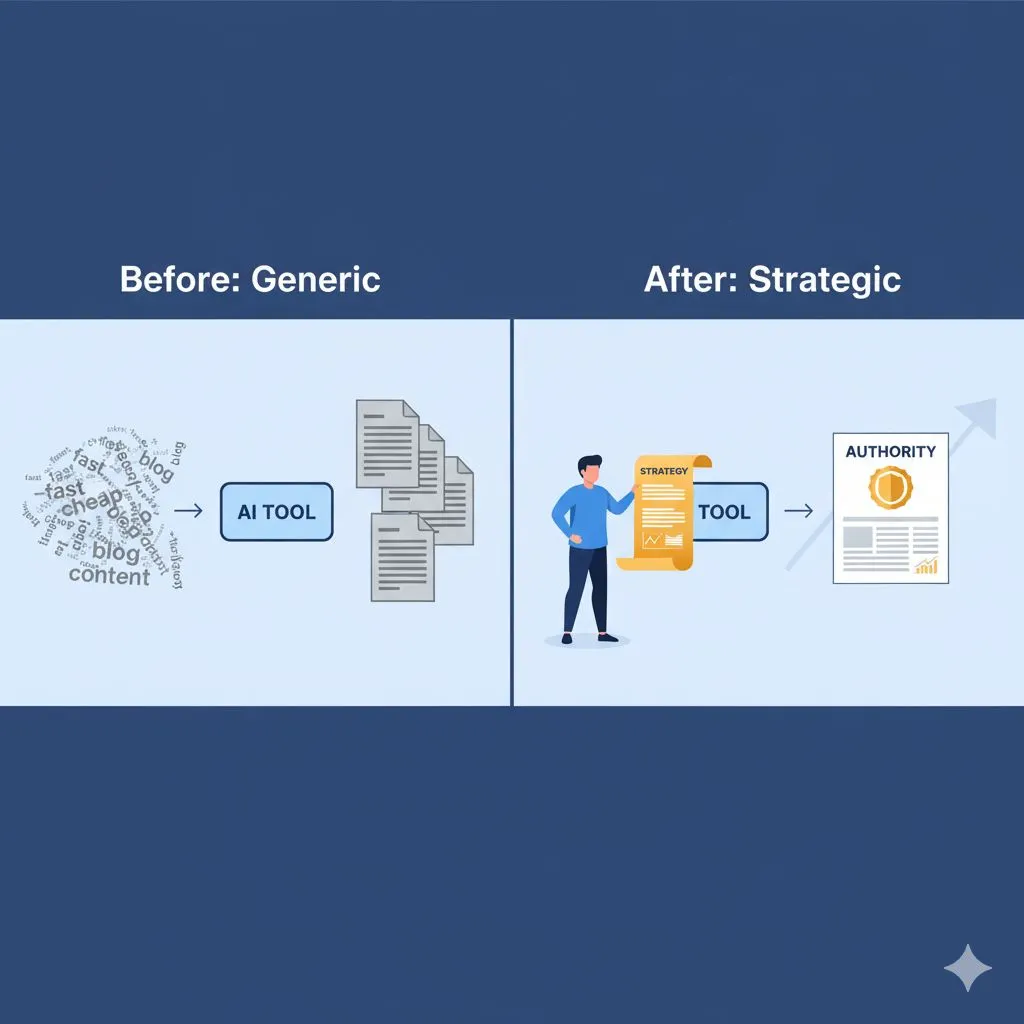
Stop scrolling Instagram. Use AI research tools (or highly specific ChatGPT prompts) to define your ideal influencer avatar. Input your customer persona—like Alex Rivers—and ask the AI to generate a list of hashtags, keywords, and content styles that your persona engages with. Use these outputs to search efficiently. Once you find a candidate, paste their public bio and recent caption styles into an AI tool to analyze their "Brand Voice Alignment." Learn how to train AI to write in your brand voice so every influencer brief reflects your unique identity and avoids generic outputs.
Step 2: The Briefing Blueprint
If you manage influencer content as part of a wider social strategy, the AI Prompts for Social Media Managers Toolkit provides 50 ready-to-use prompts that integrate directly with the workflow below.
The number one reason influencer campaigns fail is a lack of clarity. If you give a vague brief, you get vague results. However, writing detailed briefs is exhausting.
- The Fix: Create a "Master Brief" template using AI. Feed the AI your product's Value Proposition and the Influencer’s profile. Ask the AI to generate a "Creative Brief" that highlights your product’s key benefits in the language of the influencer’s audience. This ensures the content is expert-level and persuasive without you writing every word.
Step 3: Scaling Relationships
To grow, you need to move from one-off posts to long-term relationships. Use AI to manage the relationship lifecycle. Set up prompts to generate "Check-in" emails, "Performance Review" summaries, and "Contract Renewal" offers. By systematizing the relationship management, you can maintain strong connections with 20 influencers in the same time it used to take to manage two.
For creators in short-form video, the TikTok Prompt Playbook gives you platform-specific prompts to brief, manage, and scale TikTok creators without adding hours to your week.

Conclusion
For the ambitious entrepreneur, the goal is not just to survive the daily grind but to build a business that operates with the sophistication of a major agency. The convergence of influencer marketing trends—specifically the rise of micro-influencers and the accessibility of AI—offers a rare opportunity to do exactly that.
By leveraging micro-influencers, you access trust and authenticity that money can't buy. By leveraging AI, you buy back the time required to manage those relationships. This combination allows you to scale your brand presence, produce expert-level content at volume, and compete with larger players, all while keeping your team lean.
You do not need more hours in the day. You need a better system. The technology and the talent are there; the only missing piece is the strategy to connect them.
Are you ready to stop hustling and start scaling your influencer strategy?
Don't waste weeks trying to figure out the right words to say or the right contracts to draft. We have done the heavy lifting for you.
Not ready to commit to a full pack yet? Explore our free AI resources — 11 no-cost tools and prompts designed to prove the value of structured AI workflows before you invest a cent.
Get the Expert AI Prompts for Influencers Pack
Unlock 50+ industry-specific prompts designed to help you find, vet, brief, and manage influencers in minutes. Streamline your workflow and elevate your brand today.
Want to see every prompt pack available across 30 industries? Browse the full Expert AI Prompts pricing catalog and find the pack that matches your niche.
Further Reading
• The Influencer’s Shortcut: Maintain Engagement While Spending Less Time Online
• Creator Burnout is Real: How to Offload Work to AI
• Viral on TikTok: Using AI to Generate Scripts That Hook Viewers
• Micro-Influencers and AI: Dive Deeper — The Definitive Guide to AI for Social Media