Bridging the Visibility Gap: Generative Search Behavior for Solopreneurs
Bridging the Visibility Gap: Generative Search Behavior for Solopreneurs
Apr 16, 2026

Adapting to Generative Search Behavior: A Guide for Independent Consultants
You have spent the last decade—perhaps longer—building deep domain expertise inside a corporate system. You know your industry, you know your craft, and you deliver results. Yet, as you pivot toward independent consulting, a micro-agency, or a portfolio career, you face a double disruption. First, the labor market has fundamentally shifted, requiring you to package and sell your skills in entirely new ways. Second, the way clients find experts has changed overnight. Welcome to the era of generative search behavior.
For the strategic career pivoter, the challenge is rarely competence; it is translation. How do you articulate 15 years of corporate value to a hiring manager or freelance client in a new sector without sounding like you are still just an employee? More importantly, how do you make that translated value visible to the AI-driven search engines your future clients are using right now?
You do not have the luxury of spending 40 hours a week acting as a full-time content machine. You have 8 to 12 hours a week to build your side gig or transition strategy. You need practical, time-saving solutions that act as a force multiplier for your next career phase. This guide will walk you through adapting to generative search behavior, helping you rebuild your professional visibility, bridge the gap between your technical capabilities and your market positioning, and turn your expertise into scalable revenue.
Understanding Generative Search Behavior
To become indispensable in your new independent career, you must first understand how your potential clients are looking for solutions. Traditional search behavior relied on fragmented, staccato keywords. A business owner looking for operational help might have typed "operations consultant Sydney" or "supply chain optimize." Google would return a list of ten blue links, and the user would hunt through them.
Generative search behavior is entirely different. Driven by tools like Google's AI Overviews, Perplexity, and ChatGPT, search has become conversational, highly specific, and context-heavy. Instead of typing fragments, a decision-maker now types: "How do I restructure a mid-sized healthcare supply chain to reduce bottlenecks without increasing headcount?"
The AI engine does not just fetch links; it synthesizes an immediate, comprehensive answer by pulling from highly credible, structured sources across the web. If your digital footprint—your LinkedIn, your portfolio, your landing page—is still optimized for the old way of searching, you are effectively invisible to the new engines. Generative search rewards clear, authoritative, and well-structured context. It looks for experts who answer complex, multi-layered questions in natural language. Understanding this shift is the first step to ensuring your consulting brand is positioned exactly where decision-makers are looking.
The Visibility Gap in a Generative World
One of the most significant hurdles when transitioning from employment to independent consulting is what we call the Visibility Gap. You have an elite track record, but because you have been operating behind the closed doors of a corporation, your public-facing authority is near zero. When you finally launch your consulting brand, you want to look like you have been freelancing for five years, not five days.
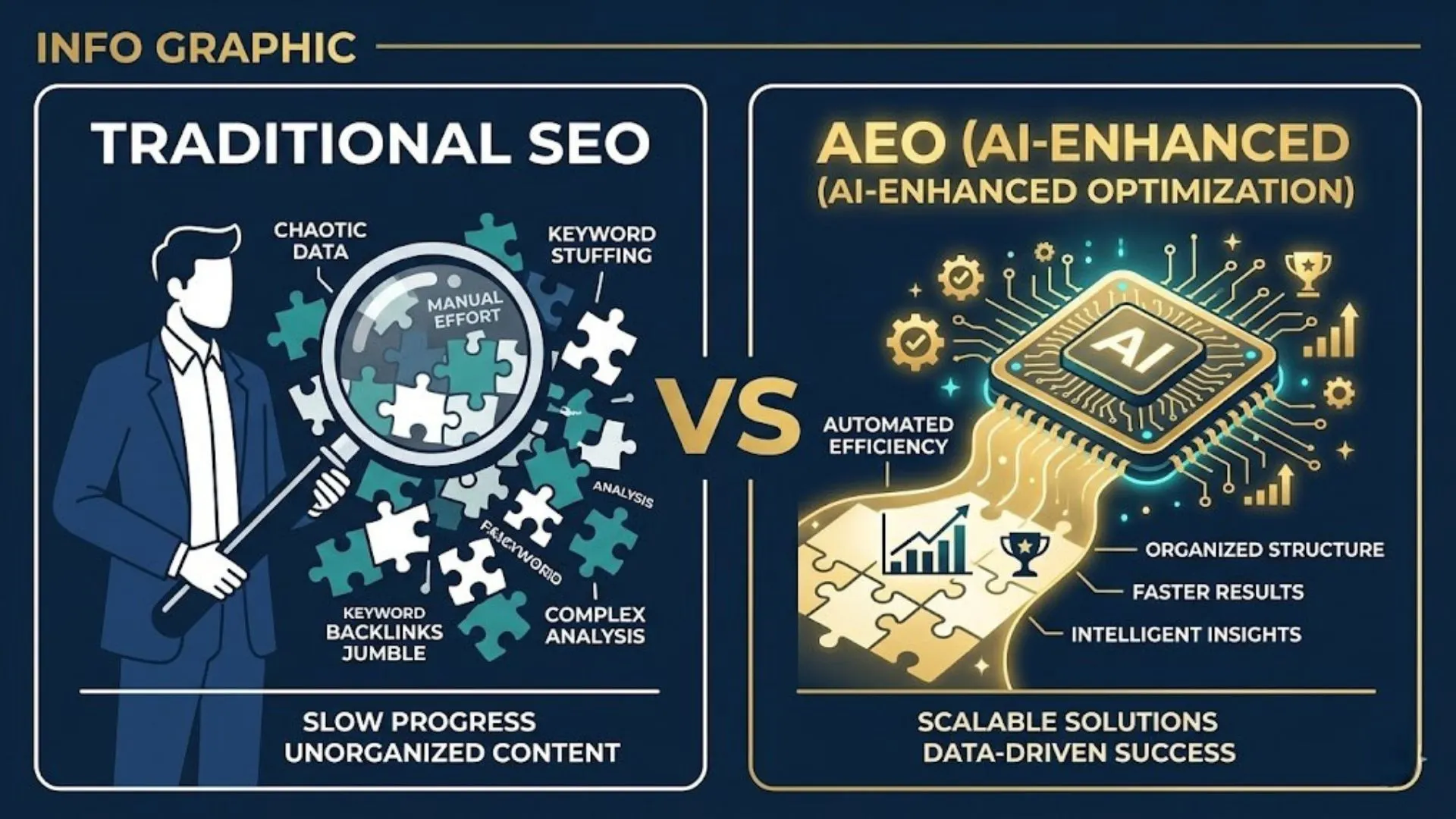
The instinct for many newly independent consultants is to rely on traditional SEO—stuffing a makeshift website with keywords related to their old job title. This is where the translation breaks down. Your identity is currently tied to a title (e.g., "Director of Operations") rather than a highly valuable, transferable skill set (e.g., "post-merger operational integration"). Generative AI search engines do not care about your old corporate title; they care about the specific problems your skills can solve.
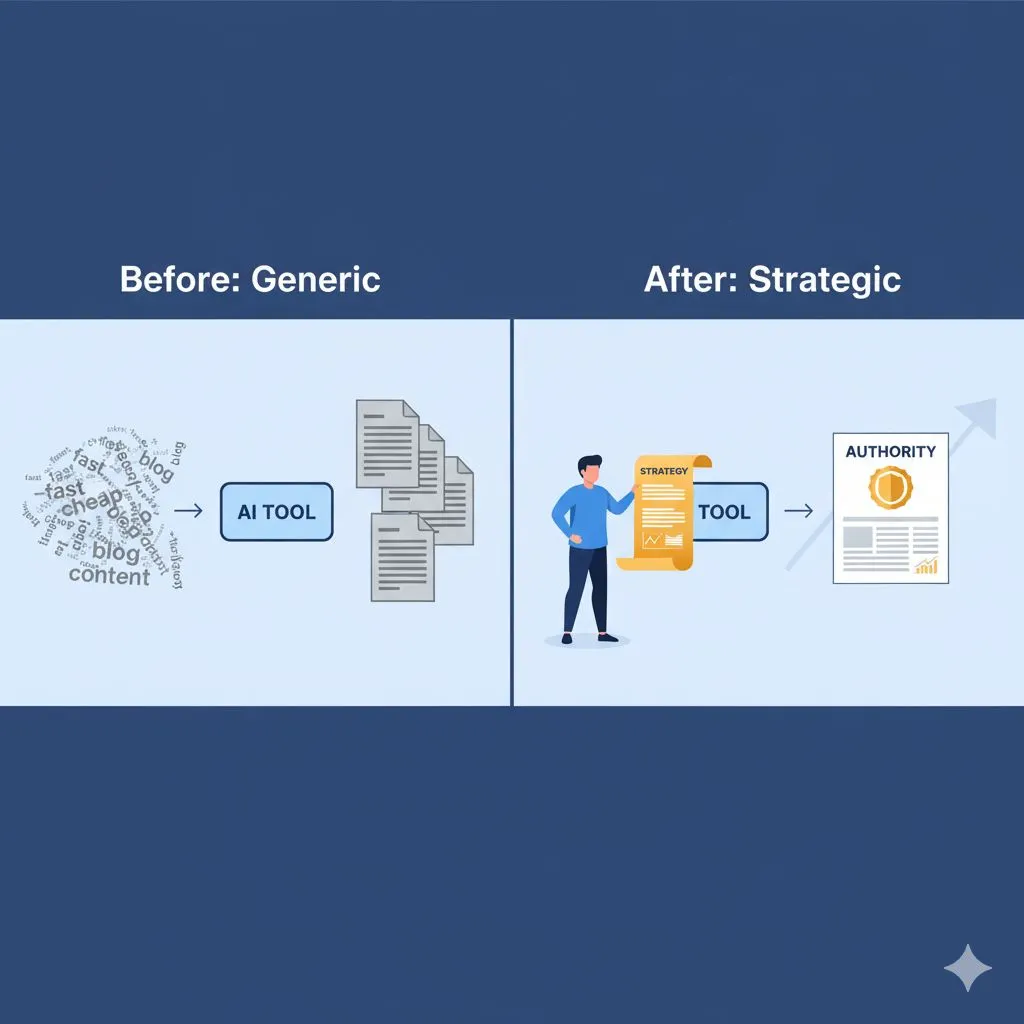
When a prospective client uses generative search behavior to find a solution, the AI bypasses generic keyword-stuffed pages. It looks for semantic meaning, authority, and relevance. If your online presence simply lists your responsibilities from your last job, the AI will not recognize you as the solution to a specific business problem. It will pass right over you in favor of a competitor who has clearly articulated their value proposition.
Furthermore, traditional SEO is a slow, grueling game that requires immense resources—something a solo transitioner simply does not have. You are operating at the output capacity of a small team, juggling client delivery, business validation, and marketing. You cannot afford to spend months writing generic blog posts hoping to rank on page three of Google. You need a strategy that bridges the Visibility Gap rapidly. You need to leverage your deep domain expertise to signal authority directly to generative AI models, ensuring that when decision-makers ask complex questions, your frameworks and solutions are the ones being cited.
How to Optimize Your Consulting Brand for AI Search
Adapting to generative search behavior requires a fundamental shift in how you structure your online presence. You are no longer just writing for human hiring managers; you are writing to train AI models on who you are and what you solve. Here is how you optimize your consulting brand to capture this new wave of search visibility.
Framework 1: Semantic Relevance and Conversational Authority
Because generative search queries are long and conversational, your content must match that format. Stop thinking in terms of isolated keywords and start thinking in terms of "entities" and "relationships." If you are a financial consultant targeting micro-agencies, ensure your LinkedIn profile, landing page, and case studies naturally discuss the relationship between cash flow, agency scaling, and operational bottlenecks. Answer the specific, complex questions your ideal clients are asking. Frame your expertise as direct answers to these long-tail queries.
Framework 2: Information Gain
AI engines are trained on massive amounts of existing data. If you write an article or a LinkedIn post that simply regurgitates what is already out there, the AI has no reason to cite you. You must provide "Information Gain"—unique perspectives, proprietary frameworks, personal case studies, or contrarian industry insights that the AI cannot easily replicate from its existing database. This is where your 15 years of corporate experience becomes your greatest asset. Do not just state what to do; explain how you did it during a corporate restructure or a specific project, removing the confidential details but keeping the strategic architecture.
Structuring Your Professional Narrative
Generative AI thrives on clean, logical structures. Whether you are drafting a proposal, writing an authority article, or updating your digital portfolio, use clear hierarchies. Utilize distinct headings, bulleted lists, and bolded key terms. When your knowledge is architected logically, AI engines can easily parse, extract, and serve your insights to a user. Position yourself as the definitive source by packaging your deep domain expertise into structured, easy-to-digest formats.
Building an AI-Powered Content Engine in 2 Hours a Week
The strategies above are highly effective, but they require execution. As a side-gig builder or new freelancer, your time is your most constrained resource. You need AI-powered workflows that run in under 2 hours a week to make your solo operation look like a full-time, established business.
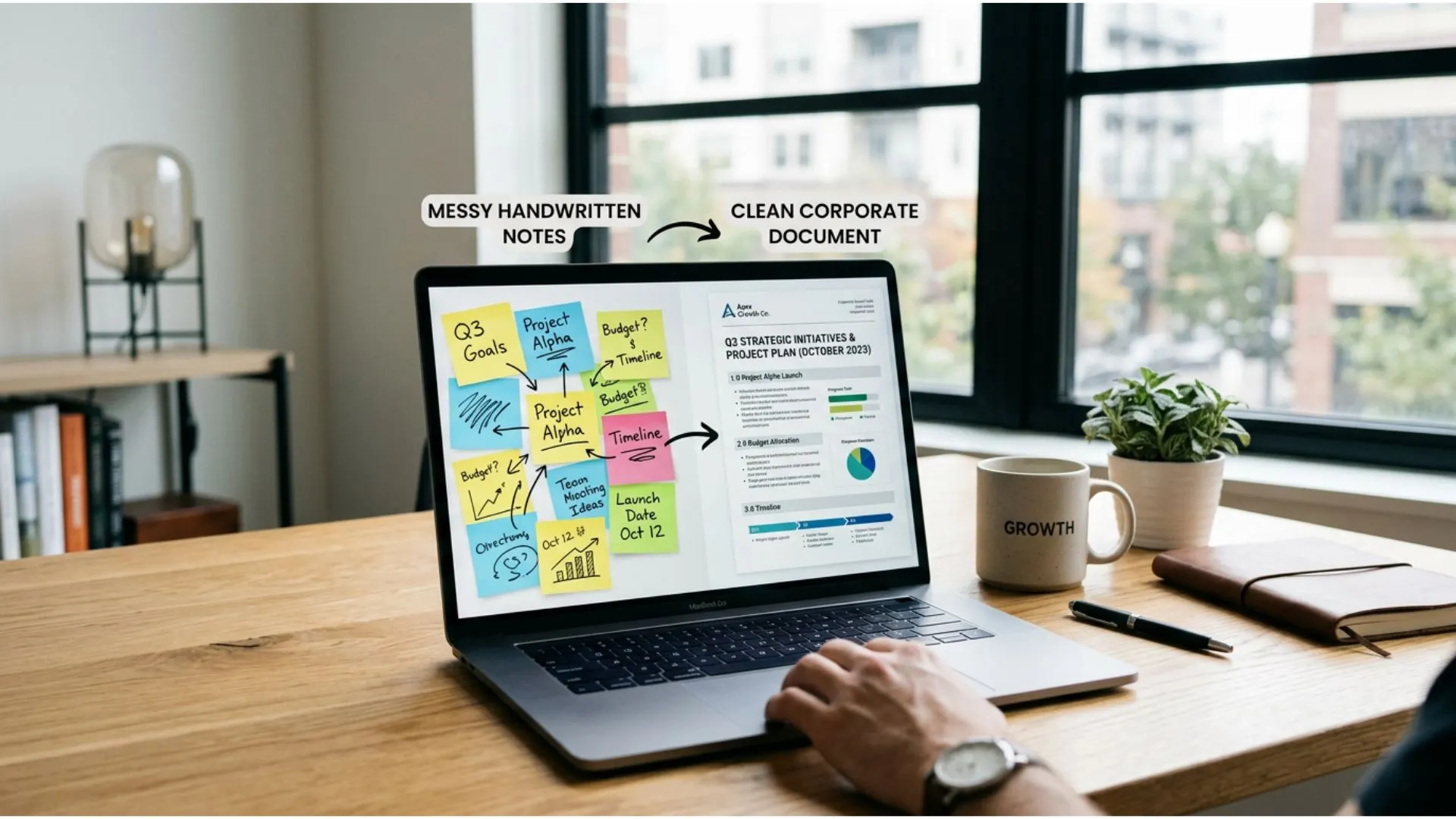
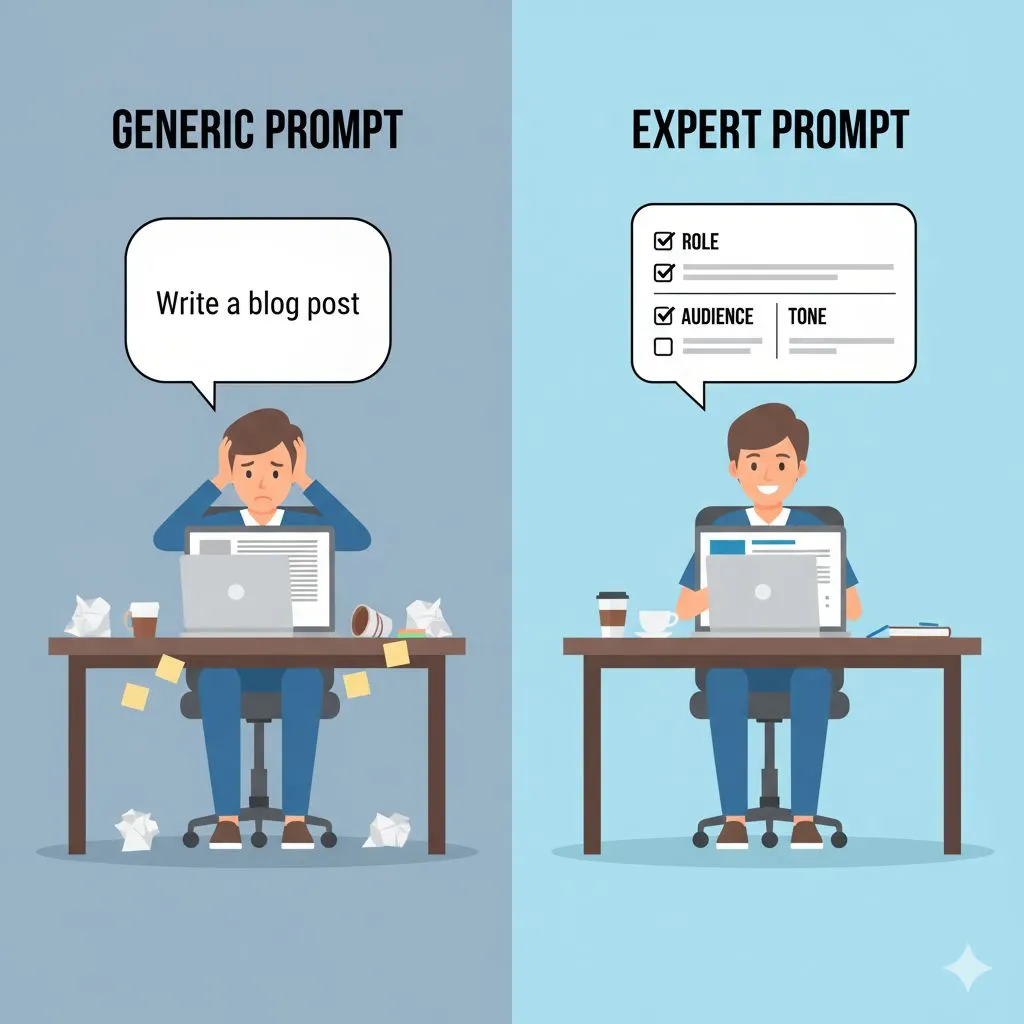
This is where you must transition from viewing AI as a threat to using it as a founding team member. By utilizing strategic AI prompts, you can build a translation engine that does the heavy lifting for you. Instead of staring at a blank page trying to rewrite your CV or draft authority content for a new sector, you can feed your raw corporate experience into an AI tool alongside a highly engineered prompt.
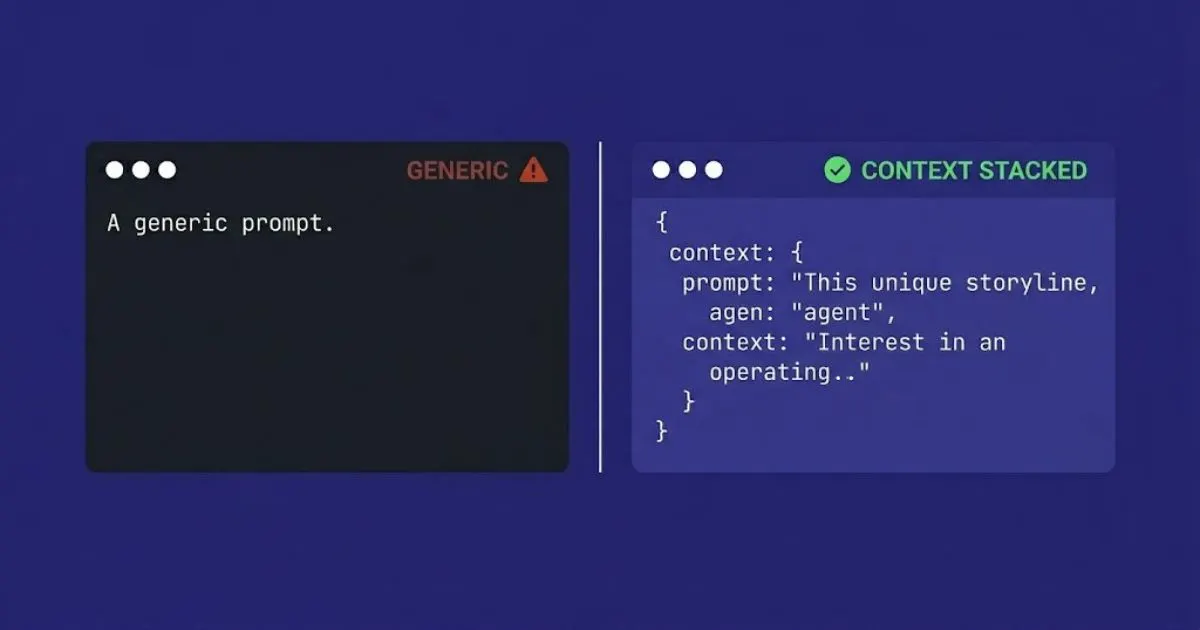
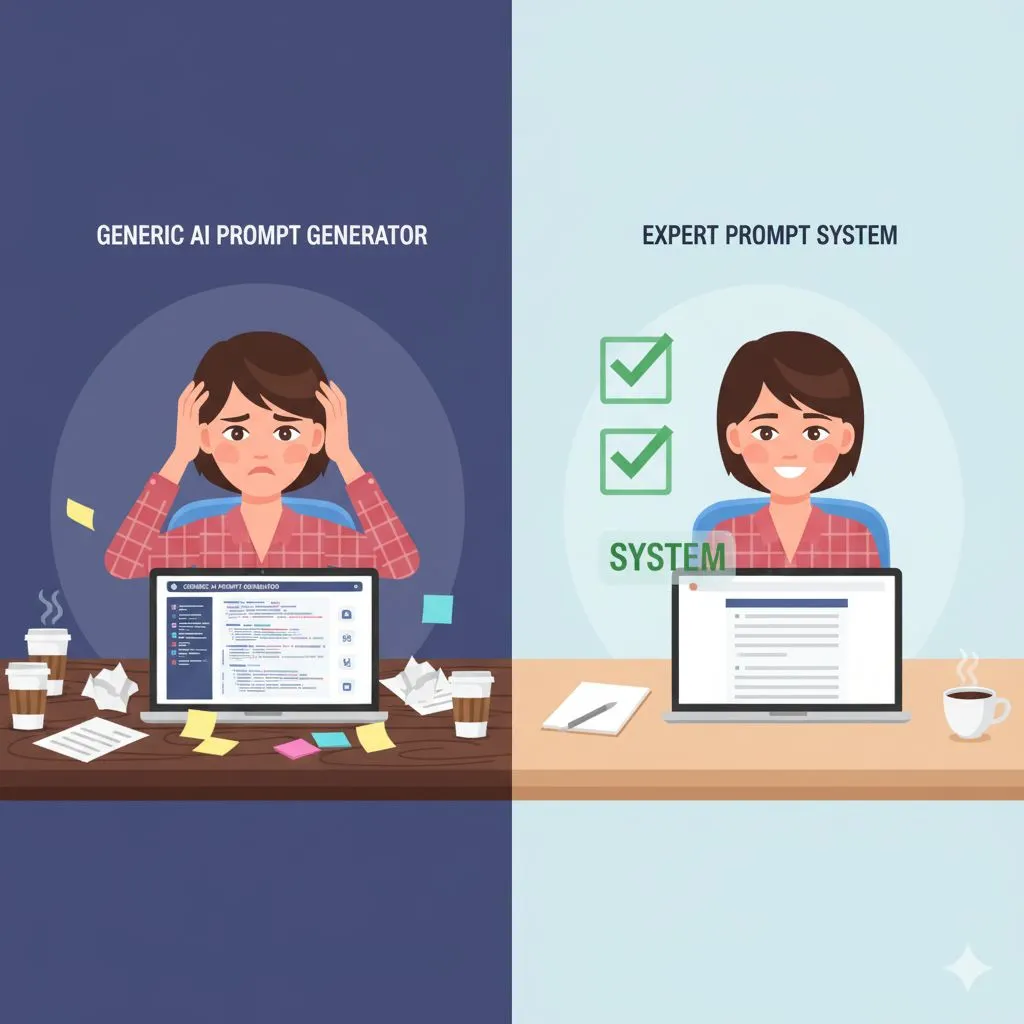
A structured prompt can instantly translate your past projects into compelling case studies, extract the transferable skills, and format the output for generative search optimization. You can use these prompts to map out a 30-day launch content strategy, draft winning proposals, and restructure your services into scalable consulting programs. By relying on expert-level prompts, you eliminate the trial and error. You do not need to become a professional marketer; you just need the right frameworks to manage multiple income streams seamlessly.
Conclusion
The transition from a secure corporate system to building an independent brand from scratch is daunting. The fear of AI eating the consulting space is real—but only for those who refuse to adapt. By understanding and optimizing for generative search behavior, you turn a potential threat into your greatest competitive advantage.
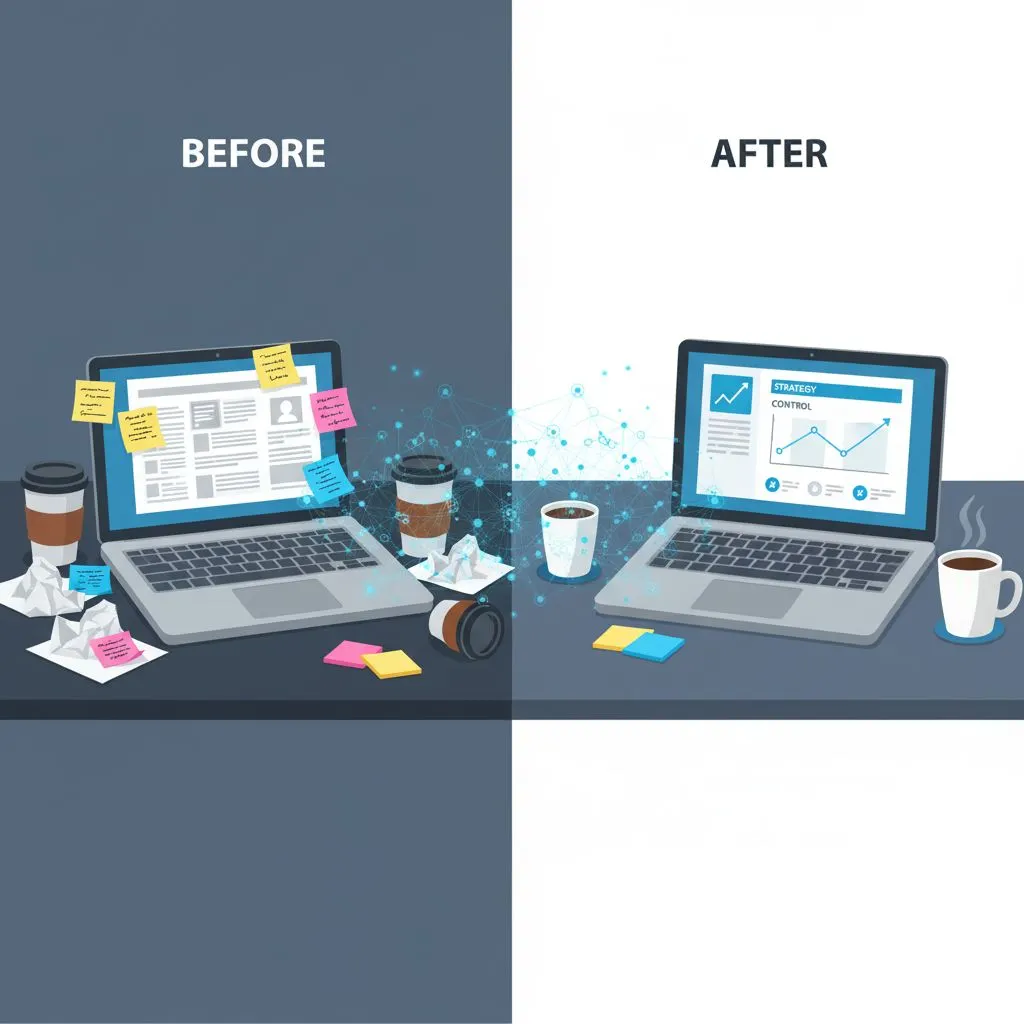
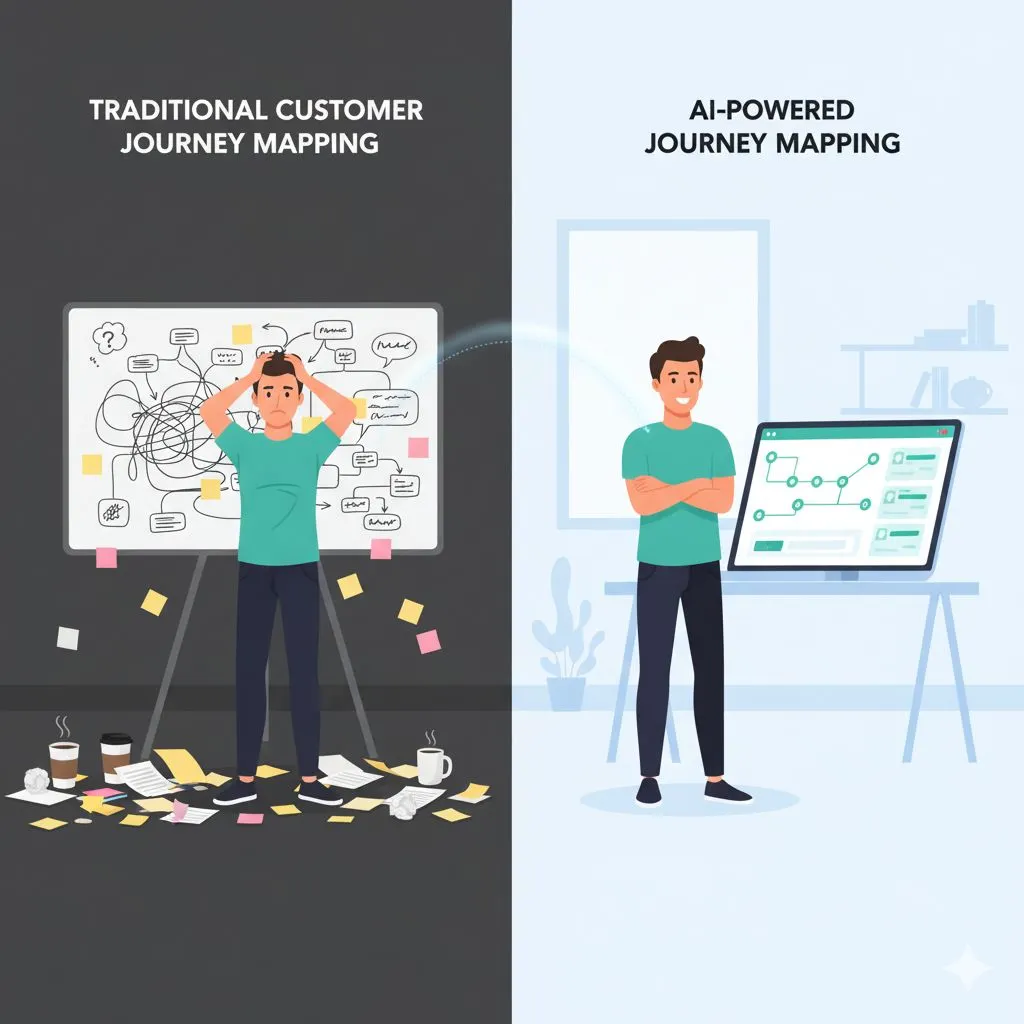
You have the credentials, the competence, and the experience. Now, it is time to close the Visibility, Confidence, Offer, and Time gaps. Stop hustling against the algorithm and start scaling your authority. By structuring your expertise for AI search and utilizing intelligent prompts to streamline your workflow, you transition from an overworked operator to a confident strategist. You become visible, you become indispensable, and you take back control of your career trajectory.
Scale smarter. Grow faster. If you are ready to translate your years of experience into a highly visible, scalable consulting brand, begin your transition today.
Upgrade your workflow and learn the exact strategies to conquer AI search: https://expertaiprompts.com/the-roi-driven-guide-to-ai-for-seo