The Future of Podcasting: Interactive and AI-Enhanced
The Future of Podcasting: Interactive and AI-Enhanced
Feb 04, 2026
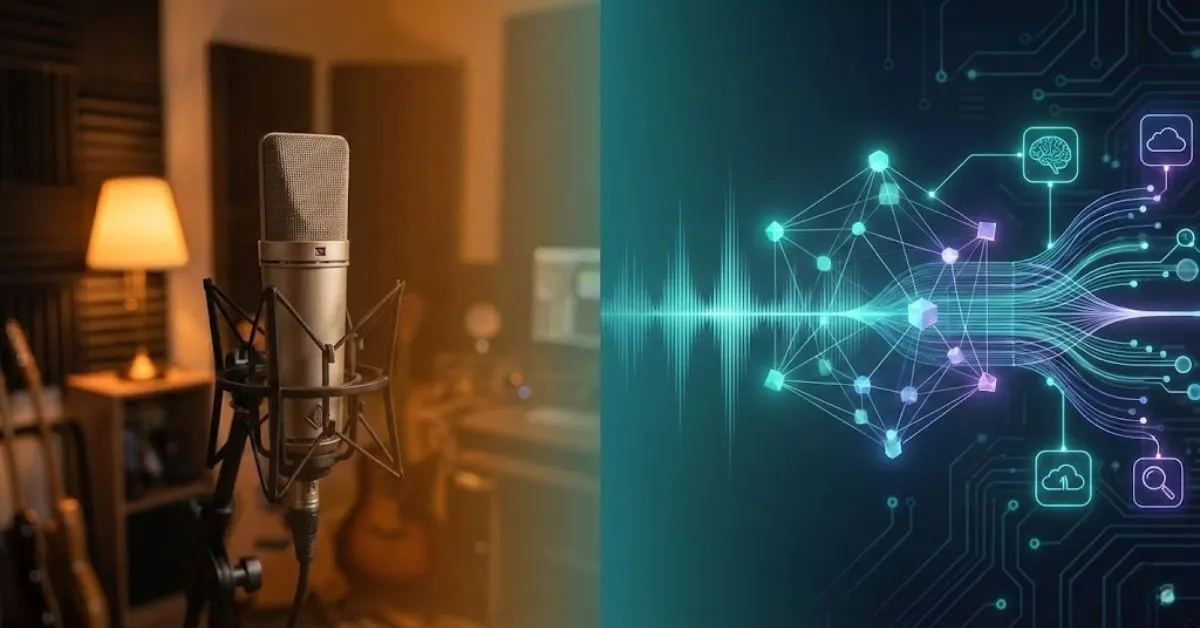
For the ambitious small business owner, podcasting has long been a double-edged sword. On one side, it is a powerful vehicle for brand authority and audience connection. On the other, it is a resource-heavy beast that demands hours of recording, editing, promoting, and managing. If you are like many entrepreneurs, you are likely wearing the hats of host, editor, and marketer simultaneously.
However, the industry is undergoing a seismic shift. We are witnessing a podcast evolution that is moving away from the saturated "record and upload" model toward a dynamic ecosystem powered by Artificial Intelligence and interactive engagement.
For the independent creator or small team, this is not just a trend update—it is a survival guide. The gap between massive media networks and agile solopreneurs is closing, but only for those willing to adapt their workflows. The future of podcasting isn't about working harder to produce more episodes; it’s about leveraging technology to produce expert-level content that works for you.
The Saturation Point: Why "Good Enough" is No Longer Enough
The statistics are daunting. With over 4 million podcasts indexed globally, the "noise" problem is real. In 2020, you could grow simply by being present. In 2026, presence is the baseline; distinctiveness is the currency.
Traditional podcasting was a linear, passive experience: you spoke, they listened. But today’s audience, conditioned by algorithmic feeds and instant gratification, demands more. They want polished audio, video components, bite-sized clips, and the ability to interact with the host. For a team of two (or one), delivering this manually is a recipe for burnout.
This report outlines the critical trends reshaping the medium. We aren't looking at "shiny objects"—we are looking at practical evolutions that reduce operational drag and increase ROI.
Trend 1: AI as the Ultimate Production Assistant
If the first era of podcasting was defined by the USB microphone, the current era is defined by the AI workflow. For business owners juggling client delivery and content creation, AI is not a shortcut—it is the only scalable way to compete.
Post-Production Automation: Reclaiming Your Nights
The most significant bottleneck in podcasting has always been post-production. Cleaning up audio, leveling voices, removing "ums" and "ahs," and mastering tracks can take four hours for every one hour of recording.
The podcast evolution has brought us AI-driven audio engineering that functions as a virtual studio engineer. Tools now exist that can identify cross-talk, remove background noise (like that air conditioner humming in your office), and level audio standards to broadcast quality in seconds. For the small business owner, this means the difference between releasing an episode weekly or falling behind schedule. It transforms the editing process from a technical burden into a strategic review.
Content Atomization: The "Create Once, Publish Everywhere" Reality
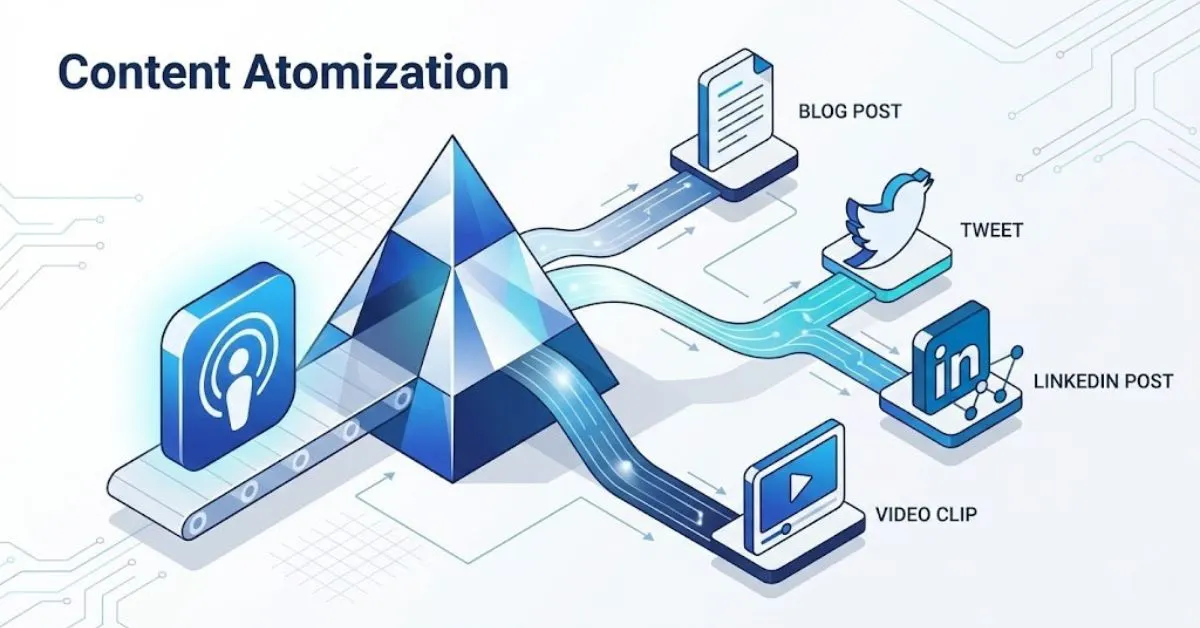
Perhaps the greatest leverage point for AI is in content repurposing. In the past, turning an episode into a blog post, a newsletter, three LinkedIn updates, and five Tweets required a dedicated copywriter.
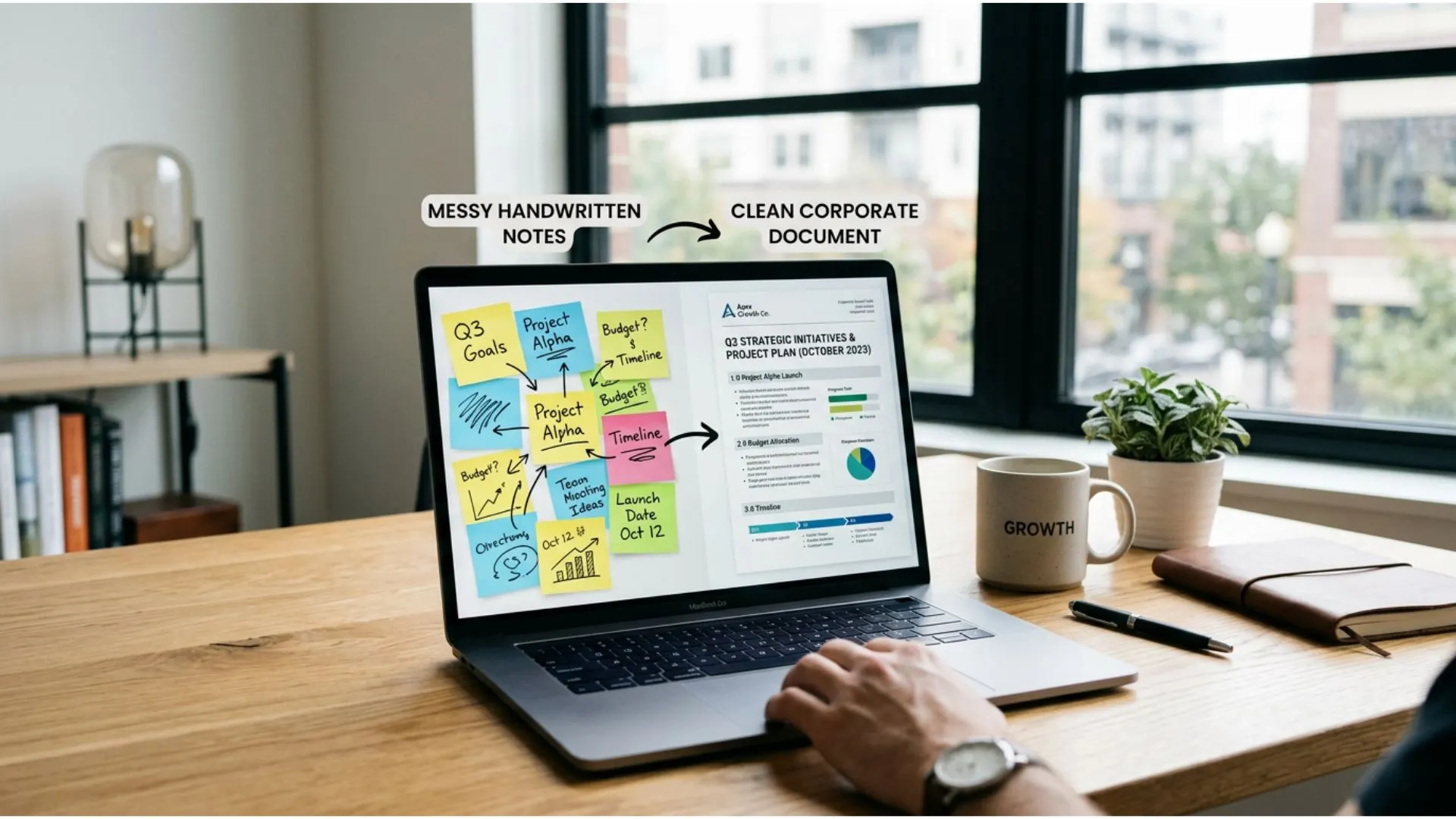
Today, Large Language Models (LLMs) can ingest a transcript and output these assets instantly, matching your specific brand voice. This is "Content Atomization." A single 30-minute conversation is no longer just an MP3 file; it is the seed for your entire week's marketing calendar. This ensures that even when you are busy with client work, your brand remains visible across all platforms.
If you want to ensure these AI outputs reliably sound like you, read how to train AI to write in your brand voice.
To build this content workflow from the ground up, explore The Small Business Playbook for AI Content Creation.
Synthetic Voice and Correction
While controversial to some, voice cloning technology offers a pragmatic solution for busy entrepreneurs. Have you ever finished an edit only to realize you mispronounced a guest's name or cited the wrong statistic? Previously, this required re-setting up the mic and recording a patch. Now, trained voice models can generate seamless corrections in your own voice just by typing text. Used ethically, this is a massive time-saver for ad reads, intros, and minor fixes, allowing you to maintain high quality without the logistical headache.
Trend 2: The Shift to Interactive Listening
For years, podcast analytics were a black box. You could see download numbers, but you had no idea if the listener was nodding along, bored, or confused. The relationship was strictly one-way. This dynamic is rapidly becoming obsolete. To build a brand that converts listeners into clients, you must move from "broadcasting" to "community building." The next phase of podcast evolution is interactive.
From Passive Consumption to Active Participation
Major platforms like Spotify and newer, niche podcast apps are rolling out features that turn listeners into participants. We are seeing a surge in integrated Q&A sections and polls directly within the episode player.
For the small business owner, this is a goldmine of market research. Instead of guessing what your audience wants to hear next, you can ask them via a poll attached to the episode.
- “What struggle is costing your business the most money right now?”
- “Do you want Part 2 of this topic?”
These touchpoints do two things:
- Algorithm Signals: They signal to podcast platforms that your audience is highly engaged, which boosts your show’s discoverability.
- Trust Building: When a listener feels heard, their loyalty deepens. For a consulting or service-based business, this trust is the precursor to a sale.
The Gamification of Audio
We are also seeing the early stages of "audio gamification." This involves rewarding listeners for retention and loyalty. Imagine a scenario where listening to five consecutive episodes unlocks a discount code for your services or access to a premium masterclass.
While this might sound like tech for big networks, simple implementations are available now. By using dynamic show notes or "secret words" dropped in episodes that listeners can trade for resources, you create a "lean-in" experience. This filters your audience, separating casual listeners from high-intent prospects who are actually likely to buy from you.
Blending Live and Asynchronous Content
The line between a "live stream" and a "podcast" is blurring. Many successful entrepreneurs are now recording their episodes live on LinkedIn or YouTube to generate real-time engagement, and then using AI tools to strip the audio, clean it, and publish it as a podcast.
This workflow is efficient because it kills two birds with one stone: you get the hype and community feel of a live event, plus the evergreen longevity of a podcast episode. It allows you to field questions in real-time, making the content more dynamic and relatable than a scripted studio recording.
For a complete strategy covering LinkedIn Live, YouTube, and TikTok content creation with AI, see The Definitive Guide to AI for Social Media.
Trend 3: Searchability and “Listen-Less” Consumption
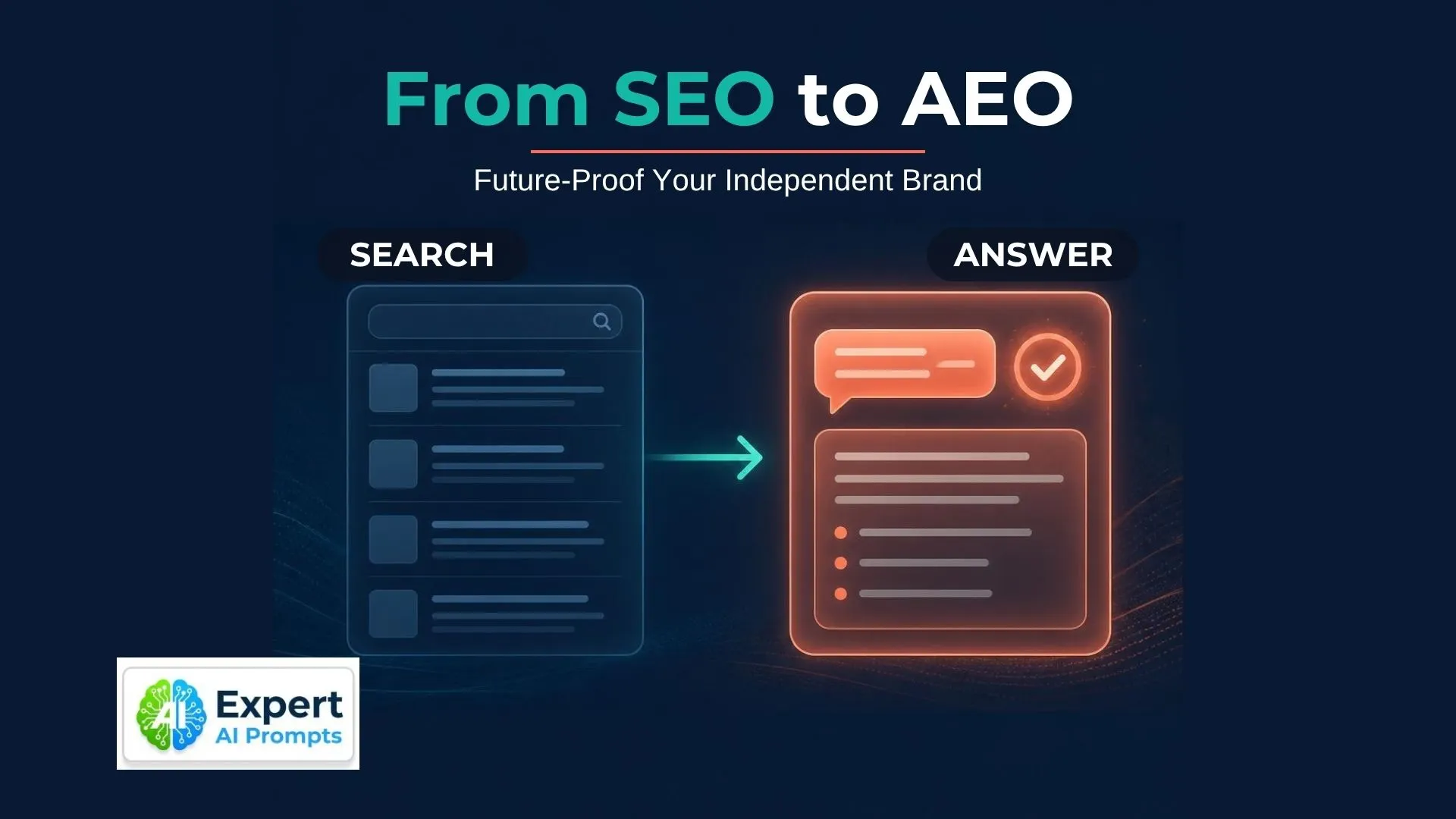
If you create the best content in the world but no one finds it, does it impact your bottom line? For the time-poor entrepreneur, "hope marketing" is not a strategy. The podcast evolution is heavily focused on solving the discoverability crisis through SEO (Search Engine Optimization) and video integration.
Video-First Podcasting: YouTube is the Engine
It is impossible to discuss the future of podcasting without acknowledging YouTube. It has quietly become the most used podcast consumption platform in many demographics.
Why does this matter for your business? Because YouTube is the world's second-largest search engine (owned by the first). Audio files are not inherently searchable by Google spiders, but video titles, descriptions, and auto-generated captions are.
You do not need a TV-studio setup. Even simple "video podcasts" (using tools like Zoom or Riverside with a branded overlay) allow you to tap into YouTube’s massive search traffic. This puts your brand in front of people searching for answers to specific problems—people who may never browse Apple Podcasts.
AI Search and Semantic Understanding
Search is becoming semantic. Google and podcast directories are using AI to "listen" to the content of episodes to understand context. This means your show can now rank for keywords you didn't even put in the title, provided the content is relevant.
To leverage this, smart creators are publishing full, AI-generated transcripts alongside their episodes on their websites. This turns a 45-minute audio file into 5,000 words of crawlable, indexable text. This creates a "flywheel" effect:
- You record an episode solving a client problem.
- The transcript is indexed by Google.
- A prospect searches for the problem on Google.
- They find your website/transcript, which leads them to the audio.
- They subscribe and eventually convert.
To apply this SEO flywheel to your full content strategy, the ROI-Driven Guide to AI for SEO maps out every step.
Optimization for the "Skimmer"
Attention spans are shrinking. A growing segment of the audience engages in "listen-less" consumption. They want the value of the podcast without committing 40 minutes immediately.
The trend here is "Chapter Markers" and "Key Moments." AI tools can now automatically detect topic shifts in your conversation and generate timestamped chapters with catchy titles. This allows a busy CEO to see, at a glance, that minute 12:30 contains the exact strategy they need. By respecting your audience's time through better navigation, you increase the likelihood that they will hit play.
Trend 4: Hyper-Personalization and Dynamic Monetization
Finally, let’s look at how the podcast evolution changes the economics of the medium. For the small business owner, the goal isn't always sponsorship revenue (which requires millions of downloads). The goal is business leverage and ROI.
Dynamic Ad Insertion (DAI) for Small Business
In the past, if you recorded an offer for your fall workshop in an episode, that episode became outdated the moment winter arrived. That is "baked-in" content.
Dynamic Ad Insertion allows you to swap out specific segments of audio in your back catalog instantly. Did you launch a new consulting package? You can use DAI to insert a 30-second promo for it into every single episode you have ever recorded. When the campaign ends, you swap it out. This ensures that your entire library of content is always working to sell your current offer, maximizing the lifetime value of every minute you record.
Predictive Analytics: Data-Driven Content Strategy
Instead of guessing what topics will resonate, predictive analytics tools are beginning to help creators analyze market gaps. By looking at search volume, competitor performance, and social trends, AI can suggest topic clusters that have high demand but low supply.
For Alex Rivers—the overworked entrepreneur—this is vital. It means you stop wasting time recording episodes that "might" work, and start producing content that is statistically likely to perform. It’s the difference between throwing spaghetti at the wall and being a sniper.
Conclusion: Adapt or Fade Away
The podcast evolution is not about replacing the human element; it is about amplifying it. The trends outlined here—AI efficiency, interactive listening, advanced searchability, and dynamic monetization—are all designed to remove the friction between you and your audience.
For the small business owner, the message is clear: You no longer need a team of ten to compete with the big players. You need the right tools and the right strategy.
The era of the "overworked operator" staying up until 2:00 AM editing audio is ending. The era of the "confident strategist" who uses AI to atomize content, engage listeners, and scale their authority is just beginning.
You have the expertise. The technology is now here to ensure that expertise gets the reach it deserves without sacrificing your sanity. The only question remaining is: Are you ready to upgrade your workflow?
Before investing in a toolkit, start with a free resource — explore the free AI prompts and tools designed for entrepreneurs ready to scale — no cost, no commitment.
Ready to Scale Your Podcast Strategy?
Understanding the trends is the first step; executing them efficiently is where the wins happen. You don't have to figure out the prompts, the workflows, or the strategies from scratch.
We have curated a specific toolkit designed to help you implement these exact strategies immediately. We have curated a specific toolkit designed to help you implement these exact strategies immediately. Or, browse all 30 industry-specific prompt packs and see full pricing to find the pack built for your workflow. From generating SEO-rich show notes to creating repurposing workflows that save hours, it’s all ready for you.
Get the AI Prompts for Podcast Pros Toolkit
Stop hustling harder. Start podcasting smarter.
Further Reading
• Entrepreneurs' Playbook for Prompt Engineering