Context Stacking: How to Engineer AI Prompts That Compress Weeks of Compliance into Hours
Context Stacking: How to Engineer AI Prompts That Compress Weeks of Compliance into Hours
Jun 12, 2026

Context stacking AI prompts is the prompt engineering methodology behind one of the most documented AI productivity results in Australian business: 62 compliance documents, three Tier 1 applications, and six regulatory gaps closed — in approximately seven hours.
It is not a shortcut. It is an architecture.
Most business owners who have tried AI and found it lacking made the same mistake: they asked a question. Context stacking does something fundamentally different — it builds a structured information environment before any question is asked, so the AI never has to guess.
This post explains exactly how it works.
The Compliance Documentation Problem Nobody Talks About
The Productivity Commission confirmed in March 2026 that Australian labour productivity fell 0.6% while hours worked rose 2.2% year-on-year. The mismatch is not a skills deficit — it is, in large part, a documentation burden.
For trade and service businesses attempting to access Tier 1 supply chains, government tenders, and prequalification panels, the documentation threshold is specific and demanding: WHS management systems, psychosocial risk registers, insurance certificates, capability statements, and compliance maps — all produced to the standard of the evaluation portal, not the standard of the business's comfort zone.
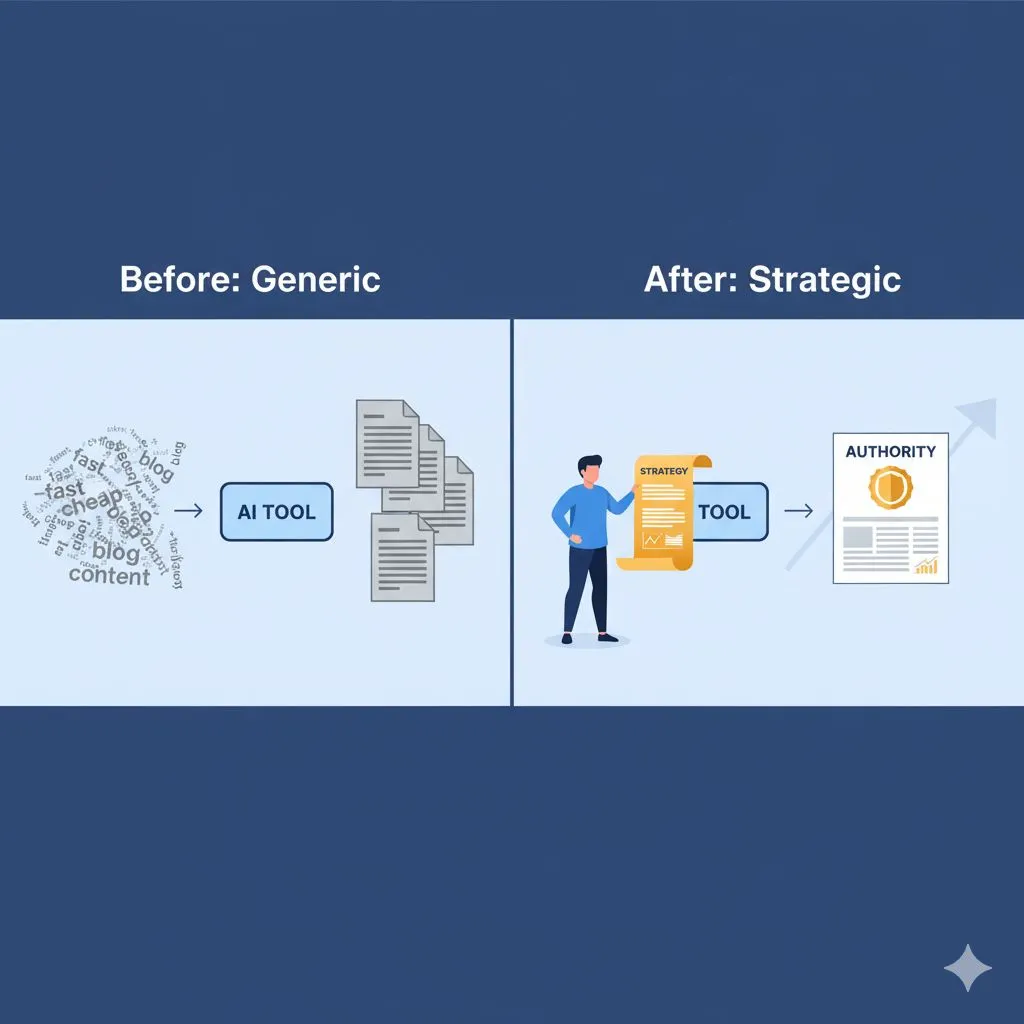
Why Generic AI Prompts Produce Generic Results
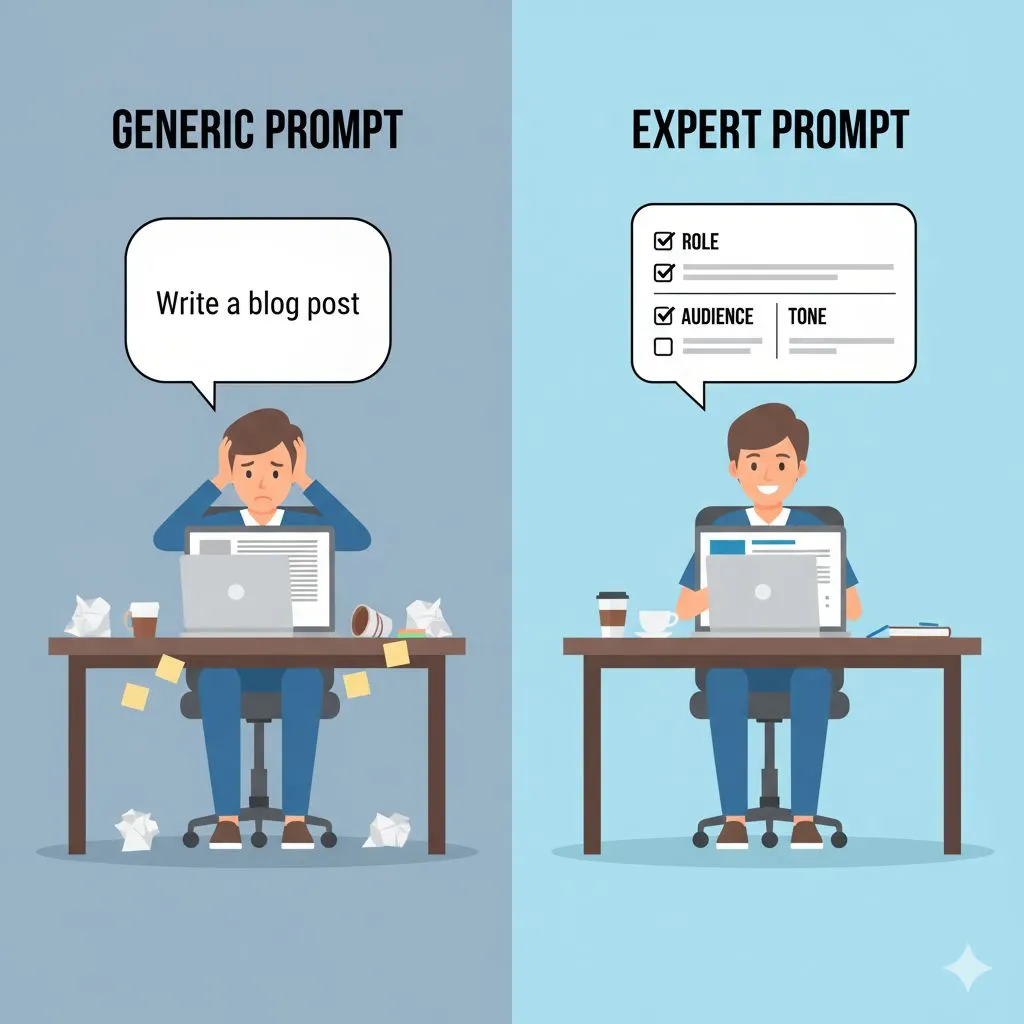
The most common AI prompting failure follows a predictable pattern. The operator opens a chat interface, types "write me a WHS policy," and receives a document that is grammatically correct, structurally plausible, and completely useless for submission to a Tier 1 procurement portal.
The AI did exactly what it was asked. The prompt gave it nothing to work with except the name of the output. No business context. No regulatory standard. No format requirement. No voice. The result is generic because the instruction was generic. This is the "rubbish in, rubbish out" paradigm.
The Architecture Problem Behind Robotic AI Output
The root cause is architectural, not technical. The AI model is capable of producing precise, compliant, submission-ready documents. What it cannot do is invent specific details, standards references, and voice constraints that make a document usable. Context stacking solves this at the architecture level — before the AI is ever asked to write anything.
What Is Context Stacking?
Context stacking is an AI prompting methodology in which multiple layers of verified business information, regulatory standards, prior AI outputs, and format constraints are assembled into a single structured prompt environment before any content generation begins.
Rather than treating each AI session as an isolated request, context stacking treats it as an informed consultation — the AI enters the session with full knowledge of the business, its compliance requirements, its previous documents, and the specific format the output must conform to.
The Definition — Layers, Not Requests
A context-stacked prompt is not one long question. It is a structured input document comprising distinct information layers, each serving a specific purpose in constraining and informing the AI's output.
The key principle: the AI should never be asked to make assumptions about any detail that can be provided directly. The job of the operator is to eliminate uncertainty before generation begins.
The Four Layers of a Context-Stacked Prompt
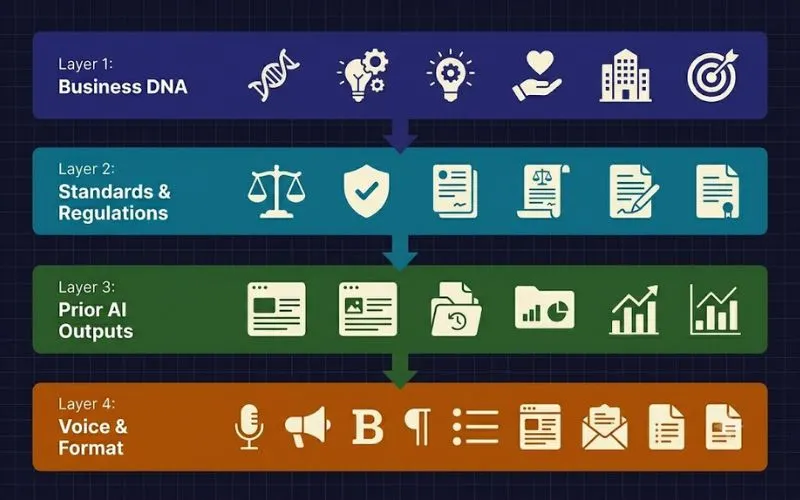
Every context-stacked prompt contains four core layers:
Layer 1 — Business DNA Block: The verified company profile — team, plant, projects, compliance status, goals, and client targets. This is the master context layer that every other layer builds on.
Layer 2 — Standards and Regulatory Framework: The specific compliance standards, clause references, and procurement criteria that the output must satisfy (e.g. ISO 45001:2018, CQMS Raize requirements).
Layer 3 — Prior AI Outputs: Documents already produced in earlier sessions. This is the chaining layer — each session's output becomes the next session's context.
Layer 4 — Voice and Format Constraints: Word counts, section headings, tone directives, and submission format specifications that prevent generic structure.
Context Stacking vs Generic Prompting — A Direct Comparison
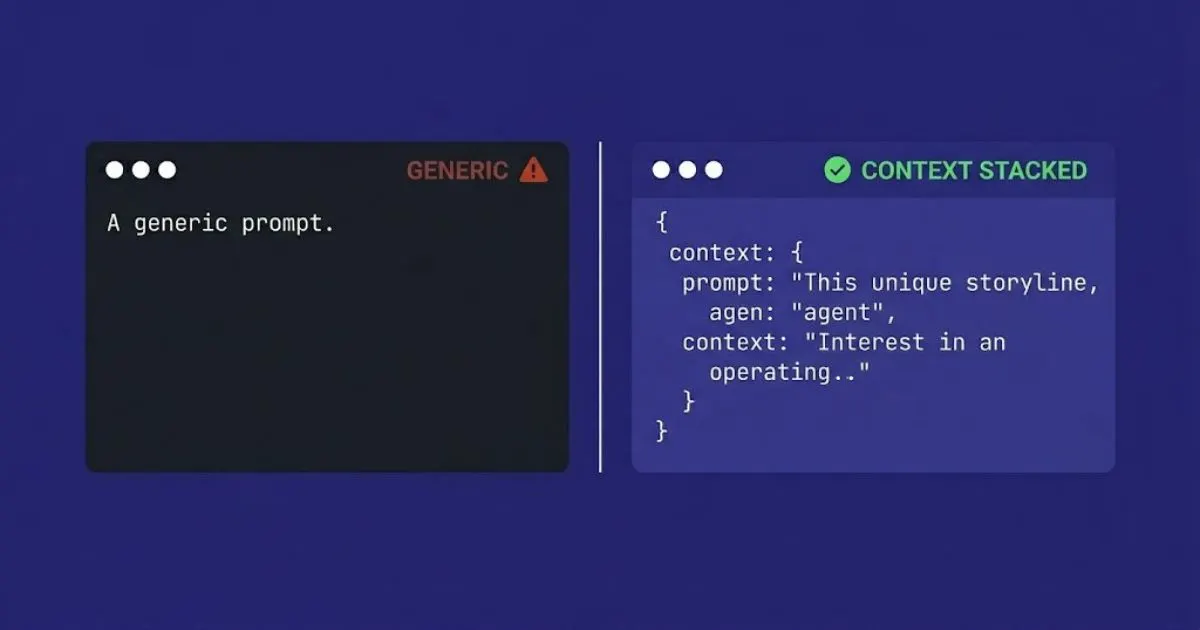
Generic prompt: "Write me a WHS policy."
Context-stacked equivalent: Business DNA block (company name, ABN, team, industry, prior projects) + ISO 45001:2018 framework reference + output format specification (8 policy areas, 1,200 words, plain NQ trade language) + previous capability statement as voice reference.
The output difference is not marginal. It is the difference between a document an evaluator discards and a document that passes a Tier 1 compliance audit.
The Business DNA Block — Layer One
The Business DNA block is the foundational layer of every context-stacked prompt. It is built once — typically in the first session of any AI-assisted document run — and then pasted into every subsequent session as the opening context.
What Goes Into a Business DNA Block
A complete Business DNA block contains: company legal name, ABN, trading name, address; owner/director profile (qualifications, experience, specialisations); team structure (roles, licence classes, credentials); plant and equipment (all items with capacity, year, ownership); past projects (minimum three, with client, value, scope, outcome); current compliance status (insurance, WHS, prequalification); target clients; and business goals.
Why Every Downstream Prompt Improves Automatically
Because the Business DNA block is pasted into every session, every document produced draws from the same verified source. There is no drift between a capabilities statement and a WHS policy overview — they describe the same business because they started from the same information.
The Business DNA block is a compounding asset. The more accurately it reflects the business, the better every document it produces — and updates cascade automatically into every future session.
Layer Two: Regulatory and Standards Framework
One of the primary reasons generic AI prompts produce generic compliance documents is the absence of specific regulatory references. An AI asked to "write a WHS policy" defaults to a broadly applicable template. An AI given "ISO 45001:2018 — 8 policy areas — psychosocial hazards under ISO 45003:2021 — QLD WHS Amendment Regulations 2022" produces a document calibrated to a specific legal environment.
ISO 45001, ISO 45003:2021 and What They Mean for Prompt Output
For civil construction and trade businesses in Queensland, the regulatory layer should include:
ISO 45001:2018 — the international standard for WHS management systems. Citing this by name forces the AI to structure the policy around recognised international criteria, not generic safety platitudes.
ISO 45003:2021 — the standard for psychosocial risk management. Queensland's 2023 WHS Regulation amendments made psychosocial hazard management a legislative obligation.
CQMS Raize prequalification requirements — naming the portal and its assessment criteria means the AI produces documentation structured for that specific evaluation environment.
Adding the Right Standards References
The standards layer does not require compliance expertise. It requires only that correct standard names and version numbers are included in the prompt context. The AI's training data contains detailed knowledge of these standards — the context layer simply activates it.
Layer Three: Prior AI Outputs as Inputs
The chaining layer separates context stacking from all other prompt engineering approaches. Once a Business DNA block and a compliance document have been produced, both become inputs for the next session.
How Chaining Makes Each Document Better Than the Last
The tender response that follows a completed WHS policy overview references the same compliance framework. The grant application that follows a capability statement uses the same project evidence. The prequalification package draws from every prior document — automatically aligned, consistently voiced, and factually consistent. This is why the Redstone Civil case study produced 62 documents — not 62 independent sessions, but a compounding chain where each output made the next one faster and more compliant.
Layer Four: Voice and Format Constraints
The final layer prevents the AI from defaulting to its generic structural preferences. Without format constraints, AI-generated documents share a recognisable "AI voice" — structured, complete, and immediately identifiable as machine-generated.
Why Word Counts, Tone Directives, and Format Rules Matter
Format constraints in a context-stacked prompt should specify: target word count for each section; submission format requirements; tone directive ("plain trade language, active voice, no jargon"); section headings that match the portal's expectations; and what to exclude ("no generic safety platitudes, no passive voice, no corporate boilerplate").
Ready to Build Your First Context-Stacked Prompt?
Explore the Expert AI Prompts library — purpose-built prompt architectures for compliance, tenders, grants, and prequalification, engineered for the civil construction sector.
Case Study — Context Stacking in Practice: Redstone Civil
The Redstone Civil case study is the most comprehensively documented demonstration of context stacking applied to a trade business. Every prompt, every output, and every deliverable is published at:
consultancydd.com/results/redstone-civil/
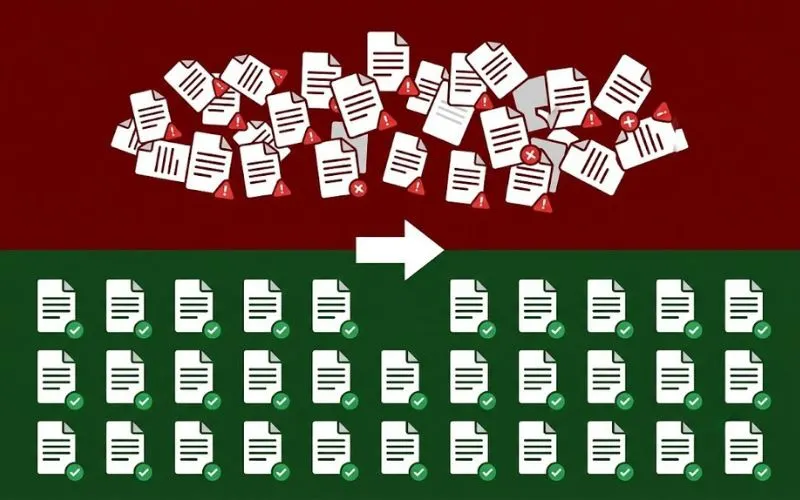
The Starting Position — 12 Compliance Gaps
Redstone Civil Pty Ltd is a fictional NQ civil earthmoving contractor built to demonstrate the CDD 7 Tools system. The starting audit identified 12 compliance gaps: no formal WHS management system; expired public liability insurance; no professional indemnity; two plant items uninsured; no capability statement; a LinkedIn profile at 40% completion; zero prequalification panel registrations; no document library.
This is the most common profile of a capable, established trade business blocked from Tier 1 access by documentation, not delivery.
The Seven-Hour Run — What Was Produced
Applying the CDD 7 Tools system produced: Business DNA profile; WHS Policy Statement (ISO 45001:2018 + ISO 45003:2021); Psychosocial Risk Register (ISO 45003:2021 + QLD Amendment Regs); three STAR-format project case studies; capabilities and capacity statements; three deep research readers; full McConnell Dowell prequalification (7 sections, 25 attachments); CSQ grant application ($23,440); TCC tender response; seven staff CVs; insurance and plant registers; LinkedIn All-Star profile (40% to 100%). Total: 62 documents. Average quality score: 4.875 out of 5.
The Results That Changed the Business
Six of twelve compliance gaps fully closed in a single run. WHS Code A to Code C. Three Tier 1 applications assembled simultaneously. The document library now provides the foundation for every future tender, grant, and prequalification submission.
View the full Redstone Civil case study and document library
The Deep Research Extension
Context stacking becomes most powerful when combined with deep research — AI-driven synthesis of market intelligence, regulatory frameworks, and competitive context completed before any application drafting begins.
Running Deep Research Before Drafting
Deep research in the context stacking system is a specific workflow: instruct the AI to research, summarise, and prioritise information specific to your target market and compliance environment, then use the resulting document as an additional context layer in every subsequent session.
Three Research Readers That Informed Every Application
In the Redstone Civil run, three deep research readers were produced before any application was drafted: (1) Tender Deep Research — Haughton Pipeline Stage 2 procurement structure and evaluation criteria; (2) Grant Deep Research — CSQ eligibility, BBRF criteria, Works for Queensland structure; (3) WHS Deep Research — ISO 45001, ISO 45003:2021, QLD WHS Amendment Regulations 2023, and a prioritised 30-day compliance sprint plan. Each became an additional context layer in the sessions that followed.
How to Build Your First Context-Stacked Prompt
The following four steps translate directly into a working context-stacked prompt. Begin with Step 1 for any new business document run.
Step 1 — Build Your Business DNA Block
Run a Business DNA Builder session. Extract: company details, owner background, team, plant, past projects (minimum three with client/value/outcome), compliance status, target clients, and business goals. Save the structured output as your master context block.
Step 2 — Add the Standards Layer
Before your first compliance document session, append relevant standard names and version numbers to your context block. For civil construction: ISO 45001:2018, ISO 45003:2021, QLD WHS Amendment Regulation 2022, and CQMS Raize if applicable.
Step 3 — Attach Prior Outputs
From Session 2 onwards, paste the output of the previous session into the opening context of the new session. The WHS policy overview becomes context for the next WHS session. The capabilities statement becomes context for the tender response.
Step 4 — Define Format and Voice
End every prompt with explicit format constraints: section headings, word counts, tone directive, and portal-specific format requirements. This prevents the AI from defaulting to generic structure and produces submission-ready output from the first run.
Frequently Asked Questions
What is context stacking in AI prompting?
Context stacking is an AI prompt engineering methodology that layers multiple pieces of structured information — business profile, regulatory standards, prior AI outputs, and format constraints — into a single prompt environment before any content generation begins. It prevents generic output by ensuring the AI has verified, specific context for every detail it produces.
How does context stacking differ from a regular AI prompt?
A regular prompt asks the AI a question from scratch. A context-stacked prompt opens with a structured information block — company data, compliance standards, prior documents, format rules — before the generation request. The difference in output quality is the difference between a document that gets discarded and one that passes a Tier 1 compliance audit.
What is a Business DNA block and how does it help?
A Business DNA block is a structured company profile document built in the first AI session. It contains company details, team, plant, past projects, compliance status, target clients, and goals. Pasted into every subsequent prompt session, it ensures all documents produced are factually consistent, correctly attributed, and voiced for the actual business — not a generic placeholder.
Can context stacking work for documents other than compliance?
Yes. Context stacking applies to any business document where accuracy, voice, and format consistency matter: tender responses, grant applications, capability statements, LinkedIn profiles, project case studies, and customer-facing content. The methodology works wherever the AI needs specific context to produce non-generic output.
What AI tools work best with context stacking?
Context stacking works with any large language model — Claude, ChatGPT, Gemini, and Copilot all perform well with well-structured context blocks. For prompts containing sensitive financial data (revenue figures, rate structures), the Expert AI Prompts methodology routes those sessions to Qwen deployed locally via LM Studio so sensitive data never leaves the device.
How long does it take to build a context-stacked prompt system?
The initial Business DNA block takes 30–60 minutes to build in a structured session. Each subsequent prompt session typically takes 20–45 minutes, depending on document complexity. The Redstone Civil case study — 62 documents across 7 tools — was completed in approximately 7 hours total.
Does context stacking work for businesses outside civil construction?
Context stacking is a universal methodology, not a sector-specific technique. The Redstone Civil case study uses civil construction compliance as the proof of concept because it is one of the most documentation-intensive sectors in Australia. The same layering approach applies to any trade, professional services, healthcare, or infrastructure business with compliance documentation requirements.
Ready to Build Your First Context-Stacked Prompt?
Explore the Expert AI Prompts library — purpose-built prompt architectures for compliance, tenders, grants, and prequalification.
See the Full Case Study and Document Library
62 documents produced using context stacking. Every prompt stage and deliverable published.