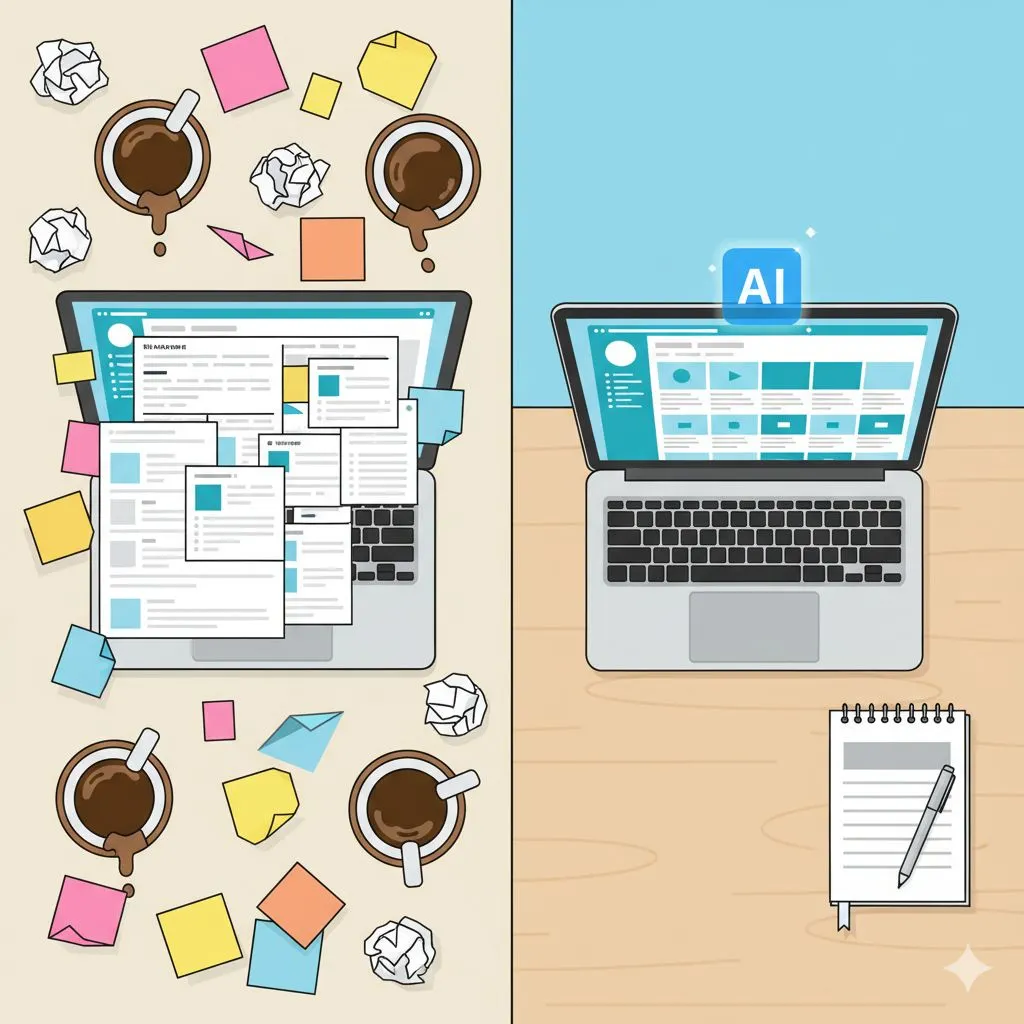
Blogging is Not Dead: How to Publish Daily Content with AI
Blogging is Not Dead: How to Publish Daily Content with AI
Jan 24, 2026

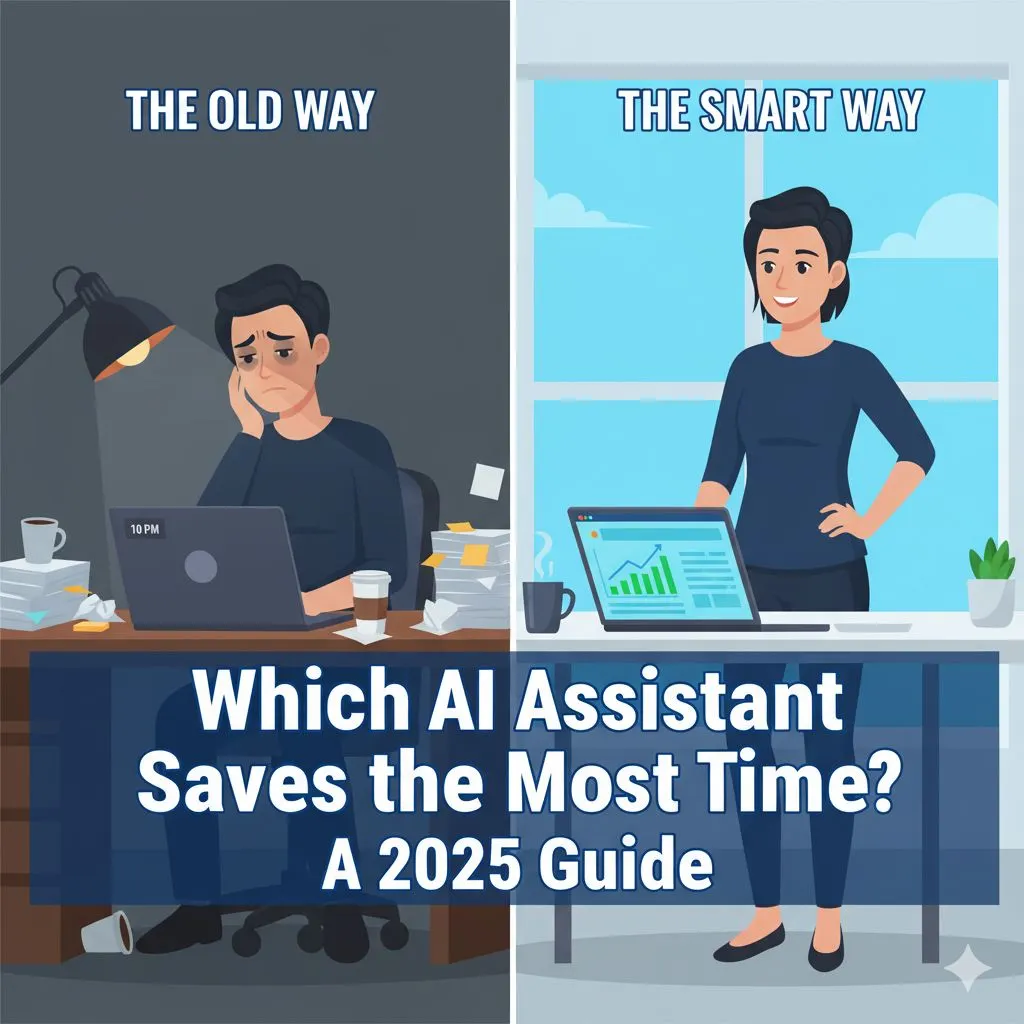
If you listen to the chatter on social media, blogging has been "dying" every year since 2015. Yet, if you look at the data, the reality is starkly different. Organic search remains one of the highest ROI channels for small businesses. The problem isn’t that blogging is dead; the problem is that the old way of blogging is dead.
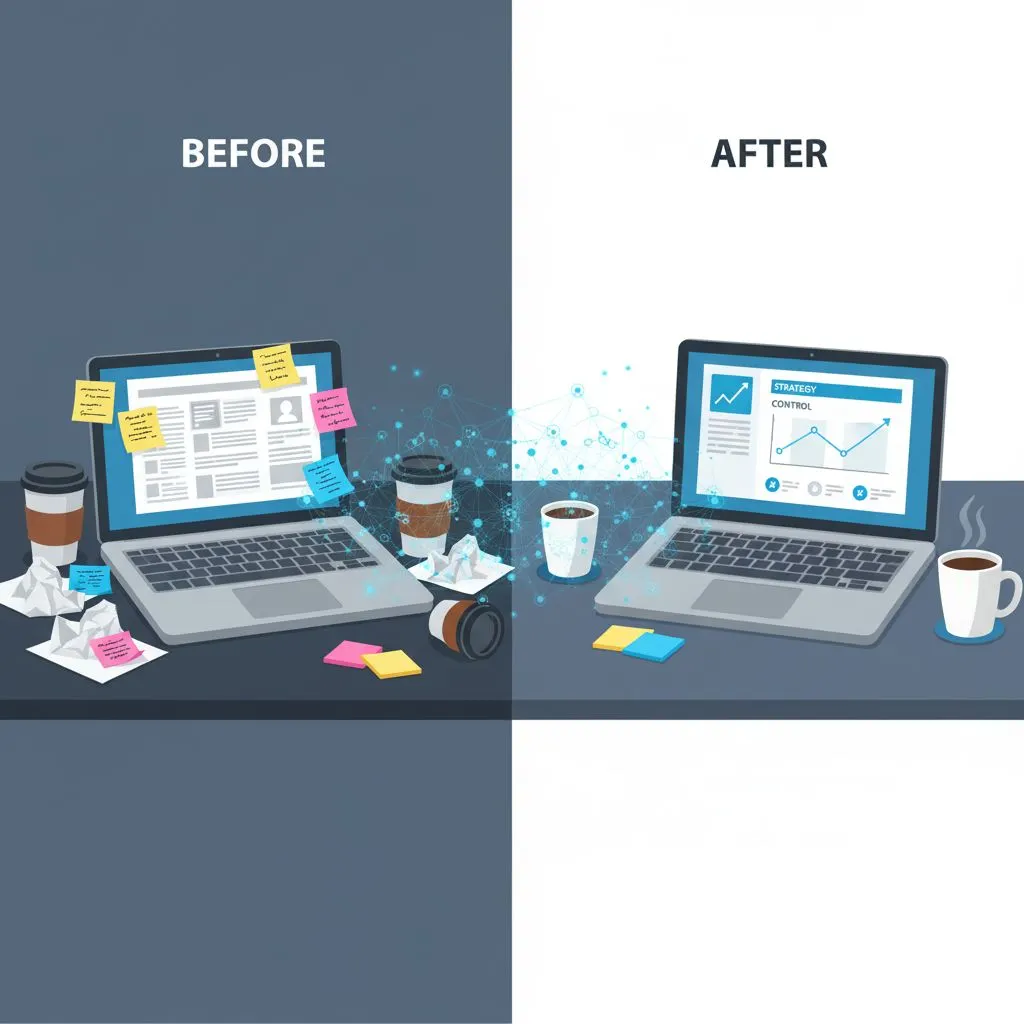
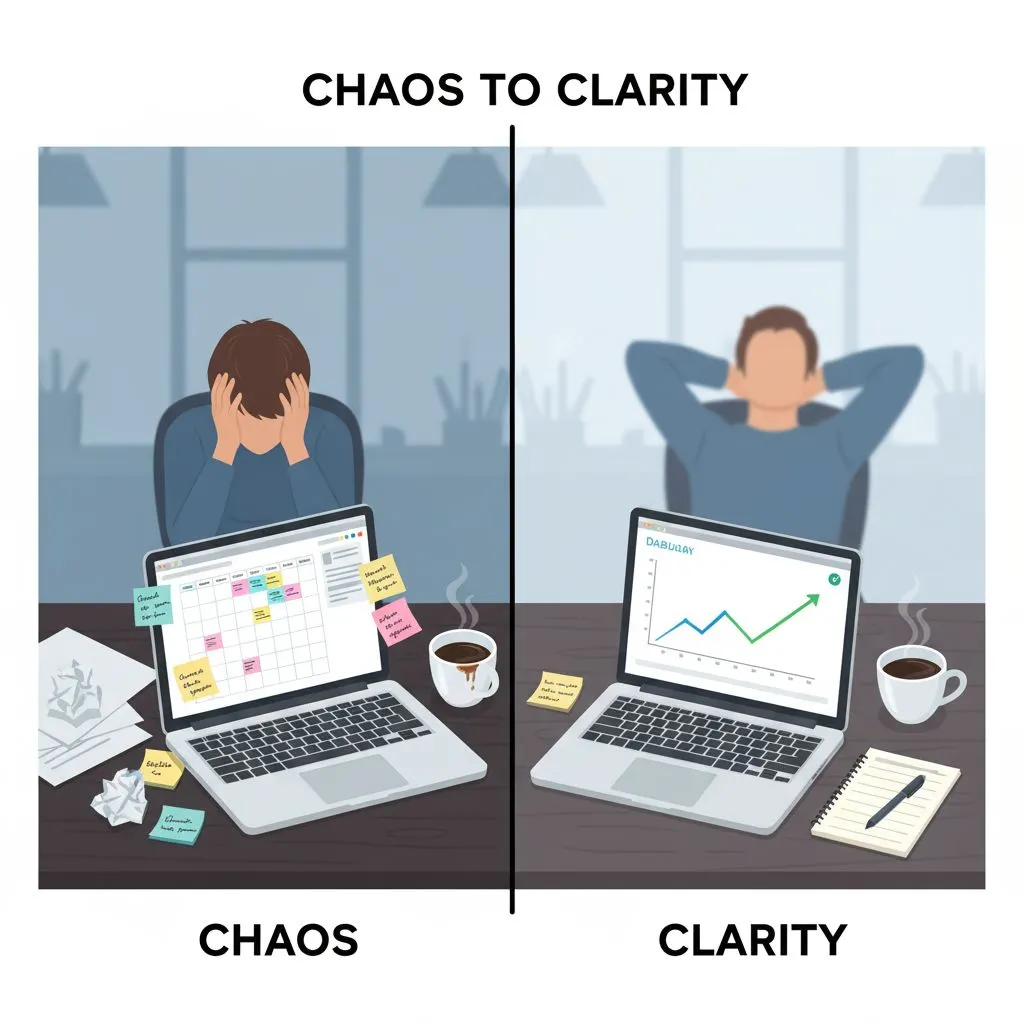
For business owners like you, the traditional method is a fast track to burnout. You know the drill: you block out three hours to write a thought-leadership piece. You stare at the blinking cursor. You get interrupted by a client email. Two hours later, you have a half-finished draft that gathers dust in your Google Drive. Meanwhile, your competitors—the big agencies with five-figure content budgets—are flooding the market.
You don’t have a team of ten writers. You don’t have 40 hours a week to dedicate to content creation. But you do have something the big players often lack: agility and deep industry expertise.
The missing link is leverage.
This guide is about reclaiming your time and competing at a high level. It is about utilizing ai for bloggers not to replace your expertise, but to amplify it. By the end of this guide, you will have a roadmap to publish daily, expert-level content that builds authority, all while spending less time typing and more time running your business.
Phase 1: The Mindset Shift – From Creation to Direction
Before we touch a single tool or prompt, we have to address the elephant in the room: The Guilt.
Many entrepreneurs feel a strange resistance to using AI for writing. It feels like "cheating." You pride yourself on authenticity and quality. You worry that using AI will dilute your brand or make you sound like everyone else.
Let’s reframe that immediately.
When you hire a junior copywriter, do you feel guilty for not writing every word yourself? No. You give them a brief, they write a draft, and you edit it to match your standards. To ensure AI output consistently reflects your brand, read how to train AI to write in your brand voice. AI is simply the most efficient, affordable junior copywriter you will ever hire. It never sleeps, never complains, and costs a fraction of a human employee.
The "Human Sandwich" Method
To maintain quality while scaling volume, you must adopt the Human Sandwich method. This is the core philosophy that prevents your content from sounding generic.
- The Top Bun (Human Strategy): You define the topic, the angle, the audience (Alex Rivers), and the goal. You provide the creative spark and the constraints.
- The Meat (AI Execution): The AI does the heavy lifting. It organizes thoughts, generates structures, and produces the rough draft prose based on your strict instructions.
- The Bottom Bun (Human Refinement): You step back in as the Editor-in-Chief. You verify facts, inject personal stories, adjust the tone, and ensure it aligns with your brand voice.
Defining Your Role
Stop trying to be the writer. Your new role is Executive Editor. Your value lies in your strategic thinking and your unique perspective, not in your ability to type 60 words per minute. Once you accept this shift, the goal of publishing daily content changes from an "impossible chore" to a "manageable system."
Phase 2: The Strategy Engine (Pre-Production)
The biggest time-suck in blogging isn't writing; it's deciding what to write. Decision fatigue is real, and it kills consistency. If you sit down every morning asking, "What should I post today?", you have already lost the battle.
To publish daily, you need a manufacturing mindset. You need a backlog of high-value ideas ready to go. This is where ai for bloggers shines brightest—not just in writing, but in strategic planning.
Never Start with a Blank Page
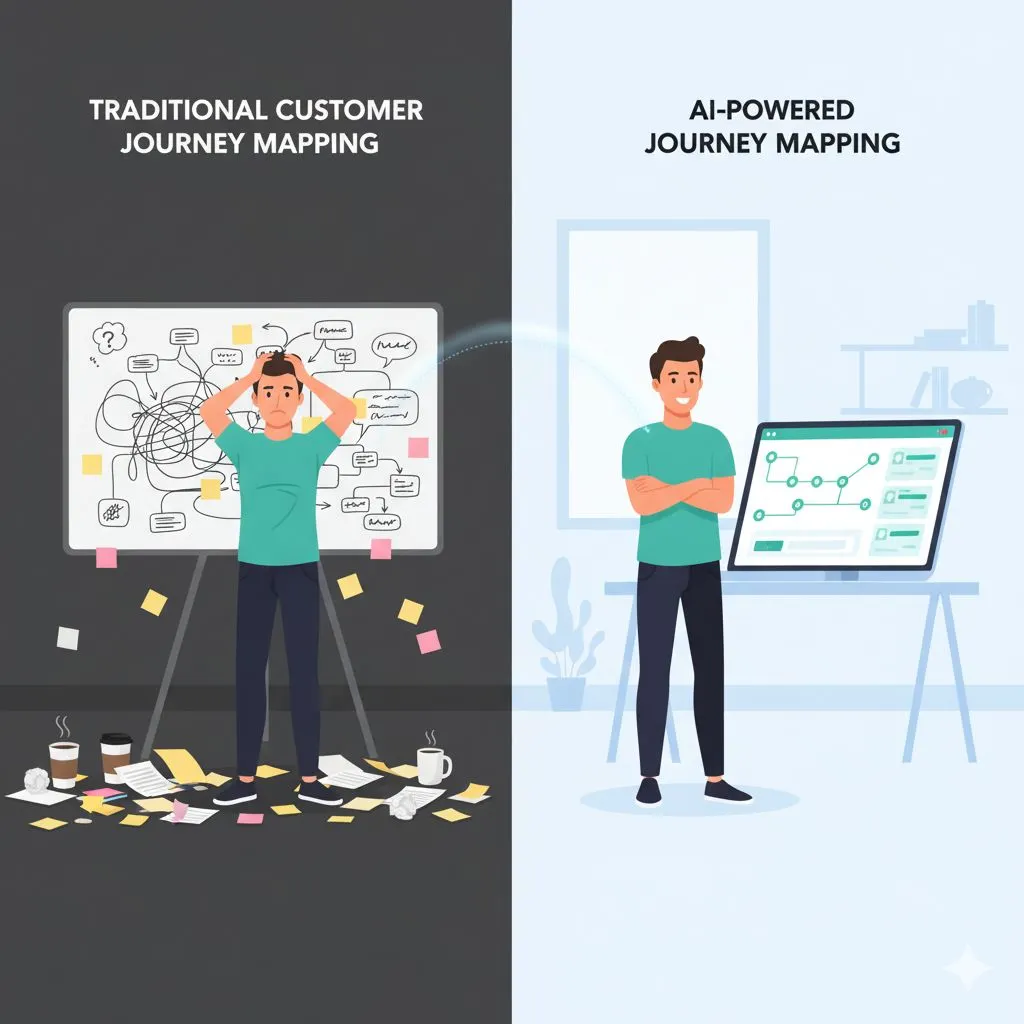
Instead of brainstorming in a vacuum, use AI to mine your customer persona for pain points. If you sell consulting services, you likely answer the same ten questions on every sales call. Those questions are your content roadmap.
You can ask AI:
"Act as a market researcher. My target audience is small business owners who are overwhelmed with daily operations. List 20 specific, burning questions they have about scaling their business without hiring more staff. Focus on anxieties regarding time management and automation."
In seconds, you have 20 blog post titles. This isn't just fluffy content; it is content that directly addresses the sleepless nights of your potential clients.
Topic Clustering for Authority
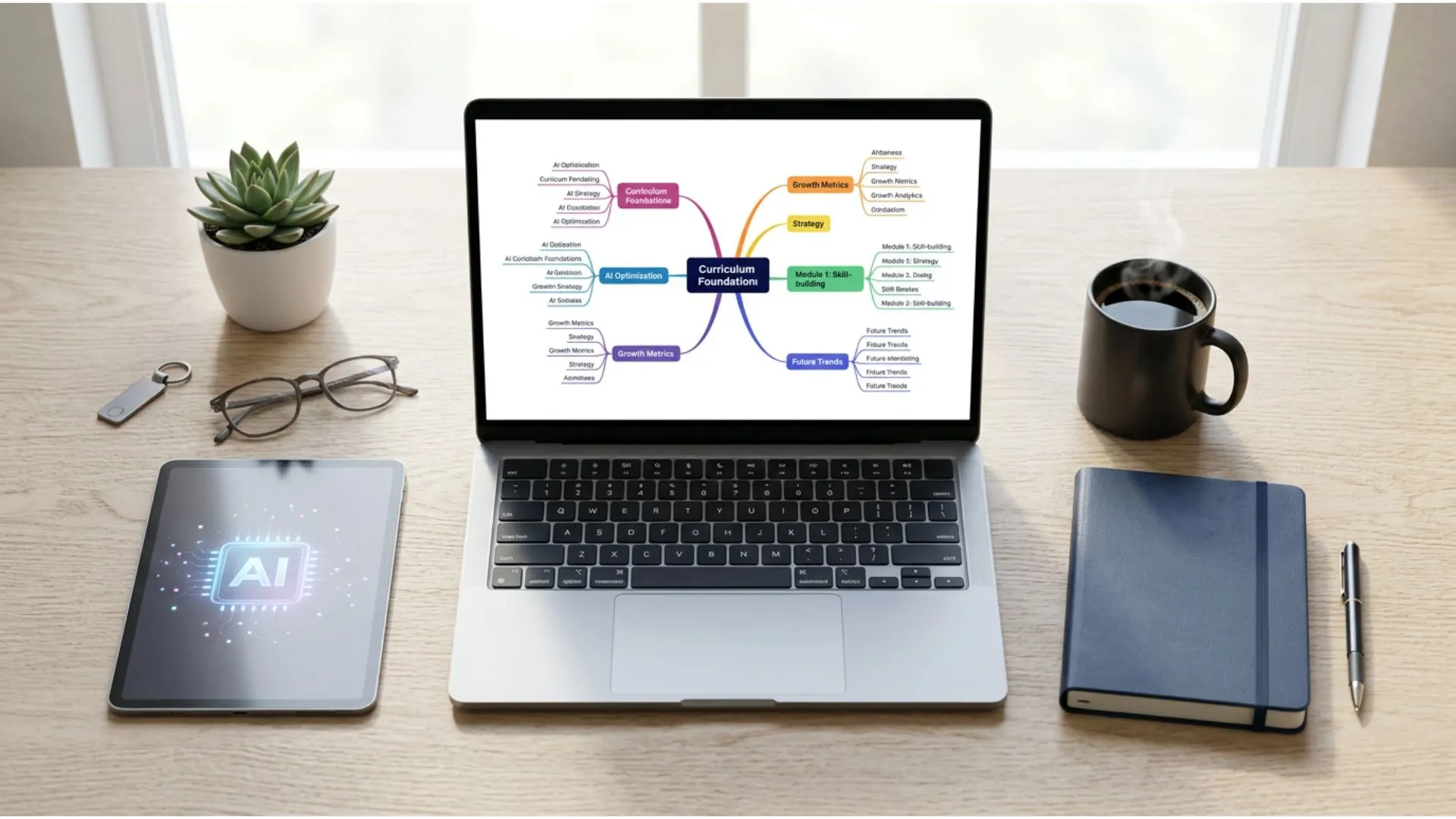
Google loves topical authority. Instead of writing random posts, you should create "Topic Clusters." This means writing one "Pillar Page" (a comprehensive guide) and then supporting it with 10–20 smaller, related posts that link back to it.
Doing this manually is tedious. With AI, you can plan a month of content in 10 minutes.
- The Pillar: "The Ultimate Guide to Small Business Automation."
- The Cluster: The AI can generate sub-topics like "Automating Email Follow-ups," "Best CRM for Teams of 5," "Automation vs. Delegation," etc.
By treating your content like a connected ecosystem rather than isolated islands, you signal to search engines that you are a true expert in your field. Start mapping your cluster today — download the free Content Pillar Planner template to plan a full quarter of content in one afternoon.
SEO Research: Finding the Gaps
You want to compete, but you don't want to fight battles you can't win. Targeting high-volume keywords like "business tips" is a waste of time for a smaller site. You need "long-tail" keywords—specific phrases with lower competition but high intent.
AI tools can simulate the search behavior of your persona. Ask the AI to generate a list of "commercial intent" keywords your persona might search for when they are ready to buy a solution like yours.
For example, instead of "productivity tips," AI might suggest: "how to automate client onboarding for marketing agencies."
This level of specificity attracts the right kind of traffic—people looking for solutions, not just free reading material. By front-loading this strategy, you ensure that every piece of content you produce has a job to do.
Phase 3: The Production Assembly Line
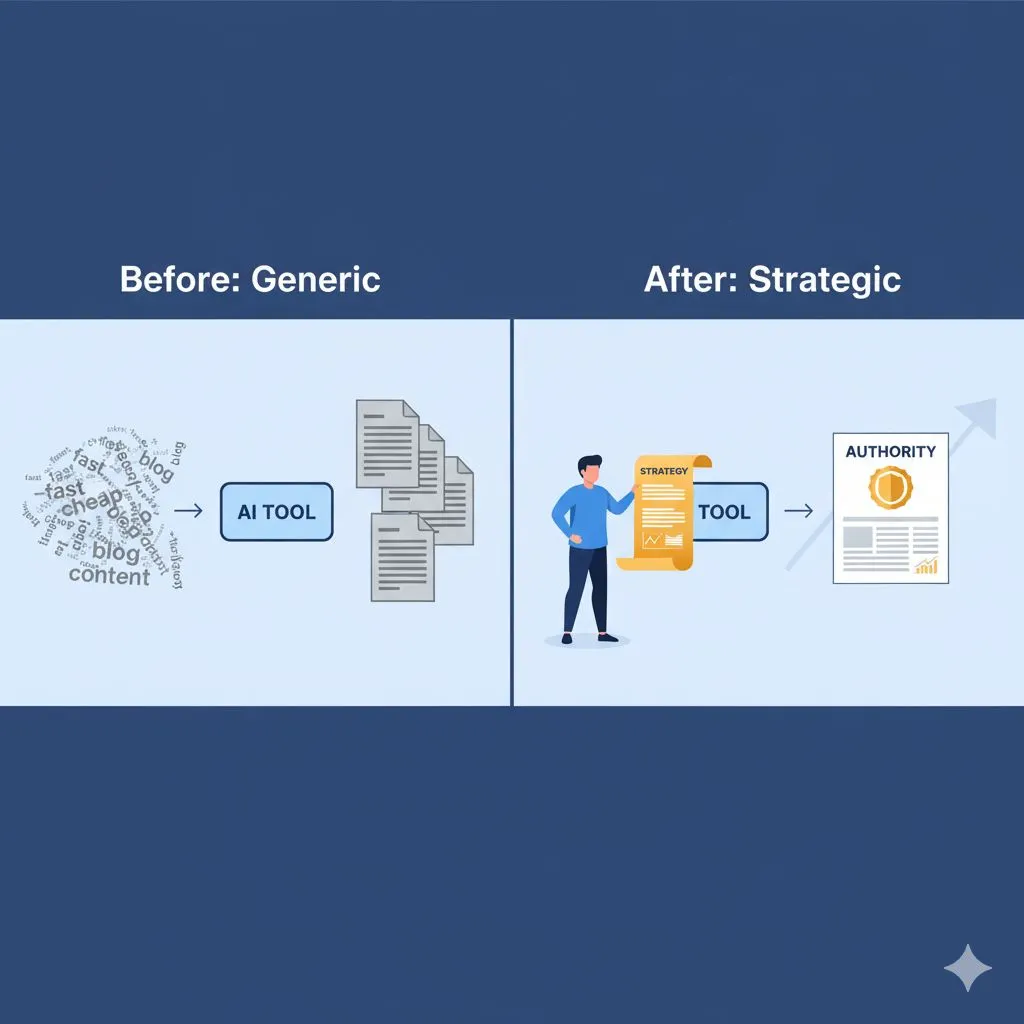
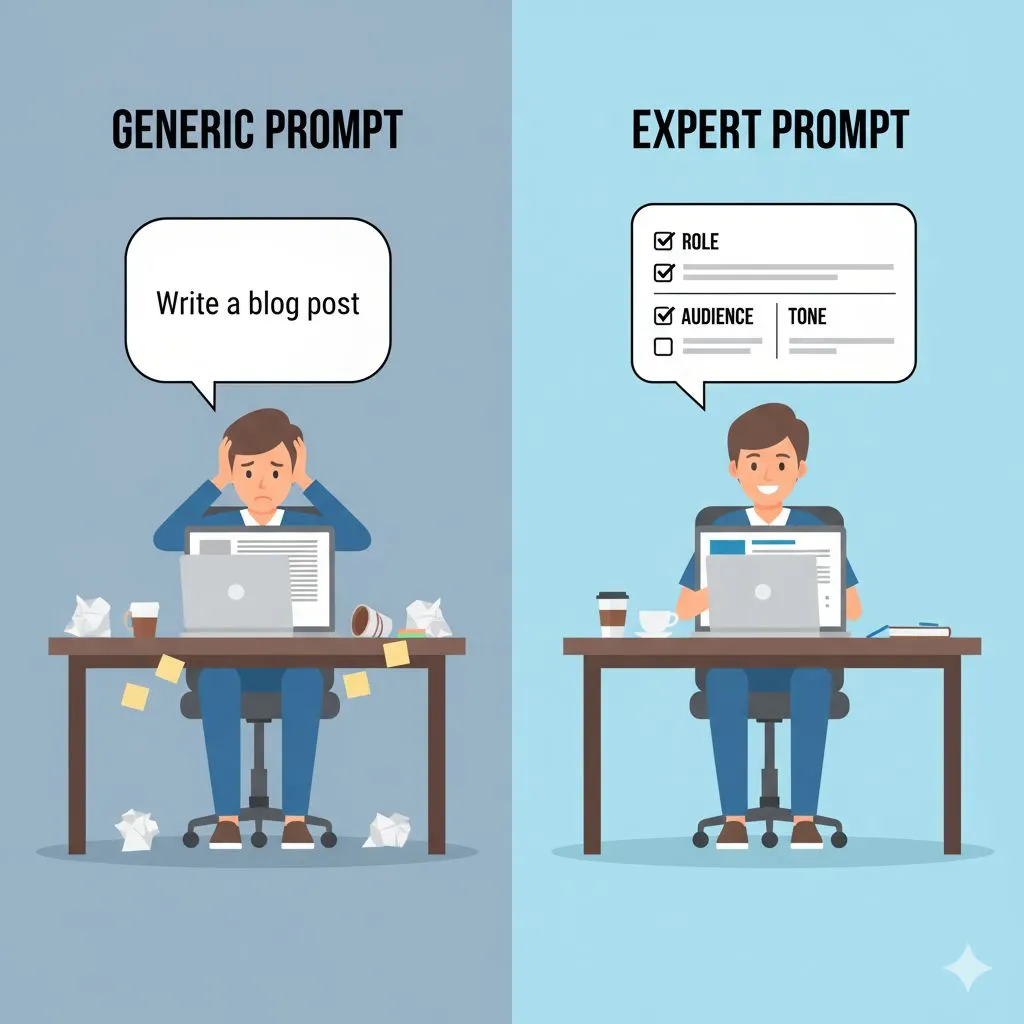
Now that you have your strategy and topic list, it’s time to build the factory. This is where most people fail with AI. They log into ChatGPT, type "Write a blog post about time management," and get a bland, repetitive, robotic wall of text. Then, they throw their hands up and say, "AI content is garbage."
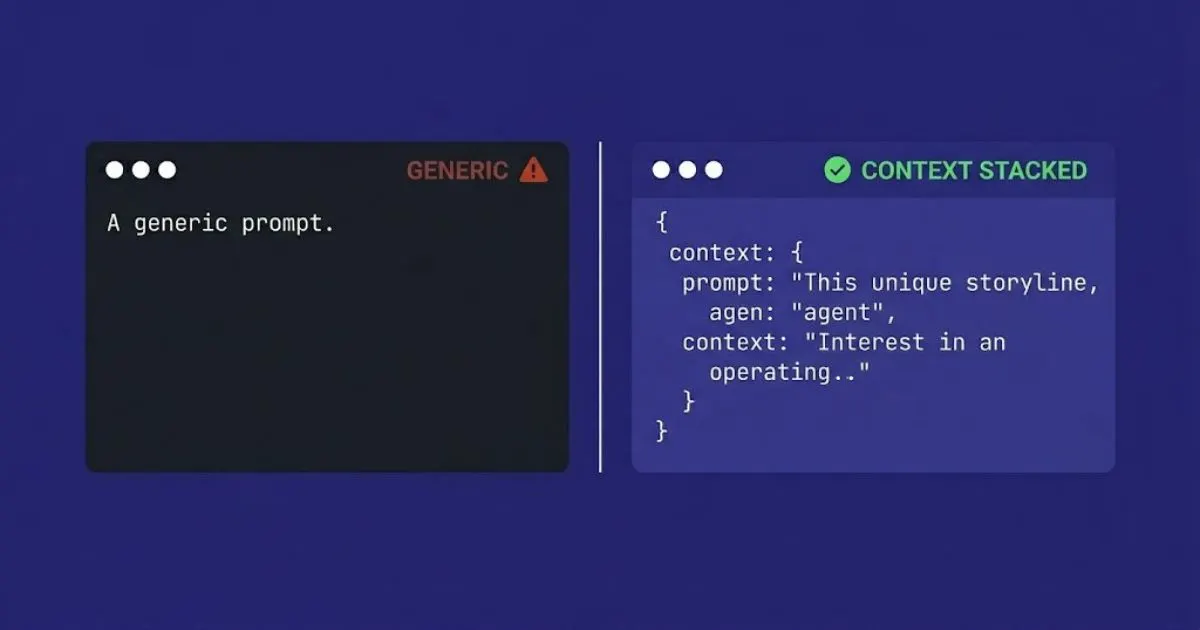
The output is only as good as the input. To get expert-level results, you need expert-level prompts. Grab the free Perfect Prompt Framework guide — a one-page reference that covers every element of a high-converting prompt. This is where the difference between generic vs strategic AI prompts becomes a competitive advantage.
Prompt Engineering 101 for Bloggers
To get content that sounds like you, you must provide context. A high-quality prompt must include:
- Role: Who is the AI acting as? (e.g., "World-class business consultant")
- Task: What exactly are we making? (e.g., "A 1000-word blog post")
- Audience: Who is reading this? (e.g., "Skeptical solopreneurs")
- Tone: How should it sound? (e.g., "Authoritative but empathetic, using short sentences")
- Constraints: What should it avoid? (e.g., "No jargon, no passive voice, no fluff.")
Structure First, Prose Second
Do not ask the AI to write the whole post at once. AI loses focus over long texts. Instead, use a two-step process.
Step 1: Generate the Outline.
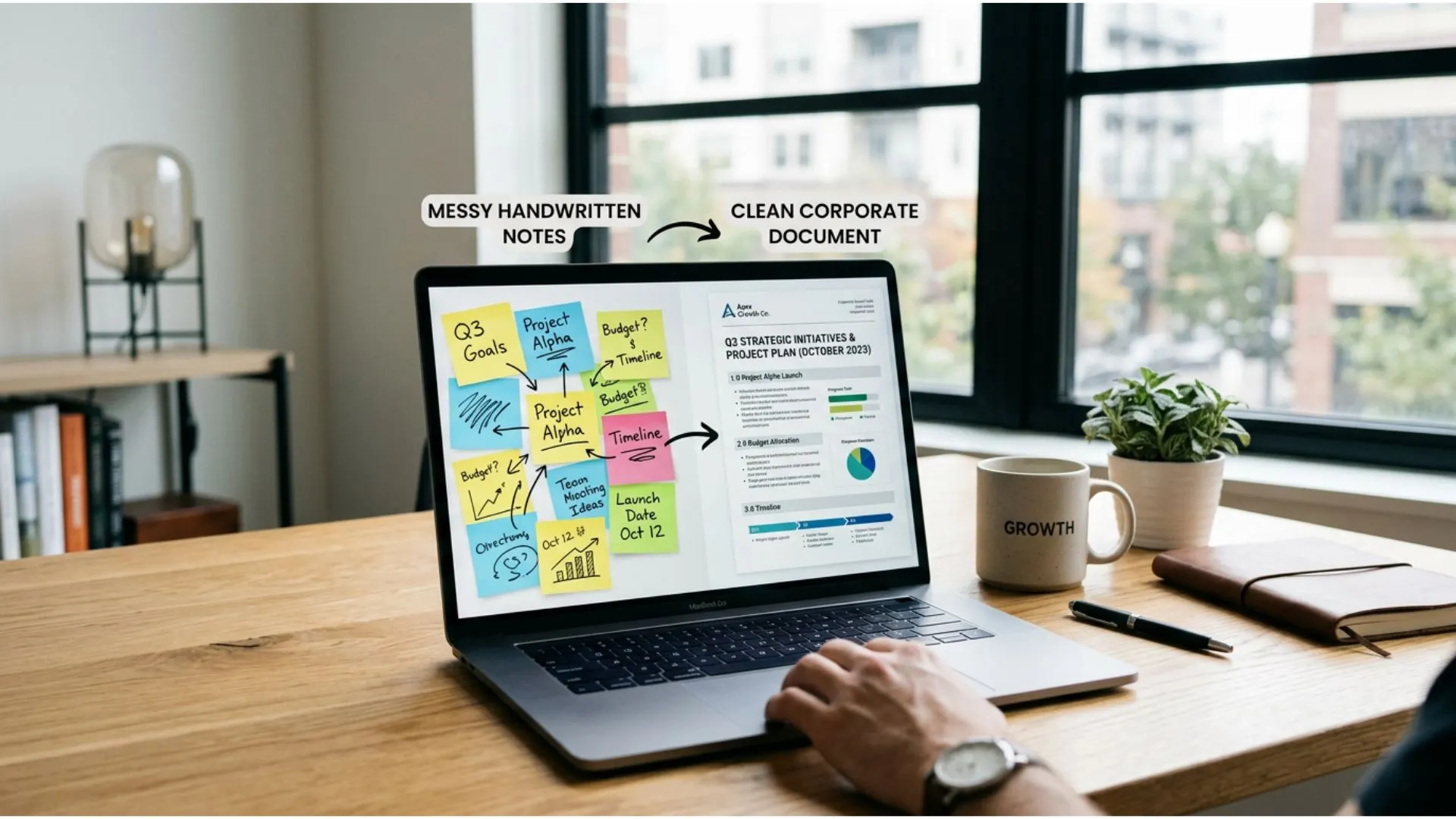
Ask for a detailed outline based on your title. Review it. Does it flow logically? Does it cover the key points? If not, ask the AI to revise the outline. You are the architect; the AI is the builder. Do not approve the build until the blueprints are perfect.
Step 2: Section-by-Section Drafting.
Once the outline is approved, generate the content one section at a time.
"Write the introduction. Hook the reader with a relatable struggle about [Pain Point]. Use a short, punchy opening sentence."
After the intro is generated, move to the next section.
"Now write Section 1 based on the outline. Include a bulleted list of benefits and a real-world example."
This "chunking" method ensures high fidelity. It keeps the AI on track and allows you to catch errors early. It takes slightly more interaction than a single click, but the difference in quality is the difference between spam and thought leadership.
The "Anti-Robot" Filter
AI has "tells." It loves words like "unleash," "unlock," "delve," and "tapestry." It tends to use passive voice and overly complex sentence structures.
Include a negative constraint in your prompts to combat this:
"Do not use the words 'unleash', 'game-changer', or 'realm'. Use active voice. Write as if speaking to a friend over coffee. Keep paragraphs under 3 sentences."
By strictly controlling the constraints, you force the AI to write in a style that mimics high-converting human copy.
Phase 4: Quality Control & The "Human Polish"
You have generated the draft. It’s 90% there. But that final 10% is what separates the amateurs from the pros. This is the "Bottom Bun" of the Human Sandwich—where you earn your trust.
Fact-Checking & Hallucinations
AI is a prediction engine, not a knowledge database. It predicts the next likely word, which means it can sound incredibly confident while being completely wrong. This is called a "hallucination."
If the AI cites a statistic, a date, or a quote, you must verify it. As a business owner, your currency is credibility. One fake stat can ruin your reputation. Treat the AI draft as a "rough sketch" that needs verification.
Injecting Experience and Story
This is the most critical step. For a step-by-step walkthrough, see how to use an AI content writer and still sound human. AI cannot replicate your life experience. It hasn't dealt with your difficult clients; it hasn't stayed up until 2 AM fixing a server crash.
Go through the draft and find places to inject:
- "I remember when..." stories.
- Contrarian opinions. (AI defaults to the consensus; you should offer a unique take).
- Case studies from your actual business.
If the AI writes, "Time management is important for growth," you change it to: "In 2022, I almost lost a major client because I was too busy doing $10/hour admin work. That was the moment I realized time management isn't just helpful—it's survival."
That shift is what makes readers trust you.
Formatting for Skimmers
Nobody reads big walls of text. They skim. AI often produces long, dense paragraphs. Your job as the Editor is to break it up.
- Use bolding for key takeaways.
- Turn lists into bullet points.
- Add H2 and H3 subheaders that are descriptive (not just "Introduction").
- Ensure there is plenty of white space.
SEO Final Polish
Before you hit publish, do a quick SEO sweep. Ensure your primary keyword appears naturally in the Title, the first 100 words, and at least one H2 header. Write a compelling meta description that invites the click.
Conclusion
The narrative that "blogging is dead" is a myth perpetuated by those who haven't adapted. For the ambitious solopreneur like Alex Rivers, blogging is a dormant goldmine. The barrier has never been ability; it has always been time. If the blank page is your biggest obstacle, download the free Writer's Block Buster swipe file — 50 ready-to-run prompts to spark your next post in minutes.
By integrating ai for bloggers into your workflow, you are not cutting corners—you are building a smarter business. You are moving from the exhausted operator trying to write 500 words before bed, to the strategic director orchestrating a media empire.
You have the expertise. You have the stories. Now, you have the engine to deliver them to the world daily.
Stop hustling harder. Start scaling smarter.
Not sure where to start? Explore all free AI resources — 11 free tools, templates and prompt downloads, zero cost.
Ready to Scale Your Content Production?
Don't waste months learning prompt engineering by trial and error. We have done the heavy lifting for you.
Get the Expert AI Prompts for Bloggers Pack.
It includes 50 pre-engineered, industry-specific prompts designed to take you from "blank page" to "published expert" in minutes.
Unlock Your Blogging Potential Here
Already know you need a full toolkit? See all 30 industry-specific prompt packs and find the right fit for your business.