3 Major Marketing Shifts Coming This Year
3 Major Marketing Shifts Coming This Year
Feb 01, 2026

Introduction
If you have felt exhausted by the sheer volume of "must-have" AI tools flooding your feed over the last two years, you are not alone. For small business owners and solopreneurs, the promise of Artificial Intelligence often feels like a double-edged sword. On one side, there is the potential for incredible leverage—the ability to do the work of ten people. On the other, there is the paralyzing reality of trying to learn new tech while keeping your business afloat.
For many, the last few years were the "Wild West" of AI. It was messy, experimental, and often overwhelming. But as we look toward the AI trends of 2026, the dust is finally settling. Our guide to the best AI tools for small business in 2026 gives you a curated view of exactly which platforms deliver real ROI for lean teams. We are entering a new phase of maturity. The novelty of "generating text" has worn off, replaced by a much more critical question: How does this actually help me grow my business and get my time back?
2026 is not about generating more noise. It is about generating better results.
For ambitious entrepreneurs operating with limited resources, this is the best news possible. The shifts coming this year favor the agile. They favor the business owner who wears many hats but wants to take them off one by one. The emerging landscape is no longer about who has the biggest budget; it is about who has the smartest strategy.
Here are the three major marketing shifts defining 2026, and how you can use them to transition from an overworked operator to a confident strategist.
Shift 1: The Move from "Generic Volume" to "AI-Assisted Authenticity"
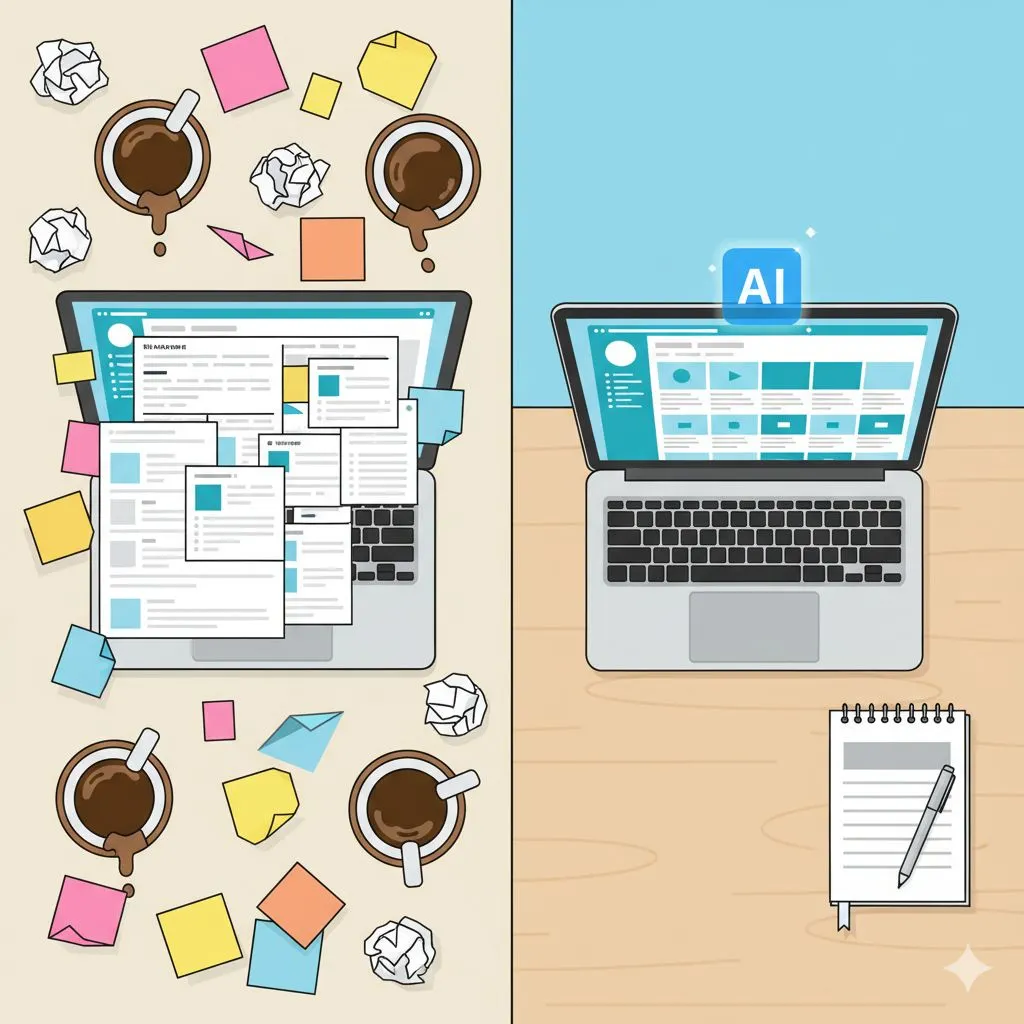
In 2023 and 2024, the internet was flooded with what industry experts call "grey goo." This was the tidal wave of average, mediocre content generated by people who treated AI like a slot machine—input a generic prompt, pull the lever, and publish the result.
The result? Trust plummeted. Readers became skeptical. Algorithms on Google and LinkedIn adjusted to penalize content that lacked depth, perspective, or human experience.
The Trap of Efficiency Over Quality
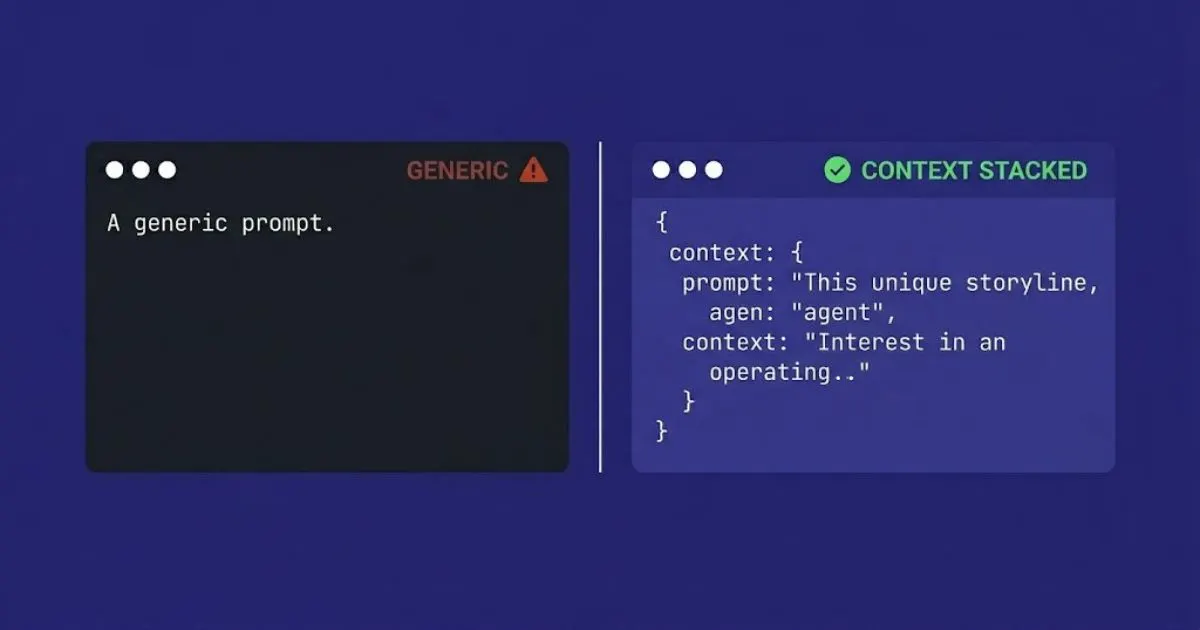
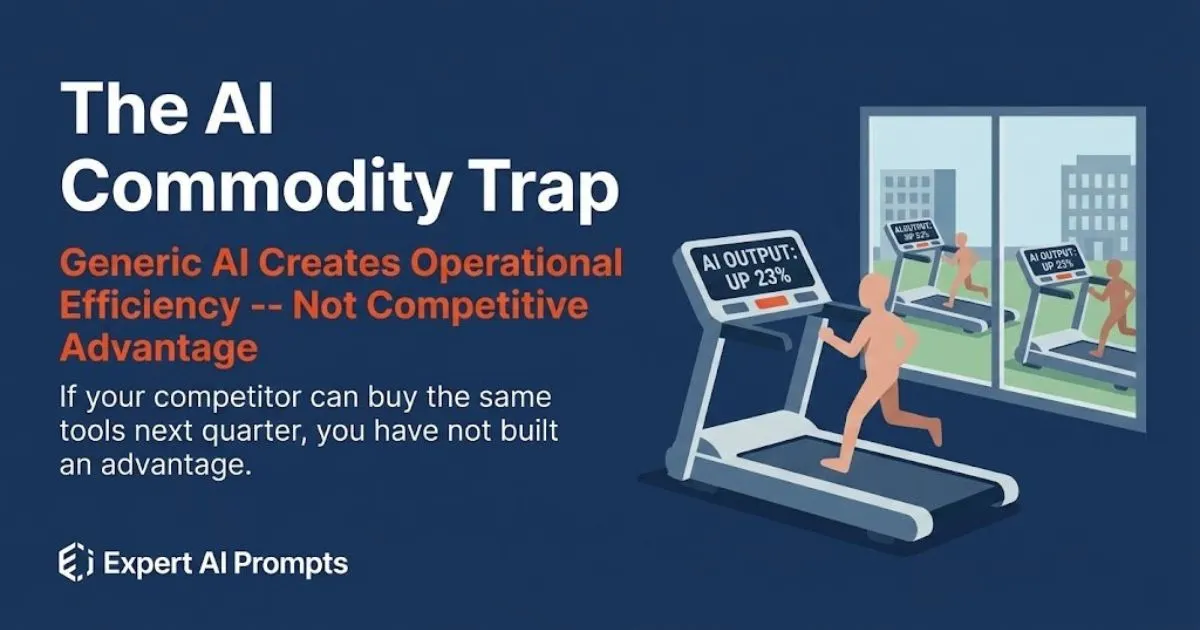
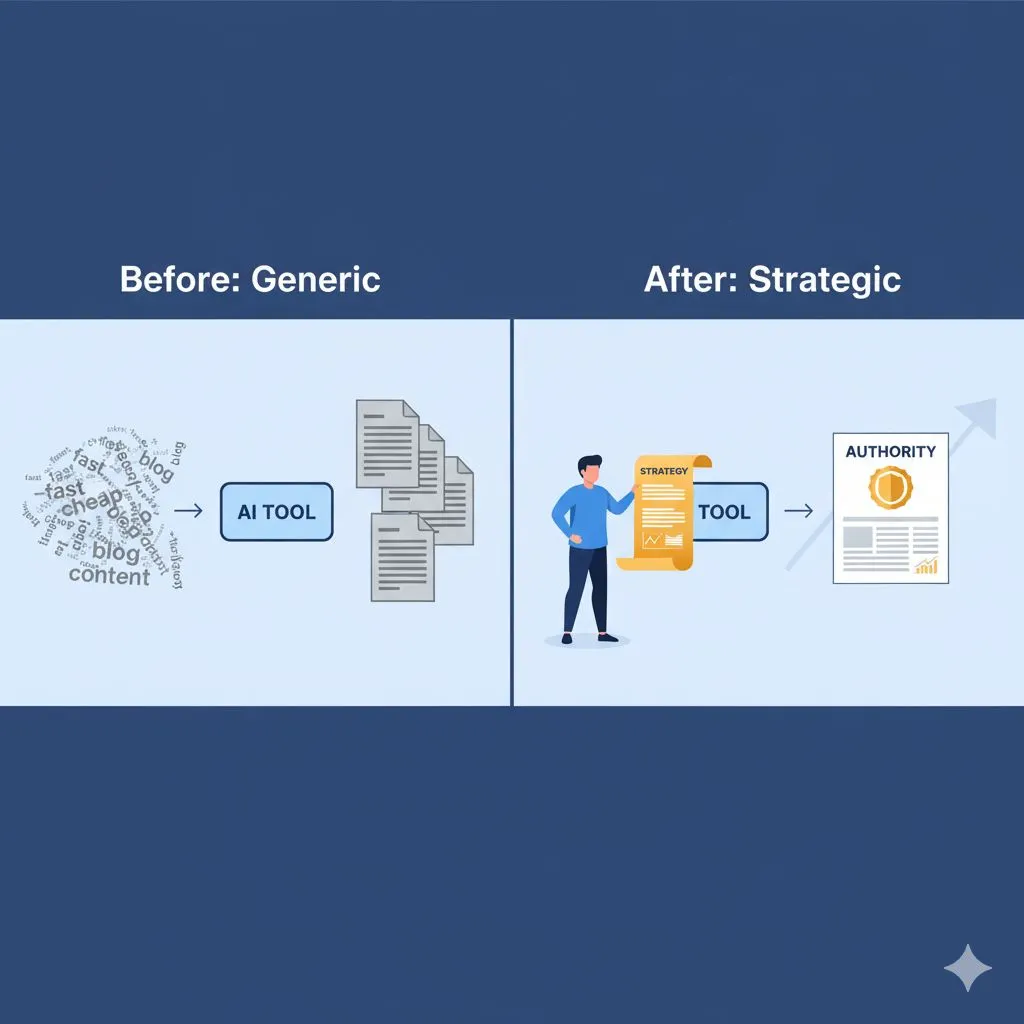
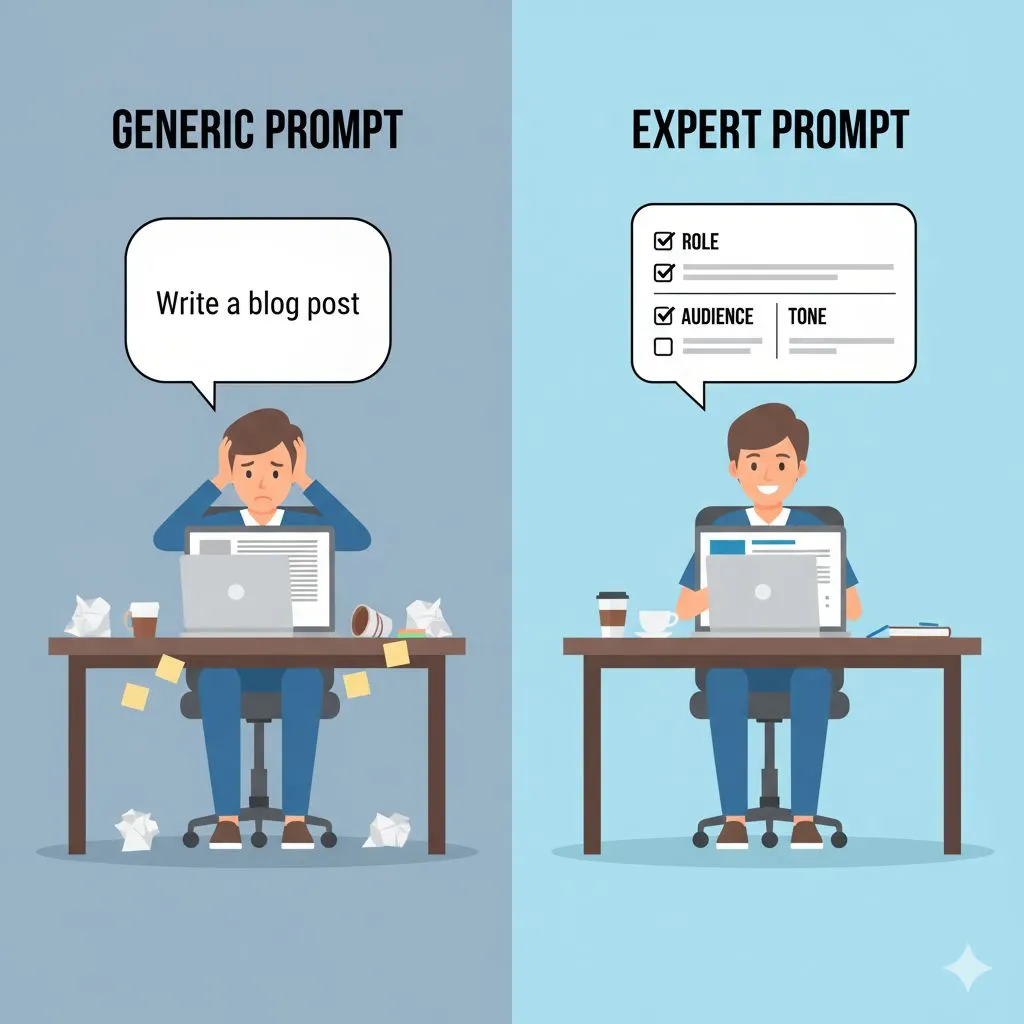
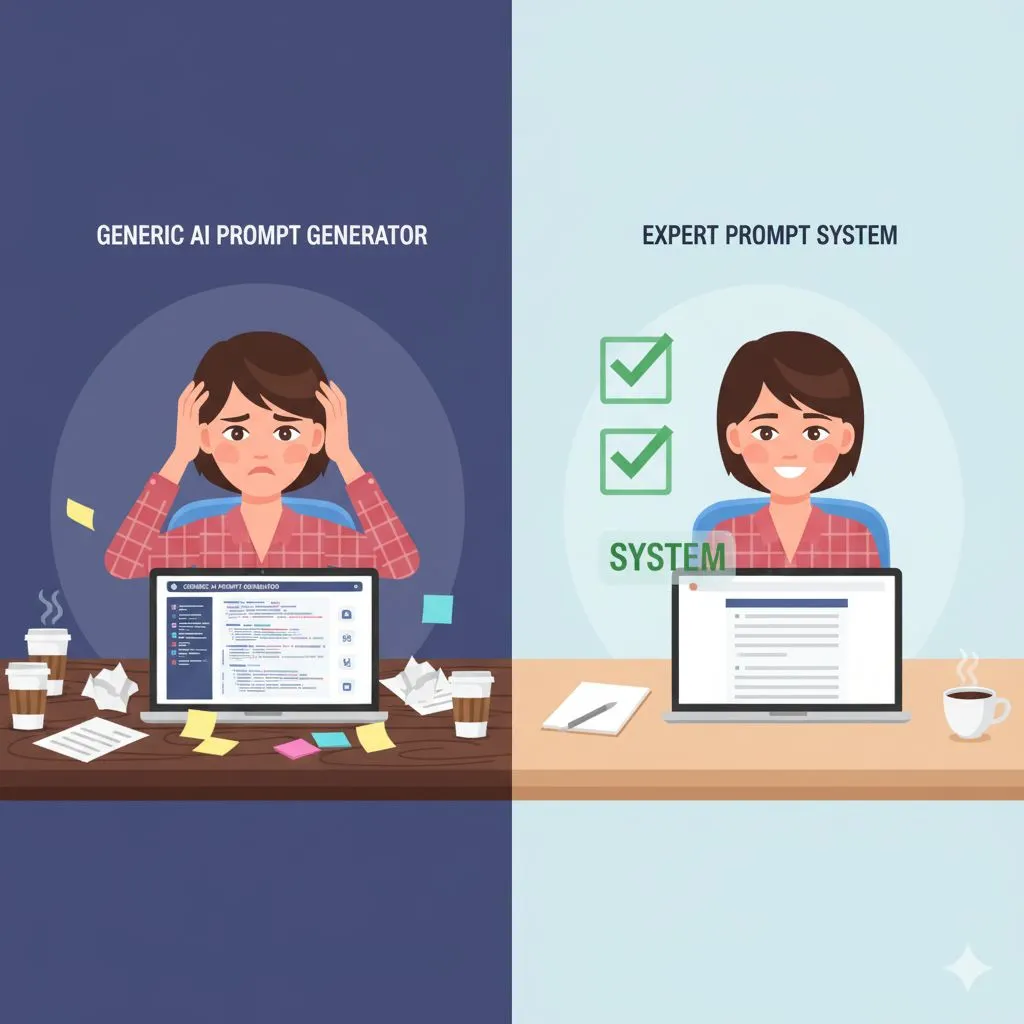
For a time-poor business owner, the temptation to "let AI write the blog post" while you handle client fires is strong. But in 2026, generic content is worse than no content. It signals to your potential customers that you are checking a box, not solving their problems. If your marketing sounds like everyone else’s, you cannot compete on value—you can only compete on price. That is a race to the bottom that small businesses cannot afford to win. The comparison between generic and strategic AI prompts makes this gap concrete — and shows exactly what mediocre outputs are costing your brand.
The Strategic Shift
The winner in 2026 uses AI to amplify their unique voice, not replace it. We are seeing a pivot toward AI-Assisted Authenticity. This means using AI to handle the structure, the research, and the formatting, while you provide the strategic insight and the "war stories" that only you possess. The most impactful first step is learning how to train AI to write in your brand voice, so that every output reinforces your credibility rather than diluting it.
Think of AI not as the writer, but as the world's best developmental editor.
How to Apply This Now
To capitalize on this shift, stop using prompts that ask AI to "write an article about X." Instead, use prompts that interview you.
- The "Extraction" Method: Use AI to interview you about a topic for 10 minutes via voice-to-text. Then, ask the AI to turn your raw, chaotic thoughts into a polished, structured piece of thought leadership.
- The "Devil's Advocate" Method: Paste your draft into your AI tool and ask it to critique your arguments, find holes in your logic, or suggest counter-arguments.
This approach saves you hours of staring at a blank page (the "efficiency" value) but ensures the final output drips with your specific expertise and credibility (the "quality" value). Download the Perfect Prompt Framework — free one-page guide that shows you how to structure every prompt so it extracts your expertise on demand. In 2026, your personal brand and unique perspective are your moat. AI is simply the pump that fills it.
Shift 2: Hyper-Personalization at Scale (The "Segment of One")
For decades, the "Holy Grail" of marketing for small businesses was the email blast. You built a list, you wrote a newsletter, and you sent the same message to everyone, hoping a small percentage would bite. If you wanted to personalize your marketing, you had to do it manually—writing individual emails to prospects, which is unscalable when you are already working 10+ hours a day.
Big corporations had the expensive software and data teams to segment their audiences. Small players had to settle for being broad.
The Trap of Broad Broadcasting
In 2026, the tolerance for generic marketing is hitting zero. Customers expect brands to know what they need before they ask. If you are a consultant sending beginner tips to an advanced client, you lose credibility. If you are an e-commerce shop sending dog product offers to a cat owner, you lose the sale.
Broad broadcasting creates "marketing fatigue." It forces you to send more emails to get the same result, increasing your workload and annoying your audience.
The Strategic Shift
The second major shift of 2026 is Hyper-Personalization at Scale, often called the "Segment of One."
AI tools have democratized data analysis. You no longer need a data scientist to understand your customers; you just need the right prompts and the right integration. AI agents can now analyze a prospect’s recent behavior—what they clicked, what they asked, what industry they are in—and dynamically assemble a message that speaks directly to them.
Our AI-driven marketing automation setup guide shows the exact architecture small businesses are using to implement personalisation without enterprise software or a developer.
How to Apply This Now
You don't need expensive enterprise software to start this. The shift here is about mindset and using accessible tools to tailor your outreach.
- Smart Segmentation: Instead of one "Newsletter" list, use AI to tag your subscribers based on their interests. If you run a digital agency, AI can scan your interaction history and tag clients as "interested in SEO" vs. "interested in Paid Ads."
- Dynamic Content Creation: When creating a campaign, use AI to generate three variations of your core message.
- Variation A (The Cost-Conscious Lead): Focuses on ROI and affordability.
- Variation B (The Growth-Focused Lead): Focuses on speed and scaling.
- Variation C (The Skeptic): Focuses on case studies and social proof.
By matching the message to the mindset, you increase conversion rates dramatically without increasing your ad spend. If you want ready-built prompts for all three variation types, the AI Prompts for Social Media Managers Toolkit has them pre-loaded and optimised for immediate use. For the solopreneur, this is the ultimate leverage. It allows you to treat 500 leads with the same care and attention usually reserved for your top 5 clients, all without working a single extra hour. This builds the kind of brand loyalty that allows small businesses to steal market share from the giants.
Shift 3: From "Prompting Tasks" to "Orchestrating Workflows"
If you have been using AI for the last year or two, your workflow probably looks something like this:
- Open ChatGPT.
- Paste a prompt.
- Wait for the output.
- Copy the result.
- Paste it into a Google Doc, email, or social media scheduler.
- Edit and format.
While this is faster than writing from scratch, it is still manual labor. You have become the "Human API"—the glue sticking different apps together. As a business owner trying to escape the weeds, you simply traded one type of task for another. You are still the bottleneck.
The Trap of Task-Based AI
Treating AI as a task-doer limits its potential. It keeps you in "operator mode." You are still triggering every action. If you take a week off, the machine stops. This isn't scaling; it's just faster typing.
The Strategic Shift
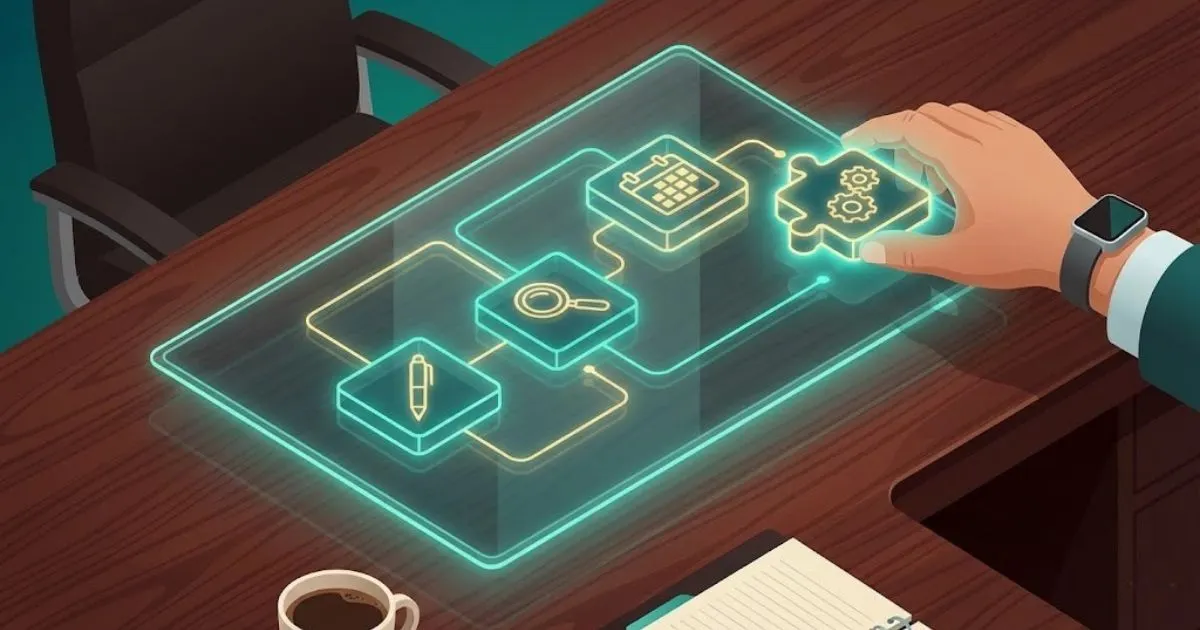
The ai trends of 2026 represent a massive leap from "Prompting" to "Orchestrating." We are moving toward Agentic AI—systems where AI agents talk to each other to complete a chain of events.
Instead of asking AI to "write a social post," the workflow of 2026 looks like this:
- Trigger: A new industry report is released.
- Agent 1 (Researcher): Reads the report and summarizes key insights relevant to your specific audience.
- Agent 2 (Writer): Drafts a LinkedIn post and a newsletter segment based on those insights, matching your brand voice.
- Agent 3 (Reviewer): Checks the content against your brand guidelines and formatting rules.
- Human Step (You): You receive a notification with a nearly finished draft. You approve it or make a slight tweak.
- Agent 4 (Publisher): Schedules the content across platforms.
How to Apply This Now
This might sound like science fiction, but the tools to build these "chains" are already here and becoming user-friendly for non-coders. Our guide to building an automated content creation workflow provides a zero-risk step-by-step process designed for small business owners with no technical background.
- Audit Your Loops: detailed audit of your week. Identify the "loops"—the repetitive chains of tasks you do constantly. (e.g., Client Onboarding, Content Repurposing, Monthly Reporting). Use our AI implementation checklist for small business to score your current workflows and pinpoint the highest-impact loops to automate first.
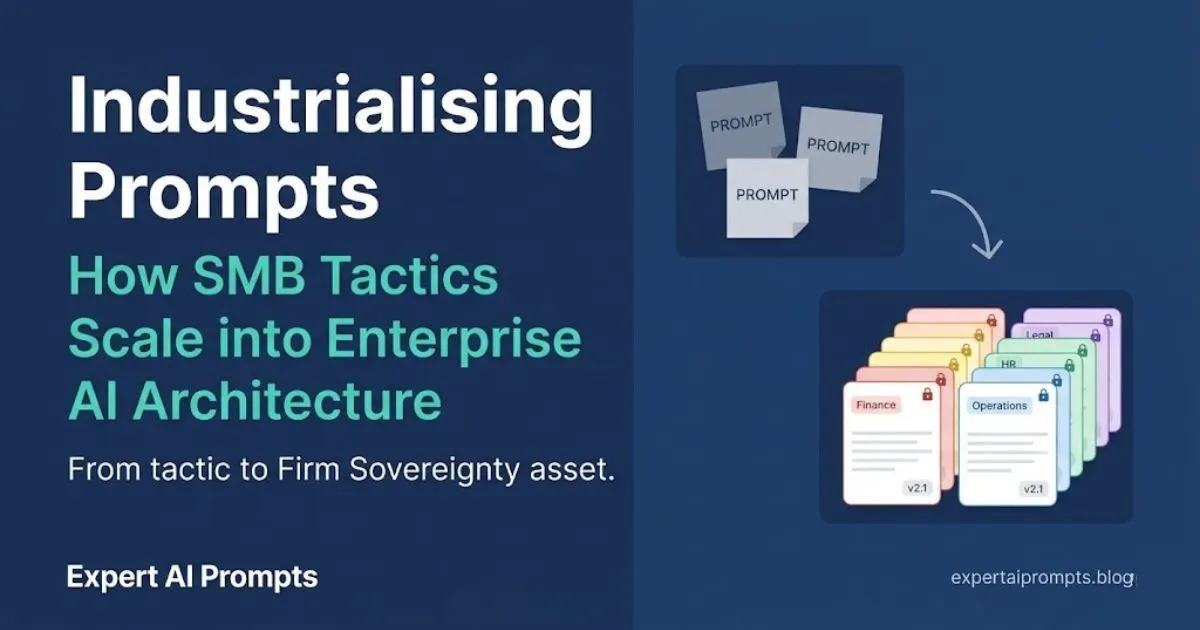
- Standardize Before You Automate: You cannot automate a mess. Before you build the AI workflow, you need clear, proven prompts for each stage of the process. Our guide to automated prompt engineering shortcuts for consistent AI outputs shows you how to build that reliability into your system from day one.
- The "Director" Mindset: Stop asking, "How do I write this prompt?" and start asking, "How do I design this system?"
This shift is the key to the "time freedom" you crave. By building an asset—a workflow—you are creating a business system that runs with or without your immediate input. This is how a team of three competes with a team of thirty. You aren't paying for more hands; you are orchestrating digital ones.
Conclusion: Reclaiming Your Time
The narrative around AI is often driven by fear—fear of replacement, fear of complexity, or fear of being left behind. But for the pragmatic business owner, the ai trends of 2026 are a message of hope.
The three shifts we have discussed—AI-Assisted Authenticity, Hyper-Personalization, and Workflow Orchestration—are all leading to the same destination: Leverage.
- Authenticity ensures your brand stands out in a crowded market, building the trust required to charge premium prices.
- Personalization ensures your marketing dollars work harder, bringing in higher-quality leads without increased ad spend.
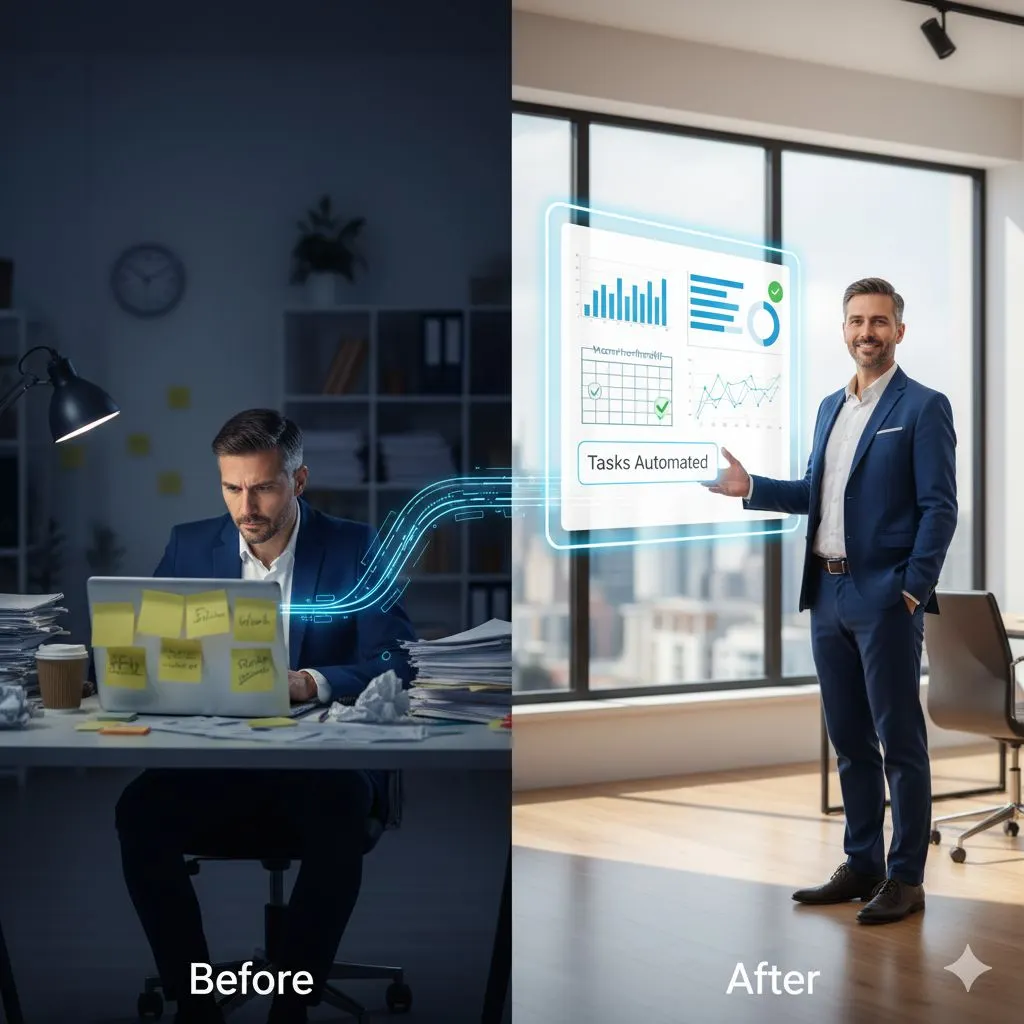
- Orchestration ensures you can deliver on your promises without burning out, removing you from the day-to-day grind of "copy-paste."
The era of "hustle harder" is ending. The era of "scale smarter" is here.
You do not need to master every new tool that launches on Product Hunt. You do not need a computer science degree. You simply need to reject the generic, embrace your unique expertise, and start building systems that work for you.
The difference between the business owners who will be stressed in 2026 and those who will be thriving is not luck. It is preparation. It is having a toolkit of proven strategies that turn these trends into tangible ROI.
Don't let another year slip by where you are stuck in the weeds of daily operations. Start with our free AI resources for small business owners — 11 ready-to-use tools you can implement today, with zero risk and no commitment required. The technology is ready. The question is: Are you ready to direct it?
Ready to Orchestrate Your Growth?
Understanding the trends is the first step; implementing them is where the profit lies. If you want to skip the trial-and-error and implement these systems immediately, we have built the roadmap for you.
Get Your Complete AI Marketing Strategy Guide
Stop spinning your wheels with generic outputs. Start building a business that scales.
Ready to go further? See all 30 prompt packs and pricing — and find the industry-specific toolkit built for your exact business type.
Further Reading
Best AI Tools for Business: The 2026 Toolkit for Small Teams
Your Complete AI Marketing Strategy Guide
Generic vs. Strategic AI Prompts: What Is the Difference?
How to Train AI to Write in Your Brand Voice
Is Your Small Business Ready for AI Implementation? [Checklist]