Is Your Enterprise Actually Ready for AI? The 4 Gates to Production
Is Your Enterprise Actually Ready for AI? The 4 Gates to Production
Apr 26, 2026

Right now, across the Fortune 500 and mid-sized enterprises alike, there is a massive gap between theoretical AI ambition and actual executive readiness. Boards are mandating artificial intelligence integration, C-suites are allocating unprecedented budgets, and technical teams are spinning up countless sandboxes.
Yet, the return on investment remains stubbornly uneven.
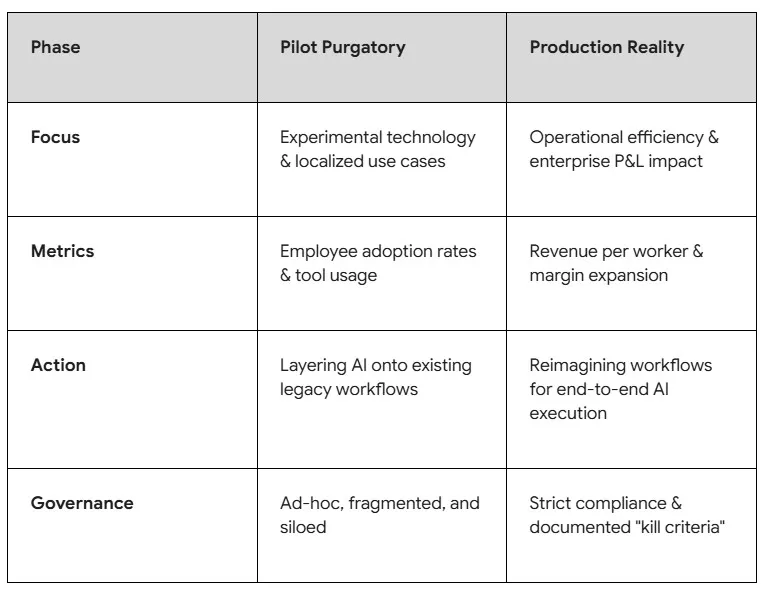
Statistics reveal a stark reality: while 78% of enterprises have AI pilots running, only a dismal 14% have successfully scaled these initiatives. Even more concerning, 56% of organizations report absolutely zero financial impact from their AI investments despite broad internal adoption. You cannot afford to fall into the 80% of companies failing to capture AI's economic value. The era of "pilot purgatory" is over. It is time for disciplined, rigorous, and highly profitable ai production deployment.
To transition from disjointed, highly technical AI initiatives into governed, enterprise-wide deployments that drive double-digit Earnings Per Share (EPS) growth, organizations must pass through four distinct strategic gates.
Gate 1: Strategic & Financial Alignment (The P&L Mandate)
If AI does not explicitly drive margin expansion, operational efficiency, or top-line growth, it is merely a costly science experiment. As an enterprise sponsor, you must demand a shift from fragmented, tech-led experiments to a structured portfolio managed with ruthless financial discipline.
You need clear executive reporting—specifically, consolidated ROI and unit economics reports that demonstrate the exact P&L impact per dollar of investment. This requires establishing a disciplined AI Portfolio Matrix.
Crucially, this matrix must include documented "kill criteria." If a project fails to meet predefined financial thresholds or operational benchmarks within a set timeframe, it must be ruthlessly defunded. This prevents capital from bleeding into vanity projects and redirects resources to initiatives that guarantee measurable returns.
Gate 2: Workflow Reimagination vs. Bolt-On Technology
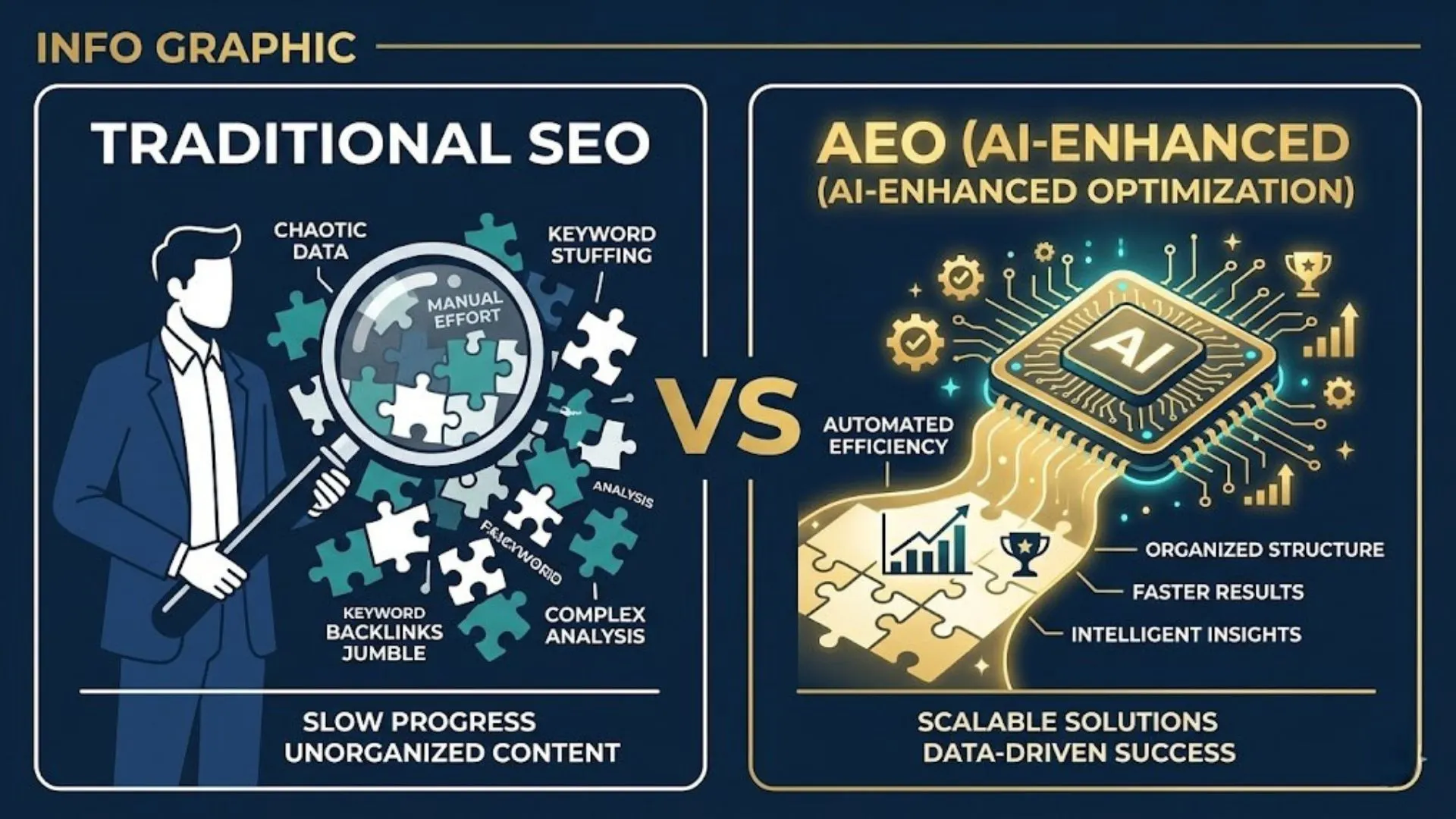
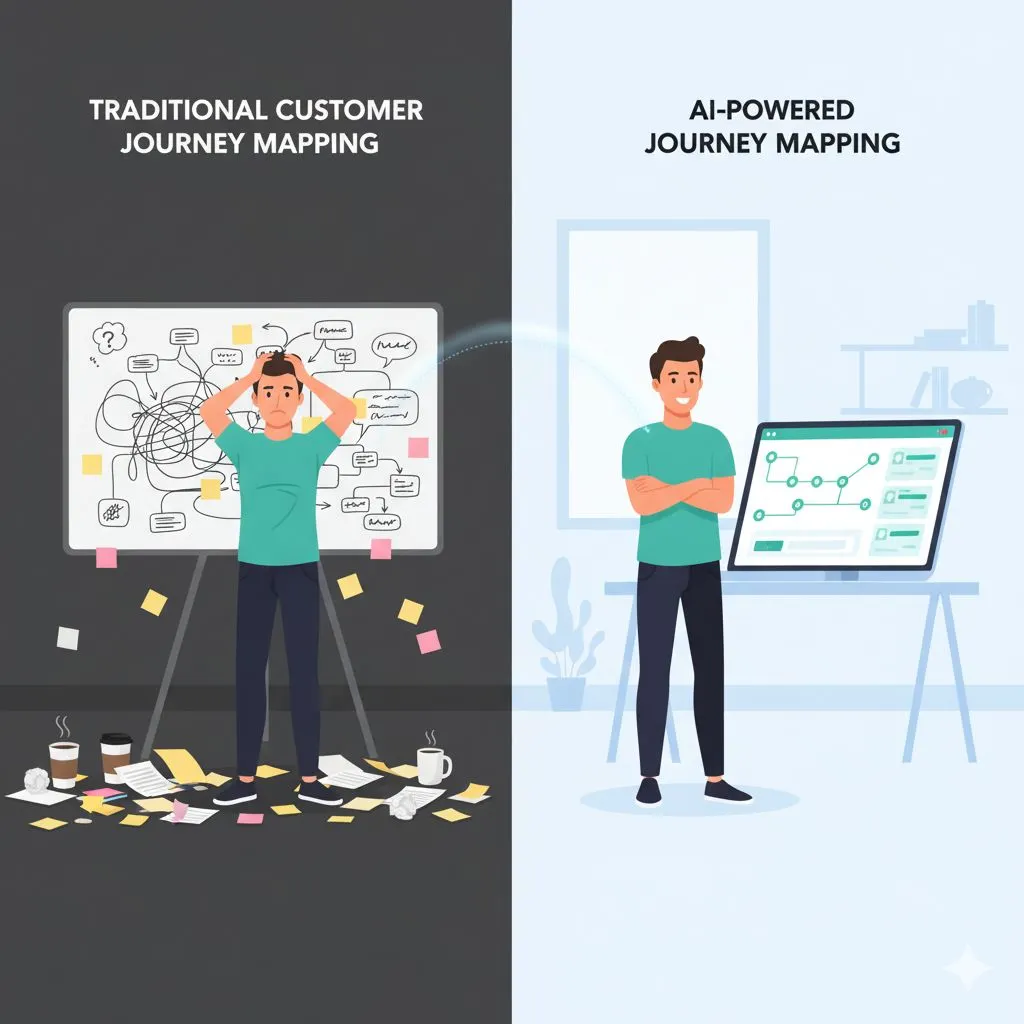
A common pitfall in enterprise AI adoption is the attempt to bolt advanced technology onto broken or outdated legacy systems. We need to stop layering AI onto legacy processes and start reimagining jobs holistically.
Successful AI production deployment requires flattening organizational structures and streamlining workflows so AI can execute tasks end-to-end. If your teams are using AI simply to generate the same outputs slightly faster, you are missing the transformative potential of the technology.
By comprehensively redesigning workflows around AI capabilities, enterprises can target up to 3x higher growth in revenue per worker. This isn't about replacing the workforce; it is about providing your teams with expert-level leverage, freeing them from repetitive manual work, and allowing them to focus on high-yield strategic execution.
Gate 3: Architectural Strategy & The Data Moat
If every enterprise possesses the exact same generic AI capabilities, competitive advantage can no longer be derived simply from having AI tools. To turn commoditized technology into a proprietary, defensible corporate moat, your architectural strategy must be flawless.
This requires effectively evaluating the "Buy vs. Build" dilemma. You must balance compute costs, speed to market, and the absolute protection of proprietary data.
Off-the-shelf models provide immediate efficiency, but true enterprise leverage comes from fine-tuning models on your organization's unique, historical data. Your data is the moat. A successful deployment strategy safeguards this data while utilizing the most efficient compute architecture available, ensuring that your AI capabilities cannot be easily replicated by competitors.
Gate 4: Governance, Compliance, and Ethical Risk
The final gate before full-scale deployment is the hardest to navigate: risk management. C-suite leaders are rightfully asking, "What is our exposure to algorithmic bias and data privacy violations at scale?"
With shifting global regulations and the strict enforcement of frameworks like the EU AI Act, a reactive approach to compliance is a massive liability. Enterprise-grade AI requires transparent governance frameworks that audit for bias, protect consumer data, and ensure ethical deployment.
Furthermore, you must proactively manage the "cultural debt" associated with AI integration. Workforce anxieties and transitions must be handled with empathy and clear communication. An enterprise is only ready for AI when its people are ready to operate alongside it without fear of unmanaged disruption.
Moving from Ambition to Execution
Treating AI as an emergent IT capability is a recipe for P&L stagnation. It is a primary driver of enterprise value creation that demands cross-functional orchestration, transparent governance, and explicitly tied financial outcomes.
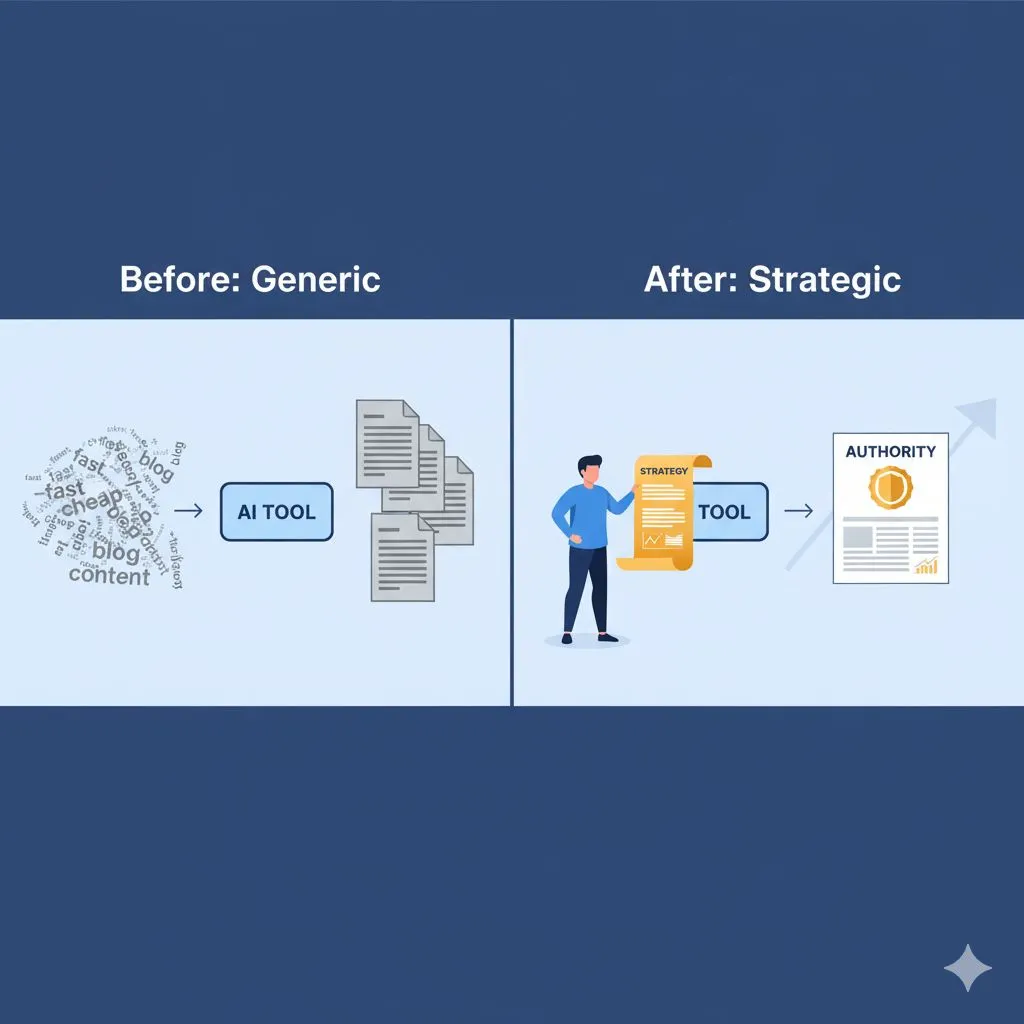
Moving from pilot to production requires a rare synthesis of deep technical fluency, rigorous financial acumen, and advanced change management. You must demand more than just 'content shortcuts' or generic tools; you need a structured, ROI-driven toolkit that directly benefits your bottom line and scales your competitive advantage.
Are you trapped in pilot fatigue, or is your infrastructure truly prepared for scale? Stop guessing and start strategizing.
Take the next step and evaluate your operational maturity today: https://expertaiprompts.com/ai-readiness-quiz