5 Signs Your AI Content Writer Is Hurting Your Brand Authority
5 Signs Your AI Content Writer Is Hurting Your Brand Authority
Jan 27, 2026

If you are like most ambitious small business owners, you are constantly fighting a war against the clock. You have clients to manage, operations to streamline, and a nagging feeling that you should be posting more content on LinkedIn or your blog to stay competitive.
Enter the AI content writer.
On the surface, tools like ChatGPT or Claude seem like the ultimate salvation. They promise to turn a blank page into a finished article in seconds. For a solopreneur or a small team stretching limited resources, this feels like magic. Finally, you can compete with the big agencies without hiring a five-person marketing team.
But there is a hidden cost to this efficiency, and it is paid in the currency of trust.
While AI can churn out words faster than any human, it lacks the lived experience, strategic nuance, and emotional intelligence that build genuine brand authority. If you are relying on generic prompts and copy-pasting the results, you aren't just saving time—you might be actively telling your audience that you don't care enough to engage with them deeply.
For a complete framework on using AI for content without losing your brand edge, see the Small Business Playbook for AI Content Creation — the strategic guide built for solopreneurs and small teams.
In the rush to scale, it is easy to miss the subtle signals that your content has slipped into the "robotic" zone. Here are the warning signs that your AI content writer is eroding the credibility you have worked so hard to build, and how to fix them before your audience tunes out.
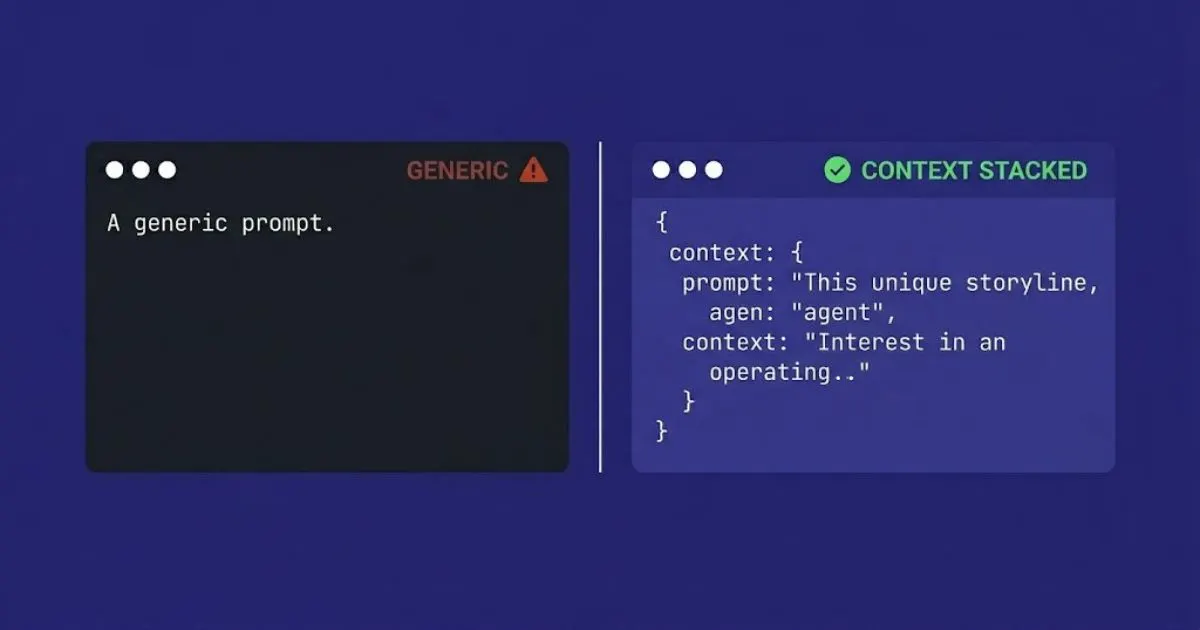
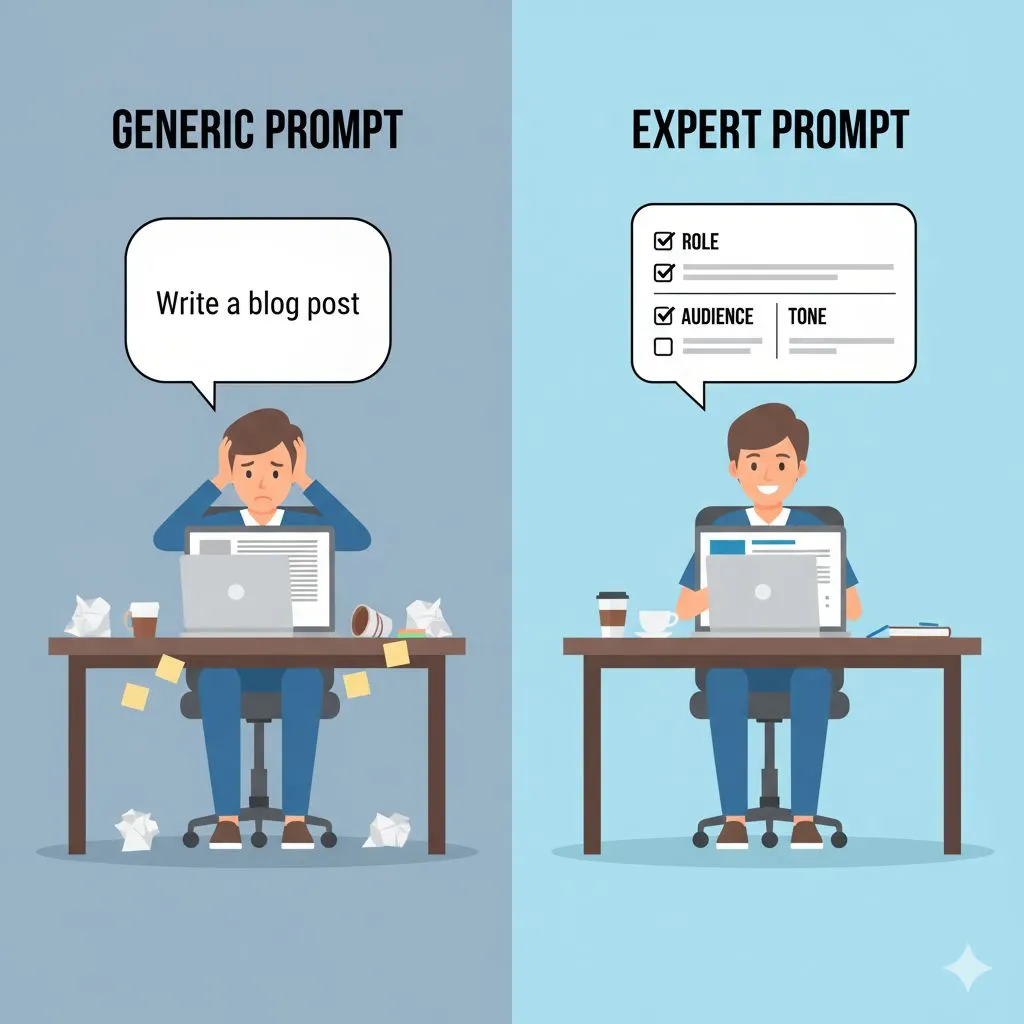
Wondering how expert-structured prompts compare to generic AI outputs? The Expert vs Generic AI Prompts side-by-side comparison shows the quality gap clearly.
Sign #1: The "Uncanny Valley" of Tone
We have all read it. You stumble across a LinkedIn post or a blog introduction that is grammatically perfect, structured well, yet feels... hollow. It’s like shaking hands with a mannequin.
This is the "Uncanny Valley" of text. It occurs when an AI content writer defaults to its training data, which favors safe, academic, and overly polite language.
The Giveaways
If your recent content is littered with words like "delve," "unleash," "tapestry," "symphony," "elevate," "game-changer," or "landscape," you have a problem. These are the verbal tics of Large Language Models (LLMs).
For example, a human expert might say:
"Here’s how we fixed a broken supply chain process to save $10k a month."
A generic AI content writer will often say:
"In the rapidly evolving landscape of modern business, it is crucial to delve into the transformative power of supply chain optimization to unleash potential savings."
Why This Hurts Your Authority
Alex, imagine you are speaking to a client face-to-face. Would you ever use the phrase "transformative tapestry of solutions"? Probably not.
When your content uses this fluff, it signals two things to your reader:
- You didn't write this. (Which breaks the personal connection).
- You don't have a distinct voice. (Which makes you forgettable).
In a digital world saturated with noise, voice is your only differentiator. If you sound like everyone else using the same tool, you become invisible. Your "AI voice" isn't making you look professional; it's making you look like a commodity.
The fastest fix is locking in your brand voice before AI can dilute it. Download the free Competitor-Proof Brand Voice Kit — a one-page template that gives AI the context it needs to sound like you, not like everyone else.
The Expert Fix
You don't need to stop using AI; you need to stop letting it drive.
- Ban the banned words: Create a "negative prompt" list. Tell the AI: "Do not use the words: delve, unleash, landscape, tapestry."
- Feed it samples: Before asking it to write, paste three examples of your previous emails or posts and say, "Analyze this writing style. Write the next piece using this exact tone—direct, punchy, and conversational."
For the step-by-step methodology, read How to Train AI to Write in Your Brand Voice — the complete pillar support guide on voice calibration for AI.
Sign #2: Surface-Level Insights (The Fluff Trap)
You are an expert in your field. Whether you run a consulting agency, a digital service, or a specialized e-commerce brand, you have accumulated years of "in-the-trenches" knowledge. You know the specific pain points that keep your clients awake at 2 AM.
Your AI content writer, however, does not.
AI models are prediction engines. They are designed to predict the most likely next word in a sentence based on the average of the entire internet. This means they naturally gravitate toward the "average" answer.
The solution is strategic prompt construction. The Entrepreneur's Playbook for Prompt Engineering breaks down exactly how to turn your expert knowledge into prompts that produce expert-level outputs — not internet averages.
The Symptom
You ask your AI tool to write an article about "How to Scale a Small Business." It returns a beautifully structured piece advising you to:
- Hire the right people.
- Focus on marketing.
- Manage your cash flow.
Is this advice wrong? No. Is it useful? Absolutely not.
It is "fluff." It is the kind of generic advice that anyone could Google in five seconds. It lacks the gritty details, the counter-intuitive strategies, and the "hard truths" that actual experts share.
Why This Hurts Your Authority
True thought leadership is about insight, not just information.
If a potential client reads your content and thinks, "I already knew that," your brand authority takes a hit. They are looking to you for a competitive edge, for a solution they haven't thought of yet. If you serve them vanilla, surface-level content, they will assume your services are equally generic.
For a business owner like you, Alex, who is trying to compete with larger players, you cannot afford to be average. You need to demonstrate that you operate at a higher level.
The Expert Fix
Never ask an AI to "come up with ideas" for the core value of the piece. You must provide the Meat; let the AI provide the Plating.
- Dictate the specific insights: Instead of "Write a post about hiring," try: "Write a post arguing that hiring for culture is more important than skills in a startup. Use an analogy about a sports team. Mention that 'skills can be taught, but attitude cannot'."
- The "Specifics" Rule: If the content doesn't mention a specific tool, a specific dollar amount, a specific timeline, or a specific mistake, it’s too vague. Ask the AI to "Rewrite this section including a hypothetical case study of a marketing firm with 5 employees."
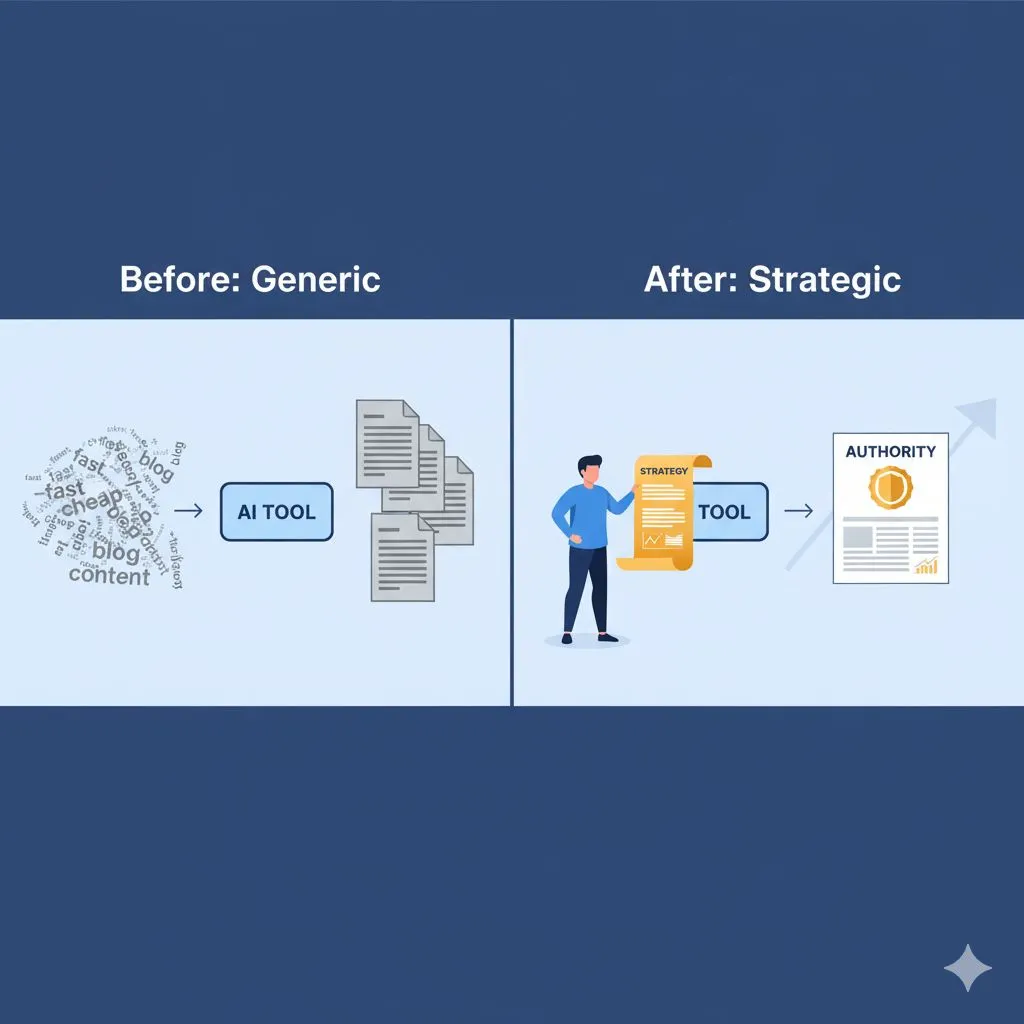
See Generic vs Strategic AI Prompts to understand the structural difference and how a single prompt change can transform output quality.
Sign #3: Factual Hallucinations & Lack of Nuance
This is the most dangerous sign on the list. We call them "hallucinations"—when an AI confidently states a fact that is completely made up.
The Symptom
It might invent a court case that never happened to support a legal argument. It might quote a statistic about social media usage from 2021 but present it as current 2026 data. Or, perhaps most insidiously, it might apply a general rule to a nuanced industry where that rule doesn't apply.
For example, an AI might write a generic best practice about "sending daily emails" for a luxury consultant. In reality, sending daily emails in the high-ticket luxury space is often considered spammy and desperate—a nuance the AI missed because it was averaging advice from aggressive retail marketing.
Why This Hurts Your Authority
Trust takes years to build and seconds to break.
If a savvy reader catches a factual error in your content, they won't email you to correct it. They will simply click away and never hire you. They will categorize you as "uninformed" or "careless."
As a solopreneur or small team leader, you are likely the final editor. If you are overworked and skimming the content before hitting "publish," these hallucinations slip through. You are essentially betting your reputation on a probability algorithm.
The Expert Fix
- Treat AI as a Drafter, not a Researcher: Never use AI to source facts, statistics, or quotes unless you have a tool specifically connected to live web browsing (and even then, double-check).
- The "Bracket" Technique: When prompting, tell the AI: "If you do not know a specific fact or statistic, insert [STATISTIC NEEDED] rather than inventing one." This forces you to go back and manually insert the correct, verified data, ensuring your content is bulletproof.
For client-facing industries where a single factual error can cost you a contract, read AI Hallucinations and Credibility Risk for Consultants — a deep-dive into where this risk hits hardest and how to protect your reputation.
Sign #4: Strategic Misalignment (Content for Content’s Sake)
One of the most common traps for the "overworked & ambitious" entrepreneur is the feeling that you just need to feed the beast. You see competitors posting three times a day, so you use your AI content writer to match their volume.
You generate 10 blog posts, 20 LinkedIn updates, and a week’s worth of tweets in an hour. You feel productive. You feel like you’re finally winning the content game.
But then... crickets. No leads. No engagement. No DMs asking about your services.
The Symptom
Your content calendar is full, but your pipeline is empty. The articles discuss topics that are tangentially related to your industry but don't actually bridge the gap to your specific offer.
For example, you sell "High-End IT Security Consulting." Your AI writes 10 articles about "The History of Computers" or "Top 10 Gadgets for 2025."
Sure, it’s tech-related. But does it attract a CTO looking for security audits? No. It attracts tech hobbyists who will never buy from you.
Why This Hurts Your Authority
High volume with low relevance signals that you are a broadcaster, not a solver.
Strategic authority isn't about how much you say; it's about how well you understand the customer's problem. When you flood your channels with misaligned content, you dilute your brand message. You become "that person who posts a lot of random stuff" rather than "the go-to expert for [Specific Problem]."
This pattern has a name. The Generic Voice Syndrome advisory explains how undirected AI content erodes brand positioning over time — and the diagnostic checklist to course-correct.
The Expert Fix
Before you open your AI tool, you need a strategy sandwich.
- Top Bun (The Goal): What is the business objective of this piece? (e.g., Overcoming an objection about price).
- The Meat (The AI): The generation of the text.
- Bottom Bun (The CTA): Where does the reader go next?
- Prompt with Intent: Don't ask for "5 tips on productivity." Ask for "5 productivity tips specifically for overworked agency owners that lead into the argument that outsourcing is the only way to scale."
Start with a strategy-first foundation: the free Content Pillar Planner Template gives you a plug-in framework to build your quarter's content around a single strategic goal before you generate a single word with AI.
Sign #5: Repetitive Structure and Formatting
Humans crave novelty. Algorithms crave patterns.
If you have been using the same prompt structure (or no structure at all) for months, your audience is likely suffering from "formatting fatigue."
The Symptom
Scroll through your last 10 posts. Do they all look like this?
- A provocative hook question?
- An introductory paragraph.
- Three bullet points with bold headers.
- A summarizing conclusion starting with "In conclusion..."
This is the default skeleton of almost every AI content writer. It is clean, it is logical, and it is incredibly boring after the third time.
The Impact on Your Brand
When your audience sees the exact same structure every day, their brain categorizes it as "background noise." They stop reading because they already know the rhythm. It makes your brand feel formulaic.
More importantly, it suggests a lack of creativity. If you can't be bothered to structure your thoughts in a new way, why should they believe you can solve their unique, complex business problems?
The Expert Fix
Disrupt the pattern. You need to force the AI to break its own rules.
- Ask for Contrarian Formats: "Write this post as a personal story starting in the middle of the action, with no bullet points."
- The "Rant" Prompt: "Write this as a passionate, opinionated short essay, keeping paragraphs under two sentences for speed."
- The Case Study: "Write this in the format of: Problem -> Failed Attempt -> The Solution -> The Result."
By varying your structure, you keep your audience on their toes and force them to actually read the content, rather than just scanning the bullet points.
For hands-on examples of how structure variation works in practice, browse 5 Expert AI Prompt Examples for Copywriting — real prompt-to-output comparisons that demonstrate format diversity across five different content types.
From "Generator" to "Strategist"
Alex, if you recognize any of these five signs in your own content, don't panic. You haven't failed; you've just been using the tool in "default mode."
The goal isn't to stop using your AI content writer. For a small team or solopreneur, AI is still the most powerful leverage you have to reclaim your time and compete with the giants. The goal is to evolve how you use it.
You need to stop being an Operator (who pushes a button and accepts the output) and start being a Strategist (who directs, edits, and refines the output).
The "Human Sandwich" Workflow
To protect your brand authority while keeping your efficiency high, adopt this simple workflow:
- Human Strategy: You define the unique angle, the specific audience pain point, and the "hard truth" only you know.
- AI Execution: You use the AI to draft the structure, expand the points, and fix the grammar.
- Human Polish: You go back in to remove the "delves" and "tapestries," inject your personal stories, verify the facts, and ensure the tone sounds like you.
This process takes a few minutes longer than the "copy-paste" method, but the difference in ROI is astronomical. One piece of high-authority content is worth one hundred pieces of generic fluff.
Ready to formalise this system across your whole content operation? The Prompt Engineering Edge AI Toolkit gives you the complete strategic framework — 50 pre-built expert prompts — to run AI at a level that consistently produces authority-building content.
Conclusion: Reclaim Your Voice
Your brand is your most valuable asset. In a world increasingly flooded with synthetic media, authenticity is the new premium currency.
Don't let a generic AI content writer dilute the reputation you’ve spent years building. By spotting these five signs—robotic tone, surface-level fluff, factual errors, strategic misalignment, and repetitive formatting—you can course-correct immediately.
You have the ambition. You have the expertise. Now, you need the right inputs to ensure your AI reflects that.
If you are ready to stop sounding like a robot and start sounding like the industry leader you are, it’s time to audit your current workflow. We have created a simple tool to help you diagnose exactly where your content strategy might be leaking authority.
Don't let generic prompts hurt your business growth.
Click here to get your Free Generic-to-Expert AI Content Audit Checklist and start creating content that actually converts.
Or explore all 11 free AI tools and resources at the Expert AI Prompts Free Offers Hub — zero cost, immediate impact on your content quality and workflow.
When you are ready to go deeper, see all 30 industry-specific prompt packs and pricing to find the pack built for your exact industry and use case.